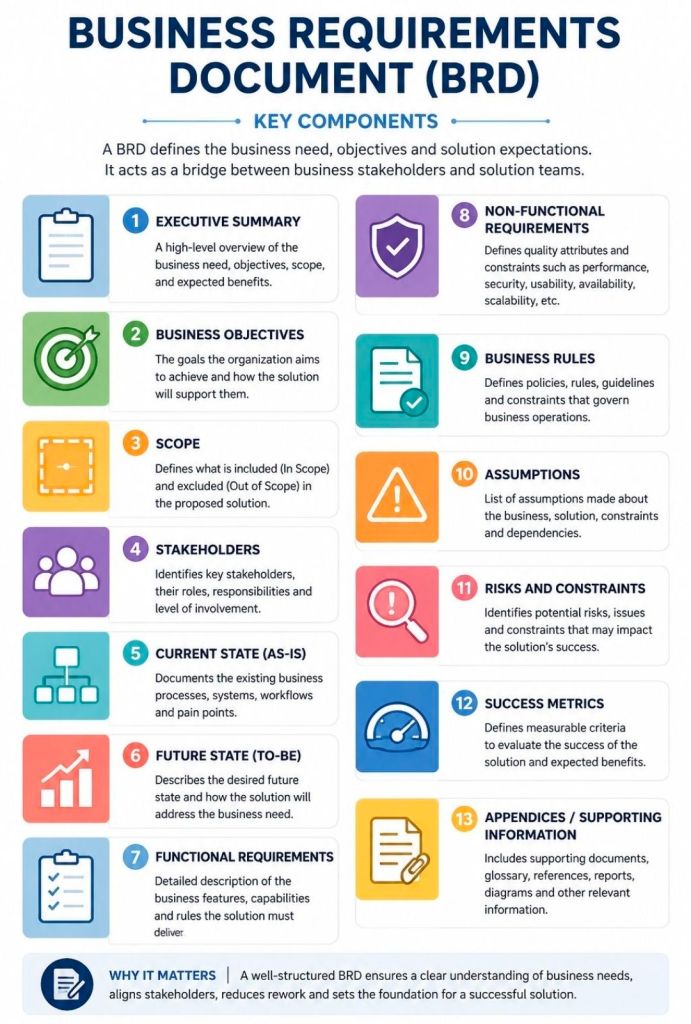
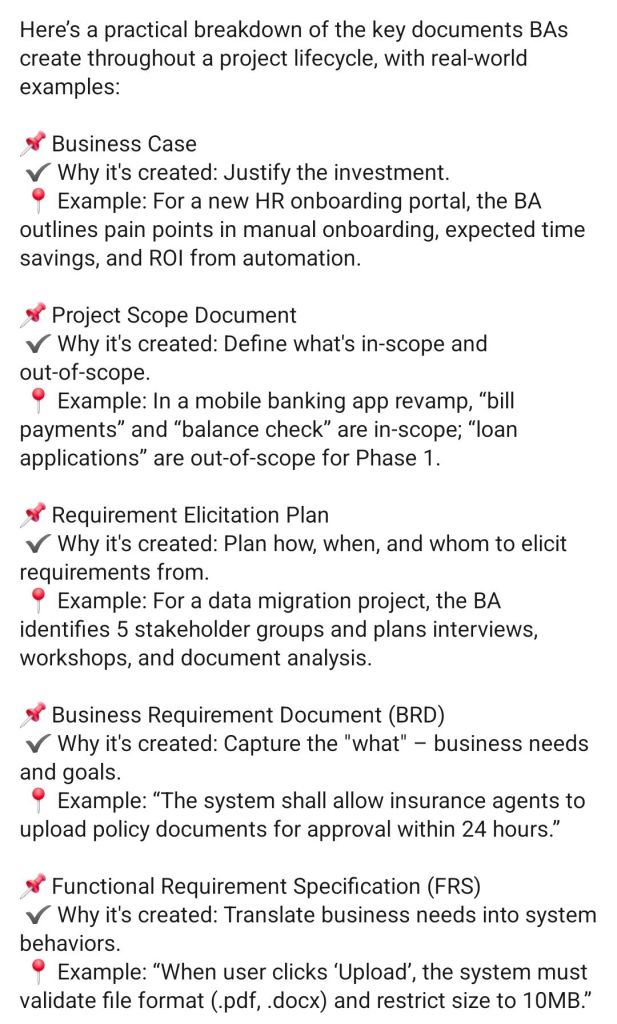
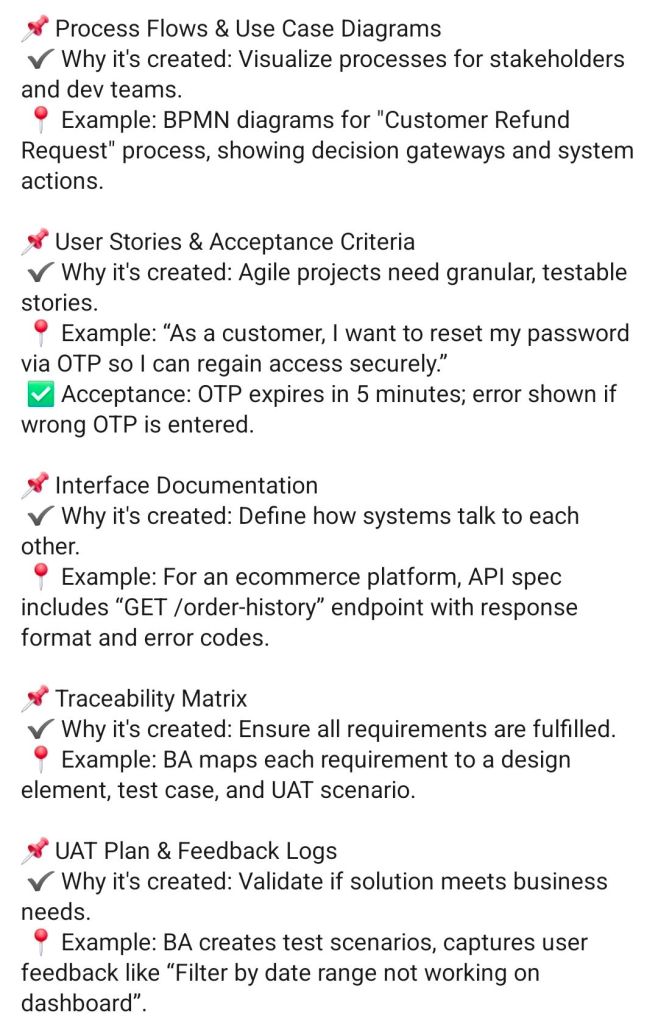
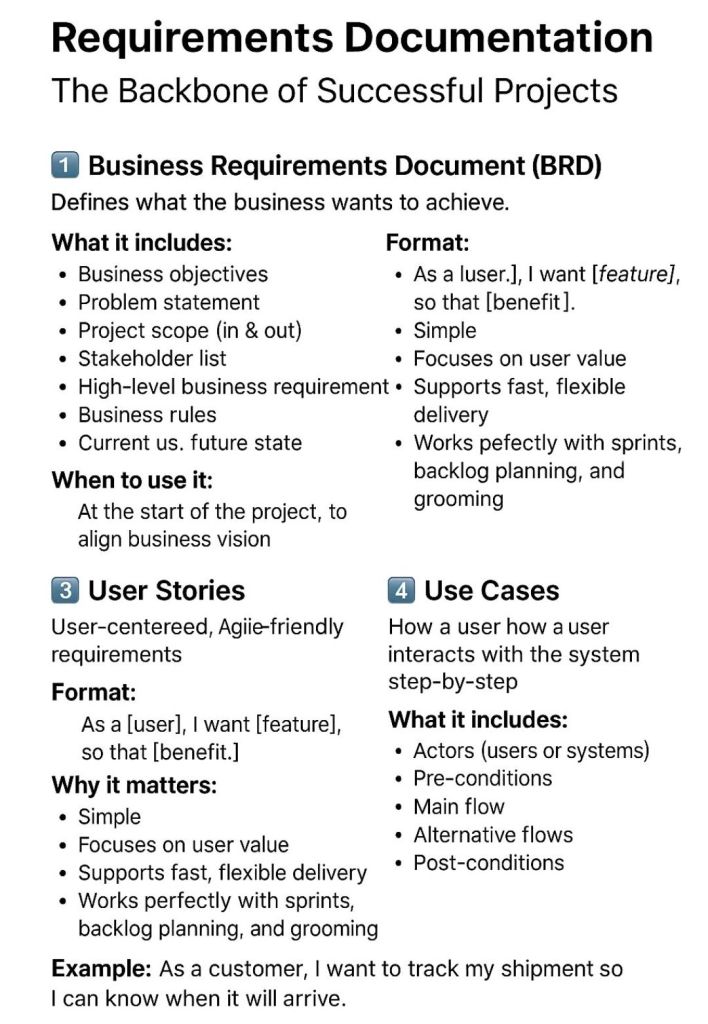
A Business Requirements Document (BRD) details what a project must accomplish and why it matters to the organization, acting as a bridge between business stakeholders and technical execution teams.
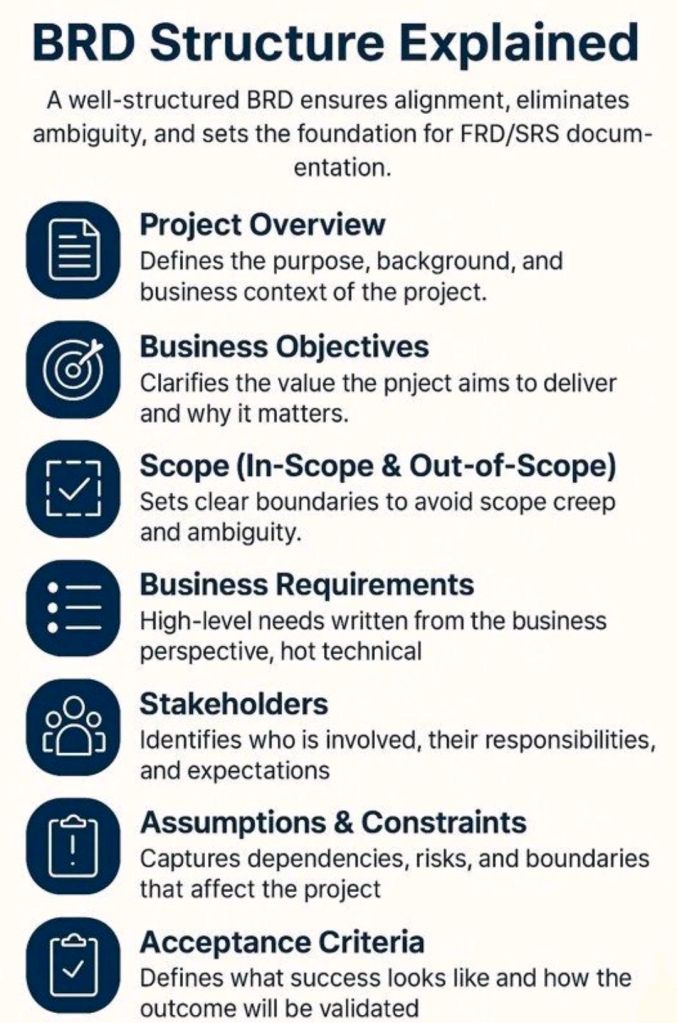
Here is a summary of the core sections required to construct a comprehensive BRD:
1. Document Control
Version History: Tracks changes, authors, and dates to ensure everyone uses the current iteration.
Approvals: Formal sign-off section where stakeholders authorize moving the project forward.
2. Executive Summary
Project Overview: A brief one-page overview stating the essence and main purpose of the project.
Needs Statement: Outlines the core business challenges or opportunities the project solves.
3. Project Scope & Objectives
Project Objectives: High-level, measurable targets aligned with company goals, often using SMART criteria.
In-Scope: Clear boundaries stating exactly what deliverables or processes are included.
Out-of-Scope: Explicit list of features or tasks intentionally left out to prevent scope creep.
4. Stakeholder Analysis
Key Stakeholders: Identifies project sponsors, department heads, and end-users.
Roles & Responsibilities: Maps out who provides requirements, who reviews them, and who receives deliverables.
5. Process Specifications
Current State (AS-IS): Maps current operational workflows to illustrate existing bottlenecks.
Future State (TO-BE): Details the desired future process after implementing the solution.
6. Core Requirements
Business Requirements: The high-level operational goals and capabilities the system must offer.
Functional Requirements: Descriptions of specific system tasks or behaviours from a business user perspective.
Non-Functional Requirements: Standards for performance, system security, and scalability.
7. Financial & Strategic Analysis
Cost-Benefit Analysis: Compares estimated financial expenses against anticipated business gains.
Success Metrics: Defines Key Performance Indicators (KPIs) and expected Return on Investment (ROI).
8. Project Dynamics & Risk Management
Assumptions: Unverified elements assumed to be true for the project to progress.
Constraints: Fixed limitations such as budget, time, technology, or legal compliance.
Risks & Mitigation: Potential threats to project delivery paired with backup action plans.
Dependencies: External factors or other projects that this initiative relies on to succeed.
9. Supporting Documentation
Acceptance Criteria: The standards and conditions required for stakeholders to accept the final delivery.
Glossary: Clear definitions of industry terms and acronyms used throughout the document.
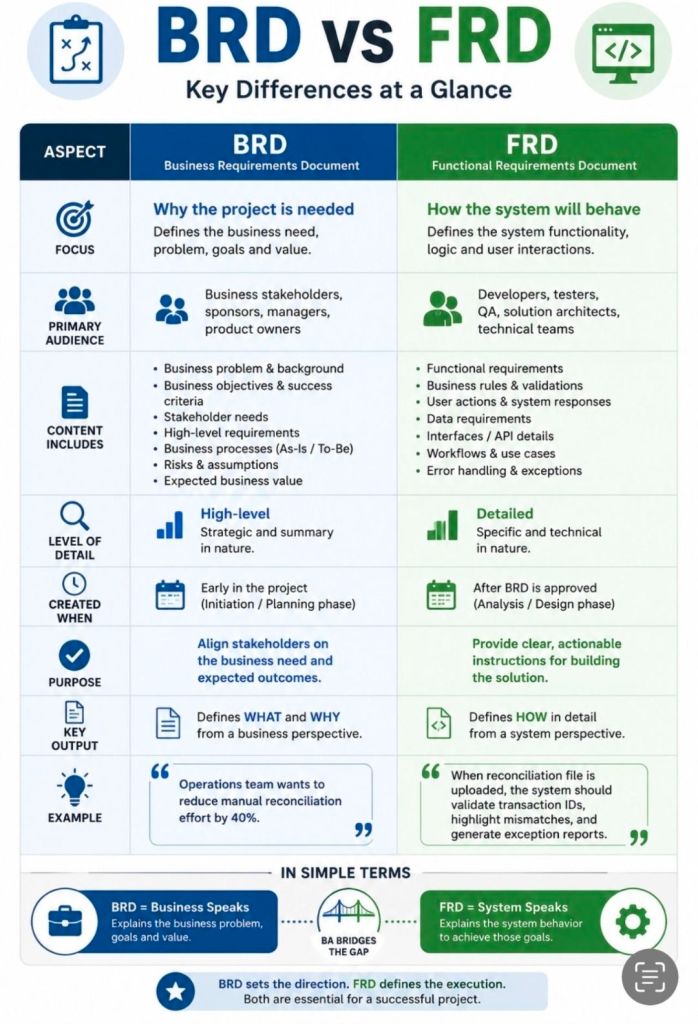
BRD vs FRD, Business Requirements vs Functional Requirements
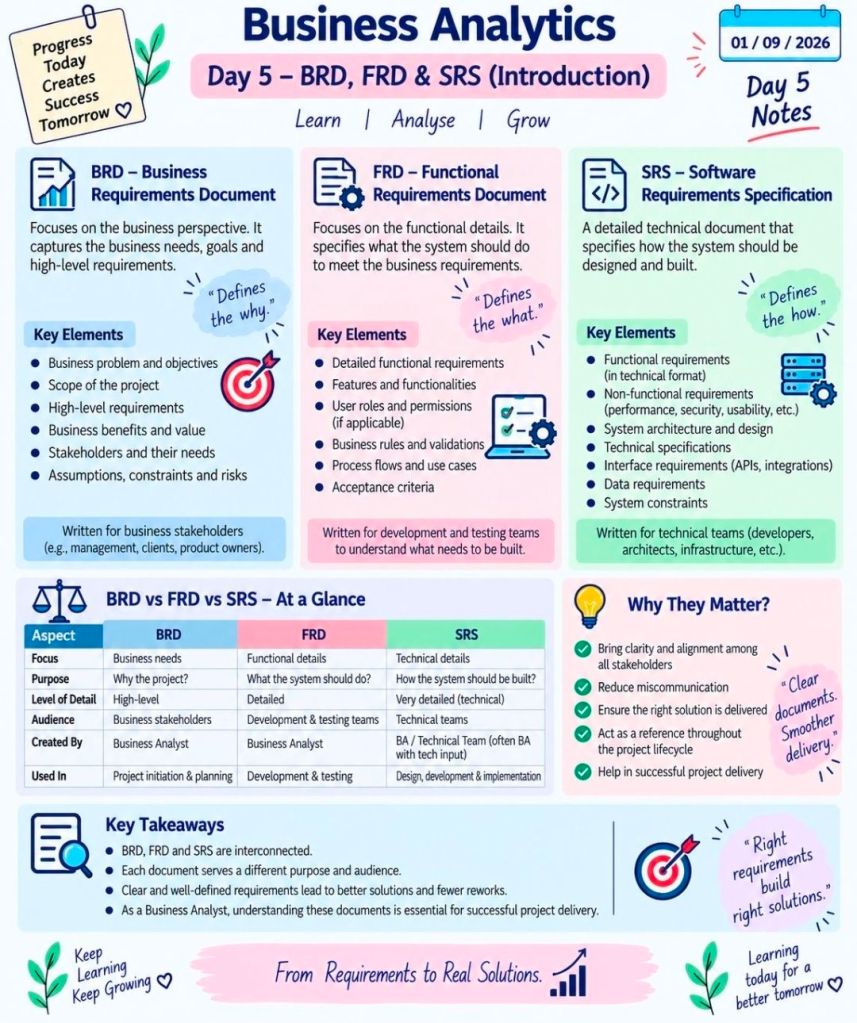
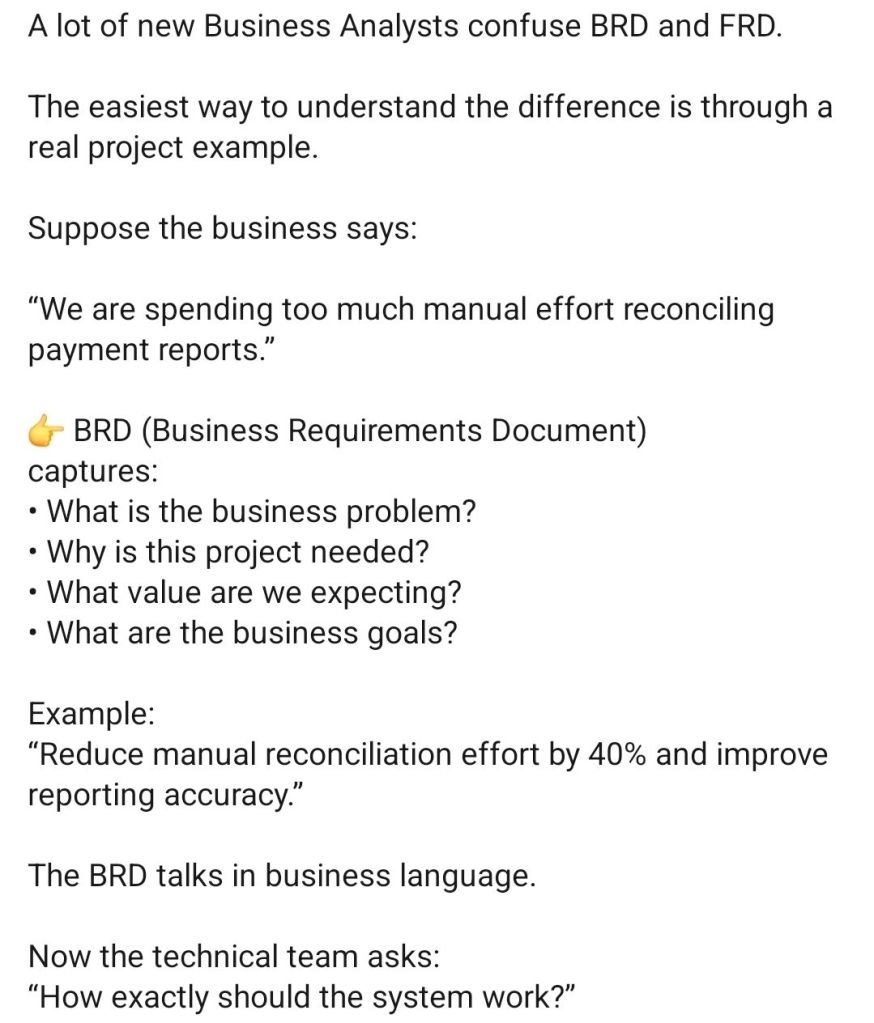
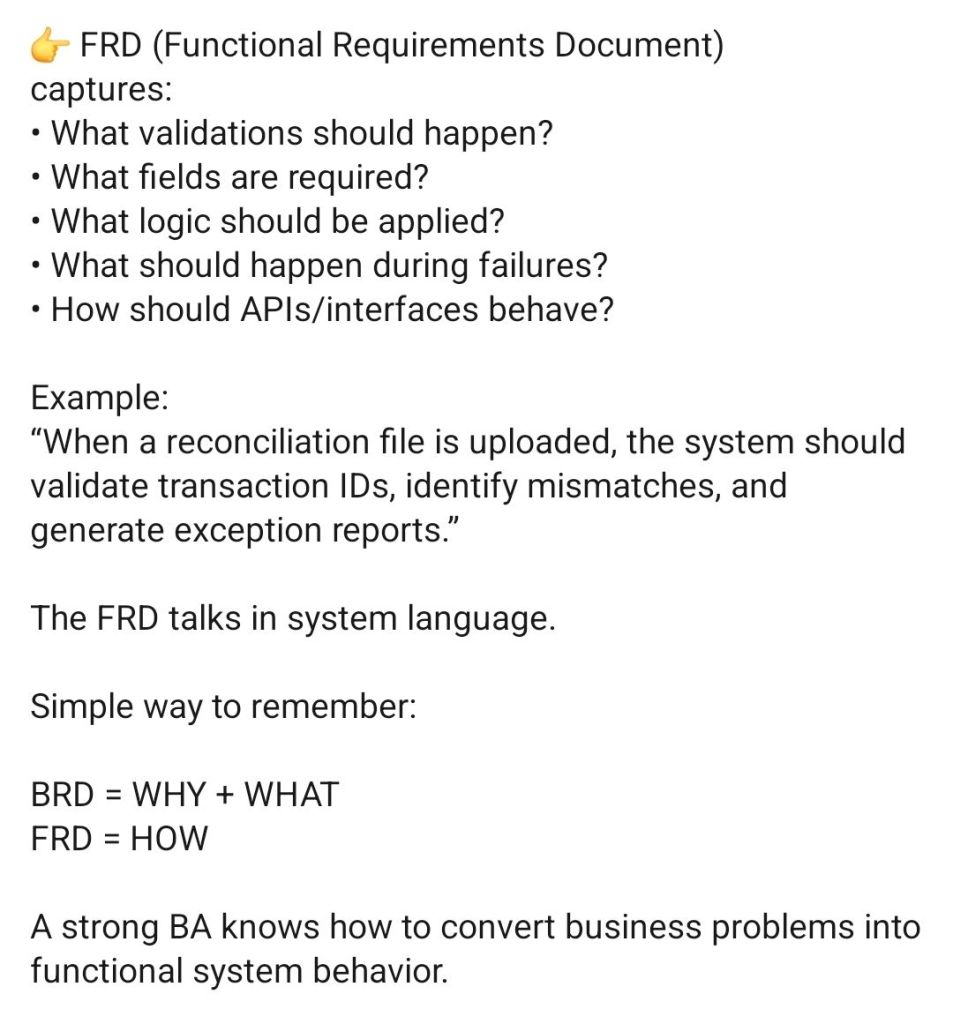
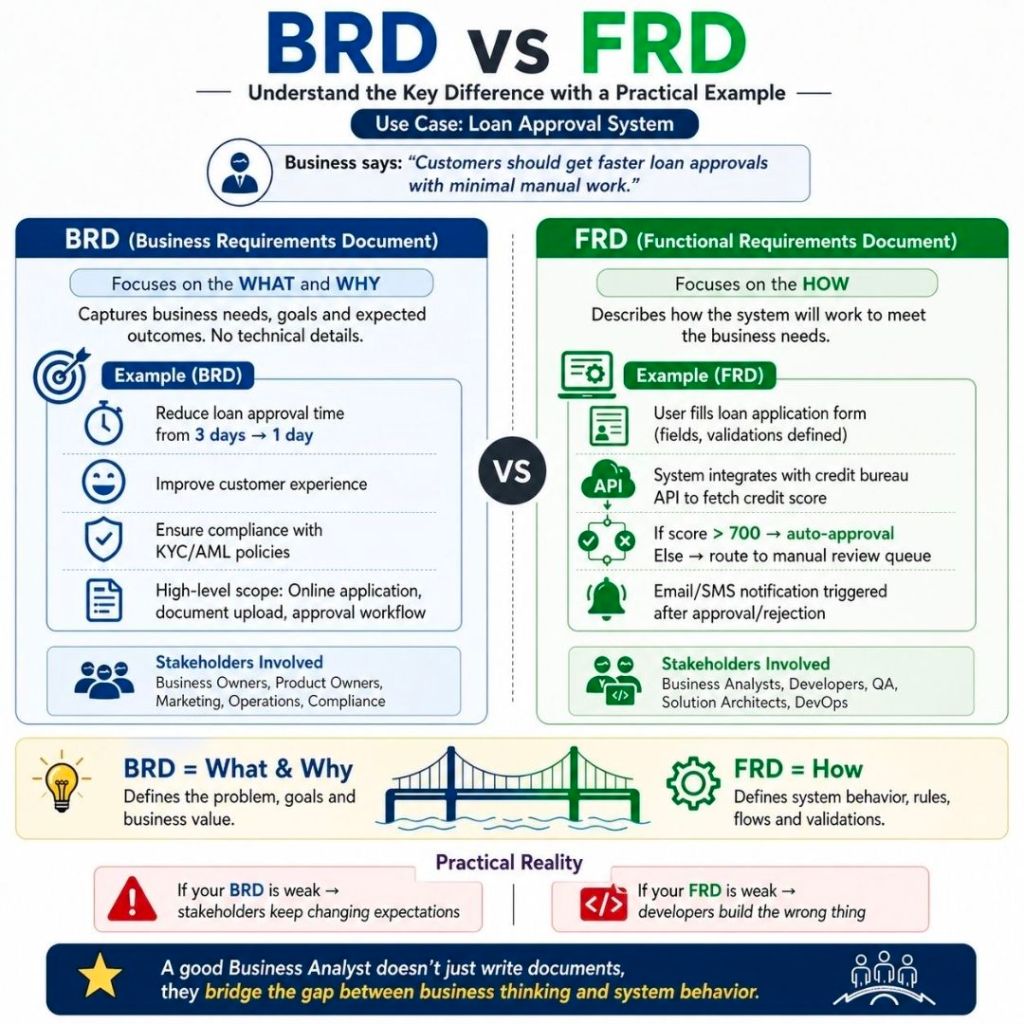
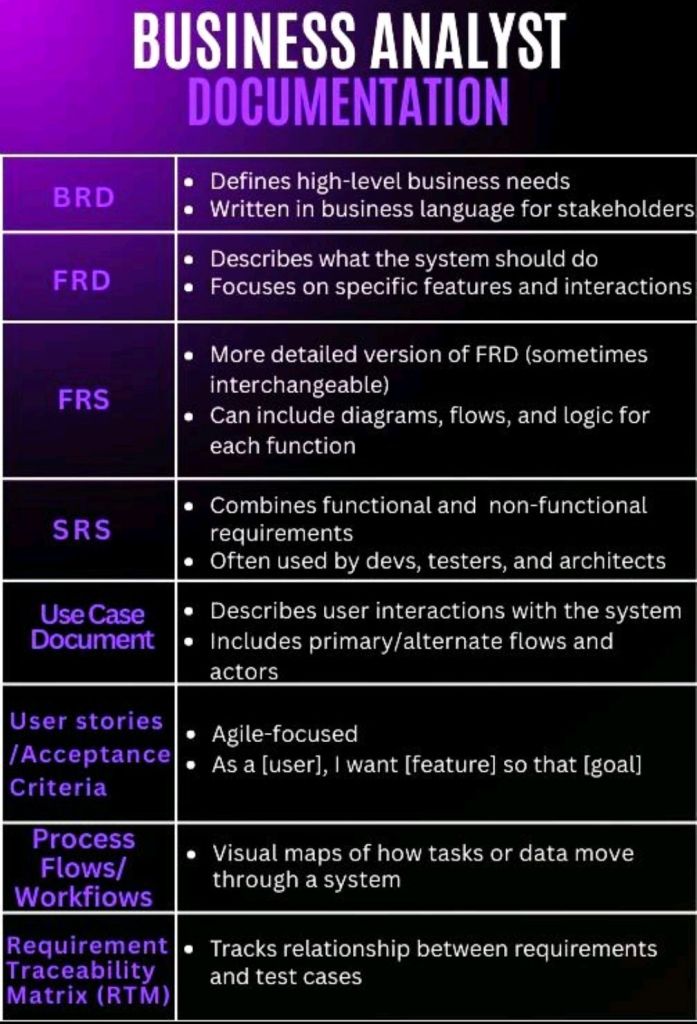
The primary difference between a Business Requirement Document (BRD) and a Functional Requirement Document (FRD) is that the BRD focuses on “why” a project is needed (business objectives), while the FRD details “how” the system will work to meet those needs. The BRD serves stakeholders and leadership, whereas the FRD guides developers and technical teams.
Key Differences at a Glance:
BRD (Business Requirements Document):
Goal: Defines business objectives, goals, and high-level needs.
Key Content: Business problem, scope, ROI, high-level project goals.
FRD (Functional Requirements Document):
Goal: Translates business needs into detailed technical functionalities.
Focus: “How” the system will perform to meet requirements.
Audience: Developers, Testers, Technical Team, Business Analysts.
Key Content: Feature descriptions, user interactions, system workflows, data requirements, UI mockups.
How They Work Together: The BRD is created first to get approval for the project, while the FRD is developed based on the approved BRD. The FRD ensures the project is actionable, testable, and feasible. In Agile, these are often combined into smaller artifacts like User Stories.