

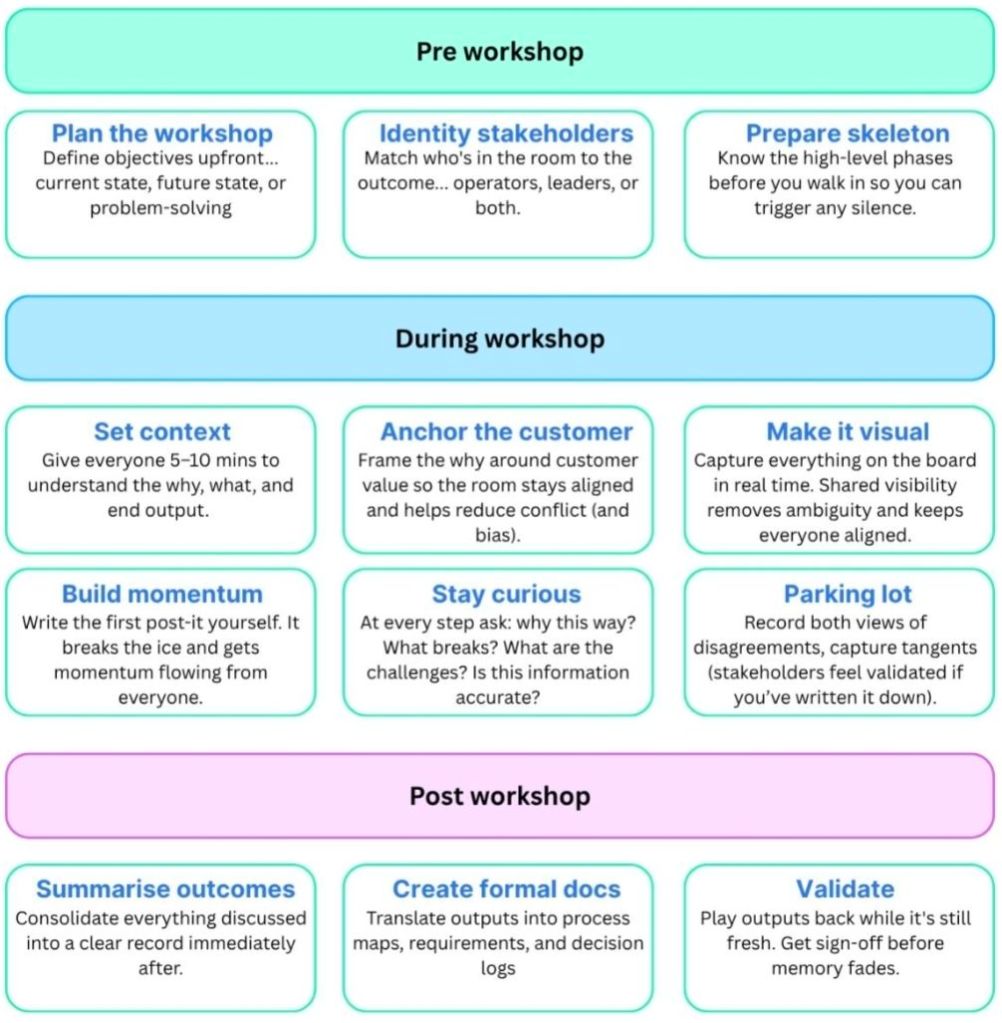
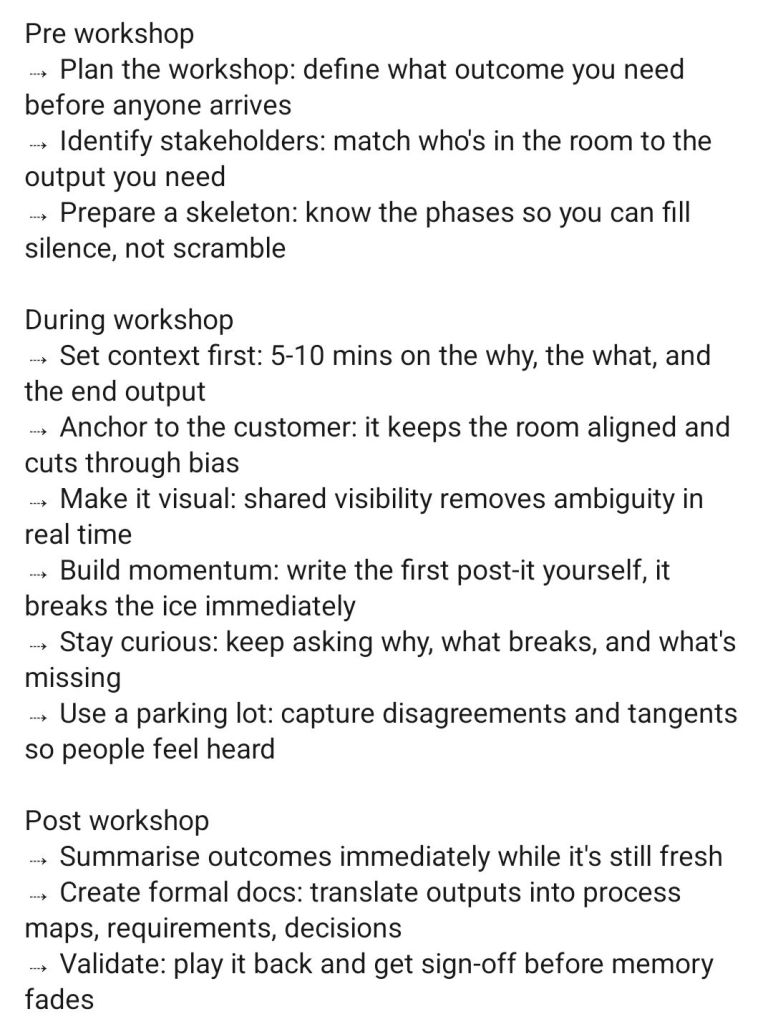
As a Business Analyst (BA), facilitating workshops is a core competency used to elicit requirements, align cross-functional teams, and achieve stakeholder consensus. Success hinges on meticulous pre-session planning, active moderation of group dynamics during the session, and timely post-workshop documentation.
A proven framework for facilitating impactful BA workshops involves three critical phases:
1. Preparation
Planning is the most important step for a successful workshop. Poorly planned sessions waste valuable stakeholder time.
- Define the Objective: Identify exactly what needs to be achieved (e.g., process mapping, feature prioritization, or user story mapping).
- Select Participants: Invite subject matter experts (SMEs), decision-makers, and end-users. Keep the group size manageable, usually between 5 to 10 people to ensure productivity.
- Create a Clear Agenda: Break the time down into specific activities. Allocate time for introductions, the core activity, breaks (if >1 hour), and a summary.
- Prepare Materials: Set up whiteboards (physical or digital like Miro/Mural) and prepare your facilitation techniques (e.g., brainstorming, MoSCoW prioritization).
2. Execution (In the Session)
Your role is to act as a neutral guide, keeping the team focused on the objective rather than getting bogged down in implementation details.
- Set Ground Rules: Establish parameters early, such as one conversation at a time, keeping devices put away, and respecting everyone’s input.
- Manage Group Dynamics: Encourage quieter participants to speak up while politely reigning in dominant voices.
- Use a ‘Parking Lot’: Create a designated section on a whiteboard for off-topic ideas, out-of-scope concerns, or unresolved questions to prevent the meeting from derailing.
- Visual Collaboration: Use process flows, mockups, or sticky notes to give the conversation a focal point. This triggers ideas and helps maintain stakeholder attention.
3. Post-Workshop
The work doesn’t end when the meeting concludes. You must synthesize the information gathered to ensure it translates into actionable project deliverables.
- Consolidate Documentation: Clean up notes, digitize whiteboard sessions, and format the elicited requirements.
- Distribute and Align: Send a clear, written summary to participants outlining decisions made, parking lot items that need resolution, and agreed-upon next steps (who is doing what and by when).
Resources and Best Practices
- For structured, globally recognized techniques and study material, explore the International Institute of Business Analysis (IIBA).
- To learn practical workshop formats like user story mapping and discovery, watch this BA Requirements Workshop Guide on YouTube.

