Centiun

Centiun is a UK-based Microsoft AI Cloud Partner and IT consultancy specializing in digital transformation, cloud migration, and AI integration for public and private sector organizations.

Centiun is a UK-based Microsoft AI Cloud Partner and IT consultancy specializing in digital transformation, cloud migration, and AI integration for public and private sector organizations
Centiun is a UK-based Microsoft AI Cloud Partner and IT consultancy

They help businesses modernize operations, leverage low/no-code platforms, and transition legacy infrastructure to secure cloud environments.

Core Services

  • Cloud & App Modernization: Migrating on-premise, legacy applications to secure cloud environments to reduce costs and enhance agility.
  • Microsoft AI & Business Applications: Implementing solutions across the Microsoft stack, including Copilot, Power Platform, and Dynamics 365, to improve process efficiency and data-driven decision-making.
  • Managed Services & Governance: Providing SLA-compliant technical governance, threat monitoring, and support to ensure business continuity.
  • Training & Enablement: Upskilling staff to confidently use Microsoft tools and low-code solutions.

Target Industries

Centiun tailors their technology solutions to several specialized sectors, offering domain expertise in:

  • Healthcare and Non-profits
  • Public Bodies and Central Government
  • Financial Services and Manufacturing
  • Energy and Utilities

Why They Stand Out

  • Microsoft Expertise: Their seasoned experts hold numerous Microsoft certifications and boast a combined 20+ years of experience in Microsoft Business Applications.
  • Tailored Approach: They focus on personal service rather than one-size-fits-all solutions, aiming to help clients scale and modernize while minimizing operational disruption.
  • Security & Trust: The firm operates with strict data security measures, holding accreditations like Cyber Essentials and registration with the Information Commissioner’s Office (ICO).

Explore their complete list of solutions and case studies directly on the Centiun Official Website.

Free Centiun eBooks:

  1. https://centiun.com/wp-content/uploads/2026/04/Centiun_eBook_Unify-your-data-platform_SMB.pdf
  2. https://centiun.com/wp-content/uploads/2026/04/Centiun_e-book_Automate-business-processes-with-agents.pdf
  3. https://centiun.com/wp-content/uploads/2026/01/Ebook-Dynamics-365-Agentic-Sales.pdf
  4. https://centiun.com/wp-content/uploads/2026/01/Service-Transformation-with-AI-and-Dynamics-365.ppsx

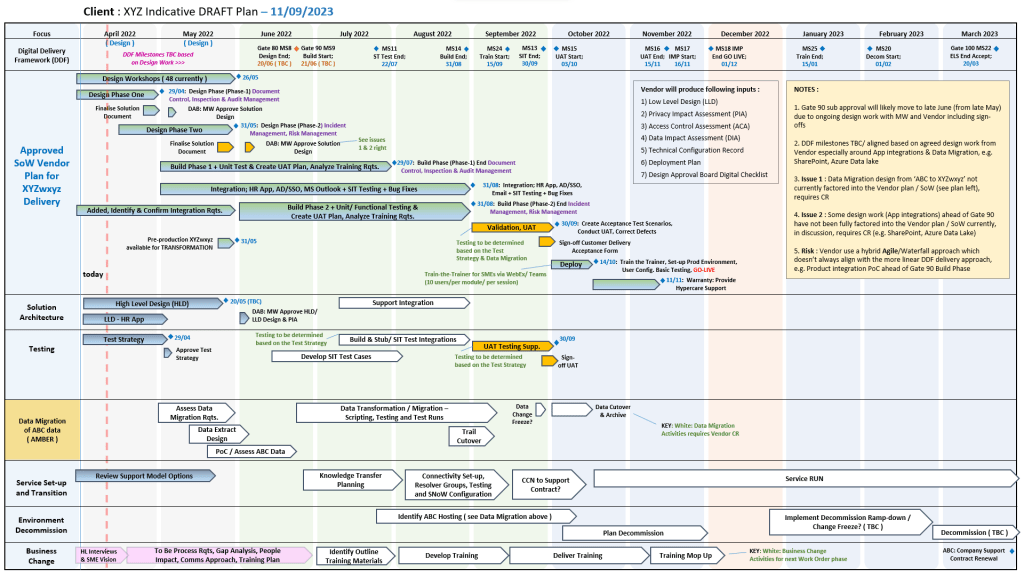
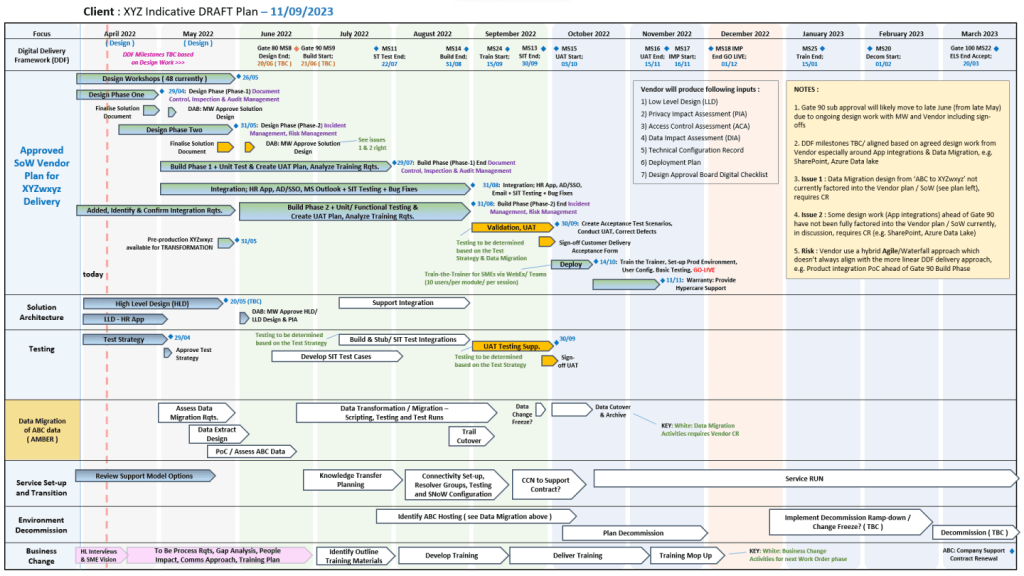
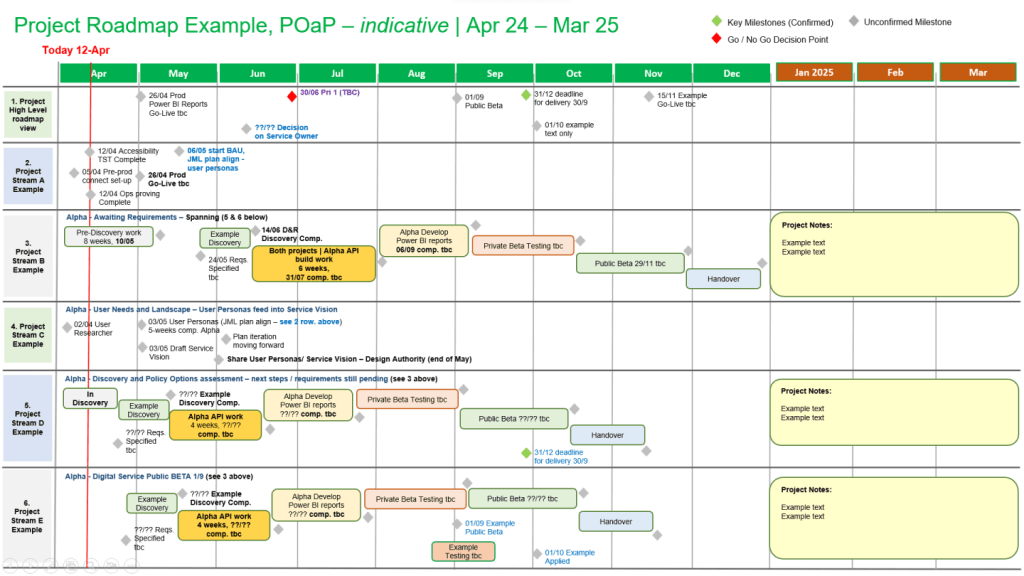
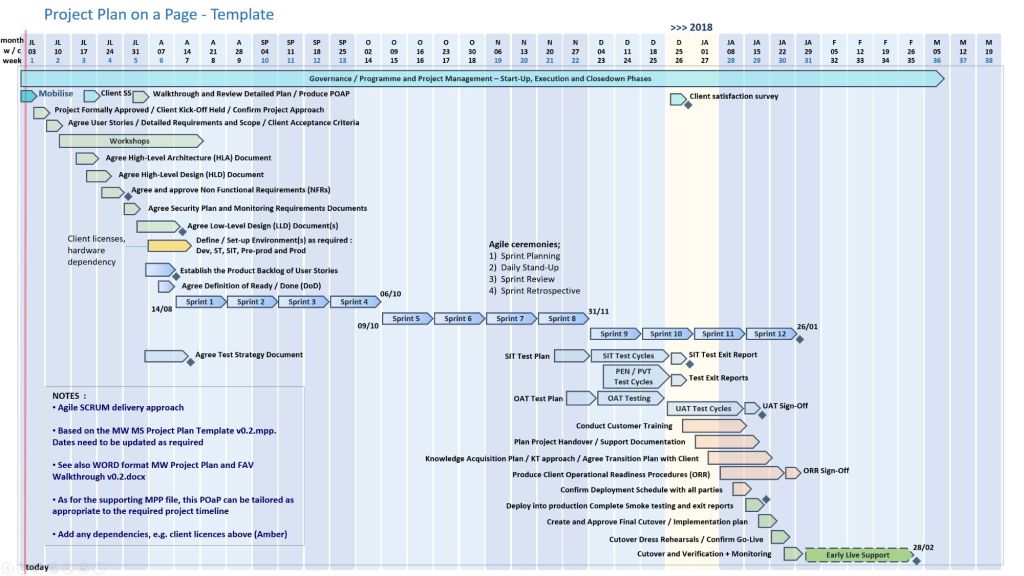
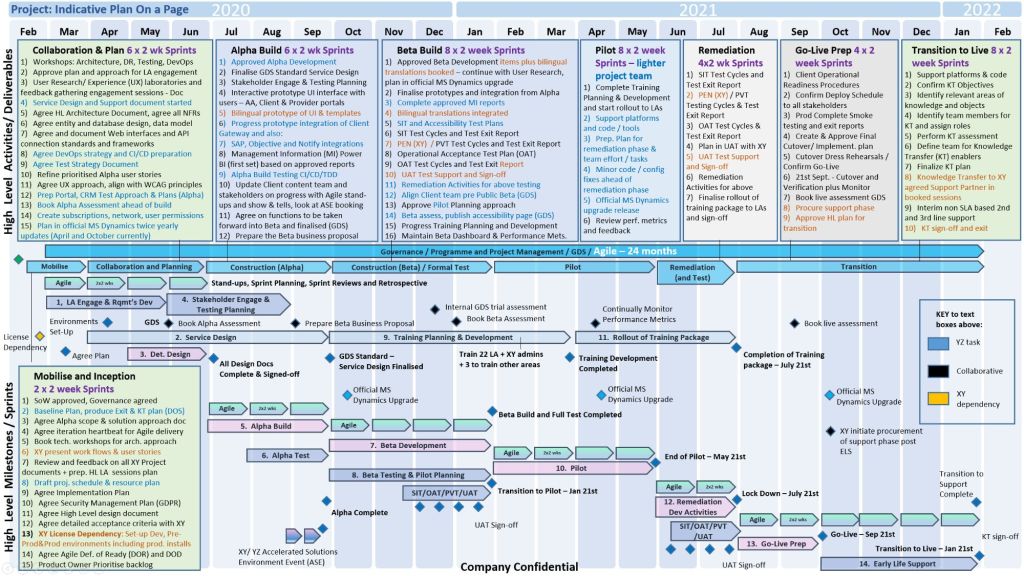
Agile Projects Overview and Timeline by year

Agile project management is an iterative, adaptive approach that breaks projects down into small, manageable cycles called sprints or iterations. Instead of planning the entire project upfront, teams continuously deliver functional increments, gather immediate feedback, and adapt to changing requirements. It prioritizes team collaboration, customer involvement, and rapid value delivery over rigid documentation and sequential phases.


Comprehensive Timeline Breakdown by Era and Year

Era 1: The Foundational Seeds (1950s – 1980s)

Before “Agile” existed as a formal term, engineers and researchers laid the groundwork through lean manufacturing and early iterative computing.

  • 1957: IBM begins utilizing incremental development concepts under Gerald M. Weinberg.
  • 1958: Software for Project Mercury (NASA’s first human spaceflight program) is developed using rapid half-day iterations.
  • 1970: Dr Winston Royce publishes a paper describing the Waterfall methodology. Paradoxically, he presents it as high-risk, yet it becomes the dominant, rigid corporate framework for decades.
  • 1980: Toyota refines “Just-In-Time” logistics and visual management system concepts, which later directly inspire Kanban and Lean software practices.
  • 1986: Authors Hirotaka Takeuchi and Ikujiro Nonaka publish “The New New Product Development Game” in the Harvard Business Review. They introduce a holistic, “rugby-style” team approach, coining the term “Scrum”.
  • 1988: Dr Barry Boehm introduces the Spiral Model, formalizing risk-driven, iterative lifecycle planning.

Era 2: The “Lightweight” Revolt (1990s)

Driven by frustration over the high failure rates and slow delivery of Waterfall, software pioneers independently build faster, more flexible frameworks.

  • 1991: James Martin formalizes Rapid Application Development (RAD), highlighting timeboxing, prototyping, and active customer involvement.
  • 1993: Jeff Sutherland, John Scumniotales, and Jeff McKenna deploy the very first operational Scrum process at Easel Corporation.
  • 1994: The Dynamic Systems Development Method (DSDM) is launched in the UK, providing one of the earliest structured frameworks for iterative project delivery.
  • 1995: Ken Schwaber and Jeff Sutherland co-present the formal Scrum Framework to the public at the OOPSLA conference.
  • 1996: Kent Beck introduces Extreme Programming (XP), introducing core engineering mechanics like pair programming and test-driven development (TDD).
  • 1997: Jeff De Luca and Peter Coad design Feature-Driven Development (FDD) to focus strictly on client-valued functional results.

Era 3: The Manifesto Moment (2000 – 2001)

The pivotal pivot point where separate iterative movements unite into a single, cohesive global movement.

  • 2000: Pre-meeting alignment occurs. Martin Fowler publishes his definitive article on Continuous Integration (CI), and Extreme Programming teams begin adopting Scrum’s three-question daily standup format.
  • February 2001: The Agile Manifesto is Born. Seventeen software development pioneers meet at a ski resort in Snowbird, Utah. They discover common ground, author the Manifesto for Agile Software Development, and establish the 4 Core Values and 12 Principles.
  • Late 2001: The Agile Alliance non-profit is established to safeguard, evolve, and distribute Agile education globally.

Era 4: Mainstream Adoption & Scaling (2002 – 2019)

Agile shifts from a rebellious IT trend into a standard corporate expectation, requiring frameworks that can scale across massive enterprises.

  • 2002: Ken Schwaber co-founds the Scrum Alliance to offer standardized certifications (like Certified ScrumMaster), dramatically accelerating global adoption.
  • 2003: Mary and Tom Poppendieck publish Lean Software Development, cleanly mapping Toyota’s manufacturing efficiencies directly onto digital projects.
  • 2009: The Software Craftsmanship Manifesto is created to ensure technical excellence and code quality are not forgotten during rapid business sprints.
  • 2011: Dean Leffingwell releases the Scaled Agile Framework (SAFe), allowing massive corporate enterprises to align hundreds of agile teams across entire portfolios.
  • 2015: Global project management authorities officially pivot; AXELOS releases PRINCE2 Agile, and the Project Management Institute (PMI) introduces Agile certifications into its core curriculum.

Era 5: Modern Continuous Agility (2020s – Present)

Agile transcends IT entirely, cementing its place as an overarching organizational strategy for business survival in an uncertain world.

  • 2020: The Scrum Guide receives its most significant structural update, streamlining language, eliminating prescriptive micro-management, and focusing intensely on a single, unified team working toward a singular “Product Goal”.
  • 2021–2023: Business Agility explodes. Non-technical departments—including HR, Marketing, Legal, and Finance—broadly restructure their workflows into iterative agile backlogs to manage volatile hybrid work environments.
  • 2024–Present: AI-Driven Agility becomes standard practice. Project management tools use generative AI to automatically draft user stories, estimate team velocity, and dynamically rewrite project sprint backlogs based on real-time market shifts.

Agile Projects Overview and Timeline by year

Project Management, Role Organization Chart

Project Management, Role Organization Chart

ACI Worldwide XPNET Message-Oriented Middleware, MOM

XPNET (often distributed as part of the NET24 suite) is a proprietary, mission-critical Message-Oriented Middleware (MOM) and network management infrastructure developed by ACI Worldwide.

It is designed to run primarily on fault-tolerant HPE NonStop (Tandem) systems. XPNET acts as the foundational layer for ACI’s globally dominant payment engines, BASE24 and BASE24-eps.

It provides the multi-node network architecture, data routing, inter-process communication, and transaction logging required to safely process hundreds of millions of ATM, Point of Sale (POS), and mobile payments daily.

Key Architectural Technical Description

  • Core Function: XPNET acts as the vital gateway between terminal devices (ATMs, POS terminals), regional interchanges (Visa, MasterCard), and a bank’s back-end host system.
  • Network Environment File (NEF): All physical and logical configurations of an XPNET deployment—including nodes, links, processes, stations, and communications lines—are centrally defined inside the NEF.
  • Fault Isolation: XPNET monitors processes using a distributed architecture. If an interface process or line drops, XPNET safely queues or reroutes transactions to achieve “five-nines” (99.999%) financial system uptime.
  • Audit and Tracing: XPNET intercepts all systemic message traffic, managing the core Transaction Log File (TLF) and generating event messaging for fraud monitoring and performance profiling.

Detailed XPNET Historical Timeline Breakdown

The evolution of XPNET is deeply intertwined with ACI’s flagship software, scaling alongside the transformation of global electronic funds transfers (EFT).

1982 – 1989: The Genesis Era

  • 1982: ACI launches BASE24 to manage early ATM networks. To handle low-level Tandem interprocess communication, ACI designs precursor communication layers.
  • 1986: ACI scales internationally to 131 major clients across 14 countries, increasing the demand for a standard, highly secure, policy-driven message-switching architecture to accommodate disparate global telecommunication protocols.

1990 – 1999: NET24 and XPNET Standardisation

  • 1993: ACI is reorganised under Transaction Systems Architects (TSA). The communications infrastructure is formalised as NET24-XPNET, decoupled cleanly from application logic.
  • 1995: ACI goes public on NASDAQ. XPNET becomes the mandatory structural platform for any financial institution deploying BASE24 “Classic”.
  • 1998: ACI acquires IntraNet. XPNET is updated to handle wholesale wire transfers and high-value Automated Clearing House (ACH) data alongside retail consumer swipes.

2000 – 2009: The Next-Gen Transition (BASE24-eps)

  • 2002: ACI launches BASE24-eps (Enterprise Payments System). XPNET is radically re-engineered to support both classic structural architecture and next-generation message formats, utilizing its Common Transport Subsystem (CTS) to act as a Tandem Pathway client/server.
  • 2008: ACI optimises BASE24-eps for IBM System z architectures, but updates the NonStop-native XPNET to Version 08.2 to handle expansive regional payment networks across Europe and Asia.

2010 – 2019: Litigation and Global Footprint Consolidation

  • 2011 – 2014: Third-party performance suites, such as IR Prognosis XPNET Manager, Insider Technologies XPERT24 and Reflex ONE24 explode in popularity, allowing banks to map live visual diagnostics of their XPNET lines and queues.
  • 2017: ACI and MasterCard reach an agreement to resolve a massive legal dispute. As part of the settlement, MasterCard purchases a perpetual components license for NET24-XPNET middleware to legally fuel its core debit-switching network infrastructure.

2020 – 2026: Legacy Modernisation & The API Era

  • 2021: With financial institutions pivoting toward digital microservices, ACI introduces hybrid compatibility layers. Companies like NuWave introduce direct API bindings to XPNET, allowing legacy HP NonStop payment architectures to map to modern REST web services without rewriting base COBOL/C code.
  • 2025 – 2026: ACI celebrates 50 years of enterprise infrastructure engineering. While cloud-native solutions like ACI Connetic roll out for real-time rails, NET24-XPNET Version 4.x remains a heavily maintained, actively running baseline layer across tier-1 legacy banking systems worldwide.

ACI Worldwide XPNET Message-Oriented Middleware, MOM

XPERT24 Product Overview

XPERT24 (XPNET Performance Monitoring and Tracking) is a specialised financial middleware software product developed by Insider Technologies Limited. It provides real-time transaction tracking and operational counter monitoring for the BASE24™ transaction processing infrastructure.

Product Description

XPERT24 functions as a critical diagnostics layer for companies running BASE24 bank card payment systems. Built to sit on HP NonStop systems, the software uses PATHWAY servers to automatically detect, capture, and analyse data points from the underlying network. Its core features include:

  • XPNET Counter Monitoring: Tracks infrastructure health via rate, state, and data queue counters.
  • Interchange Performance: Monitors live transaction metrics, including approval and denial rates for ATM and POS transactions.
  • Throughput Optimization: Provides clear system visibility to avoid high-volume traffic jams or transaction delays.

Detailed Timeline Breakdown

The lifecycle of the XPERT24 software package moved from initial technical specification into corporate ecosystem expansions:

2001 — Initial System Baseline & Prep

  • Training and Scoping: Insider Technologies Limited launched internal Sales & Marketing campaigns to map mid-market banking software demands.
  • System Language Adaptation: Engineering teams refined core HP NonStop transaction tracking metrics.

2006 — Structural Architecture Layout

  • Design Initiatives: Product groups commenced documentation guidelines to build customer-facing technical literature.
  • Database Modeling: Initial designs mapped how transaction records could safely pass without lagging the live bank engine.

2007 — Server Logic Creation

  • Server Infrastructure Setup: Developers initiated building structural frameworks inside development kits.
  • Pathway Server Logic: Logic was written to make sure the software query scripts safely gathered data without interrupting processing.

2008 — Production Release & Launch Era

  • Official Software Launch: Insider Technologies launched the operational XPERT24 system to production status.
  • Hypervisor UI Integration: The company produced dedicated BASE24-eps™ and XPNET layer Hypervisor graphical displays.
  • Industry Showcase: Technical user interfaces were presented directly to the Electronic Banking User Group (EBUG) and the Satellite Transaction User Group (SATUG).

2009 — Data Query Expansion

  • SQL Interoperability: Product upgrades integrated better SQL handling to build structured transaction logs.
  • Web Monitoring Foundations: Teams rolled out technical requirements to present live transaction counters into standard web browsers.

2011 — Project Management & Standardization

  • Agile Shift: Development pipelines migrated entirely onto the Scrum framework.
  • Process Alignment: The product management structure was retrofitted to follow strict PRINCE2 guidelines to help service major government and banking institutions.

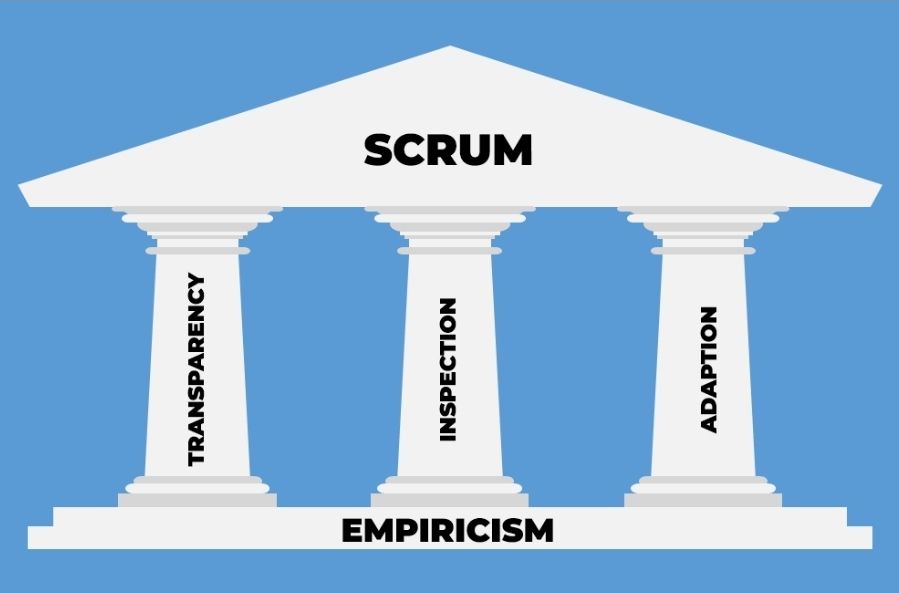
The 5 Pillars of Project Success Framework

The 5 Pillars of Project Success Framework
Five Pillars of Project Success Framework

Agile SAFe Events, Cadence of Collaboration

SAFe (Scaled Agile Framework) events are structured, time-boxed ceremonies designed to drive synchronization, alignment, and continuous improvement across different levels of an enterprise

SAFe (Scaled Agile Framework) events are structured, time-boxed ceremonies designed to drive synchronization, alignment, and continuous improvement across different levels of an enterprise.

These events are primarily categorized into Team-level events (which mirror standard Scrum practices) and Agile Release Train (ART) level events (which orchestrate multiple teams working toward a shared goal).

The core events within Essential SAFe are broken down below by organizational layer.

👥 Agile Team-Level Events

These recurrent ceremonies occur inside a short timebox called an Iteration (typically lasting 2 weeks) and focus on local execution.

  • Iteration Planning: Teams refine the iteration plan, select backlog stories, and commit to a set of Iteration Goals.
  • Team Sync (Daily Stand-up): A brief, daily 15-minute meeting where team members align on progress, discuss daily goals, and highlight impediments.
  • Iteration Review: A cadence-based showcase at the end of the iteration where teams demo working software to gather immediate feedback.
  • Iteration Retrospective: Held at the end of each iteration to reflect on the process, team dynamics, and behaviors to drive relentless improvement.
  • Backlog Refinement: A weekly meeting where the Product Owner and team flesh out, estimate, and prep user stories for upcoming iterations.

🚊 Agile Release Train (ART) Level Events

These higher-level events drive the Planning Interval (PI), an 8 to 12-week timebox where an entire “train” of 5–12 teams delivers cross-functional value.

  • PI Planning: The multi-day flagship event of SAFe where all teams, stakeholders, and leaders align on a shared business vision, map dependencies, and commit to PI objectives.
  • System Demo: A regular event occurring every iteration where the integrated functionality built by the entire ART is demonstrated to stakeholders for feedback.
  • Coach Sync (formerly Scrum of Scrums): Facilitated by the Release Train Engineer (RTE), Scrum Masters meet to resolve cross-team dependencies, risks, and progress hurdles.
  • PO Sync: Product Owners and Product Management meet to track milestone progress, manage scope adjustments, and ensure the train remains aligned with business goals.
  • ART Sync: A combined session of Coach Sync and PO Sync used to streamline communication regarding execution and deployment.
  • Inspect & Adapt (I&A): A major event held at the end of the PI consisting of a system demo, quantitative measurements, and a problem-solving workshop to implement systemic backlog improvements.

Summary of Differences

For a quick comparison, you can look at how responsibilities scale across the framework:

Scaled Agile Framework, SAFe events are structured, time-boxed ceremonies designed to drive synchronization, alignment, and continuous improvement across different levels of an enterprise
SAFe (Scaled Agile Framework) events are structured, time-boxed ceremonies designed to drive synchronization, alignment, and continuous improvement across different levels of an enterprise

Project Management Roles and some Certifications

Project Management Roles and some Certifications

Sentra Overview and Detailed Timeline by Year

Sentra is a premier tracking and service management software platform developed by Insider Technologies Limited. Designed specifically for high-volume, mission-critical operations, Sentra is deployed across major financial, government, and defense institutions. It specializes in real-time tracking, information mediation, and multi-platform service level agreement (SLA) monitoring.

Insider Technologies, Business, Process and Systems Management for the Financial and Messaging Markets
Insider Technologies in 2003 (San Jose), Business, Process and Systems Management for the Financial and Messaging Markets

The system operates across Windows, HP NonStop, Linux, and Unix environments to guarantee maximum uptime for transaction processing and data transmission.


Product Description & Capabilities

Sentra acts as a powerful tracking diagnostics framework. It evaluates the flow of files, payments, and system events to prevent costly service outages.

  • Real-Time Transaction Extraction: Utilizes extraction agents to pull live transaction data—such as ATM and Point-of-Sale (POS) logs—from core banking applications.
  • High-Speed Middleware Ingestion: Relays transaction lifecycle files (TLF) directly to a Windows server and Microsoft SQL database. This uses the company’s proprietary, high-speed TCP/IP sockets protocol known as FastPipe.
  • Rigorous SLA Enforcement: Provides end-to-end monitoring metrics optimized to help financial firms achieve extremely demanding targets, including 99.999% system availability.

Detailed Timeline Breakdown by Year

Because Insider Technologies is a private, specialized enterprise software house, its continuous internal product updates are primarily mapped through corporate evolution and key platform milestones:

1989 — Corporate Foundation

  • Insider Technologies Limited is incorporated in Manchester, UK. It targets 24×7 mission-critical systems like Tandem Computers (which later evolved into HP NonStop computing architecture).

1990s to Early 2000s — The Monitoring Evolution

  • The company relies heavily on its early flagship monitoring software suites, Reflex and MultiBatch.
  • Recognizing a shift toward heterogeneous environments, engineering teams begin conceptualizing Sentra to bridge real-time tracking between Windows and legacy systems.

2004 — Core Sentra Framework Launch

  • Official design, infrastructure layout, and core coding begin for the specialized Sentra platform architecture.
  • Sentra is formalized to extend tracking metrics outside of traditional mainframe environments into multi-platform Linux, Unix, and Windows installations.

2006 — Banking Application Integration

  • Development accelerates on custom add-ons to integrate Sentra directly with core banking infrastructure.
  • Teams design specialized mechanisms to track high-volume transactions routed via ACI Worldwide’s popular BASE24™ transaction-processing software.

2008 to 2011 — The RTLX Reactor Expansion

  • Insider Technologies releases RTLX Reactor, a major add-on module built entirely on top of the Sentra framework.
  • This expands Sentra’s market footprint by offering retail banks direct, real-time diagnostic visibility into live ATM and POS cash terminal traffic.

2013 — Framework Optimization & Digital Web Presence

  • A multi-year architectural overhaul wraps up, introducing enhanced information mediation and updated corporate digital resources mapping the platform’s core tracking methodologies.

2015 — ETI-NET Acquisition

  • Backup, storage, and mainframe architecture firm ETI-NET officially acquires Insider Technologies.
  • Sentra benefit from combined global sales networks and tighter operational integrations with deep corporate data storage infrastructure.

2019 — 30th Anniversary & Enterprise Modernisation

  • Celebrating 30 years in operation, Insider Technologies rolls out modernised visual dashboards and broader diagnostic tracking capabilities across the Sentra portfolio. This addresses the escalating scale of electronic payments.

2024 to 2026 — PartnerOne Era & Cyber-Resilience

  • Insider Technologies transitions into operating as part of the global PartnerOne group.
  • Sentra continues to serve as an indispensable middleware tracking and monitoring asset. It runs alongside updated proactive cybersecurity, XDR, and IT operations infrastructure tailored for the UK government, defense sector, and multinational banking institutions.
  • The Insider RTLX product at ETI-NET is now called C-Deep for Transaction Monitoring;
    C-Deep (Transaction Monitoring)

    The Insider Reflex product at ETI-NET is now called Sentinel for NonStop Monitoring;
    Sentinel (Nonstop Monitoring)