ActionView.400 Monitoring Tool for OSI/MHS X.400 Subsystem on HPE NonStop

ActionView.400 is an enterprise tracking and diagnostics software solution developed by Insider Technologies Limited. It was purpose-built as a dedicated monitoring tool for the Open System Interconnection / Message Handling System (OSI/MHS) X.400 subsystem deployed on Tandem, Compaq, HP, and HPE NonStop server platforms.

ActionView 400 Monitoring Tool for OSI/MHS X.400 Subsystem on HPE NonStop
Insider Technologies Limited, Salford Quays, Manchester. M50 2YR

The software acts as a critical infrastructure layer used heavily by banking institutions, telecommunications providers, and government/military defense sectors.

It ensures that high-volume, secure electronic mail infrastructure meets strict Service Level Agreements (SLAs) by allowing engineers to account for every message, calculate end-to-end processing times, and issue real-time tracking metrics.


Detailed Timeline Breakdown by Year

  • 1989: Insider Technologies Limited is incorporated in Manchester, England, by a collective of IT industry veterans. The firm initially focuses on building service management and custom tracking middleware for the rapidly expanding Tandem NonStop server ecosystem.
  • 1990s (Early to Mid): As X.400 protocols become the global standard for secure EDI (Electronic Data Interchange) and military messaging, Insider Technologies develops ActionView 400. The product is integrated directly into Tandem’s core software stack and begins shipping natively with Tandem NonStop platforms.
  • 1997: Tandem Computers is acquired by Compaq. ActionView 400 is sustained through this transition to maintain critical operations for tier-one banks and national military infrastructures relying on NonStop systems.
  • 2002: Compaq merges with Hewlett-Packard (HP). ActionView 400 is bundled under the HP NonStop software catalog (product designation T8443), managing and diagnosing log audits like the AUDLOG framework.
  • 2000s (Mid to Late): Insider Technologies starts shifting forward-looking tracking requirements toward its newer central architecture platform, Sentra. While ActionView 400 continues handling legacy X.400 pipelines, Sentra begins acting as a unified web console to consolidate both X.400 and modern SMTP/MIME email flows across multi-vendor systems.
  • 2015: HP splits its corporate structures. The NonStop computing line and the management of ActionView 400 shift over to Hewlett Packard Enterprise (HPE).
  • 2018: In December 2018, HPE officially moves ActionView 400 to Obsolete status, marking the formal end of its product life cycle and standard vendor service life.
  • 2019 – Present: Despite official obsolescence on the HPE hardware list, Insider Technologies continues to directly support and maintain the solution for deep-legacy military, defense, and governmental bodies. Because these sectors still mandate uncompromised, zero-loss X.400 message accounting, the software remains active, feeding tracking telemetry directly into Insider’s modern Middleware Monitoring and Sentra platform interfaces.
Sentra - unified web console to consolidate both X.400 and modern SMTP / MIME email flows across multi-vendor systems
Sentra – unified web console to consolidate both X.400 and modern SMTP / MIME email flows across multi-vendor systems

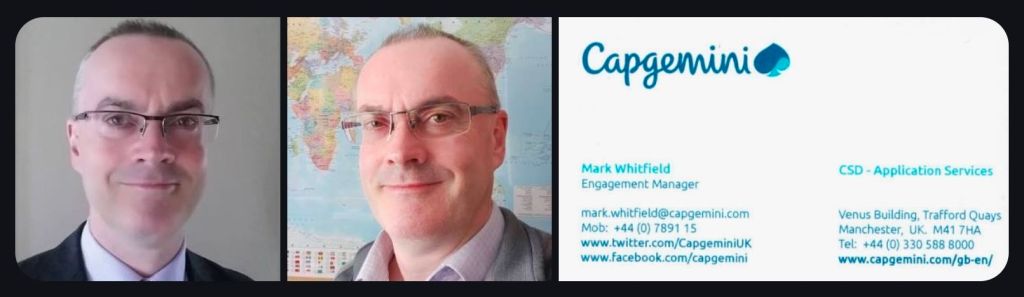
Mark Whitfield – projects timeline history from 1990

Mark Whitfield is an SC-cleared Senior IT Project Manager with over 30 years of experience delivering high-availability financial, cloud, and digital transformation projects. Over his career, he has transitioned from deep technical engineering on HPE NonStop (Tandem) mainframe systems to leading major corporate and public sector Agile and Waterfall software rollouts.

A comprehensive, year-by-year timeline breakdown of his project history and clients since 1990 is outlined below.

💻 The Technical Era (1990–1995)

During this period, Whitfield worked as a Programmer and Lead Analyst for The Software Partnership (acquired by Deluxe Data in 1994). He focused on electronic banking software (sp/ARCHITECT-BANK) on Tandem Mainframe Computers.

  • 1990–1992: Barclays Bank – Placed on-site at Knutsford, Cheshire to design and code software for the high-profile Barclays Business Master II (BBM II) electronic desktop banking project.
  • 1992–1993: Girofon (Denmark) – Developed a touch-tone phone banking suite. This allowed clients to use automated voice/menu-driven systems via a Periphonics VRAM device to fetch live balances from back-end mainframes.
  • 1993–1994: TSB & Bank of Scotland – Conducted early-era digital investigations, logic design, and mainframe coding for inter-account desktop money transfers.
  • 1994–1995: Rabobank – Headed software optimization, custom electronic coding patches, and on-site deployment validation for international operations.

🛡️ Monitoring & Infrastructure Era (1995–2013)

Whitfield joined Insider Technologies Limited (ITL) in Salford Quays, specializing in platform diagnostics, transaction monitoring, and financial logging systems for mission-critical infrastructure.

  • 1995–1996: Internal ITL Product R&D – Core developer on the Reflex monitoring suite (Reflex 80:20), creating platform health and diagnostic plug-in modules.
  • 1997–1998: CRESTCo (now Euroclear) – Brought in as a technical infrastructure consultant to run benchmark tests on newly released Tandem S7000 processing hardware nodes.
  • 1999–2001: Bank of England / Deutsche Bank – Deployed real-time tracking protocols utilizing ITL’s MultiBatch scheduling architectures and file monitors.
  • 2002–2003: Hewlett-Packard (HP) – Successfully managed the rigorous certification process for the first HP OpenView Operations (OVO) Smart Plug-In built for the NonStop mainframe environment.
  • 2004–2007: Alliance & Leicester (now Santander) / HSBC – Implemented transaction log extraction protocols (RTLX and Sentra) to audit automated teller machine (ATM) logs.
  • 2008–2010: Saudi Arabian Retail Bank – Acted as Project Manager overseeing the cross-border rollout of a high-volume ATM and Point-of-Sale (POS) monitoring system.
  • 2011–2013: Global Payments / Standard Chartered – Integrated transaction monitoring capabilities with external corporate frameworks such as TIVOLI and XPERT24 using ACI’s XPNET architecture.

🏦 Senior Project Management & Retail Banking (2013–2016)

This timeframe marked a total transition into senior contract project management, dealing directly with multi-million-pound programs.

  • 2013–2014: Lloyds Banking Group (LBG) – Augmented into Wincor Nixdorf as the IT Project Manager leading a £5+ million workstream. This was part of LBG’s comprehensive Self-Service Software Replacement (SSSR) initiative to modernise legacy ATM software.
  • 2014–2016: Betfred – Senior IT Project Manager inside an Agile Scrum structure. Directed cross-functional software vendors to deliver updates for mobile apps (iOS/Android), fraud detection systems, and payment gateways for their digital sportsbook platforms.

🌐 Enterprise Consulting & Cloud Transformations (2016–Present)

In January 2016, Whitfield joined global consultancy firm Capgemini as a Senior client-facing Engagement/Delivery Manager.

  • 2016–2017: Aerospace & Defence Client – Managed an enterprise-level integration project to deploy a Salesforce-driven Single Customer View (SCV) portal platform.
  • 2017–2018: Jaguar Land Rover (JLR) – Served as Project Manager for the iFAB Middleware Project, a complex 12-month architecture development program linking global manufacturing supply components.
  • 2018–2019: MuleSoft (A Salesforce Company) – Augmented directly into MuleSoft’s London headquarters as a Delivery Manager, spearheading API-led connectivity deployments via the Anypoint Platform.
  • 2019–2021: UK Government Agency (UK Gov) – Commanded a major Hybrid Cloud Migration initiative to refactor, re-host, and re-platform 130 legacy agency software applications directly to cloud servers.
  • 2022: UK Utility Sector (Welsh Water / Scottish Water) – Dual-management lead executing a £0.5 million contract to migrate an aging, on-premise document management program (EQS) onto the Microsoft Azure cloud via Enablon.
  • 2023–2026: Public Sector & Core Tooling (Current) – Managing high-value middleware and API integrations for entities like the Royal Mail Group (RMG), NATS, and regional government bodies. Concurrently authors a widely used portfolio of commercial project management templates (RAID logs, RACI matrixes, and MS Project MPP layouts) published via PROject Templates.

Completing the Stakeholder List using Process Analysis

Completing the Stakeholder List using Process Analysis

Completing a stakeholder list using process analysis involves tracing the end-to-end lifecycle of a process to identify every individual, team, or organization that interacts with, influences, or is impacted by it. This ensures no hidden users, bottlenecks, or approvers are missed.

A four-step approach will ensure your list is thorough and actionable:

1. Map the Process Flow

Create a step-by-step flowchart of the current or future process. Break it down into key phases: Inputs, Activities, Outputs, and Outcomes. This visual map acts as a blueprint to spot every touchpoint where someone is involved.

2. Identify Stakeholders at Each Touchpoint

Go through each phase of your process map and ask the following dependency questions to pinpoint roles:

  • Input Stage: Who supplies the data, materials, or funding? (e.g., vendors, regulators, finance departments)
  • Activity Stage: Who performs the work or oversees it? (e.g., project teams, department managers, QA testers)
  • Output Stage: Who receives the final deliverable? (e.g., end-users, clients, customers)
  • Outcome Stage: Who is affected by the long-term results? (e.g., the community, executives, maintenance teams)

3. Classify and Prioritize

Once your comprehensive list is built, categorize stakeholders using the Power/Interest Matrix. This helps allocate your engagement efforts efficiently:

  • High Power, High Interest: Manage closely and collaborate heavily (e.g., Project Sponsors, Product Owners).
  • High Power, Low Interest: Keep satisfied but do not over-communicate (e.g., Regulators, Steering Committees).
  • Low Power, High Interest: Keep informed and consult regularly (e.g., End-users, Support Staff).
  • Low Power, Low Interest: Monitor with minimal effort (e.g., Peripheral departments).

4. Document and Review

Log all identified stakeholders in a Stakeholder Register. Key details to capture include:

  • Stake / Impact: How the process affects them (or vice-versa).
  • Expectations: What they need from the process.
  • Engagement Strategy: How and how often you will communicate with them.

Completing the Stakeholder List using Process Analysis

Wincor Nixdorf Overview & Timeline by Era and Year

Wincor Nixdorf was a premier global provider of IT solutions, hardware, software, and services tailored for retail banks and the retail industry.

Headquartered in Paderborn, Germany, the company historically commanded roughly 35% of the global automated teller machine (ATM) market and stood as a dominant force in electronic point-of-sale (EPOS) systems.

Its operations focused deeply on business process optimisation, automated cash handling, and retail self-checkout systems. In 2016, Wincor Nixdorf merged with its US rival Diebold, Inc., creating the modern consolidated market leader, Diebold Nixdorf.

Detailed Historical Timeline

The history of Wincor Nixdorf spans several distinct strategic eras, tracing its evolution from a post-war calculator workshop into a modern global fintech titan.

Era 1: The Founding & Decentralised Computing (1952–1989)

This era was defined by entrepreneur Heinz Nixdorf, who pioneered small-to-medium business computing and electronic banking terminals across Europe.

  • 1952: Heinz Nixdorf establishes Labor für Impulstechnik in Paderborn, Germany. The small enterprise builds electronic calculators for businesses rebuilding in post-war Europe.
  • 1964: The company shifts from acting as a third-party component supplier to marketing office calculators and billing systems under its own brand name. []
  • 1968: Following corporate acquisitions, the company officially rebrands as Nixdorf Computer AG and develops some of the world’s earliest decentralized minicomputers.
  • 1969: The firm enters the North American market by purchasing the electronics division of the US office equipment manufacturer Victor Comptometer.
  • 1971: Secures its first landmark international banking contract, supplying 1,000 terminals to the Swedish banking industry.
  • 1978: Global sales cross DEM 1 billion, and the workforce grows to over 10,000 employees globally.
  • 1982: Expands its engineering breadth by forming a dedicated corporate telecommunications division.
  • 1984: Launches its initial public offering (IPO), floating shares publicly on the Frankfurt Stock Exchange.
  • 1986: Founder Heinz Nixdorf suddenly dies of a heart attack at a corporate event. The company struggles to pivot from hardware-locked minicomputers to emerging open personal computer architectures.
  • 1989: Amid intensifying global hardware margins and strategic missed steps, corporate financial losses top DEM 1 billion.

Era 2: The Siemens Integration & Corporate Carve-Out (1990–1998)

During this stage, corporate giant Siemens rescued and absorbed the distressed business, later reorganizing its retail and banking assets into a specialized standalone vehicle.

  • 1990: Siemens AG steps in to purchase the shares of Nixdorf Computer AG, officially merging it with its own Data Information Services division to create Siemens Nixdorf Informationssysteme (SNI) AG.
  • 1992: SNI expands heavily across European IT markets, operating as a distinct, specialized computing arm under the Siemens umbrella.
  • 1996: Becomes the largest IT company in Germany and the second largest across the European continent.
  • 1998: Siemens restructures its computing strategy; it sells its personal computer division to Acer and spins off the highly profitable banking and retail segments into a new unit: Siemens Nixdorf Retail and Banking Systems GmbH.

Era 3: Private Equity Buyout & The Rise of Wincor Nixdorf (1999–2015)

This period marked the official birth of the independent “Wincor Nixdorf” brand, characterized by aggressive global expansion, software-driven solutions, and public market listing.

  • 1999: Private equity firms Kohlberg Kravis Roberts (KKR) and Goldman Sachs Capital Partners complete a buyout of the Siemens unit. The company is formally renamed Wincor Nixdorf GmbH.
  • 2000: Launches major end-to-end IT outsourcing and infrastructure managed services alongside its standard terminal hardware.
  • 2004: On 19 May, Wincor Nixdorf successfully returns to the public markets, listing as Wincor Nixdorf AG on the Frankfurt Stock Exchange via a high-performing IPO.
  • 2006: Longtime Chief Executive Officer Karl-Heinz Stiller resigns from the board, leaving a structurally sound company expanding deep into automated cash recycling and software.
  • 2009–2014: Deploys multi-vendor banking software and automated checkout machines worldwide, expanding operations across roughly 100 countries.
  • 2015: Reports global revenues of €1.8 billion, split roughly 65% in banking services and 35% in retail point-of-sale solutions. On 23 November, US rival Diebold announces a formal business combination agreement to acquire the company.

Era 4: The Diebold Nixdorf Consolidation (2016–Present)

This current era represents the unification of American and European ATM powerhouses to navigate shifting brick-and-mortar financial landscapes.

  • 2016: Diebold Inc. officially completes its $1.8 billion voluntary public takeover of Wincor Nixdorf AG on 15 August. The consolidated global giant begins unified operations as Diebold Nixdorf on 16 August.
  • 2017: The UK Competition and Markets Authority (CMA) formally clears the merger following a comprehensive antitrust review, requiring Diebold to divest its legacy UK customer ATM operation to avoid localized market monopoly.
  • 2021: Capitalizing on self-checkout shifts accelerated by the pandemic, the combined entity launches its next-generation DN Series™ EASY self-service retail product line.
  • 2023: Burdened by legacy debt structures, supply chain disruptions, and pandemic operational challenges, Diebold Nixdorf files for a prepackaged Chapter 11 bankruptcy protection in June. The restructuring swiftly sheds $2.1 billion in debt. By August, it successfully emerges from bankruptcy, resuming trading on the New York Stock Exchange (NYSE).
  • 2024–2026: The restructured firm shifts its focus from low-margin hardware to high-margin managed services and cloud software, stabilizing its global operations with annual revenues reaching $3.75 billion.
Wincor Nixdorf, Mark Whitfield, above and beyond awards, Customer Satisfaction and Commitment to Excellence
Mark Whitfield, above and beyond awards, Customer Satisfaction and Commitment to Excellence, Wincor Nixdorf

Diebold Wincor Nixdorf Overview & Timeline by Era and Year

HPE NonStop MultiBatch is an advanced workload automation & scheduling manager

HPE NonStop MultiBatch is an advanced workload automation and scheduling manager designed explicitly for mission-critical HPE NonStop environments. Originally created to support complex scheduling needs in banking and finance, it automates job flows and parallel processing across multiple CPUs.

Detailed Description

The original NonStop batch scheduler (NetBatch) was built for basic sequential job queues. As large enterprises required deeper integration with databases, real-time events, and complex parallel schedules, MultiBatch (developed originally by Insider Technologies, now part of ETI-NET) emerged.

  • Core Functions: It automates job submission, tracks job flow, handles conditional parameters, manages event timers, and triggers jobs “On Demand” based on real-time system events.
  • High Availability: Like the underlying HPE NonStop system, MultiBatch is engineered for fault tolerance, ensuring automated workflows do not fail due to hardware or software interruptions.
  • Enterprise Integration: It supports Open System Services (OSS) and standardizes auditing, security, and menu-based operations across distributed NonStop systems.

Breakdown by Year / Era

The evolution of MultiBatch parallels the architectural changes of the HPE NonStop platform.

1985–1990s: Tandem Era & Origin

  • 1985: Conceived. MultiBatch was developed by Insider Technologies specifically to meet the complex batch schedule demands of large financial institutions that exceeded native NetBatch capabilities.
  • Early 1990s: The system was officially rolled out for Tandem processors to automate transaction data loads and daily reconciliation tasks for ATMs and financial ledgers.

1997–2014: Compaq & Early HP Era

  • 1997: Following Compaq’s acquisition of Tandem, MultiBatch was adapted to support the NonStop Himalaya systems and server software, which expanded data and network scaling.
  • 2000s: During the HP Itanium and MIPS Era, MultiBatch evolved to support more dynamic processing pools and expanded job limits, increasing fault tolerance under the HP-UX integrated environment.

2014–2020: Transition to NonStop X & Modernization

  • 2014: As HPE shifted the platform to standard Intel x86-64 processors (NonStop X), MultiBatch was updated for L-series operating systems to run efficiently on high-speed InfiniBand fabrics.
  • 2019: Insider Technologies made significant updates to MultiBatch to modernize the GUI and improve code stability for the new generation of NonStop users transitioning to X-series hardware.

2020–Present: MultiBatch 10 & 10.2

  • 2023: MultiBatch 10 was released. It included a new Operations GUI Server, significantly increased configuration limits (e.g., supporting up to 2,500 jobs), enhanced conditional parameters, improved processing of Open System Services (OSS), and “On Demand” job capabilities.
  • 2025: MultiBatch 10.2 was released by ETI-NET. This update focused heavily on digital resilience, providing deep alignment with the NIST Cybersecurity Framework to protect against operational and cyber threats.
  • Current Status: Fully integrated into modern systems supporting the HPE GreenLake consumption-based cloud model, MultiBatch 10.2 serves as the primary automation engine for large enterprises executing complex HTAP (Hybrid Transaction/Analytical Processing) workloads.

The Software Partnership was a highly specialized software house in Runcorn

The Software Partnership (TSP) was a highly specialized British software house based in Runcorn, Cheshire, that played a key role in early cutting-edge electronic banking software. The firm famously developed sp/ARCHITECT-BANK, an innovative enterprise banking system built explicitly for Tandem Computers (now HPE NonStop) fault-tolerant server systems. I was based there between 1990 and 1995.

The Software Partnership Logo, Runcorn Software House, Deluxe Data
The Software Partnership Logo

Below is a detailed overview of the company’s operational history, alongside the corresponding hardware/software architectural eras of the HPE NonStop platform it relied upon.


Detailed Overview

  • Core Focus: The Software Partnership specialized in online transaction processing (OLTP) and electronic automated banking software. Long before the internet became mainstream, TSP engineered early desktop access environments for corporate bookkeeping and inter-account bank transfers.
  • Key Product: Its flagship software suite, sp/ARCHITECT, ran on Tandem’s highly unique, redundant architecture. The software handled complex high-volume retail transactions, ATM networking, and ledger balances.
  • Major Clients: High-profile financial institutions deployed TSP’s systems, including TSB (Trustee Savings Bank), Bank of Scotland, Rabobank, and Denmark’s Girofon.
  • Legacy: TSP initiated a massive lineage of financial tech operations in the Runcorn/Warrington area. After subsequent buyouts and transitions, its corporate DNA integrated into modern banking giants, eventually operating under Fidelity National Information Services (FIS).

Detailed Timeline by Era and Year

The history of TSP mirrors the evolution of the underlying fault-tolerant architecture originally built by Tandem, later managed by Compaq, HP, and currently Hewlett Packard Enterprise (HPE).

Era 1: The Tandem Founding & TSP Inception (Mid-1970s – 1989)

This era is marked by Tandem’s creation of the fault-tolerant server market, which birthed the niche that TSP filled.

  • 1974–1976: Tandem Computers is founded and ships its first 16-bit NonStop I (T/16) system, utilizing complete component redundancy to guarantee close to zero downtime for the financial industry.
  • 1981: Tandem introduces the NonStop II, transitioning to battery-backed DRAM memory and enabling early 32-bit addressing.
  • Mid-1980s: The Software Partnership (TSP) is co-founded by Nigel Walsh. It establishes offices first in Timperley (Wingate Drive), then moves to Crowngate (Norton House) in Runcorn. The team begins developing online banking architectures explicitly for Tandem OS (Guardian) and early UNIX nodes.
  • 1989: Tandem launches the NonStop Cyclone, a high-end mainframe system featuring superscalar CPUs and fiber-optic interconnects.

Era 2: The MIPS RISC Transition & Corporate Buyouts (1990 – 1999)

TSP reaches peak software deployment exactly as Tandem shifts its internal processor technology.

  • 1990: TSP establishes itself as a major regional employment hub for software engineers following a massive boom in terminal banking technology. Software programmers deploy sp/ARCHITECT-BANK code for massive retail banks internationally.
  • 1991: Tandem shifts its structural hardware away from proprietary chips, introducing its first MIPS RISC-based NonStop systems.
  • 1992: TSP expands its Runcorn footprint, moving to custom facilities at Wingate House on Northway, Runcorn.
  • 1994: TSP is acquired by American firm Deluxe Electronic Payment Systems (a division of Deluxe Corporation, one of the largest check printers and transaction processors in the US). The corporate name transitions to Deluxe Data.
  • 1997: Due to shifts in the enterprise hardware landscape, Compaq Computer Corporation acquires Tandem Computers for $3 billion, taking over the NonStop lineage.

Era 3: The Itanium Migration & eFunds Realignment (2000 – 2013)

The architecture sheds its proprietary processors for industry standards, and TSP’s corporate legacy transforms.

  • 2000: Deluxe Data’s electronic payment wing splits off and rebrands as EFD eFunds.
  • 2001–2002: HP (Hewlett-Packard) merges with Compaq, absorbing the NonStop portfolio. Simultaneously, HP begins shifting NonStop servers from MIPS architectures to Intel Itanium processors.
  • 2007: Following industry consolidation, the corporate remnants of the original TSP Runcorn operations are absorbed into Fidelity National Information Services (FIS) and relocated to Aegon House in Daresbury, Warrington.

Era 4: The Modern HPE NonStop X & Virtualization Era (2014 – Present)

The legacy of the high-availability software pioneered in Runcorn culminates in cloud and x86 integration.

  • 2014: HP introduces NonStop X, completely migrating the underlying architecture to Intel x86-64 processors and implementing InfiniBand connectivity fabrics.
  • 2015: Hewlett-Packard officially splits into two entities; the core mission-critical banking platform continues its five-decade lineage under Hewlett Packard Enterprise (HPE).
  • 2020s–Present: HPE modernizes the software architecture to support Virtualized NonStop Software (vNS). Modern variants allow banking systems to run mission-critical apps seamlessly inside enterprise private clouds and scalable HPE GreenLake consumption models with 100% fault tolerance.
Deluxe Data International Operations, Wingate House, Northway, Runcorn, Cheshire
The Software Partnership, Norton House, Crowngate, Runcorn, Cheshire

⚙️ sp/ARCHITECT

sp/ARCHITECT (specifically sp/ARCHITECT-BANK) was a foundational electronic banking and transaction framework engineered in the 1990s by The Software Partnership (a UK-based fintech house later acquired by Deluxe Data). It primarily powered corporate banking portals and telephone-driven banking services.

The platform acted as highly reliable middleware, serving as a bridge between the customer and back-end banking mainframes. The breakdown of its architecture, infrastructure, and core functions includes:

⚙️ Architectural Breakdown

  • Hardware & OS: Built to run natively on fault-tolerant Tandem NonStop computers (now HPE NonStop). This “shared-nothing” architecture was designed for absolute transactional uptime and zero data loss.
  • Programming Languages: Built using legacy enterprise standards. Code was primarily written in COBOL85 and TAL (Transaction Application Language) native to the Tandem ecosystem.
  • Middleware Integration: Utilized Tandem-specific middleware like Pathway and Remote Server Call (RSC) to handle client-to-host communications.

💻 Core Capabilities & Modules

  • Electronic Delivery Framework: Served as a multi-channel framework, accommodating a wide variety of early access devices like desktop clients, UNIX workstations, and smart phones.
  • Transaction Handlers: Deployed custom scripts/handlers that enabled end-users to securely access real-time account data and perform early inter-account transfers without visiting a physical branch.
  • Testing Utilities: Included proprietary simulation tools like sp/TESTBED, acting as a PC-to-host test harness so developers could emulate user queries and transaction flows.

🏦 Industry Footprint

  • European Rollout: Heavily adopted by large European financial institutions, including TSB, Rabobank, Bank of Scotland, and Girofon.
  • BBM II Integration: Powered landmark corporate desktop banking solutions like Barclays Business Master II (BBM II), long before modern web browser banking existed.
  • Evolution: Following its acquisition, its design philosophies eventually evolved into Deluxe Data’s broader CONNEX suite of payment solutions.

Capgemini Engagement Manager is a senior-level, client-facing role

A Capgemini Engagement Manager is a senior-level, client-facing role responsible for end-to-end delivery of complex business and technology transformation programs. They bridge strategy and execution, acting as a trusted advisor to clients while maintaining operational and financial control over projects.

Mark Whitfield PM, Capgemini Engagement Manager from 2016
Engagement Manager, from 2016

Key Responsibilities

  • End-to-End Delivery: Overseeing projects from start to finish, ensuring milestones, SLAs, and contractual obligations are met on time and within budget.
  • Financial Accountability: Managing project budgets, revenue tracking, forecasting, invoicing, and contract compliance.
  • Stakeholder Management: Acting as the primary client point of contact while aligning cross-functional and globally distributed delivery teams.
  • Risk & Governance: Identifying potential roadblocks, proactively managing risks, and ensuring strict adherence to project governance standards.
  • Business Growth: Spotting opportunities for additional business and supporting bid activities for account expansion.
Mark Whitfield, Engagement Management EM Level 2 Exam Passed 2017

Ideal Candidate Profile

  • Experience: Typically requires a degree in Business, Engineering, or IT, combined with at least 5+ years of experience in project management or service delivery within a B2B environment.
  • Skills: Strong commercial acumen, proficiency in formal methodologies (e.g., Agile, ITIL), and the ability to lead diverse, multinational teams.
C&CA UK's Communications & Engagement Award Winner 2022, Cloud & Custom Applications, Mark Whitfield
C&CA UK’s Communications & Engagement Award Winner 2022, Cloud & Custom Applications, Mark Whitfield

Explore current vacancies and learn more about the EM community through the Capgemini Careers Portal or their specific Engagement Management Careers overview.

Capgemini Engagement Manager, from 2016.

Capgemini Campus – Serge Kampf Les Fontaines, Chantilly, France – Advanced Engagement Management Course – November 2017 Class – 2nd from left, Mark Whitfield
Capgemini Campus – Serge Kampf Les Fontaines, Chantilly, France – Advanced Engagement Management Course – November 2017 Class – 2nd from left

Mark Whitfield – Senior Project Manager – training received

Mark Whitfield, an SC cleared Senior Project Manager based in the Manchester area, has over 30 years of experience transitioning from a software engineer to an IT program leader.

His extensive technical and project management training spans methodologies, cloud infrastructure, and software applications.

A detailed breakdown of his training, certifications, and academic background includes:

Project Management Methodologies

  • PRINCE2 Practitioner: Certified via the ILX Group.
  • Agile SCRUM: Trained in-house with RADTAC.
  • Advanced Engagement Management: Level 2 certification completed via Capgemini.
  • Project Fundamentals: Completed “Fundamentals of Successful Project Management” and “Managing Multiple Projects” via Skillpath.
  • Microsoft Project: Microsoft Project ’98 certified.

Technical & Cloud Training

  • Microsoft Azure: AZ-900 Microsoft Certified Azure Fundamentals.
  • MuleSoft: Completed outcome-based delivery training and is a specialized Delivery Manager.
  • Technical Programming: Includes foundational database and software language training, such as C++ and MS SQL 2000 query training, as well as VPS and Tandem (HPE NonStop) technical/development courses.
  • Productivity: Completed Microsoft Excel Refresher and Expert skills training (Udemy and Microsoft).

Formal Education

  • Higher National Diploma (HND): Graduated with a Distinction (top) in Computing (1990).

You can review his detailed credential breakdown on the PROject Templates Professional Training Page.