

The fundamental difference in project delivery ownership is that a Project Manager (PM) owns the overall project outcomes (Scope, Schedule, Budget, Risks), whereas a Scrum Master (SM) owns the delivery process, team effectiveness, and Agile practices.
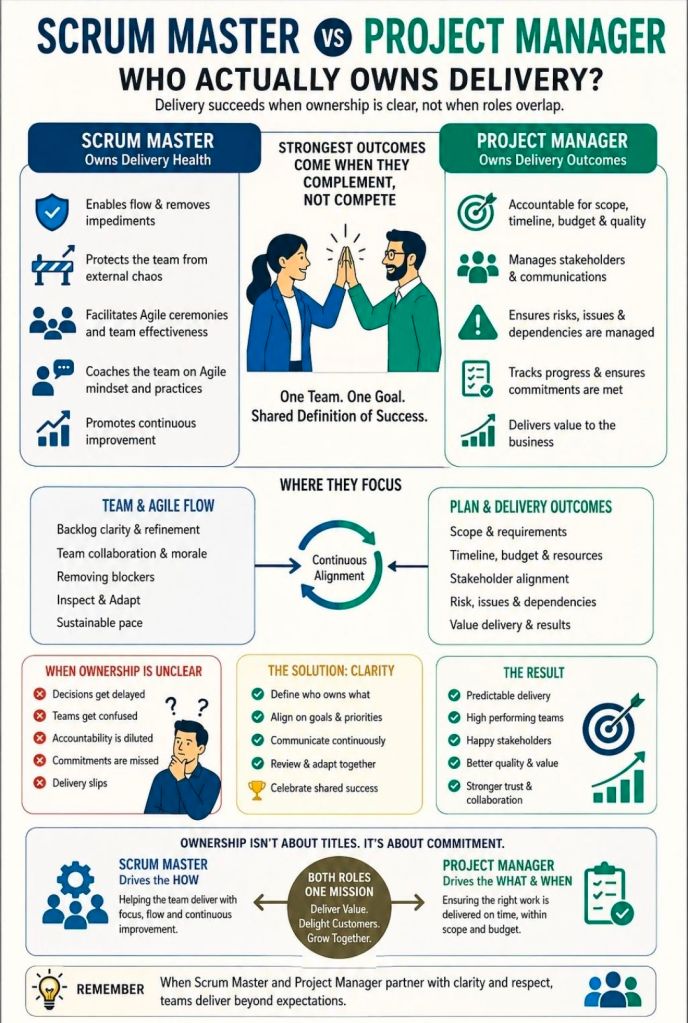
who owns delivery
A PM directs what needs to happen externally, while an SM coaches how the team works internally.
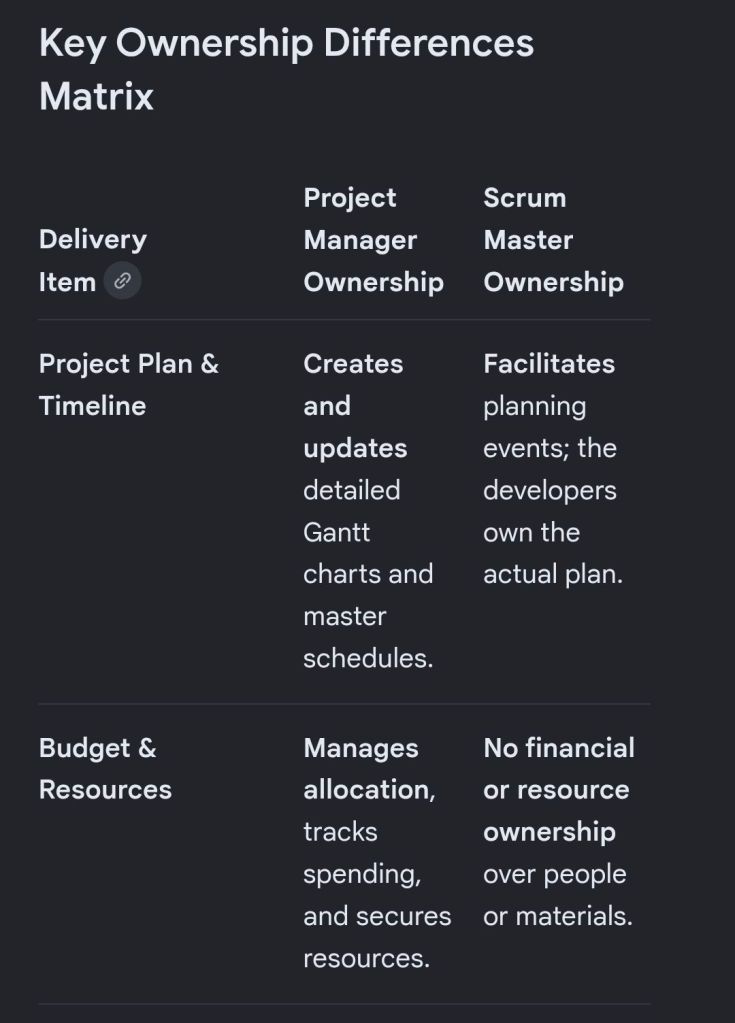
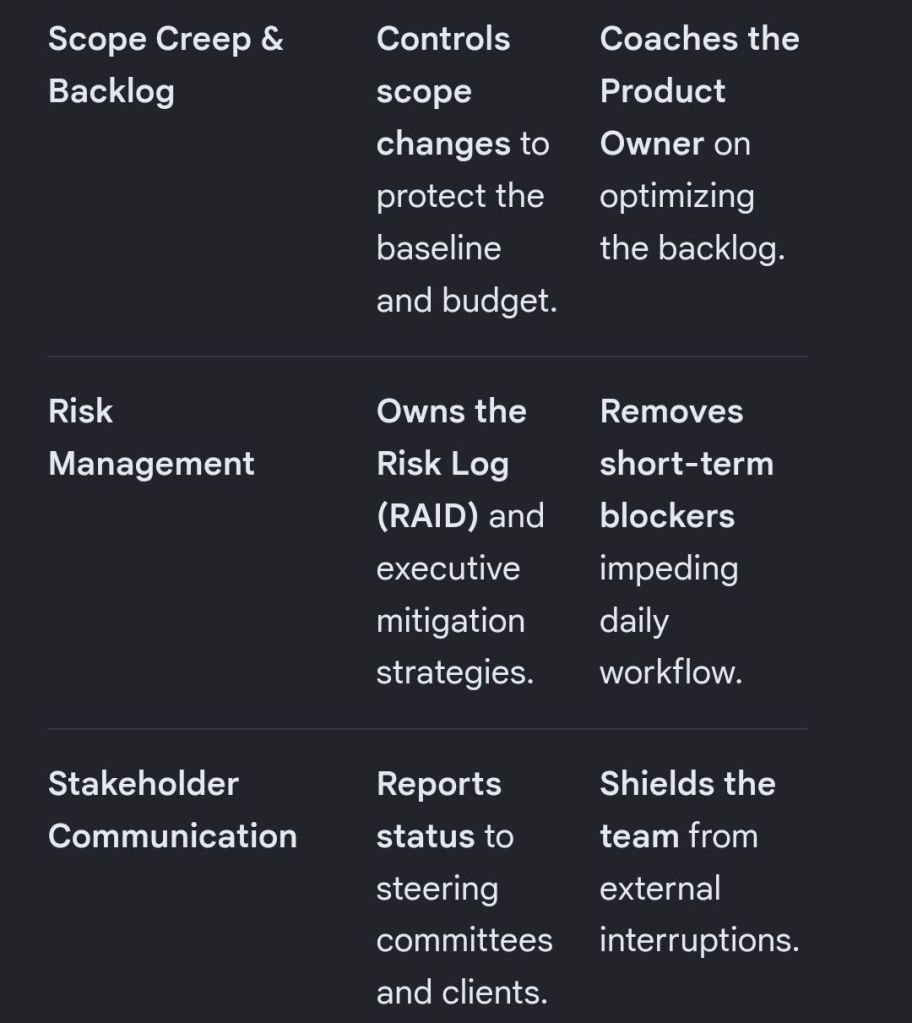
Detailed Ownership Breakdown
1. Scope, Requirements, and Product Backlog
- Project Manager: Directly manages the agreed-upon project scope. They review change requests, evaluate how scope changes impact the budget, and negotiate modifications with stakeholders. They are legally or contractually accountable for delivering the specified scope.
- Scrum Master: Holds no direct ownership over the product content or scope. Instead, they coach the Product Owner on how to effectively manage the Product Backlog, draft clear user stories, and refine items for upcoming sprints.
2. Schedule, Milestones, and Timeline
- Project Manager: Owns the macro-level timeline. They track critical path milestones, define task dependencies across multiple teams, and are accountable to executive management if a delivery deadline is missed.
- Scrum Master: Owns the micro-level iteration cadence (sprints). They do not assign tasks or dictate schedules. Instead, they facilitate Sprint Planning, ensuring the team commits to a sustainable pace of predictable delivery.
3. Budget and Financial Accountability
- Project Manager: Fully owns the project’s financial performance. They forecast costs, track actual spend against the budget, manage vendor contracts, and seek approval for capital expenditures.
- Scrum Master: Has zero financial accountability or budget ownership. Their focus is entirely operational—maximizing value and efficiency through team performance rather than managing corporate balance sheets.
4. Issue Resolution and Risk Management
- Project Manager: Focuses on long-term, macro-level risks (e.g., market shifts, organizational changes, vendor failures). They maintain formal risk registers and coordinate executive-level mitigation plans.
- Scrum Master: Focuses on immediate, tactical impediments. They own the removal of daily “blockers”—such as technical hurdles, broken tools, or communication gaps—that slow down the development team.
5. Team Governance and Task Assignment
- Project Manager: Operates with a directive or orchestrating leadership style. They often assign work packages, manage resource utilization, and hold individuals accountable for specific task deadlines.
- Scrum Master: Operates as a servant-leader and coach. They have no direct authority over team members and do not assign tasks. They empower the team to self-manage, collaborate, and decide collectively how to accomplish the work.
Summary of Success Metrics
- The Project Manager succeeds when the project is delivered on time, within budget, and according to specifications.
- The Scrum Master succeeds when the team becomes highly self-managing, continuously improves, and predictably delivers increments of high value.


