The history of project management has evolved from ancient manual coordination to highly sophisticated, digital-first methodologies.
Pre-20th Century: The Era of Ancient Marvels
During this era, project management was characterized by massive labour forces and basic resource coordination without standardized scheduling tools.
2570 BC: Completion of the Great Pyramid of Giza. Documentation shows managers were assigned to each of the four faces to oversee progress.
208 BC: Construction of the Great Wall of China. Labour was systematically organized into groups of soldiers, civilians, and criminals.
1850s: Construction of the Pacific Railroad. This is often cited as one of the first large-scale industrial project management undertakings in the U.S..
1900–1950: The Birth of Modern Project Management
This era introduced scientific management principles and the first visual scheduling tools.
1917: Henry Gantt develops the Gantt Chart, a radical tool for visualising schedules that remains a global standard today.
1931–1936: Construction of the Hoover Dam. This project was a major early adopter of Gantt’s scheduling techniques.
1942–1945: The Manhattan Project. This complex R&D effort pioneered the use of large-scale task coordination and resource management.
1950–1980: The Era of Management Science
Driven by the Cold War and space race, this period saw the creation of mathematical scheduling techniques.
1956: AACE International is formed, focusing on cost engineering.
1957–1958: Development of Critical Path Method (CPM) by DuPont and Program Evaluation and Review Technique (PERT) by the U.S. Navy.
1962–1975: Introduction of Work Breakdown Structure (WBS) by the DoD, founding of IPMA and PMI, and development of PROMPT (later PRINCE).
1980–2000: The Computing Revolution
Personal computers allowed project management software to proliferate into the private sector. Key milestones included the early Scrum framework and the initial PMBOK Guide release.
1989–1997: Widespread adoption of Earned Value Management (EVM), release of PRINCE2, and development of Critical Chain Project Management (CCPM).
2000–Present: The Agile and Digital Era
Modern project management emphasizes flexibility, speed, and digital tools.
2001: The Agile Manifesto is published.
2012–2021: Release of ISO 21500, major updates to PRINCE2 and PMBOK to integrate Agile, and the shift to performance-based standards in PMBOK 7th Ed.
Project Management evolution timeline by era
Project management has evolved from ancient engineering feats to a highly structured, data-driven discipline. Below is a comprehensive timeline of its historical development and the evolution of its core methodologies.
Ancient & Early Eras
2570 BC: The Great Pyramid of Giza – Completed with record-keeping and oversight for each of the four faces, demonstrating early forms of planning and control.
208 BC: The Great Wall of China – Built with a massive labour force organised into specific groups: soldiers, ordinary people, and criminals.
1917: Gantt Chart – Developed by Henry Gantt, this scheduling diagram became a radical innovation for tracking project tasks chronologically.
The Mid-20th Century: Formalization
1956: AACE International Formed – Early practitioners of cost engineering and scheduling founded what is now the leading society for project control specialists.
1957: Critical Path Method (CPM) – Invented by DuPont to address chemical plant maintenance; it saved the company $1 million in its first year.
1958: PERT (Program Evaluation Review Technique) – Developed for the U.S. Navy’s Polaris project to analyse the minimum time needed for task completion.
1962: Work Breakdown Structure (WBS) – Mandated by the U.S. Department of Defense as a hierarchical tree structure for project deliverables.
1965: IPMA Founded – The world’s first project management association was started in Vienna as a global forum for networking.
1969: Project Management Institute (PMI) Launched – Founded to advance the profession, PMI has since become the primary publisher of global standards.
Late 20th Century: Methodology Proliferation
1975: PROMPTII & “The Mythical Man-Month” – Guidelines were created for computer projects, while Fred Brooks’s Brooks’s law observed that adding manpower to late software projects makes them later.
1984: Theory of Constraints (TOC) – Introduced by Dr. Eliyahu M. Goldratt, focusing on identifying system bottlenecks.
1986: Scrum – First named as a project management style for software development in a Harvard Business Review paper.
1989: PRINCE & Earned Value Management – The PRINCE method was developed for UK government IT projects; meanwhile, Earned Value Management (EVM) became an essential part of procurement.
1996: PRINCE2 – A more generic revision of PRINCE was published, applicable to any project type.
1997: Critical Chain Project Management (CCPM) – Invented to keep resources levelly loaded and flexible.
21st Century: Agile & Global Standards
2001: The Agile Manifesto – Written by 17 developers in Utah, codifying the principles of lightweight, iterative software development.
2006: Total Cost Management Framework – Released by AACE International as the first integrated process for portfolio and project management.
2012: ISO 21500:2012 – The International Organisation for Standardisation released its global guidance on project management.
2017: PMBOK 6th Edition & PRINCE2 Update – Updates reflected the integration of Agile practices into traditional project settings.
2021: PMBOK 7th Edition – Shifted toward a principle-based approach to help practitioners be more proactive and innovative.
The transition from massive, industrial room-sized mainframes to the “home computer” was driven by the invention of the microprocessor in the early 1970s.
The Pre-Home Era (1971–1976)
Before “home computers” existed as off-the-shelf products, they were sold as DIY kits for electronics hobbyists.
1971: Intel releases the 4004, the first commercial single-chip microprocessor.
1974: The MITS Altair 8800 is featured in Popular Electronics; it is widely considered the spark of the personal computer revolution.
1976: Apple Computer is founded. The Apple I goes on sale as a hand-soldered board for $666.66.
1976: MOS Technology releases the KIM-1, the first single-board computer kit.
The “1977 Trinity” & Early Adoption
In 1977, three computers were released that targeted ordinary consumers rather than just hobbyists.
Apple II: Features colour graphics and eight expansion slots, becoming a standard for schools and early home users.
Commodore PET 2001: The first “all-in-one” home computer with a built-in monitor and tape drive.
TRS-80 Model I: Sold through Radio Shack stores, making computers accessible on the high street for $399.
The 1980s Boom
This decade saw fierce competition between manufacturers and the rise of gaming and office productivity.
1980: Sinclair ZX80 launches in the UK as a very low-cost entry point into computing.
1981: The IBM PC is released, creating the “PC-compatible” standard that still dominates today.
1981: The Commodore VIC-20 becomes the first computer to sell over one million units.
1982: The Commodore 64 launches and eventually becomes the best-selling single computer model of all time.
1984: Apple launches the Macintosh, the first successful mass-market computer with a Graphical User Interface (GUI) and a mouse.
1985: The Amiga 1000 and Atari ST bring advanced multimedia and multitasking to the home.
Standardisation & The Modern Age (1990s–Present)
The market shifted away from proprietary “home computers” toward standardized “PCs” and portable devices.
1990: Microsoft Windows 3.0 is released, making GUI computing standard on IBM-compatible PCs.
1995: Windows 95 launches, moving the PC away from its MS-DOS roots and integrating internet support.
1998: The Apple iMac revitalizes Apple’s consumer line with an integrated, colourful design and USB ports.
2010: The Apple iPad introduces the “tablet” as a primary home computing device for many users.
2012: The Raspberry Pi launches, bringing home computing back to its DIY and educational roots.
The history of the home computer evolved from large, room-sized mainframes into the diverse, interconnected devices used today. This timeline categorises the evolution by era and key annual milestones.
The Pre-Home Era: Mainframes & Minicomputers (1940s–1960s)
Before computers could fit in a home, they were massive machines used by governments and corporations.
1945: ENIAC (Electronic Numerical Integrator and Computer) is completed as the first general-purpose electronic digital computer.
1951: UNIVAC I is delivered to the US Census Bureau, becoming the first commercial computer produced in the US.
1960: DEC PDP-1 is introduced, representing the first “minicomputer” that was smaller than its predecessors.
1965: The DEC PDP-8 launches, becoming the first commercially successful minicomputer.
The Hobbyist Era: The First Personal Computers (1970–1976)
The invention of the microprocessor allowed computers to become small enough for individuals to own, though they often required manual assembly.
1971: Intel 4004, the first single-chip microprocessor, is released.
1974: The MITS Altair 8800 appears on the cover of Popular Electronics, sparking the hobbyist revolution.
1976: The Apple I, a single-board computer kit designed by Steve Wozniak, is released.
The “1977 Trinity” & The Home Boom (1977–1983)
This era saw the transition from kits to fully assembled, consumer-ready “home computers”.
1977: The “1977 Trinity” launches: the Apple II (with colour graphics), the Commodore PET, and the Tandy TRS-80.
1980: Sinclair ZX80 is released as one of the first low-cost home computers in the UK.
1981: The IBM PC is released, setting the industry standard for hardware and software compatibility.
1981: The Osborne 1 is released as the first commercially successful portable computer.
1982: The Commodore 64 launches; it eventually becomes the best-selling single computer model of all time.
1982: The ZX Spectrum is released, becoming a cultural icon in Europe.
The Graphical User Interface (GUI) Era (1984–1994)
Computers moved away from text-based commands toward visual icons and mice.
1984: The Apple Macintosh launches, popularising the mouse and Graphical User Interface (GUI).
1985: The Commodore Amiga 1000 and Atari ST launch, bringing advanced multimedia and multitasking capabilities.
1990: Tim Berners-Lee creates the World Wide Web, fundamentally changing how home computers would be used.
1994: PowerPC processors are introduced by Apple, significantly increasing processing speed.
The Internet & Mobility Era (1995–Present)
Home computing shifted focus toward connectivity, portability, and eventually, the cloud.
1995: Windows 95 is released, integrating internet support and making PCs user-friendly for the masses.
1998: The Apple iMac launches, ditching the floppy drive and embracing USB.
2000s: Laptops begin to outsell desktops as portable computing gains momentum.
2010: The Apple iPad pioneers the modern tablet market, creating a new “casual computing” category.
2012: The Raspberry Pi is released, re-engaging a new generation in hobbyist computer building.
2020s: The rise of Cloud Computing and AI Integration (like the Apple M1 chip) shifts the focus from local storage to remote applications and machine learning.
Agile and Scrum have evolved from specific product development theories into a global standard for project management. While Scrum predates the Agile Manifesto by several years, it has become the most widely adopted framework within the Agile umbrella.
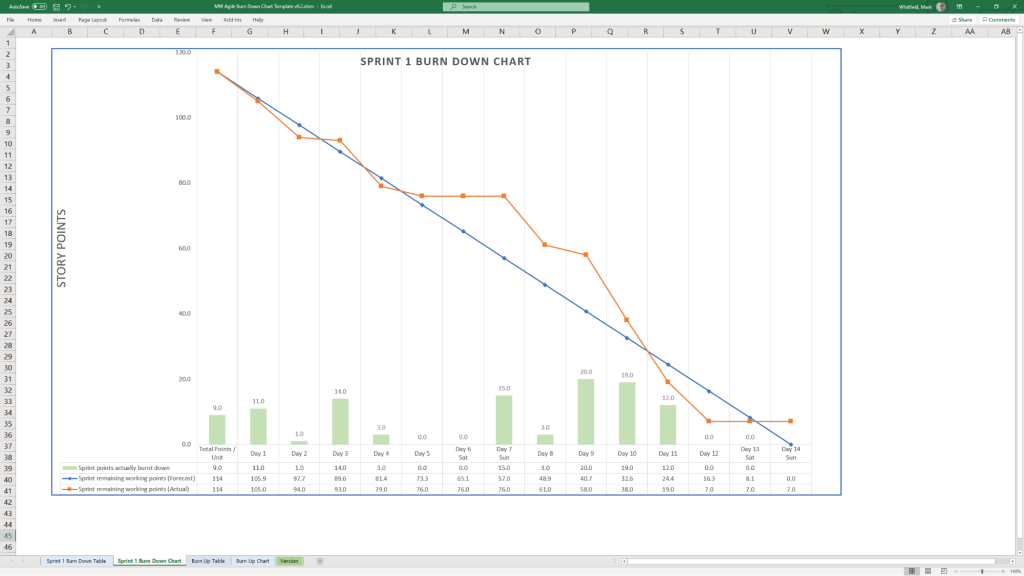
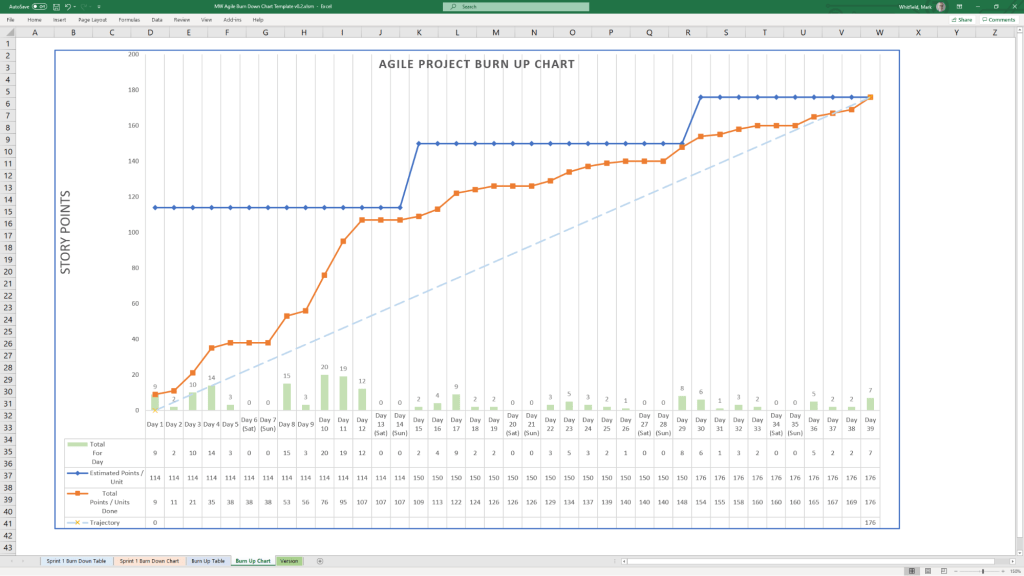
Agile Scrum Burn down and Burn up charts – can be downloaded from website banner
Evolution Timeline
1986: The Inspiration. Hirotaka Takeuchi and Ikujiro Nonaka publish “The New New Product Development Game” in Harvard Business Review, introducing the “rugby” approach to product development.
1993: The First Scrum. Jeff Sutherland and his team at Easel Corporation implement the first official Scrum.
1995: Public Presentation. Ken Schwaber and Jeff Sutherland formally present Scrum at the OOPSLA ’95 conference, introducing the concept of Sprints.
2001: The Agile Manifesto. 17 software developers meet in Utah to sign the Manifesto for Agile Software Development, codifying the 4 values and 12 principles that define Agile.
2002: Scrum Alliance Founded. The Scrum Alliance is established by Ken Schwaber, Mike Cohn, and Esther Derby to provide training and certifications like the Certified ScrumMaster (CSM).
2009: Founding of Scrum.org. Ken Schwaber founds Scrum.org to provide a more consistent approach to Scrum training and assessments.
2010: The First Scrum Guide. Sutherland and Schwaber publish the first Official Scrum Guide, providing a definitive, minimal definition of the framework.
2011–2017: Iterative Refinements. Updates to the Scrum Guide clarify the Daily Scrum purpose (2013) and emphasize Scrum Values (2016).
2020: The “Simplified” Guide. The latest 2020 Scrum Guide is released, focusing on making the framework less prescriptive and more applicable to non-software industries by removing technical jargon.
Key Shifts in Scrum Maturity
Prescriptive to Descriptive: Early Scrum was highly prescriptive about meetings and roles; modern Scrum focuses on Empiricism (Transparency, Inspection, Adaptation).
Team Autonomy: The 2013 update pivoted from “selecting tasks” to focusing on the Sprint Goal, empowering teams to decide how to achieve the objective.
Scaling Frameworks: As organizations grew, frameworks like SAFe (2011) and LeSS (2013) emerged to apply Scrum across hundreds of teams.
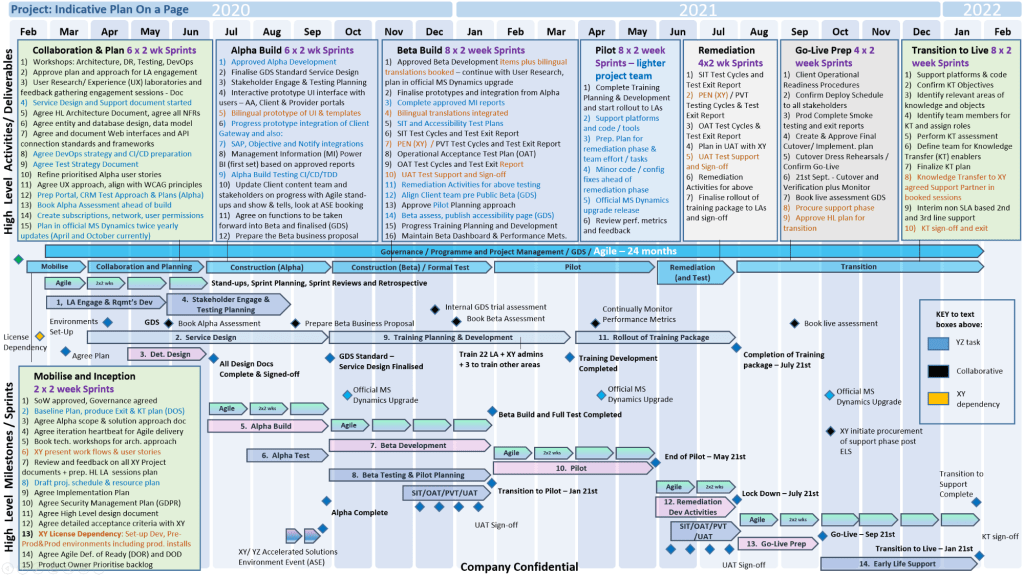
Plan On a Page POaP for an Agile Scrum project, available for download above
Agile’s history is a transition from rigid, manufacturing-based “Waterfall” models to flexible, people-centric frameworks. While the term was coined in 2001, its roots trace back to early 20th-century industrial practices and the “software crisis” of the 1960s.
Early Foundations (Pre-1990s)
Before Agile became a formal software methodology, its core principles of efficiency and iteration emerged from manufacturing and early computing.
1896: Sakichi Toyota introduced the “Stop and Notify” concept (Jidoka), a foundational Lean/Agile practice for immediate problem-solving.
1948: The Toyota Production System (TPS) established Lean manufacturing and the Kanban system to manage workflow.
1957:IBM began using incremental development on large software projects.
1970: Winston Royce published “Managing the Development of Large Software Systems,” which formalized the Waterfall Model but actually cautioned against its rigidity.
1986: Takeuchi and Nonaka published The New New Product Development Game, introducing the “rugby” metaphor for team-based development that inspired Scrum.
The Rise of “Lightweight” Methods (1990–2000)
Frustrated by Waterfall’s slow delivery, practitioners developed several “lightweight” frameworks.
1991:Rapid Application Development (RAD) popularized timeboxing and iterations.
1993:Jeff Sutherland and his team first implemented Scrum at Easel Corporation.
1994: The Dynamic Systems Development Method (DSDM) was created as a vendor-independent RAD framework.
Agile’s evolution is not just a 21st-century phenomenon but a response to decades of “software crises” and rigid industrial processes. Below is a comprehensive historical breakdown of Agile’s journey.
1. Pre-Digital Foundations (1910s – 1940s)
Long before software, the concepts of efficiency and waste reduction were born in manufacturing.
1911: Scientific Management.Frederick Taylor encouraged managers to adopt worker suggestions for efficiency, opposing rigid habits.
1940s: Lean Manufacturing (Toyota). Toyota pioneered the “Just-in-Time” method and Kaizen (continuous improvement) after observing American supermarkets.
1948: Toyota Production System. Introduction of Kanban for visual workflow management.
2. Early Iterative Development (1950s – 1970s)
The 1950s saw the first departures from strictly sequential “waterfall” planning.
1957: Incremental Development. IBM and Motorola teams, including Gerald Weinberg, used iterative methods indistinguishable from modern Extreme Programming (XP) for Project Mercury.
1968: NATO Software Engineering Conference. Formally identified the “Software Crisis” (projects being late and over budget), sparking a search for better methodologies.
1970: Waterfall Formalised (and Critiqued). Winston Royce described the Waterfall model but notably advocated for iterative releases to reduce risk.
3. The Proliferation of “Lightweight” Methods (1980s – 1990s)
Frustration with heavyweight, document-heavy processes led to several “Agile” precursors.
1986: “The New New Product Development Game.” Takeuchi and Nonaka published this HBR article, introducing the “Rugby” approach (teamwork over relay-race handoffs), which directly inspired Scrum.
1991: Rapid Application Development (RAD). James Martin introduced RAD, emphasising fast prototyping and client feedback.
1993–1995: The Birth of Scrum. Jeff Sutherland and Ken Schwaber formalised Scrum, presenting it at the OOPSLA ’95 conference.
1996: Extreme Programming (XP). Kent Beck introduced XP at Chrysler, focusing on technical excellence through practices like Pair Programming and Test-Driven Development.
4. The Agile Manifesto & Formalisation (2001 – 2010)
Agile moved from a collection of “lightweight” methods to a global standard.
2001: The Agile Manifesto. 17 developers met in Snowbird, Utah, to draft the Manifesto for Agile Software Development, establishing four core values and 12 principles.
2003: Lean Software Development. Mary and Tom Poppendieck adapted Toyota’s Lean principles specifically for software engineering.
2009: Software Craftsmanship. The Software Craftsmanship Manifesto emerged to refocus the community on the quality of the “craft” rather than just project management.
2010: The First Scrum Guide. Published as the definitive resource on Scrum framework rules.
5. Scaling and Modern Business Agility (2011 – Present)
Agile expanded beyond coding into enterprise-wide strategy.
2011: Scaled Agile Framework (SAFe). Dean Leffingwell launched SAFe to help large corporations apply Agile at scale.
2015–2017: Project Management Integration. Major bodies like AXELOS released PRINCE2 Agile, and the PMI introduced the Agile Certified Practitioner (ACP).
2020s: Beyond Software. Agile principles are now standard in marketing, HR, and hardware development through concepts like Business Agility.
HPE NonStop (formerly Tandem) has evolved through distinct architectural eras, each introducing specific programming languages and environments to maintain its legendary fault tolerance.
1. The Tandem Stack Machine Era (1974–1990)
This era focused on the proprietary 16-bit stack-based architecture (TNS), where software was designed to “fail-fast” and operate in process pairs.
Nov 1974: Tandem Computers founded by Jimmy Treybig.
May 1976:TAL (Transaction Application Language) launched with the first Tandem/16 (NonStop I) system. It was the only language available at launch, derived from HP 3000’s SPL.
Late 1970s:COBOL74, FORTRAN, and MUMPS were added to support business and scientific applications.
1981:NonStop II introduced support for 32-bit addressing, enabling larger application memory.
1983:SCOBOL (Screen COBOL) emerged alongside the Pathway transaction manager to handle terminal-based user interfaces and fault-tolerant logic.
1986:NonStop SQL released as the first fault-tolerant relational database language.
1987:C was introduced to the platform.
1989:Integrity S2 line launched using MIPS processors, introducing a variant of Unix called NonStop UX.
2. The MIPS RISC / Himalaya Era (1991–2004)
As Tandem migrated to MIPS processors (TNS/R), it introduced a Unix-like personality to attract modern developers while maintaining its legacy Guardian environment.
1991:Cyclone/R launched. Most software still ran in TNS stack mode using an “Accelerator” tool to translate code to MIPS instructions.
1993:Himalaya K-Series released with native-mode compilers for C and COBOL to leverage MIPS performance.
1994/1995:Open System Services (OSS) introduced a POSIX-compliant environment, enabling C++ and standard Unix utilities.
1995:Java was first supported on the platform.
1997: Compaq acquired Tandem; ServerNet became the standard interconnect.
Late 1990s: Support for scripting languages like Perl, Python, and PHP began appearing in the OSS environment.
3. The HP Integrity Itanium Era (2005–2013)
Following the HP merger, the architecture moved to Intel Itanium (TNS/E), branded as HP Integrity NonStop.
2005:NonStop i introduced. Compilers for C, C++, and Java were updated for the Itanium architecture.
2000s:pTAL (Portable TAL) became the standard for system-level programming to bridge legacy TAL code to modern RISC/Itanium architectures.
2011: Enhanced support for modern web languages and frameworks within the OSS environment.
4. The Modern x86 / NonStop X Era (2014–Present)
HPE migrated the entire stack to standard Intel x86-64 processors (TNS/X) while retaining binary compatibility for legacy applications.
2014:NonStop X launched. All languages (COBOL, C, C++, Java) were migrated to target x86-64.
2015: Transition to Hewlett Packard Enterprise (HPE) branding.
Recent Years: Integration of modern open-source dev-ops tools and languages, including JavaScript (Node.js), Python 3, Go, and Samba via the HPE NonStop OSS environment.
HPE NonStop (formerly Tandem) programming has evolved from proprietary languages designed for fault-tolerant, transaction-oriented processing (TAL, COBOL85) to supporting open-source languages (Java, C++, Python, PHP) on modern x86-64 hardware. The ecosystem spans from the initial Guardian OS to modern J-series and L-series OS, supporting TNS, TNS/R, TNS/E, and TNS/X architectures.
Key Programming Languages & OS Timeline
1970s–1980s (Tandem Guardian): Core development centered on TAL (Transaction Application Language) (system programming), COBOL85 (business logic), and TACL (Tandem Advanced Command Language) (command shell scripting).
1990s (Guardian 90 / NonStop UX): Introduction of C and C++ for more flexible application development, alongside Pascal and FORTRAN.
2000s (H-Series / J-Series – Itanium): Shift towards Java and enhanced support for C/C++ in the Pathway server environment.
2010s–Present (J-Series / L-Series – x86-64): Modern NonStop systems, particularly on x86-64, expanded to include scripting languages like Perl, PHP, and Python within the Open System Services (OSS) environment.
pTAL (Portable TAL): Introduced to bridge native TAL to newer, more portable processor architectures.
Operating System & Architecture Evolution
Guardian (TNS): The foundational OS, relying on Tandem’s native stack, with TAL as the primary low-level language.
OSS (Open System Services): Introduced to bring POSIX-compliant, Unix-like functionality to NonStop, enabling easier porting of C/C++ and open-source applications.
Modern OS (J-series/L-series): Supports both Guardian (native) and OSS environments, allowing for a hybrid approach where traditional transaction processing (COBOL/TAL) mixes with modern web services (Java/Python).
Sherilyn Fenn (born Sheryl Ann Fenn; February 1, 1965) is an American actress who rose to fame in the early 1990s.
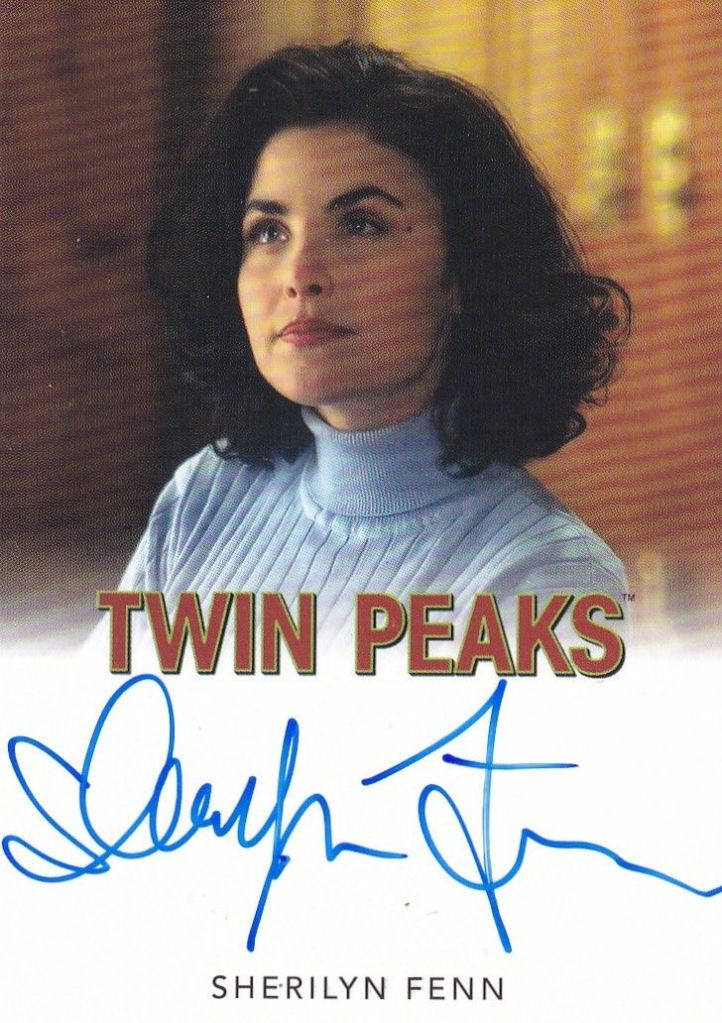
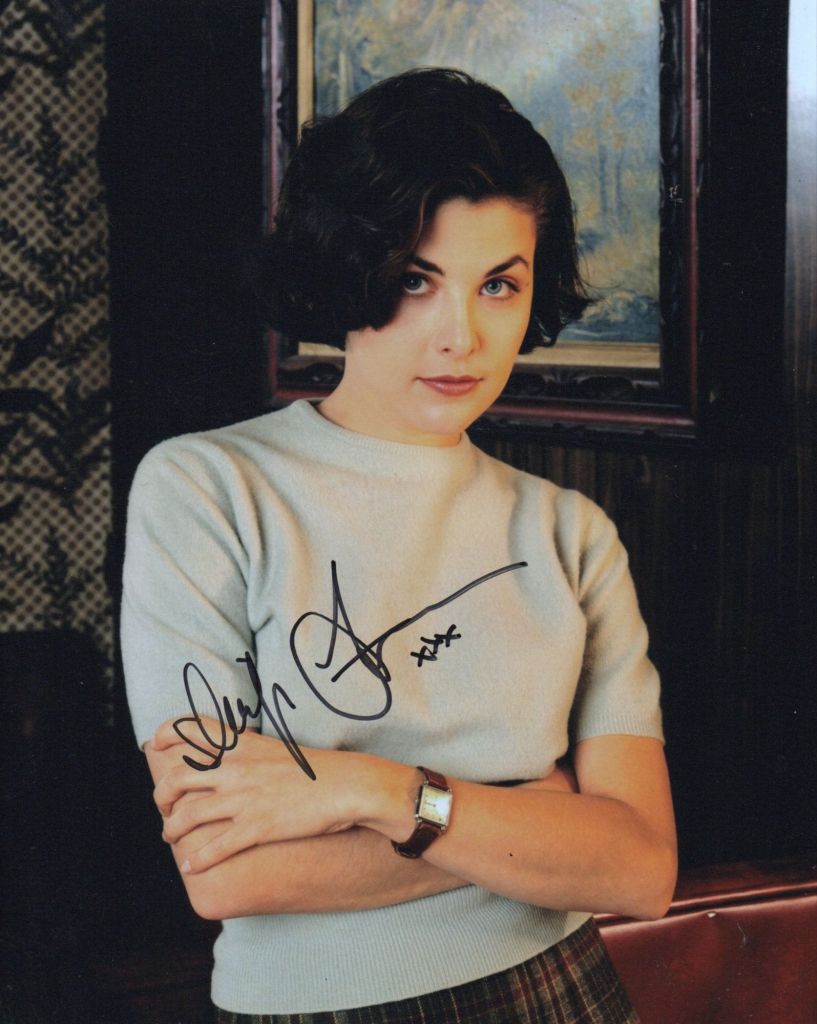
Sherilyn Fenn in Twin Peaks
Early Life and Family
Background: Born in Detroit to a musical family (including mother Arlene Quatro and aunt Suzi Quatro), she moved to Los Angeles at 17 to study acting at the Lee Strasberg Theatre Institute.
Career Highlights
Breakthrough: Achieved stardom as Audrey Horne in Twin Peaks (1990–1991, 2017), earning Emmy and Golden Globe nominations.
Film & TV: Notable roles include Wild at Heart (1990), Of Mice and Men (1992), and Boxing Helena (1993). She also starred in Rude Awakening (1998–2001) and Liz: The Elizabeth Taylor Story (1995).
Personal Life
Details: Had a well-known relationship with Johnny Depp in the 1980s.
Family & Work: She has two sons and authored a children’s book, No Man’s Land (2016), inspired by her younger son’s autism.
Sherilyn Fenn’s career spans over four decades, defined by her transition from 1980s cult teen films to her 1990s rise to fame as a Hollywood icon, followed by a prolific period as a versatile character actress in television and independent film.
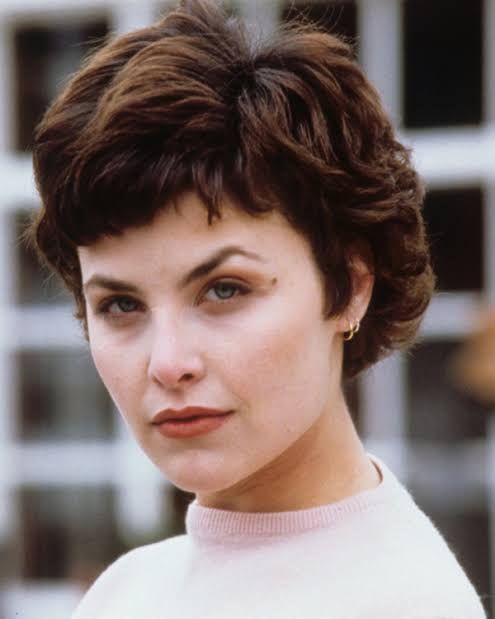
Sherilyn Fenn in Ruby
Early Career and Teen Roles (1984–1989)
Fenn began her career in various B-movies and teen dramas, often playing sultry or rebellious characters.
The Wild Life (1984): Played Penny Harlin in this early film role.
Facebook: There is a page titled Sherilyn Fenn Now that shares updates related to her podcast appearances and projects.
by era, annotated:
Sherilyn Fenn (born Sheryl Ann Fenn on February 1, 1965) is an American actress and author best known for her iconic portrayal of Audrey Horne in the cult television series Twin Peaks.
Biography Overview
Born in Detroit, Michigan, Fenn grew up in a musical family; her mother, Arlene Quatro, was a keyboardist, and her aunt is rock icon Suzi Quatro. Her father, Leo Fenn, managed notable bands, including Alice Cooper. After moving to Los Angeles at 17, she dropped out of high school to study acting at the Lee Strasberg Theatre Institute.
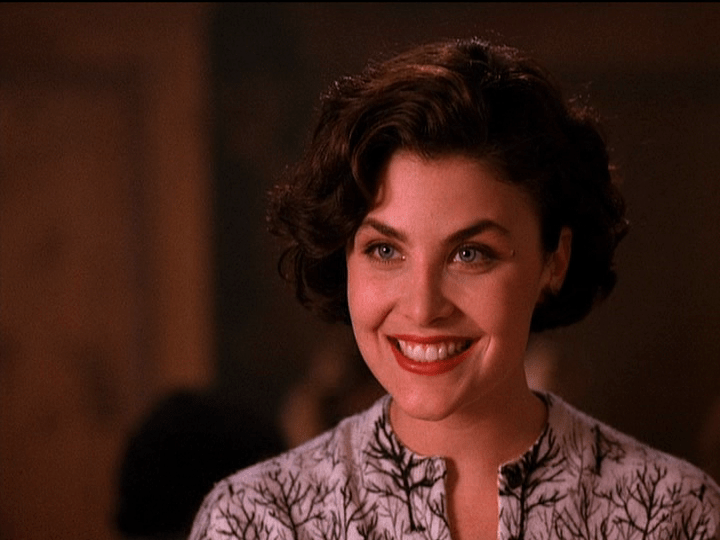
Audrey Horne in Twin Peaks played by Sherilyn Fenn
Annotated Career Timeline
Early Career & Cult Foundations (1984–1989)
1984: Film debut in the comedy The Wild Life.
1985: Appeared in the cult comedy Just One of the Guys and starred alongside then-boyfriend Johnny Depp in the short film Dummies.
1986: Solidified her presence in the “brat pack” era with roles in the skater film Thrashin’ and the supernatural action movie The Wraith.
1988: Landed her first lead in Zalman King’s erotic drama Two Moon Junction. Fenn later expressed embarrassment over the film’s “sexploitation” leanings, which led her to take a brief hiatus from acting.
Breakthrough & Peak Stardom (1990–1995)
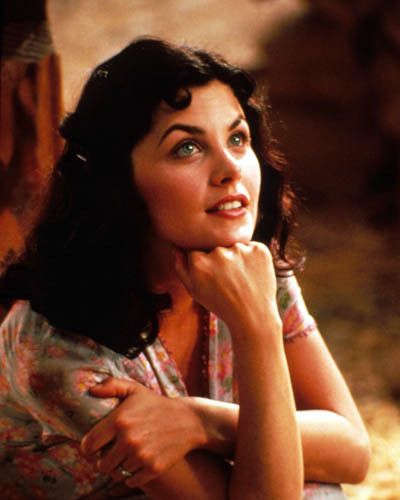
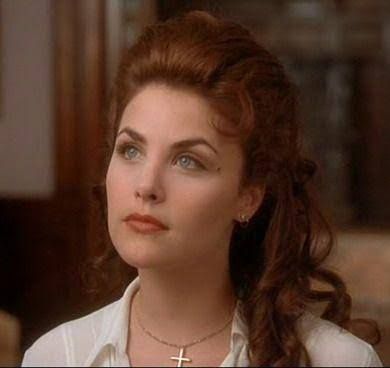
1990–1991: Cast as Audrey Horne in Twin Peaks. Her performance, characterized by 1950s-style fashion and the famous “cherry stem” scene, earned her Emmy and Golden Globe nominations.
1990: Appeared in David Lynch’s Wild at Heart as a car accident victim. Lynch famously described her as “five feet of heaven in a ponytail”.
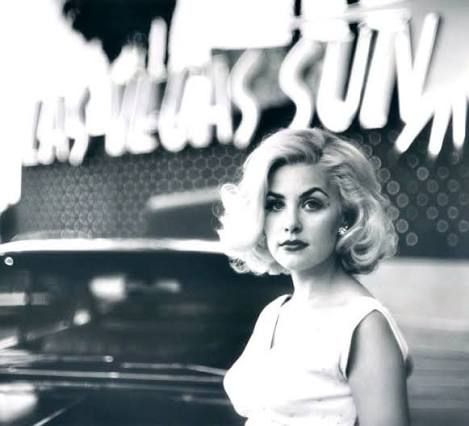
1992: Starred in the critically acclaimed adaptation of Of Mice and Men opposite John Malkovich and Gary Sinise. She also played a composite of Marilyn Monroe and Candy Barr in the film Ruby.
1993: Starred in the controversial Boxing Helena, directed by Jennifer Lynch. Though a commercial failure, Fenn remained proud of the film’s artistic risks.
1995: Portrayed Elizabeth Taylor in the NBC miniseries Liz: The Elizabeth Taylor Story. She fought for script integrity to ensure a respectful portrayal of the legend.
Independent Era & Television Lead (1996–2001)
1997: Guest-starred on Friends as Ginger, a character with a prosthetic leg.
1998–2001: Headlined the Showtime sitcom Rude Awakening as Billie Frank, a recovering alcoholic former soap star.
Diverse Roles & Return to Twin Peaks (2002–Present)
The Burden of “Too Pretty”: Fenn has openly discussed how her striking features led directors to typecast her as a passive, idealized object of desire. She has actively advocated for rewriting roles to make her characters stronger, proactive, and more intellectually complex.
The Elizabeth Taylor Connection: Playing the legendary actress in a 1995 biopic resonated deeply with Fenn. She connected with Taylor’s struggle against the stereotypes placed on beautiful women and the double-edged sword of using beauty as a career calling card.
Embracing Aging Authentically: Now in her 60s, Fenn receives widespread praise for gracefully embracing her age, often showing off her striking, natural silver hair and powerful, glamorous features.
Fenn’s career is defined by her resistance to typecasting. Following the massive success of Twin Peaks, she intentionally chose complex, sometimes unglamorous roles in independent films like Darkness Falls (1998) and Cement (1999) to distance herself from being a mere “sex symbol”. She has remained an outspoken critic of the Hollywood “machine” and is also an author; in 2016, she published the children’s book No Man’s Land, inspired by her son’s autism.
Audrey Horne in Twin Peaks played by Sherilyn Fenn
The Coma (March 1989): Audrey survives the explosion but falls into a coma for three and a half weeks. During this time, Cooper’s doppelgänger (Mr. C) visits her in the hospital, where he rapes and impregnates her.
Motherhood: In late 1989, Audrey gives birth to her son, Richard Horne. She raises him as a single mother and eventually opens a successful beauty salon in Twin Peaks.
Marriage: Roughly ten years after Richard’s birth, Audrey enters a “marriage of convenience” with her accountant, Charlie.
Personal Life
Sherilyn Fenn‘s personal life has been defined by her upbringing in a famous musical family and her high-profile relationships during the peak of her Twin Peaks fame. Born on 1 February 1965 in Detroit, Michigan, she moved to Los Angeles at age 17, where she began her journey from a theater student to an international sex symbol and devoted mother.
Early Life & Family Roots (1965–1983)
1965: Born Sheryl Ann Fenn in Detroit.
Musical Heritage: Raised in a family of performers. Her mother, Arlene Quatro, was a keyboardist; her aunt is rock star Suzi Quatro; and her father, Leo Fenn, managed bands like Alice Cooper.
1982: Moved to Los Angeles at age 17. She dropped out of Beverly Hills High School to enroll at the Lee Strasberg Theatre Institute to study acting.
The Rising Star & Johnny Depp Era (1984–1989)
1985: Met actor Johnny Depp on the set of the short film Dummies. The two dated for three and a half years and were briefly engaged.
Late 1980s: Her relationship with Depp ended as their careers pulled them in different directions (Los Angeles for Fenn, Vancouver for Depp’s 21 Jump Street).
Twin Peaks Fame & First Marriage (1990–1999)
1990: Dated singer Billy Idol briefly; the pair appeared together on the cover of In Fashion magazine.
1993: Welcomed her first son, Myles, with guitarist/songwriter Toulouse Holliday, whom she met on the set of Three of Hearts.
1997: Divorced Holliday after three years of marriage.
Motherhood & Later Years (2000–Present)
2007: Gave birth to her second son, Christian, with then-boyfriend Dylan Stewart.
2014: Began practicing Transcendental Meditation, a practice often associated with her long-time collaborator David Lynch.
Present: Continues to act and engage with fans, famously returning to her iconic role as Audrey Horne for Twin Peaks: The Return in 2017.
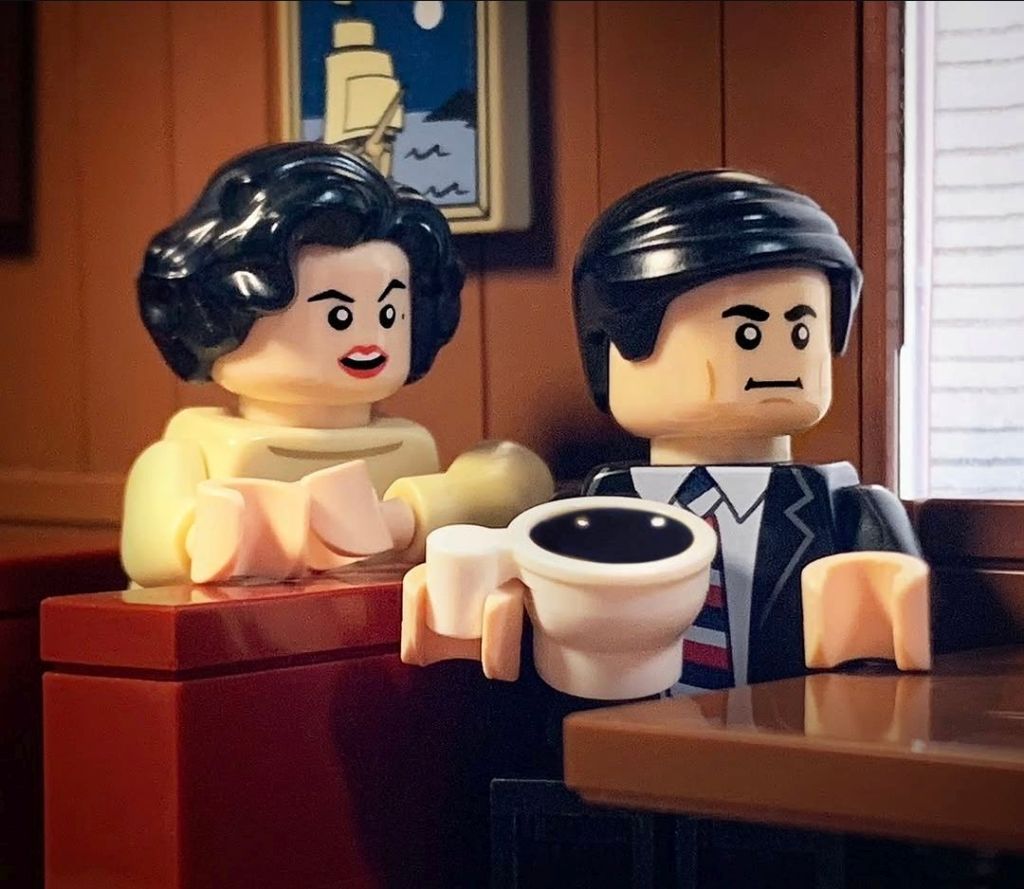
Sherilyn Fenn as Audrey Horne
Audrey Horne‘s timeline spans her high school years during the original investigation of Laura Palmer’s murder to her mysterious, fractured reality 25 years later in The Return.
Twin Peaks, Sherilyn Fenn as Audrey Horne
Original Series (February – March 1989)
February 1989: Audrey begins her own investigation into Laura Palmer’s death to impress Special Agent Dale Cooper. She goes undercover at One Eyed Jacks, where she narrowly avoids a horrific encounter with her father, Ben Horne.
March 1989: After being rescued from One Eyed Jacks by Cooper, Audrey briefly finds romance with John Justice Wheeler. However, she remains politically active and chains herself to the vault door at the Twin Peaks Savings and Loan to protest the Ghostwood Development project.
The Explosion: On March 28, 1989, a bomb goes off in the bank vault, leaving Audrey’s fate uncertain as the original series ends.
The Interim Years (1989 – 2014)
The Return (2014 – 2016)
Disappearance: About four years before the events of The Return, Audrey suddenly closes her salon and vanishes from public life. Rumours suggest she entered a private care facility or became an agoraphobic recluse.
Fractured Reality: Audrey appears in several surreal scenes with Charlie, obsessing over a missing man named Billy. She eventually goes to the Roadhouse to perform “Audrey’s Dance,” but after a fight breaks out, she “wakes up” in a stark white room, staring into a mirror.
Current Status: Her final scene suggests she may be confined to a psychiatric hospital, with the Roadhouse scenes being a mental construct or “dream”.
Audrey Horne, the iconic, confident, and mischievous character from Twin Peaks played by Sherilyn Fenn, is known for her flirtatious demeanor and sharp wit. Famous quotes include “I’m Audrey Horne and I get what I want,” “Do your palms ever itch?”, and her obsession with Agent Cooper, “You’re my special agent”.
Key Quotes from Audrey Horne:
“I’m Audrey Horne and I get what I want”.
“You know, sometimes I get so flushed, it’s interesting. Do your palms ever itch?”.
“Do you like my ring?”.
“When something you care about is in danger you must fight to save it, or lose it forever”.
“I’ve been doing some research, in real life there is no algebra”.
“Oh, Daddy, I’m so afraid”.
“Talk, Emory! I want to know everything. About you, Laura, Ronnette, One-Eyed Jacks”.
“I don’t think anyone understands me”.
“You are in the Doghouse Mister… let me fix you a sandwich”.
Memorable Moments and Exchanges:
On her family: “Not exactly. Laura tutored my brother Johnny three times a week. Johnny’s 27 and he’s in the third grade. He’s got emotional problems. Runs in the family”.
On her determination: “I’m going to let you in on a little secret: Every day, once a day, give yourself a present. Don’t plan it, don’t wait for it, just let it happen”. (Note: This is often attributed to Cooper, but encapsulates her philosophy).
On her investigation: “Did Laura know that my father owned it? [One-Eyed Jacks]”.
Sherilyn Fenn’s beauty commentary centers on her iconic, retro-glamour aesthetic and her pushback against Hollywood typecasting. Celebrated for her mesmerizing looks in the 1990s—notably as Audrey Horne in Twin Peaks—her personal reflections on beauty and identity cover several key themes:
The Burden of “Too Pretty”: Fenn has openly discussed how her striking features led directors to typecast her as a passive, idealized object of desire. She has actively advocated for rewriting roles to make her characters stronger, proactive, and more intellectually complex.
The Elizabeth Taylor Connection: Playing the legendary actress in a 1995 biopic resonated deeply with Fenn. She connected with Taylor’s struggle against the stereotypes placed on beautiful women and the double-edged sword of using beauty as a career calling card.
Embracing Aging Authentically: Now in her 60s, Fenn receives widespread praise for gracefully embracing her age, often showing off her striking, natural silver hair and powerful, glamorous features.
Her timeless aesthetic, defined by strong brows, deep retro hues, and winged liner, has spawned countless beauty tutorials and inspired a dedicated fanbase. Fans and pop culture critics frequently discuss her peak 90s aesthetic as a high-water mark of on-screen magnetism. You can read community discussions on her legacy via the r/Twin Peaks Subreddit.
HPE NonStop Pathway (now often part of NonStop TS/MP) has a legacy spanning nearly five decades, evolving from a terminal management system into a sophisticated middleware for high-scale, fault-tolerant Online Transaction Processing (OLTP).
Comprehensive Evolution Timeline
1976: Genesis (Tandem Computers) The HP NonStop platform was originally introduced by Tandem Computers Inc. as the first fault-tolerant commercial computer. Pathway was soon developed to manage the distribution of transaction requests across multiple server processes.
1980s: The Classic Pathway Era Pathway became the standard for “Screen COBOL” applications. It introduced the PATHMON process to monitor and manage serverclasses, ensuring that if one process failed, another would immediately take its place.
1997: Compaq Acquisition Compaq acquired Tandem, integrating the NonStop technology into its enterprise portfolio. During this time, Pathway began adapting to newer networking protocols and client-server architectures.
2002: Hewlett-Packard (HP) Acquisition HP merged with Compaq, and the platform was rebranded as HP NonStop. Pathway evolved into NonStop TS/MP (Transaction Services/Massive Parallelism), allowing for even greater scalability across massive clusters of processors.
2014–2015: The x86 Revolution HP announced the NonStop X architecture, moving the platform from Itanium processors to standard Intel x86 hardware. Pathway (TS/MP) was optimized to run on this new architecture, providing the same high availability with modern hardware performance.
2015–Present: HPE and Modern Middleware Following the split of HP, Hewlett Packard Enterprise (HPE) continued developing Pathway. Modern versions (like NonStop TS/MP 2.8) support advanced features like:
Dynamic Server Processes: Automatically scaling server instances based on load.
Heterogeneous Interoperability: Allowing TUXEDO or Java clients to access Pathway servers.
Virtualization: Deployment via HPE NonStop Virtual Enterprise (vNS).
Core Components Over Time
PATHMON: The “manager” process that monitors all objects in the environment.
PATHCOM: The command-line interface used to configure and start Pathway objects.
Tandem Advanced Command Language (TACL) is the interpreted, high-level command and programming language for HPE NonStop (formerly Tandem) systems. Its timeline follows the evolution of Tandem hardware and the Guardian operating system.
Comprehensive TACL Timeline
1974–1976: Foundation of Tandem
Tandem Computers Inc. was founded. The initial operating system, Guardian, was designed for fault-tolerant computing.
Late 1970s: Initial Release
TACL was introduced in the 1970s as the primary command interface, replacing or augmenting earlier, more primitive command interpreters. It was written in TAL (Tandem Application Language).
1980s: Mature Programming Capabilities
TACL evolved from a simple shell into a powerful programming language. Key features like Macros, Routines, and Variables (TEXT, ALIAS, STRUCT) were solidified during this era to automate complex system tasks.
1994: D-Series (D30.00) Release
A significant update was documented in the TACL Programming Guide for D30.00, which detailed advanced features like Nowait I/O, Pathway Server integration, and SPI/EMS programmatic interfaces.
1997–2000s: Corporate Transitions (Compaq & HP)
1997: Compaq acquired Tandem.
2002: HP merged with Compaq, and TACL development continued under the HP NonStop banner.
2000: Updated reference manuals detailed TACL’s environment customization and the use of the _EXECUTE variable for program flow.
2010s: H-Series and HPE Era
2013: Comprehensive Reference Manuals were released, refining built-in functions for the H-Series architecture.
2015: Hewlett Packard Enterprise (HPE) was formed. TACL is now maintained as part of the HPE NonStop software stack.
Current: Legacy & Automation
TACL remains the essential tool for administrative tasks and system-level automation on modern HPE NonStop X (x86) platforms.