Agile Scrum Evolution Timeline Overview

Agile and Scrum have evolved from specific product development theories into a global standard for project management. While Scrum predates the Agile Manifesto by several years, it has become the most widely adopted framework within the Agile umbrella. 

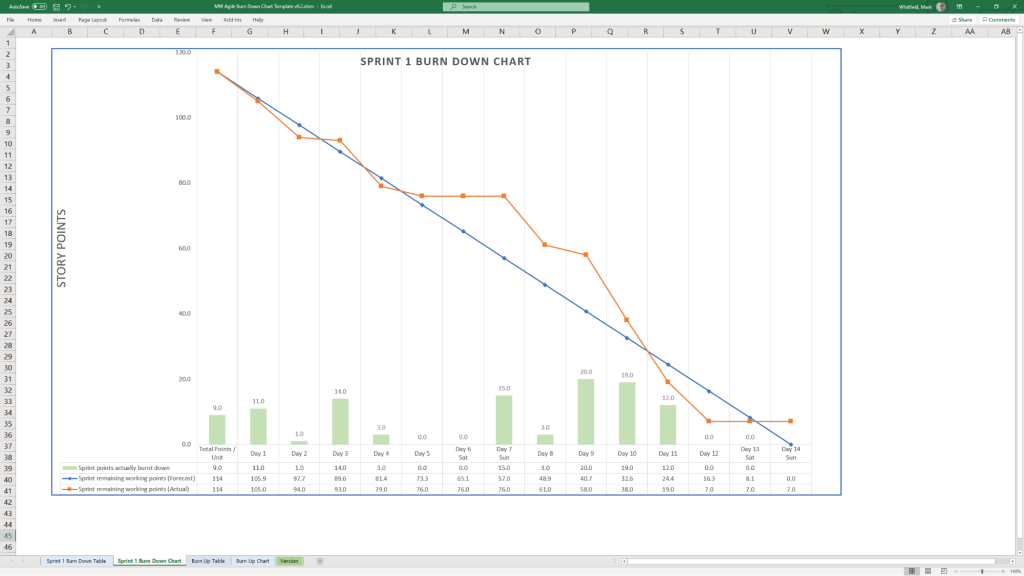
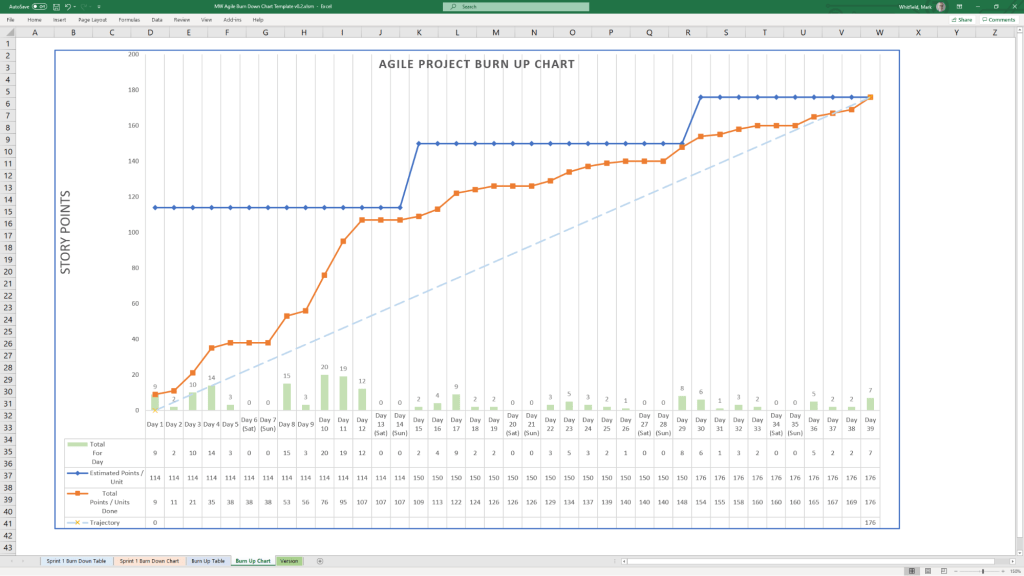
Agile Scrum Burn down and Burn up charts – can be downloaded from website banner

Evolution Timeline

  • 1986: The Inspiration. Hirotaka Takeuchi and Ikujiro Nonaka publish “The New New Product Development Game” in Harvard Business Review, introducing the “rugby” approach to product development.
  • 1993: The First Scrum. Jeff Sutherland and his team at Easel Corporation implement the first official Scrum.
  • 1995: Public Presentation. Ken Schwaber and Jeff Sutherland formally present Scrum at the OOPSLA ’95 conference, introducing the concept of Sprints.
  • 2001: The Agile Manifesto. 17 software developers meet in Utah to sign the Manifesto for Agile Software Development, codifying the 4 values and 12 principles that define Agile.
  • 2002: Scrum Alliance Founded. The Scrum Alliance is established by Ken Schwaber, Mike Cohn, and Esther Derby to provide training and certifications like the Certified ScrumMaster (CSM).
  • 2009: Founding of Scrum.org. Ken Schwaber founds Scrum.org to provide a more consistent approach to Scrum training and assessments.
  • 2010: The First Scrum Guide. Sutherland and Schwaber publish the first Official Scrum Guide, providing a definitive, minimal definition of the framework.
  • 2011–2017: Iterative Refinements. Updates to the Scrum Guide clarify the Daily Scrum purpose (2013) and emphasize Scrum Values (2016).
  • 2020: The “Simplified” Guide. The latest 2020 Scrum Guide is released, focusing on making the framework less prescriptive and more applicable to non-software industries by removing technical jargon. 

Key Shifts in Scrum Maturity

  • Prescriptive to Descriptive: Early Scrum was highly prescriptive about meetings and roles; modern Scrum focuses on Empiricism (Transparency, Inspection, Adaptation).
  • Team Autonomy: The 2013 update pivoted from “selecting tasks” to focusing on the Sprint Goal, empowering teams to decide how to achieve the objective.
  • Scaling Frameworks: As organizations grew, frameworks like SAFe (2011) and LeSS (2013) emerged to apply Scrum across hundreds of teams.
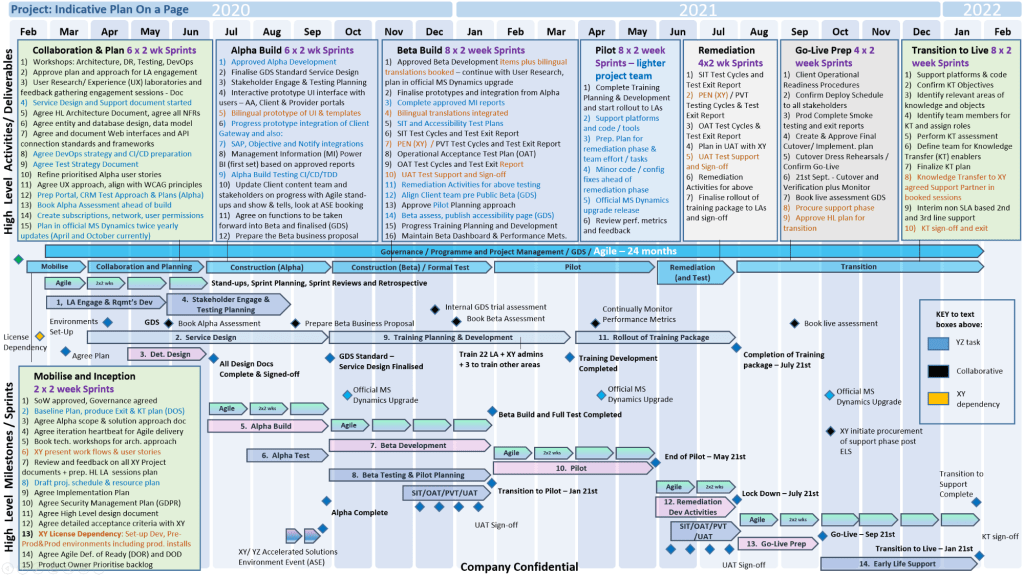
Plan On a Page POaP for an Agile Scrum project, available for download above

Agile Development History Timeline Overview

Agile’s history is a transition from rigid, manufacturing-based “Waterfall” models to flexible, people-centric frameworks. While the term was coined in 2001, its roots trace back to early 20th-century industrial practices and the “software crisis” of the 1960s. 

Early Foundations (Pre-1990s)

Before Agile became a formal software methodology, its core principles of efficiency and iteration emerged from manufacturing and early computing.

  • 1896: Sakichi Toyota introduced the “Stop and Notify” concept (Jidoka), a foundational Lean/Agile practice for immediate problem-solving.
  • 1948: The Toyota Production System (TPS) established Lean manufacturing and the Kanban system to manage workflow.
  • 1957: IBM began using incremental development on large software projects.
  • 1970: Winston Royce published “Managing the Development of Large Software Systems,” which formalized the Waterfall Model but actually cautioned against its rigidity.
  • 1986: Takeuchi and Nonaka published The New New Product Development Game, introducing the “rugby” metaphor for team-based development that inspired Scrum

The Rise of “Lightweight” Methods (1990–2000) 

Frustrated by Waterfall’s slow delivery, practitioners developed several “lightweight” frameworks. 

  • 1991: Rapid Application Development (RAD) popularized timeboxing and iterations.
  • 1993: Jeff Sutherland and his team first implemented Scrum at Easel Corporation.
  • 1994: The Dynamic Systems Development Method (DSDM) was created as a vendor-independent RAD framework.
  • 1995: Ken Schwaber and Jeff Sutherland formally co-presented Scrum at the OOPSLA conference.
  • 1996: Kent Beck introduced Extreme Programming (XP), emphasizing practices like pair programming and continuous testing.
  • 1997: Feature-Driven Development (FDD) and Crystal Clear emerged as alternative iterative models. 

Formalisation & Modern Evolution (2001–Present)

The movement unified under a single name and eventually scaled to entire enterprises. 

  • 2001: 17 software leaders met at Snowbird, Utah, to draft the Agile Manifesto, establishing four core values and 12 principles.
  • 2003: The book Lean Software Development by Mary and Tom Poppendieck officially bridged Lean manufacturing and software agility.
  • 2009: The concept of DevOps emerged, extending Agile principles into IT operations and deployment.
  • 2011: The Scaled Agile Framework (SAFe) was introduced to help large organizations manage multiple Agile teams.
  • 2012–2015: Agile surpassed the 50% mark in global adoption, becoming the industry standard for development.
  • 2020s: Agile principles are now widely applied outside of tech, in fields like marketing, education, and HR

Agile’s evolution is not just a 21st-century phenomenon but a response to decades of “software crises” and rigid industrial processes. Below is a comprehensive historical breakdown of Agile’s journey. 

1. Pre-Digital Foundations (1910s – 1940s)

Long before software, the concepts of efficiency and waste reduction were born in manufacturing. 

  • 1911: Scientific Management. Frederick Taylor encouraged managers to adopt worker suggestions for efficiency, opposing rigid habits.
  • 1940s: Lean Manufacturing (Toyota). Toyota pioneered the “Just-in-Time” method and Kaizen (continuous improvement) after observing American supermarkets.
  • 1948: Toyota Production System. Introduction of Kanban for visual workflow management. 

2. Early Iterative Development (1950s – 1970s)

The 1950s saw the first departures from strictly sequential “waterfall” planning. 

  • 1957: Incremental Development. IBM and Motorola teams, including Gerald Weinberg, used iterative methods indistinguishable from modern Extreme Programming (XP) for Project Mercury.
  • 1968: NATO Software Engineering Conference. Formally identified the “Software Crisis” (projects being late and over budget), sparking a search for better methodologies.
  • 1970: Waterfall Formalised (and Critiqued). Winston Royce described the Waterfall model but notably advocated for iterative releases to reduce risk. 

3. The Proliferation of “Lightweight” Methods (1980s – 1990s) 

Frustration with heavyweight, document-heavy processes led to several “Agile” precursors. 

  • 1986: “The New New Product Development Game.” Takeuchi and Nonaka published this HBR article, introducing the “Rugby” approach (teamwork over relay-race handoffs), which directly inspired Scrum.
  • 1991: Rapid Application Development (RAD). James Martin introduced RAD, emphasising fast prototyping and client feedback.
  • 1993–1995: The Birth of Scrum. Jeff Sutherland and Ken Schwaber formalised Scrum, presenting it at the OOPSLA ’95 conference.
  • 1996: Extreme Programming (XP). Kent Beck introduced XP at Chrysler, focusing on technical excellence through practices like Pair Programming and Test-Driven Development

4. The Agile Manifesto & Formalisation (2001 – 2010)

Agile moved from a collection of “lightweight” methods to a global standard. 

  • 2001: The Agile Manifesto. 17 developers met in Snowbird, Utah, to draft the Manifesto for Agile Software Development, establishing four core values and 12 principles.
  • 2003: Lean Software Development. Mary and Tom Poppendieck adapted Toyota’s Lean principles specifically for software engineering.
  • 2009: Software Craftsmanship. The Software Craftsmanship Manifesto emerged to refocus the community on the quality of the “craft” rather than just project management.
  • 2010: The First Scrum Guide. Published as the definitive resource on Scrum framework rules. 

5. Scaling and Modern Business Agility (2011 – Present) 

Agile expanded beyond coding into enterprise-wide strategy. 

  • 2011: Scaled Agile Framework (SAFe). Dean Leffingwell launched SAFe to help large corporations apply Agile at scale.
  • 2015–2017: Project Management Integration. Major bodies like AXELOS released PRINCE2 Agile, and the PMI introduced the Agile Certified Practitioner (ACP).
  • 2020s: Beyond Software. Agile principles are now standard in marketing, HR, and hardware development through concepts like Business Agility

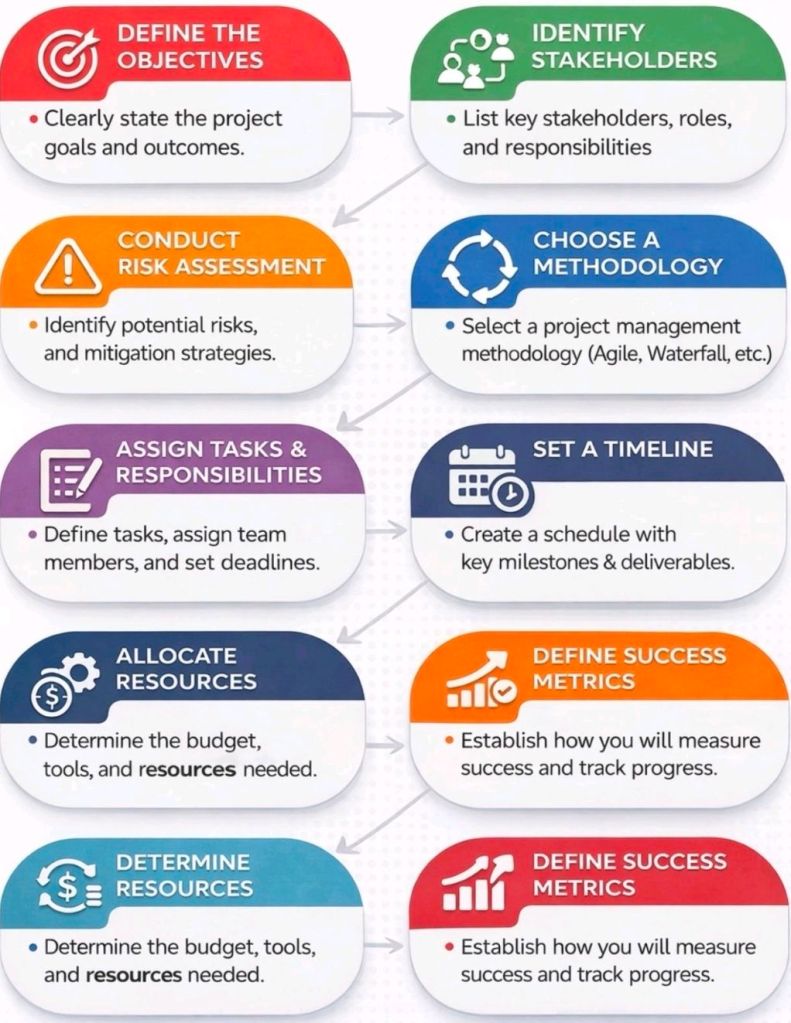
Putting Together a Project Plan Overview

Putting Together a Project Plan Overview

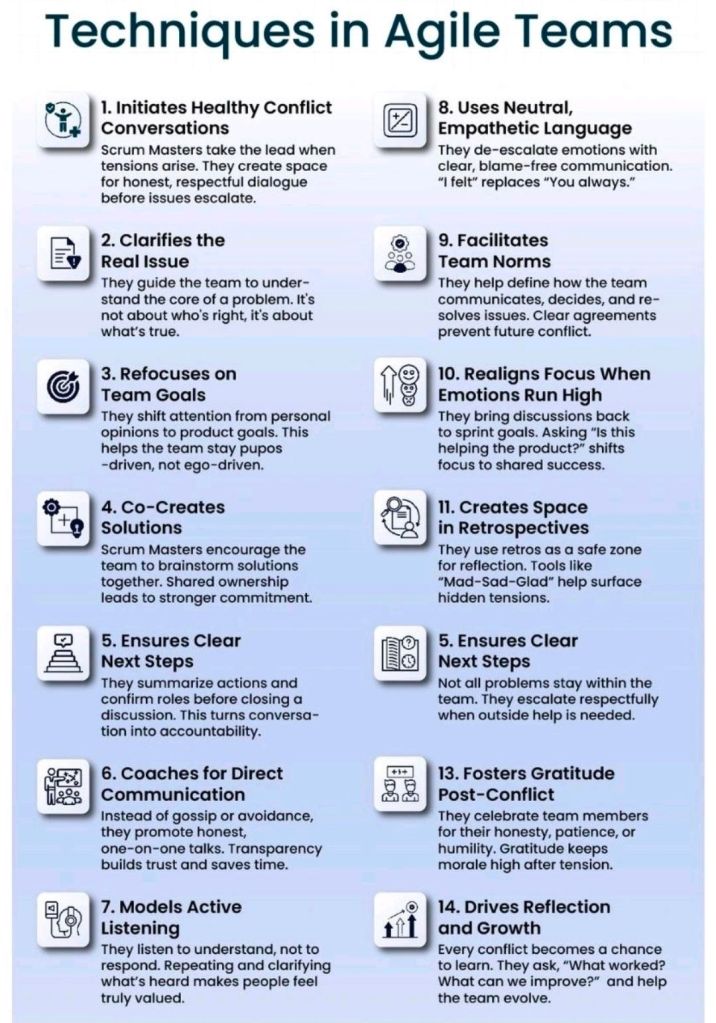
Agile Team Techniques Overview

Agile Team Techniques Overview

COBOL Development Detailed Timeline Overview

COBOL (Common Business-Oriented Language) has evolved from a 1959 “stopgap” experiment into a cornerstone of global finance, currently powering approximately 95% of ATM swipes and 80% of in-person credit card transactions

The Early Years (1959–1965)

  • 1959 (Origins): Following a meeting at the Pentagon in May, the Conference on Data Systems Languages (CODASYL) was formed to create a machine-independent language for business. It was heavily influenced by Grace Hopper’s FLOW-MATIC.
  • 1960 (First Release): The COBOL-60 specifications were published. In December, the same program was successfully run on two different manufacturers’ computers (RCA and Univac), proving portability.
  • 1961–1965 (Rapid Revisions): Successive updates included COBOL-61 and COBOL-65, which introduced critical features like the SORT and REPORT WRITER facilities. 

Standardisation & Dominance (1968–1985) 

  • 1968 (COBOL-68): The American National Standards Institute (ANSI) published the first official standard, making COBOL the industry benchmark.
  • 1974 (COBOL-74): This update added file organisation methods and the DELETE statement, further refining data management capabilities.
  • 1985 (COBOL-85): A major milestone that introduced structured programming (e.g., END-IFEVALUATE) to improve code readability and maintainability. 

Modernisation & Object-Orientation (2002–Present) 

  • 2000 (The Y2K Crisis): COBOL regained global attention as programmers rushed to fix the “Millennium Bug” in legacy systems.
  • 2002 (COBOL-2002): The first major update in 17 years introduced Object-Oriented (OO) features, Unicode support, and XML processing.
  • 2014 (COBOL-2014): Simplified the language by making several niche features (like the SCREEN SECTION) optional and adopting IEEE 754 floating-point math.
  • 2023 (COBOL-2023): The current ISO/IEC 1989:2023 standard added modern programming comforts like asynchronous messaging (SEND/RECEIVE), transaction processing (COMMIT/ROLLBACK), and bitwise operators. 

Today, despite its age, an estimated 800 billion lines of COBOL remain in active use, with modernization efforts focusing on cloud integration and interoperability with Java and .NET.

COBOL Development Detailed Timeline Overview

WordPress Content Management System (CMS) Timeline Overview

WordPress has evolved from a basic blogging tool in 2003 into a dominant Content Management System (CMS) that powers over 43% of the internet including this https://mark-whitfield.com website. Its history is defined by major version releases, often named after jazz musicians, and shifts toward “Full Site Editing”. 

This WordPress website started around 2021

The Early Years (2001–2005)

  • 2001: French developer Michel Valdrighi launches b2/cafelog, the PHP/MySQL-based blogging software that served as the foundation for WordPress.
  • 2003 (May 27): Matt Mullenweg and Mike Little release WordPress Version 0.7, a fork of b2/cafelog.
  • 2004: Version 1.0 (“Miles Davis”) introduces SEO-friendly permalinks and comment moderation. Version 1.2 (“Mingus”) debuts the plugin architecture, allowing for external extensibility.
  • 2005: Version 1.5 (“Strayhorn”) introduces the Themes system and static Pages, moving WordPress beyond just chronological blog posts. Automattic is founded by Matt Mullenweg in August. 

Expansion and Ecosystem Growth (2006–2010)

  • 2006: The first WordCamp is held in San Francisco. Automattic registers the WordPress trademark.
  • 2007: Version 2.1 (“Ella”) adds autosave and spell-check. Version 2.2 (“Getz”) introduces Widgets.
  • 2008: Version 2.7 (“Coltrane”) revamps the dashboard, moving the menu to the sidebar where it remains today.
  • 2010: Version 3.0 (“Thelonious”) is a major milestone, introducing Custom Post Types and Multisite capabilities. The WordPress trademark is transferred to the non-profit WordPress Foundation

The “Modern” Dashboard & Visual Improvements (2011–2017)

  • 2011: WooCommerce is released (later acquired by Automattic in 2015), revolutionising WordPress e-commerce.
  • 2013: Version 3.7 (“Basie”) introduces automatic background updates for security patches. Version 3.8 (“Parker”) gives the admin dashboard the modern, flat design used today.
  • 2014: Version 4.0 (“Benny”) focuses on media management with a new grid view.
  • 2016: The REST API is integrated into core (v4.4), allowing WordPress to interact with other web applications. 

The Gutenberg & Site Editing Era (2018–Present)

  • 2018 (Dec 6): Version 5.0 (“Bebo”) launches the Gutenberg block-based editor, fundamentally changing content creation from text-heavy to visual blocks.
  • 2022: Version 6.0 introduces Full Site Editing (FSE), enabling users to edit headers, footers, and templates visually without code.
  • 2024: WordPress continues to refine the site editing experience with Version 6.7 (“Rollins”). In late 2024, a public legal conflict began between Automattic and WP Engine over trademark usage and contributions.
  • 2025–2026: Version 6.8 (April 2025) and future Version 7.0 roadmap focus on real-time collaboration (Phase 3 of Gutenberg) and AI integration.

WordPress Content Management System (CMS) Timeline Overview

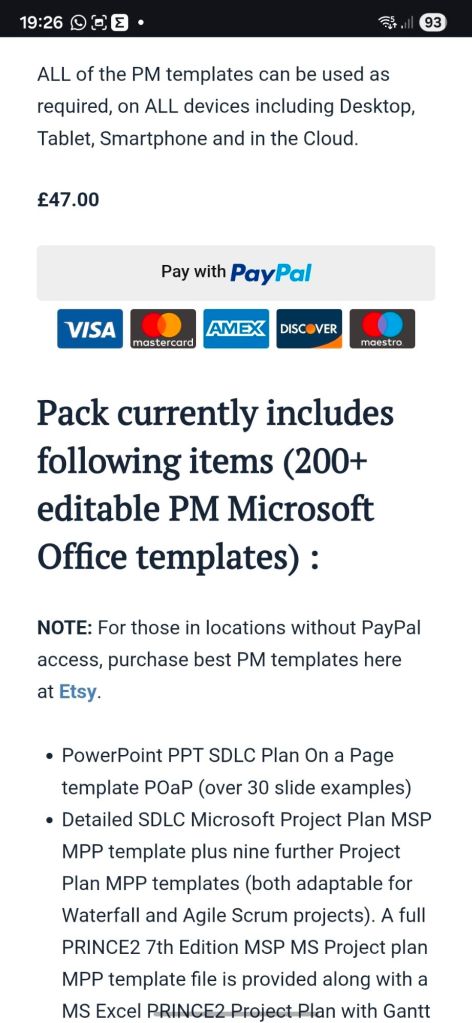
This WordPress website selling Project Management templates – see banner above

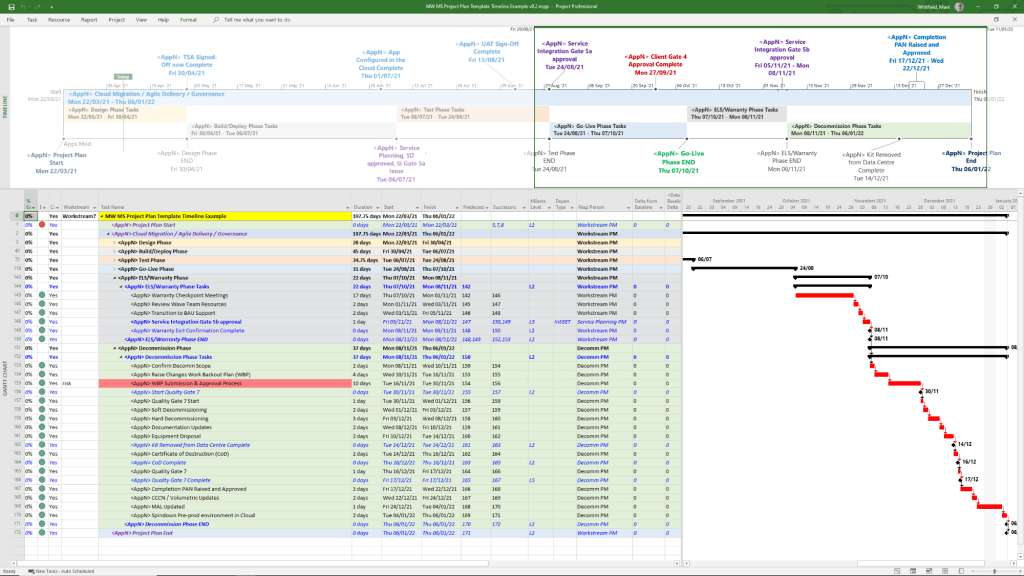
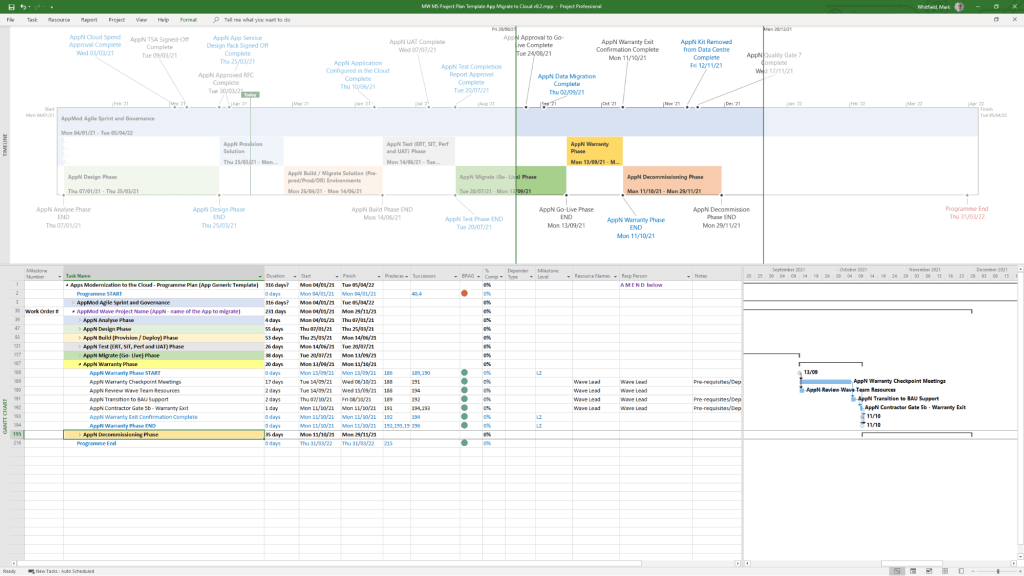
Microsoft Project Timeline, Development History Overview

Microsoft Project has evolved from a DOS-based tool in the 1980s into a cloud-integrated platform. Its “Timeline” feature specifically has transitioned from a simple static view to a multi-layered, interactive reporting tool. 

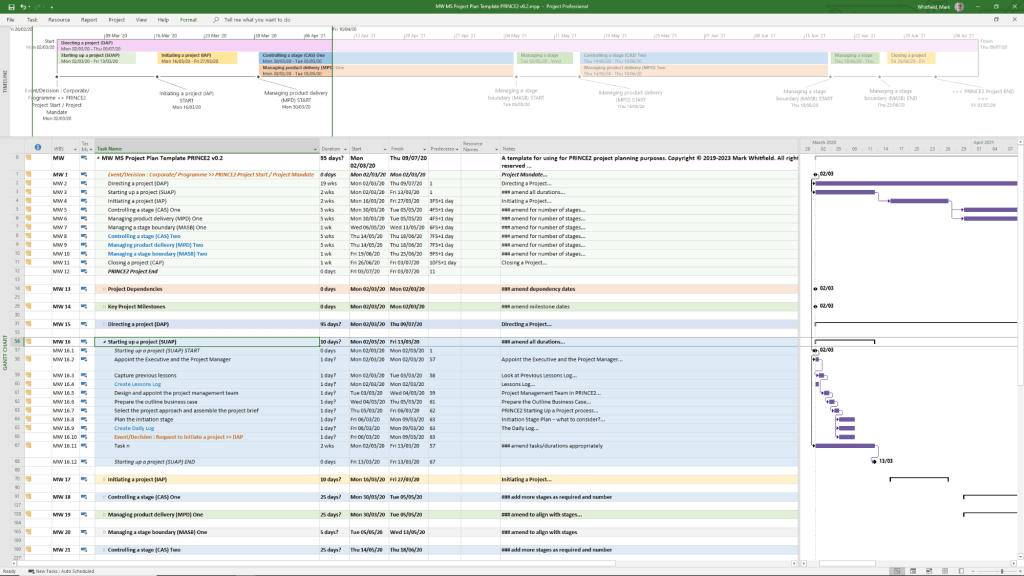
Template included in package – see website banner

Timeline Feature Development History

  • Early Era (1984–2007): For decades, the “timeline” was synonymous with the Gantt Chart. Users had to rely on complex print-outs or third-party tools to create high-level summaries for executives.
  • The dedicated Timeline View (2010): Microsoft introduced a native Timeline view in Project 2010, allowing users to cherry-pick specific tasks and milestones to display on a single horizontal bar.
  • Multi-Timeline Support (2016): Project 2016 expanded this by allowing multiple timeline bars in a single view. This enabled managers to represent different project phases or workstreams with independent start and end dates.
  • Cloud & Web Integration (2019–Present): With the launch of Project for the web, timelines became more interactive, supporting drag-and-drop adjustments and real-time co-authoring.
  • Task History Tracking (2023): Microsoft added a Task History pane to the web version, allowing users to see a chronological log of changes to specific timeline items. 

Key Components of a Modern MS Project Timeline

Templates included in download bundle – see website banner
  • Gantt-Style Visualization: Displays tasks as horizontal bars against a calendar timescale.
  • Milestones & Callouts: Important dates appear as diamonds or labels that can be dragged above or below the main bar to avoid clutter.
  • Dependencies: Visual links between tasks that illustrate the sequence of work and the Critical Path.
  • Copy for Presentation: A dedicated formatting tool that allows users to export the timeline directly to Microsoft PowerPoint or email at various sizes (Small, Medium, Full Size). 

Future Outlook

Template included in download bundle – see website banner

Microsoft has announced that Project Online will be officially retired on 30 September 2026, with development focus shifting entirely to the new Microsoft Planner and Project for the web ecosystem.

Microsoft Project Timeline, Development History Overview

ITSM IT Service Management Framework Overview

ITSM IT Service Management Framework Overview