IT Career snapshot of Mark Whitfield, Senior IT Project Manager (SC cleared)

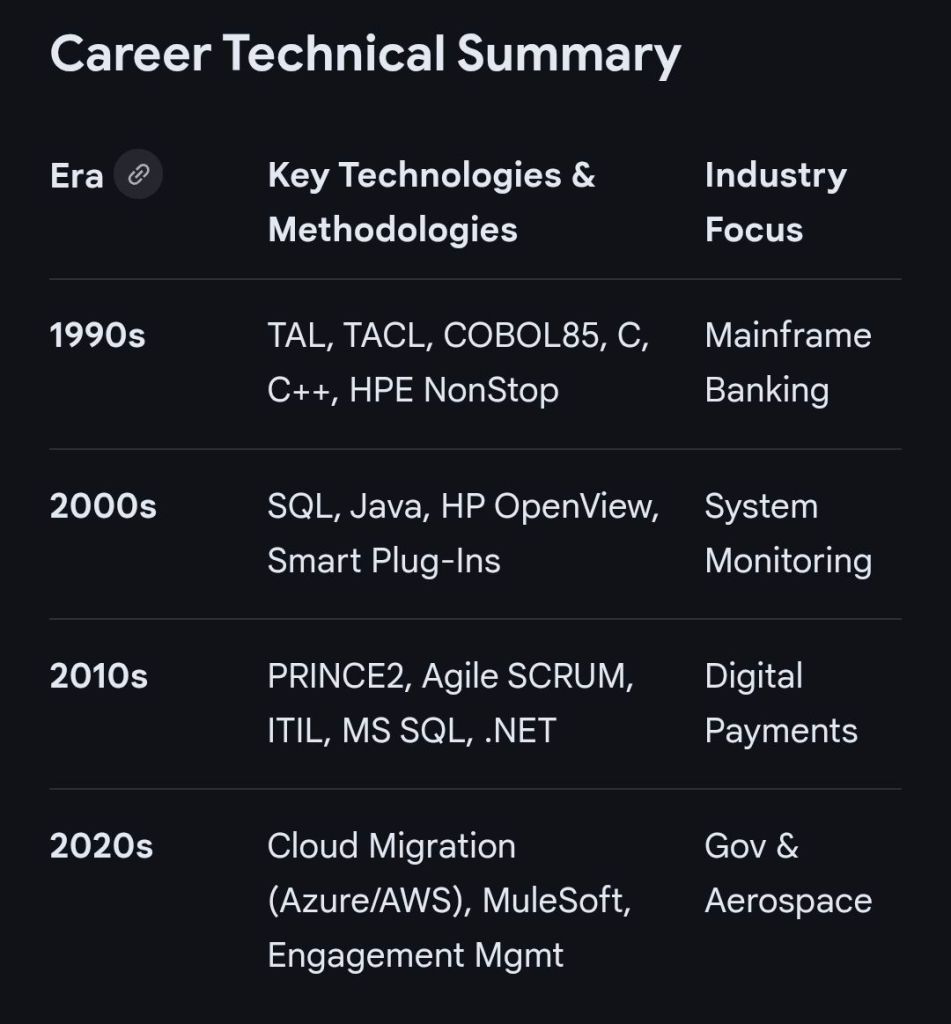
This resume summarizes the career of Mark Whitfield, a Senior IT Project Manager with over 30 years of experience specializing in digital and software development lifecycles, cloud migrations, and HP NonStop systems

Personal Details

  • Name: Mark A. Whitfield
  • Location: Manchester, UK
  • Nationality: British
  • Security Clearance: SC Cleared to 2031
  • Professional Profiles: Official Website | LinkedIn Profile 

Executive Summary

  • Experience: 30+ years in IT.
  • Core Focus: Senior Project Management for Digital/ Software Development Lifecycles (SDLC).
  • Expertise: Transitioning from a technical background in programming (pre-2000) to senior leadership in large-scale projects for global blue-chip companies. 

Key Skills & Competencies

  • Methodologies: PRINCE2 Practitioner, Agile (Scrum/ Kanban), Waterfall, ITIL, ISO QA.
  • Project Controls: MS Project, Budget & Burn Tracking, GDPR compliance, Supplier & Stakeholder Management, Statement of Work (SoW).
  • Technical Proficiencies:
    • Platforms: HP NonStop (Tandem), Cloud Migration (Hybrid).
    • Languages (Historical): C/C++, Java, COBOL85, TAL, TACL, SCOBOL, SQL, MS SQL.
    • Utilities: PATHWAY, SCF, FUP, INSPECT, XPNET. 

Professional Experience

  • Senior IT Project Manager (Various Projects):
    • Managed large-scale solutions for clients including Jaguar Land Rover (JLR)HeathrowRoyal Mail Group (RMG)NATS, and Euroclear.
    • Extensive work within the financial sector for Bank of EnglandBarclaysHSBCSantanderStandard CharteredDeutsche Bank, and Global Payments.
    • Government and public sector projects for DefraUKEFWelsh Water, and Scottish Water.
  • Early Career (Programmer / Technical Lead):
    • 1990 – 1995: Programmer at The Software Partnership (later Deluxe Data) in Runcorn, specializing in electronic banking software (sp/ARCHITECT-BANK) on Tandem Mainframe Computers. 

Education & Certifications

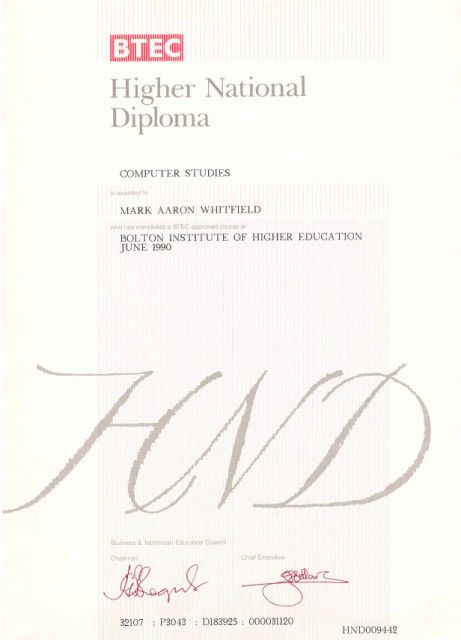
  • Degree: Higher National Diploma (HND) in Computing (Distinction, Graduated 1990).
  • Certifications:
    • Microsoft Azure Fundamentals (Certified).
    • PRINCE2 Practitioner.
    • Agile/ Radtac Course Completion. 

BASIC programming language timeline history by year

BASIC (Beginner’s All-purpose Symbolic Instruction Code) was designed to make computing accessible to non-scientists, evolving from a simple teaching tool into the foundational language of the personal computer revolution. 

The Academic Era (1964–1974)

  • 1964: Invention at Dartmouth. John Kemeny and Thomas Kurtz created BASIC at Dartmouth College to allow students in non-technical fields to use computers.
  • 1964: First Execution. The first BASIC program ran on 1 May 1964, on a GE-225 mainframe.
  • Philosophy of Simplicity. It featured an intuitive, English-like syntax and was originally a “compile-and-run” language rather than a slow interpreter.
  • Time-Sharing. BASIC was designed for the Dartmouth Time-Sharing System (DTSS), allowing multiple users to program simultaneously from different terminals. 

The Home Computer Revolution (1975–1980s) 

  • 1975: Altair BASIC. Bill Gates and Paul Allen developed a BASIC interpreter for the MITS Altair 8800, which became Microsoft’s first product.
  • The “De Facto” Standard. By the late 1970s, BASIC was pre-installed in the ROM of almost every major home computer, including the Apple II, Commodore PET, and TRS-80.
  • Interpreted vs. Compiled. To save memory (often limited to 4KB), these versions were typically “interpreted,” meaning the computer translated code line-by-line during execution.
  • Hobbyist Culture. Magazines and books published “type-in” programs, allowing millions of users to learn coding by manually entering BASIC code. 

The Professionalization & Decline (Mid-1980s–1990)

  • Structured Evolution. Microsoft released QuickBASIC (1985), which introduced structured syntax (removing the need for line numbers) and a compiler for faster performance.
  • Rise of C and Pascal. Professional developers began shifting toward more powerful languages like C and Pascal as hardware became capable of supporting them.
  • Shift to Applications. As pre-written commercial software became common, the average user stopped writing their own programs in BASIC. 

The Visual & Enterprise Era (1991–Present)

  • 1991: Visual Basic (VB). Microsoft combined BASIC with a graphical user interface (GUI) designer, allowing developers to “drag and drop” buttons and forms.
  • Dominance in Business. By 1998, an estimated two-thirds of Windows business applications were built using Visual Basic 6.0.
  • 2002: Visual Basic .NET. Microsoft transitioned the language to the .NET framework, turning it into a fully object-oriented language.
  • Modern Status. While C# has surpassed it in popularity, VB.NET remains a stable, maintained language used heavily for maintaining legacy systems and Office automation. 

BASIC programming language timeline history by year

VAX Computer Family, Virtual Address Extension, Timeline History by year

The VAX (Virtual Address Extension) computer family, produced by Digital Equipment Corporation (DEC) from 1977 to 2000, is considered the quintessential 32-bit Complex Instruction Set Computing (CISC) architecture. 

The Formative Years (1970s)

  • 1976: Development begins on the VAX-11 architecture as a 32-bit successor to the successful 16-bit PDP-11 series.
  • 1977: On 25 October, DEC announces the VAX-11/780 (code-named “Star”), the first system to implement the VAX architecture.
  • 1978: The first VAX-11/780 systems ship with VMS 1.0 (Virtual Memory System). 

Expansion and Innovation (1980–1984) 

  • 1980: Introduction of the VAX-11/750 (code-named “Comet”), the first LSI (Large Scale Integration) VAX.
  • 1982: Launch of the VAX-11/730 (“Nebula”) and the dual-processor VAX-11/782 (“Atlas”).
  • 1983: Introduction of VAXcluster technology, allowing multiple VAX systems to share storage and be managed as a single system.
  • 1984: The VAX-11/785 and the high-end VAX 8600 (“Venus”) are introduced. This year also marks the debut of the MicroVAX I and VAXstation I, bringing VAX power to desktop workstations. 

The Microprocessor Era (1985–1989) 

  • 1985: Launch of the MicroVAX II, featuring the first “VAX-on-a-chip”.
  • 1986: Introduction of the VAX 8800 and 8200/8300 series. Local Area VAXcluster (LAVC) extends clustering to smaller workgroups.
  • 1987: The VAXstation 2000 and MicroVAX 3500/3600 are released, the latter being the first to use the CVAX chip.
  • 1988: Introduction of the VAX 6200 series and VMS 5.0.
  • 1989: The VAX 9000 mainframe is announced, designed to compete directly with IBM’s most powerful systems. The MicroVAX 3100 and VAX 6000-400 are also launched. 

The Transition to Alpha (1990–2000)

  • 1990: Launch of the VAX 4000 series and the fault-tolerant VAXft 3000. DEC announces “OpenVMS”.
  • 1991: The VAX 6000-600 is released, featuring the NVAX chip.
  • 1992: Introduction of the VAX 7000 and 10000 series, the final high-end VAX systems. DEC begins transitioning to the 64-bit Alpha AXP architecture.
  • 1998Compaq acquires DEC for $9.6 billion.
  • 1999–2000: Sales of new VAX systems officially end, though support continues for decades. 

The VAX (Virtual Address eXtension) computer family, produced by Digital Equipment Corporation (DEC), represents one of the most successful 32-bit architectures in computing history. 

The Early Era: Origins and VAX-11 (1975–1984)

Designed to overcome the 16-bit memory limitations of the PDP-11, this era established VAX as the industry standard for superminicomputers. 

  • 1975: VAX 32-bit architecture first proposed.
  • 1977: The VAX-11/780 (code-named “Star”) is introduced; it becomes the first commercially successful model and the baseline for “VAX MIPS” performance.
  • 1980: VAX-11/750, the first 32-bit minicomputer using LSI technology.
  • 1981: VAX-11/782, the first dual-processor VAX.
  • 1982: VAX-11/730, the first to fit in a single cabinet.
  • 1984: VAX-11/785 (most powerful VAX-11) and the high-end VAX 8600 are released. 

The Expansion Era: MicroVAX and Workstations (1984–1989) 

DEC miniaturized the architecture, bringing VAX power to desktops and departmental servers. 

  • 1984: MicroVAX I and VAXstation I introduced, bringing VAX to the workstation market.
  • 1985: MicroVAX II (the “VAX-on-a-chip”) and VAXstation II extend performance to personal-sized systems.
  • 1986: VAX 8200/8300 (mid-range) and VAX 8800 (high-end) introduce the VAXBI bus and dual-processor support.
  • 1987: VAXstation 2000 and MicroVAX 3500/3600 launched.
  • 1988: VAX 6200 series (first small systems to run Symmetric Multiprocessing) and the VAX 8840 (4-processor VAX) are released. 

The Late Era: Mainframes and Transition (1989–2000)

DEC attempted to compete with mainframes while eventually transitioning to the 64-bit Alpha RISC architecture. 

  • 1989: VAX 9000 introduced as a mainframe-class machine, though its complexity led to commercial challenges.
  • 1990: VAX 4000 series (replacing MicroVAX) and the fault-tolerant VAXft debuted.
  • 1992: VAX 7000/10000 systems launched using the NVAX single-chip CPU; DEC introduces the 64-bit Alpha (RISC) as the successor to VAX.
  • 1993–1996: Continued releases of VAX 4000 models (e.g., Model 705A) as legacy support.
  • 2000: Compaq (which acquired DEC) officially announces the discontinuation of the remaining VAX models.

VAX Computer Family, Virtual Address Extension, Timeline History by year

Periphonics Corporation pioneer in Interactive Voice Response (IVR) Timeline

Periphonics Corporation, founded in 1969, was a pioneer in the Interactive Voice Response (IVR) industry. The company evolved from a boutique voice response manufacturer into a key subsidiary of global telecommunications giant Nortel Networks by the late 1990s. 

Founding & Early Era (1969 – 1979) 

  • 1969: Periphonics Corporation is co-founded in Bohemia, New York, by S. Thomas Emerson, who served as the original CTO.
  • Early 1970s: The company focused on manufacturing early computerized voice response systems.
  • 1974: S. Thomas Emerson is named “Inventor of the Year” by the U.S. Patent Office for his work in computer technology. 

Expansion & Market Leadership (1980 – 1998) 

  • 1983: Periphonics deployed the first-ever voice “call tree” (IVR system).
  • 1980s: The company became a subsidiary of Exxon Corporation during a period of diversification by the oil giant into technology.
  • 1991: Periphonics Limited (UK) is established to expand operations into the European market.
  • 1992: Supplied and installed voice processing systems for the Emirates Telecommunications Corporation.
  • 1998: Launched CallSponsor CT, a major computer telephony product that integrated IVR, skills-based routing, and call blending into a single suite. 

The Nortel Era & Beyond (1999 – 2009)

  • 1999Nortel Networks acquires Periphonics Corp for approximately $435 million to bolster its e-commerce and internet-based service offerings.
  • 2001: Nortel rebrands the core Periphonics technology as the Nortel Speech Server.
  • 2005: Periphonics Limited (UK division) enters a declaration of solvency and begins liquidation as part of Nortel’s broader restructuring.
  • 2009: Following Nortel’s bankruptcy, the assets and legacy Periphonics technologies were sold off to various telecommunications firms. 

Key Products Through the Eras

  • Early Voice Response Units (VRUs): Proprietary hardware-based systems for high-energy physics data acquisition and early banking.
  • IVR “Call Trees” (1983): The foundational technology for modern automated phone menus.
  • CallSponsor CT (1998): A turnkey “computer telephony” suite designed to reduce installation and debugging times for call centres.
  • Nortel Speech Server (2000s): The evolved version of Periphonics technology integrated into Nortel’s digital network infrastructure.

Periphonics Corporation, founded in 1969, was a pioneer in the Interactive Voice Response (IVR) industry

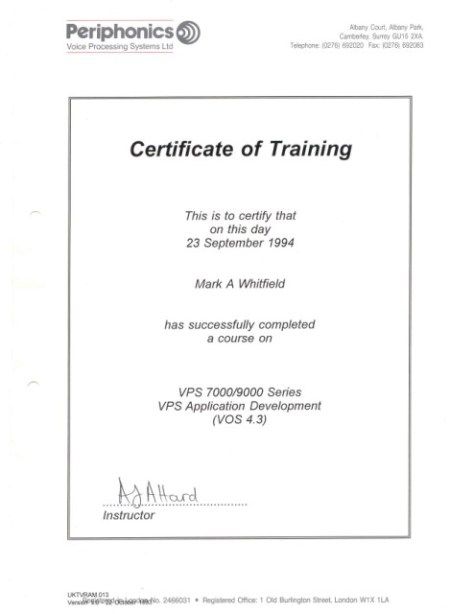
My Periphonics experience

Year:         1994

Course:     Periphonics Voice Processing Systems LTD.  VPS 7000 / 9000 Series VPS
Application Development (VOS 4.3) –
(Periphonics Voice Processing)

Periphonics certificate of training

BBC Micro Home Computer and the Computer Project (CLP) timeline

The timeline of the BBC Micro and the Computer Project (CLP) represents a pivotal era in British computing, moving from early industrial machines to a generation-defining home computer

Pre-Launch & The Need for Literacy (1974–1980)

  • 1974: Ceefax launches as the world’s first teletext service, introducing interactive TV concepts.
  • 1978: Acorn Computers is founded in Cambridge; the BBC initiates its Computer Project to address the UK’s lack of digital preparedness.
  • 1979: A BBC report warns that the silicon chip will radically change the workplace, prompting the need for a national awareness campaign.
  • 1980: After the “New Brain” computer project fails to meet requirements, the BBC searches for a British manufacturer to build a custom machine. 
BBC Micro Home Computer

The Golden Era: The BBC Micro (1981–1985) 

  • 1981: Acorn wins the contract in March with its “Proton” prototype. The BBC Micro Model A (£299) and Model B (£399) are officially launched in December.
  • 1982: The BBC Computer Literacy Project (CLP) formally launches with the TV series The Computer Programme. Over 500,000 machines are sold this year as the “Beeb” enters most UK schools.
  • 1983: The Acorn Electron is launched in August as a budget-friendly home version of the BBC Micro. New series Making the Most of the Micro begins.
  • 1984: High-speed expansion continues; 1,000 dealers operate in the US, and production reaches thousands of units per month in India and Mexico.
  • 1985: The BBC Micro achieves its goal: at least one machine is present in every British school. 

Expansion & The Move to 16-Bit (1986–1990s)

  • 1986: Launch of the Domesday Project, a massive digital snapshot of Britain stored on Laservision discs and accessed via BBC Micros.
  • 1987: The Acorn Archimedes is launched, introducing the revolutionary RISC architecture (the precursor to modern ARM chips).
  • 1989: The official CLP project concludes after nearly a decade of programming and hardware releases. The domain bbc.co.uk is registered.
  • 1997: The BBC website is established, transitioning the corporation’s digital focus from hardware to the internet. 

The Modern Legacy (2016–Present)

  • 2016: The BBC micro:bit is released—a pocket-sized, programmable computer distributed free to one million Year 7 students to continue the legacy of coding literacy.
  • 2018: The BBC Computer Literacy Project Archive is made public, allowing users to watch old programmes and run original 8-bit software in modern browsers.

BBC Micro Home Computer and the Computer Project (CLP) timeline

Also…

The Raspberry Pi is widely considered the spiritual successor to the BBC Micro. Created by the ⁠Raspberry Pi Foundation in Cambridge, the credit card-sized single-board computer was directly inspired by the 1980s educational computer.

Raspberry Pi
Raspberry Pi

It aimed to reverse declining enrollment in computer science by giving a new generation of students an affordable, highly accessible tool to learn coding and hardware engineering.

The BBC Micro Homage

  • Model A and Model B Names: The choice of “Model A” (lower spec, lower cost) and “Model B” (fully featured) names was a deliberate homage to the original ⁠Acorn Computers BBC Micro models.
  • The ARM DNA Connection: The original BBC Micro was built by ⁠Acorn Computers. Acorn later co-developed the ARM (Acorn RISC Machine) processor architecture. Centuries later, these same energy-efficient ARM chips power modern ⁠Raspberry Pi boards.
  • Educational Philosophy: Just as the BBC Micro introduced an entire generation of British school children to programming in the 1980s, the Raspberry Pi was launched in 2012 to renew interest in hands-on computer literacy and physical computing.

Core Differences

  • Affordability: While the BBC Micro Model B was highly aspirational and very expensive for its time (around £399 in 1983), the Raspberry Pi was engineered from the start to be remarkably cheap (originally launched at $25 to $35) so that schools and parents could easily afford it.
  • Exposed Hardware: The Raspberry Pi exposes its raw circuitry, chips, and General Purpose Input/Output (GPIO) pins directly to the user. This design choice makes it much simpler to interface with custom sensors, lights, and robotics.

Sinclair ZX81 Home Computer timeline history

The Sinclair ZX81 was a seminal moment in home computing, launched in March 1981 as the successor to the ZX80. It was designed by Sinclair Research to be a low-cost entry point into computing, famously costing less than £70 (or £50 as a self-assembly kit). 

ZX81 Home Computer

Development & Launch (1980–1981) 

  • Autumn 1980: Most of the ZX81’s software was completed, with the remainder of the year spent writing the manual and finalizing hardware.
  • 5 March 1981: Official UK launch at an introductory price of £49.95 for the kit and £69.95 for the pre-assembled machine.
  • October 1981: Launched in the United States at $149.95 assembled and $99.95 in kit form.
  • November 1981: The ZX Printer was released for £49.95, expanding the system’s capabilities. 
ZX81 Home Computer article

Market Success & Expansion (1982)

  • January 1982: Over 300,000 units had been sold via mail order. American sales reached 15,000 units per month.
  • February 1982: Production reached 40,000 units per month to keep up with massive global demand.
  • July 1982Timex Sinclair 1000 launched in the US as a licensed version of the ZX81, featuring 2KB of RAM (double the original’s 1KB).
  • 1982 Peripheral Boom: Numerous third-party upgrades were released, including the Memopak 64K RAM expansion and various replacement “real” keyboards to solve the frustration of the original membrane design. 

The Shift to Spectrum & Decline (1982–1986) 

  • 23 April 1982: Sinclair launched the ZX Spectrum, the colour-capable successor that would eventually overshadow the ZX81.
  • 1983: Total production of the ZX81 surpassed 1.5 million units worldwide.
  • 1984: The ZX81 was officially discontinued as Sinclair focused on the Spectrum and the ill-fated Sinclair QL.
  • 7 April 1986: Following financial difficulties, Sinclair Research’s computer assets were sold to Amstrad for £5 million.

Sinclair ZX81 Home Computer timeline history

Jackson Structured Programming (JSP) Timeline  by year

Jackson Structured Programming (JSP) was developed by British software consultant Michael A. Jackson to provide a rigorous, data-driven alternative to the intuitive “top-down” methods prevalent in the 1970s. Its evolution is characterized by a transition from micro-level program design to macro-level system architecture. 

The Early 1970s: Foundation and Invention

  • 1970: Michael Jackson founded his firm, Michael Jackson Systems Limited, to fully develop a new program design methodology.
  • 1974: The name Jackson Structured Programming (JSP) was coined by the company’s Swedish licensee.
  • 1975: Jackson published the seminal book Principles of Program Design, which formally documented the JSP method and is now considered a classic. 

The Late 1970s: Standardisation and Expansion

  • 1977: JSP reached global recognition, being taught in universities and used across Europe, the US, and Asia.
  • Government Adoption: The UK government adopted JSP as its standard program design method under the name SDM (System Development Methodology).
  • Industry Use: Large organisations like the World Health Organization (WHO) began using JSP as a standard for specifying programs. 

The 1980s: Evolution into System Development (JSD)

  • 1980: Jackson published JSP, A Practical Method of Program Design, further refining the technique for practical industry use.
  • 1982–1983: Jackson, along with John Cameron, introduced Jackson System Development (JSD). While JSP focused on individual programs, JSD expanded these principles to entire systems.
  • Integration: JSD was widely incorporated into the UK’s SSADM (Structured Systems Analysis and Design Method), specifically for entity and event modelling. 

The 1990s to Present: Legacy and Modern Relevance

  • 1990s: Jackson introduced his third major method, Problem Analysis (or the Problem Frames Approach), focusing on requirements and software specifications.
  • Legacy: While JSP has faded from mainstream daily practice due to the rise of Object-Oriented Programming, its core concepts—like deriving program structure from data structures—influenced modern practices like Event Storming in Domain-Driven Design (DDD). 

Jackson Structured Programming (JSP) Timeline  by year

History of Cloud Computing timeline by year

The history of cloud computing evolved from 1950s time-sharing concepts to today’s AI-integrated hyperscale ecosystems. While John McCarthy and J.C.R. Licklider envisioned computing as a global utility in the 1960s, the modern era truly began with the 1999 launch of Salesforce and the 2006 debut of Amazon Web Services (AWS)

Foundational Era (1950s – 1980s)

  • 1955John McCarthy introduces the theory of sharing computing time among a group of users.
  • 1961: McCarthy proposes that computing will one day be sold as a public utility, similar to water or electricity.
  • 1967: IBM develops the first operating system that allows multiple users to timeshare a single resource.
  • 1969: ARPANET (Advanced Research Projects Agency Network) is launched, serving as the precursor to the modern internet.
  • 1972: IBM releases the first version of its Virtual Machine (VM) operating system.
  • 1977: The cloud symbol is first used in original ARPANET diagrams to represent networks of computing equipment.

The Rise of the Modern Cloud (1990s – 2009)

  • 1996: The term “cloud computing” appears in an internal Compaq business plan.
  • 1997: Professor Ramnath Chellappa defines cloud computing as a “computing paradigm where the boundaries of computing will be determined by economic rationale”.
  • 1999: Salesforce.com launches, becoming the first company to offer business applications over the internet, pioneering SaaS.
  • 2002: Amazon Web Services (AWS) launches as a suite of web-accessible tools for developers.
  • 2006: AWS releases Elastic Compute Cloud (EC2) and Simple Storage Service (S3), marking the birth of modern IaaS.
  • 2007Netflix begins its transition to a video-streaming service using cloud infrastructure.
  • 2008Google releases Google App Engine, a platform for developing and hosting web applications in its data centres.
  • 2009Google Apps (now G Suite) launches, bringing browser-based enterprise applications to the mainstream. 

Expansion & Specialisation (2010 – 2019)

  • 2010: Microsoft officially releases Azure.
  • 2010: NASA and Rackspace initiate OpenStack, an open-source project for cloud software.
  • 2011: Apple launches iCloud, popularising consumer cloud storage.
  • 2012: Oracle enters the market with Oracle Cloud.
  • 2013: Docker introduces open-source container software, revolutionising application portability.
  • 2014: Google launches Kubernetes for container orchestration, and AWS introduces Lambda, pioneering serverless computing.
  • 2019: Microsoft Azure introduces Azure Arc, enabling services to run across various on-premises and cloud environments. 

The AI & Edge Era (2020 – Present)

  • 2020: The COVID-19 pandemic accelerates cloud adoption for remote work and education.
  • 2022-2024: Cloud providers integrate GenAI and Machine Learning into core services, such as Microsoft’s alliance with OpenAI.
  • 2025Quantum-as-a-Service gains traction, with IBM providing cloud access to systems with over 1,000 qubits.
  • 2026: Global spending on cloud services (SaaS, PaaS, and IaaS) is forecast to reach approximately $738 billion.

History of Cloud Computing timeline by year