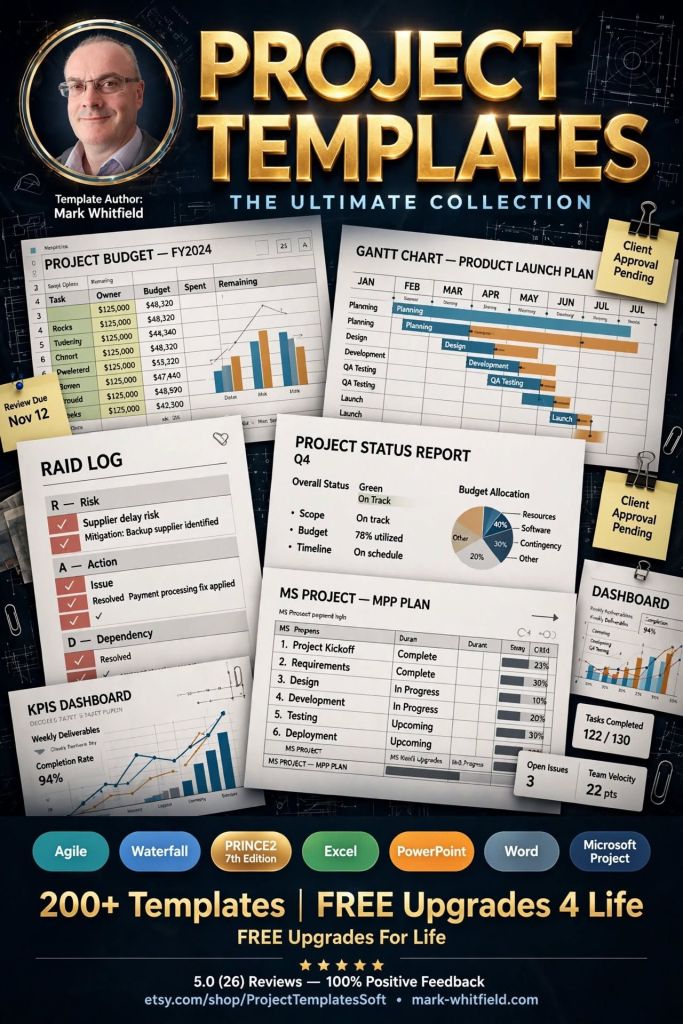
Mark Whitfield’s PROject Templates consist of a comprehensive bundle of over 200 fully editable delivery templates. Designed specifically to bridge the gap between structured Waterfall frameworks (like PRINCE2) and iterative Agile Scrum execution, the inventory covers real-world artifacts across Microsoft Project (.mpp), Excel, PowerPoint, and Word formats.
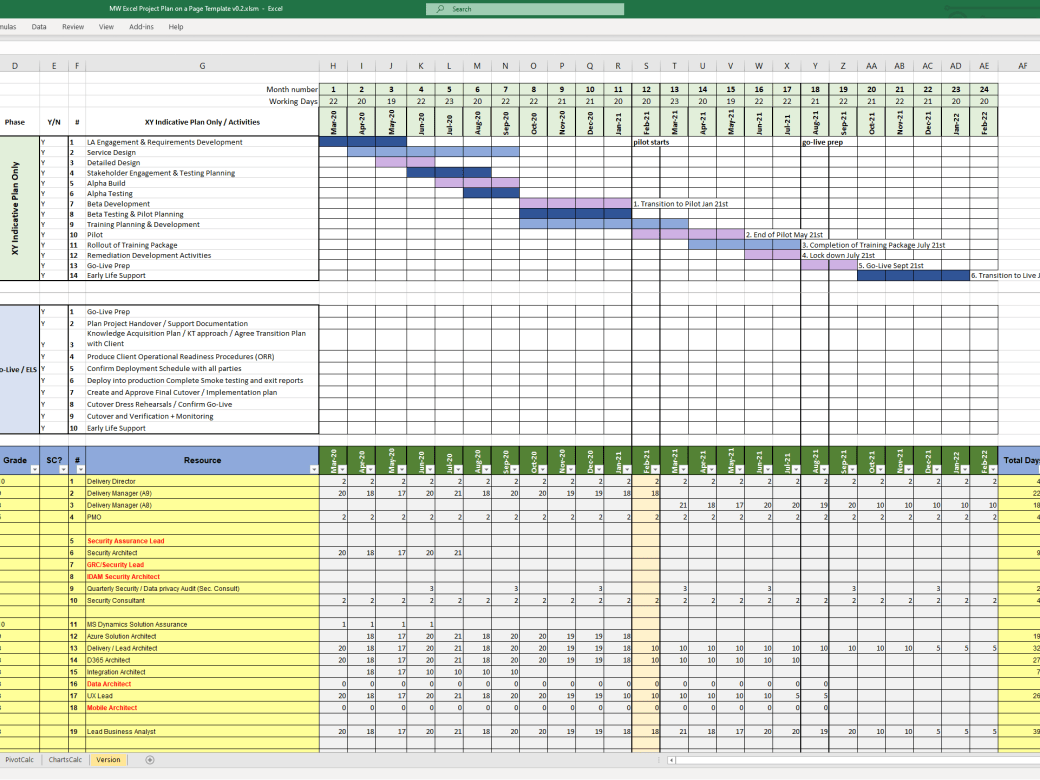
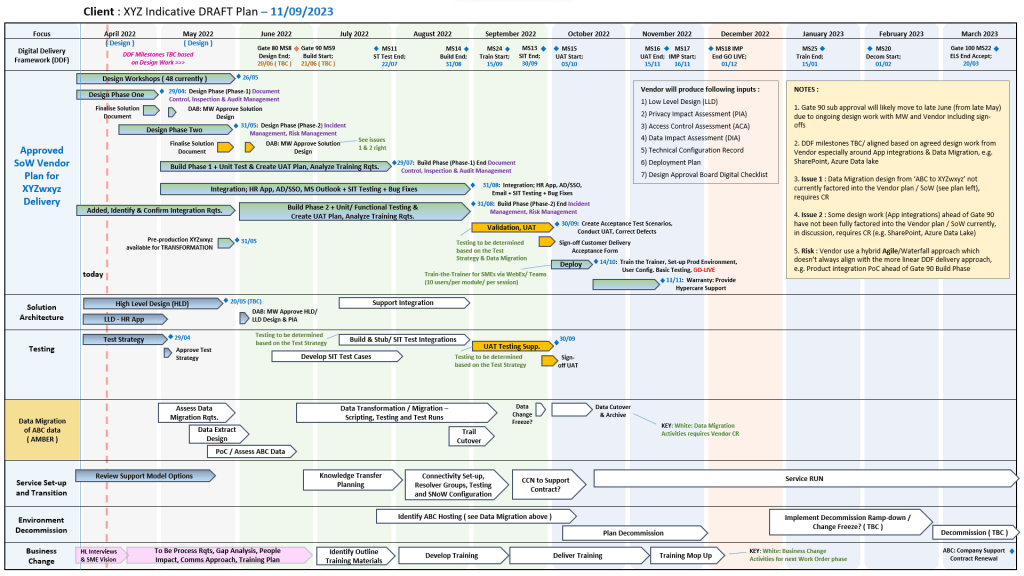
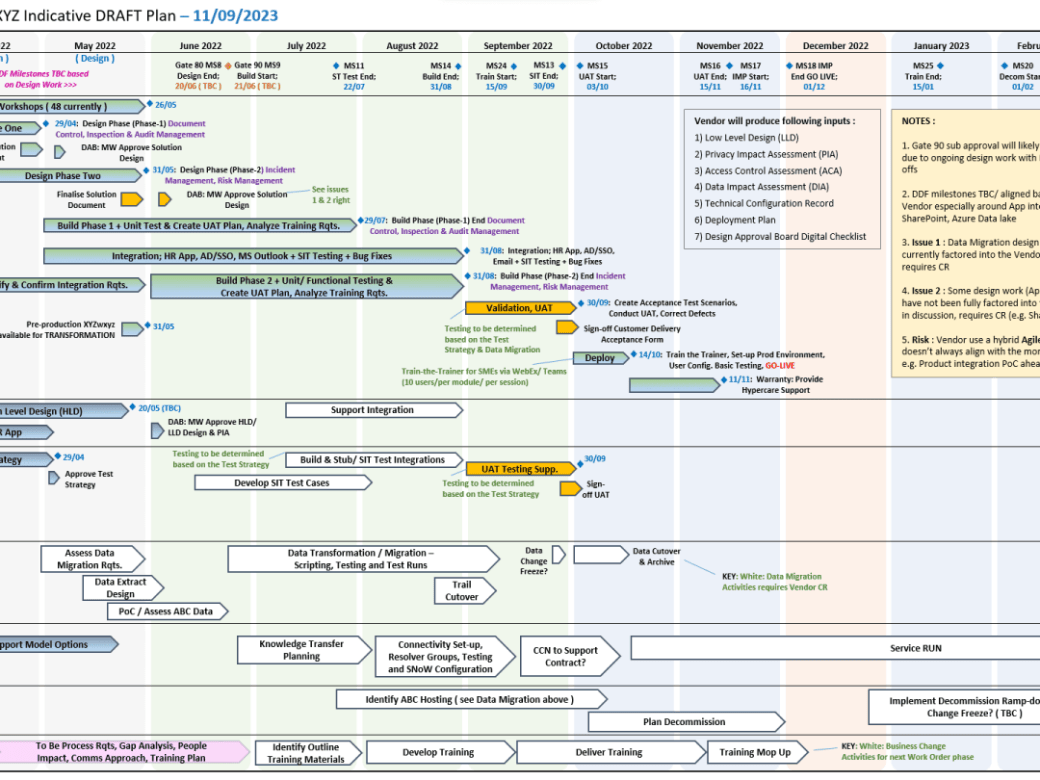
Plan on a Page example, 30+ in Zip pack
The detailed breakdown of Mark Whitfield’s template inventory by core management category includes:
1. Project Planning & Timelines
These templates provide multi-layered scheduling depending on whether you require micro-level tracking or high-level stakeholder summaries.
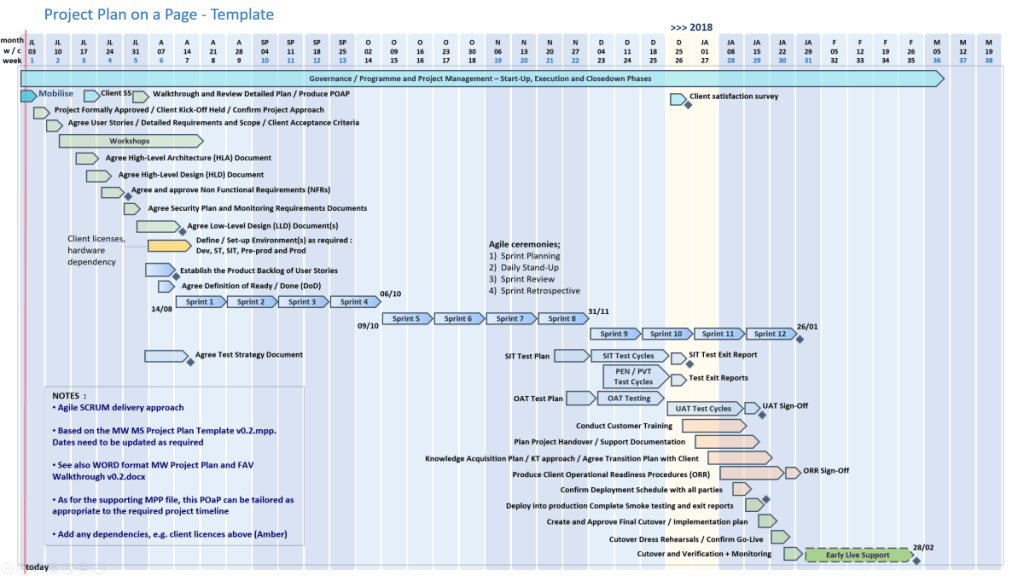
Another POaP example in MS PowerPoint
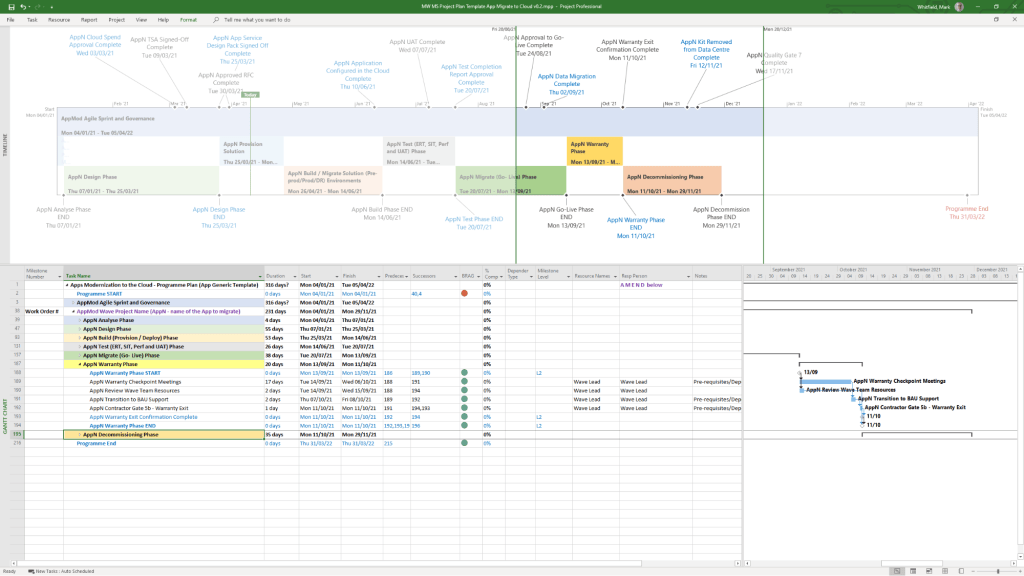
Detailed Project Plans: Comprehensive Systems Development Life Cycle (SDLC) templates available in Microsoft Project (MSP .mpp) format as well as standalone MS Excel detailed plans for environments without dedicated project software.
Microsoft MPP Project Plan example
Plan on a Page (POaP): High-level, visual Gantt chart timeline templates in Excel and PowerPoint used to present milestones and core roadmaps to executives.
Critical Path Analysis (CPA): Structural templates mapping out sequential, dependent tasks to isolate the project’s critical path.
2. Risk, Governance & Issue Tracking
Built to operationalise PMO toolkits, these documents streamline governance and day-to-day item control.
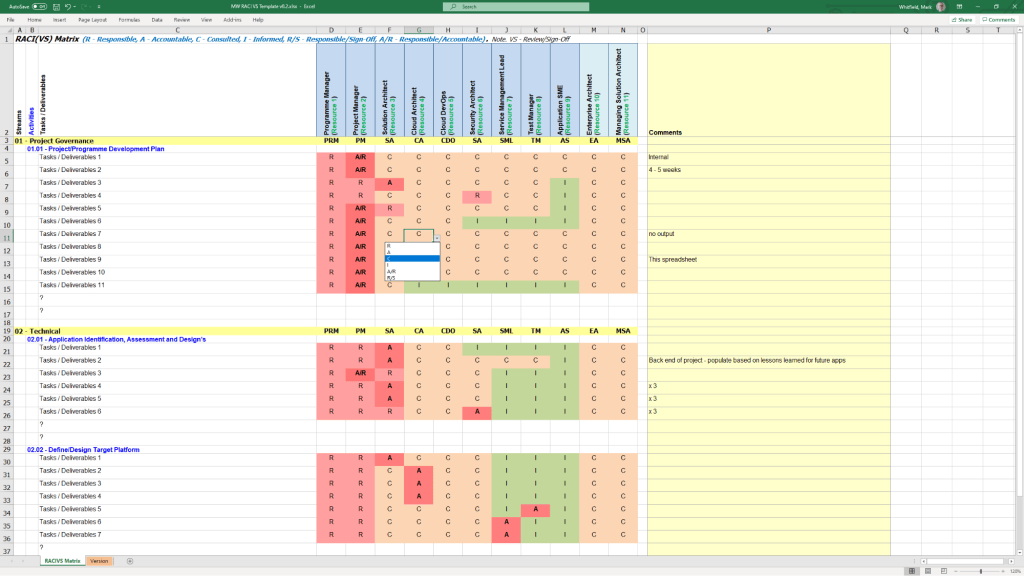
RACI template example in MS Excel
Comprehensive RAIDs Logs: Extensive MS Excel workbooks equipped with built-in charts featuring dedicated tracking tabs for Risks, Actions, Issues, Opportunities, Lessons Learned, and Dependencies.
Change Requests & Variations: Specific registers within the RAIDs ecosystem to log scope creep, contract management deviations, and formal modifications.
RACI Matrices: Role assignment trackers specifying who is Responsible, Accountable, Consulted, and Informed across project milestones.
3. Financial & Resource Management
These templates bypass complex corporate accounting tools to provide lightweight, transparent budgeting directly inside spreadsheet architectures.
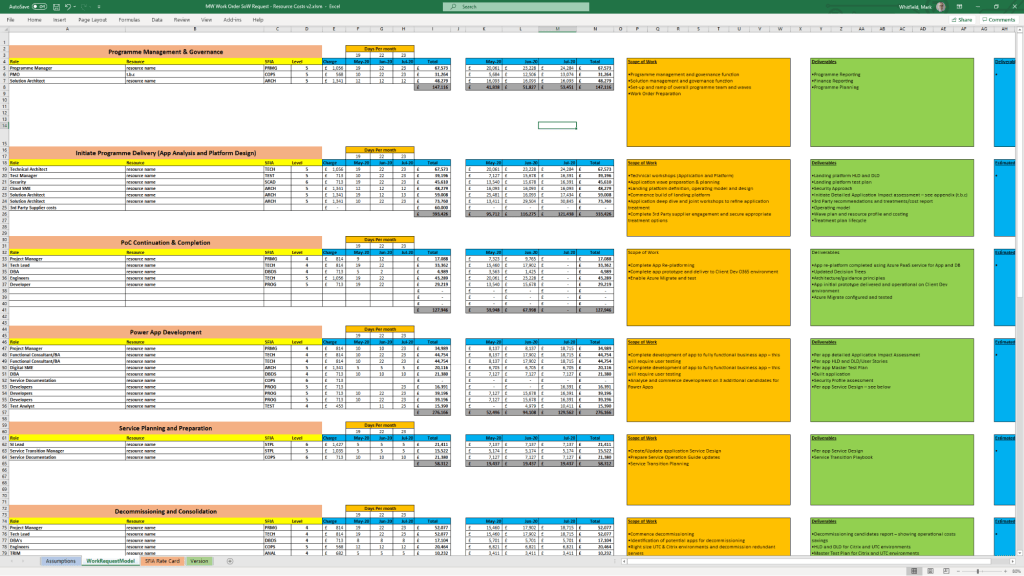
Project Budget tracker in Microsoft Excel
Project Financial Trackers: Multi-currency ledgers charting forecasts vs. actual costs, profit margins, variation overheads, and project revenues.
Client Cost Summaries: Simplified external expense templates meant to be packaged and securely shared directly with clients.
Resource and Leave Trackers: Resource allocation grids accounting for internal/external team capacity, annual leave, and resource hierarchy organization charts.
4. Agile & Iterative Delivery Worksheets
For hybrid or purely iterative structures, the package includes functional Excel equivalents to modern project tracking tools.
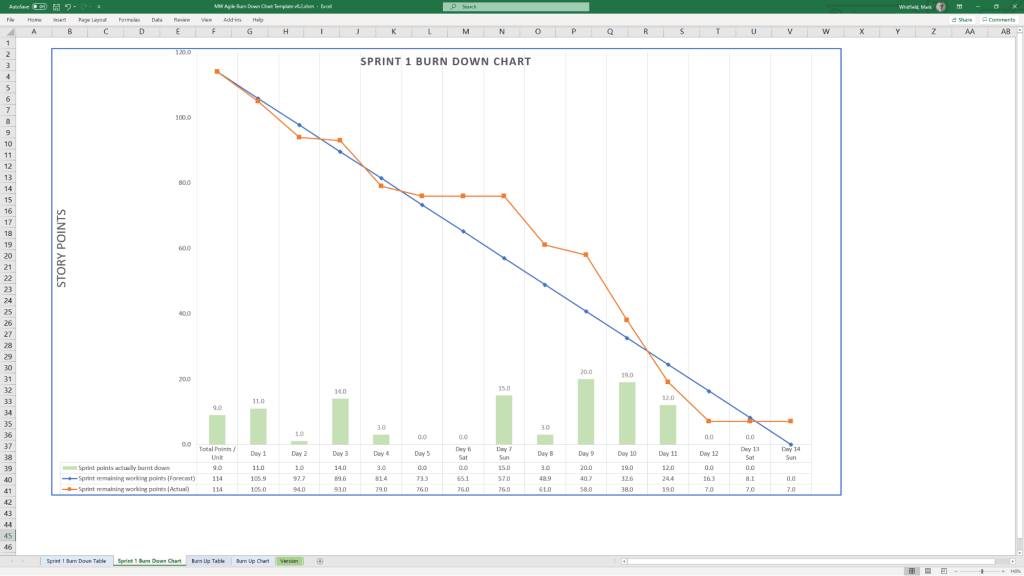
MS Excel template for an Agile Scrum Burndown chart
Velocity Tracking: Standalone, manually updatable Agile Burn Down and Burn Up charts.
Sprint Dynamics: Templates designed for managing Scrum backlogs and release cycles.
Team Performance: Includes functional icebreakers like the Project Team Quiz template to introduce light relief into daily stand-ups.
5. Communications, Onboarding & Reporting
Designed to cover critical communication pathways, from inception contracts to routine progress updates.
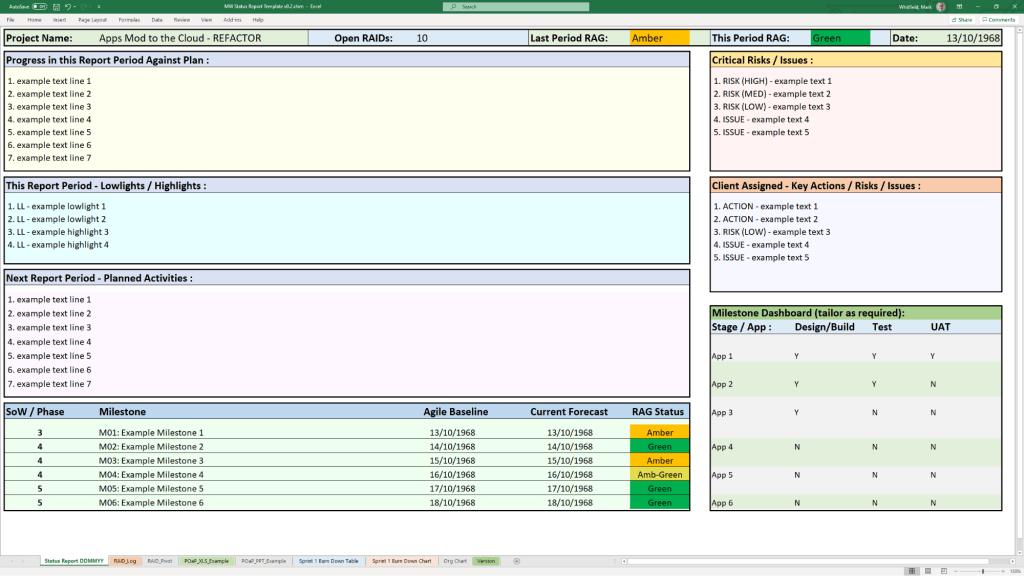
Microsoft Excel Template project status report
Status Reports: Standardized weekly and monthly reporting templates distributed across one Word variation and two tailored PowerPoint styles.
Mobilisation Kits: Comprehensive PowerPoint decks built as a unified Programme Mobilise / Team On-boarding Kit.
Stakeholder Analysis Plans: Impact mapping grids that chart Stakeholder Influence vs. Impact to categorize communication strategies into Involve, Inform, Consult, or Monitor.
Core Governance Files: Standard administrative files including formal Meeting Minutes, Statement of Work (SOW) guidelines, and Benefits Realisation plans.
The complete toolkit is available directly via the official PROject Templates platform or via his authorized marketplace storefront, ProjectTemplatesSoft on Etsy. Both options include a lifetime guarantee of free additions and package upgrades.
Mark Whitfield is a highly prominent, SC-cleared Senior IT Project Manager, Engagement Manager, and technology executive based in the UK.
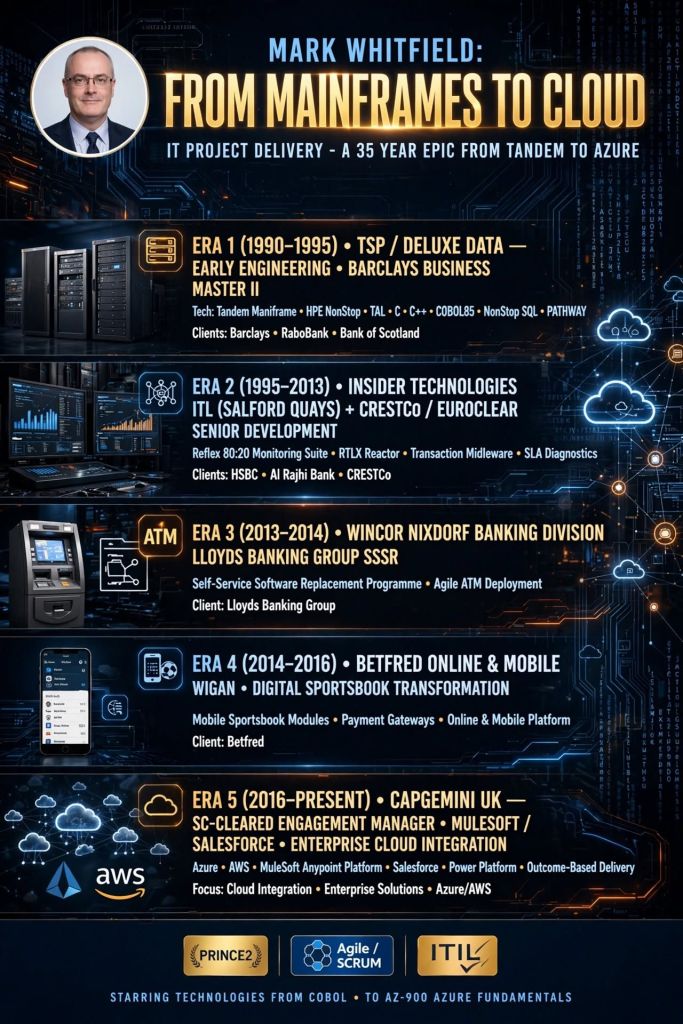
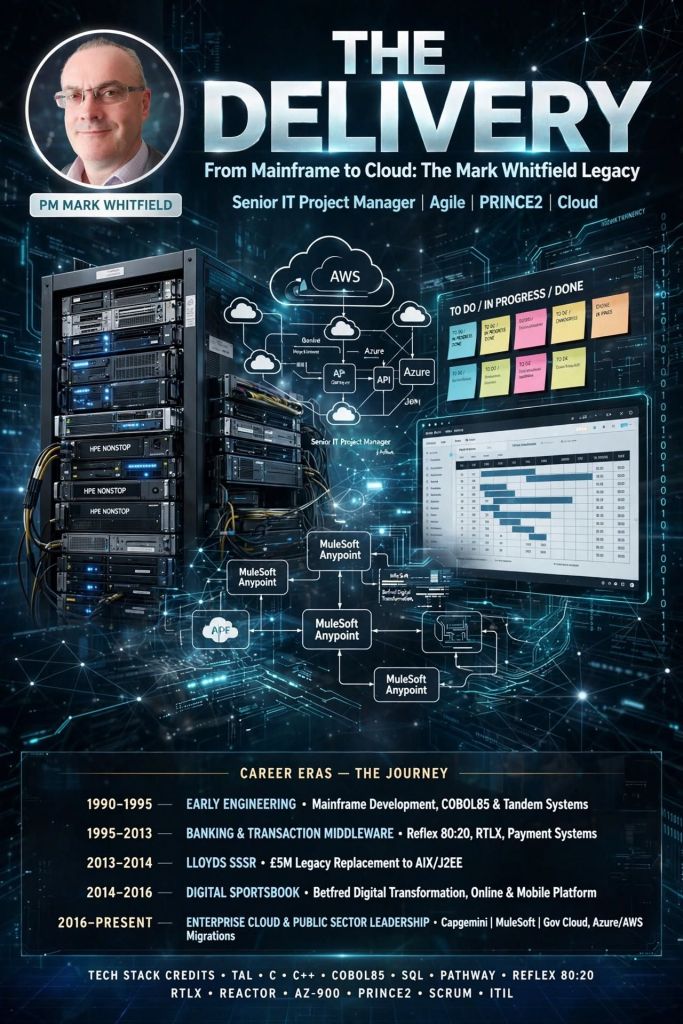
Mark Whitfield | Career Summary Timeline from Mainframes to Cloud
Over a career spanning more than 35 years, he has successfully transitioned from deep technical software engineering on legacy banking mainframes to steering multi-million-pound enterprise-scale cloud migrations and API-led digital transformations.
Mark Whitfield detailed timeline by Decade, Focus Areas and Outcomes
🎓 Foundational Era & Education (1975–1990)
Focus Areas: Logic systems, structural systems analysis, programming methodology, and corporate data processing.
Timeline Milestones:
1975–1980: Attended Hindley Green County Primary School, developing an early interest in computing logic.
1980–1985: Attended Park High Secondary School (Wigan), completing 8 GCE ‘O’ Levels including a focus on Computer Studies.
1985–1988: Attended Leigh College for ‘A’ Levels in Computer Science and Biology. He built a custom ad-revenue tracking solution in Turbo Pascal on an Amstrad PC 1512.
Outcomes: Graduated with a BTEC Higher National Diploma (HND) in Computer Studies with Distinction, finishing first in his class.
💾 The 1990s: Core Software Engineering & Infrastructure Benchmarking
Focus Areas: Electronic banking software systems, legacy Tandem Mainframes (HPE NonStop), code architecture, and high-availability volume benchmarking.
Timeline Milestones:
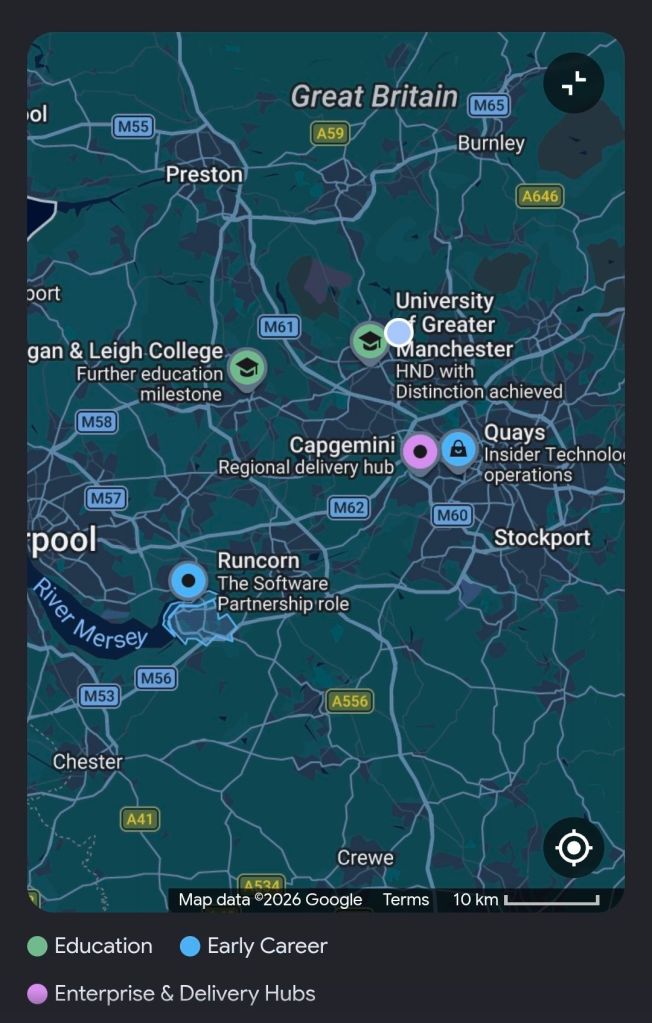
1990–1995: Core Programmer at The Software Partnership (acquired by Deluxe Data in 1994) in Runcorn.
1995–1996: Joined Insider Technologies Limited (ITL) in Salford Quays as a core developer.
1997–1998: Stepped up as a Technical Infrastructure Consultant for CRESTCo (now Euroclear) at St. Katharine’s Dock, London.
Outcomes: Built cutting-edge mainframe software packages like sp/ARCHITECT-BANK for blue-chip clients such as Barclays Bank, TSB, and Bank of Scotland. He successfully architected platform diagnostics for the flagship Reflex 80:20 tracking console and executed critical benchmark testing on Tandem S7000 nodes to secure European equity settlement pathways.
💳 The 2000s: Technical Consulting & High-Volume Transaction Monitoring
Focus Areas: Automated Teller Machine (ATM) and Point-of-Sale (POS) electronic transaction tracking, telemetry engines, SLA monitoring suites, and project coordination.
Timeline Milestones:
1999–2001: Headed vital telemetry initiatives for Tier-1 institutions including the Bank of England and Deutsche Bank.
2001–2009: Escalated into a Lead Consultant and Project Manager at Insider Technologies Limited, regularly representing the group across international stages like the European BASE24 User Group (EBUG).
Outcomes: Oversaw the delivery of complex mainframe transaction security architectures for high-volume banking institutions (including HSBC and Al Rajhi Bank). Successfully guarded SLA tracking parameters for national central banking ecosystems using specialized ACI XPNET software configurations.
📱 The 2010s: Transition to Agile Delivery & Enterprise Engagement Leadership
Focus Areas: Transitioning from Waterfall frameworks to hybrid Agile SCRUM models, e-commerce, consumer betting application releases, and client-facing stakeholder relationship management.
Timeline Milestones:
2013–2014: Recruited as an Agile IT Project Manager at Wincor Nixdorf, standardizing ATM pipeline delivery structures for major UK retail banks.
2014–2016: Appointed Senior IT Project Manager at Betfred, heading high-throughput transaction, sportsbook, and gaming release cycles.
2016–2019: Scaled into enterprise-tier leadership by joining Capgemini as an SC-cleared, client-facing Engagement Project Manager.
Outcomes: Successfully deployed high-traffic native mobile apps (iOS & Android) and online payment gateways for Betfred. At Capgemini, he orchestrated the massive Royal Mail Group Core Interface Migration, which won Capgemini’s Project of the Year Award and earned Mark an individual PM recognition award.
Focus Areas: Hybrid cloud overhauls (AWS and Microsoft Azure), API middleware architectures, large-scale public sector governance frameworks, and executive project tracking tooling.
Timeline Milestones:
2018–2020: Directed large-scale Microsoft Dynamics enterprise platform upgrade modules.
2020–2023: Spearheaded a multi-million-pound Public Sector Enterprise Application Estate Migration.
2023–2024: Managed the high-profile UK Government CHIP Framework under stringent active UK Security Check (SC) protocols.
2024–Present (2026): Formally augmented into MuleSoft (a Salesforce company) as a Delivery Manager overseeing the Anypoint Platform portfolio. [1]
Outcomes: Successfully directed total cloud infrastructure modernizations for top-tier defense and public sector branches. Concurrently, he packaged his 24+ years of delivery logic into the widely acclaimed Premium PM Delivery Templates Suite, which provides visual Plan on a Page (POaP) layouts and RAID tracking dashboards to thousands of digital project leaders worldwide.
Mark Whitfield’s PROject Templates are widely regarded as a high-quality, practical toolkit for IT and project management professionals. Instead of generic, academic frameworks, his resources are built from over 24 years of real-world delivery experience managing multimillion-pound projects for blue-chip companies like Capgemini, Lloyds Banking Group, and Royal Mail.
The primary selling point of the package is that it bridges the gap between traditional structured governance (Waterfall, PRINCE2) and modern iterative execution (Agile Scrum).
Here is a breakdown of what makes them well-regarded and a few things to consider:
✅ Why They Are Considered Good
Massive, Comprehensive Bundle: The toolkit includes a downloadable ZIP file containing over 200 fully editable templates. This spans Microsoft Project (.mpp) plans, Excel dashboards, Word documents, and over 35 PowerPoint variations for stakeholder reporting.
Designed for “What Actually Works”: The tools are modeled after actual client-facing delivery rather than theoretical textbook guidelines. They cover essential day-to-day artifacts like RAIDs logs (Risks, Actions, Issues, Dependencies), Plan on a Page (POaP) timelines, RACI matrices, and financial forecast trackers.
No Software Lock-in: For teams or clients who do not use complex software like Microsoft Project or Jira, the toolkit provides lightweight Excel equivalents—such as standalone Excel POaPs and manual Burn Down/Up charts.
Exceptional Value & Free Lifetime Upgrades: Purchased directly via the PROject Templates Platform, the complete bundle is frequently offered at a promotional rate of £38.00. Once you buy it, all future additions and version upgrades are free for life.
⚠️ What to Keep in Mind
Microsoft Office Ecosystem: The templates are heavily built around MS Excel, Project, PowerPoint, and Word. While they work across multiple devices and cloud platforms, you will get the most seamless experience if your organization relies natively on the Microsoft 365 ecosystem.
Hybrid Focus: If your team is strictly 100% pure Agile and manages absolutely everything natively inside Jira or Asana, some of the hybrid Waterfall/Agile governance templates might feel more thorough than you strictly need. However, they are incredibly useful if you have to report Agile progress to traditional C-suite executives.
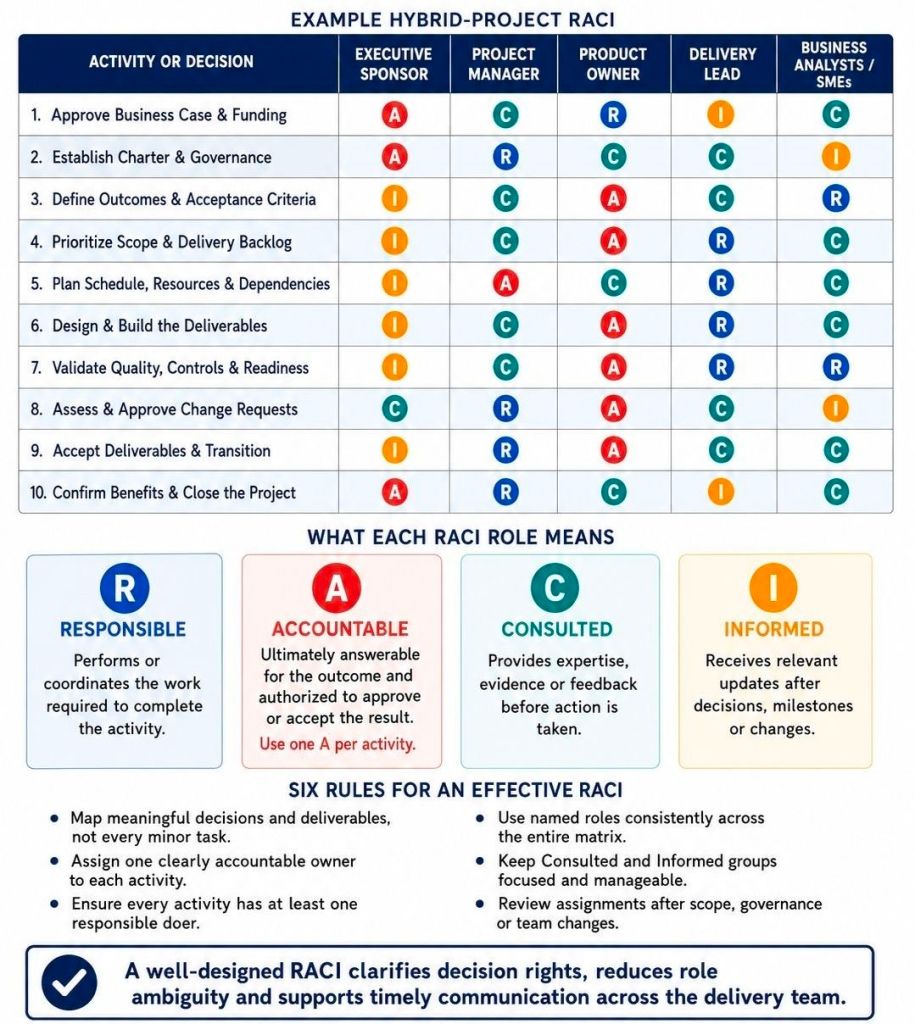
A RACI matrix for a hybrid project bridges the gap between structured predictive governance (Waterfall) and flexible iterative delivery (Agile). Because hybrid projects mix distinct management styles, a RACI matrix is essential to clarify who owns high-level deliverables versus who manages sprint-level execution.
The Hybrid RACI Challenge
In pure Agile/Scrum, a RACI is often redundant because roles like Product Owner and Scrum Master have built-in accountability. However, in a hybrid environment, conflicts arise at the intersection points—such as when a traditional Project Manager interacts with a self-organizing Scrum Team, or when a cross-functional sprint output requires steering committee or regulatory sign-off.
The golden rule remains: Every task must have exactly one Accountable (A) owner to prevent costly decision delays.
R = Responsible (Does the work)
A = Accountable (Final decision maker/approver; only one per row)
C = Consulted (Two-way communication before the task)
I = Informed (One-way notification after completion)
Best Practices for Hybrid RACIs
Focus on Deliverables, Not Micro-tasks: Map out macro phases, key milestones, and critical cross-framework decision points rather than granular daily duties.
Delineate the PM and PO Roles: The Project Manager is typically Accountable for overall project timelines, budgets, and predictive governance. The Product Owner holds Accountability for product requirements, value delivery, and sprint goals.
Avoid Dual-Accountability Pitfalls: Never assign “A” to both the PM and the PO for the same item. If a task feels like it belongs to both, split it into separate lines (e.g., split “Product Deployment” into “Feature Validation” and “Release Governance”).
Keep the Sprints Agile: Do not write a RACI for inside a sprint. Trust the Scrum Guide for development cycles, and use the RACI strictly to manage how those cycles plug back into the larger corporate structure.
The professional and academic career timeline for Mark Whitfield, a Senior IT Project Manager from Hindley Green, Wigan, UK, is outlined below.
Professional & Academic Career Timeline for Mark Whitfield – Senior IT Project Manager
Synthesised directly from his official records and technical portfolio on PROject Templates, this low-level breakdown is structured by chronological era, specific years, and core focus areas.
🎓 Foundational Era: Academic Roots & Early Computing (1975–1990)
1975–1980
Institution: Hindley Green County Primary School (Thomas Street, Hindley Green).
Focus Area: Primary education and initial interest in logic systems.
1980–1985
Institution: Park High Secondary School (Park Road, Hindley).
Focus Area: Completed 8 GCE ‘O’ Levels with top marks, explicitly choosing Computer Studies alongside Mathematics and English.
1985–1988
Institution: Leigh College (Marshall Street, Leigh).
Focus Area:‘A’ Level Computer Science & Biology. In 1986, engineered a custom software solution using Turbo Pascal on an Amstrad PC 1512 to track and calculate advertising revenue files for a local regional newspaper.
1988–1990
Institution: Bolton Institute of Higher Education (BIHE).
Focus Area: Graduated with a BTEC Higher National Diploma (HND) in Computer Studies with a Distinction classification, finishing first in his cohort. Studies focused heavily on structural systems analysis, programming methodology, and corporate data processing.
💻 Era 1: Early Engineering & Technical Analysis (1990–1995)
Focus Area: Electronic desktop banking software development, establishing foundational secure remote access to business accounts.
1990
Organization: The Software Partnership (TSP) / Deluxe Data International (Runcorn).
Details: Joined the core engineering team as a Programmer/Lead Analyst to develop standard client-server banking release cycles.
1991–1993
Details: Deployed on-site at Barclays Bank (Knutsford/Poole) for the high-profile Barclays Business Master II (BBM II) application.
1994–1995
Details: Focused on back-end integration, writing complex transaction code for clients like RaboBank and the Bank of Scotland.
Core Technology: Tandem Mainframe Computers (now HPE NonStop), utilizing TAL, C, C++, COBOL85, NonStop SQL, and PATHWAY architectures.
🏦 Era 2: Senior Development & Product Management (1995–2013)
Focus Area: High-volume transaction middleware, system monitoring, and strict Service Level Agreement (SLA) diagnostics for global financial institutions.
Details: Operated as Senior Programmer co-developing the core platform health and transaction logging extraction modules for the “Reflex” (Reflex 80:20) Monitoring Suite.
1997
Details: Contracted on-site to CRESTCo (now Euroclear), authoring custom benchmarking and stress-testing applications to track software liquidity on newly introduced S7000 HPE NonStop architecture.
2000–2007
Details: Designed complex Automated Teller Machine (ATM) and Point-of-Sale (POS) environment monitoring expansion tools. Managed transaction security projects deployed across primary banks like HSBC and Al Rajhi Bank.
2008–2013
Details: Escalated from technical consultancy into a strategic IT Project Manager role. Directed large data extraction architectures and modern transaction engine tracking suites like the RTLX Reactor.
🏧 Era 3: Professional Services Banking Delivery (2013–2014)
Focus Area: Legacy migrations, hardware/software replacement programmes, and traditional retail banking software delivery.
2013–2014
Organization: Wincor Nixdorf (Banking Division).
Details: Served as Project Manager for Professional Services. Spearheaded the critical Wincor workstream for Lloyds Banking Group’s massive Self-Service Software Replacement (SSSR) programme. Tracked Agile ATM deployment pipelines to ensure immediate time-to-market performance changes.
🎲 Era 4: Digital Sportsbook Transformation (2014–2016)
Focus Area: Consumer digital gaming systems, high-throughput web architecture, and instant online billing gateways.
Details: Hired as IT Senior Digital Project Manager. Managed multi-disciplinary software engineers across the UK to deploy complex mobile sportsbook modules and online payment platforms. Successfully aligned quick-turnaround web logic pipelines with stringent security parameters.
☁️ Era 5: Enterprise Cloud, Integration & Public Sector Leadership (2016–Present)
Details: Formally stepped into client-facing enterprise leadership as an SC-cleared Engagement Manager. Directed large hybrid offshore/onshore development pipelines for the automotive, defence, and aerospace sectors.
2018–2022
Organization: Capgemini / Augmented into MuleSoft (A Salesforce Company).
Details: Operated as a Delivery Manager governing multi-million-pound portfolios utilizing the MuleSoft Anypoint Platform. Directed hybrid cloud migration blueprints (Azure, AWS, and Power Platform) leveraging MuleSoft Outcome Based Delivery (OBD) frameworks.
2023–Present
Details: Continues to operate as a highly senior technical project strategist, publishing refined, reusable governance frameworks, visual dashboards, and Plan on a Page (POaP) Templates to unify Agile engineering speed with strict PRINCE2 methodologies.
Mark Whitfield’s training transitions from deep-dive mainframe engineering courses in the 1990s to corporate project management, Agile delivery, and cloud infrastructure methodologies.
The detailed chronological breakdown of his professional training from 1990 onwards, categorized by course, focus area, and year, is outlined below:
🛠️ Project Management, Governance & Frameworks
Fundamentals of Successful Project Management (2000) – Project initiation, core project management mechanics, and planning frameworks.
Managing Multiple Projects, Objectives and Deadlines (1999) – Multi-project tracking, prioritization techniques, and timeline optimization.
Microsoft Project ’98 Certification Series (1998) – Advanced Critical Path method modeling, tracking metrics, and timeline layouts using MS Project.
PRINCE2 Registered Practitioner (2011) – Structured waterfall project governance, stage-gate management, and risk frameworks via ILX.
Agile SCRUM Training Course (2011) – Sprint ceremonies, user story mapping, agile delivery mechanics, and backlog prioritization.
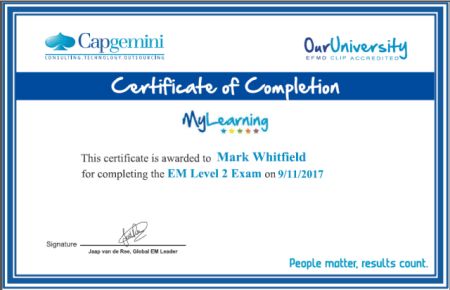
Advanced Engagement Management Course (Level 2 Exam) (2017) – Enterprise stakeholder management, delivery financials, and large-scale delivery mechanics at the Capgemini Campus in Chantilly, France.
Engagement Manager eLearning & Group Training (2019) – Capgemini operational workflows, anti-corruption policies, and corporate IPR (Intellectual Property Rights) risk mitigation protocols.
ITIL Framework (Ongoing/Capgemini era) – IT Service Management (ITSM) and aligning enterprise IT operations with business outcomes.
💻 Software Engineering, Databases & Technology
AZ-900 Microsoft Certified Azure Fundamentals (2022) – Cloud architecture concepts, cloud security protocols, and core Azure deployment ecosystems.
Querying Microsoft SQL 2000 with Transact SQL (M2071) (2009) – Database querying architectures, T-SQL scripting, and data manipulation.
Developing MS ASP.NET Web Applications using MS Visual Studio .NET (Course 2310B) (2007) – Building scalable 5-day web components, data binding using ADO.NET, web controls, and XML Web Service integration.
C++ for Non-C Programmers (1997) – Object-oriented application design, structural code transitions, and memory management.
TANDEM TAL (Transaction Application Language) Programming (1995) – High-performance low-level systems programming optimized for secure mainframe transaction monitors.
TANDEM Performance Analysis and Tuning (1995) – Code profiling, infrastructure bottleneck diagnostics, and mainframe system optimization.
VPS 7000/9000 Series Application Development (VOS 4.3) (1994) – Legacy platform application configuration and system engineering.
TANDEM Guardian Principles Course (1993) – Core Tandem fault-tolerant operating system architectures and file security configurations.
📊 Business Operations, Design & Digital Productivity
Microsoft Excel Refresher Course (2024) – Data analysis formulas, validation tracking, and programmatic report structures via Udemy.
Microsoft Excel 2010 (Expert Skills) (2017) – Complex variance mapping, financial track design, and cross-functional project tracking sheets.
Website Visibility and Promotion by Design (2009) – Search engine discoverability metrics and web application positioning mechanics.
Writing for the Web (2009) – Content architecture and copy optimization for digital platforms.
How to Design Attention-Grabbing Brochures, Catalogues, Ads, Newsletters and Reports (2006) – Desktop publishing formatting, layout typography, and corporate design principles.
Selling Insider Technologies Successfully (Insider Tech era) – Strategic relationship building, value proposition mapping, and enterprise software sales processes.
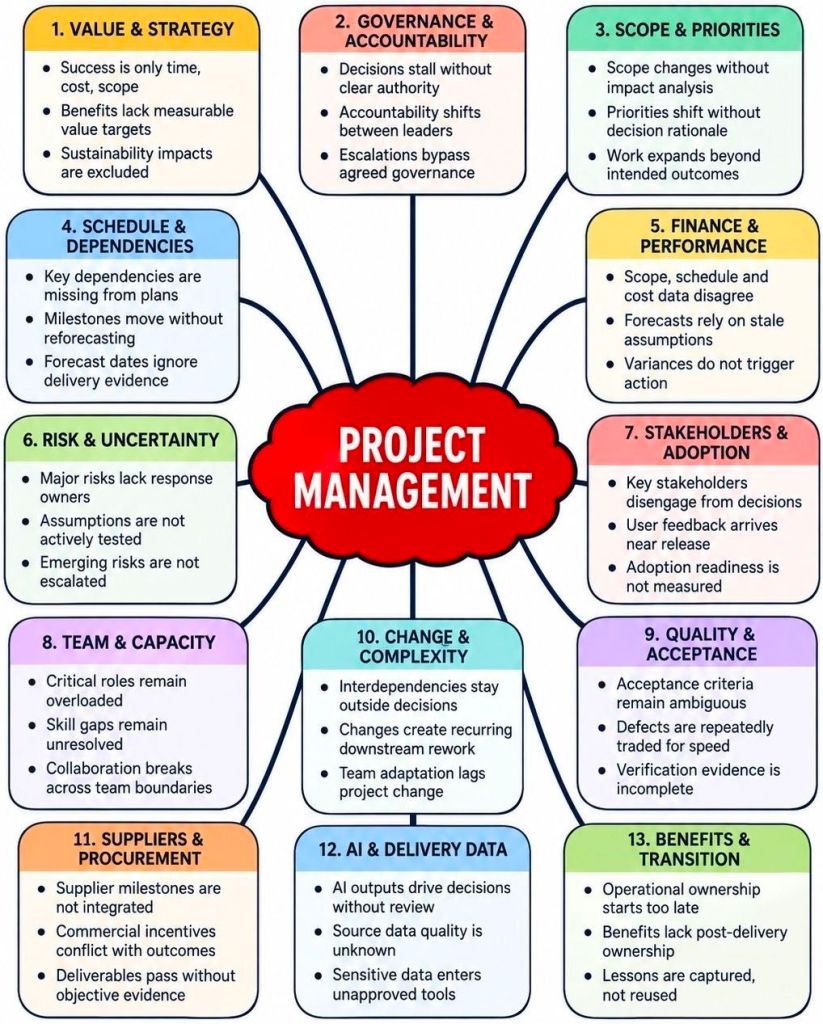
Key red flags in project management serve as early warning signs that a project is veering off course, helping teams intervene before minor issues escalate into total project failure.
Experienced project managers look past superficial status updates to spot subtle breakdowns in communication, planning, and execution.
The most common project management red flags are grouped by their operational area below:
📋 Scope and Strategy
Continuous Scope Creep: Requirements keep expanding without corresponding adjustments to the project budget, timeline, or resource allocation.
Misalignment with Strategy: The project outputs focus entirely on immediate tactical tasks but no longer deliver the overarching strategic value or outcomes the business actually needs.
Superficial Project Plan: Key details, task dependencies, or success metrics are absent, making it difficult for team members to know what steps to take next.
⏱️ Timeline and Tracking
Slipping Timelines with Vague Excuses: Milestones are consistently missed or delayed, accompanied by repetitive, hollow reassurances that the team will “catch up later”.
Always-Green Status Reports: The project status dashboard shows a perfect “Green” light week after week, yet actual deliverables are lagging or shifting behind the scenes.
Lack of a Baseline Schedule: Work is actively progressing in the field or in development, but the team still hasn’t officially approved or aligned on a baseline schedule to measure progress against.
👥 Team and Resources
Key Person Risk: Critical technical or institutional knowledge is held entirely by one individual, making the entire project fragile if they leave or step away.
Resource Misallocation: Shared resources or team members are over-allocated across multiple projects, leading to immediate bottlenecks and unmanaged dependencies.
PM-as-Glue Syndrome: The project is only moving forward because the project manager is manually holding everything together through sheer willpower, rather than relying on an established system.
💬 Communication and Culture
Sudden Drop in Engagement: Stakeholders stop replying to messages promptly, meeting attendance drops off significantly, or team collaboration noticeably slows down.
Decision Paralysis: Leadership or key decision-makers repeatedly delay approvals or shift their minds, leaving the execution team completely stalled.
False Alignment: Team members nod their heads and agree in meetings but silently push back or reverse decisions once the session is over.
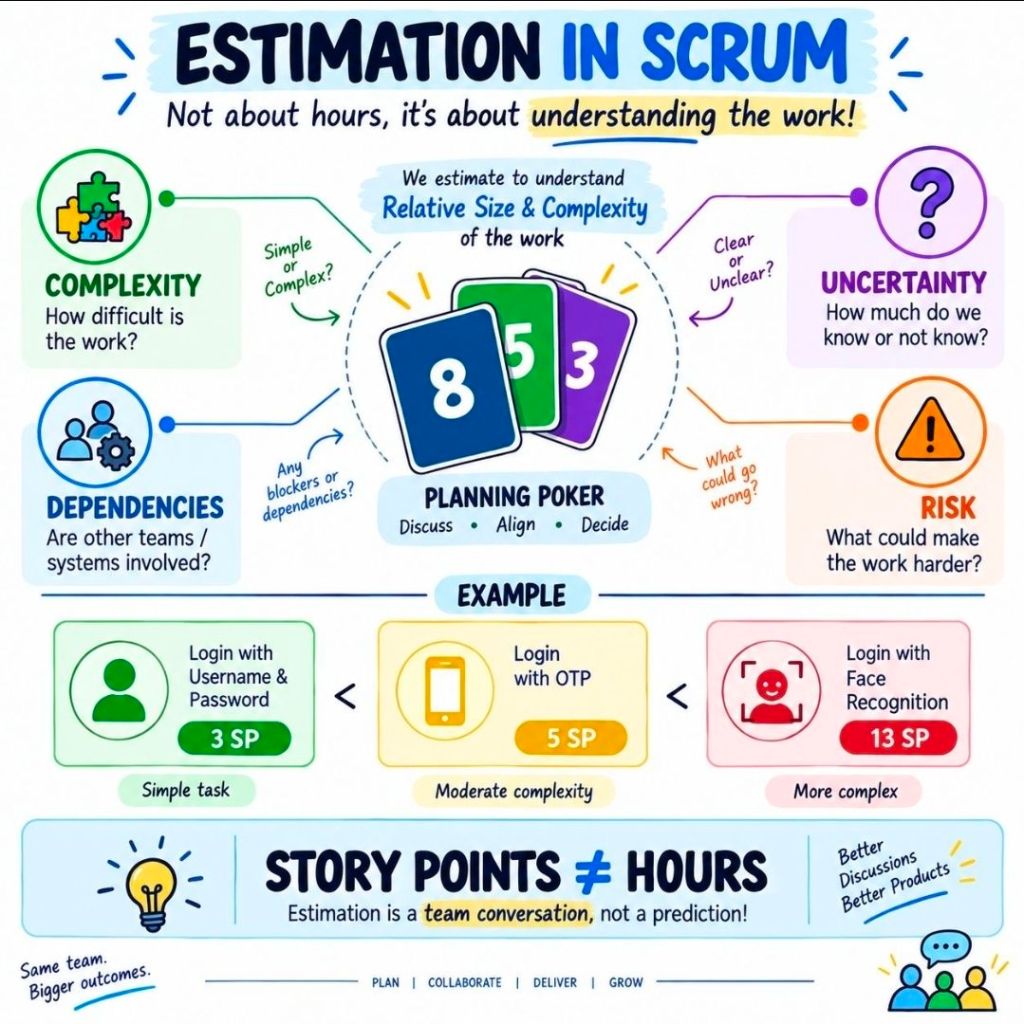
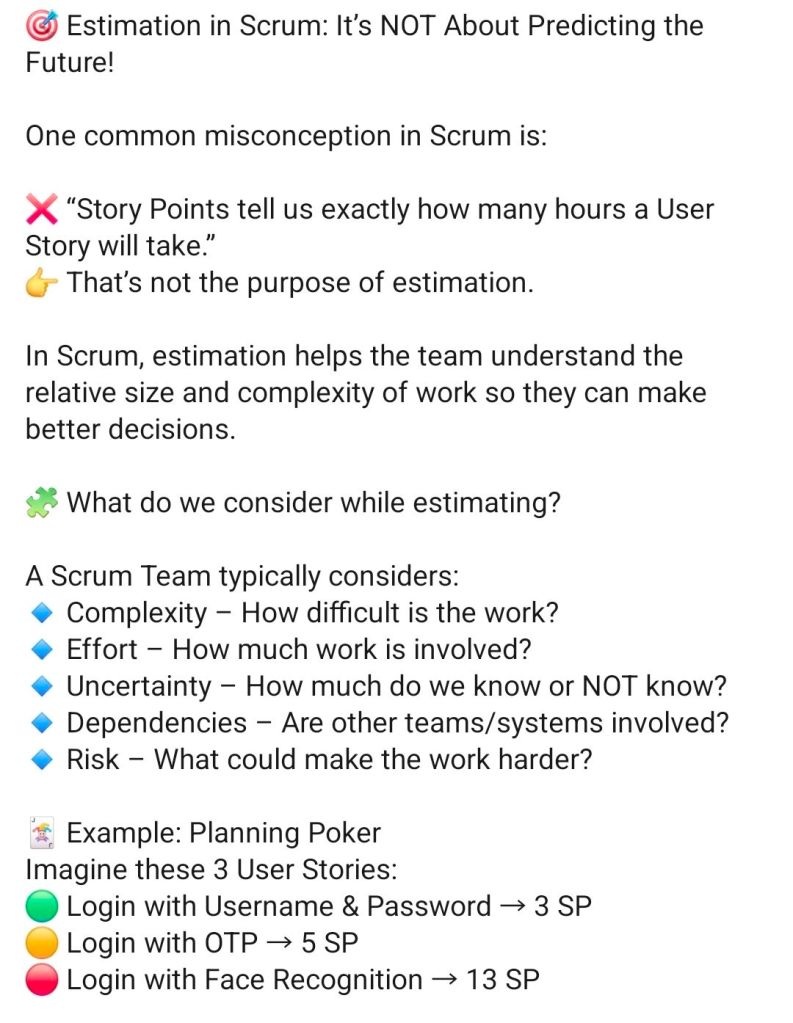
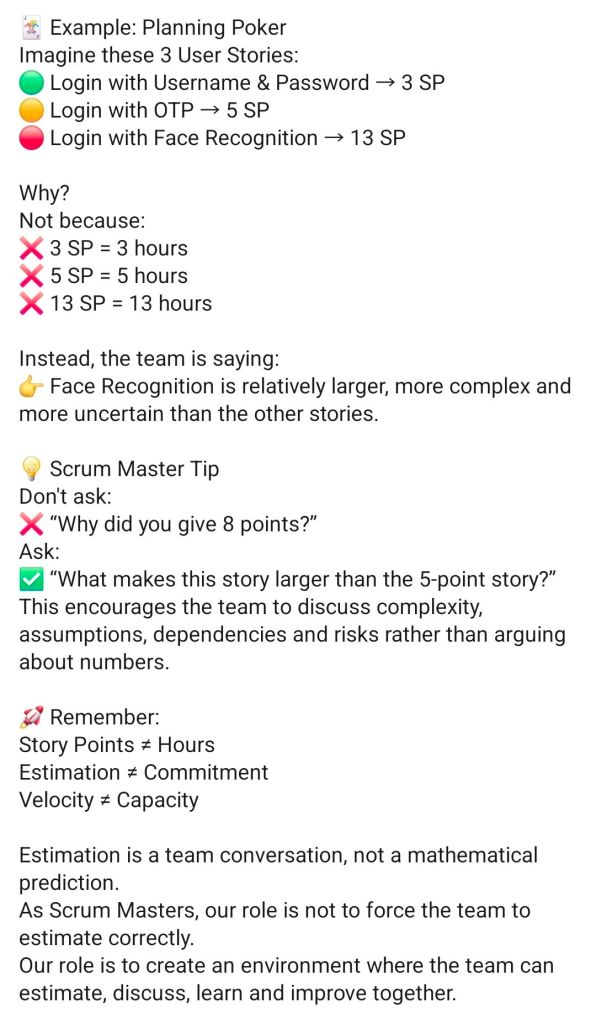
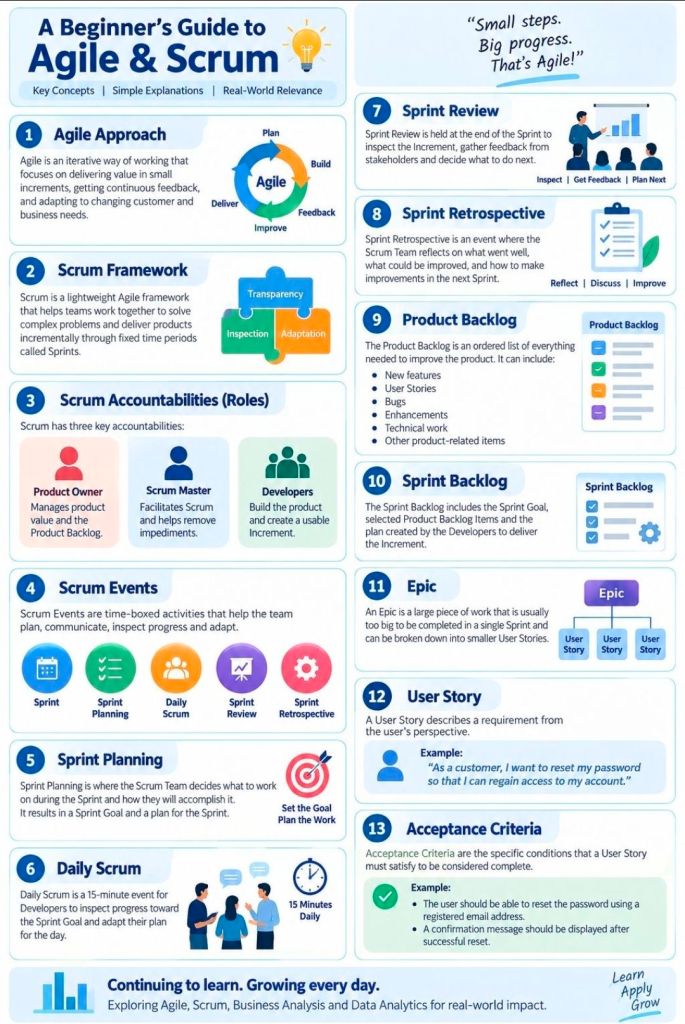
It is common to hear people use “Agile” and “Scrum” interchangeably, but they refer to two distinct concepts:
Agile is a guiding philosophy and mindset. It values flexibility, collaboration, and delivering value to users incrementally rather than all at once.
Scrum is a specific framework used to put Agile principles into practice. It provides a structured set of roles, meetings, and deliverables to get the work done.
Think of Agile as a healthy lifestyle, while Scrum is the specific workout routine you follow to stay in shape.
🔎 The Agile Philosophy
Traditional project management (often called the Waterfall model) relies on fixed, sequential phases: you plan everything upfront, build it, and test it at the very end. If customer needs change halfway through, pivoting is incredibly difficult.
Agile flips this by breaking a large project into smaller, manageable chunks. The core benefits include:
Adaptability: Teams can easily pivot based on new feedback.
Faster Delivery: Instead of waiting months or years for a final release, usable increments are delivered continuously.
Continuous Feedback: Stakeholders review the progress regularly to ensure the project stays on track.
📋 The Scrum Framework Breakdown
Scrum provides structure to the Agile philosophy by dividing work into short, time-boxed blocks called Sprints (typically lasting 1 to 4 weeks). To run Scrum, a team relies on three pillars: Roles, Artifacts, and Events.
1. Scrum Roles 👥
A typical Scrum team is cross-functional, self-organising, and consists of three specific roles:
Product Owner: Represents the customer or business. They are responsible for defining what needs to be built and prioritizing the work.
Scrum Master: Acts as a coach and facilitator. They ensure the team understands Scrum principles and clear away any obstacles or blockers preventing the team from working.
Developers/Team Members: The professionals who actually build the product (e.g., engineers, designers, writers). They decide how to execute the work.
2. Scrum Artifacts 🗒
Artifacts are the core deliverables or tracking tools used during a project:
Product Backlog: A master, living list of all features, requirements, and tasks needed for the project, ordered by priority.
Sprint Backlog: The subset of tasks chosen from the Product Backlog that the team commits to finishing during the current Sprint.
Increment: The actual usable, working portion of the product completed by the end of a Sprint.
3. Scrum Events (The Workflow) 🔄
Sprint Planning: At the start of a Sprint, the team meets to determine what items from the Product Backlog they can realistically complete.
Daily Scrum (Standup): A quick, 15-minute daily meeting where the team syncs on what they did yesterday, what they will do today, and any roadblocks they face.
Sprint Review: Held at the end of the Sprint. The team demonstrates the finished working increment to stakeholders to gather feedback.
Sprint Retrospective: The final meeting of the cycle. The team looks inward to evaluate their workflow and identify ways to improve the process for the next Sprint.
📖 Highly Rated Reading Material for Beginners
If you want to dive deeper into implementing these frameworks, here are highly regarded introductory books on Agile and Scrum:
Agile Scrum: Your Quick Start Guide with Step-by-Step Instructions by Scott M. Graffius: An award-winning, user-friendly paperback that guides beginners through the exact steps needed to implement Scrum from scratch.
Learn Agile and Scrum in 2 Hours by Kieran Morgan and Luke Pivac: An ultra-concise audiobook version that cuts through technical jargon to deliver an immediate “Agile 101” overview.
Agile Essentials You Always Wanted To Know by Vibrant Publishers: A comprehensive self-learning guide focused heavily on Agile planning, execution, and foundational methodologies.