Senior IT Project Manager & Project Templates author – Mark Whitfield

Mark Whitfield is a highly experienced SC-cleared Senior IT Project Manager and Engagement Manager with over 30 years of experience in the software development lifecycle (SDLC), specializing in Agile and Waterfall delivery for financial, automotive, and public sector clients. He has a strong background in HP NonStop (Tandem) systems and currently works for Capgemini. 
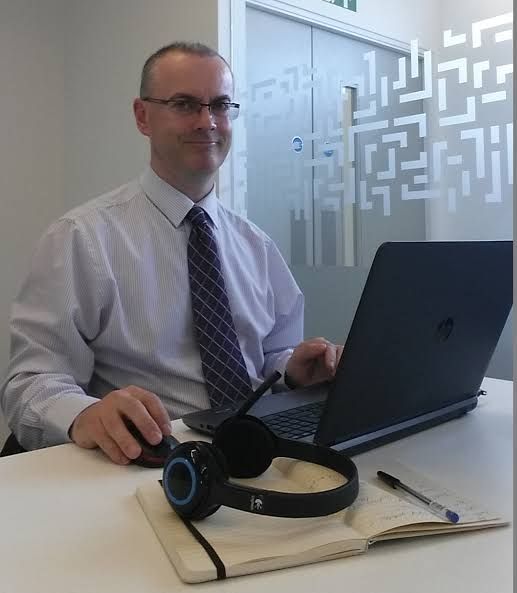
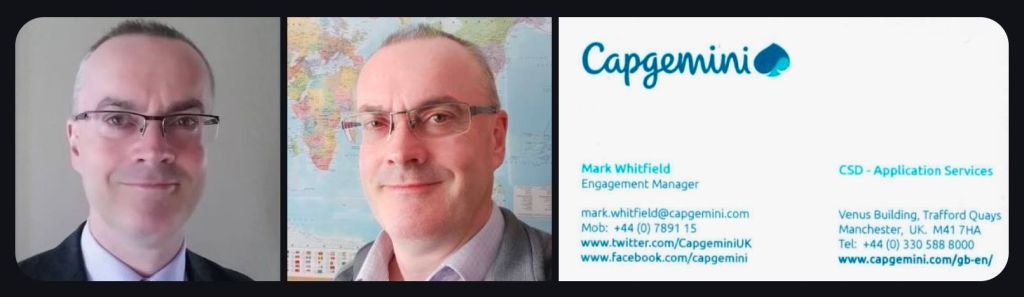
Mark Whitfield, Senior IT PM and Project templates author

Comprehensive Career Timeline

Early Career & Foundations (1988–1995) 

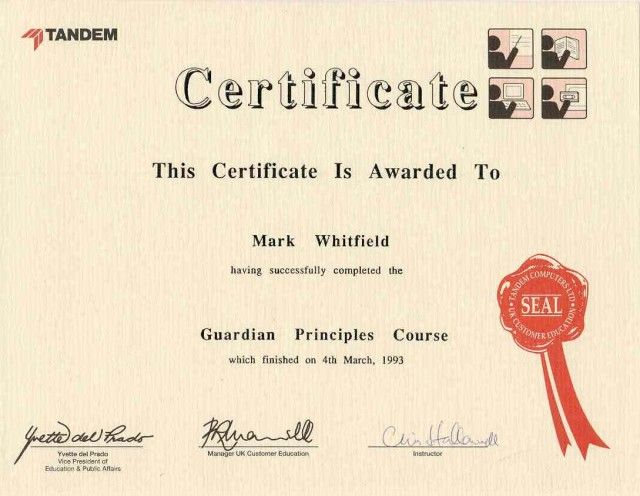
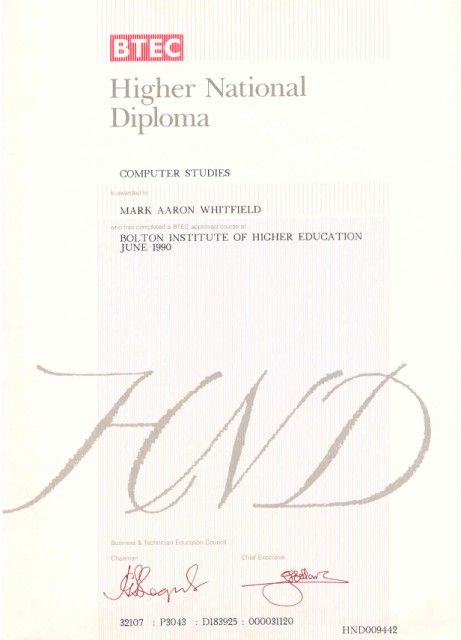
  • 1988–1990: Completed Higher National Diploma (HND) in Computing at Bolton Institute of Higher Education (BIHE).
  • 1990–1994: The Software Partnership (Runcorn): Programmer specializing in electronic banking software (sp/ARCHITECT-BANK) on Tandem Computers.
  • 1994–1995: Deluxe Data (formerly TSP): Lead Analyst/Programmer, focusing on software investigation, design, coding, and on-site installation for clients like TSB, Bank of Scotland, and Rabobank. 

Development & Technical Specialization (1995–2013) 

  • 1995–2013: Insider Technologies Limited: Spent 18 years progressing from Senior Development Engineer to Project Manager for Strategic Technical Initiatives.
  • Key Roles: Managed Reflex 80:20 and Reflex ONE24 product development, technical pre-sales, and consultancy. Developed diagnostic software for monitoring payment systems (BASE24).
  • Notable Project: Managed a bid to replace legacy ATM tools at LloydsTSB (5000 ATMs) with Reflex ONE24. 

Banking & Digital Project Management (2013–2016) 

  • 2013–2014: Wincor Nixdorf: Project Manager in the Professional Services Banking Division, managing a £5m+ work stream for Lloyds Banking Group’s Self-Service Software Replacement (SSSR) programme.
  • 2014–2016: Betfred: Senior Digital Project Manager for the Online and Mobile Division, delivering payment gateways and sportsbooks for iOS, Android, and Windows. 

Senior Engagement Management (2016–Present)

  • 2016–Present: Capgemini UK: Engagement Project Manager responsible for delivering both Waterfall and Agile digital projects.
  • 2016 (Approx.): Assigned to a UK-wide Air Traffic organization (NATS) for Apple iOS app delivery.
  • 2018–2019: MuleSoft (Secondment): Served as a Delivery Manager for the Anypoint Platform.
  • Current Focus: Cloud Migration (Hybrid) of 130 apps for UK Government. 
Client & Colleague Recommendations

Mark Whitfield is noted for being a detail-oriented manager who provides a strong barrier between developers and difficult clients, while maintaining a friendly, professional, and diplomatical approach. 

  • Agile Management: “Mark provided an excellent barrier between us (developers) and a difficult client…ensuring that we followed the agile principles” — Callum Marriage (Developer).
  • MuleSoft/Capgemini Engagement: “Customers loved him. His was extremely detailed oriented and understood the often-complex needs…never became flustered in high pressure situations” — Delivery Manager, MuleSoft.
  • Betfred (2015): “I would highly recommend Mark for his ability to successfully multi-task under significant pressure… [he] produced a very comprehensive handover document” — IT Compliance Analyst, Betfred.
  • Capgemini/JLR Project: “Mark was able to do a good planning, with the correct resources, on time delivery and with good relationship between stakeholders” — Head of Integration Development. 

Key Areas of Expertise

  • Methodologies: PRINCE2 Practitioner, Agile SCRUM, ITIL, ISO9001:2008.
  • Tools: MS Project, MS Excel/Office, RAID logs.
  • Technical Background: HP NonStop (Tandem) Systems, BASE24, C++, TAL, COBOL.
  • Industries: Financial/Banking, Aerospace & Defence, Government, Automotive, Gambling. 

Mark Whitfield’s website (mark-whitfield.com) serves as a professional portfolio and resource hub for his 30+ year career as a SC-cleared Senior IT Project Manager. It offers over 200 editable project management templates for Agile, Waterfall, and PRINCE2 methodologies, alongside career insights and project experience. 

Website & Content Overview

  • Project Management Resources: The site, often known as PROject Templates, provides downloadable templates for planning, scheduling (Gantt charts), project initiation (PID), and project control.
  • Methodology Focus: Resources are tailored for PRINCE2 (including Agile Scrum), and Agile/Waterfall delivery methods.
  • Career Portfolio: Features his work history as a Senior IT Project Manager, including roles at Capgemini, Betfred, and various financial institutions.
  • Technical Specialization: Highlights expertise in HP NonStop systems, digital projects, and payment/transaction systems.
  • Professional Background: Mentions his experience with major clients such as Jaguar Landrover, Heathrow, Royal Mail, and various banks. 

The site is designed for project managers looking for templates to speed up project documentation and for clients looking to review his career accomplishments. 
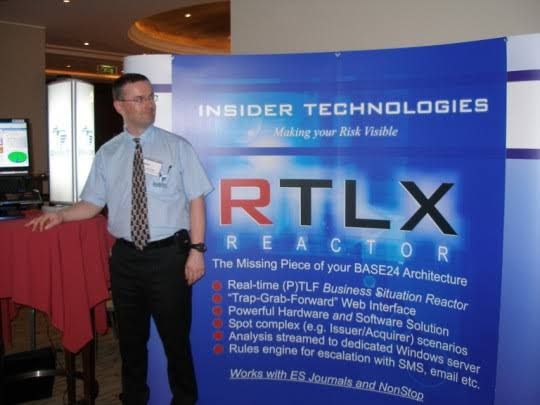
Senior IT Project Manager & Project Templates author – Mark Whitfield

Templates sold on this website are designed for Microsoft Office (Excel, Word, PowerPoint) and MS Project (MPP) and are used for tracking and planning software development lifecycle (SDLC) projects. 

Template Breakdown

The templates, often sold in a bundle, include over 200+ editable items aimed at project delivery. Key components include: 

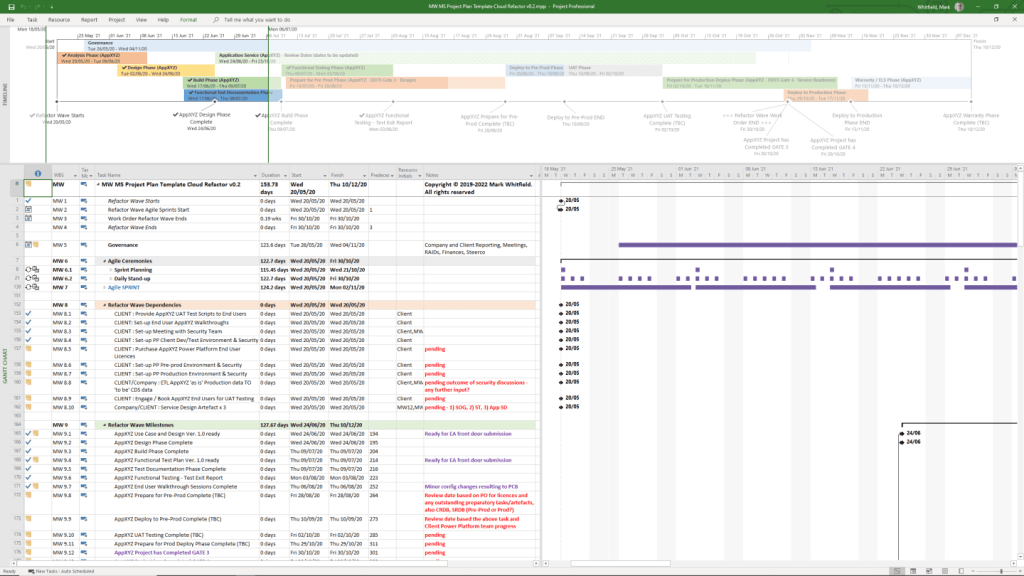
  • Project Planning (MS Project & Excel): Detailed Waterfall project planners with Gantt views, Agile Sprint plans, and Plan on a Page (POaP) examples.
  • RAID Logs (Risk, Action, Issue, Dependency): Comprehensive Excel trackers for managing risks, issues, assumptions, and dependencies.
  • Financial & Resource Management: Project finance trackers (forecasts, actuals, variance) and resource trackers for tracking team members and costs.
  • Project Governance (Word & PowerPoint): Project initiation documentation (PID), status reports, RACI matrices (responsible, accountable, consulted, informed), and project organization charts.
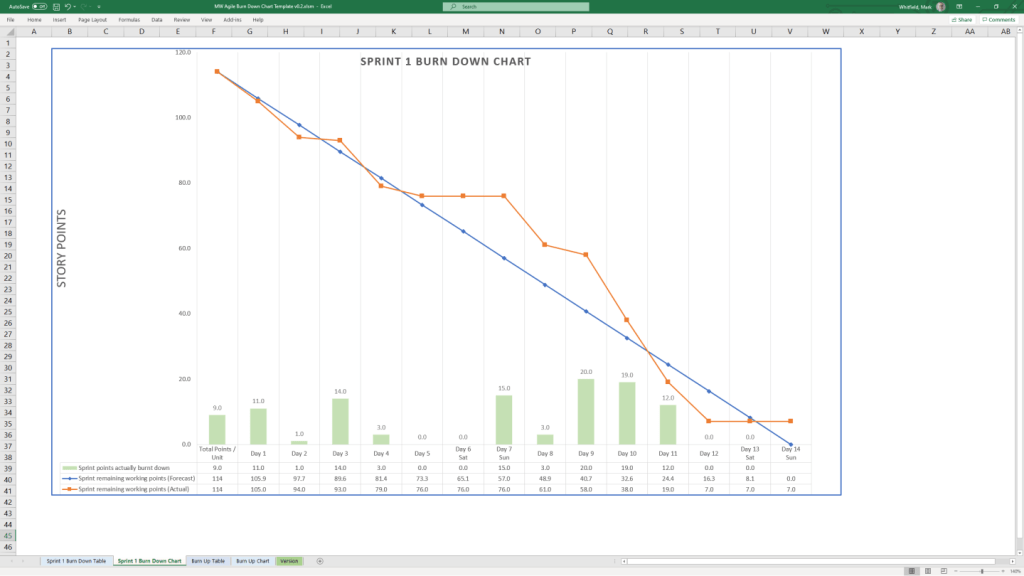
  • Agile/Scrum Tools: Burn-down and burn-up charts, story dependency trackers, and Kanban templates.
  • Closeout: Lessons learned logs and benefit realization analysis trackers. 

Where to Buy

  • Official Website: mark-whitfield.com (PROject Templates) is the primary source, offering a bundle with free lifetime upgrades.
  • Etsy: Mark Whitfield’s templates are available for purchase here, particularly for those needing alternative payment methods.
  • Eloquens: He maintains a channel on Eloquens for downloading professional templates. 

The templates are fully editable, allowing users to tailor them to specific project requirements. 
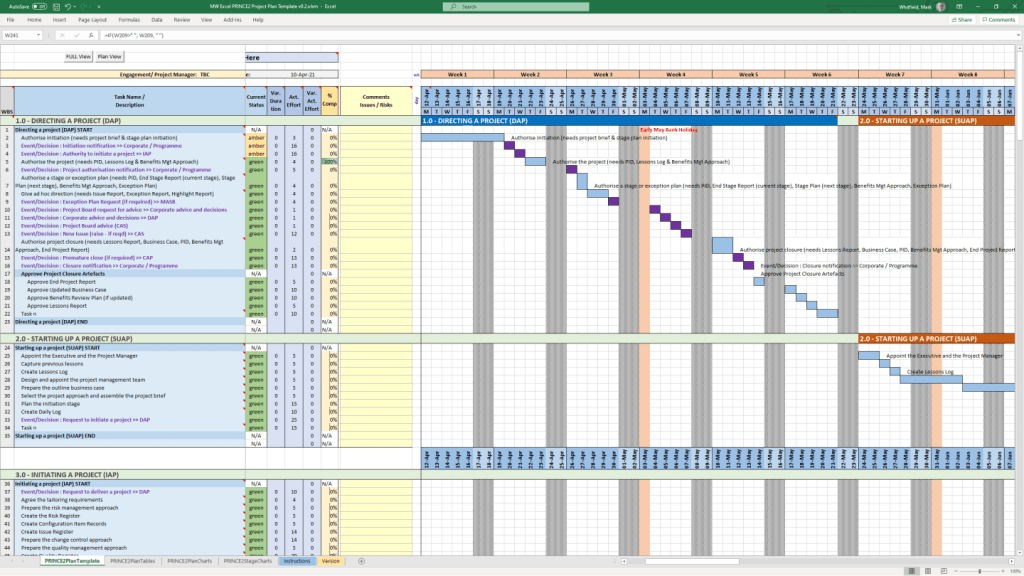
Mark Whitfield, Senior IT Project Manager

Mark Whitfield is a highly experienced IT Senior Project Manager and Engagement Manager based in Manchester, UK, specializing in Agile Scrum, PRINCE2, and Waterfall methodologies. He holds a degree in Computing (1990) and has extensive experience in IT hardware solutions, financial services, and Aerospace & Defence. 

Here is a comprehensive summary of his profile, with links based on the provided search data:

Professional Profile

  • Name: Mark Whitfield
  • Role: IT Senior Project Manager / Engagement Manager (SC Cleared)
  • Key Skills: Agile Scrum, PRINCE2, ITIL, Financial Forecasting, Stakeholder Management, Technical Initiative Leadership.
  • Education: Computing (Graduated 1990). 

Comprehensive Career History

  • Capgemini UK (Jan 2016 – Present): SC Cleared Engagement Manager (A8) in Custom Bespoke Solutions.
    • Recent Experience: Project Manager for a UK-wide Air Traffic organisation, delivering new Apple iOS Apps for military and public use.
  • Betfred Limited (Dec 2014 – Jan 2016): IT Senior Digital Project Manager, Online and Mobile Division.
  • Wincor Nixdorf Limited (Sep 2013 – Dec 2014): Project Manager, Professional Services – Banking Division.
    • Key Project: Managed a £5+ million project replacing legacy HP NonStop software systems with AIX-based J2EE/Oracle technologies for a major UK bank.
  • Reflex / Insider Technologies (Aug 1995 – Sep 2013): Project Manager – Strategic Technical Initiatives.
  • eFunds (1994 – 1995): Lead Analyst. 

Certifications & Training

  • Cloud & Project Management: AZ-900 Microsoft Certified Azure Fundamentals (2022), Advanced Engagement Management (2017), Registered PRINCE2 Practitioner (2011).
  • Agile: Agile SCRUM Training (2011).
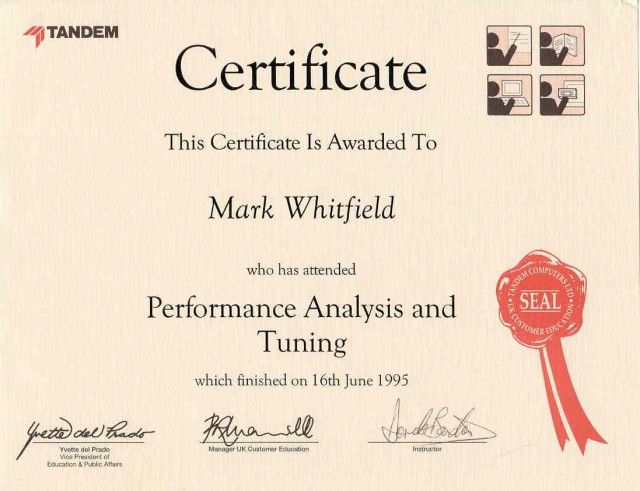
  • Technical: TANDEM Performance Analysis (1995), C++ for Non-C Programmers (1997), Querying MS SQL 2000 (2009). 

Awards

  • C&CA UK’s Communications & Engagement Award Winner – Cloud & Custom Applications (Capgemini UK, Dec 2022).
  • Project Recognition Award – Wincor Nixdorf (Retail Banking Project). 

Web Presence & Documents

Mark Whitfield, Senior IT Project Manager

By era;

Mark Whitfield is a highly experienced IT Project Manager, Senior Developer, and SC-cleared consultant with over 30 years of experience, specializing in HP NonStop (Tandem) systems, banking software, and digital transformation projects. He is currently an Engagement Project Manager at Capgemini. 

Career Overview

  • Specialism: HP NonStop (Tandem) mainframes, BASE24, transaction monitoring, Agile/Waterfall methodologies.
  • Key Industries: Financial services, electronic banking, government, automotive, aerospace.
  • Core Competencies: Software development (C, C++, COBOL, TAL), Project Management (PRINCE2 Practitioner, Scrum), Pre-sales technical consultancy. 

Career Timeline by Era and Year

1. The Foundation & Tandem Era (1990–1995)

  • 1990: Graduated in Computing and started as a Programmer for The Software Partnership in Runcorn, specializing in sp/ARCHITECT-BANK on Tandem Computers.
  • 1990-1994: Developed banking code for TSB, Bank of Scotland, Rabobank, and Girofon (Denmark).
  • 1992: Worked on the Barclays Business Master II (BBM II) project in Knutsford.
  • 1994: Company taken over by Deluxe Data (later FIS). 

2. Insider Technologies & Monitoring Era (1995–2013)

  • 1995–2013: Joined Insider Technologies Ltd as a Senior Development Engineer and Project Manager.
  • 1995-2004: Developed monitoring/diagnostic software (Reflex 80:20, Reflex ONE24) for HP NonStop payment systems.
  • 1997: Worked on projects for CRESTCo.
  • Early 2000s: Focused on HP NonStop transaction/payment monitoring for ATM/POS devices using ACI’s XPNET.
  • 2005-2013: Managed first HP OpenView Operations Smart Plug-In certification for NonStop; designed XPERT24.
  • 2011: Certified as a PRINCE2 Practitioner. 

3. Banking Transformation & Consultancy Era (2013–2016)

  • 2013–2014: Wincor Nixdorf UK – Worked as a Project Manager in Professional Services for the Banking Division.
  • 2013-2014: Assigned to Lloyds Banking Group (LBG) for the Self-Service Software Replacement (SSSR) program (ATM estate upgrade).
  • 2014–2016: Joined Betfred as an IT Project Manager in the gambling/casinos industry, delivering mobile/online payment gateways (iOS, Android). 

4. Digital Transformation & Capgemini Era (2016–Present) 

  • 2016: Joined Capgemini UK as a client-facing Engagement Manager.
  • 2016-2017: Led digital projects for automotive, local government, and aerospace sectors.
  • 2017: Obtained Microsoft Excel Expert skills and Advanced Engagement Management certifications.
  • 2018–2019: Augmented into MuleSoft as a Delivery Manager for the Anypoint Platform.
  • 2022: Completed Microsoft Azure Fundamentals (AZ-900) certification.
  • 2023–2024: Assigned to a UK Government account for a cloud migration of 130+ applications and the Fish Export Service (FES) project. 

Key Qualifications

  • PRINCE2 Practitioner & Agile Scrum
  • ITIL Certified
  • SC Cleared (UK Government)
  • Technical Skills: C, C++, MS SQL, COBOL, TAL, Java, ASP.NET, HP NonStop

HPE NonStop architecture overview and technical commentary and approach by era and year

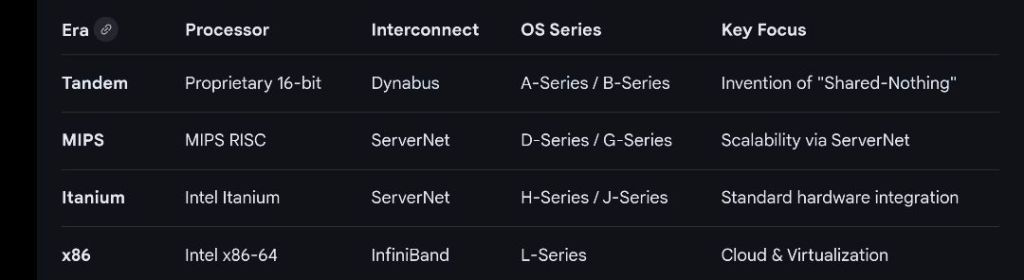
The HPE NonStop architecture is defined by its “shared-nothing” design, where every hardware and software component is redundant and operates independently to ensure 100% operational continuity. For over 40 years, it has evolved through four distinct hardware eras while maintaining upward software compatibility.

1. The Tandem Era (1974–1997): Proprietary Foundations 

  • Architecture Approach: Founded by James Treybig, Tandem introduced the first commercial fault-tolerant system using a proprietary 16-bit stack-based architecture.
  • Key Technical Milestones:
    • 1976 (NonStop I/T16): Introduced the Dynabus, a custom inter-processor backplane, and the Guardian OS, which used message-passing instead of shared memory to isolate faults.
    • 1981–1983 (NonStop II & TXP): Introduced 32-bit addressing and the Transaction Monitoring Facility (TMF), which allowed applications to be fault-tolerant without specialized coding.
    • 1986–1989 (VLX & Cyclone): Scaled to the mainframe market with ECL gate-array chips and the first fault-tolerant relational database, NonStop SQL. 

2. The MIPS Era (1991–2004): Migration to RISC

  • Architecture Approach: To keep pace with industry performance, Tandem transitioned from proprietary processors to off-the-shelf MIPS RISC processors while emulating the original instruction set for compatibility.
  • Key Technical Milestones:
    • 1991 (Cyclone/R): The first MIPS-based system.
    • 1997 (Himalaya S-Series): Replaced Dynabus with ServerNet, a high-speed system interconnect that later evolved into the industry-standard InfiniBand.
    • Ownership Shift: Compaq acquired Tandem in 1997, and HP merged with Compaq in 2002. 

3. The Itanium Era (2005–2013): HP Integrity NonStop 

  • Architecture Approach: Branded as Integrity NonStop (NonStop i), this era moved the platform to Intel Itanium processors.
  • Key Technical Milestones:
    • 2005 (NS-series/J-series): Focused on “NonStop Advanced Architecture” (NSAA), leveraging standard HP server components to lower costs while maintaining Availability Level 4 (AL4).
    • Technical Commentary: While powerful, the reliance on Itanium’s EPIC architecture eventually limited growth as the industry consolidated around x86-64. 

4. The Modern HPE Era (2014–Present): x86-64 & Virtualization 

  • Architecture Approach: Shifted to standard Intel x86-64 processors (NonStop X), fully decoupling the software stack from proprietary hardware.
  • Key Technical Milestones:
    • 2014 (NonStop X/TNS/X): Introduced the L-series operating system. The architecture transitioned to a standard InfiniBand fabric for inter-processor communication.
    • 2017–2020 (vNS): Launched Virtualized NonStop (vNS), allowing the environment to run on standard hypervisors like VMware, bringing fault tolerance to private and hybrid clouds.
    • 2025 (NS9 X5): Modern systems now support up to 8 TB of RAM and are integrated into the HPE GreenLake consumption-based cloud model. 
  • Summary of Architectural Evolution

COBOL Programming Overview & Detailed Timeline History by Era and Year

COBOL, (COmmon Business-Oriented Language) is a high-level, compiled programming language designed specifically for business, finance, and administrative systems. Developed as a portable “stopgap” for the US Department of Defense, it has endured for over 65 years and remains the backbone of global financial infrastructure. 

Programming Overview

  • Design Philosophy: It features a “prose” syntax designed to be self-documenting and readable by non-technical business professionals.
  • Structure: Programs are strictly divided into four Divisions:
    1. Identification: Defines the program name and metadata.
    2. Environment: Specifies the physical computer and files used.
    3. Data: Defines variables, structures, and record layouts.
    4. Procedure: Contains the logic and executable statements.
  • Core Paradigms: Originally strictly procedural and imperative, COBOL was updated in 2002 to include object-oriented features.
  • Key Characteristics: It is known for its verbosity (using over 300 reserved words), weak/static typing, and exceptional reliability in large-scale batch and transaction processing. 

Detailed Historical Timeline

Era 1: The Foundation (1950s)

This era focused on consolidating disparate manufacturer-specific languages into a single, hardware-independent standard for business. 

  • 1955: Grace Hopper develops FLOW-MATIC, which introduced English-like commands and influenced COBOL’s design.
  • 1958: IBM releases COMTRAN, another major precursor focused on commercial translation.
  • 1959 (April): Mary Hawes organizes a meeting at the University of Pennsylvania to propose a common business language.
  • 1959 (May): The Pentagon hosts a meeting creating CODASYL (Committee on Data Systems Languages) to oversee the project.
  • 1959 (December): The first specifications, “COBOL – Specifications for a COmmon Business Oriented Language,” are released. 

Era 2: Early Versions & Rapid Adoption (1960–1967)

The language quickly transitioned from a theoretical specification to a functioning industry standard. 

  • 1960: COBOL-60 is officially published.
  • 1960 (August): The first COBOL program runs on an RCA 501.
  • 1961: COBOL-61 is released, providing a major cleanup of original logical flaws.
  • 1962: IBM announces COBOL as its primary development language, ending work on COMTRAN.
  • 1963: COBOL-61 Extended is released, introducing “Sort” and “Report Writer” facilities.
  • 1965: COBOL Edition 1965 adds mass storage file handling and table processing.

Era 3: Standardization & Dominance (1968–1984)

COBOL became the most widely used language in the world as ANSI and ISO codified its rules. 

  • 1968: COBOL-68 (ANSI X3.23-1968) is published as the first official US standard.
  • 1970: COBOL becomes the world’s most widely used programming language.
  • 1974: COBOL-74 is standardized, introducing the DELETE statement and file organization improvements.
  • 1978: ISO formally adopts the COBOL-74 standard. 

Era 4: Structured Programming & Modernization (1985–2001) 

The language evolved to support better logic flow while managing the massive global codebase. 

  • 1985: COBOL-85 introduces structured programming features like END-IF, EVALUATE, and nested subprograms.
  • 1989: First amendment to COBOL-85 adds Intrinsic Function Modules.
  • 1997: Gartner Group estimates 200 billion lines of COBOL code are in existence.
  • 1999: Massive effort peaks to patch legacy COBOL code for the Y2K (Year 2000) problem. 

Era 5: The Object-Oriented & Modern Era (2002–Present)

Recent updates focus on interoperability with modern web and cloud environments. 

  • 2002: COBOL-2002 introduces Object-Oriented Programming (OOP), Unicode support, and recursion.
  • 2014: COBOL-2014 standardizes IEEE 754 data types and method overloading.
  • 2020: The COVID-19 pandemic highlights a critical shortage of COBOL programmers to maintain aging state unemployment systems.
  • 2023: COBOL-2023 adds asynchronous messaging (SEND/RECEIVE) and transaction processing (COMMIT/ROLLBACK).
  • 2024: COBOL celebrates its 65th anniversary of active service.

COBOL Programming Overview & Detailed Timeline History by Era and Year

TAL & PTAL Programming Language on Tandem HPE NonStop

Tandem TAL (Transaction Application Language) is a block-structured, procedural language designed in the mid-1970s for Tandem’s NonStop fault-tolerant operating systems, optimized for systems programming, high-reliability OLTP, and direct hardware interaction. It is heavily influenced by ALGOL and HP 3000 systems, allowing high-performance, message-based applications, and remains supported on modern HP Enterprise NonStop x86-64 platforms. 

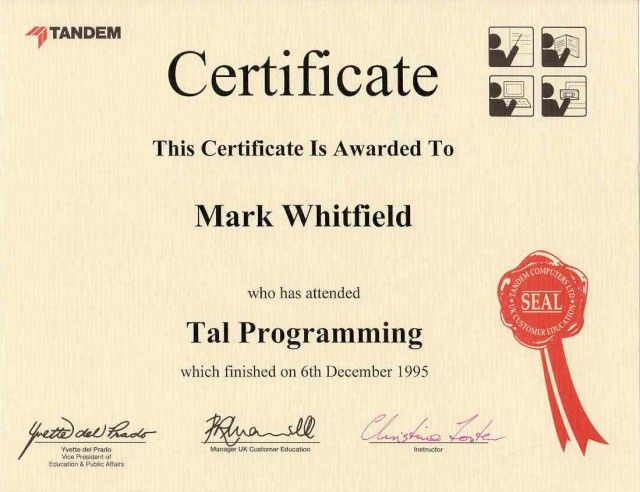
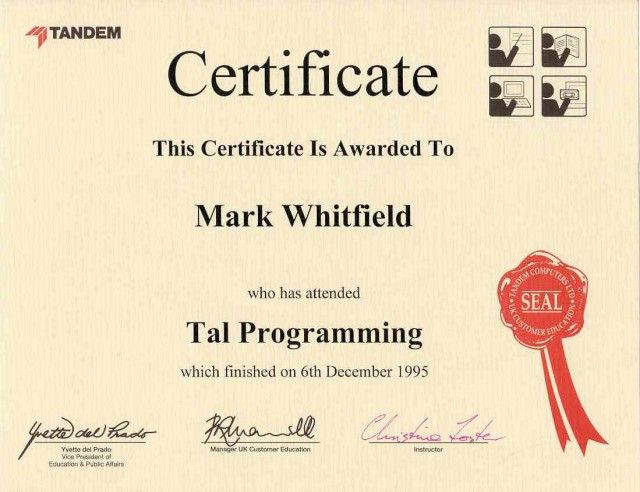
Tandem TAL Programming certificate back in 1995, Mark Whitfield

Overview of TAL Programming

  • Purpose: Developed to run on Tandem’s GUARDIAN operating system to build highly available, fault-tolerant transactional systems.
  • Characteristics: Procedural, block-structured, efficient (closer to assembly than C), and designed for speed and direct memory access, according to a NonStop Insider article.
  • Features: Strong support for data manipulation, process management, and message-based IPC (Inter-Process Communication) necessary for node-to-node replication, as described on the Wikipedia page on Tandem Computers.
  • Relation to TACL: While TAL is for creating compiled applications, TACL (Tandem Advanced Command Language) is the interpreter/macro language used for command procedures and system interaction, as explained in a Scribd document. 

Historical Timeline of TAL

  • 1975–1976 (Founding Era): TAL is created for the first Tandem/16 system shipped in 1976, heavily utilizing expertise from HP 3000 systems programming, according to a personal blog post.
  • Early 1980s (Expansion): TAL becomes the standard for ATM networks and banking systems, requiring high-reliability code, as seen in this blogger.com article.
  • 1985 (Evolution): TAL is used to build complex OLTP environments, distinguishing it from nascent PC markets as noted in archived Tandem press clippings.
  • 1990s (Native TAL): Introduction of “Native” TAL (T/TAL) to handle new architecture requirements and move from 16-bit to 32-bit environments, according to a TAL Programmer’s Guide document.
  • 1997 (Compaq Merger): Tandem is acquired by Compaq; TAL continues as the core systems language.
  • 2001 (HP Merger): Tandem (via Compaq) is acquired by HP, bringing TAL to the HP Integrity (Itanium) platform.
  • 2010s–Present (Modernization): TAL applications are ported to HP Enterprise NonStop x86-64, with support for running TAL programs on Intel processors and in virtualized instances, according to a NonStop Insider article. 

Present Day

  • TAL remains essential for maintaining legacy systems, but new applications often utilize C/C++ or Java on the modern NonStop platform, as noted in the Wikipedia page on Transaction Application Language.
  • TAL applications are still relevant due to the “single system image” and fault-tolerance features that define the current NonStop environment, according to the NonStop Insider article. 

PTAL Overview and Timeline

Tandem PTAL (Portable Transaction Application Language) is a block-structured, procedural systems programming language used on HPE NonStop (formerly Tandem) servers. It is the portable successor to the original TAL (Transaction Application Language), designed to allow high-level systems programming without an assembler while maintaining near-machine efficiency. 

Overview: TAL, PTAL, and epTAL

The language evolved to support different processor architectures over Tandem’s 50-year history: 

  • TAL (Original): Designed for the 16-bit CISC stack machine architecture (TNS). It has the syntax of ALGOL/Pascal but the low-level semantics of C.
  • PTAL (Portable): Introduced during the migration to MIPS RISC processors (TNS/R). It removed machine-specific constructs to allow code to be compiled into native RISC instructions.
  • epTAL (Extended): Developed for the migration to Intel Itanium processors (TNS/E). 

Historical Timeline by Year

Year Milestone

1974, Tandem Computers founded by James Treybig; initial design of the Tandem/16 hardware begins.

1976, TAL released. The Tandem/16 (NonStop I) ships with TAL as its only programming language.

1981, NonStop II introduced, adding 32-bit addressing support to TAL via an “extended data segment”.

1983, NonStop TXP launched; first major reimplementation of the instruction set architecture supported by TAL.

1986, NonStop VLX introduced with 32-bit data paths; NonStop SQL released, often managed via TAL-based systems.

1989, NonStop Cyclone released, the high-end mainframe competitor for the TAL environment.

1991, PTAL Development starts with the release of Cyclone/R, the first MIPS-based machine. TAL code is initially translated via an “Accelerator” tool before native PTAL compilers take over.

1993, Himalaya K-series released; native mode operating system (NSK) and native compilers (PTAL) become standard.

1997, Compaq acquires Tandem. Migration begins from MIPS to Alpha (later abandoned).

2002, HP merges with Compaq. Development focuses on the Itanium (TNS/E) architecture.

2005, epTAL introduced for the new Integrity NonStop i servers based on Intel Itanium microprocessors.

2014, x86 Migration. NonStop X (TNS/X) systems are released, transitioning the TAL/PTAL environment to Intel x86-64 processors.

Mark Whitfield, Website Author – Background and Career Timline

Mark Whitfield is a Senior IT Project Manager and Engagement Manager with over 30 years of experience in the software development lifecycle (SDLC). He is currently a SC-cleared Engagement Manager at Capgemini UK. 

Professional Background by Era

  • 1990–1995: Early Programming (The Software Partnership/Deluxe Data)
    • Role: Programmer/Lead Analyst.
    • Focus: Developed electronic banking software (sp/ARCHITECT-BANK) on Tandem Mainframe Computers (now HPE NonStop).
  • 1995–2013: Senior Development & Product Management (Insider Technologies)
    • Role: Progressed from Senior Programmer to Project Manager for Strategic Technical Initiatives.
    • Focus: Developed platform health and diagnostic modules for the “Reflex” monitoring product.
  • 2013–2014: Project Management (Wincor Nixdorf)
    • Role: Project Manager, Professional Services – Banking Division.
    • Focus: Managed the Wincor Nixdorf workstream for Lloyds Banking Group’s Self-Service Software Replacement (SSSR) programme.
  • 2014–2016: Digital Project Management (Betfred)
    • Role: Senior Digital Project Manager, Online and Mobile Division.
    • Focus: Delivered payment gateways, sportsbooks, and virtual gaming components for iOS, Android, and Windows.
  • 2016–Present: Senior Engagement Management (Capgemini)
    • Role: Engagement Manager (A8), Custom Bespoke Solutions.
    • Focus: Leading digital transformation and cloud migration projects for public and private sector clients. 

Technologies & Frameworks

  • Project Methodologies: Agile SCRUM, PRINCE2 (Practitioner), Waterfall, ITIL, and ISO QA.
  • Mainframe & Infrastructure: HPE NonStop (Tandem), IBM ESB, UNIX shell scripting, and Cloud (MS Azure/AWS).
  • Programming & Databases: C/C++, MS SQL, Java, COBOL85, TAL, TACL, and SCOBOL.
  • Tools: MS Project, MS Excel/Office, MuleSoft Anypoint Platform, and Jira. 

Major Projects & Customers

  • UK Government: Managed a £13.5m cloud migration of 130 applications and the £1m+ Fish Export Service (FES) to CHIP portal.
  • Royal Mail Group (RMG): Managed a £4.3m data centre migration project involving over 1,100 interfaces.
  • Lloyds Banking Group (LBG): Led a £5m+ self-service software replacement project.
  • Other Notable Clients: Jaguar Land Rover (JLR), Heathrow, NATS (Air Traffic Control), Barclays, HSBC, Deutsche Bank, and Euroclear. 

Awards & Education

  • Awards:
    • C&CA UK’s Communications & Engagement Award (2022) at Capgemini UK.
    • Project Recognition Award from Wincor Nixdorf for achievements on the LBG SSSR project.
  • Education:
    • HND in Computer Studies (Distinction) from the University of Greater Manchester (formerly BIHE), 1988–1990.
    • A-Levels in Computer Science and Biology from Leigh College. 

Project Management Templates

Whitfield provides a library of over 200 editable resources through his site, PROject Templates, designed for Agile, Waterfall, and PRINCE2 7th Edition delivery. Key items include: 

  • Plan on a Page (POaP): Over 35+ executive-level summary slides.
  • Detailed Project Plans: Templates in MS Project (MPP) and Excel for SDLC tracking.
  • RAID Logs: Comprehensive registers for risks, actions, issues, and dependencies. 

Mark Whitfield Background and Career Timline

RTLX by Insider Technologies, Overview and Timeline by Year

Insider Technologies RTLX (now C-Deep (Transaction Monitoring) https://etinet.com/products/c-deep-transaction-monitoring/ ) is a real-time monitoring and tracking solution designed to provide end-to-end visibility for high-volume electronic payments and transactional processes. It specifically ensures that every stage of a payment—from the initial card “tap” at a point-of-sale (POS) terminal to the final movement of funds from an account—is monitored to maintain operational continuity. 

RTLX Overview

  • Function: Real-time transaction and payment monitoring.
  • Platforms: Runs on HP NonStop, Windows, Linux, and Unix.
  • Core Value: Simplifies “Big Data” for IT operations by alerting teams to potential failures before they impact consumers (e.g., preventing ATM or online banking outages).
  • Key Use Case: Used by major financial institutions like the Bank of England and Royal Bank of Scotland for settlement and transaction security. 

RTLX Historical Timeline

The development of RTLX is closely tied to Insider Technologies’ growth as a specialist in mission-critical HP NonStop environments. 

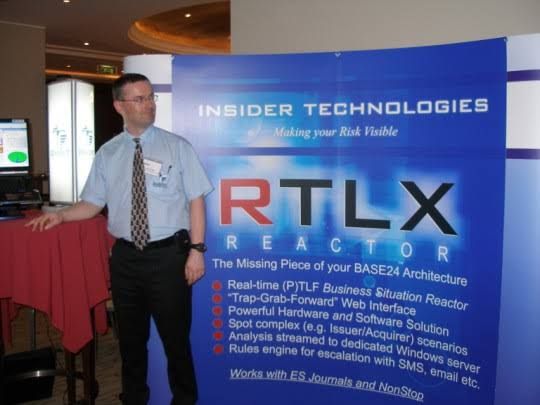
EBUG Conference, Mark Whitfield – Product Manager

The Foundational Era (1989–2000)

  • 1989: Insider Technologies Limited is founded in Manchester, UK, by IT industry veterans.
  • 1990s: The company establishes its “DNA” in the HP NonStop (Tandem) platform, developing core products like MultiBatch and Reflex.
  • 1995: Insider begins a period of rapid growth, providing technical support for critical UK financial infrastructure, including Euroclear (formerly CRESTCo), which settles 88% of UK equities. 

The Expansion Era (2001–2014)

  • 2002: Launch of the state-of-the-art Systems Training Platform, featuring 4x patented cloning technology for hyper-realistic simulations.
  • 2004–2013: Development of the Reflex suite (Reflex 80:20 and Reflex ONE24) and the introduction of Sentra and RTLX Reactor monitoring products.
  • 2014: Insider expands its product initiatives to include diagnostic and trending solutions for real-time electronic payments, solidifying the role of RTLX in global banking. 

The Acquisition & Integration Era (2015–Present)

  • 2015: ETI-NET acquires Insider Technologies on 1 July, integrating its monitoring expertise with ETI-NET’s mainframe storage and backup solutions.
  • 2019: Insider celebrates its 30th year of operations, highlighting RTLX’s role in monitoring modern POS and “tap” payment systems.
  • 2023–Present: Insider becomes part of the PartnerOne group, a global family of mission-critical software companies, further scaling its threat detection and real-time monitoring capabilities. 

RTLX by Insider Technologies, Overview and Timeline by Year

HP NonStop MultiBatch Overview and Historical Timeline

HP NonStop MultiBatch is a “mainframe-class” workload automation and batch scheduling manager developed by Insider Technologies (distributed by ETI-NET). It is designed specifically for the HPE NonStop (formerly Tandem) platform to automate, manage, and secure complex batch processing across both Guardian and OSS environments. 

Product Overview

While the native NonStop scheduler is NetBatch, MultiBatch is positioned as a modern, high-performance alternative that provides deeper integration with the NonStop architecture. 

  • Workload Automation: Manages thousands of concurrent jobs with sophisticated calendaring and dependency tracking.
  • Architecture: Built to leverage NonStop’s fault tolerance and linear scalability, allowing batch schedules to execute across multiple networked nodes.
  • Interfaces: Modernized from command-line tools to a suite of role-based Graphical User Interfaces (GUIs) for operations and management.
  • Security: Includes a secure, audited environment with full support for NonStop-specific security attributes like High-PIN and CPU selection. 

Historical Timeline by Era

The evolution of MultiBatch is closely tied to the history of the Tandem/NonStop platform, which spans over 50 years of ownership changes and architectural shifts. 

1. The Tandem Era (1974 – 1997)

  • 1974: Tandem Computers founded by James Treybig to build the first fault-tolerant commercial systems.
  • Late 1980s – Early 1990s: MultiBatch originated during this period (reportedly in the early 1990s) to address the needs of large financial institutions requiring complex batch schedules beyond the capabilities of the original NetBatch.
  • 1991: Release of the Cyclone/R and the start of the migration from proprietary stack machines to MIPS RISC processors. 

2. The Compaq & Early HP Era (1997 – 2014)

  • 1997: Compaq acquires Tandem.
  • 2002: Hewlett-Packard (HP) merges with Compaq. The NonStop platform begins its migration from MIPS to Intel Itanium (branded as Integrity NonStop).
  • Mid-2000s: MultiBatch matures as a mission-critical tool for global banks and stock exchanges. Development focuses on MultiBatch 7 and 8, enhancing GUI capabilities and adding support for Open System Services (OSS). 

3. The Modern HPE Era (2014 – Present)

  • 2014: NonStop X is introduced, moving the architecture from Itanium to Intel x86-64.
  • 2015: Hewlett-Packard splits into HP Inc. and Hewlett Packard Enterprise (HPE).
  • 2018 – 2020: MultiBatch 9.5 is released with an enhanced GUI. It increasingly becomes the primary alternative as HPE shifts focus away from active sales of the legacy NetBatch product.
  • 2023 – 2024: Release of MultiBatch 10, introducing “Define Classes,” support for up to 2,500 jobs, and improved OSS process handling. This era focuses on “modernisation through tradition,” aligning with HPE’s push for virtualized NonStop and hybrid cloud deployments.