

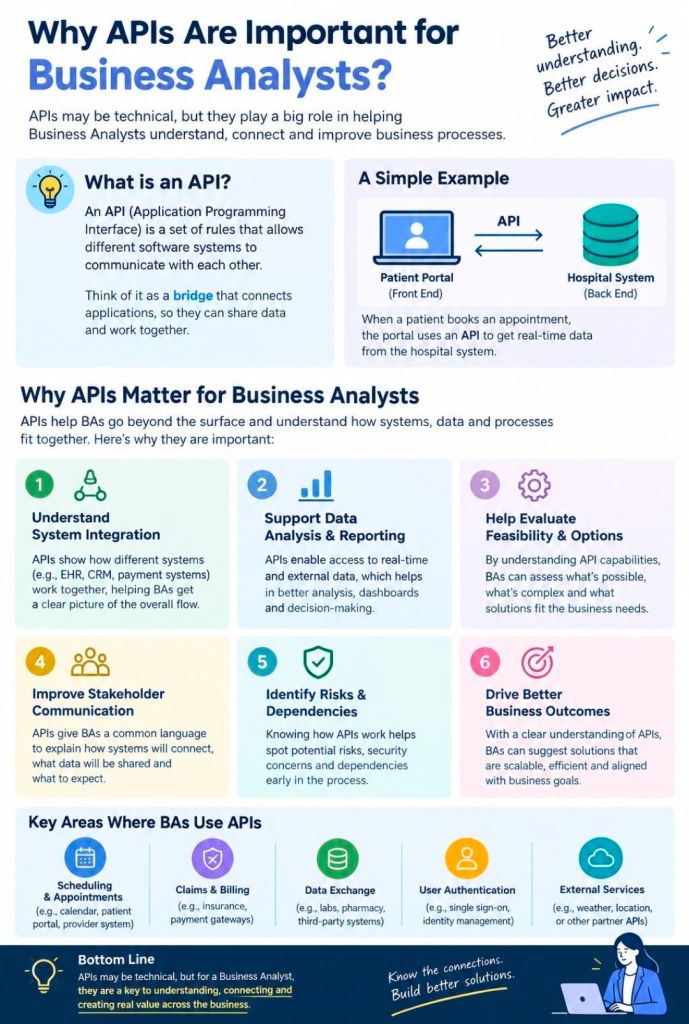
An Application Programming Interface (API) is a set of rules, definitions, and protocols that allows different software applications to communicate and exchange data with one another.
Essentially, an API acts as a software intermediary or “digital contract”: if one application submits a request in a specific format, the other system promises to return a predictable response or perform a specific action.
Instead of building every single feature from scratch, software engineers use APIs to seamlessly integrate tools, databases, and services built by other creators.
How an API Works (The Restaurant Analogy)
The easiest way to understand an API is to think of a restaurant:
- The Client (You): You sit at the table looking at the menu, wanting to order food.
- The Server (The Kitchen): The kitchen has the ingredients and the capability to cook your food, but you cannot talk directly to the chef.
- The API (The Waiter): The waiter takes your specific order (the Request), delivers it to the kitchen, and returns to your table with your food (the Response).
Real-World Examples
Most modern digital experiences rely completely on APIs working behind the scenes:
- Weather Apps: A phone app doesn’t track global weather itself. It sends an API request to an official organization like AWS Weather Systems or Weather.com, which safely delivers the live forecast data back to your screen.
- Travel Booking: Websites like Expedia use APIs provided by individual airlines to instantly gather, compare, and display live flight prices and times in one place.
- Ride-Hailing: Apps like Uber use the Google Maps API to handle location routing and mapping, rather than spending millions building their own global maps system.
Core Benefits
- Efficiency: Developers save months of time by plugging into pre-built features instead of reinventing the wheel.
- Security: APIs hide internal server details. They only share tiny packets of necessary data, keeping the main database protected from outside users.
- Automation: They let data flow cleanly between applications without requiring manual file exports or human intervention.

