

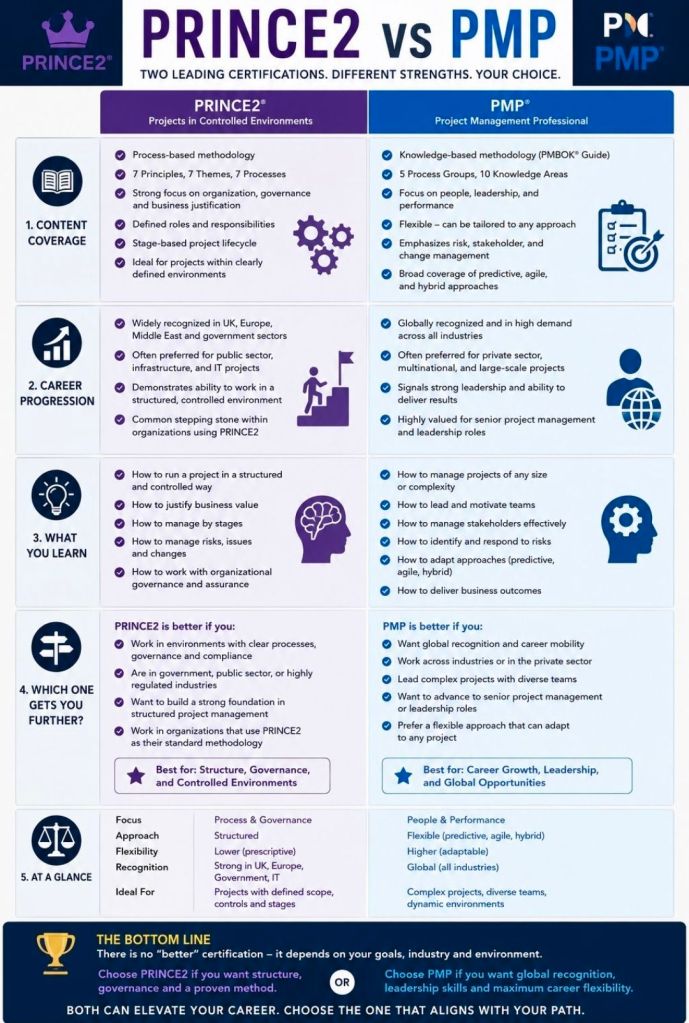
Choosing between PRINCE2 and PMP depends on your career goals and location. PMP is a global, experience-based standard highly valued in the US and multinational corporations. PRINCE2 is a process-based methodology heavily favored in the UK, Europe, and government/public sectors.
A high-level text overview highlights the following core differences:
Project Management Professional (PMP)
- What it is: A globally recognized framework and body of knowledge (PMBOK) that certifies a manager’s broad project leadership skills.
- Focus: People, processes, and business domains. It is highly flexible and covers predictive (waterfall), agile, and hybrid methodologies.
- Requirements: Strict prerequisites. Requires 36–60 months of project management experience and 35 hours of project management education before you can take the 180-question exam.
- Best for: Experienced project managers seeking global mobility and opportunities in corporate and private sectors.
- Official Hub: Learn more and apply via the Project Management Institute.
PRINCE2 (PRojects IN Controlled Environments)
- What it is: A structured, prescriptive methodology that gives you a step-by-step guide on how to run a project from start to finish.
- Focus: Governance, defined roles, continuous business justification, and documentation. It uses a scaleable “Tailoring Approach” so it can be adapted to projects of varying sizes.
- Requirements: No mandatory experience needed for the Foundation level, making it accessible to beginners. The Practitioner level tests your ability to apply the framework.
- Best for: Early-to-mid career professionals and those targeting government, NHS, or public sector roles within the UK and Europe.
- Official Hub: Browse certification pathways via Axelos.


