Project Plan on a Page (POAP) is a Concise, Visual Summary of a Project

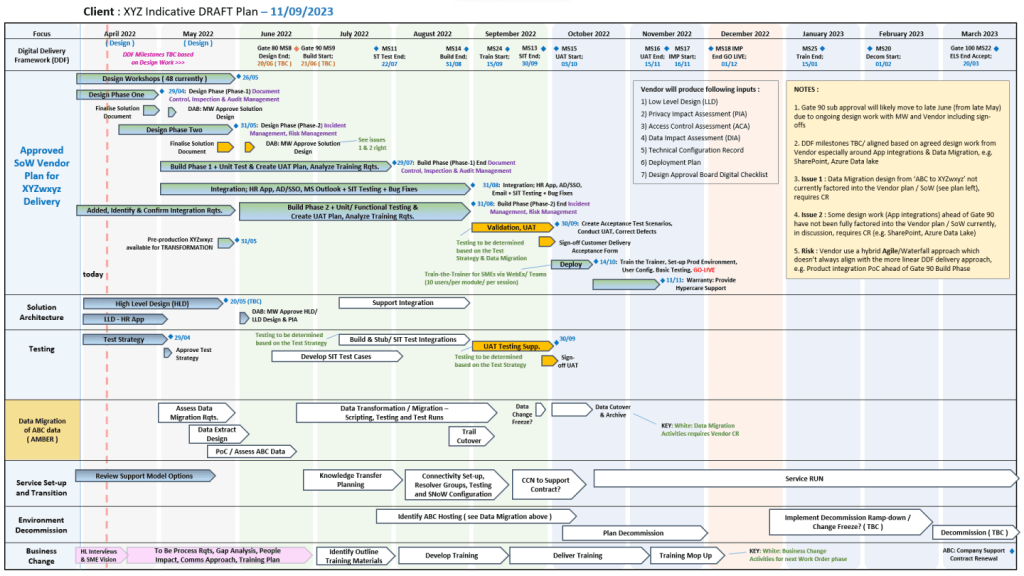
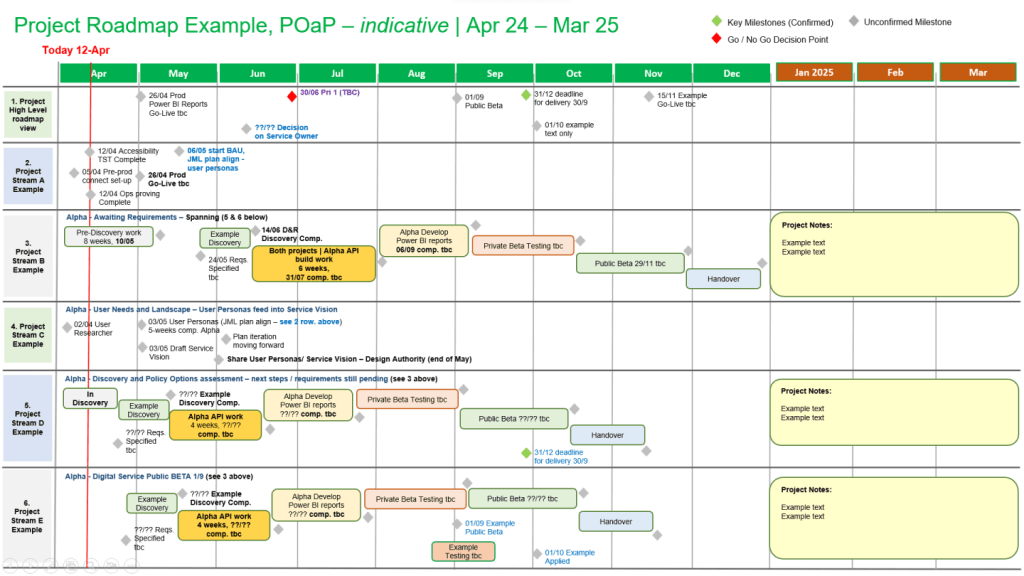
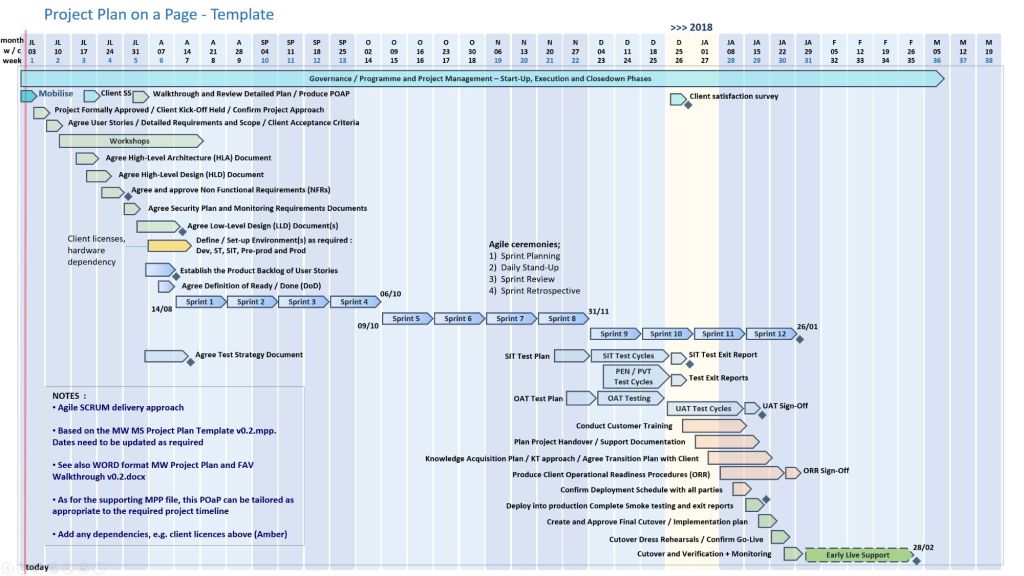
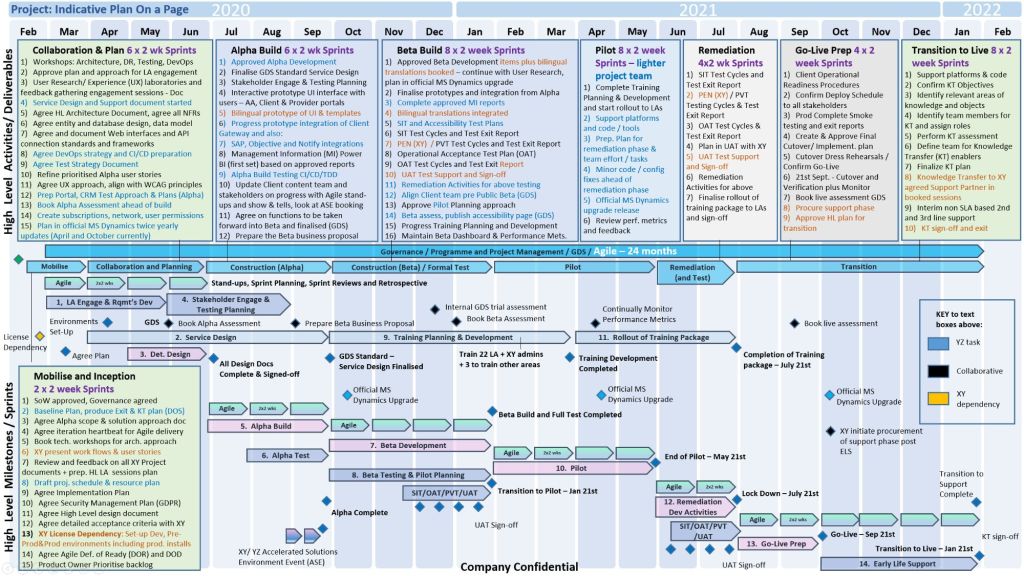
A Project Plan on a Page (POAP) is a concise, visual summary of a project’s objectives, timeline, milestones, and risks. Its primary purpose is to provide an instant, high-level overview for stakeholders and executives, ensuring alignment without overwhelming them with low-level details.

3. Project Plan on a Page (POAP) is a Concise, Visual Summary of a Project
4. Project Plan on a Page (POAP) is a Concise, Visual Summary of a Project
1. Project POAP by Mark Whitfield, Plan on a Page
Mark Whitfield POAP examples, 35+ in all

Best Structure for a POAP

An effective POAP eliminates excessive task lists in favor of a clean, scannable layout organized into these key sections:

  • Project Overview: Title, Project Manager, and the overarching “Why” or business objective.
  • Timeline & Milestones: A horizontal, time-phased bar chart mapping the project’s key phases (e.g., Initiation, Beta Launch, Go-Live).
  • Key Deliverables: 4 to 6 major outputs or goals required to consider the project a success.
  • Risks & Dependencies: Critical blockers or assumptions that require management attention.

Examples & Templates for Download

Because POAPs are highly visual, they are most effectively built in Excel (for data and dates) or PowerPoint (for visual presentation).

  • Excel/PowerPoint Templates: You can download ready-made POAP layouts via Titanium Consulting or Mark Whitfield Consulting to generate professional visual graphics.
  • Word/Spreadsheet Variations: For simpler initiatives, you can access the 1-page summary templates available through Smartsheet’s Project Plan Templates.
  • Automated Software: If you already track complex projects in MS Project, Excel, or Primavera, automation tools like SummaryPro can automatically ingest your detailed schedule and spit out an accurate POAP.

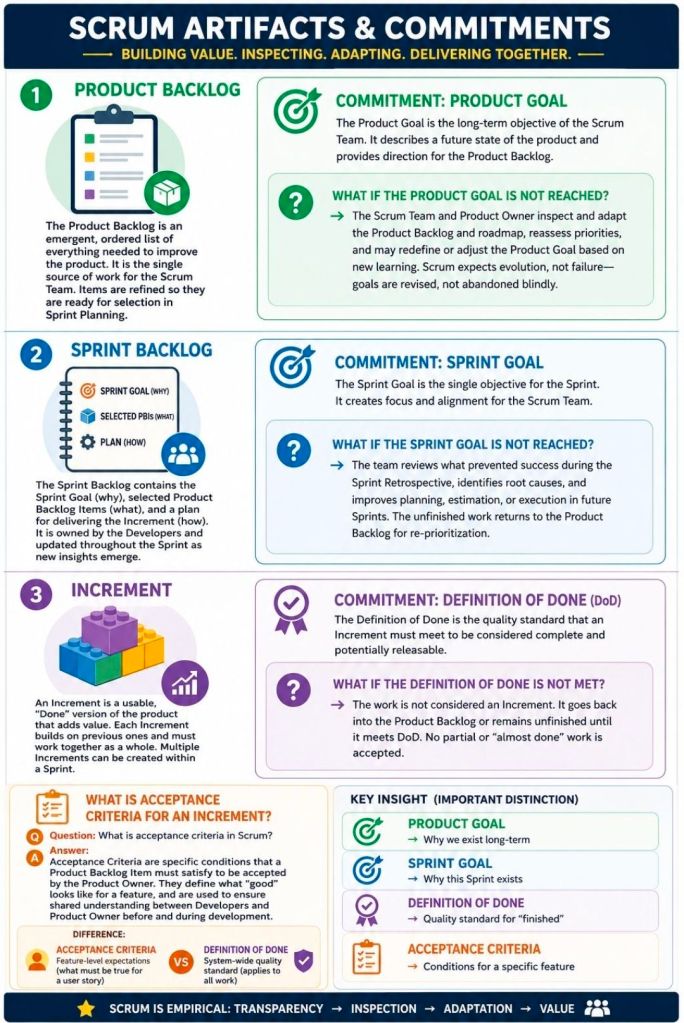
Agile Scrum Artifacts and Commitments

Artifacts and Commitments in Scrum
Scrum Artifacts & Commitments
Agile Scrum Artifacts and Commitments

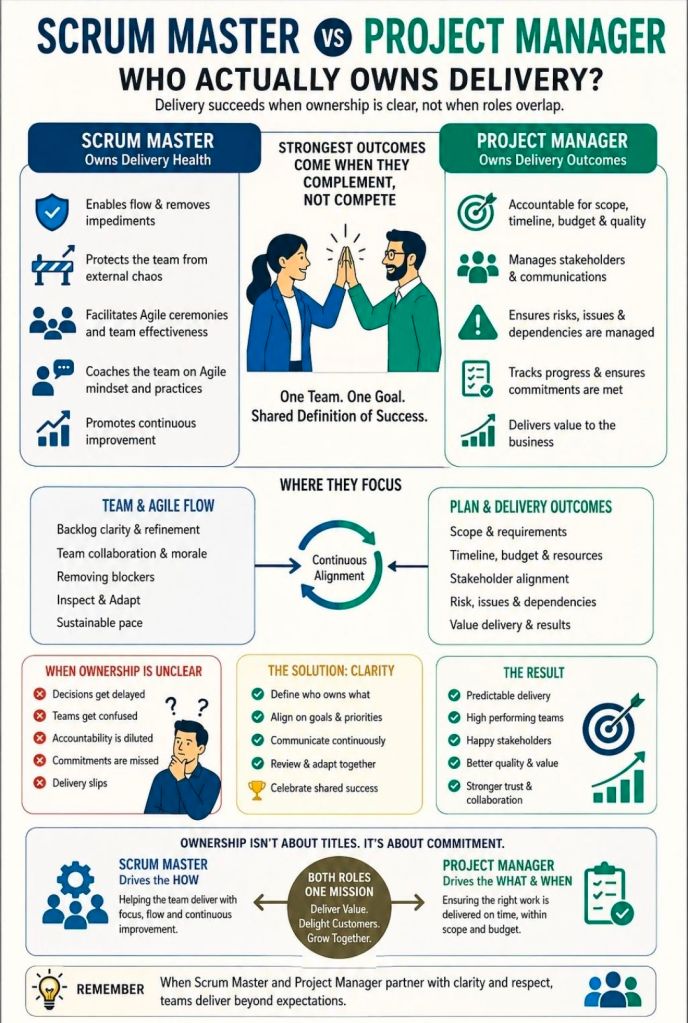
Agile Scrum Master versus Project Manager

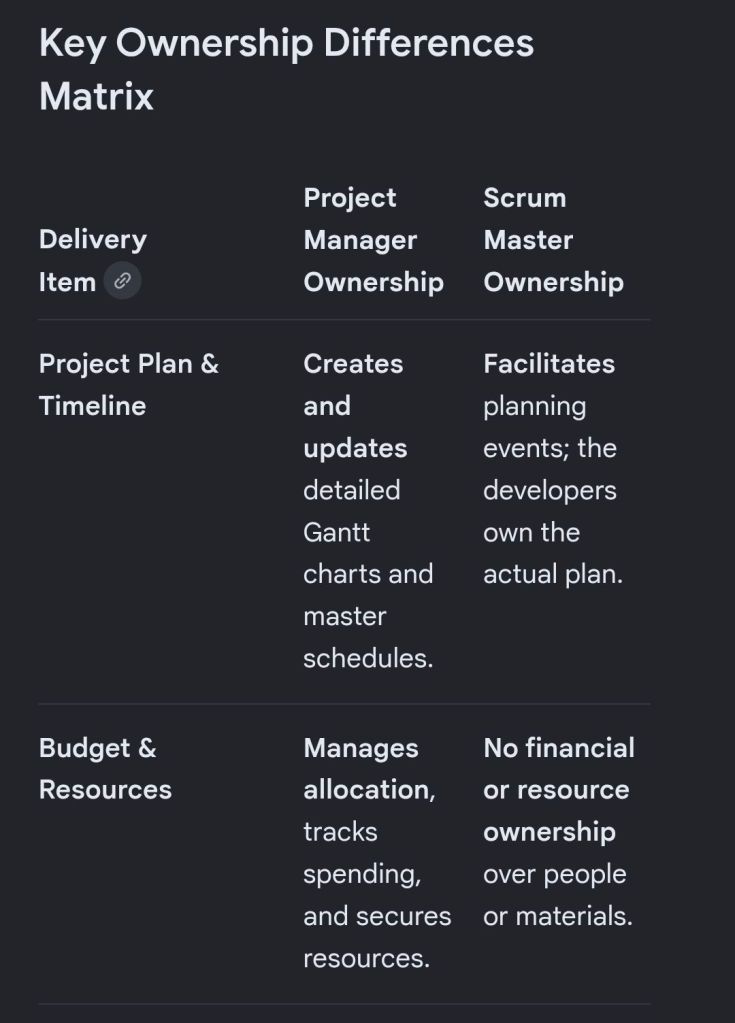
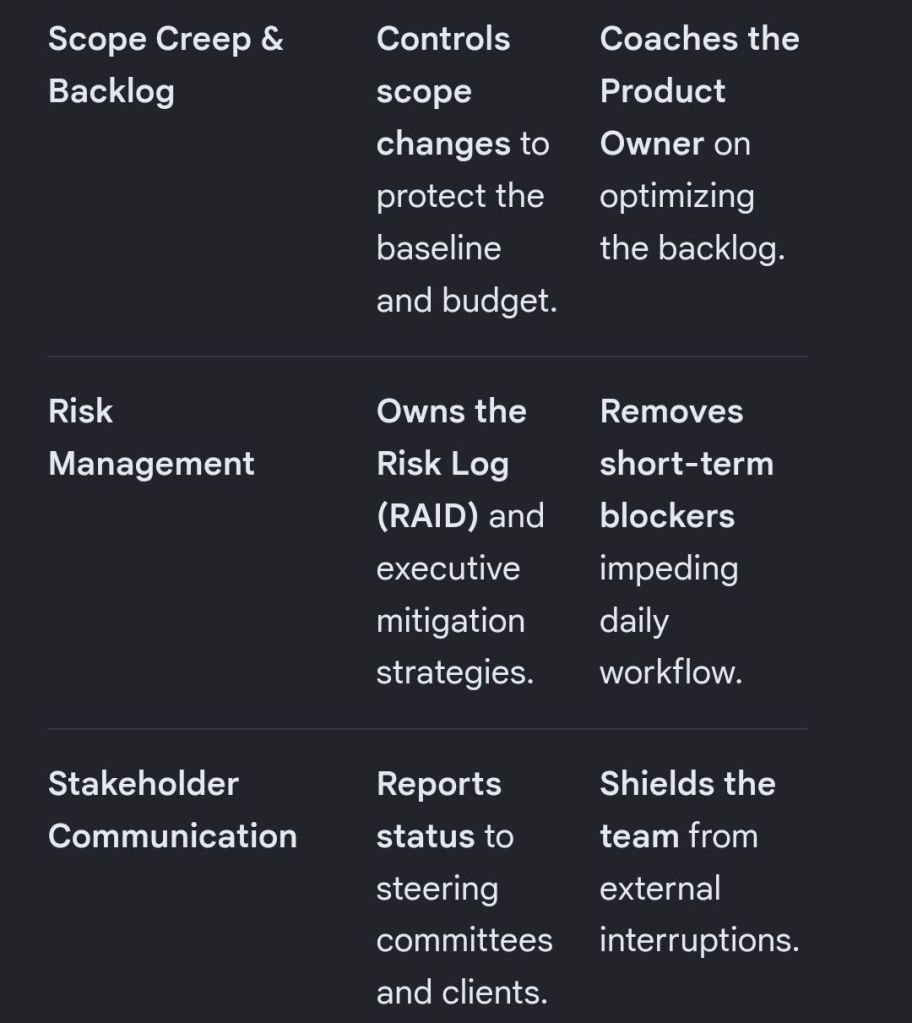
The fundamental difference in project delivery ownership is that a Project Manager (PM) owns the overall project outcomes (Scope, Schedule, Budget, Risks), whereas a Scrum Master (SM) owns the delivery process, team effectiveness, and Agile practices.

Scrum Master vs Project Manager –
who owns delivery

A PM directs what needs to happen externally, while an SM coaches how the team works internally.

Agile Scrum Master versus Project Manager
Scrum Master vs Project Manager

Detailed Ownership Breakdown

1. Scope, Requirements, and Product Backlog

  • Project Manager: Directly manages the agreed-upon project scope. They review change requests, evaluate how scope changes impact the budget, and negotiate modifications with stakeholders. They are legally or contractually accountable for delivering the specified scope.
  • Scrum Master: Holds no direct ownership over the product content or scope. Instead, they coach the Product Owner on how to effectively manage the Product Backlog, draft clear user stories, and refine items for upcoming sprints.

2. Schedule, Milestones, and Timeline

  • Project Manager: Owns the macro-level timeline. They track critical path milestones, define task dependencies across multiple teams, and are accountable to executive management if a delivery deadline is missed.
  • Scrum Master: Owns the micro-level iteration cadence (sprints). They do not assign tasks or dictate schedules. Instead, they facilitate Sprint Planning, ensuring the team commits to a sustainable pace of predictable delivery.

3. Budget and Financial Accountability

  • Project Manager: Fully owns the project’s financial performance. They forecast costs, track actual spend against the budget, manage vendor contracts, and seek approval for capital expenditures.
  • Scrum Master: Has zero financial accountability or budget ownership. Their focus is entirely operational—maximizing value and efficiency through team performance rather than managing corporate balance sheets.

4. Issue Resolution and Risk Management

  • Project Manager: Focuses on long-term, macro-level risks (e.g., market shifts, organizational changes, vendor failures). They maintain formal risk registers and coordinate executive-level mitigation plans.
  • Scrum Master: Focuses on immediate, tactical impediments. They own the removal of daily “blockers”—such as technical hurdles, broken tools, or communication gaps—that slow down the development team.

5. Team Governance and Task Assignment

  • Project Manager: Operates with a directive or orchestrating leadership style. They often assign work packages, manage resource utilization, and hold individuals accountable for specific task deadlines.
  • Scrum Master: Operates as a servant-leader and coach. They have no direct authority over team members and do not assign tasks. They empower the team to self-manage, collaborate, and decide collectively how to accomplish the work.

Summary of Success Metrics

  • The Project Manager succeeds when the project is delivered on time, within budget, and according to specifications.
  • The Scrum Master succeeds when the team becomes highly self-managing, continuously improves, and predictably delivers increments of high value.

Gap Analysis in Agile Projects, Detailed Breakdown

In Agile projects, gap analysis shifts from a heavy upfront documentation exercise to a dynamic, continuous evaluation of the difference between your product’s current capabilities and your user’s actual needs.

Instead of building massive compliance checklists, Agile teams break gaps down into functional, team-level increments embedded directly into product development loops.

🛠️ How Gap Analysis Maps to Agile Artifacts

Agile doesn’t use a standalone “Gap Analysis Report”. Instead, gaps are converted directly into standard Agile artifacts to keep the delivery team moving:

  • The Epic Level (Strategic Gaps): Large operational or technical gaps (e.g., “System lacks multi-factor authentication”) are captured as Epics.
  • The User Story Level (Functional Gaps): Epics are sliced down into smaller, testable User Stories that represent a single increment of closing that gap (e.g., “As a user, I want to receive an SMS verification code to secure my login”).
  • The Backlog (Prioritisation): Identified gaps are estimated, given a business value, and ranked directly alongside feature requests in the Product Backlog.

📋 The 4-Step Agile Gap Process Breakdown

Agile teams continuously execute gap analysis iteratively through four distinct stages:

1. Define the Current State (Where We Are Now)

  • Action: Evaluate the existing performance or architecture using live metrics, user research, and current automated test results.
  • Agile Tool: Review system metrics, customer churn data, or velocity charts during Retrospectives. Avoid vague complaints; stick strictly to measurable facts.

2. Envision the Desired Future State (Where We Want to Be)

  • Action: Define target benchmarks or expected system behavior.
  • Agile Tool: Leverage the Product Vision, user personas, acceptance criteria, or your team’s Definition of Done (DoD) to serve as the baseline future state.

3. Identify and Analyze the Gap (The “Why”)

  • Action: Highlight the specific differences between performance and goals, then uncover the underlying reasons.
  • Agile Tool: Run a Five Whys session or build a Fishbone Diagram during sprint planning to see if the gap is caused by legacy code (Technology), missing skillsets (People), or inefficient workflows (Process).

4. Build the Action Plan (The Bridge)

  • Action: Convert the necessary fixes into work items.
  • Agile Tool: Map the required changes directly into the Sprint Backlog as User Stories, technical spikes (research tasks), or non-functional requirements to be delivered in upcoming iterations.

⏱️ When Gap Analysis Happens in the Agile Lifecycle

Rather than an administrative phase at the very beginning of a project, gap analysis is integrated throughout standard Agile ceremonies:

  • Product Discovery: High-level gap analysis ensures the initial product backlog addresses actual target user needs instead of internal assumptions.
  • Sprint Planning: The team evaluates the gap between the sprint goal and the current codebase to pick the right stories.
  • Sprint Review / Demo: Stakeholders compare the working increment against their expectations. This immediately exposes any emerging functional or alignment gaps.
  • Retrospectives: The team conducts an internal process gap analysis to evaluate how they collaborate, uncovering process bottlenecks or technical debt.

Gap Analysis in Agile Projects, Detailed Breakdown

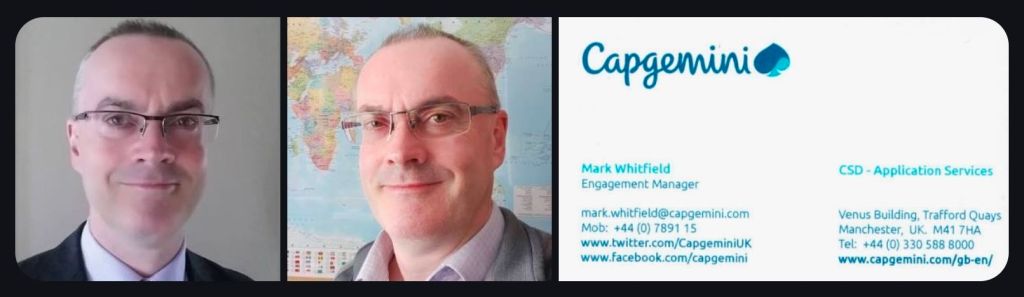
Mark Whitfield PM – Website & Blog focus areas

The blog posts by Mark Whitfield, a Senior IT Project and Engagement Manager, primarily focus on practical project management (PM) frameworks, methodology implementation, and digital delivery execution.

Mark Whitfield PM - Website and Blog focus areas

Hosted on his platform, PROject Templates, the blog acts as an extension of his 30+ year career transitioning from mainframe engineering to leading large-scale Agile and Waterfall digital transformations.

Blog Overview and Key Topics

The core purpose of the blog is to guide project professionals through real-world deployment challenges while showcasing an ecosystem of over 200 editable Microsoft Office templates.

The main content focus areas include:

  • Framework Implementation: In-depth overviews on aligning project lifecycles with PRINCE2 (7th Edition), Agile Scrum, and Kanban methodologies.
  • Detailed Project Planning: Actionable steps for setting up Software Development Life Cycles (SDLC), defining dependencies, establishing milestones, and handling project baselines.
  • Operational Checklists: Daily, highly practical guides tailored for specific team roles, such as his “Daily Checklist for Scrum Masters”.
  • Risk and Governance Control: Best practices on organizing and managing RAIDs logs (Risks, Actions, Issues, Dependencies), change requests, and corporate project governance.
  • High-Level Reporting: Frameworks for structural communication with stakeholders, utilizing Plan on a Page (POaP) examples, dashboard designs, and financial budget tracking templates.
  • Digital & Cloud Delivery Lessons: Real-world insights drawn from his corporate and public sector experiences, covering topics like middleware architecture deployments and hybrid cloud application refactoring.

Agile for Business Analysts BA

Agile for Business Analysts BA

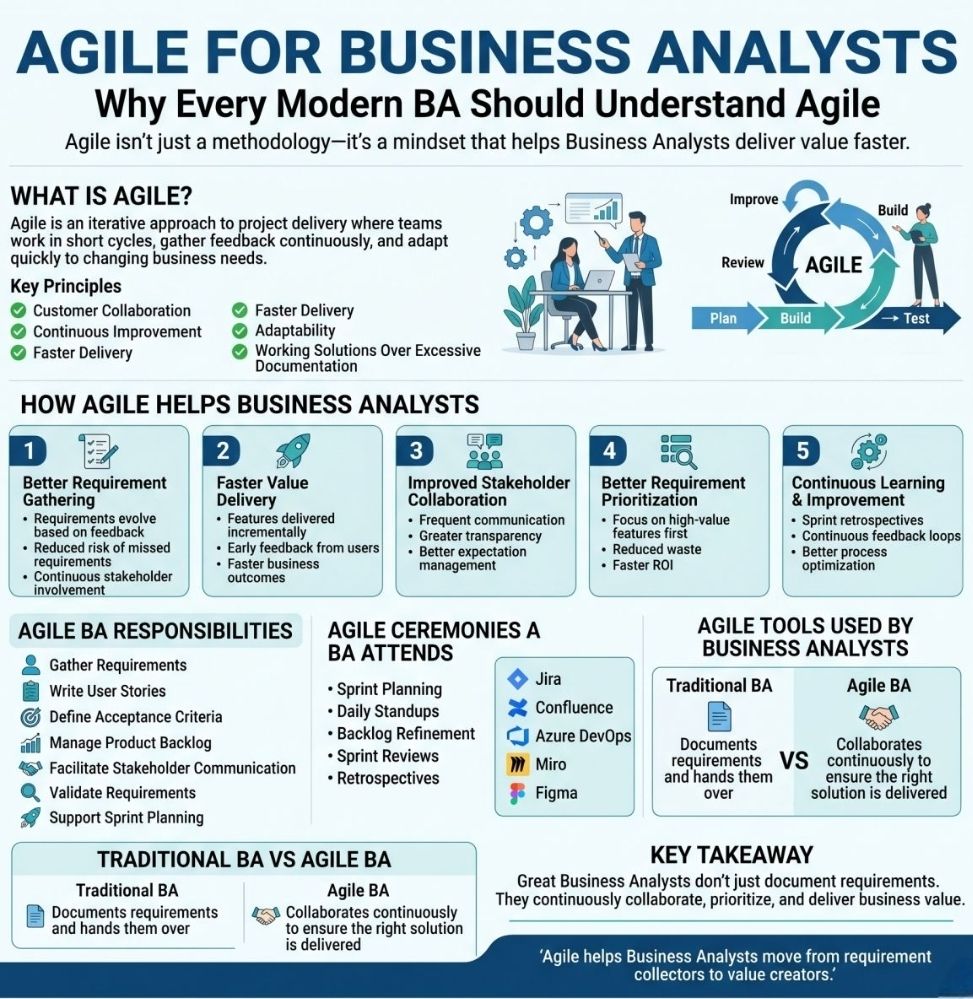
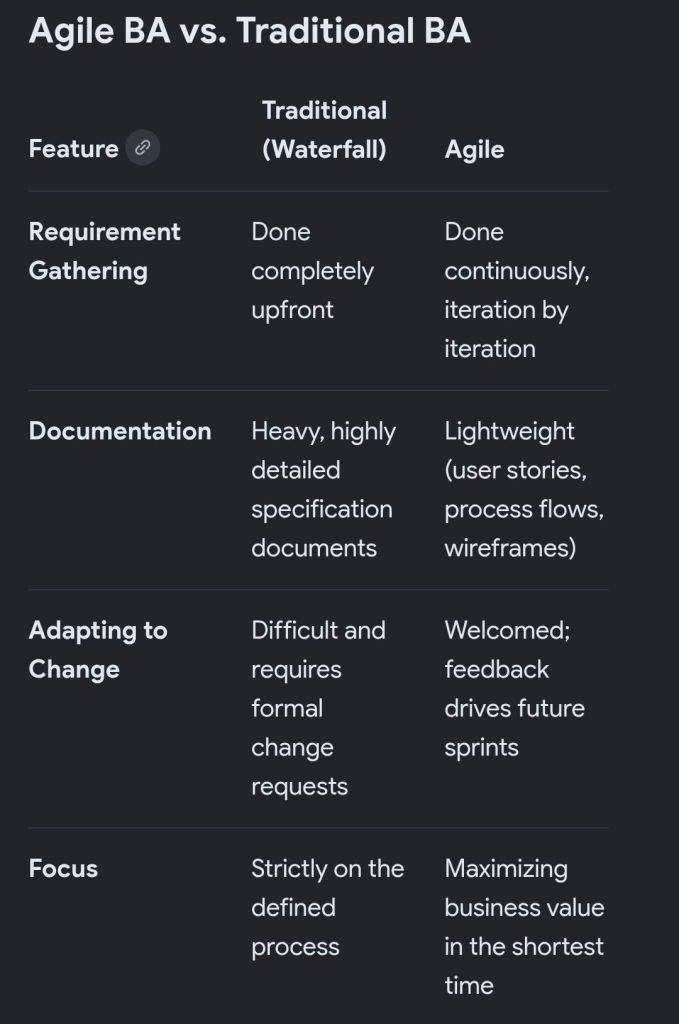
In an Agile environment, a Business Analyst (BA)acts as the crucial bridge between business stakeholders and the technical team. Rather than gathering all requirements upfront, Agile BAs focus on continuous analysis, delivering value in small increments, and writing lightweight user stories that adapt as the product evolves.

Transitioning from traditional (Waterfall) analysis to an Agile framework requires a fundamental shift in how requirements are handled, documented, and delivered.

The Core Shifts in an Agile BA Role

  • Continuous Discovery: Instead of producing a massive Requirements Document at the start, BAs analyze and refine requirements just-in-time and just-enough to keep the development team moving.
  • User Stories over BRDs: Traditional Business Requirements Documents (BRDs) are replaced with collaborative user stories and acceptance criteria.
  • Value-Driven Prioritization: The BA continuously helps the Product Owner (or acts as the Product Owner proxy) rank the Product Backlog so that the highest-value features are built first.
  • Shared Understanding: The focus is on face-to-face communication, workshops, and visual modeling (like wireframes) to ensure developers fully grasp what needs to be built.

Key Responsibilities

Agile BAs operate across several domains throughout the sprint lifecycle:

  1. Backlog Refinement: Collaborating with stakeholders to break down large, complex requirements into smaller, manageable chunks (Epics to User Stories).
  2. Definition of Ready (DoR): Ensuring that user stories are clear, testable, and have defined acceptance criteria before they are pulled into an active sprint.
  3. Sprint Support: Answering questions from the development team in real-time, clarifying business rules, and helping to remove blockers.
  4. Acceptance Testing: Assisting Quality Assurance (QA) teams or business users to validate that the delivered software works as intended and solves the underlying business problem.
Agile BA versus Traditional BA

Common Frameworks for Agile BAs

  • Scrum: Working alongside the Scrum Master, Product Owner, and Developers in short iterations (sprints), typically lasting 2 to 4 weeks.
  • Kanban: Managing a continuous flow of analysis work, prioritizing items on a visual board as development capacity allows.
  • AgileBA: A specific certification and framework designed by the Agile Business Consortium that provides BAs with practical tools for working in Agile settings.

Recommended Resources for Skill Building

To deepen your expertise in Agile business analysis, explore these highly regarded methodologies and guides:

  • Use the AgileBA Certification guide to understand official best practices.
  • Read the IIBA Agile Extension to the BABOK Guide for authoritative frameworks.
  • Review Bridging the Gap for practical, real-world implementation strategies.

Agile Scrum vs SAFe (Scaled Agile Framework), Key Differences

Agile Scrum vs SAFe (Scaled Agile Framework), Key Differences
Agile Scrum vs Scaled Agile Framework (SAFe)

The fundamental difference is scale: Agile Scrum is designed for a single, autonomous team (typically 5–9 people), whereas Scaled Agile Framework (SAFe) is built for the enterprise level to coordinate dozens of teams (50+ people) working toward shared business goals.

Scrum prioritizes team flexibility and speed. Conversely, SAFe trades complete autonomy for centralized alignment, consistency, and structural predictability.

Industry Perspectives on the Trade-offs

While SAFe solves enterprise synchronization challenges, it faces regular scrutiny from product leaders who argue that its highly prescriptive nature can stifle the true spirit of agility.

A popular comment from an agile practitioner on Reddit’s Scrum Community highlights the developer sentiment regarding the process overhead:

“I’ve never seen SAFe implemented without a meeting explosion. More planning, more roles, more acronyms and way more time blocked on calendars.”

Another developer shared a similar perspective on Reddit’s ExperiencedDevs Community:

“Number of meetings have increased 4x. More time is spent for planning to build software than actually building software. Bureaucratic rituals are more important than getting things done.”

Ultimately, SAFe does not replace Scrum. Most organizations implementing SAFe still utilize standard Scrum practices at the team level, leveraging the macro framework solely to manage the dependencies that threaten to derail massive initiatives.


Choosing the Right Approach

  • Choose Scrum if: You have a small or mid-sized setup, your teams operate independently, you are early in your Agile journey, and your primary pain point is a need for fast market-feedback loops.
  • Choose SAFe if: You are coordinating 50 to 1,000+ engineers across complex legacy systems, cross-team dependencies frequently delay your releases, and you need strict regulatory compliance or top-down executive alignment.

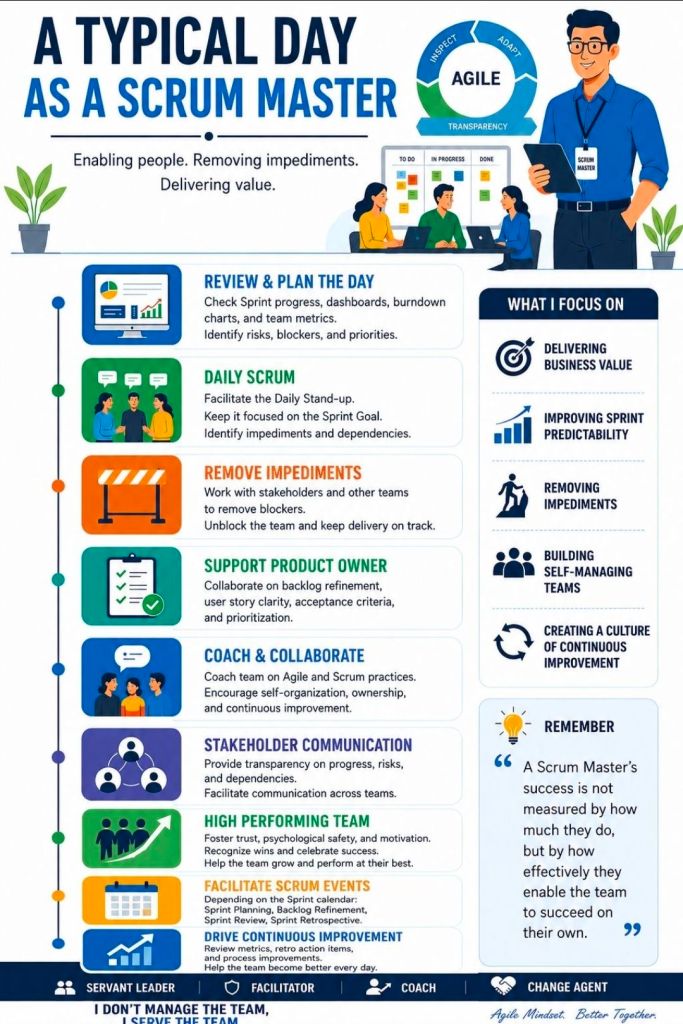
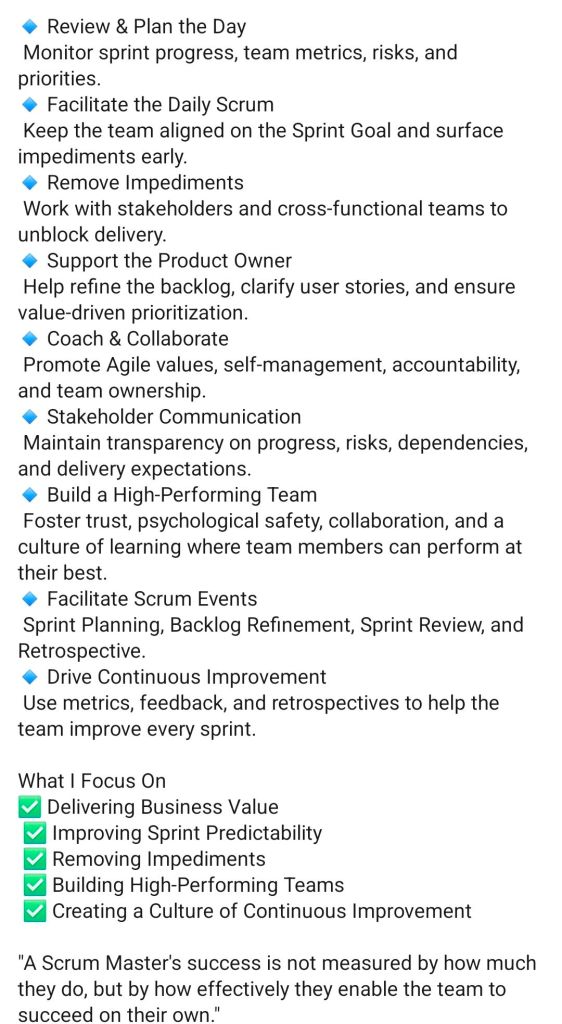
Agile Scrum Master, a Typical Day

Agile Scrum Master, a Typical Day
Agile Scrum Master, Typical Day