Focus: Electronic banking programming and development on Tandem Mainframe Computers.
Projects: Wrote, developed, and maintained software like sp/ARCHITECT-BANK and associated billing software (in Poole, 1993). This involved building early electronic banking systems for desktops long before internet banking was prevalent.
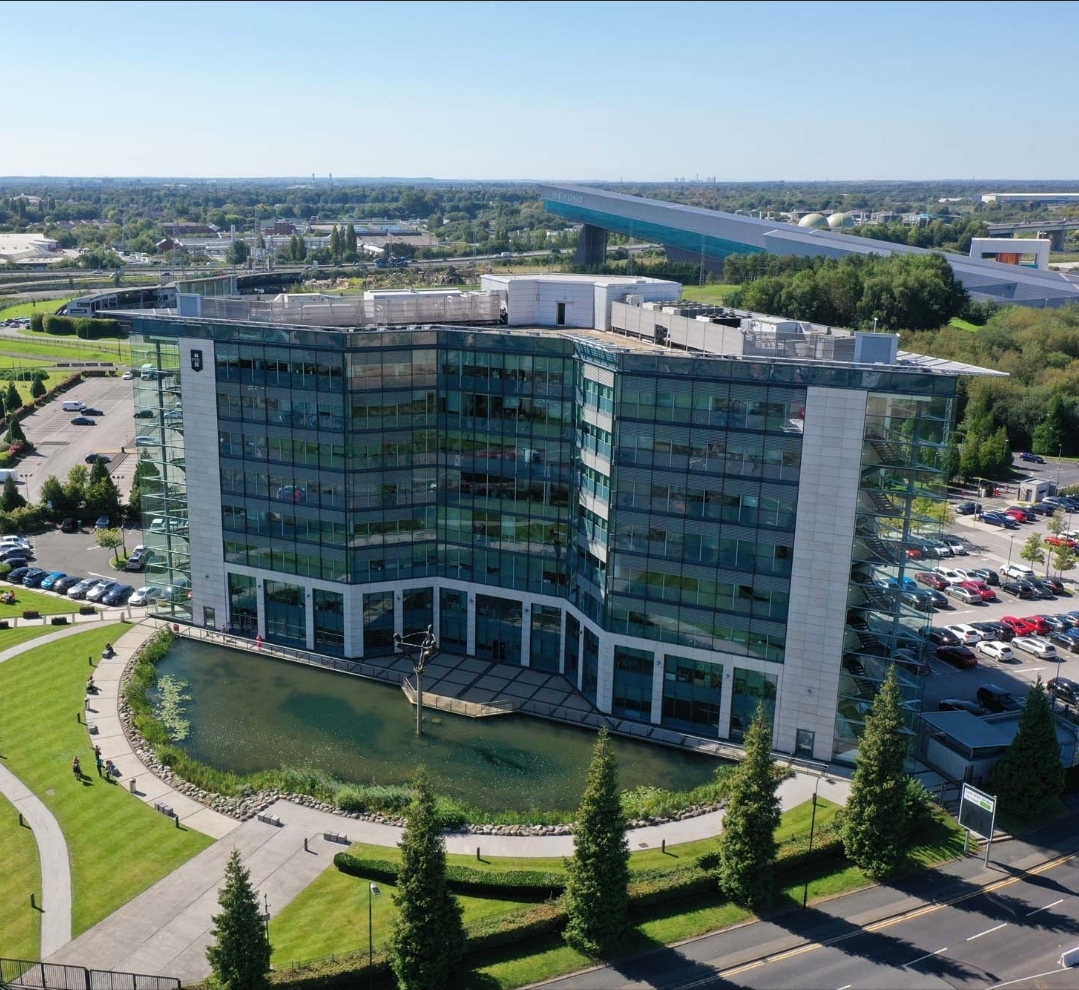
Location: Insider Technologies, Salford Quays, Manchester, UK
Focus: NonStop product management, software design, and real-time event monitoring.
Projects: Product managed software lifecycles for four monitoring products (two NonStop based). This included creating health and diagnostic tools (RTLX, Reflex 80:20, Reflex ONE24,XPERT24) for mission-critical NonStop environments. He also deployed volume testing on early HP NonStop S7000 nodes for CRESTCo in London in 1997.
Insider Technologies, Salford Quays, Manchester, UK
Location: Wincor Nixdorf & ATM/POS Financial Services, UK
Focus: Modernization and migration of legacy systems.
Projects: Managed a £5M+ replacement of legacy HP NonStop software systems at a large UK retail bank, migrating functionalities to AIX-based J2EE and Oracle architectures.
Focus: Delivery of enterprise-scale middleware, digital transformation, and cloud.
Projects: Acts as an Engagement Manager and SC-Cleared Project Manager. Focus includes Agile software delivery for Air Traffic organisations (e.g., iOS applications for military and public-facing airspace tracking) and rolling out middleware solutions.
BASE24 is an enterprise-grade electronic funds transfer (EFT) software suite developed by Applied Communications Inc. (now ACI Worldwide). It handles real-time transaction acquiring, authenticating, routing, switching, and authorization across ATMs, Point-of-Sale (POS) networks, and digital payment channels.
XPNET (Exchange Protocol Network) is the fundamental communications middleware layer designed explicitly for BASE24 on fault-tolerant systems. It acts as an abstraction layer managing interprocess communications (IPC), network protocols (e.g., Bisync, X.25, TCP/IP), line management, device messaging, and high-volume transaction routing. Together, they form the transactional backbone for a majority of the world’s top financial institutions.
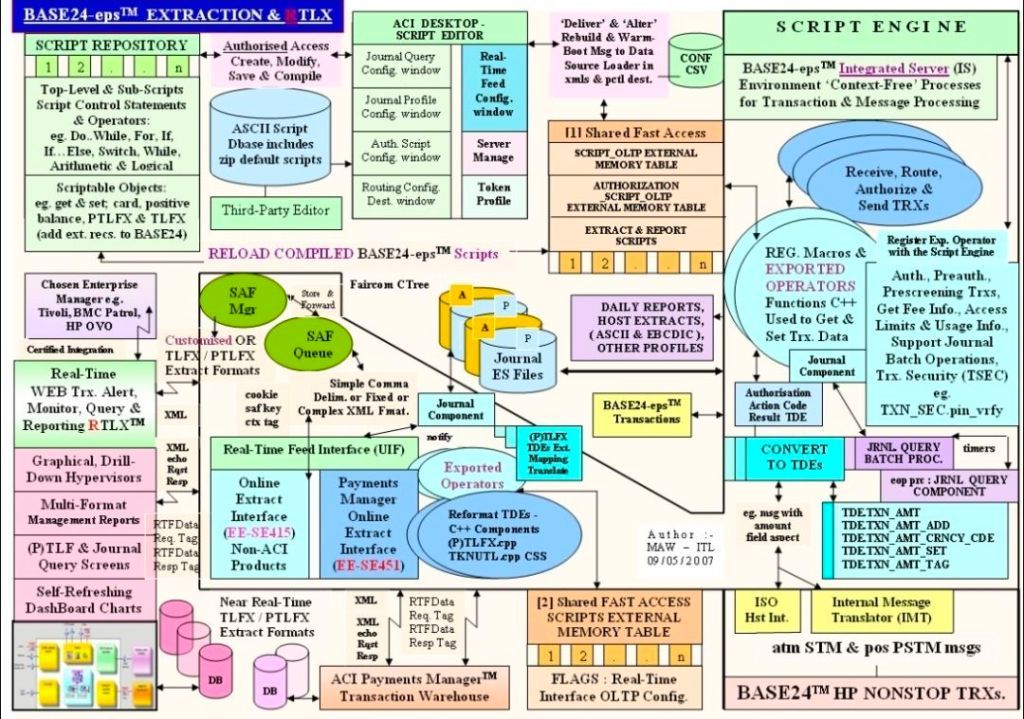
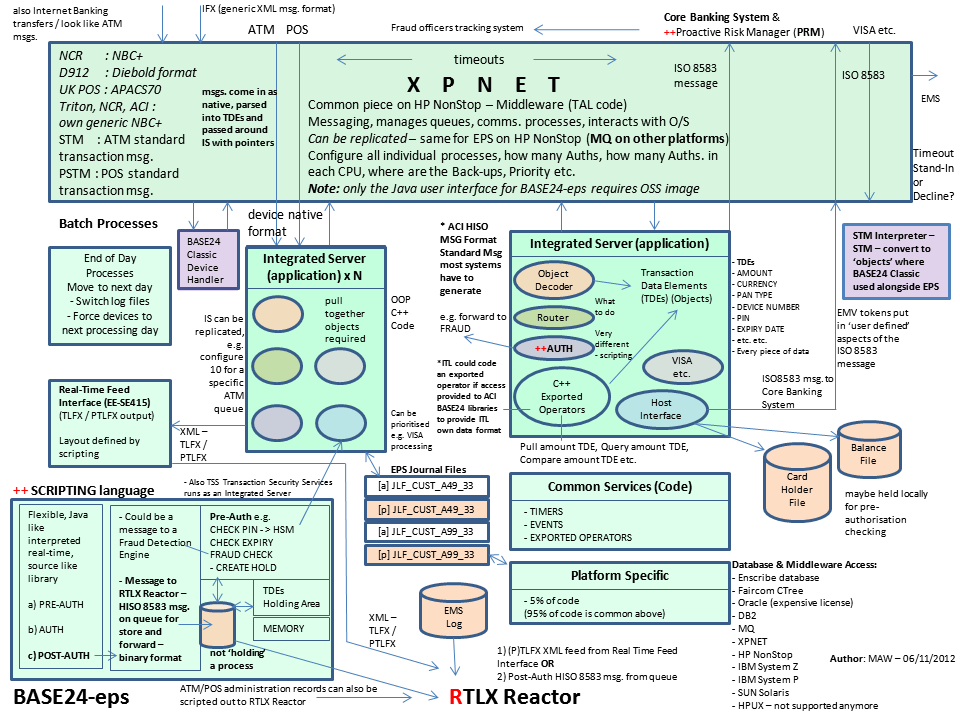
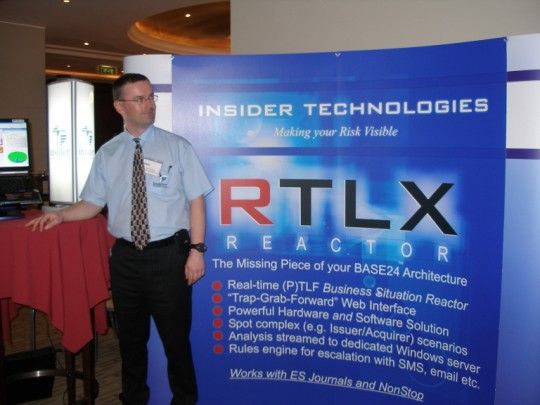
RTLX Reactor (in 2012) for tracking BASE24-eps & BASE24 XPNET transactions
Deep-Dive Architecture and Technology Stack
1. BASE24 Core Design
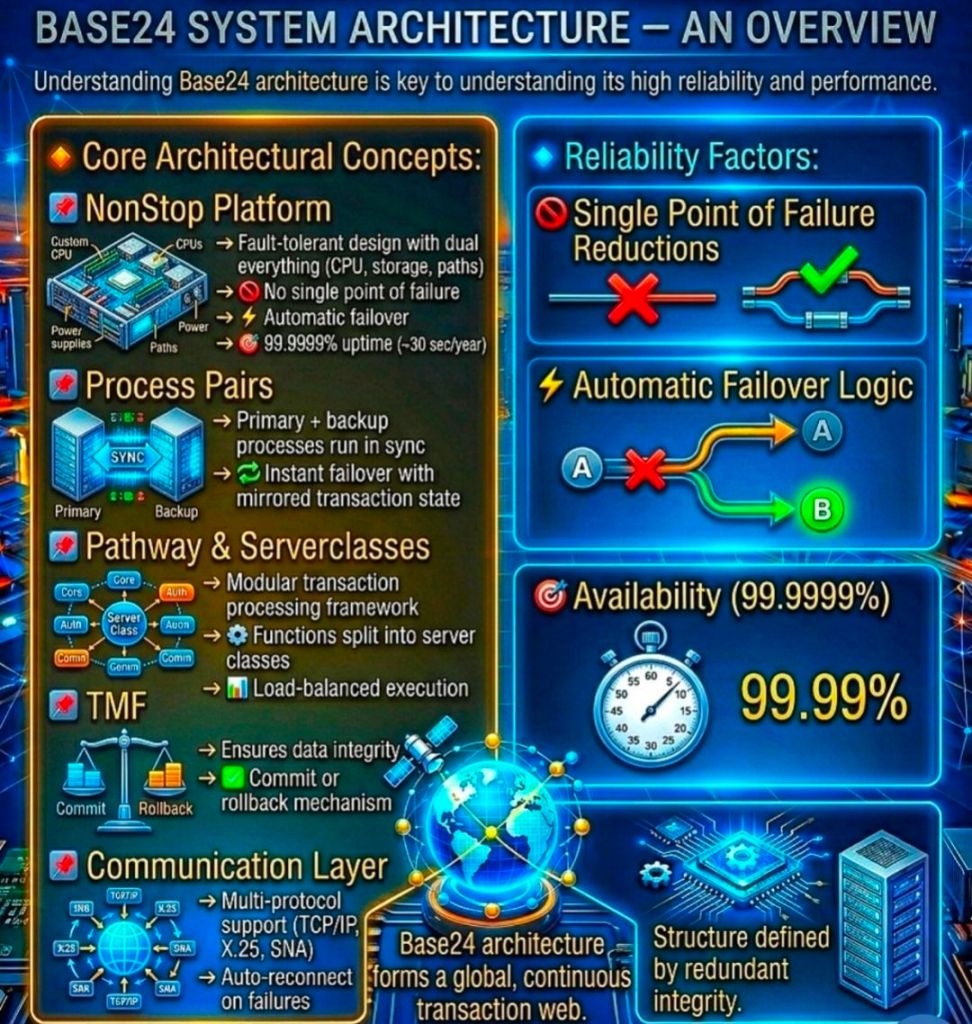
Process Pair Architecture: Designed natively around Tandem’s process pairs. A Primary Process performs the active transaction switching while a Backup Process remains synchronized in a standby state. If the hardware or primary process fails, the backup takes over instantly with zero data loss or session drops.
Functional Modules: Divided into specific transactional entities:
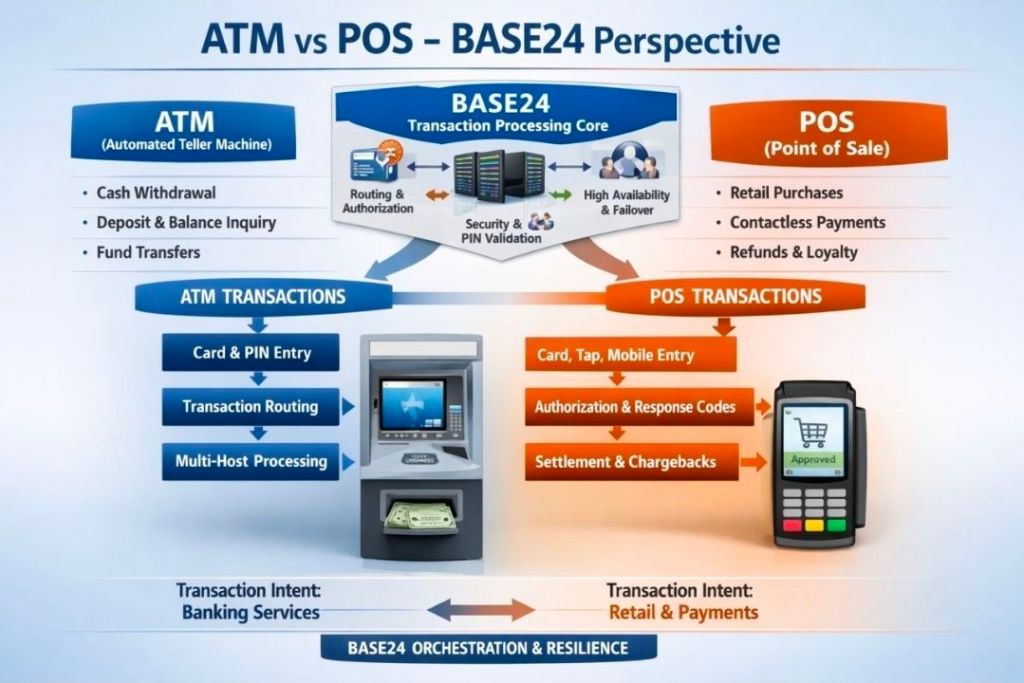
ATM (Automated Teller Machine Device Handler): Direct control and state management of physical terminals using custom message streams (e.g., Diebold, NCR).
POS (Point of Sale): Merchant terminal management and merchant accounting integration.
Auth (Authorization Processor): Internal validation scripts against account records or stand-in limits.
2. XPNET Middleware Engine
Line and Station Infrastructure: XPNET maps communication through abstract configurations. A Line represents a physical or logical network pipe, and a Station represents an endpoint (e.g., an interchange gateway or terminal node).
Dynamic Load Buffering: Employs internal memory queue structures to absorb traffic spikes from international card networks (such as Visa and Mastercard) without spilling into disk storage.
Protocol Multi-threading: It decouples low-level link dynamics (e.g., CRC checking, dropouts) from core business logic, converting legacy and modern network formats into standardized internal transaction tokens.
Application Development Timeline & Political Breakdown
The timeline below details how geopolitical, regulatory, and corporate ownership developments directly shaped versioning and core code changes in BASE24 and XPNET.
Era 1: The Tandem & Expansionist Era (1975–1992)
Geopolitical & Industry Context: The rise of consumer credit card networks, personal checking accounts, and the physical expansion of banking via ATMs. Regional networks were fragmented, necessitating specialized software to cross-connect them.
Corporate Dynamics: Applied Communications Inc. (ACI) operated as an independent software house in Omaha, Nebraska, forming a deep partnership with Tandem Computers before being acquired by US West (1988) and later Tandem directly (1991).
Year-by-Year Code & Technical Milestones:
1975–1981: Initial exploration of high-availability banking systems on Tandem NonStop computers. Developers laid the groundwork using Tandem Screen COBOL and low-level communication drivers.
1982:BASE24 v1.0 officially launches. The original codebase was written in TAL (Tandem Application Language), a high-performance, structured system programming language designed specifically for NonStop systems.
1985: A primitive version of XPNET is spun out from early shared-memory messaging code to support multi-protocol lines (Bisync, Async) without forcing restarts of the core application.
1987: Introduction of early ISO 8583 message formatting engines within the core routing code. This allowed the software to natively interpret standard financial messaging frames across distinct interbank networks.
1991: Tandem acquires ACI. Code refactoring focused heavily on optimizing interactions with Tandem’s native file system (Enscribe) and expanding the XPNET process memory layout to take advantage of new Tandem CLX architecture performance.
Era 2: The TSA Corporate & Public Market Era (1993–2000)
Geopolitical & Industry Context: Globalization of financial services, the consolidation of national card switches, and the commercial explosion of internet banking and POS devices.
Corporate Dynamics: Tandem divested ACI to a private holding company, leading to the creation of Transaction Systems Architects (TSA) in late 1993. TSA went public on NASDAQ in 1995, pushing development velocity to meet Wall Street expectations.
Year-by-Year Code & Technical Milestones:
1993–1994: Standardized compilation routines moved to Tandem’s pTAL (portable TAL) to bridge code execution compatibility between older CISC-based architectures and the newly emerging MIPS RISC processors.
1995–1996: BASE24 version 4.x introduces advanced multi-institution handling inside a single logical codebase, allowing multi-tenant processing for third-party credit card consolidators.
1997: Release of BASE24 v5.x, featuring significant expansions in XPNET (v2.x) to accommodate native TCP/IP sockets alongside aging X.25 line infrastructures.
1998–1999: Heavy investment into Y2K compliance remediation. Code changes involved updating binary-coded decimal (BCD) date configurations, expanding date-storage windows across Enscribe files, and deploying the BASE24 Year 2000 System Assessment frameworks globally.
Era 3: Enterprise Platform Shift & Consolidation (2001–2014)
Geopolitical & Industry Context: Post-9/11 regulatory changes (e.g., USA PATRIOT Act), the implementation of modern security standards like Triple DES (TDES), and the birth of the PCI-DSS (Payment Card Industry Data Security Standard). Mainframes and alternative hardware processors (IBM, HP-UX) became fierce competitors to Tandem.
Corporate Dynamics: TSA officially rebranded to ACI Worldwide, Inc. (ACIW) in 2007. A strategic decision was made to rewrite the platform to break vendor lock-in and provide cross-platform flexibility.
Year-by-Year Code & Technical Milestones:
2001–2002: Standard cryptographic layers within BASE24 are systematically modified to enforce Triple DES compliance across automated teller machines.
2003: ACI introduces BASE24-eps (Enterprise Payments System). This marked a foundational architecture shift, moving away from TAL/pTAL entirely to an object-oriented paradigm written in C++ and designed to execute cross-platform (HPE NonStop, IBM z/OS, AIX, Linux).
2005–2006: BASE24-es/eps code integrates with enterprise middleware layers such as IBM WebSphere MQ, using CICS containers on z/OS to deliver modern service-oriented architecture (SOA) web services wrappers.
2008–2010:ACI shocks the banking industry by announcing the sunsetting of standard maintenance for classic Tandem NonStop BASE24 by late 2011. Millions of lines of legacy TAL code are effectively frozen, forcing major migrations toward BASE24-eps.
2011–2013: Code enhancements center around PA-DSS validation and securing encryption pathways to ensure tokenized processing. XPNET 3.x is deployed onto newer HP Integrity Itanium-based J-Series and H-Series blades.
Era 4: Modernization, Cloud-Native, and Open Systems (2015–Present)
Geopolitical & Industry Context: The dominance of Real-Time Payments (RTP, FedNow, ISO 20022 formats), cloud computing mandates, and aggressive cost-reduction pushes away from high-maintenance legacy hardware configurations.
Corporate Dynamics: ACI pivots sharply to open-ecosystem SaaS delivery, cloud partnerships (AWS, Microsoft Azure, Google Cloud), and co-development with IBM to optimize cross-platform throughput.
Year-by-Year Code & Technical Milestones:
2015–2016: BASE24-eps code is successfully ported to Red Hat Enterprise Linux (RHEL) on standard x86 processors. This architectural pivot offered a reduction in total cost of ownership (TCO) compared to legacy hardware by providing massive processing scaling.
2018–2020: The introduction of standard ISO 20022 messaging libraries into the switching matrix to support instant transaction settlement schemes globally.
2021–2024: Legacy middleware systems are phased down. Modern releases feature direct REST API hooks, cloud-adaptor hooks, containerised microservices integration, and extended configuration capabilities via the ACI Desktop GUI.
2025–2026: ACI partners with IBM to launch native 64-bit deployment optimizations for BASE24-eps running on IBM Z mainframes (including z16/z17 configurations), incorporating hardware-driven AI fraud analysis models and full PCI-SSF (PCI 4.0) certification.
Overview of BASE24 and XPNET plus application timeline by era
The core electronic banking software product sp/ARCHITECT-BANK was originally developed by The Software Partnership (TSP), a highly specialized British software house co-founded by Nigel Walsh in Runcorn, Cheshire.
Engineered to deliver high-availability, fault-tolerant electronic and desktop home-banking services, it ran natively on Tandem NonStop mainframe computers (now HPE NonStop).
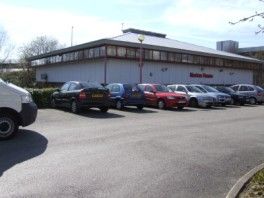
The Software Partnership, Norton House, Crowngate, Runcorn, Cheshire
Over the decades, the product evolved through major corporate acquisitions, eventually being integrated into enterprise-level banking suites like CONNEX Advantage under eFunds and FIS.
🌅 Era 1: The Inception and Independent Software House Era (Mid-1980s–1993)
During this foundational era, The Software Partnership engineered the core product from scratch to meet the emerging demand for “Direct Electronic Banking” before the commercial internet became prevalent.
1985: The Software Partnership (TSP) is co-founded by Nigel Walsh in Runcorn, Cheshire. Development begins on a standard product architecture designed specifically for the transaction processing monitor (PATHWAY) and operating system (Guardian) of Tandem Computers.
1988–1989: The company establishes sp/ARCHITECT (and its core module, sp/ARCHITECT-BANK) as a premier client-server base package for corporate and home-office electronic banking.
1990: The engineering team scales up to build standard product releases written in COBOL85 and utilizing NonStop SQL databases. They develop proprietary testing utilities like sp/TESTBED to simulate PC-to-mainframe interfaces. Mark Whitfield joins the company after graduating in Computing in late 1990.
1991: Major deployment begins for the high-profile Barclays Business Master II (BBM II) desktop corporate banking application, with TSP placing teams (including Mark Whitfield) on-site at Barclays in Knutsford, Cheshire.
Barclays, Radbroke Hall, Knutsford, Cheshire
1992: A batch billing and invoicing suite of modules is engineered over 3-months and appended to the Barclays installation at Poole, Dorset. Mark Whitfield is assigned to this HPE NonStop (Tandem) billing/ invoicing development on the UK south coast. Simultaneously, TSP expands internationally into continental Europe.
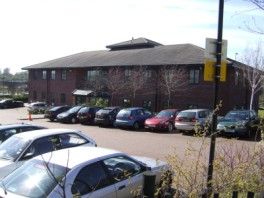
Barclays, Wimborne Road, Poole, Dorset
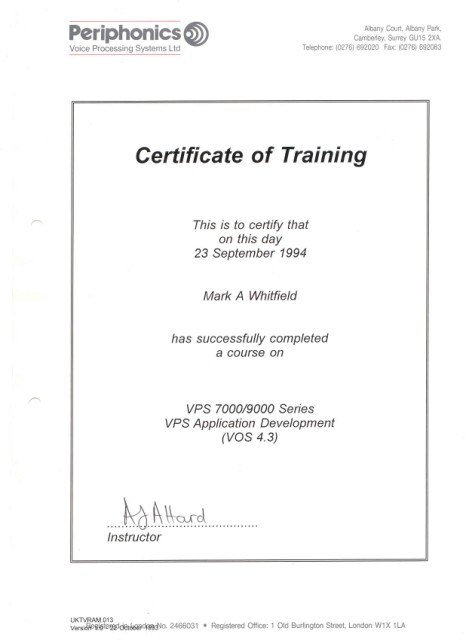
1993: TSP develops an automated, touch-tone voice menu system for Girofon (Denmark). The code interfaces phone lines through Periphonics Interactive Voice Response (IVR) hardware directly into the back-end Tandem banking system. Concurrently, the core application handles desktop money transfers and early logic checking for clearing giants TSB and Bank of Scotland. Mark Whitfield is also involved with supporting this IVR technology.
🤝 Era 2: The Deluxe Data International Era (1994–1999)
Recognizing the massive European banking client footprints of sp/ARCHITECT, US-based electronic funds transfer (EFT) specialist Deluxe Data acquired TSP to merge their direct banking and card processing capabilities.
1994: Deluxe Data Corporation acquires The Software Partnership. The Runcorn offices are reorganised as Deluxe Data International Operations.
Deluxe Data International Operations, Wingate House, Northway
1995: The product undergoes heavy code optimization to satisfy customer acceptance loops for international clearers, notably deploying direct electronic banking solutions for major Dutch institutions like Rabobank. Mark Whitfield moves on from Deluxe Data (after 5 years) to Insider Technologies Limited in Salford Quays in late 1995. This to continue HPE NonStop programming work for both monitoring and diagnostic products like Reflex 80:20.
1996: Development transitions toward hybrid enterprise networking. The sp/ARCHITECT system is updated with custom TCP/IP software interfaces to allow newer mid-range UNIX servers (such as IBM RS/6000) to safely communicate with the core Tandem server environment.
1997: Deluxe Data expands the core platform’s messaging logic using Tandem’s Remote Server Call (RSC) facility. This enables early Windows NT operating systems to request live financial data from the sp/ARCHITECT host.
1998: An automated, multi-process file transfer protocol is integrated natively into the bank database, leveraging Connect:Direct transport layers to securely transfer corporate SWIFT financial data files.
🚀 Era 3: The eFunds & Corporate Consolidation Era (2000–2006)
Deluxe Data’s technologies spun off into a new corporate entity called eFunds Corporation, altering the delivery model of the legacy software.
2000: Deluxe Electronic Payment Systems officially merges with other divisions to form eFunds Corporation (EFD). The sp/ARCHITECT package becomes a core pillar of eFunds’ international banking portfolio.
2002–2004: To modernise the transaction handling backbone, components of the sp/ARCHITECT platform are refactored. The system’s underlying communication routing is systematically aligned with CONNEX, a dominant market-leading Electronic Funds Transfer (EFT) processing engine.
2005–2006: eFunds transitions the direct client-server software layers into highly secure corporate portals, providing the foundational logic for what would eventually be rebranded as the CONNEX Advantage banking solution.
🏢 Era 4: The FIS Integration and Legacy Modernisation Era (2007–Present)
The final stage of the product timeline represents its absorption into global banking infrastructure software, where its high-availability DNA remains active in institutional transaction environments.
2007: Financial technology behemoth Fidelity National Information Services (FIS) acquires eFunds Corporation for approximately $1.8 billion. Following industry consolidation, the corporate remnants of the original TSP Runcorn operations are absorbed into Fidelity National Information Services (FIS) and relocated to Aegon House in Daresbury, Warrington.
Fidelity National Information Services (FIS) Aegon House, Warrington (in 2007)
2010: FIS fully absorbs the remaining codebase, utilizing its core Tandem architecture algorithms to fortify transaction processing stability.
2015–2020: The architectural concepts pioneered by sp/ARCHITECT-BANK continue to govern high-volume legacy systems. The logic stays preserved in COBOL85 code bases running on modern HPE Integrity NonStop (Intel Xeon-based) fault-tolerant environments.
2020s–Present: Modern banking infrastructures gradually migrate from the classic database frameworks toward microservice configurations and open-banking APIs. However, the core system layout remains a primary point of historical reference for designing high-throughput, 24/7/365 fault-tolerant banking systems.
sp/ARCHITECT-BANK originally developed by The Software Partnership (TSP), Runcorn, Cheshire
sp/ARCHITECT-BANKCode Evolution Timeline
The timeline below details how the code’s core design, language implementations, and application deployment strategies transformed by era and year.
1. The Monolithic & TAL Foundation Era (1980s – Early 1990s)
During this era, the application focus was strictly high-throughput, fault-tolerant electronic funds transfer (EFT) and point-of-sale (POS) switching systems natively built for Tandem Guardian environments.
Late 1980s: The core design of sp/ARCHITECT is established using TAL (Tandem Application Language). Applications are deployed as single-system monoliths. Code optimization focuses heavily on low-level bit manipulation and message structuring to survive CPU or inter-process failures without losing in-flight transactions.
1991–1993: Structuring of modular execution libraries. Early iterations of the codebase segment transaction processing routes from core database logging routines. The introduction of Tandem’s newer NonStop SQL forces early integration layers to transition from standard unstructured unstructured file systems (Enscribe) to early relational tracking.
2. Distributed Client/Server & pTAL Migration Era (Mid 1990s – Early 2000s)
The architectural demands shifted from single-frame monoliths toward distributed banking systems, giving rise to “Distributed Monoliths” and client/server network structures.
1995–1996: Hardware evolutions transition from the older CISC-based Tandem systems to RISC architectures (MIPS processors). sp/ARCHITECT undergoes a massive compilation shift to pTAL (portable TAL) to preserve legacy code performance across new instruction sets.
1998–1999: Tandem’s acquisition by Compaq pushes the software suite to handle open standard protocols. The application code begins abstracting system calls to prepare for broader networking interfaces.
2001–2003: Deluxe Data / eFunds eras. The code sees the introduction of C/C++ wrappers around the legacy pTAL components. Systems are decoupled into a clear 3-Tier architecture: front-end terminal networks, back-end pTAL transactional engines, and standardized clearing houses.
3. Open Systems, Modern Middleware, & Java Integration Era (Mid 2000s – 2010s)
Following HP’s acquisition of Compaq and subsequent software realignments, the sp/ARCHITECT codebase was re-engineered to prevent vendor lock-in and adopt modern enterprise standards.
2005–2007: Java is introduced into the sp/ARCHITECT ecosystem. New application modules, specifically merchant portal interfaces and settlement reporting tools, are written entirely in Java and run via OSS (Open System Services) environments.
2010–2012: FIS acquisition era integration. Legacy pTAL code blocks are systematically refactored or heavily wrapped in C++ using object-oriented principles to ensure long-term maintenance. The transaction routing engine is altered to support early SOA (Service-Oriented Architecture) paradigms via web-services hooks.
2015–2018: Mainstream deployment of COB (Core Banking) standard formats within the application layer. The system moves away from old proprietary network messaging layouts to ISO 20022 compliance frameworks, utilizing dedicated conversion engines native to the sp/ARCHITECT stack.
4. Modern Cloud-Adjacent & Hybrid Infrastructure Era (2020s)
The current evolutionary footprint centers on maintaining the absolute sub-millisecond reliability of the core architecture while exposing capabilities to dynamic cloud endpoints.
2021–2023: Modernization of the application payload. High-performance micro-frontends handle real-time fraud monitoring and data streaming using asynchronous event-driven pipelines (e.g., Kafka event consumers interfacing directly with the NonStop core runtime environments).
2024–2026: Transition to containerized orchestration and cloud-adjacent infrastructure. The sp/ARCHITECT footprint utilizes x86-based virtualized NonStop systems (NSX), enabling legacy core modules (derived from the original TAL logic) to execute seamlessly on modern virtual environments alongside Linux-based multi-tenant applications.
Insider Technologies Limited is a specialized UK-based software house and service provider that engineers high-availability monitoring, tracking, and cybersecurity solutions for business-critical, 24/7 mission-critical architectures. I worked at ITL in Salford Quays from 1995 through to 2013.
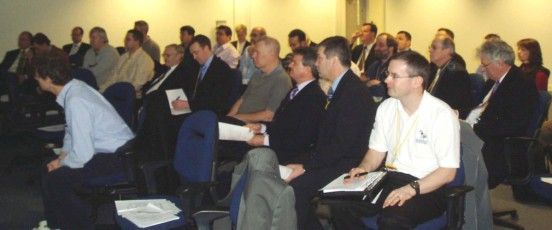
Attending an EBUG conference (European BASE24 User Group)
Foreground, attending a British Isles TANDEM User Group (BITUG)
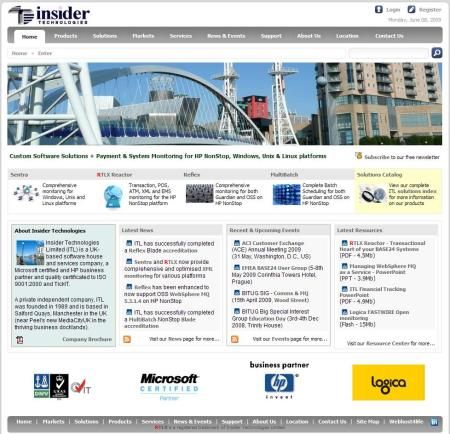
Insider Technologies Limited (website author in 2009)
CompanyOverview
🏢 Corporate Identity & Status
Legal Name: Insider Technologies Limited
Founded:27 February 1989
Headquarters: Manchester, UK (Albert Street, Eccles)
Ownership: Operating as a private independent software company, recently integrated as part of PartnerOne.
Strategic Partnerships: Certified Microsoft Gold Partner for Application Development and long-standing Hewlett Packard Enterprise (HPE) partner.
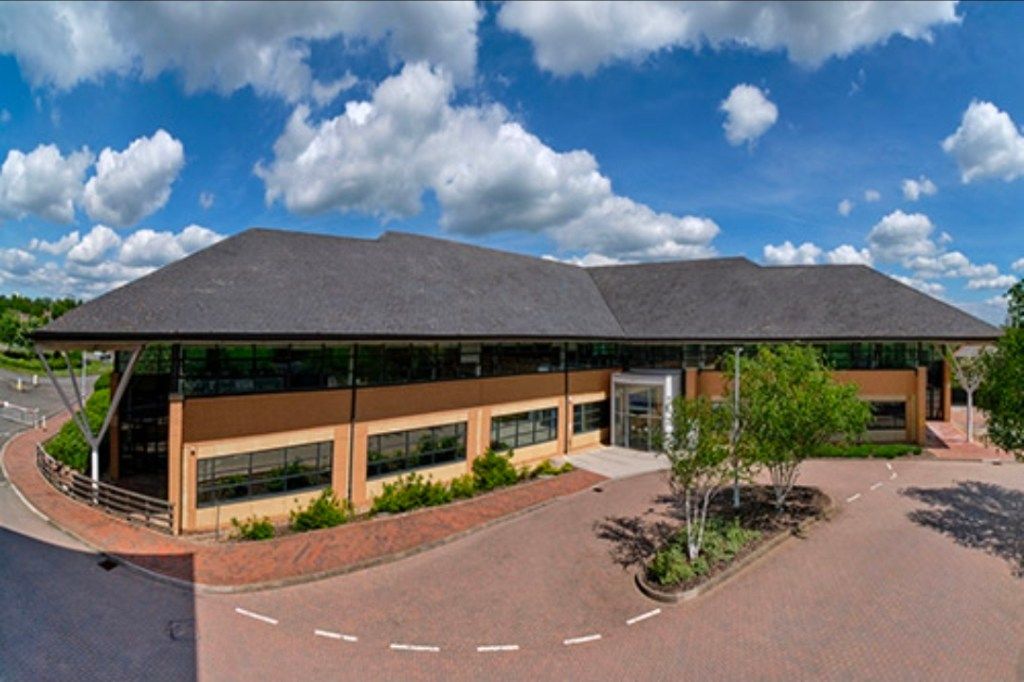
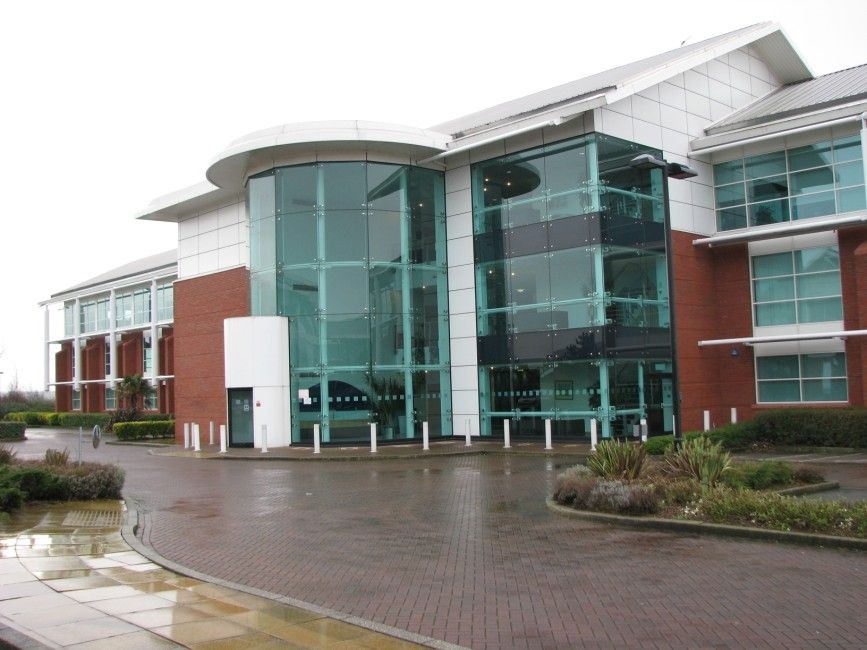
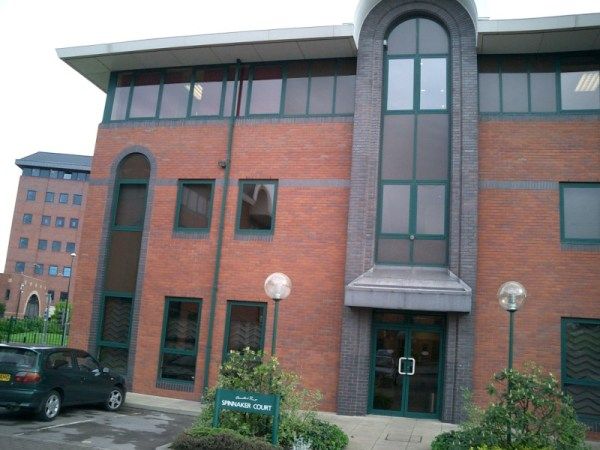
Insider Technologies Limited (ITL) in 2001, Salford Quays, Chandlers Point
🌐 Core Domain & Industries Served
The company delivers real-time, event-driven diagnostic, tracking, and compliance middleware solutions across three main highly-regulated global verticals:
Government & Defence: Secure enterprise military messaging tracking and digital evidence handling.
Telecommunications: Tracking data traffic and critical infrastructure middleware.
🛠️ Core Technology Stack & Competencies
Insider Technologies specializes in niche high-availability operating environments—specifically HPE NonStop (historically Tandem Computers and HP NonStop) running Guardian and Open System Services (OSS) environments—alongside enterprise Windows, Linux, and Unix systems. Their expertise spans database transaction management, BASE24 XPNET monitoring, IBM WebSphere MQ tracking, and low-level development (SQL, TAL, TACL, COBOL85, C++, Pathway).
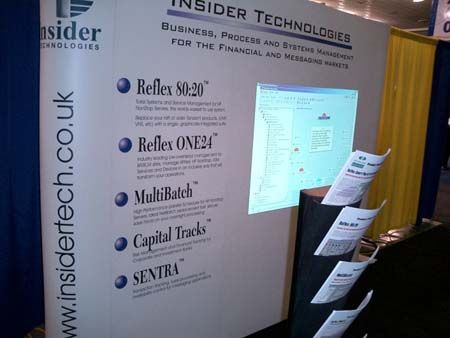
Insider Technologies – Core products in 2003
In-Depth Product & Political-Technical Timeline
This timeline breaks down how Insider Technologies evolved its software suite. It demonstrates how their technical development directly responded to shifting geopolitical landscapes—ranging from late-Cold War military messaging security to post-9/11 financial regulations and modern European cloud autonomy initiatives.
🔹 The Foundation & Legacy Tandem Era (1989–1999)
Political Context: The final years of the Cold War and the 1990s globalization boom demanded high-security, fault-tolerant mainframes for NATO-aligned military communications and early global banking clearing networks.
Technical Context: Tandem Computers dominated the un-interruptible 24/7 market. Software was required to monitor these platforms without causing processing overhead.
1989
Company Incorporation: Insider Technologies is incorporated in the UK to engineer bespoke software for highly robust technical ecosystems.
1990–1995
Reflex (Core Release): Release of Reflex, a foundational service management and real-time transaction diagnostic tool built specifically for the Tandem Guardian operating system.
1996–1999
MultiBatch Software: Further Develop and Extend MultiBatch to orchestrate and safely automate complex batch processing on Tandem machines alongside the evolution into HP NonStop computing frameworks.
Y2K Compliance Focus: Technical adjustments were deployed across Reflex and MultiBatch to assure financial institutions that automated transaction logging would not fail during the millennium rollover.
🔸 The Multi-Platform & Financial Compliance Era (2000–2015)
Political Context: Following the September 11 attacks, global anti-money laundering (AML) and counter-terrorism financing (CTF) frameworks heavily expanded. Financial regulators demanded exact, audible end-to-end payment tracking.
Technical Context: Enterprises began migrating away from single-architecture mainframes toward heterogeneous IT environments, requiring tools that could jump across Windows, Unix, and Linux simultaneously.
2002–2004
Sentra Development: Launch of Sentra, expanding the firm’s portfolio beyond HPE NonStop into cross-platform environment monitoring for Windows, Linux, and Unix systems.
Reflex 80:20 & Reflex ONE24: Advanced variations of the Reflex tracking system were built to cater to specialized real-time electronic payment flows like BASE24 with XPNET.
2005–2010
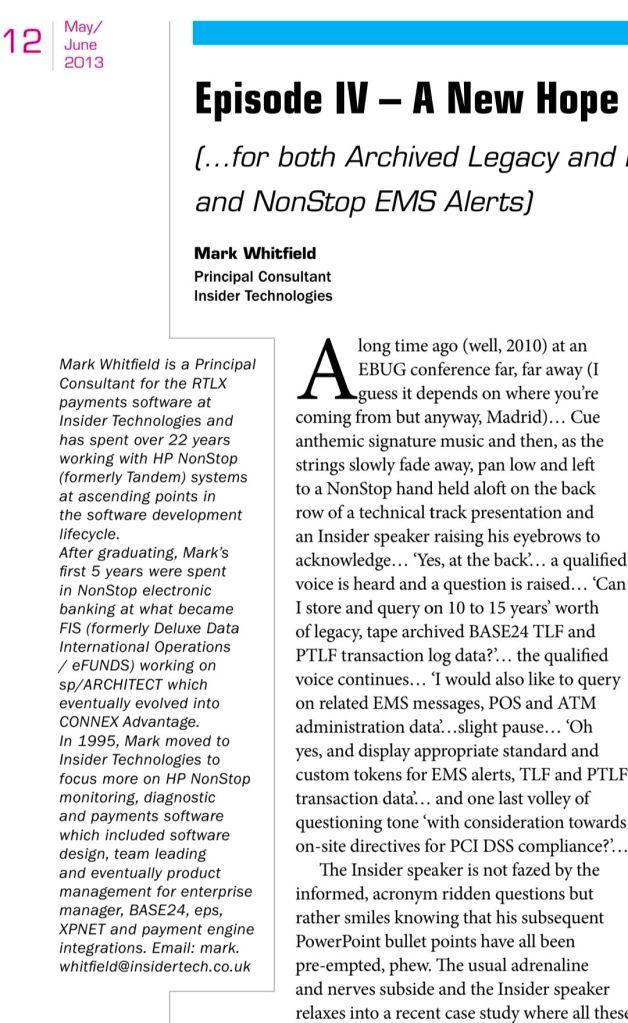
RTLX Reactor (page 12) and Middleware Monitoring: The release of RTLX Reactor provided message tracking capabilities tailored for IBM WebSphere MQ, allowing institutions to trace various payment and other data through complex middleware chains.
Corporate Structuring: The creation of Insider Technologies (Holdings) Limited reinforced corporate expansion as the company deepened its footprint in secure military messaging for government defense bodies.
🔹 The Cyber Autonomy & Sovereignty Era (2016–Present)
Political Context: Escalating nation-state cyber warfare, strict GDPR regulations, and the UK/EU push for technological sovereignty and domestic digital ecosystem resilience heightened the reliance on trusted, onshore technology suppliers.
Technical Context: High-threat environments demand zero-trust visualization, time-accurate logging across digital evidence files, and advanced protection against internal exfiltration vectors.
2019
30-Year Milestone & Modernization: The company celebrates its 30th year, accelerating development on modern mobile application extensions to permit real-time, remote secure alerts for operations teams.
2022–2025
PartnerOne Integration: Insider Technologies aligns its operations under the PartnerOne portfolio, preserving its UK identity while supercharging its enterprise-scale data infrastructure solutions.
Corporate Integration combines Insider’s expertise with PartnerOne’s portfolio to deliver advanced analytics and secure messaging systems to banking, defence, and telecommunications markets.
Defense and Public Safety Porting: Technical deployment of specialized capabilities covering digital evidence security, timekeeping tracking, and legacy virtualization modules aimed explicitly at helping the UK Government maintain its historical tech stacks safely.
RTLX Reactor (in 2012) for tracking BASE24-eps & BASE24 XPNET transactions
Insider Technologies Limited (ITL), Company Overview and Timeline by Year
The Insider RTLX product at ETI-NET is now called C-Deep for Transaction Monitoring;
BASE24 is a market-leading, fault-tolerant Electronic Funds Transfer (EFT) software application developed by ACI Worldwide. For decades, it has served as the backbone for global banking, processing billions of ATM, Point of Sale (POS), and smart card transactions.
BASE24 Electronic Funds Transfer (EFT) software application developed by ACI Worldwide, Overview
The product achieves its landmark 24/7/365 uptime by running natively on the HPE NonStop architecture—originally engineered by Tandem Computers.
1. Underlying Technology Stack
BASE24 Classic was built from the ground up to utilize the unique properties of the Tandem/HPE NonStop platform:
Database:Enscribe, a native hierarchical/flat file database optimized for ultra-fast, unstructured file access. Newer iterations use NonStop SQL/MX.
Programming Languages: Primarily TAL (Tandem Application Language), pTAL, and COBOL/SCOBOL.
Middleware:PATHWAY (PATHCOM), which acts as the transaction processing monitor to dynamically manage and load-balance server processes.
2. High-Level Component Architecture
BASE24 relies on an interconnected network of specialized processes that route and manage messages.
A. XPNET (The Networking Engine)
XPNET is a critical, proprietary communication subsystem. It provides the messaging infrastructure where applications interface with network communication lines. XPNET acts as the buffer layer, monitoring physical lines, enforcing transaction timing checks, and distributing data loads uniformly across CPUs.
B. Device Handlers (DH)
Device Handlers act as the translators for peripheral devices.
Function: They intercept hardware-specific protocol messages (e.g., Diebold or NCR formats from ATMs) and normalize them into BASE24’s internal standard message format.
Security: DH processes handle terminal-level PIN encryption, coordinate MAC (Message Authentication Code) keys, and initiate terminal downline loads.
C. Authorization Process (AUTH)
AUTH is the core decision engine of the application.
Function: It validates card restrictions, tracks card usage accumulations, and performs transaction risk checks.
Fallback Management: If a bank’s core system goes offline, AUTH drops into “Stand-Alone” or “Negative/Parametric Authorization” mode, approving transactions locally up to safe, pre-defined limits.
D. Host Interfaces (HI)
The Host Interface connects BASE24 to the financial institution’s primary backend core banking systems. It handles “On-Us” transactions—meaning the card used belongs to the bank owning the terminal.
E. Interchange Interfaces (II)
The Interchange Interface formats, translates, and routes transactions to global credit/debit networks (such as Visa, Mastercard, AMEX) or regional switches. It transforms internal BASE24 data formats into compliance standard formatting, such as ISO 8583. It handles “Not-On-Us” transactions.
3. Core Database & File Structure
BASE24 captures system activities across specialized transactional and tracking files, mostly utilizing Enscribe:
TLF (Transaction Log File): The primary log capturing every ATM event, amount, response code, and terminal ID in real-time.
PTLF (POS Transaction Log File): Mirrors the utility of the TLF, but optimizes records strictly for merchant POS transactions.
LCONF (Logical Network Configuration File): Dictates how network configurations, devices, institutions, and communication paths map into XPNET.
CAF (Cardholder Authorization File): Stores specific card numbers, limits, and statuses used for stand-alone authorization if host links break down.
4. Daily Operational Processes
Beyond live message switching, BASE24 executes several critical back-office operations:
Extract: Periodically filters transaction data from live TLF/PTLF logs to move to external billing arrays.
Refresh: Downloads updated data dumps (such as blacklisted cards or updated balances) from core hosts into local BASE24 database files.
Settlement Initiator: Aggregates transaction volumes at specified cutoff times to reconcile balanced records between ATMs, POS terminals, and clearing networks.
5. Why Tandem/HPE NonStop is Essential to BASE24
BASE24 relies on the hardware/software synergy provided by HPE NonStop to achieve near-zero downtime:
Shared-Nothing Architecture: Processors operate independently with their own memory stacks. If a physical CPU suffers hardware failure, it cannot corrupt the rest of the application.
Process Pairs: BASE24 components operate via a primary process in one CPU and a backup process in an alternate CPU. The primary constantly syncs checkpoint data with its backup. If the primary drops, the backup assumes processing instantly without interrupting transaction flights.
Active/Active Configuration: Utilizing replication software like HPE Shadowbase or DRNet, financial firms link distinct geographic NonStop locations. Both processing sites operate concurrently, managing localized transactions and replicating states reciprocally.
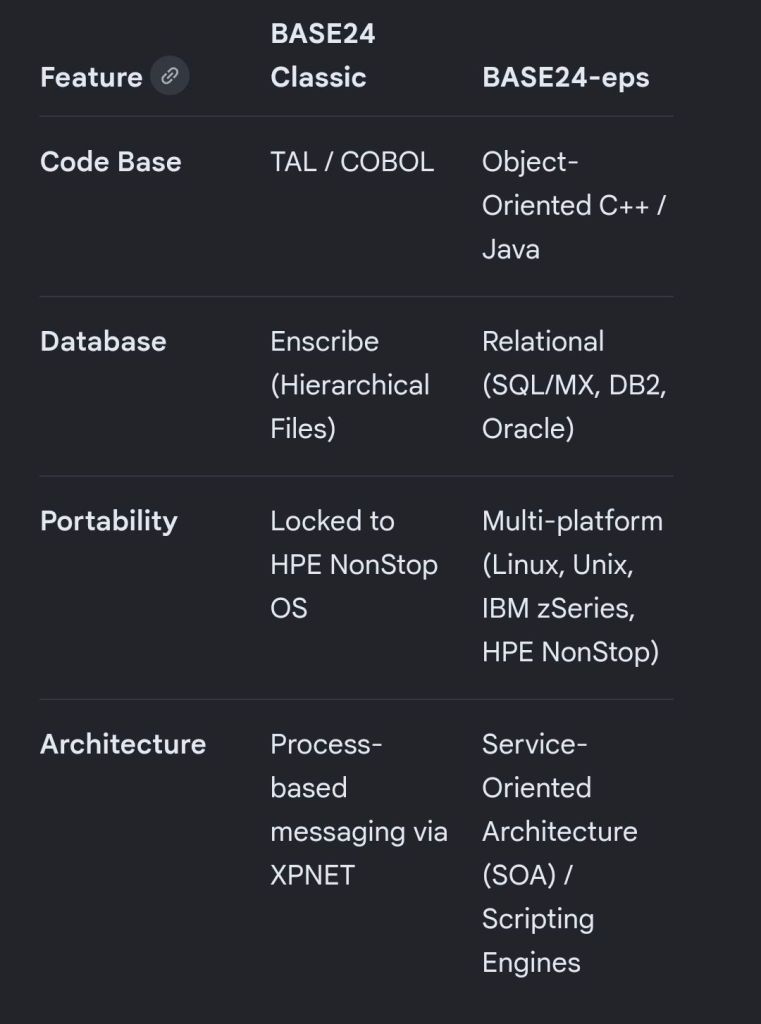
6. Product Evolution: BASE24 Classic vs. BASE24-eps
ACI Worldwide evolved the platform from BASE24 Classic into BASE24-eps (Enterprise Payment System):
Product Evolution: BASE24 Classic vs. BASE24-eps
BASE24 Electronic Funds Transfer (EFT) software application developed by ACI Worldwide, Overview
BASE24 Electronic Funds Transfer (EFT) software application developed by ACI Worldwide, Overview
The development of programming languages on the HPE NonStop platform (originally founded as Tandem Computers) is tightly bound to its architectural hardware transitions: from custom CISC stack machines to MIPS RISC, Intel Itanium, and eventually standard Intel x86-64 infrastructures.
Detailed List of NonStop Programming Languages
1. Core Proprietary & System Languages
TAL (Transaction Application Language): The foundational system programming language for Tandem. It is a block-structured, machine-dependent procedural language designed to compile directly into highly efficient machine instructions. It features ALGOL/Pascal-like syntax but implements C-like semantics, structural pointers, and weak data typing.
pTAL & epTAL: Specialized evolutions of TAL. Rather than rewriting legacy codebases from scratch during architecture shifts, pTAL was introduced to compile existing TAL code natively into MIPS RISC architectures. Later, epTAL was developed to target Intel Itanium microprocessors.
TACL (Tandem Advanced Command Language): A built-in command interpreter and interpreted scripting language. It functions like a Unix Bash shell but features highly complex macro capacities used to orchestrate system configurations, monitor processes, and automate failover procedures.
2. Enterprise & Enterprise Legacy Languages
COBOL85 (and older COBOL74): The undisputed workhorse of NonStop commercial workloads. HPE’s tailored implementation of the COBOL85 standard natively interfaces with the Guardian OS. It allows programmers to embed SQL/MP statements and program fault-tolerant Process Pairs through HPE NonStop Pathway (TS/MP).
SCOBOL (Screen COBOL): A specialized, high-level structural derivative of COBOL utilized exclusively to build blocks for character-cell terminal interfaces (such as the 6530 terminal environments) running within Pathway architectures.
NonStop SQL (SQL/MP and SQL/MX): While technically a database system, its embedded syntax acts as a declarative language integrated into C and COBOL. SQL/MP works with the legacy Guardian file system, while SQL/MX brings ANSI-compliant SQL closely bound with the Open System Services (OSS) environment.
3. Standard Mainstream Languages
C & C++: Heavily introduced during the RISC transition to allow software portability. Mainstream development on modern NonStop systems uses standard C/C++ cross-compilers. They run in either the native fault-tolerant Guardian personality or the standard POSIX-compliant Open System Services (OSS) environment.
Java: A first-class language layer deployed natively on NonStop. HPE optimizes the Java Virtual Machine (JVM) to scale across multi-CPU shared-nothing frameworks, allowing modern enterprise web apps to run with out-of-the-box system availability.
4. Modern Open-Source Options
Python, Go, & JavaScript (Node.js): Modern procedural and script utilities provided by HPE. These environments leverage the OSS POSIX platform layer, running modern DevOps orchestration, microservices, and hybrid-cloud pipelines alongside the native database engines.
Detailed Timeline Breakdown by Era and Year
The evolution of NonStop languages maps directly across distinct engineering ownership eras.
The Proprietary Foundation Era (Tandem Computers: 1974–1989)
1976: Tandem ships the original Tandem/16 (NonStop I). TAL is the only available language on the platform. The entire Guardian Operating System is written completely in TAL.
1981: The NonStop II hardware is introduced. Tandem expands language support to include COBOL74, FORTRAN, and BASIC to attract mainstream banking clients.
1983: Tandem releases the Transaction Monitoring Facility (TMF) and Pathway application management software. SCOBOL is introduced alongside them to program secure terminal entry interfaces.
1985: TACL is deployed, completely modernizing the command line shell ecosystem with scalable macros and structured operational control.
1986: Tandem launches NonStop SQL, the first linearly scalable, fault-tolerant relational database engine. Embedded SQL syntax is integrated directly into TAL and COBOL compilers.
1988: Compilers undergo a major update to natively support the newly established COBOL85 standard, which quickly replaces COBOL74 for all mission-critical banking transactions.
The Open Systems & Hardware Transition Era (Compaq: 1990–2001)
1991: Hardware migrates from CISC stacks to MIPS RISC architectures with systems like the Cyclone/R. To protect client software assets, Tandem delivers the pTAL compiler to translate TAL source code into native RISC binaries.
1995: Tandem introduces Open System Services (OSS), a POSIX-compliant UNIX subsystem running over the Guardian kernel. This brings full-scale, native native compliance for standard ANSI C and C++ programming.
1997: Compaq acquires Tandem Computers. Engineering shifts heavily toward implementing Java on NonStop, targeting cross-platform, enterprise internet-banking codebases.
2000: NonStop SQL/MX is released. It allows developers to use embedded SQL statements within standard C, C++, and emerging Java applications inside the OSS runtime environment.
The Corporate Alignment & Itanium Era (Hewlett-Packard: 2002–2014)
2002: HP merges with Compaq. Java is designated as a first-class citizen on the platform, receiving deeper optimization to tie into native clusters seamlessly.
2005: HP releases the Integrity “NonStop i” servers, moving processors away from MIPS onto Intel Itanium architectures. The epTAL compiler is rolled out alongside standard C/C++ updates to seamlessly compile older environments onto Itanium.
2011: Open-source scripting engines, including early ports of modern Python, are introduced to the OSS environment, easing the system-management burden for engineers unfamiliar with legacy TACL.
The Modern Enterprise Era (Hewlett Packard Enterprise: 2015–2026)
2015: HP splits, and the platform transitions to HPE. Standard Intel x86-64 hardware dominates with the NonStop X architecture. Compilers utilize an standard GCC/LLVM-based back end, allowing normal Linux/Unix C++ programs to build on NonStop with minimal alteration.
2020: Sales of Itanium systems officially terminate. Legacy languages like TAL are deprecated for new software creation but are preserved to support older, foundational logic.
2023–2024: HPE rolls out modern cloud-ready DevOps Starter Kits. Full, native support is added for modern languages such as Go, modern Python 3.x, and Node.js, allowing them to integrate into modern automated CI/CD build environments.
HPE NonStop Tandem Programming Languages and Development Timeline
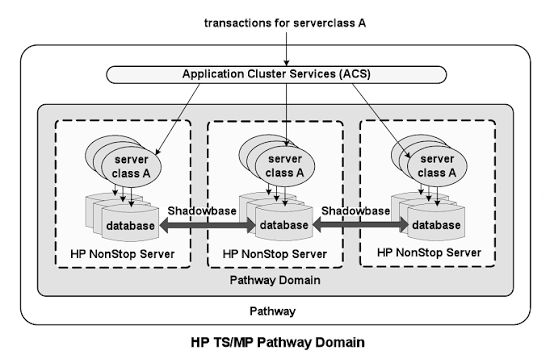
HPE NonStop Pathway is a premier transaction processing and application server environment (TS/MP) that powers mission-critical Online Transaction Processing (OLTP). It handles critical application services—such as fault tolerance, load balancing, memory management, and process scheduling—automatically, allowing developers to focus strictly on business logic.
HPE NonStop Pathway is a transaction processing & application server environment (TS/MP)
Detailed Timeline Breakdown
The history and evolution of the Tandem NonStop platform and its Pathway environment span decades of architectural transformations and corporate ownership, categorized by distinct hardware and software eras:
1. The Tandem Era (1974–1997)
1974: Tandem Computers Inc. is founded by Jimmy Treybig to build the first fault-tolerant commercial hardware.
1976: The first Tandem NonStop system (NSI) is launched. Early apps had to be manually coded for fault tolerance.
1981: NonStop II is released, bringing 32-bit addressing.
1983: The Transaction Monitoring Facility (TMF) is introduced. Together with the launch of the Pathway transaction management software, the need for programmers to write manual fault-tolerance logic into their code is officially eliminated.
1986: Tandem releases the EXT as an entry-level system, followed by the VLX.
1991: Tandem introduces the Cyclone/R and initiates a massive architectural shift away from proprietary stack machines towards MIPS RISC processors.
1997: Compaq acquires Tandem Computers, placing the NonStop product line under its umbrella.
2. The Compaq & Early HP Era (1997–2014)
2001–2002: Hewlett-Packard (HP) merges with Compaq. The platform is rebranded as HP NonStop.
2005: The HP Integrity NonStop (TNS/E) series is introduced, migrating the fault-tolerant platform to Intel Itanium microprocessors. Pathway continues to be the main driver for high-volume banking and telecom applications.
2011: Further hardware advancements lead to the release of HP Integrity NonStop BladeSystems.
3. The Modern HPE Era (2015–Present)
2015: Hewlett-Packard splits, and the NonStop environment transitions to Hewlett Packard Enterprise (HPE).
2015/2016: Introduction of NonStop X (TNS/X) systems, marking the platform’s migration to standard Intel x86-64 processors and adopting InfiniBand interconnects. Pathway capabilities are updated to span dynamic server classes across multiple systems (Pathway Domains).
Present: HPE continues to modernize the NonStop architecture, integrating the platform with HPE GreenLake for consumption-based models and providing native support for modern DevOps tools and hybrid cloud deployments.
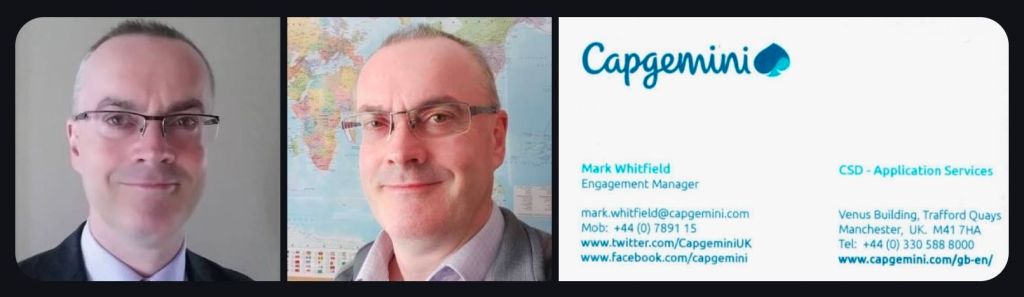
Mark Whitfield is an SC-cleared Senior IT Project and Engagement Manager with over 30 years of experience. His career spans from early mainframe programming to leading multi-million-pound cloud migrations and digital transformations for major financial, utility, and government clients.
The chronological breakdown of his professional project portfolio, structured by his definitive career eras, is detailed below:
1. The Technical Era (1990–1995)
During this foundational era, Mark worked as a Programmer and Lead Analyst for The Software Partnership (acquired by Deluxe Data in 1994). He focused strictly on the development, optimization, and deployment of the sp/ARCHITECT-BANK electronic banking solution on Tandem Mainframe Computers.
Details: Handled the custom design and backend coding for a high-profile desktop electronic business banking application.
Project: Automated Touch-Tone Phone Banking Suite
Year: 1992–1993
Client: Girofon (Denmark)
Budget: Client-retained vendor contract
Details: Coded automated, menu-driven voice solutions operating on a Periphonics VRAM device to fetch live customer balances directly from mainframes.
Project: Early Digital Inter-Account Transfers
Year: 1993–1994
Client: TSB & Bank of Scotland
Budget: Internal product development
Details: Directed logic design and mainframe coding to support pioneering inter-account electronic funds transfers.
Project: International Banking Optimization
Year: 1994–1995
Client: Rabobank
Budget: Vendor-driven custom development framework
Details: Managed localized software optimization, custom patches, and deployment testing for global banking operations.
2. The Infrastructure & Monitoring Era (1995–2014)
Mark transitioned into a Product and Project Manager role at Insider Technologies Limited (and later a brief stint at Wincor Nixdorf). His focus shifted heavily toward platform diagnostics, high-availability transaction monitoring, and financial hardware software integrations.
Project: Reflex (Reflex 80:20) System Co-Development
Year: 1995–2004
Client: Multiple Tier-1 Investment Banks (including Euroclear/Crestco, Bank of England, and Deutsche Bank)
Budget: Part of a broader £3M Management Buyout (MBO) product portfolio
Details: Acted as Senior Programmer and Technical Lead to co-develop diagnostic monitoring modules for high-availability mainframes.
Details: Managed the integration of transaction tracking across ATM networks using ACI’s XPNET and HP NonStop architecture.
Project: Legacy ATM Software Modernisation
Year: 2013–2014
Client: Major UK Retail Bank (via Wincor Nixdorf Professional Services)
Budget: Corporate financial service transformation
Details: Served as Project Manager executing the swap-out of outdated, legacy ATM client systems for modernized software stacks.
3. The Digital and Cloud Era (2014–Present)
This era highlights Mark’s leadership of large-scale Agile and Waterfall digital delivery frameworks, moving from corporate gambling technology to complex, high-budget UK public sector programs.
Project: Mobile & Online Gaming Sportsbook Platforms
Details: Led Agile Scrum development teams to upgrade payment gateways, implement fraud detection, and roll out football/horse racing mobile interfaces.
Project: National Air Space Real-Time Mobile Applications
Year: 2016
Client: NATS (UK-wide Air Traffic Organisation)
Budget: Corporate custom applications initiative
Details: Managed the secure Agile delivery of Apple iOS applications displaying live military and public airspace information.
Project: Core Systems Interface Data Centre Migration
Year: 2016 (May–October)
Client: Royal Mail Group (RMG) / Postal Services
Budget:£4.3 Million
Details: Led a massive cross-functional team of 90 Capgemini engineers to migrate over 1,100 platform data interfaces ahead of peak annual trading.
Project: Automated Call Centre CCaaS Telephony Implementation
Year: 2017 (May onwards)
Client: Local Regional Government
Budget:£400,000
Details: Deployed a programmatic dialler system linked with Microsoft Azure CRM to facilitate the “Support for Mortgage Interest” campaign.
Project: Automotive Online Car Sales and Digital Readiness
Year: 2017 (October)
Client: Jaguar Land Rover (JLR) / Aston Agile Delivery Centre
Budget:£1.1 Million (Split into a £670k Customer Sales Portal and a £430k Readiness project)
Details: Engagement Manager implementing a new-car ecommerce vehicle pipeline.
Budget:£1 Million+ (Part of a larger £13.5M cloud program moving 130 apps)
Details: Orchestrated the launch and configuration of Azure Cloud frameworks migrating 12 historical Dynamics 2016 platforms to Dynamics 365 Online.
Project: Fish Export Service (FES) to CHIP Inspection Portal
Year: 2023–2024 (Nov–Feb)
Client: UK Government / Northern Ireland Trading Framework
Budget:£1 Million+
Details: Served as Technical Delivery Manager directing Agile Scrum teams to build cloud-hosted APIs supporting catch verification under the Windsor Framework.