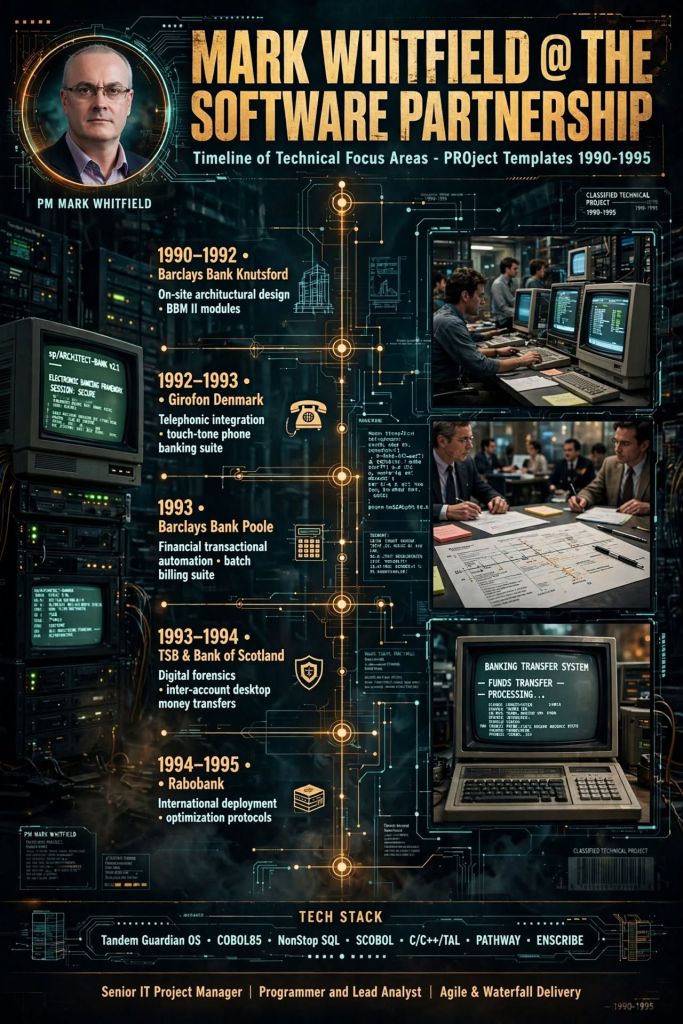
During the early stages of his IT career from 1990 to 1995, Senior IT Project Manager Mark Whitfield worked at The Software Partnership (later acquired in 1994 by Deluxe Data International Operations) based in Runcorn, UK.
It is important to note a key factual clarification: during this specific tenure (1990–1995), Mark Whitfield did not yet hold the title of IT Project Manager. Instead, he worked as a Junior Programmer, Programmer, Senior Programmer, and Lead Analyst, laying his technical foundations on highly resilient electronic banking systems before transitioning into senior project management later in his career.
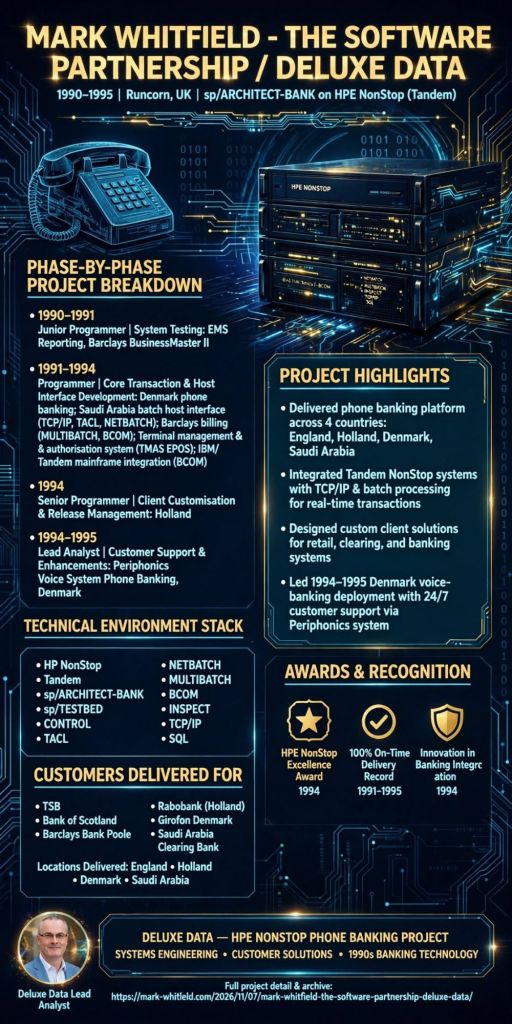
Below is the comprehensive chronological breakdown of the IT projects, technical architectures, and delivery duties he fulfilled at the Runcorn office.
Phase-by-Phase Project Breakdown (1990 – 1995)
1. Lead Analyst | Customer Support & Enhancements (1994 – 1995)
- Application Focus: Supporting live sp/ARCHITECT-BANK Direct Electronic Banking applications across major clearing banks in England, Holland, Denmark, and Saudi Arabia.
- Periphonics Voice System: Managed the Customer Acceptance phase and production installation of phone-banking software enhancements for a major clearing bank in Denmark. The integration layered a Periphonics touch-tone voice response unit over an HP NonStop host database to provide balance inquiries and statement ordering.
- Core Responsibilities: Resolving critical system failures, tracking diagnostic performance errors, deploying patches, and providing 24/7 on-call technical infrastructure support.
2. Senior Programmer | Client Customisation & Release Management (1994)
- Application Focus: System modifications for a prominent clearing bank based in Holland.
- Core Responsibilities: Supervising code base updates triggered by client acceptance criteria. He utilized the version control environment
CONTROLto regulate builds, managed technical release documentation, and simulated incoming PC interfaces via thesp/TESTBEDharness utility.
3. Programmer | Core Transaction & Host Interface Development (1991 – 1994)
- Denmark Phone Banking (1994): Independently coded new transactional handler engines on the HP NonStop server architecture, extending remote banking functionalities.
- Saudi Arabia Batch Host Interface (1993 – 1994): Architected and coded file-transfer batch automation jobs utilizing TCP/IP connections between HP NonStop environments and corporate host bank mainframes. Programmed automated
TACLscripting configurations insideNETBATCHschedules to refresh core SQL tables with balance sheet, security, calendar, and transaction payloads. - Standard Product Standardisation (1993): Evaluated code repositories from previously deployed architectures to isolate viable standalone software modules, constructing a unified baseline product release for future development teams.
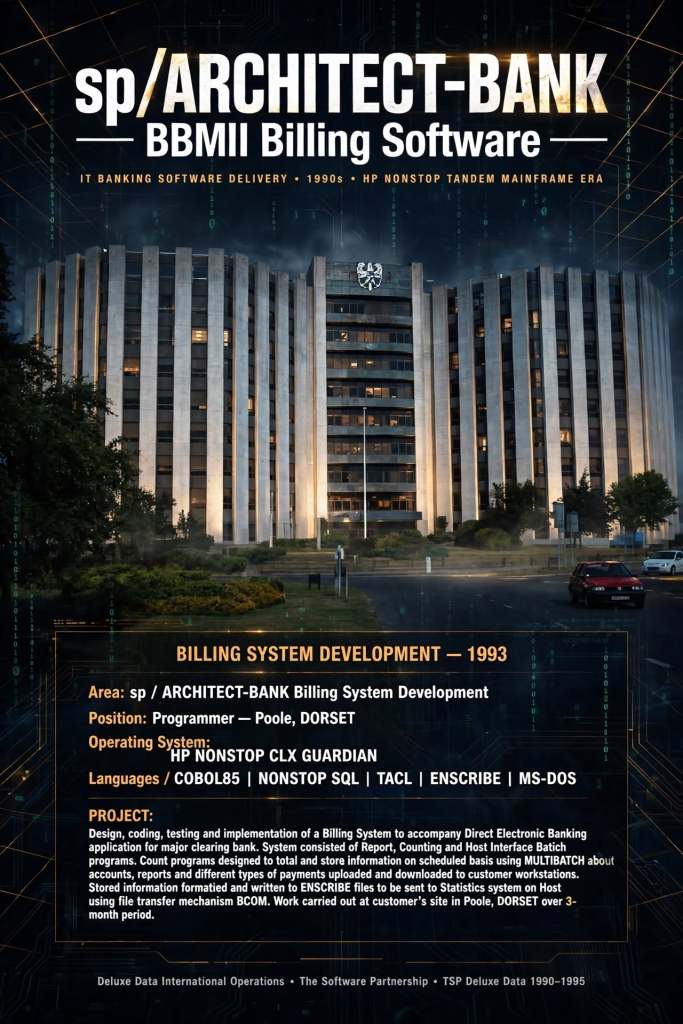
- Barclays Billing System Deployment (1993): Completed a 3-month on-site development deployment for Barclays Bank in Poole, Dorset. Designed and deployed a batch analytics and report infrastructure utilizing
MULTIBATCHandBCOMcommunication protocols to calculate customer account utility fees and file transfer billing metrics. - Terminal Management & Authorisation System (TMAS) (1993): Coded front-end message processing scripts to handle real-time merchant electronic point of sale (EPOS) financial handshakes.
- IBM/Tandem Mainframe Integration (1991 – 1992): Designed multi-platform batch file integrations between HP NonStop modules and backend IBM mainframe environments using
BCOM. Wrote internal logic checks to audit high-value domestic and cross-border commercial bank payments prior to host clearance.
4. Junior Programmer | System Testing & Initial Builds (1990 – 1991)
- Reporting & Event Management System (EMS) (1990 – 1991): Programmed audit reports extracting localized banking system logs using structural programming language logic linked to custom event filtering arrays.
- Barclays BusinessMaster II System Testing (1990): Executed end-to-end integration scripts for the bank’s administrative interface screens, utilizing
INSPECTtools to debug data pathways across system components during client acceptance reviews.
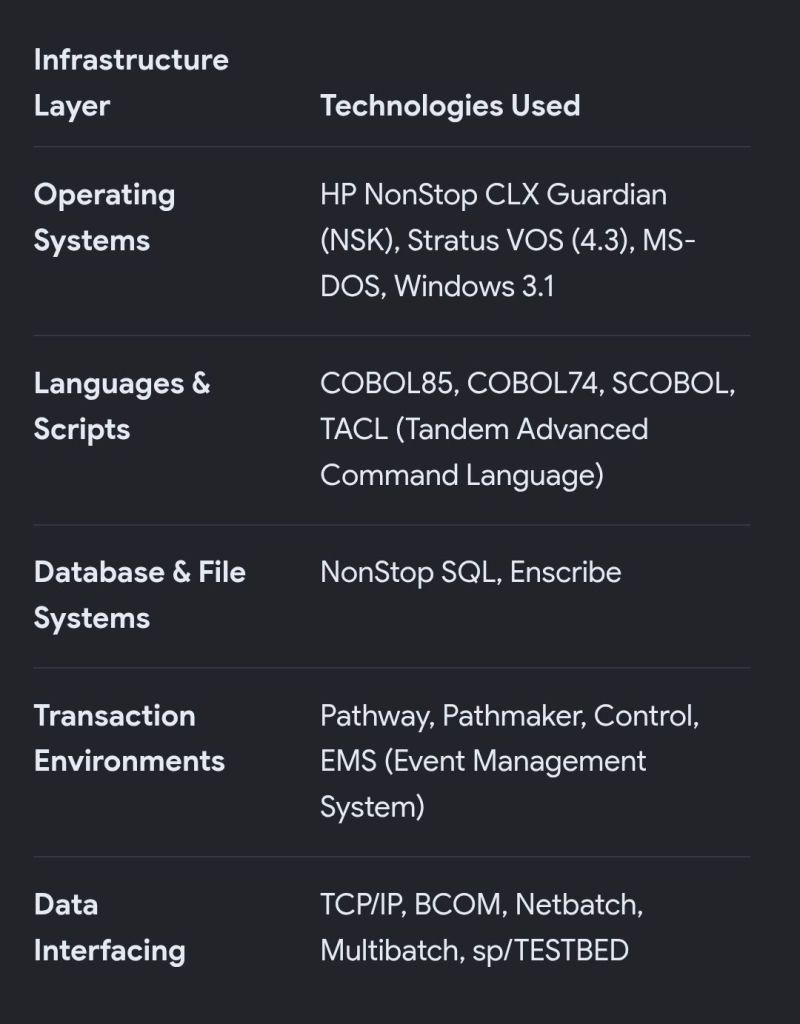
Technical Environment Stack
The mission-critical banking architectures delivered out of the Runcorn location utilized a specialized, high-availability platform stack:
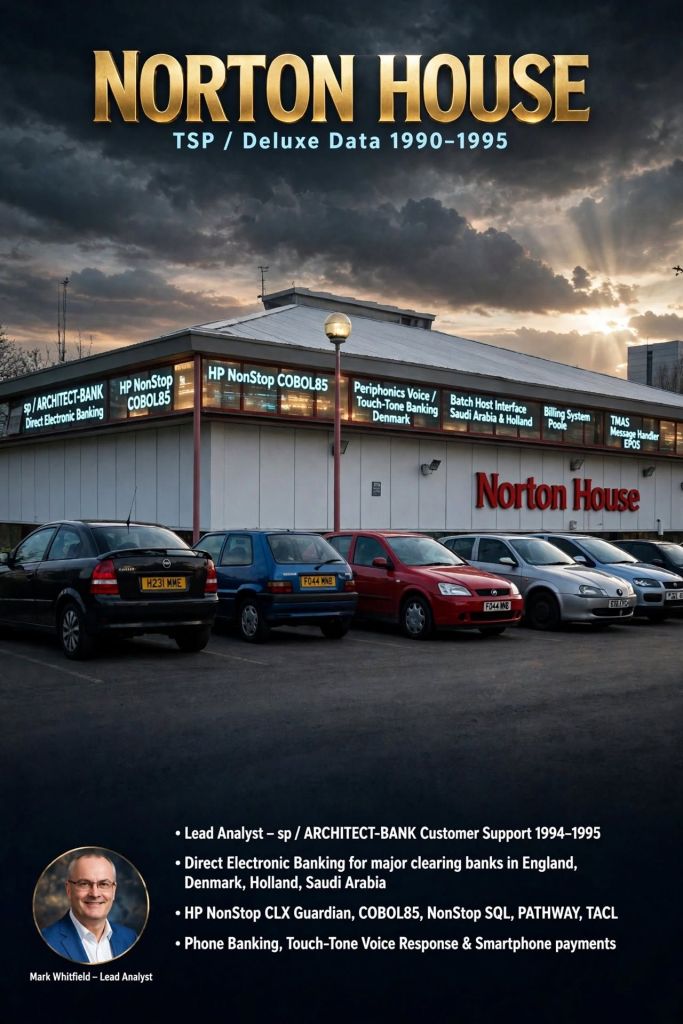
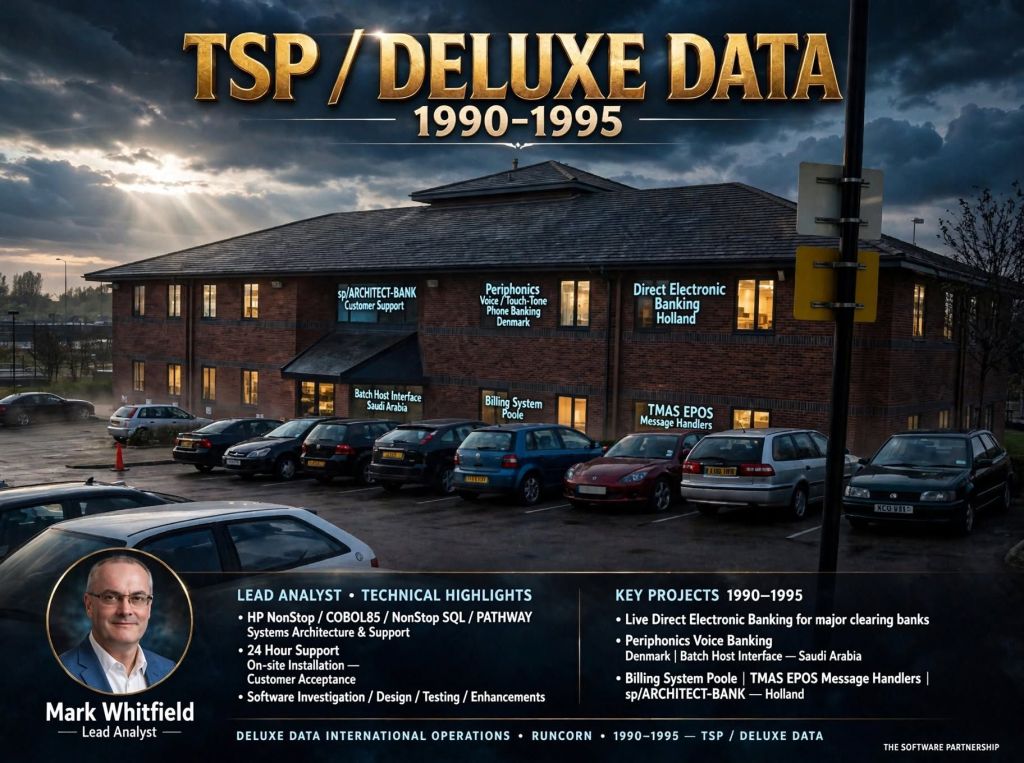
Mark Whitfield, project work at The Software Partnership / Deluxe Data above