BASE24 Overview and Historical Timeline

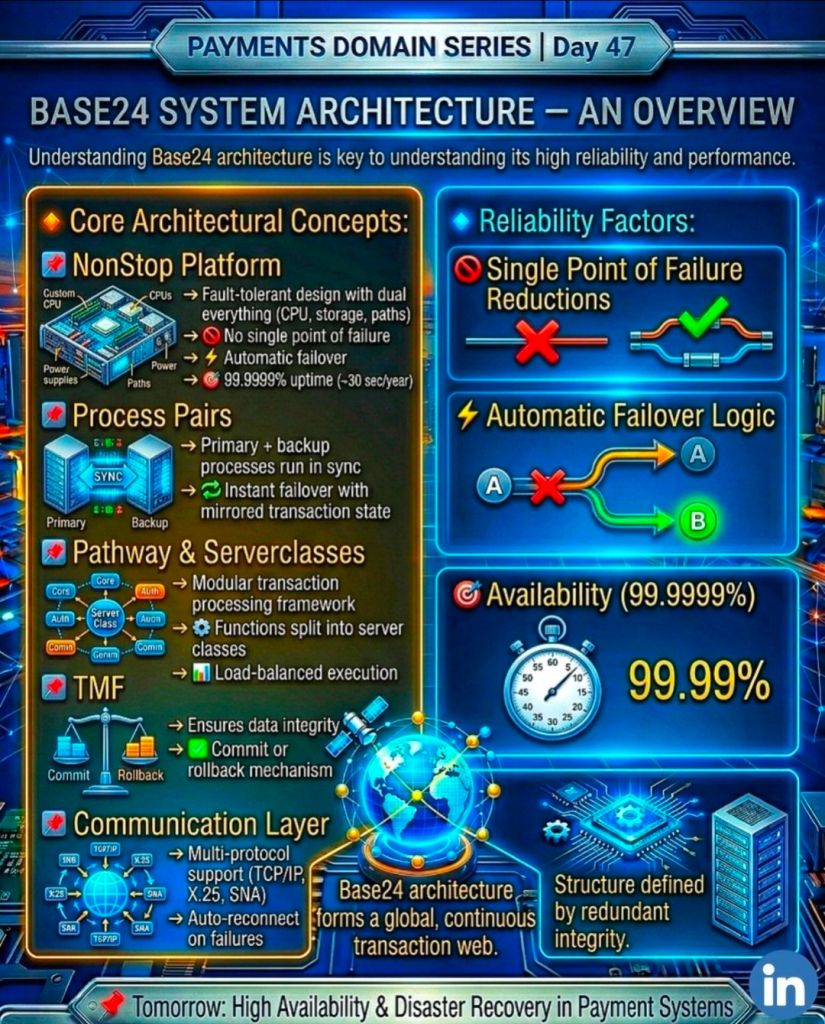
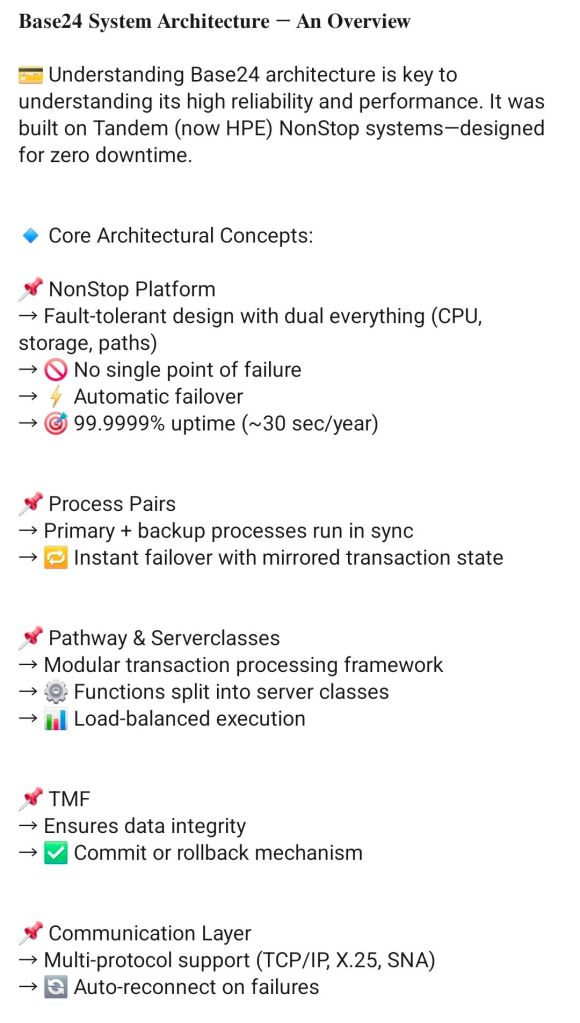
BASE24 is a foundational electronic payments software suite developed by ACI Worldwide, first launched in 1982 to provide “always-on” (24/7/365) transaction processing, primarily on HP NonStop servers.

It is used by large financial institutions to acquire, authenticate, route, switch, and authorize card- and non-card-based financial transactions across multiple channels, including ATMs, point-of-sale (POS) terminals, and mobile/internet banking. 

The product has evolved from “Base24 Classic” into BASE24-eps (formerly BASE24-es), a modern, object-oriented, platform-independent payments engine designed to support high-volume, real-time transaction processing in hybrid or cloud-based environments. 

Comprehensive Historical Timeline of BASE24 

  • The Foundation Era (1975–1981): ACI (Applied Communications, Inc.) was founded in Omaha, Nebraska, in 1975, initially developing software for fault-tolerant Tandem NonStop computers. The focus was on connecting the first wave of ATMs to bank systems.
  • The Launch and Global Expansion (1982–1990):
    • 1982: BASE24 product family is officially launched, serving as the “baseline” software for 24-hour operations.
    • 1986: By 1986, ACI has 131 customers in 14 countries, expanding globally.
    • 1987: ACI receives the U.S. President’s “E” Award for Excellence in Export.
  • Public Company and Modernization (1995–2000):
    • 1995: ACI becomes a public company.
    • 1997: Adopts the name ACI Worldwide.
    • 1996–2000: Initial expansion of support to platforms beyond Tandem, including IBM mainframes and UNIX, to support rising internet commerce.
  • The Transition to Open Systems: BASE24-eps (2001–2010):
    • Early 2000s: Introduction of BASE24-es (later renamed BASE24-eps), a Next-Gen, C++ based engine.
    • 2003: BASE24-eps is live on HP NonStop, IBM zSeries, and IBM pSeries/Sun Solaris.
    • 2006: ACI announces a version of BASE24-es to support UK Faster Payments.
    • 2008–2010: ACI moves toward a unified strategy, with BASE24-eps becoming the mainstream offering while Classic matured.
  • Modernization and Cloud Era (2011–Present):
    • 2011: BASE24-eps wins the Most Innovative Financial Product Award.
    • 2015: ACI celebrates 40 years of operation and introduces advanced fraud detection (Proactive Risk Manager) integrated with BASE24-eps.
    • 2023: ACI goes live as an early adopter of the Federal Reserve’s FedNow Service, using modernized BASE24-eps technology.
    • 2024–2025: BASE24-eps becomes fully PCI-SSF compliant (PCI 4.0), running on Red Hat Enterprise Linux and supporting hybrid cloud deployments. 

Key Features of BASE24-eps

  • Fault Tolerance: Designed for high availability with near-zero downtime.
  • Multi-Channel Support: Manages ATM (NCR, Diebold Nixdorf), POS, and Mobile/Web traffic in a single engine.
  • Scripting Engine: Uses JavaScript-like scripts to allow customers to define authorization logic without modifying the core system.
  • Universal Connectivity: Supports 40+ global and regional network interfaces (Visa, Mastercard, etc.).
  • Platform Independence: Runs on HPE NonStop, IBM z/OS (CICS), and Linux/x86_64.
  • Real-time Fraud Prevention: Integrated with ACI Proactive Risk Manager. 

BASE24 Classic vs. BASE24-eps

  • Classic: Monolithic, Tandem-dependent, older technology.
  • eps: Object-oriented (C++), open systems architecture, 30% faster processing, supports cloud-native approaches. 

BASE24 Overview and Historical Timeline

International Tandem User Group (ITUG) is dedicated to users of the Tandem NonStop computing platform (now HP Connect)

The International Tandem User Group (ITUG) is a non-profit association dedicated to users of the Tandem NonStop computing platform. Now part of the Connect Worldwide community, it facilitates education, networking, and technical exchange between users, vendors, and Hewlett Packard Enterprise (HPE). 

ITUG Overview

  • Purpose: To provide a platform for sharing technical knowledge, advocacy, and strategic information regarding Tandem (now HPE NonStop) systems.
  • Structure: ITUG operates as a global umbrella for various regional chapters, such as the British Isles Tandem User Group (BITUG) and the German Tandem User Group (GTUG).
  • Key ResourcesITUGLIB, an extensive download library containing open-source software, technical white papers, and legacy Guardian tools. 

Historical Timeline by Era

1. The Foundational Era (1974–1983)

  • 1974: Tandem Computers is incorporated in California by Jimmy Treybig and a core team of former HP 3000 engineers.
  • 1976: The first Tandem/16 (NonStop I) system ships to Citibank, establishing the fault-tolerant market.
  • 1980: Regional groups begin forming, such as GTUG in Germany, to support the rapidly growing user base.
  • 1981: Introduction of NonStop II, which adds 32-bit addressing capabilities. 

2. Growth and Expansion Era (1984–1996)

  • 1984BITUG is founded in the British Isles, eventually becoming the largest user group outside the USA.
  • 1986: Tandem launches NonStop SQL, the first fault-tolerant SQL database.
  • 1991: The platform migrates from proprietary stack-based processors to MIPS RISC architecture (TNS/R).
  • 1993: Release of the NonStop Himalaya K-series, further expanding scalability. 

3. Acquisition and Integration Era (1997–2008)

  • 1997: Compaq acquires Tandem Computers to bolster its enterprise server portfolio.
  • 2002: Hewlett-Packard (HP) acquires Compaq, bringing Tandem “back home” to the company that inspired its founders.
  • 2003: ITUG celebrates its 25th anniversary with participation from original Tandem executives.
  • 2005: ITUG officially merges with other HP user groups (Encompass and HP-Interex) to form Connect, though it often retains the “ITUG” branding for its NonStop-focused division. 

4. Modern Era (2009–Present)

  • 2014: The platform completes its transition to Intel x86 architecture, branded as Integrity NonStop X.
  • 2015: Hewlett-Packard splits; Tandem/NonStop becomes a core part of Hewlett Packard Enterprise (HPE).
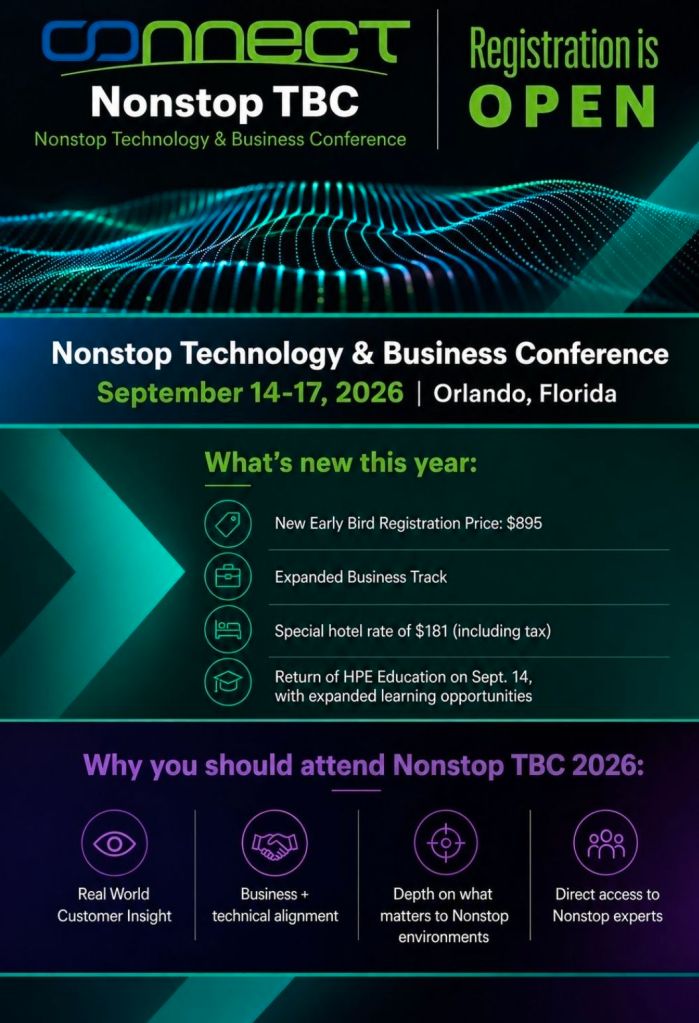
  • Present: ITUG continues to operate under Connect Worldwide, hosting major annual events like the NonStop Technical Boot Camp (TBC). 

……….

HP Connect (often referred to as Connect Worldwide) is a leading global IT user community dedicated to professionals using Hewlett Packard Enterprise (HPE) and HP Inc. solutions. It serves as an independent hub for peer-to-peer networking, technical education, and advocacy, primarily supporting users of high-availability systems like NonStop, ProLiant, and HP-UX. 

Historical Timeline by Era

The community’s history is defined by the evolution and eventual merger of several legacy user groups representing the giants of the mid-20th-century computing world. 

1. The Legacy Foundations (1960s – 1990s)

Before the name “Connect” existed, three distinct user groups served the customers of the companies that would eventually form the modern HP/HPE ecosystem:

  • DECUS (1961): The Digital Equipment Computer Users’ Society was one of the oldest and largest user groups, supporting DEC systems.
  • Interex (1974): Founded as the HP 3000 International Users Group, it later expanded to support HP 9000 and HP-UX users.
  • ITUG (1970s): The International Tandem User Group supported the high-availability Tandem NonStop server community. 

2. The Consolidation Era (2000 – 2008)

Major corporate mergers necessitated the union of these independent communities:

  • 2002: HP acquired Compaq, which had already acquired DEC and Tandem.
  • 2004 – 2005: The DECUS community transitioned into Encompass, serving the Enterprise users of the merged entities.
  • 2008: Connect Worldwide was officially launched through the merger of Encompass and ITUG, creating a single, unified global community for HP enterprise users. 

3. The Unified “Connect” Era (2008 – 2015)

During this period, Connect Worldwide solidified its role as the primary independent voice for HP enterprise technology:

  • Global Advocacy: It represented over 50,000 members across 1,000+ member companies worldwide.
  • Technical Focus: The community focused heavily on HP’s “Converged Infrastructure” and mission-critical systems.
  • The “Boot Camp”: The NonStop TBC (Technical Boot Camp) became its flagship global event. 

4. The Modern Era & Digital Transformation (2015 – Present)

Following the historic 2015 split of Hewlett-Packard into HP Inc. and Hewlett Packard Enterprise (HPE), the community adapted to a dual-focus landscape: 

  • Specialised Sub-Communities: While “Connect” remains the umbrella for legacy enterprise users, newer platforms like the HP Support Community have risen to manage consumer and PC-specific technical needs.
  • HP Connect (Cloud Service): HP introduced a modern cloud-based tool also named HP Connect, which IT admins use to manage BIOS and security settings for corporate PC fleets via Microsoft Intune.
  • AI Integration: The latest era (2024+) focuses on the “HP AI Helix,” embedding AI management and security into the user experience. 

European BASE24 User Group (EBUG) dedicated to the BASE24 payment processing system

The European BASE24 User Group (EBUG) was a prominent, community-led organization dedicated to the BASE24 payment processing system. It served as a vital hub for financial institutions and vendors to exchange technical knowledge, discuss platform migrations, and influence the development of ACI Worldwide products. 

Group Overview

  • Primary Purpose: EBUG facilitated networking and technical collaboration among users of the BASE24 ecosystem, including the BASE24 Classic and BASE24-eps platforms.
  • Evolution of Scope: While it began with a strict focus on BASE24, it eventually expanded to include other ACI products like Postilion.
  • Independence: The group shifted from being an ACI-sponsored event to a supplier-agnostic forum known as “The Payments Knowledge Forum” after ACI ended its direct involvement.
  • Legacy Transformation: In its later years, it was affectionately referred to as the “Everybody Belongs User’s Group”, reflecting its inclusive stance as “The Independent Group for All Payments System Users”. 

Detailed Timeline

The history of EBUG is marked by its annual conferences held in major European cities and its eventual transition to an independent entity: 

  • 1980s: EBUG is established as a regional group for the growing BASE24 community in Europe.
  • Early 2000s: EBUG events gain prestige, featuring technical tracks on HPE NonStop transaction monitoring and payment security.
  • 2006–2008: High-profile meetings held in cities such as Istanbul (2007) and Vienna (2008). The 2008 Vienna event was notable for discussing ACI’s strategic shift toward IBM platforms.
  • 2009: The conference takes place in Prague, continuing strong support for BASE24 on NonStop despite broader industry shifts.
  • 2012: The Technical Focus Group (TFG) is held in London at Trinity House. This marks a turning point as the event moved off ACI’s premises, signaling a shift in sponsorship dynamics.
  • 2013: EBUG holds a major forum in Westminster, London, at the Institution of Civil Engineers. By this time, it is officially rebranding toward the broader “Payments Knowledge Forum”.
  • 2015: EBUG fully transitions into the Payments Knowledge Forum, an annual gathering in London that continues the 30-year legacy as an independent, supplier-agnostic body.

……….

The Payments Knowledge Forum (PKF) is an independent, user-led resource dedicated to the exchange of information regarding payment systems. It operates without vendor affiliation, bringing together financial institutions, retailers, processors, and consultants to share practical expertise and shape the future of payment activities. 

Overview of the Payments Knowledge Forum

  • Purpose: PKF serves as a collaborative hub for payment system users to discuss industry challenges, regulatory changes, and technical innovations.
  • Composition: The forum is open to a wide range of industry stakeholders, including:
    • Financial Institutions: Banks and building societies.
    • Retailers: Businesses focusing on consumer point-of-sale and e-commerce.
    • Payments Processors: Entities managing the technical execution of transactions.
    • Consultants: Experts providing strategic and technical guidance.
  • Governance: It is uniquely “run by users for the benefit of users,” ensuring that the information shared is neutral and prioritises the operational needs of the participants over commercial vendor interests.
  • Activities: PKF hosts regular events and an annual conference to address evolving topics such as ISO 20022 migration, central bank digital currencies (CBDC), and security frameworks like PSD2.

Detailed Timeline of Major Payment Milestones

The following timeline tracks critical industry milestones often discussed and addressed within the forum’s scope:

  • 2015: The Payments Strategy Forum was established by the UK Payment Systems Regulator (PSR) to create a long-term roadmap for UK payments.
  • November 2016: Publication of the “Payments Strategy for the 21st Century,” introducing concepts like Request to Pay and enhanced data standards.
  • March 2018: Regulatory Technical Standards (RTS) for PSD2 were published, initiating the transition to Strong Customer Authentication (SCA).
  • November 2018: Launch of TARGET Instant Payment Settlement (TIPS), enabling real-time fund transfers across Europe.
  • September 2019: Full implementation of PSD2 security measures, including the requirement for standardised API interfaces for third-party access.
  • 2020–2024: Acceleration of digital payment adoption following the COVID-19 pandemic, with a notable decline in cash usage at points of sale.
  • October 2021: The Financial Stability Board (FSB) published global targets for cost, speed, and transparency in cross-border payments.
  • February 2024: Swedish krona successfully onboarded to the TIPS platform.
  • April 2025: Danish kroner scheduled for onboarding to the TIPS system.
  • September 2025: Publication of the Digital Euro innovation platform outcome report, detailing findings for future development.
  • April 2026: Review of the Senior Managers and Certification Regime (SM&CR) to enhance accountability in financial services.
  • June 2026: Deadline for firms to demonstrate credible timetables for addressing climate-related financial risks.
  • 2026 (Targeted): Anticipated go-live dates for enhanced access to the CHAPS high-value payment system.

Annual Conference & Resources

The PKF holds an annual conference that serves as its primary knowledge-sharing event.

  • Recent/Upcoming: The 2026 Conference continues the forum’s tradition of deep-diving into operational resilience and the digital transformation of finance.
  • Direct Access: For the latest news and detailed membership information, visit the The Payments Knowledge Forum Official Site. 

……….

Some HPE NonStop BASE24 related User groups on LinkedIn :

BASE24 BASE24-eps User Group Forum | HP NonStop Tandem NSK IBM SUN Windows – News Events Discussion
https://www.linkedin.com/groups/51296/

PCI DSS Compliant Payments Transactions Compliance Monitoring Alerting Querying Archiving Reporting
https://www.linkedin.com/groups/146595/

HPE NonStop Tandem | Guardian OSS Performance Monitoring Management Integrity Blade Itanium ServerNet
https://www.linkedin.com/groups/165816/

BASE24 BASE24-eps – HP NonStop Tandem IBM SUN – Open System Services OSS RealTime – Experts Users
https://www.linkedin.com/groups/150095/

SATUG Southern African HP NonStop Tandem NSK Server User Group – SATUG
https://www.linkedin.com/groups/81881/

Payment Engine Applications Forum | Retail and Wholesale | HP NonStop NSK Tandem SUN IBM Windows
https://www.linkedin.com/groups/80773/

HPE NonStop Tandem NSK OSS Open System Services Monitoring – Users, Experts and Technical Authorities 
https://www.linkedin.com/groups/80740/

Job Batch Scheduling | HP NonStop Tandem Guardian Open System Services OSS Servernet Integrity Blade  
https://www.linkedin.com/groups/78111/

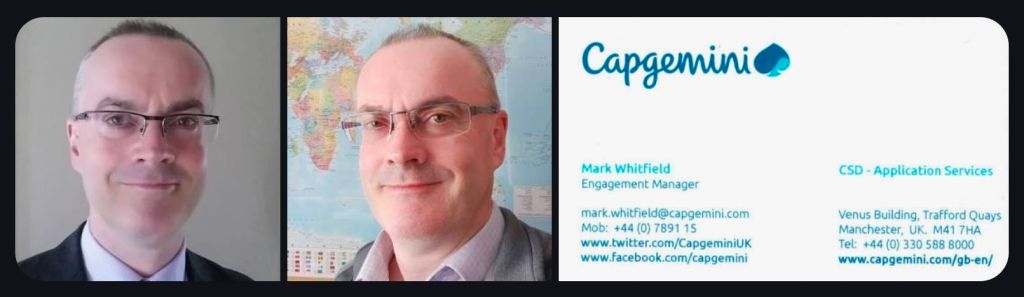
Mark Whitfield is a Senior IT Project Manager

Mark Whitfield is a Senior IT Project Manager and Engagement Manager with over 30 years of experience in the software development lifecycle (SDLC), specializing in digital transformation, payment systems, and HPE NonStop (Tandem) technology.

He is SC cleared (valid until 2031) and currently works at Capgemini UK, having transitioned from a technical programming background to senior project leadership roles. 

He is also the creator of PROject Templates, providing a comprehensive, editable suite of over 200 project management tools built over 24+ years of experience. 

Comprehensive Career Timeline by Era

1. Technical Foundations & Mainframe Development (1990–1995) 

  • 1990: Graduated in Computing at University of Bolton; started as a programmer at The Software Partnership (later Deluxe Data), Runcorn.
  • 1990–1994: Specialised in electronic banking software (sp/ARCHITECT-BANK) on Tandem Mainframe Computers (HPE NonStop), developing in COBOL85 and NonStop SQL for major banks.
  • 1994: Developed batch billing modules for Barclays Business Master II (BBM II) on-site in Knutsford and Poole.

2. Advanced Technical Management & Product Focus (1995–2013) 

  • 1995–2013: Worked at Insider Technologies Limited as Senior Development Engineer/ Project Manager.
  • 1997: Conducted volume testing/benchmark software for CRESTCo (now Euroclear) on new S7000 hp NonStop nodes.
  • 2002: Managed and attained the first HP OpenView Operations 2-way Smart Plug-In (SPI) certification for the HPE NonStop platform.
  • 2000s (Early): Developed RTLX (Real-Time Log Extraction) for BASE24 POS and ATM transaction monitoring, collaborating with banking clients like HSBC and Global Payments.
  • 2013: Delivered a large BASE24 transaction tracking project at Al Rajhi Bank in Riyadh, Saudi Arabia. 

3. Senior Project Management & Banking Upgrades (2013–2016) 

  • 2013–2014: Senior Project Manager at Wincor Nixdorf UK, managing a £5M+ ATM/POS software replacement programme (Self-Service Software Replacement) for Lloyds Banking Group (LBG).
  • 2014–2016: Senior IT Digital Project Manager at Betfred, delivering online and mobile platform projects (iOS/Android) using Agile SCRUM. 

4. Digital Engagement & Cloud Transformation (2016–Present)

  • 2016: Joined Capgemini UK as a client-facing Engagement Manager (SC Cleared).
  • 2016–2017 (Aerospace): Managed Agile delivery for air traffic control iOS apps.
  • 2016–2017 (Postal): Project Manager for a £4.3M migration of 1100+ interfaces for a major postal client.
  • 2017–2018 (Automotive): Managed a £670K Customer Portal/ New Car Online Sales project and Digital Readiness project.
  • 2018–2019 (MuleSoft): Augmented as Delivery Manager for MuleSoft Professional Services, managing API-led projects.
  • 2020–Present (UK Government): Led various MS Azure and Cloud migration projects, including a £13.5m programme to migrate 130 UK government apps. 

Key Areas of Expertise

  • Methodologies: Agile (SCRUM), Waterfall, PRINCE2 Practitioner, ITIL.
  • Technical Knowledge: HPE NonStop (Tandem), BASE24, Middleware, Cloud (AWS/Azure), PCI DSS Compliance.
  • Sector Experience: Retail Banking, Public Sector, Aerospace & Defence, Automotive, Gambling & Casino. 

PROject Templates Resource Overview

Mark Whitfield provides an extensive and fully editable project management template bundle (200+) developed from his 30+ year career. 

  • Format: Excel, PowerPoint (PPT), Word (DOC), and MS Project (.mpp msp mpt).
  • Key Templates:
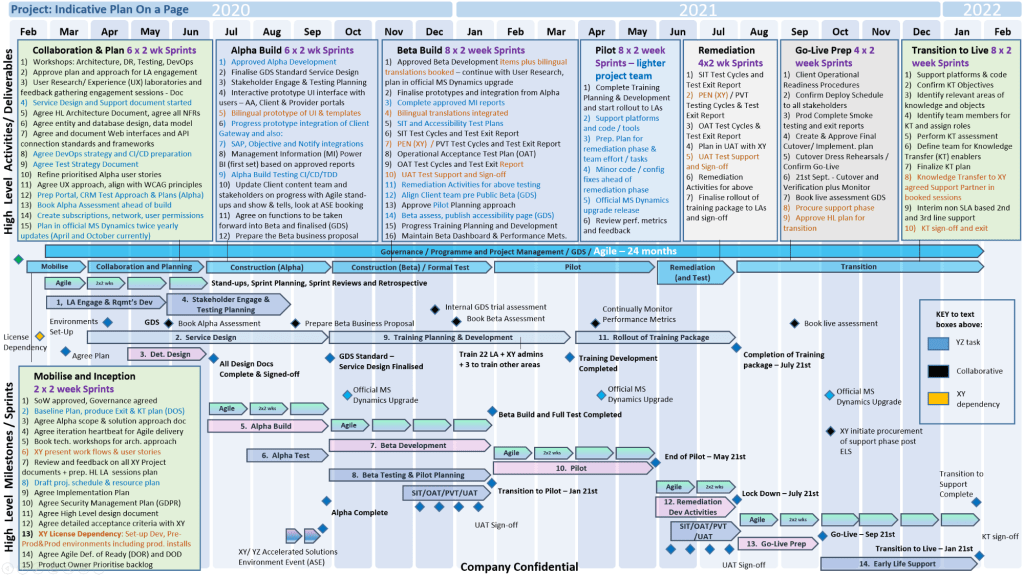
    • Planning: Plan on a Page (POaP), Detailed Project Plans (Waterfall/Agile).
    • Tracking: RAID logs (Risk, Action, Issue, Dependency/Decision), Budget & Burn Tracking (Actuals vs Forecasts).
    • Governance: Status Reports, RACI, Stakeholder Analysis, Project Delivery Checklists.
  • Key Features: Designed for immediate use, fully customizable, and offers free lifelong upgrades and additions. 

Tandem Computers ( HPE NonStop ) Overview & Detailed Timeline

Tandem Computers, founded in 1974 by James (Jimmy) Treybig, revolutionized the computing industry by pioneering fault-tolerant computer systems. Designed specifically for online transaction processing (OLTP) in banking, stock exchanges, and telephone switching, Tandem’s “NonStop” systems provided near-zero downtime by utilizing redundant, modular processors and a “shared-nothing” architecture. 

Tandem remained an independent, rapidly growing company until it was acquired by Compaq in 1997, later becoming part of Hewlett Packard Enterprise (HPE). 

Overview of Key Technologies

  • NonStop Architecture: The core design featured multiple independent processors, each with its own memory and I/O bus, interconnected by a redundant inter-CPU bus called the Dynabus.
  • Guardian OS: A message-based operating system designed to detect faults immediately (“fail-fast”) and mirror process states to a backup processor, allowing seamless failover.
  • NonStop SQL (1986): The first fault-tolerant SQL database, known for linear scalability.
  • ServerNet (1995): A high-speed, scalable, point-to-point network system that replaced the Dynabus and influenced modern InfiniBand standards. 

Detailed Historic Timeline by Era and Year

The Founding Era (1974–1979) 

  • 1974: Tandem Computers is founded in Cupertino, California, by Jimmy Treybig, formerly of HP. Initial venture capital investment comes from Kleiner & Perkins.
  • 1975: Design of the Tandem/16 (T/16) is completed.
  • 1976: The first T/16 NonStop system is shipped to Citibank.
  • 1977: Tandem goes public; sales begin rapid, exponential growth.
  • 1978: Introduction of the ENCOMPASS database management system.

The Growth and Competition Era (1980–1989)

  • 1980: Inc. magazine ranks Tandem as the fastest-growing public company in America.
  • 1981: NonStop II is introduced, supporting 32-bit addressing to allow for larger applications.
  • 1982: Competition intensifies as Stratus Technologies enters the fault-tolerant market. Tandem faces its first quarter of declining growth.
  • 1983: Introduction of the NonStop TXP, the first entirely new implementation of the TNS architecture with cache memory.
  • 1985: Attempted entry into the PC market with the MS-DOS-based Dynamite PC, which fails commercially and is withdrawn.
  • 1986: Introduction of the NonStop VLX (32-bit datapath) and the revolutionary NonStop SQL database.
  • 1987: Introduction of the low-cost NonStop CLX for small office environments.
  • 1988: Tandem acquires Ungermann-Bass, Inc. to strengthen networking capabilities.
  • 1989: Introduction of the NonStop Cyclone, a high-end ECL-based processor aimed at mainframe markets. 

The Open Standards & MIPS Transition Era (1990–1996)

  • 1990: Tandem introduces the Integrity line of fault-tolerant Unix systems.
  • 1991: Cyclone/R (CLX/R) is released, marking the start of the migration from proprietary stack machines to MIPS R3000 RISC microprocessors.
  • 1993: Introduction of the NonStop Himalaya K-series using faster MIPS R4400 processors.
  • 1994: NonStop Kernel (NSK) is extended with Open System Services (OSS), a POSIX-compliant Unix environment.
  • 1995: Introduction of ServerNet, designed for extremely low-latency inter-processor communication.
  • 1995–1997: Partnered with Microsoft on the “Wolfpack” project, which becomes Microsoft Cluster Server. 

Acquisition and Integration Era (1997–Present)

  • 1997: Compaq acquires Tandem Computers for roughly $3 billion. The Himalaya S-Series is introduced.
  • 1998: Compaq acquires DEC, leading to a shift in engineering strategy towards Alpha/Itanium instead of MIPS.
  • 2001: Compaq terminates Alpha engineering, committing to Intel’s Itanium (Merced) processors.
  • 2002: Hewlett-Packard acquires Compaq. Tandem becomes the core of the HP Integrity NonStop Server division.
  • 2005: The first HP Integrity NonStop servers (TNS/E) based on Itanium processors are released.
  • 2014: Completion of the migration to Intel x86 architecture (NonStop X). 

Note: Following the split of HP into Hewlett Packard Enterprise (HPE) and HP Inc., the NonStop product line continues to be developed and supported by HPE.

Tandem Computers Overview and Detailed Timeline

HPE NonStop ViewSys Overview and Timeline by Era

ViewSys is a legacy, interactive system monitoring utility for HPE NonStop servers that provides real-time visibility into system resource utilization. Similar to PEEK and Measure, it allows system operators to view resource consumption as it happens, allowing for immediate analysis of the impacts of process relocations or controller path changes. 

HPE NonStop ViewSys Overview

  • Purpose: Monitors system resources, including processor utilization, I/O performance, and memory usage, on NonStop systems.
  • Key Features: Provides online viewing of system resources, allowing for quick recognition of performance bottlenecks, which helps in performance tuning.
  • Functionality: Unlike Measure, which is typically analyzed offline, ViewSys offers an interactive, live, and graphical view of system performance.
  • Operation Requirement: Runs from HPE block mode terminals or non-Stop terminal emulators, presenting average resource usage for each polling interval. 

Detailed Historic Timeline: ViewSys & NonStop Monitoring Evolution

The history of ViewSys is deeply intertwined with the development of the HPE NonStop OS and its monitoring toolkit.

Era 1: Tandem Era (The Early Days)

  • 1976: Initial Tandem NonStop System introduced; basic system monitoring is manual and console-based.
  • 1980s (Mid-late): As Transaction Monitoring Facility (TMF) and Pathway are introduced, the need for interactive monitoring grows.
  • 1990s: ViewSys becomes a key utility for operators managing massive OLTP (Online Transaction Processing) workloads. 

Era 2: Compaq/Early HP Era (The Transition)

  • 1997: Compaq Acquires Tandem.
  • 2003: HP Acquires Compaq. The monitoring focus begins to merge with Integrity-based architecture.
  • 2004: The ViewSys User’s Guide highlights ViewSys alongside PEEK and Measure, standardizing its use for interactive monitoring.
  • 2005: Introduction of HP Integrity “NonStop i” (TNS/E) servers using Intel Itanium processors. ViewSys adapted to monitor Itanium systems. 

Era 3: Modern HPE Era (The Modernization) 

  • 2014: First NonStop X (TNS/X) systems on x86-64 are introduced. ViewSys remains a available tool, but modernization efforts begin.
  • 2015: Hewlett Packard Enterprise (HPE) is formed.
  • 2016-2020: Shift towards Web ViewPoint Enterprise (by Idelji Corporation), which provides web-based dashboards for monitoring EMS events and system metrics.
  • 2020: Sales of Itanium-based systems end. Modern monitoring focuses heavily on NonStop X systems and virtualized environments.
  • Present: While legacy ViewSys may exist in older environments, it is largely superseded by modern GUI-based, browser-independent monitoring solutions like Web ViewPoint and Remote Analyst. 

HPE NonStop ViewSys Overview and Timeline by Era

HPE NonStop EMSDIST, Event Management Service EMS Distributor Timeline by Era

HPE NonStop EMSDIST (Event Management Service Distributor) is a critical component within the HPE NonStop operating system responsible for distributing and managing event messages (logs) generated by the system, subsystems, or applications. It is part of the Event Management Service (EMS), which is essential for fault-tolerant monitoring. 

EMS events (via EMSDIST) seen in the Reflex 80:20 application ( now Sentinel (Nonstop Monitoring) by ETI-NET)

EMSDist Overview

  • Purpose: EMSDIST reads events from an EMS collector process ($0, $ZLOG, etc.) or a collector logfile, filters them based on user criteria, and sends them to a user-specified destination (such as a terminal, printer, or another file).
  • Key Functionality: It enables both real-time monitoring and historical analysis of events.
  • Event Handling: It handles EMS messages, including those generated by the EMS subsystem itself (messages 513-999) and those from EMS distributors (messages > 1000).
  • Integration: Often used in conjunction with TACL (Tandem Advanced Command Language) for automated event management scripts. 

Detailed Historic Timeline and Evolution

EMSDIST has evolved alongside Tandem / Compaq / HPE NonStop systems, transitioning from basic console management to complex distributed management systems. 

1. The Tandem Guardian Era (Late 1970s – 1980s)

  • Context: The emergence of Tandem NonStop systems focused on continuous availability.
  • EMS Origins: Initial event handling was largely via console messages. As systems grew, the need to manage logs across multiple processors led to early Event Management Service components.
  • Role of EMSDist: Early distributors primarily moved messages from local collectors to a central console or tape log.

2. The D-Series & TMF Era (1990s)

  • Context: Introduction of sophisticated transaction monitoring and distributed databases.
  • 1996: A significant EMS Reference Summary was released (PN 114754), formalizing the structure of EMS collectors and distributors.
  • Capabilities: EMSDIST became capable of filtering high-volume events, separating critical errors from warning messages (513-1019).
  • Evolution: Began integrating with the Distributed Systems Management (DSM) suite for better network-wide event visibility. 

3. The Compaq & Integrity (J-Series/H-Series) Era (2000s – 2010s)

  • Context: Shift from MIPS-based processors to Intel Itanium (Integrity) servers.
  • 2003-2005: Integration with Windows-based management systems (DSM/NOW) and improvements to the Multi Event Viewer (MEV).
  • 2014: HP Integrity NonStop Operations Guides emphasized using EMSDIST alongside modern tools like OSM (Open System Management) Event Viewer, especially for H-Series and J-Series systems.
  • Key Capability: Improved handling of large logs, with better time-based querying (TIME and STOP options) for auditing and troubleshooting. 

4. The HPE NonStop X & Modern Era (2015 – Present)

  • Context: Adoption of x86 architecture and cloud-ready systems (L-Series).
  • 2015: HPE takes over the portfolio, accelerating integration with HPE InfoSight for AI-driven log analysis.
  • Modernization: While EMSDIST remains, modern environments heavily leverage NS Software Essentials and third-party tools for advanced analytics.
  • Continued Importance: EMSDIST remains essential for analyzing historical logs via the LOGFILE option, especially when dealing with cold-standby or restored logs from tape/disk. 

Key Functional Milestones

  • Message Categorization: Formalization of messages 513-999 (collectors) and >1000 (distributors) for structured analysis.
  • Filtering Efficiency: Implementation of complex FILTER parameters allowed operators to filter events by process, user, or time.
  • Logfile Access: The ability for EMSDIST to process archived or older LOGFILE entries independently of the live $0 collector.
  • Template Support: Ability to use specific =_EMS_TEMPLATES for customizable output formatting. 

HPE NonStop EMSDIST, Event Management Service Distributor Timeline by year

sp/ARCHITECT electronic banking by The Software Partnership TSP

sp/ARCHITECT was a pioneering electronic banking and funds-transfer software suite originally developed by the Runcorn-based firm The Software Partnership (TSP). Following its acquisition by the American firm Deluxe Electronic Payment Systems in 1994, the Runcorn office became the European hub for what was then rebranded as Deluxe Data

sp/ARCHITECT electroinic banking by The Software Partnership TSP

Overview

The Runcorn operation specialised in high-availability, mission-critical banking software, specifically the sp/ARCHITECT-BANK product. This software was designed to run on Tandem Computers (now HPE NonStop), which were known for their fault-tolerant architecture. The “sp/ARCHITECT” platform was highly valued for its client-server design, allowing it to be adapted for various hardware brands, including Unix-based systems. 

Historical Timeline

  • Mid-1980sThe Software Partnership (TSP) is co-founded by Nigel Walsh. The company starts developing online banking systems in Timperley before moving to Runcorn.
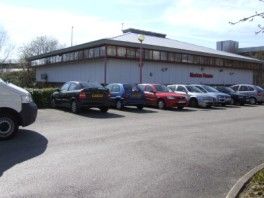
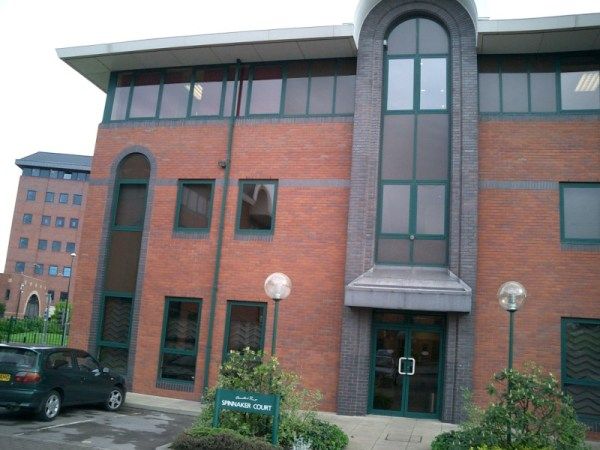
  • 1990: The firm establishes itself at Norton House in Crowngate, Runcorn, focusing on electronic banking software for major clients like TSB and Bank of Scotland.
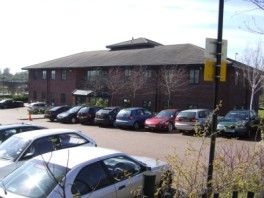
  • 1992: The Runcorn office relocates to Wingate House on Northway.
  • 1994Deluxe Electronic Payment Systems (a subsidiary of Deluxe Corporation) acquires The Software Partnership for an undisclosed sum. The acquisition is aimed at helping Deluxe expand its global presence and accelerate the use of the sp/ARCHITECT suite.
  • 1994–1995: The Runcorn office operates as Deluxe Data, providing software design, coding, and 24-hour support for international clients including Rabobank.
  • 2000: Following a series of corporate shifts, the company name changes to EFD eFunds.
  • 2007: By this year, the operation has transitioned to Fidelity National Information Services (FIS) and is based in Aegon House, Daresbury, Warrington. 

sp/ARCHITECT electroinic banking by The Software Partnership TSP