Serco Group plc is a prominent international government services contractor delivering public services across defence, justice, immigration, transport, healthcare, and citizen services.
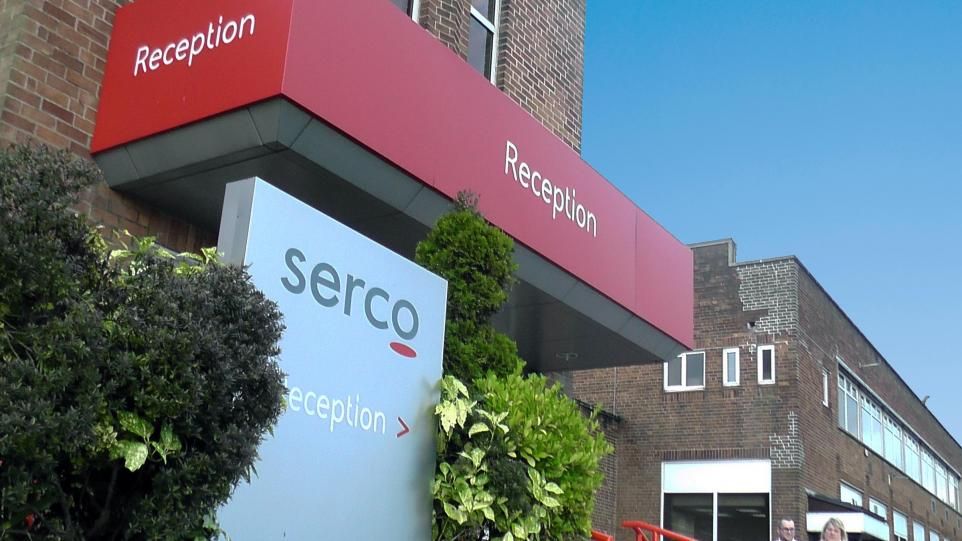
The detailed history of Serco, tracked chronologically by year from its origins to 2026, is detailed below.
🏢 Origins & Foundations (1929–1989)
- 1929: Formed originally as RCA Services Limited, a UK-based subsidiary of the Radio Corporation of America servicing the British cinema industry.
- 1940s: Pivoted to providing technical engineering and radar support services to the British War Office during World War II.
- 1958: Began maintaining the early warning radar lines for the Ministry of Defence, which later evolved into a multi-decade relationship with the Ballistic Missile Early Warning System (BMEWS) at RAF Fylingdales.
- 1987: Following an acquisition of RCA by General Electric, senior executives staged a management buyout for roughly £24 million. The business rebranded as Serco Limited (derived from “Services Company”).
- 1988: Serco was officially listed on the London Stock Exchange (LSE) under the ticker symbol
SRP. - 1989: The company began its international expansion, branching out to Civil Government markets and establishing a presence in the Asia Pacific region.
🌍 Global Expansion & Privatisation Wave (1990–2009)
- 1991: Expanded heavily into civilian public sectors, specifically running infrastructure and facilities for the National Health Service (NHS).
- 1992: Entered the civil aviation and air traffic control sectors by acquiring International Aeradio Limited (IAL) from British Telecom for £12.25 million.
- 1997: Secured the multi-million-pound contract to manage and operate London’s Docklands Light Railway (DLR) network.
- 2006: Appointed key political figures to its board—such as former Labour minister Lord Filkin—solidifying its position as a default partner for UK public sector outsourcing.
- 2008: Significantly broadened its footprint in the North American government services arena by acquiring SI International, expanding IT and intelligence support for US federal agencies.
📈 Structural Shift & Controversies (2010–2019)
- 2012: Disrupted by structural overhauls; the UK Home Office shifted asylum seeker housing contracts into regional commercial hubs (COMPASS contracts), with Serco taking responsibility for Scotland, Northern Ireland, and North West England.
- 2013: Serco faced intense public and legal scrutiny over electronic offender tagging fraud, during which the company was found to have billed the government for individuals who were deceased, already in jail, or overseas.
- 2014: To restore faith, the company handed over operations of the DLR franchise to KeolisAmey and accepted a massive fine. Rupert Soames was brought in as Chief Executive Officer to launch a deep corporate restructuring.
- 2015: Formally completed a major capital restructuring and stock split to balance its books, shifting focus squarely toward critical government operations in Defence, Justice, and Migration.
- 2018: Expanded transport services by securing and rolling out a bicycle-sharing scheme for Edinburgh, alongside launching updated vessel systems for the UK Ministry of Defence.
- 2019: Settled the tagging scandal definitively by paying a £22.9 million fine as part of a Deferred Prosecution Agreement with the UK Serious Fraud Office.
While working via Capgemini UK, Mark Whitfield was brought in to act as a Senior PM for Serco to deliver a £400K telephony project.
This project was established following a Serco contract win from the Department for Work and Pensions (DWP) concerning Support for Mortgage Interest (SMI) changes.
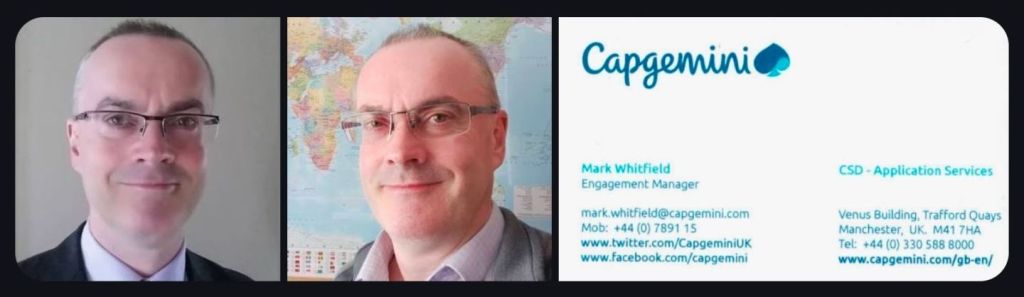
Key details of Mark Whitfield’s involvement with Serco include:
- The Deliverable: Setting up a Contact Center as a Service (CCaaS) call center campaign featuring an automated, programmatic dialer solution integrated with an Azure-deployed CRM system.
- The Scale: Establishing a new solution for a few hundred call center staff based in Bolton.
- The Timeline: Mark Whitfield stepped in during May 2017 to rescue, restructure, and successfully deliver the project by late July 2017.
🛡️ Modern Focus, Defence Pivot & Resilience (2020–2026)
- 2020: Played a substantial operational role during the COVID-19 pandemic by providing staffing, facilities management, and administrative support for the UK’s Test and Trace system.
- 2022: Strategically targeted European public integration by acquiring ORS, a Swiss-based specialist in migration services and accommodation across continental Europe.
- 2023: Acquired European Homecare (EHC), establishing a highly influential market share in German immigration processing networks. Long-serving CEO Rupert Soames stepped down, succeeded by Mark Irwin.
- 2024: Continued its focus on justice sector services with a £200 million, 10-year contract extension to manage HMP Ashfield.
- 2025: Serco integrated MTNS (Marine Training & Simulation), boosting its North American defence platform with advanced simulated mission capabilities. Full-year revenue reached a record £4.9 billion, heavily driven by military expenditure.
- 2026: Mark Reid stepped up as Group CFO following Nigel Crossley’s retirement. Backed by a record £12.5 billion pipeline and major contract expansions—such as a £270 million facility contract at Norfolk and Norwich University Hospital—the company doubled its share buyback program to £150 million.
Serco Group plc, detailed timeline by year