Leigh, a historic market town in South Lancashire, evolved from a collection of medieval agricultural townships into a powerhouse of the Industrial Revolution. Below is a timeline of its development.
Early History & Foundations
Ancient Origins: Neolithic stone axes and Bronze Age spearheads suggest activity as early as 1500–1000 BC.
Medieval Growth: The name “Leigh” (Saxon for “meadow” or “pasture”) was recorded as Leech in 1264. The town was the centre of an ecclesiastical parish including the townships of Bedford, Pennington, and Westleigh.
1642: During the English Civil War, local “Chowbenters” (men from nearby Atherton) defeated Royalist troops in a battle at Leigh on 2nd December.
1651: The Earl of Derby spent his final night at the King’s Arms in Leigh before his execution in Bolton.
Industrial Revolution & Expansion
1795: The Bridgewater Canal was extended to Leigh, linking the town to Manchester’s industrial network.
1820: The Leigh Branch Canal opened, connecting the town to the Leeds and Liverpool Canal.
1828: The Bolton and Leigh Railway opened—the first public railway in Lancashire.
1839: The “Leigh Feight” occurred on 14th August, a major Chartist protest and riot involving over 2,000 people.
1850s: The Leigh Union Workhouse was established at Atherleigh.
Late 19th Century: Large multi-storey cotton mills like Leigh Spinners (Grade II*) and Mather Lane Mill (Grade II) transformed the skyline.
Civic Development
1875: The townships of Bedford, Pennington, and Westleigh merged to form the Leigh Local Board.
1894: Leigh became an Urban District.
1899: Leigh was granted a Royal Charter, becoming a Municipal Borough.
1907: The current Leigh Town Hall was completed on Market Street.
1920:Pennington Hall and its grounds were gifted to the people of Leigh, eventually becoming Pennington Park.
Modern Era
1974: Under the Local Government Act 1972, the Municipal Borough was abolished and Leigh became part of the Metropolitan Borough of Wigan in Greater Manchester.
1992: The last coal mines in the area, Bickershaw and Parsonage Collieries, closed on 13th March.
2016: The Leigh-Salford-Manchester Guided Busway opened to provide rapid transit to Manchester city centre.
2023: The Leigh Leopards rugby league team won the Challenge Cup for the first time in 52 years.
Leigh’s history is a classic Lancashire tale of transition from a rural collection of townships to an industrial powerhouse. Here is a timeline of its most significant milestones:
Early Origins & Medieval Period
Stone Age & Roman Era: Archaeological finds in the area include a Stone Age axe in Pennington and a Roman coin in Bedford.
12th Century: The name “Leigh” (from the Old English leah, meaning a woodland clearing) appears in records. The ancient parish originally consisted of six townships: Astley, Atherton, Bedford, Pennington, Tyldesley cum Shakerley, and Westleigh.
1189–1199: Higher Hall, the manor house of Westleigh, dates back to the reign of Richard I.
Conflict & Industrial Revolution
1642: During the English Civil War, local Parliamentarians (the “Chowbenters”) defeated Royalist troops in the Battle of Leigh.
1760s: Local legend attributes the invention of the spinning jenny and the water frame to Thomas Highs of Leigh, marking the start of its textile dominance.
1795–1820: The Bridgewater Canal was extended to Leigh (1795), followed by the Leigh branch of the Leeds and Liverpool Canal (1820), making the town a critical hub for coal and textiles.
1828: The Bolton and Leigh Railway opened for freight, becoming the first public railway in Lancashire.
1839: The “Leigth Feight” occurred on 14 August, when a mob of 2,000 Chartist strikers clashed with troops over high unemployment and living costs.
Civic Development & Modern Era
1875: The townships of Bedford, Pennington, and Westleigh merged to form the Leigh Local Board, officially adopting “Leigh” as the town’s name.
1899:Leigh was granted a Royal Charter to become a Municipal Borough.
1907: The current Leigh Town Hall, designed by J.C. Prestwich, was completed.
1911: The textile industry peaked, with over 6,000 people employed in the town’s mills.
1974: Under local government reorganisation, Leigh ceased to be an independent borough and became part of the Metropolitan Borough of Wigan in Greater Manchester.
2008: The Leigh Sports Village opened, providing a modern home for the Leigh Leopards rugby league team.
2016: The Leigh-Salford-Manchester guided busway opened, re-establishing a rapid transport link to Manchester.
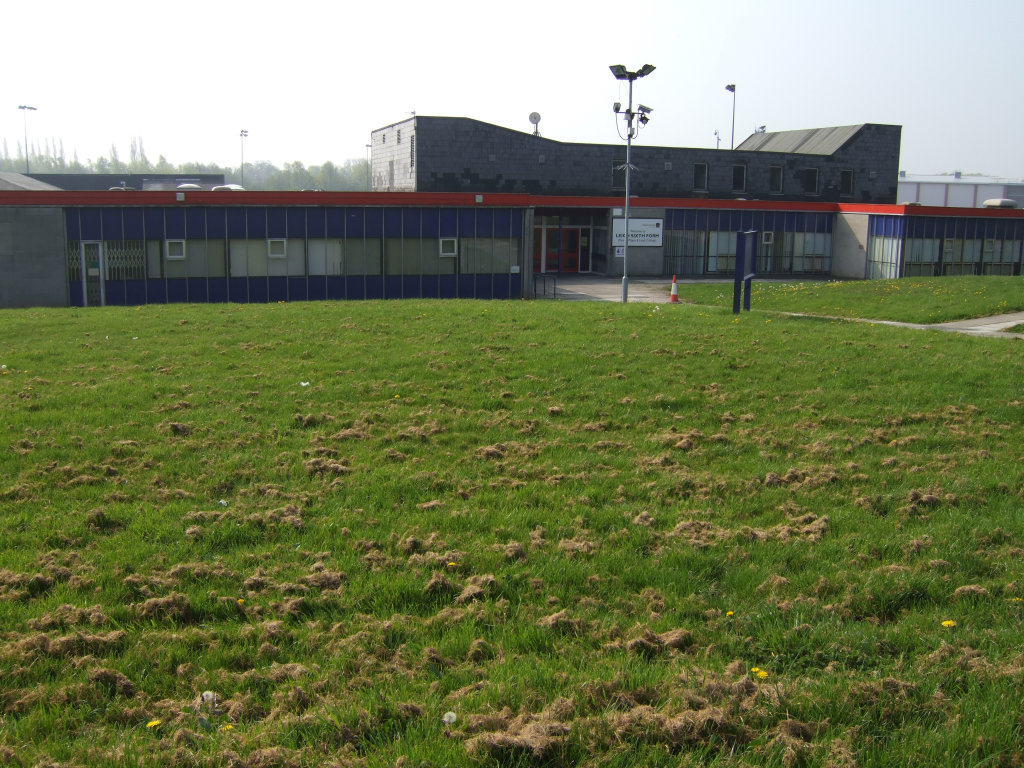
Leigh College, Marshall Street, Leigh, Lancs
Building below demolished 2007 and now rebuilt at the Leigh Sports Village – 1, 2, 3, 4 article by Julie McKiernan courtesy of PastForward, produced by Wigan Archives & Museums, Issue No. 97, August – November 2024, Marking 50 years of the borough, Wigan and Leigh’s local history magazine – Address: Past Forward, Archives, Wigan & Leigh, Leigh Town Hall, Mark Street, Leigh, WN7 1DY
The software known as sp/ARCHITECT (specifically the sp/ARCHITECT-BANK module) has a timeline tied to its development in Runcorn, Cheshire, by a firm originally called The Software Partnership.
Company & Product Timeline
Mid-1980s:The Software Partnership is co-founded by Nigel Walsh.
1989: The company begins significant operations in Runcorn, initially at Wingate Drive (Timperley) and later moving to Norton House in Crowngate.
1990–1994: Development period for sp/ARCHITECT in Runcorn. The software was a banking system used by major institutions including TSB, Bank of Scotland, and Rabobank.
1992: The firm relocates its Runcorn base to Wingate House on Northway.
1994: The Software Partnership is acquired by the American company Deluxe Electronic Payment Systems (a division of Deluxe Corporation).
Post-1994: Following the acquisition, the entity operated as Deluxe Data International Operations.
Later Transitions: The lineage of the Runcorn operations eventually merged into larger fintech entities, including eFunds, EFD, and ultimately FIS.
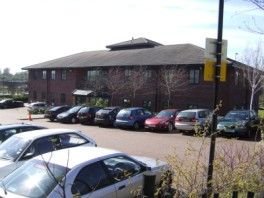
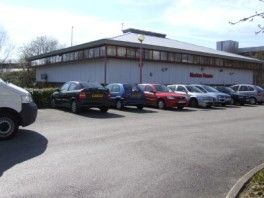
Deluxe Data, Wingate HouseThe Software Partnership, Norton House
sp/ARCHITECT-BANK module – development in Runcorn, Cheshire by The Software Partnership
Mark Whitfield’s project management templates offer a range of timeline and planning views designed for Agile, Waterfall, and PRINCE2 delivery. These templates typically include a high-level Plan on a Page (POaP) and detailed Microsoft Project (MPP) or Excel schedules.
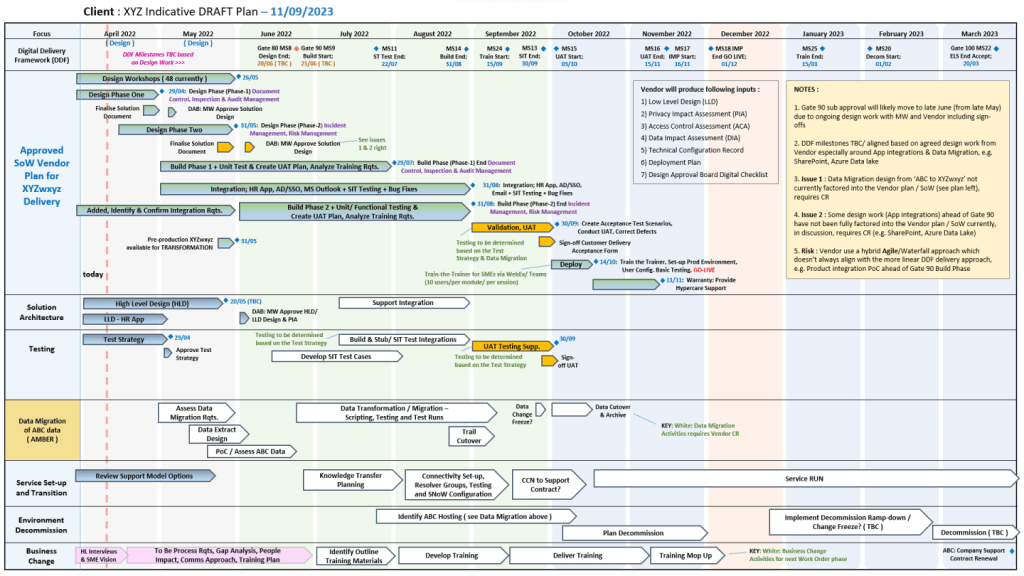
Example Plan on a Page POaP
Timeline & Planning Views
Plan on a Page (POaP): A high-level summary view (often in PowerPoint or Excel) used to communicate key phases and milestones to stakeholders without the clutter of a full Gantt chart.
Detailed Gantt Charts: Provided in both Microsoft Project (MPP) and Excel, these timelines include task dependencies, resource allocations, and critical path tracking.
Agile Sprint Timelines: Specialized views for tracking 2–4 week sprints, daily stand-ups, and sprint retrospectives within a broader project framework.
SDLC Progression: The templates are often structured around a typical Software Development Life-cycle (SDLC), moving from Inception to Transition and Early Live Support (ELS).
Key Timeline Components
The templates are pre-configured with several essential timeline elements:
Project Start & End Dates: Easily adjustable fields that automatically update durations and downstream tasks.
Milestones & Gateways: Visual markers for critical sign-off points and delivery stages.
Task Dependencies: Pre-built links that show how delays in one area (e.g., hardware delivery) impact the overall project finish date.
Resource View: Timelines integrated with resource calendars to account for holidays and leave.
HPE NonStop (originally Tandem) has a nearly 50-year history as the gold standard for fault-tolerant, “always-on” computing. Originally developed by Tandem Computers to eliminate single points of failure, the platform has survived through several major corporate acquisitions while evolving its underlying processor architecture.
Founding and The Tandem Era (1974–1997)
The “NonStop” architecture was born from the idea that a single hardware failure should never crash a system.
1974:Tandem Computers is founded by Jimmy Treybig and three former HP engineers.
1976: The first Tandem/16 (later NonStop I) is shipped to Citibank. It featured a “shared-nothing” architecture where each CPU had its own memory and copy of the Guardian OS.
1981:NonStop II is released, introducing 32-bit addressing to support larger applications.
1983: The NonStop TXP and Pathway software are introduced. Pathway revolutionized the platform by allowing programmers to write fault-tolerant apps without manually coding “checkpoints”.
1986:NonStop SQL is launched, the first fault-tolerant relational database.
1989:NonStop Cyclone arrives, a high-end mainframe-class system.
1991–1993: Transition to MIPS RISC processors begins with the Cyclone/R and the Himalaya K-series.
Corporate Acquisitions and Transition (1997–2014)
The platform changed hands twice in five years, but the mission-critical nature of the technology kept it alive.
Salford Quays has evolved from a largely empty landscape of racecourses and medieval halls into one of the UK’s most significant urban regeneration projects.
1986–1990: Massive infrastructure programme: polluted dock water is separated by bunds, and a compressed air mixing system (Helixor) is installed to improve water quality.
1987: Introduction of 12,000 coarse fish to the now-cleaned waterways.
1989: Opening of the Mariners Canal to link the Ontario and Erie Basins.
1999: Completion of major bridge works and the Metrolink extension, connecting the Quays to Manchester city centre.
In Scrum, the “timeline” is typically structured as a repeatable, time-boxed cycle known as a Sprint, which usually lasts between one and four weeks. Each sprint follows a strict sequence of “ceremonies” designed to ensure constant delivery and feedback.
The Standard Sprint Timeline (2-Week Example)
The following is a common chronological breakdown of a typical 10-day (two-week) sprint:
Day 1: Sprint Planning
Goal: Define what will be delivered and how.
Activity: The Product Owner presents prioritized items from the Product Backlog. The team selects items to move into the Sprint Backlog.
Days 2–9: Development & Daily Scrum
Development: The team works in parallel on design, coding, and testing.
Daily Scrum: A 15-minute “stand-up” held every morning. Team members sync on progress and identify blockers.
Ongoing: Backlog Refinement
Goal: Prepare for future sprints.
Activity: The team reviews upcoming backlog items to ensure they are “ready” for the next planning session.
Day 10: Sprint Review & Retrospective
Sprint Review: A demo for stakeholders to show the Product Increment (completed work) and gather feedback.
Sprint Retrospective: An internal meeting where the team reflects on their process to improve for the next cycle.
Strategic Project Phases
While the sprint is the heart of execution, a broader Agile project often follows these foundational stages:
Concept/Ideation: Defining project vision, high-level requirements, and initial scope.
Inception: Building the team, setting up architecture, and creating a mock-up.
Construction (Iterative Sprints): The primary execution phase consisting of multiple back-to-back sprints.
Release/Deployment: Final testing, security checks, and launching the product increment to production.
Maintenance & Operations: Ongoing support, bug fixes, and incorporating user feedback into new sprints.
Time Allocation (The 15/10/5 Rule)
For a standard sprint, many teams use a percentage-based guide to manage ceremony time:
15% for Sprint Planning.
10% for Sprint Review.
5% for Sprint Retrospective.
For more hands-on planning, tools like the Wrike Sprint Template or Jira Timelines can help visualize these cycles across a long-term roadmap.
PRINCE2 (PRojects IN Controlled Environments) has evolved from a rigid, IT-specific framework into a globally recognised, flexible project management standard.
Historical Evolution Timeline
1975: PROMPT Origins – Simpact Systems Ltd developed PROMPT (Project Resource Organisation Management and Planning Techniques) to address IT project overruns.
1996: PRINCE2 Launch – Developed with input from 150 European organisations, PRINCE2 was released as a generic, scalable framework suitable for any industry.
2009: Major “Refresh” – Introduced the seven core principles and made the method more customisable.
2017: 6th Edition Update – Formerly known as the “2017 Update,” this version focused heavily on scalability and tailoring to specific project needs.
2021–Present: PeopleCert Era – PeopleCert acquired AXELOS in 2021. In 2023, PRINCE2 7 was launched, introducing a greater emphasis on people management and sustainability.
Comprehensive Project Timeline Breakdown
A standard PRINCE2 project follows a lifecycle defined by seven processes: