COBOL Development Detailed Timeline Overview

COBOL (Common Business-Oriented Language) has evolved from a 1959 “stopgap” experiment into a cornerstone of global finance, currently powering approximately 95% of ATM swipes and 80% of in-person credit card transactions

The Early Years (1959–1965)

  • 1959 (Origins): Following a meeting at the Pentagon in May, the Conference on Data Systems Languages (CODASYL) was formed to create a machine-independent language for business. It was heavily influenced by Grace Hopper’s FLOW-MATIC.
  • 1960 (First Release): The COBOL-60 specifications were published. In December, the same program was successfully run on two different manufacturers’ computers (RCA and Univac), proving portability.
  • 1961–1965 (Rapid Revisions): Successive updates included COBOL-61 and COBOL-65, which introduced critical features like the SORT and REPORT WRITER facilities. 

Standardisation & Dominance (1968–1985) 

  • 1968 (COBOL-68): The American National Standards Institute (ANSI) published the first official standard, making COBOL the industry benchmark.
  • 1974 (COBOL-74): This update added file organisation methods and the DELETE statement, further refining data management capabilities.
  • 1985 (COBOL-85): A major milestone that introduced structured programming (e.g., END-IFEVALUATE) to improve code readability and maintainability. 

Modernisation & Object-Orientation (2002–Present) 

  • 2000 (The Y2K Crisis): COBOL regained global attention as programmers rushed to fix the “Millennium Bug” in legacy systems.
  • 2002 (COBOL-2002): The first major update in 17 years introduced Object-Oriented (OO) features, Unicode support, and XML processing.
  • 2014 (COBOL-2014): Simplified the language by making several niche features (like the SCREEN SECTION) optional and adopting IEEE 754 floating-point math.
  • 2023 (COBOL-2023): The current ISO/IEC 1989:2023 standard added modern programming comforts like asynchronous messaging (SEND/RECEIVE), transaction processing (COMMIT/ROLLBACK), and bitwise operators. 

Today, despite its age, an estimated 800 billion lines of COBOL remain in active use, with modernization efforts focusing on cloud integration and interoperability with Java and .NET.

COBOL Development Detailed Timeline Overview

sp/ARCHITECT-BANK module – development in Runcorn, Cheshire by The Software Partnership

The software known as sp/ARCHITECT (specifically the sp/ARCHITECT-BANK module) has a timeline tied to its development in Runcorn, Cheshire, by a firm originally called The Software Partnership

Company & Product Timeline

  • Mid-1980s: The Software Partnership is co-founded by Nigel Walsh.
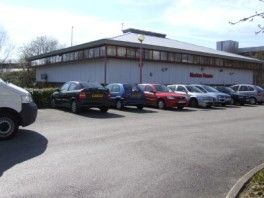
  • 1989: The company begins significant operations in Runcorn, initially at Wingate Drive (Timperley) and later moving to Norton House in Crowngate.
  • 1990–1994: Development period for sp/ARCHITECT in Runcorn. The software was a banking system used by major institutions including TSBBank of Scotland, and Rabobank.
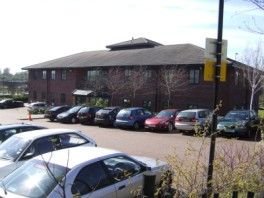
  • 1992: The firm relocates its Runcorn base to Wingate House on Northway.
  • 1994: The Software Partnership is acquired by the American company Deluxe Electronic Payment Systems (a division of Deluxe Corporation).
  • Post-1994: Following the acquisition, the entity operated as Deluxe Data International Operations.
  • Later Transitions: The lineage of the Runcorn operations eventually merged into larger fintech entities, including eFundsEFD, and ultimately FIS
Deluxe Data, Wingate House
The Software Partnership, Norton House

sp/ARCHITECT-BANK module – development in Runcorn, Cheshire by The Software Partnership

HPE NonStop Tandem Timeline History

HPE NonStop (originally Tandem) has a nearly 50-year history as the gold standard for fault-tolerant, “always-on” computing. Originally developed by Tandem Computers to eliminate single points of failure, the platform has survived through several major corporate acquisitions while evolving its underlying processor architecture. 

Founding and The Tandem Era (1974–1997)

The “NonStop” architecture was born from the idea that a single hardware failure should never crash a system.

  • 1974: Tandem Computers is founded by Jimmy Treybig and three former HP engineers.
  • 1976: The first Tandem/16 (later NonStop I) is shipped to Citibank. It featured a “shared-nothing” architecture where each CPU had its own memory and copy of the Guardian OS.
  • 1981: NonStop II is released, introducing 32-bit addressing to support larger applications.
  • 1983: The NonStop TXP and Pathway software are introduced. Pathway revolutionized the platform by allowing programmers to write fault-tolerant apps without manually coding “checkpoints”.
  • 1986: NonStop SQL is launched, the first fault-tolerant relational database.
  • 1989: NonStop Cyclone arrives, a high-end mainframe-class system.
  • 1991–1993: Transition to MIPS RISC processors begins with the Cyclone/R and the Himalaya K-series

Corporate Acquisitions and Transition (1997–2014)

The platform changed hands twice in five years, but the mission-critical nature of the technology kept it alive.

  • 1997: Compaq acquires Tandem for $3 billion to bolster its enterprise server offerings.
  • 1997: The Himalaya S-Series introduces ServerNet, a high-speed interconnect that later evolved into the industry-standard InfiniBand.
  • 2002: HP merges with Compaq, bringing the NonStop line under Hewlett-Packard.
  • 2005: NonStop i (Integrity) is launched, transitioning from MIPS to Intel Itanium processors. 

The Modern HPE Era (2015–Present)

Today, the platform focuses on integrating with modern data centre standards like x86 and cloud-native virtualisation. 

  • 2014–2015: NonStop X (TNS/X) is introduced, moving the architecture to industry-standard Intel x86-64 processors.
  • 2015: HP splits; the server line becomes part of Hewlett Packard Enterprise (HPE).
  • 2017: Virtualised NonStop (vNS) is released, allowing the software stack to run in virtual machines (KVM/OpenStack).
  • 2020: HPE officially ends sales of Itanium-based systems, completing the transition to x86.
  • 2024: The platform celebrates its 50th anniversary, continuing to power the majority of the world’s ATM and credit card transactions

HPE NonStop Tandem Timeline History

My Career in HPE NonStop Tandem, 1995 thru 2013
My Career in HPE NonStop Tandem, 1990 thru 1995

BASE24 and core Networking Component XPNET timeline

The technical timeline for BASE24 and its core networking component, XPNET, reflects the evolution of high-availability payment switching on HP NonStop (Tandem) systems.

Technical Evolution Timeline

  • 1980s: The Foundation
    • BASE24 Release: Originally developed by Applied Communications Inc. (now ACI Worldwide), BASE24 was built for the Tandem Guardian operating system.
    • XPNET Introduction: Developed as the Message-Oriented Middleware (MOM) to handle all transaction routing and communications. It introduced a multi-node architecture allowing different “satellite” processes (ATM, POS, Host) to communicate.
  • 1990s: Scale and Maturity
    • Classic Era: BASE24 “Classic” became the industry standard for ATM and POS switching.
    • XPNET 3.x: Enhanced to support larger networks and more complex auditing through NCPCOM.
    • Language & DB: The system relied on TAL (Tandem Application Language), COBOL, and the Enscribe database.
  • 2000s: The Shift to BASE24-eps
    • 2003–2005: ACI introduced BASE24-eps (Electronic Payment Systems). This was a re-architecture using C++ and Java to provide platform independence.
    • XPNET 4.1: Released to support the transition, adding features like Common Transport Subsystem (CTS) for better Pathway integration and support for external processes.
    • z/OS Support: By 2009, BASE24-eps was fully ported to IBM z/OS using CICS and VSAM.
  • 2010s – Present: Modernisation & Cloud
    • 2014–2017: Continued updates to BASE24 Classic R6.0, maintaining its relevance for legacy users.
    • Cloud Enablement: Recent versions of BASE24-eps focus on REST API integration via tools like LightWave, allowing legacy XPNET paths to be exposed as web services.
    • Active/Active Environments: Modern implementations focus on “continuous availability” using GoldenGate for data replication between sites. 

Key Technical Components

  • NMM (Network Management Module): The core process of XPNET that manages the configuration of lines, stations, and links.
  • LCONF: The Logical Network Configuration File used by XPNET to define how messages route between processes.
  • Auditing: XPNET provides the primary transaction auditing mechanism, which is still utilized by both Classic and eps versions.

BASE24 and core Networking Component XPNET

HPE NonStop Tandem ViewPoint EMS Event log viewer

The timeline of HPE NonStop ViewPoint (and its modern successor, Web ViewPoint) reflects the evolution of NonStop systems from Tandem’s fault-tolerant beginnings to Hewlett Packard Enterprise’s modern cloud-integrated management. 

Detailed History Timeline

  • Pre-2000: Legacy ViewPoint
    • Originally developed for the Tandem NonStop platform to provide a graphical operations interface for monitoring system status and events.
    • Featured early support for DSM/PM (Distributed Systems Management/Performance Monitor) and event management through primary and alternate event logs.
  • 2003–2005: Transition to Web ViewPoint
    • September 2003: Version 4 AAD released as an early iteration of the web-based management tool.
    • May–October 2004: Progressive upgrades (Versions 5.0 and 5 AAF) introduced refined management capabilities for S-Series servers.
    • March 2005: Version 5 AAG released, consolidating features for the S-Series.
    • November 2005: Web ViewPoint for Itanium (Version H01AAI) launched, marking the shift to the Intel Itanium-based Integrity NonStop architecture.
  • 2013–2015: The x86 Revolution & Virtualization
    • 2014: Support for Intel x86 architecture was officially announced, leading to the launch of NonStop X.
    • Evolution to Web ViewPoint Enterprise (WVP E): The platform evolved into an automated management product, eventually adding integration with cloud-based analytics like HPE Remote Analyst.
  • 2018–Present: Modern Hybrid Cloud Era
    • L-Series Support: Continued updates provided support for L-Series operating environments and enhanced security monitoring.
    • 2023–2024: Recent developments focus on Web ViewPoint Enterprise, featuring a global configuration platform and enhanced historical data capture through integrations like Sentinel for HPE NonStop

For more specific documentation, you can browse the HPE NonStop Manuals on the HPE Support Center

MultiBatch is a high-performance, mainframe-class workload automation and batch scheduling solution

MultiBatch is a high-performance, mainframe-class workload automation and batch scheduling solution specifically designed for the HPE NonStop parallel architecture (formerly Tandem). It is developed by ETI-NET (formerly by Insider Technologies) to manage complex batch schedules across both NonStop Guardian and OSS environments. 

Key Milestones and Timeline

  • 1976 – Tandem NonStop Origins: The foundation for these systems was established with the introduction of the first NonStop servers by Tandem Computers.
  • 2017 – MultiBatch Release: Insider Technologies announced an updated release of MultiBatch to enhance off-line processing flows for the HPE NonStop arena.
  • 2019 – GUI and Monitoring Enhancements: Real-time status monitoring through a GUI interface was highlighted as a major differentiator, allowing users to visually track complex batch schedules like RTGS and securities settlements.
  • 2020 – Business Benefits Proven: Case studies demonstrated that MultiBatch could reduce online-dealing batch times by up to 6 hours per day.
  • 2022 – MultiBatch 10 for TBC: MultiBatch 10 was presented at the NonStop Technical Boot Camp (TBC), positioning it as the only workload manager for NonStop built on continuous innovation principles.
  • 2024 – Modernization and Security: Recent updates focused on securing and modernizing the platform for high-performance multitasking

Core Functionality

  • Parallel Execution: Supports batch schedules that run concurrently across multiple nodes, leveraging the NonStop architecture for high availability.
  • Hybrid Support: Seamlessly integrates both Guardian and OSS jobs within a single schedule.
  • Batch Prediction: Uses historical metrics in a status database to predict schedule completion times based on average and maximum elapsed run times.
  • Simplified Migration: Unlike NetBatch, it allows for extracting and inserting schedules between environments (e.g., test to production) without TACL changes.

MultiBatch is a high-performance, mainframe-class workload automation and batch scheduling solution

Mark Whitfield IT Career Timeline, AI generated from Google

The technical timeline for 

Mark Whitfield, an SC cleared, Senior IT Project Manager and Engagement Manager, spans over 30 years and transitions from specialized banking software development to high-level project leadership and cloud migrations. 

Professional Career Timeline

  • 1990 – 1994: Programmer at The Software Partnership (later Deluxe Data). Developed electronic banking software (sp/ARCHITECT-BANK) on Tandem Computers (now HPE NonStop) for major banks like TSB and Bank of Scotland.
  • 1994 – 1995: Lead Analyst at Deluxe Data International, continuing support and development for banking customer systems.
  • 1995 – 2013: Project Manager of Strategic Technical Initiatives at Insider Technologies Limited. Oversaw projects involving Reflex 80:20, Sentra development, and corporate website authoring.
  • 2013 – 2014: Project Manager (Banking Division) at Wincor Nixdorf Limited, focusing on professional services for the banking sector.
  • 2014 – 2016: Senior Digital Project Manager at Betfred Limited, managing the Online and Mobile Division.
  • 2016 – Present:Engagement Manager / Senior PM at Capgemini UK.
    • 2016: Led a £4.3M data centre migration for Royal Mail (RMG) involving 1,100+ interfaces.
    • 2018 – 2019: Augmented into MuleSoft as a Delivery Manager for the Anypoint Platform.
    • 2020 – Present: Leading a £13.5M cloud migration program moving 130 UK government apps to Azure and AWS. 

Technical Training & Education

Whitfield maintains an active Professional Training timeline to adapt to changing technologies:

  • 1990: Graduated in Computing.
  • 1995: HP NonStop TAL Programming and Performance Tuning.
  • 1997: C/C++ Programming at Comtec.
  • 2006 – 2009: Deep dive into security and databases, including Cryptography, Thales e-Security, and Microsoft SQL 2000.
  • 2011: Java and Google Android programming using Eclipse IDE.
  • 2014 – 2024: Advanced Microsoft Excel and AI-focused refreshers. 

He is also a Certified Engagement Manager and a registered PRINCE2 Practitioner proficient in both Agile Scrum and Waterfall methodologies.

The Software Partnership (TSP) was a Runcorn-based software house

The Software Partnership (TSP) was a Runcorn-based software house co-founded by Nigel Walsh in the mid-1980s. Specialising in on-line banking systems for Tandem and UNIX platforms, the company underwent several acquisitions that integrated its technology into global financial services. 

Corporate Timeline

  • Mid-1980s: Founded as The Software Partnership.
  • 1990: Initial operations were based at Wingate Drive in Timperley before moving to Norton House in Crowngate, Runcorn.
  • 1992: Relocated to Wingate House on Northway, Runcorn.
  • 1994: Acquired by the American firm Deluxe Electronic Payment Systems (a subsidiary of Deluxe Corporation).
  • 2000: The company transitioned to EFD eFunds.
  • 2007: Became part of Fidelity National Information Services (FIS), eventually moving operations to Daresbury Park in Warrington. 

Key Products

The company’s primary legacy is the development of sp/ARCHITECT-BANK, a software suite designed for secure card management and electronic transaction processing. This technology became a foundational component for the secure payment systems later managed by Deluxe Data and FIS

The Software Partnership, Norton House, Crowngate, Runcorn, Cheshire
The Software Partnership (TSP) was a Runcorn-based software house
Deluxe Data International Operations, Wingate House, Northway

https://mark-whitfield.com/career/tsp-deluxe-data-1990-1995/