HPE Nonstop Technology Architecture – specialized, 100% fault-tolerant infrastructure

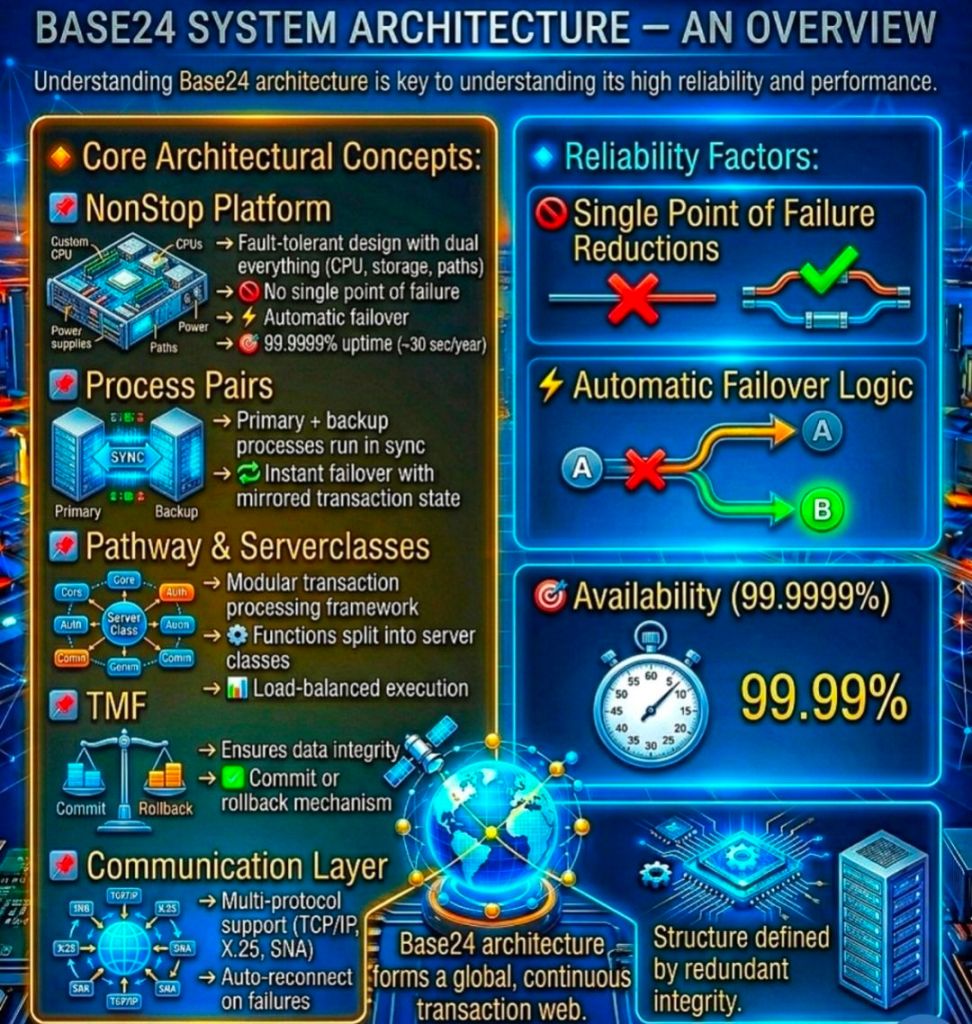
The official HPE Nonstop Technology Architecture is a specialized, 100% fault-tolerant infrastructure built with a tightly integrated hardware and software stack designed to eliminate any single point of failure. Formal instruction and architectural frameworks have been modernized under the newly relaunched HPE Nonstop Compute Training Portfolio curriculum.

Originally developed by Tandem Computers in 1976, the platform eventually became part of Hewlett Packard Enterprise (HPE). Unlike standard servers that can crash due to a single component failure, NonStop uses a tightly integrated, “shared-nothing” architecture to ensure that if a hardware or software component fails, another instantly takes over with zero downtime or data loss.

Core Architectural Features

To understand how HPE NonStop works, you need to understand its unique design principles:

  • Shared-Nothing Architecture: Every processor has its own dedicated memory, I/O channels, and copy of the operating system. No single component is shared, eliminating any single point of failure.
  • Process Pairs: Applications run using a primary process and a backup process on a different processor. The primary process constantly copies its state to the backup. If the primary fails, the backup immediately takes over.
  • Massive Scalability: Systems can scale up seamlessly from small distributed environments to massive clusters containing up to 24,000 processor cores without interrupting running operations.
  • Hardware Platform: The modern software environment runs on industry-standard x86 architectures, available as physical server racks (like the HPE NonStop NS9 X5) or as virtualized instances in hybrid cloud environments.

Dual Operating Environments

HPE NonStop runs a specialized operating system called NonStop OS. Inside this OS, developers and administrators interact with two distinct environments:

  • Guardian Environment: The native, proprietary environment optimized for high-volume Online Transaction Processing (OLTP). It handles tasks sequentially through process-oriented manually-started jobs rather than traditional automated queues.
  • Open System Services (OSS): A UNIX-like, POSIX-compliant environment built on top of the NonStop kernel. This allows organizations to run standard open-source applications, tools, and scripts natively alongside Guardian.

Ecosystem and Use Cases

HPE NonStop is rarely used for standard office automation or basic web hosting. Instead, it serves as the backbone for global industries where an hour of downtime could cost millions of dollars:

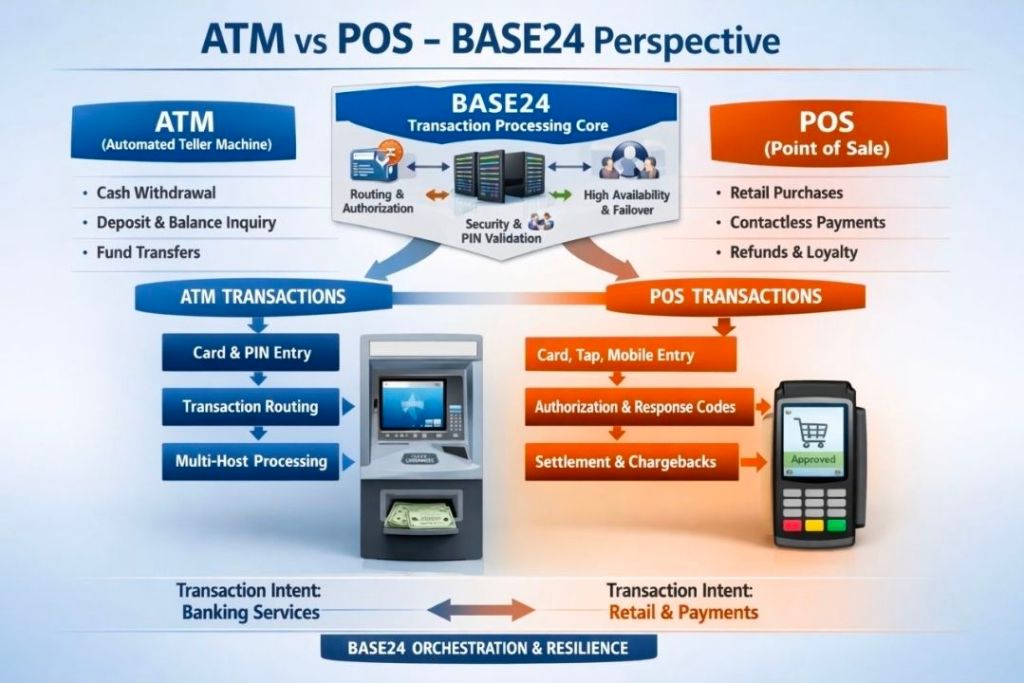
  • Financial Transactions: Powers global stock exchanges, automated teller machines (ATMs), and retail point-of-sale credit card processing, eg. BASE24.
  • Travel and Logistics: Runs critical airline reservation systems and real-time cargo routing infrastructure.
  • Database Management: Features its own highly secure, distributed database engine called NonStop SQL, which guarantees absolute data integrity across all transactions.
  • Modern Development: Supports traditional languages like COBOL85 and ANSI C, alongside modern DevOps integrations like Git, Ansible, and Eclipse-based IDE environments.

If you plan to work directly with these systems, you can explore formal pathways like the Concepts and Facilities for HPE NonStop Systems course provided by HPE Education Services.


Core Architectural Layers (Diagram Blueprint)

An architectural blueprint of an HPE NonStop environment typically separates the layout into three core interdependent layers:

  • Hardware & Fabric Layer: Consists of independent, loosely-coupled Processor Nodes (handling up to 24,000 cores globally) connected via an ultra-fast InfiniBand or ServerNet system fabric backbone.
  • I/O & Subsystem Layer: Utilizes Cluster I/O Protocols (CLIMs), splitting tasks between Storage CLIMs (SCLIMs) and Network CLIMs (NCLIMs) to isolate external communication from main processing.
  • Operating System & DB Layer: Runs the NonStop OS, which simultaneously manages the traditional Guardian environment, Open System Services (OSS) for UNIX/Linux paradigms, and the NonStop SQL distributed database engine.

Recommended Architecture Training Curriculum

HPE organizes its technical blueprints into structured educational paths for engineers.

1. Foundational Blueprint Concepts

  • Course Code: U4147S (HPE Nonstop Compute System Fundamentals).
  • Focus: Delivers a top-down view of system goals, transaction processing, and fundamental architecture.
  • Key Modules: Explores Guardian vs OSS, Pathway application management, and basic database interaction.

2. System Operations & Administration

  • Course Code: H1SC3S (HPE Nonstop Compute System Administration I).
  • Focus: Maps physical and virtual components to real-world deployment.
  • Key Modules: Covers Processor Nodes, configuring SCLIMs/NCLIMs, and hands-on fault-scenario testing.

3. Low-Level OS Internals

  • Course Code: U8609S (HPE Integrity Nonstop Operating System Architecture).
  • Focus: Deep dive into runtime architecture, process control, and memory allocation.
  • Key Modules: Focuses on Inter-process Message Systems, synchronization mechanisms, and system debugging.

Training Delivery Options

Enrolling via HPE Education Services grants access to various professional development features:

  • HPE vLabs: Direct sandbox access to practice configuration and live fault injection inside virtual environments.
  • Digital Learner Credits: Flexible licensing options to assign corporate learning units across teams.
  • Modernized Tracks: Courses have been fully overhauled to support contemporary cloud paradigms and hybrid integration via HPE GreenLake frameworks.

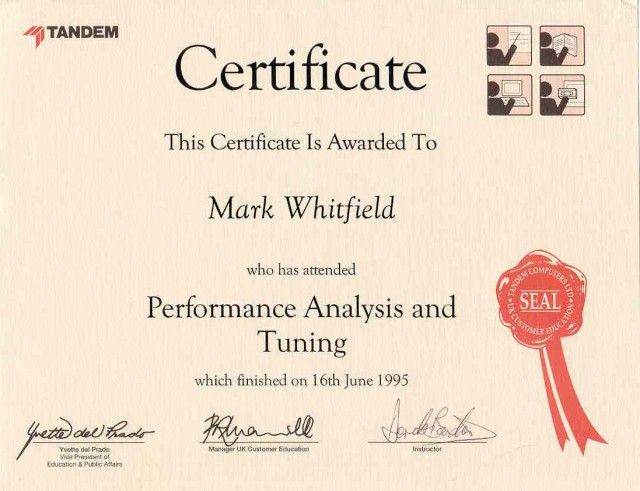
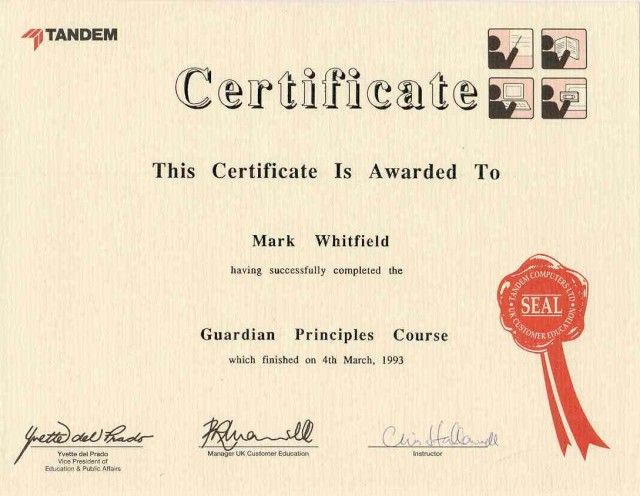
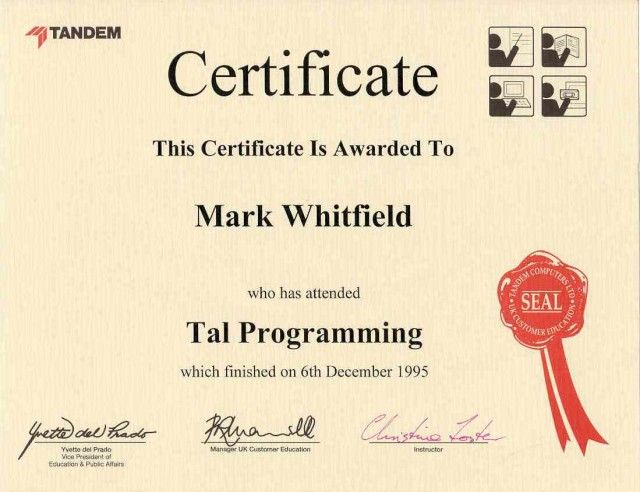
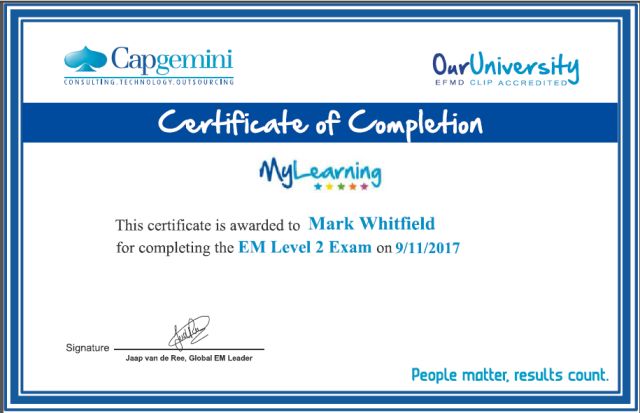
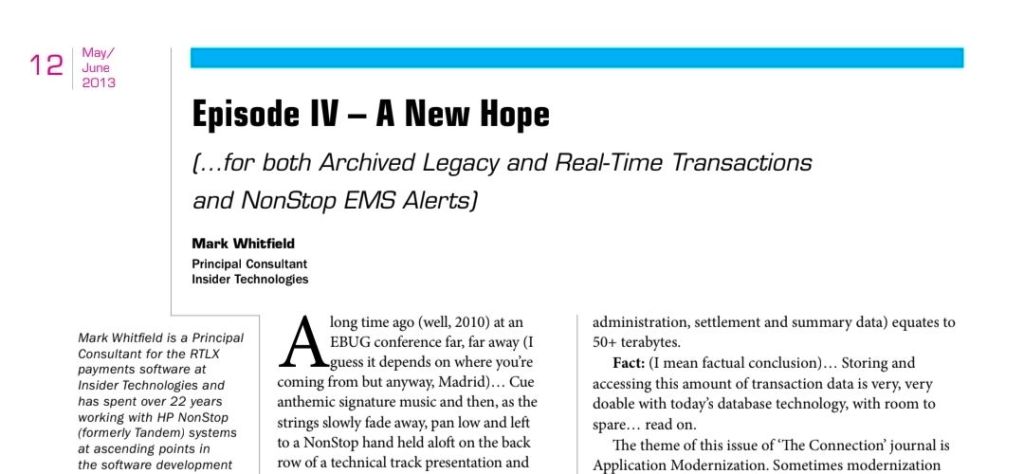
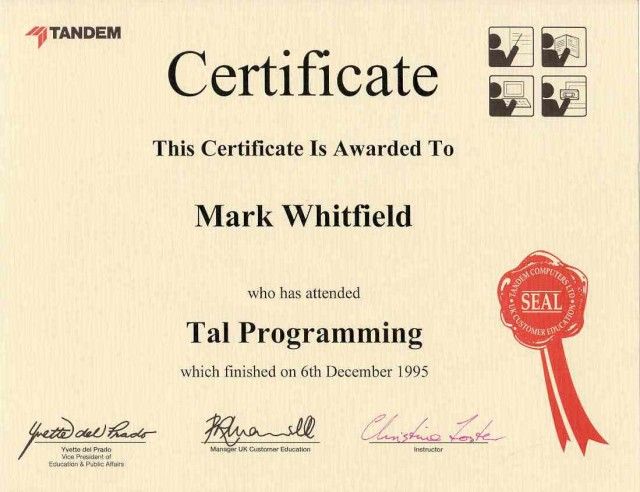
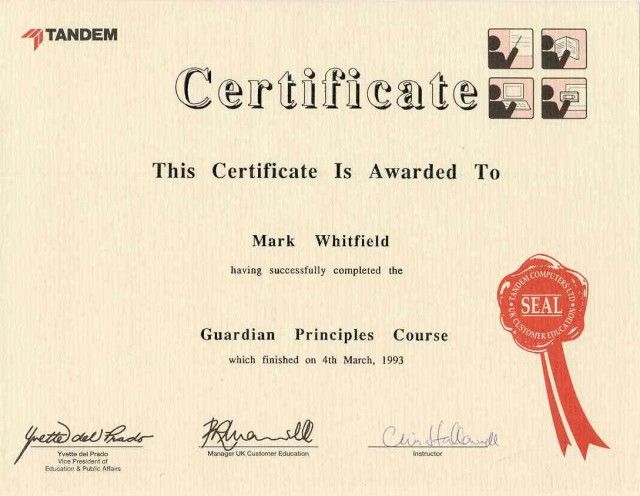
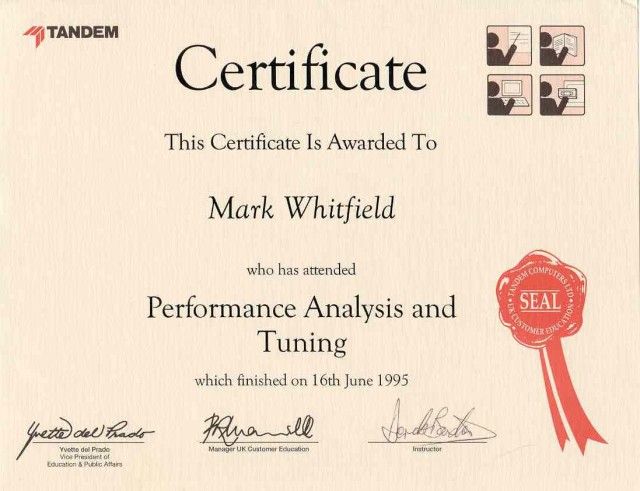
My HPE NonStop (Tandem Computers) Certificates :

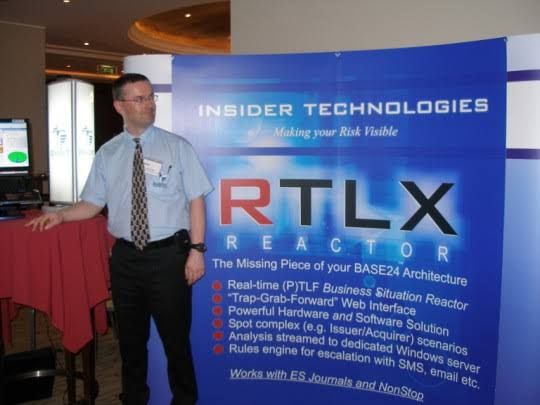
HPE NonStop (Tandem) Career Experience at Insider Technologies Limited, ITL
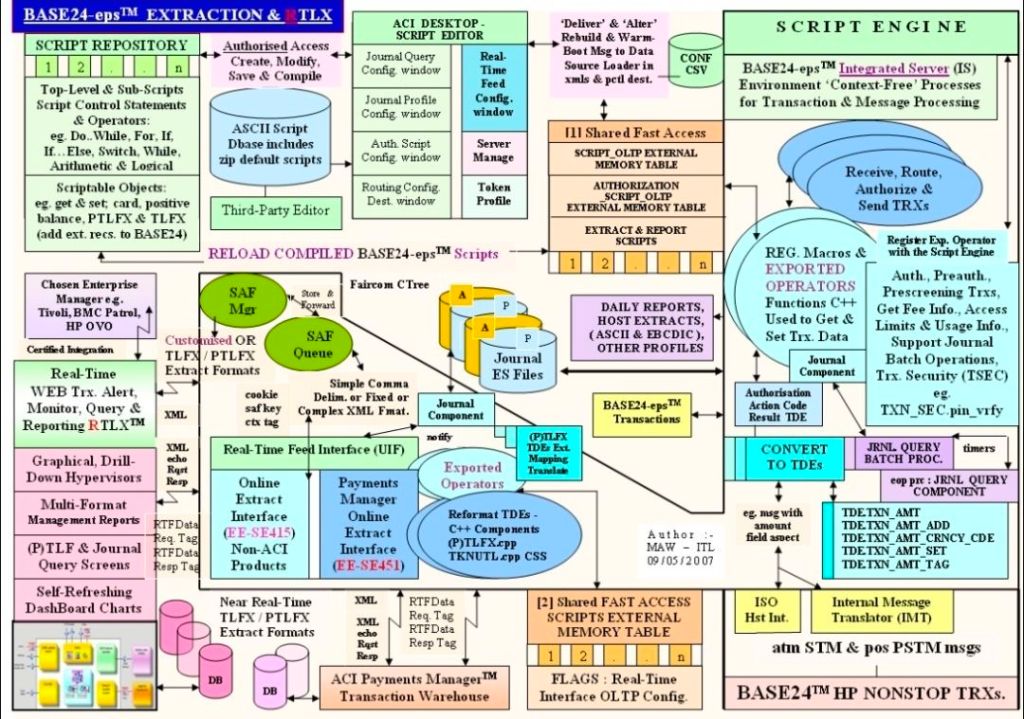
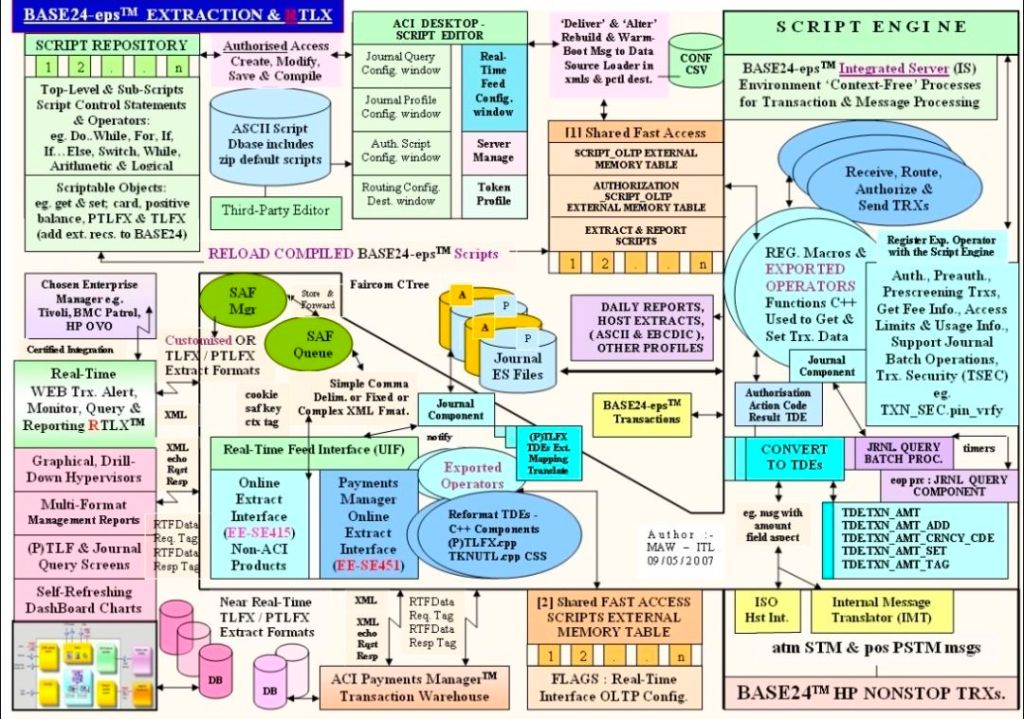
BASE24 eps monitoring

Mark Whitfield IT, Technical & Project Management Training Overview

Mark Whitfield, a Manchester-based Senior IT Project Manager, has completed extensive professional training throughout his career, focusing on project management methodologies, delivery software, and technical tools.

Core Project Management Methodologies :

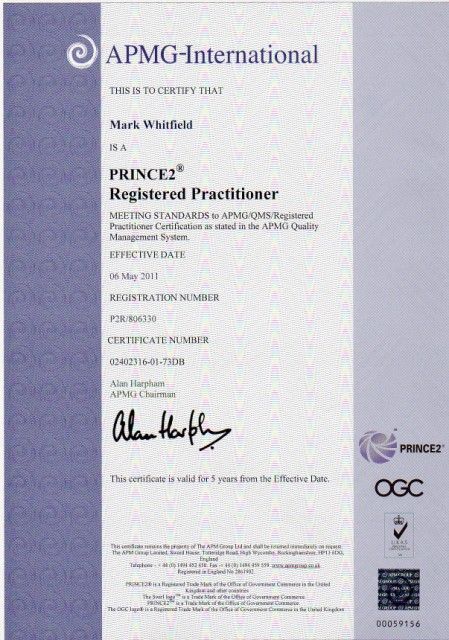
  • PRINCE2 Practitioner: Certified as a registered PRINCE2 Practitioner in May 2011 via the ILX Group (Gold e-Learning).
  • Agile SCRUM Training: Attended in-house training with RADTAC in May 2011.
  • Advanced Engagement Management (Level 2): Completed at Capgemini in November 2017.
  • Project Management Fundamentals: Completed “Fundamentals of Successful Project Management” in February 2000 through Skillpath in Manchester.
  • Managing Multiple Projects: Attended “Managing Multiple Projects, Objectives and Deadlines” in October 1999/1998 via Skillpath.

Software & Cloud Platforms :

  • AZ-900 Microsoft Azure Fundamentals: Certified in February 2022.
  • Microsoft Project: Completed the Microsoft Project ’98 Certification Series in May 2000 through the IIL UK Education Centre in Reading.
  • Microsoft Excel Expert Skills: Upgraded skills via a 2017 Expert course and a July 2024 Udemy refresher.

Technical & Programming Courses :

  • Tandem / HP NonStop: Completed Tandem Guardian Principles (1993), Tandem Performance Analysis (1995), and Tandem TAL Programming (1995).
  • C / C++ Programming: Attended “C++ for Non-C Programmers” with Comtec Computer Training in March 1997.
  • Database Querying: Completed “Querying Microsoft SQL 2000 with Transact SQL” via QA Training in March 2009.
  • Web Applications: Attended “Developing MS ASP Web Applications using MS Visual Studio .NET” in January 2007.

Marketing & Communication Training :

  • Writing for the Web: Completed in May 2009 with gbdirect (iTrain Education in London).
  • Brochure & Document Design: Attended a SkillPath Seminar on designing marketing brochures and reports in April 2006.

Mark Whitfield is a Senior IT Project Manager based in Manchester

Mark Whitfield is a highly experienced Senior IT Project Manager based in Manchester, UK, with over 31 years of experience in the IT industry specializing in both Agile and Waterfall methodologies. He holds SC clearance (valid until 2031) and has a strong technical background in banking and digital project delivery, including experience as a developer in software development lifecycles (SDLC).

Mark Whitfield is a highly experienced Senior IT Project Manager based in Manchester

Professional Biography

After graduating in Computing in 1990, Mark began his career as a programmer specializing in Electronic Banking software on Tandem Mainframe Computers (HPE NonStop). He spent five years coding in COBOL85 and NonStop SQL for banking clients before transitioning into project management.

Mark has operated as a Senior IT Project Manager for over two decades, delivering complex projects for major blue-chip clients, including Jaguar Landrover, Heathrow, Royal Mail Group, and various financial institutions. He currently provides project management templates based on his extensive experience via his website, PROject Templates.

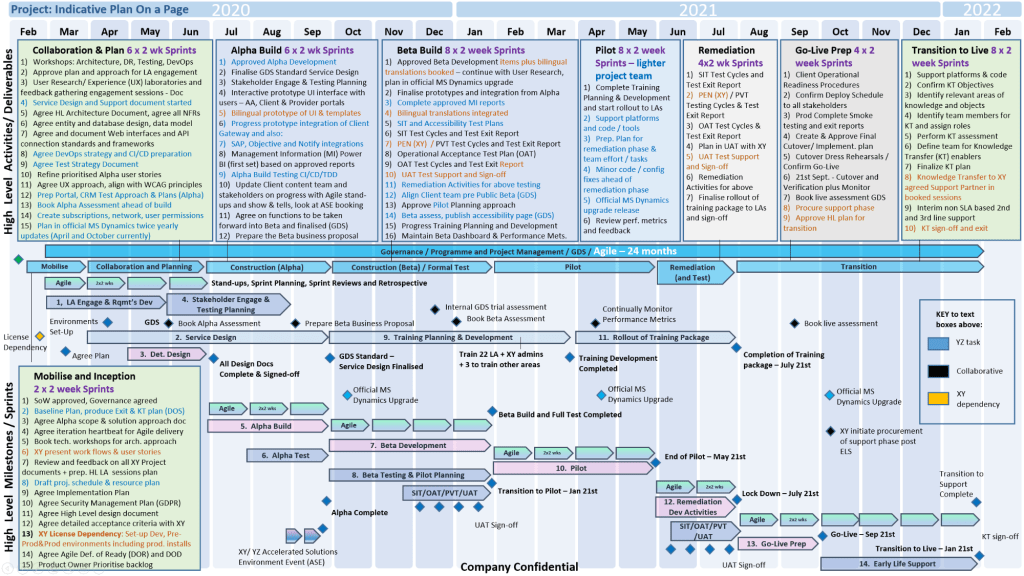
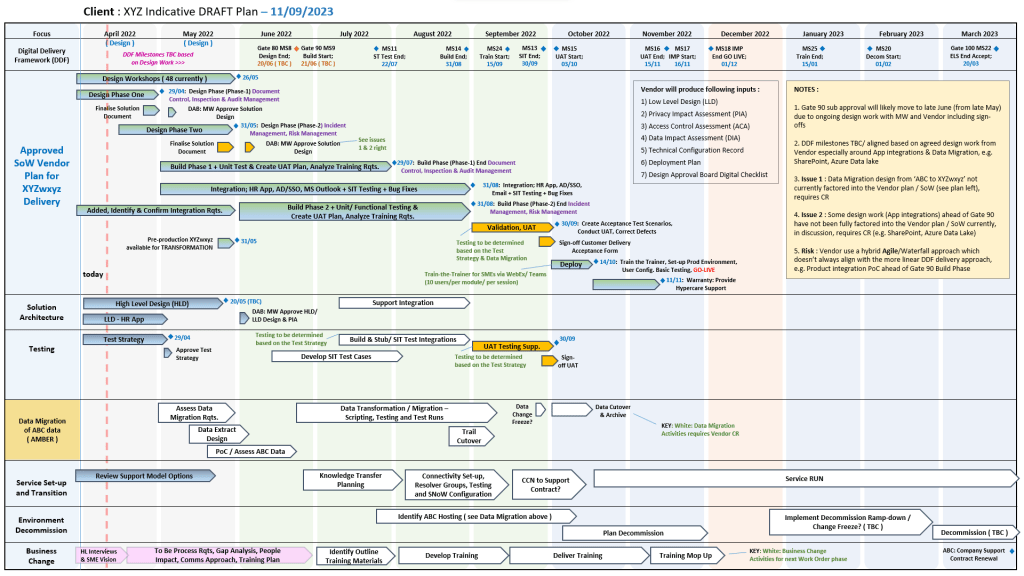
Example POaP Plan On a Page templates by Mark Whitfield

Key Skills & Expertise

  • Methodologies: Agile SCRUM, Waterfall, PRINCE2 Practitioner.
  • Technologies: HP NonStop (BASE24, TAL, C, C++, SQL), Java, .NET, Mobile (iOS, Android, Windows).
  • Areas: ATM software delivery, Gambling/Casinos, Public Sector/LRG, Payment Systems, Digital Transformation.
  • Clearance: SC Cleared until 2031.
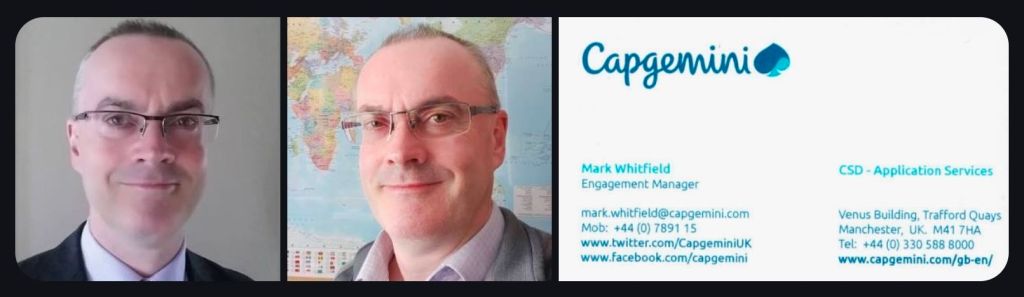
Capgemini Engagement Manager, 2016 thru 2025

Professional Career & Projects

Capgemini UK (Jan 2016 – Present)

  • Role: Client-facing SC Cleared Engagement Manager.
  • Projects: Delivered Waterfall and Agile digital projects for automotive, local regional government (LRG), postal services, and aerospace & defence sectors.
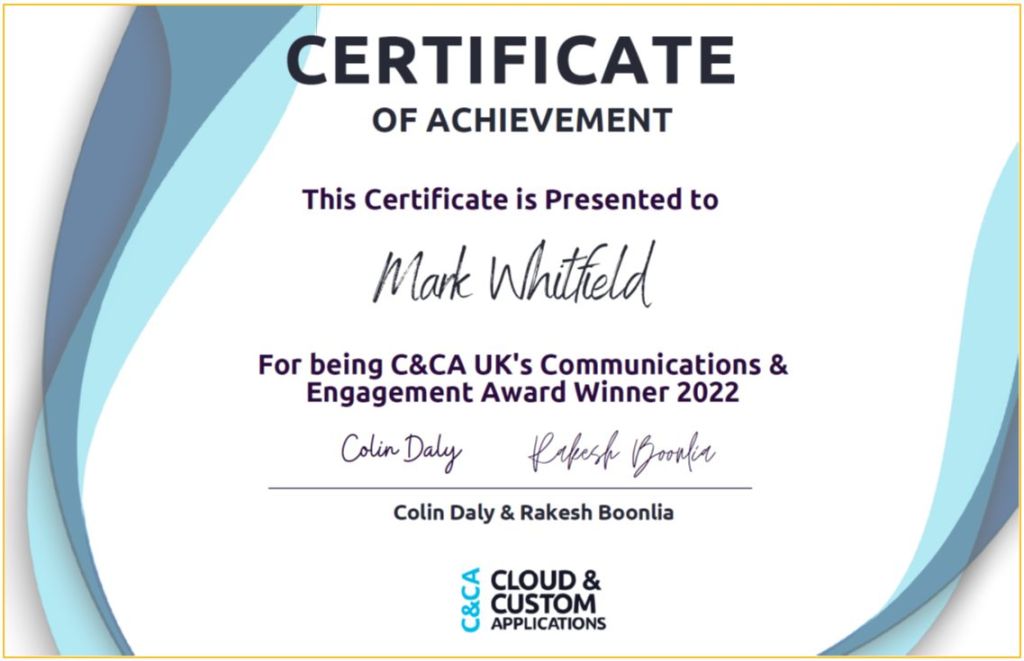
C&CA UK’s Communications & Engagement Award Winner 2022

Betfred (Late 2014 – Jan 2016)

  • Role: Senior IT Project Manager.
  • Projects: Managed mobile and online gambling/casino projects, including payment gateways, sportsbook, and virtual gaming using Agile SCRUM.

Wincor Nixdorf (Sept 2013 – Late 2014)

  • Role: Agile IT PM, Professional Services – Banking Division.
  • Projects: Managed ATM software delivery (Wincor Nixdorf work stream >£5M) for Lloyds Banking Group/Halifax.

Insider Technologies Limited (Aug 1995 – Sept 2013)

  • Role: Project Manager – Strategic Technical Initiatives.
  • Projects: Technical pre-sales, product management, and installation for HPE NonStop banking products (Reflex 80:20, RTLX).
HP NonStop TAL Programming Course
1995, HP NonStop TAL Programming Course

The Software Partnership / Deluxe Data (1990 – 1995)

  • Role: Programmer.
  • Projects: Developed code for sp/ARCHITECT-BANK on Tandem Computers for banks like TSB, Bank of Scotland, and Rabobank.

Professional Training & Certification

Registered PRINCE2 Practitioner (May 2011, ILX)
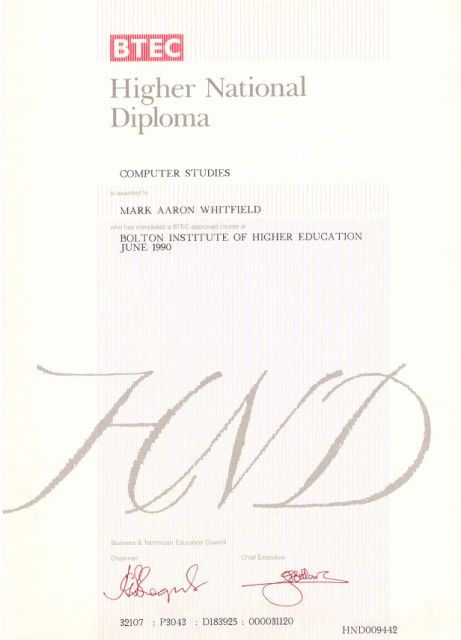
1990, BTEC HND in Computer Studies from Bolton Institute of Higher Education, BIHE

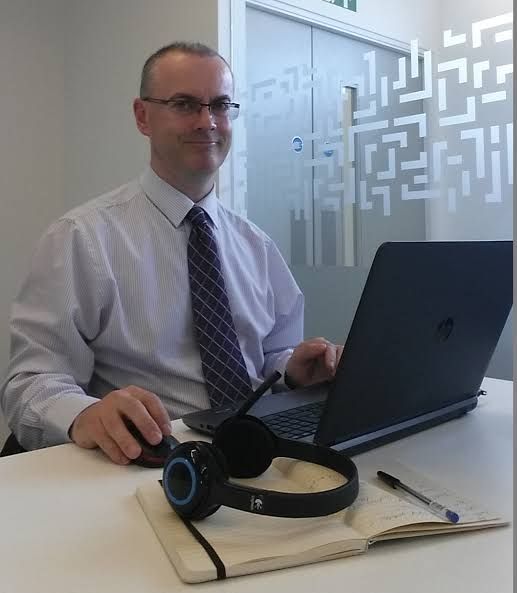
Mark Whitfield, SC Cleared Senior Project Manager, Manchester

Mark Whitfield is a highly experienced, SC-cleared Senior Project Manager and Engagement Manager specializing in complex IT software development lifecycle (SDLC) projects, digital transformation, and cloud migrations.

Currently based in Greater Manchester, UK, he has over 31 years of experience in the IT industry, working with major blue-chip companies across various sectors, including UK Government, retail banking, aerospace, and utilities.

He is a certified PRINCE2 Practitioner, skilled in both Agile SCRUM and Waterfall methodologies.

Website Links:

Professional Biography:

Mark specializes in bridging technical teams and business stakeholders, delivering complex IT systems under challenging conditions.

His career spans from early roles as a developer on Tandem Mainframe Computers (HPE NonStop) to senior management positions focusing on cloud resources, API integrations, and CRM platform implementations.

  • Key Skills: Project Planning, Stakeholder Management, Financial Forecasting, Risk Management (RAID), Agile Scrum, PRINCE2, ITIL.
  • Key Strengths: Cloud Migration (Azure/Dynamics 365), Payment Systems (ATM/POS), and API-led connectivity.

Detailed Career Timeline:

  • Nov 2023 – Feb 2024 (UK Government – Capgemini): Acted as Client-Side Technical Delivery Manager for a £1m+ Fish Export Service (FES) to CHIP project, facilitating Azure-based API updates for UK-Northern Ireland trade.
  • Nov 2022 (UK Government – Capgemini): Managed two Microsoft Dynamics 365 Azure Cloud projects, including a £0.4m Dynamics 2016 migration and a £0.54m CRM platform discovery/build.
  • Feb 2022 (UK Utility Industry – Capgemini): Managed a £0.5M project migrating legacy document management systems to an Azure-based Enablon product.
  • 2020 (UK Gov – Capgemini): Senior PM for a £375k Agile proof-of-concept (POC) project migrating legacy applications (MS Access/Oracle) to Microsoft Azure and Dynamics 365.
  • Oct 2018 – June 2019 (MuleSoft): Served as Delivery Manager overseeing 5+ UK accounts for MuleSoft Anypoint Platform (API-led connectivity) implementations.
  • Oct 2017 (Automotive Industry – Capgemini): Managed a £430k Digital Readiness project and a £670k Customer Portal/Online Sales project (Agile).
  • May 2017 (Local Govt – Capgemini): Led a £400k telecommunications project (CCaaS) for the Support for Mortgage Interest (SMI) program.
  • Jan 2017 (Aerospace/Def – Capgemini): Senior Project Lead for two £1.3M projects with high-governance and gated deliverables.
  • Jan 2016 – Present (Capgemini UK): Joined as an Engagement Manager (A8), working on projects including Apple iOS app development for UK Air Traffic (NATS) and a £4.3M data center migration for Postal Services.
  • Dec 2014 – Jan 2016 (Betfred Limited): IT Senior Digital Project Manager for online/mobile payment gateways and sports book platforms.
  • Sep 2013 – Dec 2014 (Wincor Nixdorf): Senior Project Manager for a £5+ million ATM/POS software swap-out at a UK retail bank.
  • 2013 (Retail Banking – Riyadh): Delivered an RTLX transaction tracking project (BASE24 Classic) at a Saudi Arabian bank.
  • 1995 – 2013 (Insider Technologies): Worked on Strategic Technical Initiatives and bank-facing projects on the HPE NonStop platform (Tandem) for products Reflex 80:20, Reflex ONE24, RTLX and XPERT24.
  • 1990 – 1995 (The Software Partnership/Deluxe Data): Commenced career as a programmer specializing in electronic banking software on Tandem Computers (HPE NonStop), sp/ARCHITECT-BANK

Education:

  • 1988 – 1990: Higher National Diploma (HND) in Computing, Distinction/Overall First, Bolton Institute of Higher Education (now University of Greater Manchester from 2024).

Mark Whitfield, SC Cleared Senior Project Manager, Manchester

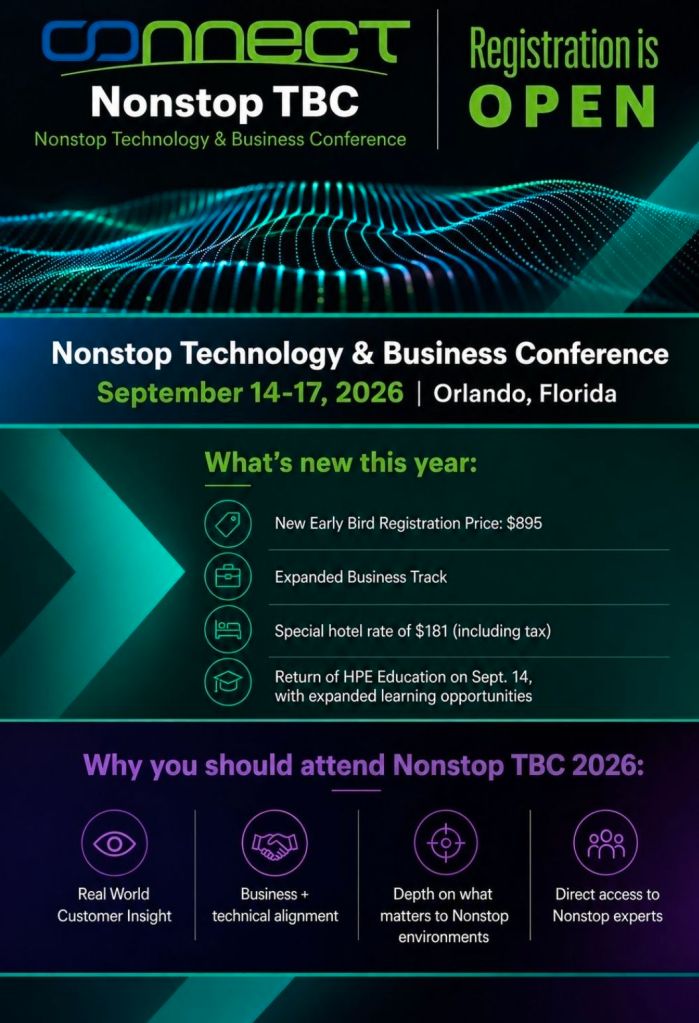
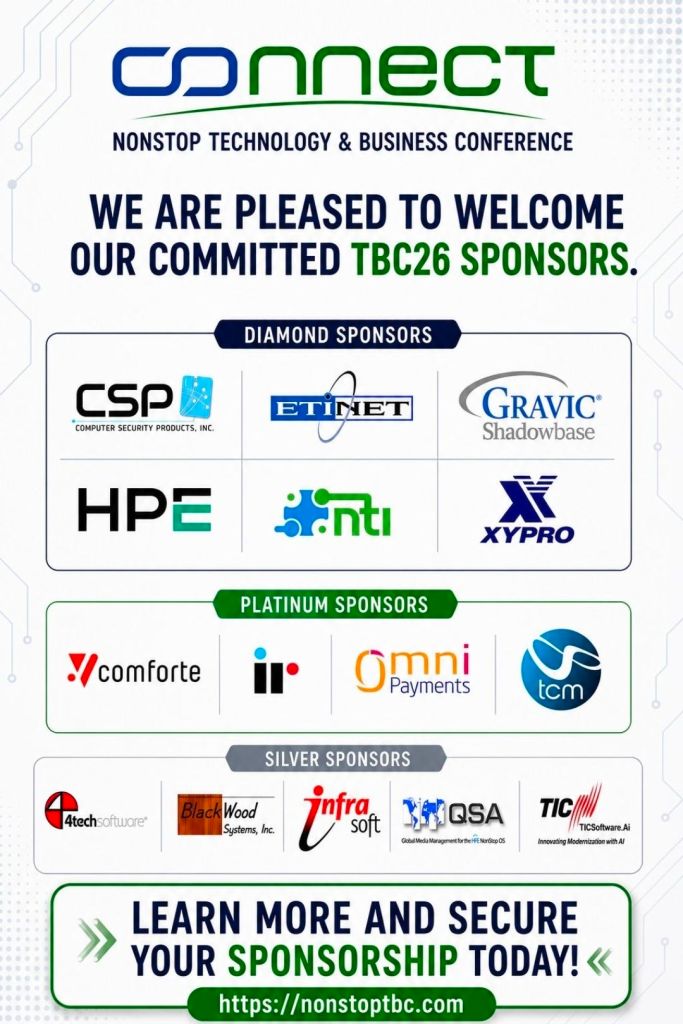
Connect NonStop Registration Sept. 2026, NonStop Technology & Business Conference

Connect NonStop Registration 2026, NonStop Technology & Business Conference
Event Date

September 15-17, 2026 (HPE Education Sept. 14)

Event Location

Orlando, Florida

Venue

The Rosen Plaza 9700 International Drive

Contact Us

info@connect-community.org

HPE NonStop Conferences Insight and Timeline by Era

The HPE NonStop community, historically rooted in Tandem Computers’ culture of openness, has held an annual gathering since the early 1980s.

Originally known as the International Tandem Users Group (ITUG) summits, the main conference evolved into the NonStop Technical Boot Camp (TBC), now organized by Connect Worldwide and heavily supported by Hewlett Packard Enterprise

The conference serves as the premier annual gathering for NonStop users, focusing on technical education, mission-critical applications, and networking. 

Detailed Historical Timeline (1990–2026)

The “Tandem/ITUG” Era (1990–1996)

  • Focus: Transitioning from proprietary stack machines to MIPS RISC microprocessors, introducing Open System Services (OSS).
  • 1990: Tandem reaches peak revenue; ITUG meetings focus on fault tolerance in ATM networks.
  • 1993: Introduction of NonStop Himalaya K-series using MIPS R4400 processors.
  • 1994: NonStop Kernel (NSK) extended with POSIX-compliant Unix.
  • 1995: Introduction of ServerNet, foundational for future x86 architectures. 

The Compaq & HP Transition Era (1997–2014) 

  • Focus: Integration into larger portfolios, migration from MIPS to Intel Itanium (TNS/E).
  • 1997: Compaq acquires Tandem. ITUG summits begin navigating the new corporate structure.
  • 2003: HP acquires Compaq. NonStop conferences become key components of HP’s high-end mission-critical offerings.
  • 2005: Introduction of HP Integrity NonStop i servers based on Intel Itanium.
  • 2008: Connect Worldwide (independent user group) takes over, revitalizing the “Technical Boot Camp” name.

The HPE NonStop X & Virtualization Era (2015–2019) 

  • Focus: Migration to x86-64 (NonStop X), Virtualization (vNonStop), and cloud integration.
  • 2015: Formation of Hewlett Packard Enterprise (HPE). Focus shifts to modernized “NonStop X” systems.
  • 2016: vNonStop demoed at TBC, allowing fault-tolerant systems in virtual machines.
  • 2017: TBC highlights AI and cybersecurity, reflecting modern enterprise needs.
  • 2019: Discussions around “NonStop-as-a-Service” (XaaS) and GreenLake integration. 

The AI & 50th Anniversary Era (2020–2026)

  • Focus: Hybrid Cloud, Artificial Intelligence, 50th Anniversary of NonStop.
  • 2020: TBC goes virtual, with high attendance from a global community.
  • 2022: Continued focus on XaaS (everything as a service).
  • 2023-2024: Emphasis on cyber resilience, SQL improvements, and integration with modern DevOps tools.
  • 2025/2026: HPE NonStop 50th Anniversary. Conferences focus on AI-driven transformation, cybersecurity, and the new business track

Conference Insights and Evolution

  • The “Beer Bust”: A tradition started in the early days of Tandem, now a staple social event at the TBC to foster community and open communication.
  • Format: The NonStop TBC typically features 4 days of technical sessions, user case studies, and partner exhibitions (e.g., XYPRONTI).
  • Regional Events: Alongside the main TBC, regional events (e.g., MexTUG) occur throughout the year.
  • Key Themes: Uninterrupted performance, database integrity, and migration to x86/cloud. 

NonStop TBC 2026 is scheduled for Sept 14–18 in Orlando, FL. 

The history of Tandem Computers (now HPE NonStop) conferences is a nearly 50-year chronicle of community-driven knowledge sharing, evolving from the Tandem User’s Group (TUG) in 1978 to the modern HPE NonStop Technology & Business Conference (TBC).

These events have served as the primary venue for sharing best practices on fault tolerance, high availability, and mission-critical application design, bridging the gap between Tandem’s founding in 1974 and HPE’s current virtualized NonStop systems. 

Detailed Historical Conference & Product Timeline (1970s–Present)

  • 1974–1979: The Founding Era
    • 1974: Jimmy Treybig founds Tandem Computers in Cupertino, CA, with a mission to create fault-tolerant systems for online transaction processing (OLTP).
    • 1976: First Tandem/16 (T/16) system shipped to Citibank, initiating the NonStop era.
    • 1978: Creation of the Tandem User’s Group (TUG) in San Jose, CA, as the foundational user community. Introduction of the Encompass database management system.
  • 1980–1989: Growth and Expansion
    • 1981: TUG is renamed the International Tandem User’s Group (ITUG), reflecting global growth. Introduction of NonStop II.
    • 1983: Introduction of the Tandem NonStop Extended Processor (TXP) and Guardian B-Series OS.
    • 1984: Formation of the British Isles Tandem User Group (BITUG).
    • 1985–1986: Introduction of the entry-level NonStop EXT system.
    • 1987-1988: Large-scale adoption of Tandem systems by international financial institutions and growing ITUG conference attendance, often characterized by strong community spirit.
    • 1989: Release of NonStop Cyclone and relational database software, challenging IBM’s dominance in transaction processing.
  • 1990–1999: The Move to Open Systems & Acquisition
    • 1990: Announcement of the Integrity S2 line for Unix-based fault tolerance.
    • 1991: Release of Cyclone/R (CLX/R) based on MIPS R3000, signaling a move away from custom proprietary CPUs.
    • 1993: Launch of the Himalaya K-series, supporting the MIPS R4400 and native mode NSK.
    • 1994-1995: Introduction of Open System Services (OSS), extending the NonStop Kernel to include a Unix-like POSIX environment.
    • 1997: Compaq acquires Tandem for $3 billion. Tandem releases the NonStop Himalaya S-Series, introducing the ServerNet interconnect technology.
  • 2000–2010: Compaq-HP Merger and Modernization
    • 2001: Hewlett-Packard merges with Compaq, taking over the NonStop product line and initiating a migration to Intel Itanium processors (TNS/E).
    • 2001: ITUG is renamed to “Compaq Users Group” before transitioning to the combined Connect community group.
    • 2002: Formation of a Tandem Alumni Group, celebrating the unique culture.
    • 2005: Introduction of Integrity NonStop servers, fully leveraging Intel’s Itanium architecture.
  • 2011–Present: HPE NonStop and Cloud Era
    • 2014: Formation of HPE (Hewlett Packard Enterprise).
    • 2015: Introduction of NonStop X, moving from Itanium to Intel x86-64 processors.
    • 2023-2024: Celebration of 50 years of Tandem/NonStop. The platform embraces virtualization and converged infrastructure.
    • 2025/2026: NonStop TBC 2026 is scheduled for Sept 15-17 in Orlando, FL, focusing on AI integration, modernization, and hybrid cloud. 

Key Conference Themes & Insights (2026 Perspective)

  • Legacy + Future: Current TBC conferences balance supporting existing high-value transaction applications with modernization approaches like REST APIs, Java, and DevOps.
  • Virtualization & Cloud: A major focus is deploying NonStop as virtualized instances (vNS) and integrating with public/hybrid clouds.
  • Community Continuity: Despite multiple mergers (Tandem HPE), the user community has remained tight-knit, with organizations like Connect hosting the NonStop TBC.
  • Continuous Availability: The core focus remains 100% uptime, with sessions analyzing how to achieve it in modern containerized environments.

BASE24 Overview and Historical Timeline

BASE24 is a foundational electronic payments software suite developed by ACI Worldwide, first launched in 1982 to provide “always-on” (24/7/365) transaction processing, primarily on HP NonStop servers.

It is used by large financial institutions to acquire, authenticate, route, switch, and authorize card- and non-card-based financial transactions across multiple channels, including ATMs, point-of-sale (POS) terminals, and mobile/internet banking. 

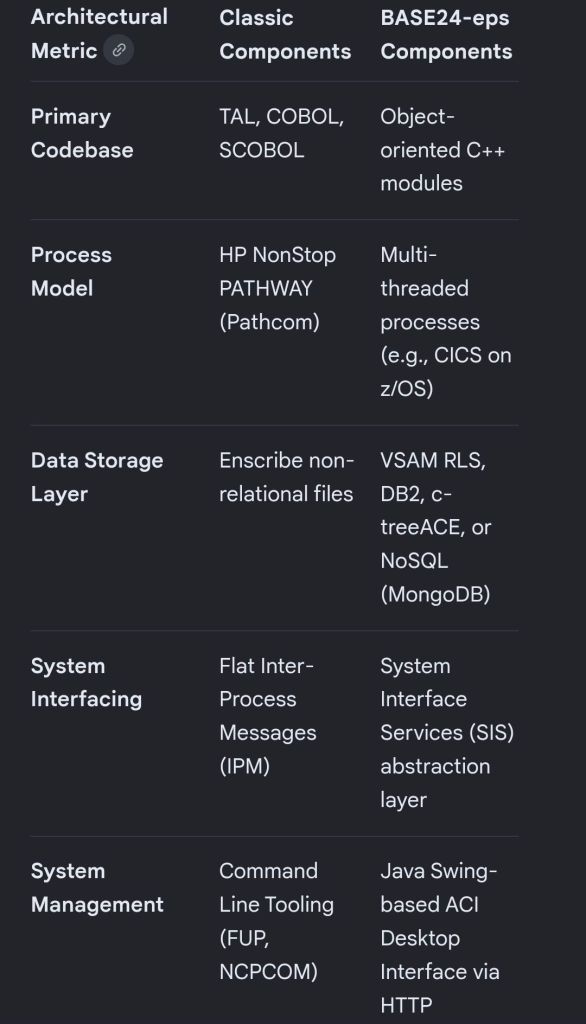
The product has evolved from “Base24 Classic” into BASE24-eps (formerly BASE24-es), a modern, object-oriented, platform-independent payments engine designed to support high-volume, real-time transaction processing in hybrid or cloud-based environments. 

Comprehensive Historical Timeline of BASE24 

  • The Foundation Era (1975–1981): ACI (Applied Communications, Inc.) was founded in Omaha, Nebraska, in 1975, initially developing software for fault-tolerant Tandem NonStop computers. The focus was on connecting the first wave of ATMs to bank systems.
  • The Launch and Global Expansion (1982–1990):
    • 1982: BASE24 product family is officially launched, serving as the “baseline” software for 24-hour operations.
    • 1986: By 1986, ACI has 131 customers in 14 countries, expanding globally.
    • 1987: ACI receives the U.S. President’s “E” Award for Excellence in Export.
  • Public Company and Modernization (1995–2000):
    • 1995: ACI becomes a public company.
    • 1997: Adopts the name ACI Worldwide.
    • 1996–2000: Initial expansion of support to platforms beyond Tandem, including IBM mainframes and UNIX, to support rising internet commerce.
  • The Transition to Open Systems: BASE24-eps (2001–2010):
    • Early 2000s: Introduction of BASE24-es (later renamed BASE24-eps), a Next-Gen, C++ based engine.
    • 2003: BASE24-eps is live on HP NonStop, IBM zSeries, and IBM pSeries/Sun Solaris.
    • 2006: ACI announces a version of BASE24-es to support UK Faster Payments.
    • 2008–2010: ACI moves toward a unified strategy, with BASE24-eps becoming the mainstream offering while Classic matured.
  • Modernization and Cloud Era (2011–Present):
    • 2011: BASE24-eps wins the Most Innovative Financial Product Award.
    • 2015: ACI celebrates 40 years of operation and introduces advanced fraud detection (Proactive Risk Manager) integrated with BASE24-eps.
    • 2023: ACI goes live as an early adopter of the Federal Reserve’s FedNow Service, using modernized BASE24-eps technology.
    • 2024–2025: BASE24-eps becomes fully PCI-SSF compliant (PCI 4.0), running on Red Hat Enterprise Linux and supporting hybrid cloud deployments. 

Key Features of BASE24-eps

  • Fault Tolerance: Designed for high availability with near-zero downtime.
  • Multi-Channel Support: Manages ATM (NCR, Diebold Nixdorf), POS, and Mobile/Web traffic in a single engine.
  • Scripting Engine: Uses JavaScript-like scripts to allow customers to define authorization logic without modifying the core system.
  • Universal Connectivity: Supports 40+ global and regional network interfaces (Visa, Mastercard, etc.).
  • Platform Independence: Runs on HPE NonStop, IBM z/OS (CICS), and Linux/x86_64.
  • Real-time Fraud Prevention: Integrated with ACI Proactive Risk Manager. 

BASE24 Classic vs. BASE24-eps

  • Classic: Monolithic, Tandem-dependent, older technology.
  • eps: Object-oriented (C++), open systems architecture, 30% faster processing, supports cloud-native approaches. 

BASE24 Overview and Historical Timeline

International Tandem User Group (ITUG) is dedicated to users of the Tandem NonStop computing platform (now HP Connect)

The International Tandem User Group (ITUG) is a non-profit association dedicated to users of the Tandem NonStop computing platform. Now part of the Connect Worldwide community, it facilitates education, networking, and technical exchange between users, vendors, and Hewlett Packard Enterprise (HPE). 

ITUG Overview

  • Purpose: To provide a platform for sharing technical knowledge, advocacy, and strategic information regarding Tandem (now HPE NonStop) systems.
  • Structure: ITUG operates as a global umbrella for various regional chapters, such as the British Isles Tandem User Group (BITUG) and the German Tandem User Group (GTUG).
  • Key ResourcesITUGLIB, an extensive download library containing open-source software, technical white papers, and legacy Guardian tools. 

Historical Timeline by Era

1. The Foundational Era (1974–1983)

  • 1974: Tandem Computers is incorporated in California by Jimmy Treybig and a core team of former HP 3000 engineers.
  • 1976: The first Tandem/16 (NonStop I) system ships to Citibank, establishing the fault-tolerant market.
  • 1980: Regional groups begin forming, such as GTUG in Germany, to support the rapidly growing user base.
  • 1981: Introduction of NonStop II, which adds 32-bit addressing capabilities. 

2. Growth and Expansion Era (1984–1996)

  • 1984BITUG is founded in the British Isles, eventually becoming the largest user group outside the USA.
  • 1986: Tandem launches NonStop SQL, the first fault-tolerant SQL database.
  • 1991: The platform migrates from proprietary stack-based processors to MIPS RISC architecture (TNS/R).
  • 1993: Release of the NonStop Himalaya K-series, further expanding scalability. 

3. Acquisition and Integration Era (1997–2008)

  • 1997: Compaq acquires Tandem Computers to bolster its enterprise server portfolio.
  • 2002: Hewlett-Packard (HP) acquires Compaq, bringing Tandem “back home” to the company that inspired its founders.
  • 2003: ITUG celebrates its 25th anniversary with participation from original Tandem executives.
  • 2005: ITUG officially merges with other HP user groups (Encompass and HP-Interex) to form Connect, though it often retains the “ITUG” branding for its NonStop-focused division. 

4. Modern Era (2009–Present)

  • 2014: The platform completes its transition to Intel x86 architecture, branded as Integrity NonStop X.
  • 2015: Hewlett-Packard splits; Tandem/NonStop becomes a core part of Hewlett Packard Enterprise (HPE).
  • Present: ITUG continues to operate under Connect Worldwide, hosting major annual events like the NonStop Technical Boot Camp (TBC). 

……….

HP Connect (often referred to as Connect Worldwide) is a leading global IT user community dedicated to professionals using Hewlett Packard Enterprise (HPE) and HP Inc. solutions. It serves as an independent hub for peer-to-peer networking, technical education, and advocacy, primarily supporting users of high-availability systems like NonStop, ProLiant, and HP-UX. 

Historical Timeline by Era

The community’s history is defined by the evolution and eventual merger of several legacy user groups representing the giants of the mid-20th-century computing world. 

1. The Legacy Foundations (1960s – 1990s)

Before the name “Connect” existed, three distinct user groups served the customers of the companies that would eventually form the modern HP/HPE ecosystem:

  • DECUS (1961): The Digital Equipment Computer Users’ Society was one of the oldest and largest user groups, supporting DEC systems.
  • Interex (1974): Founded as the HP 3000 International Users Group, it later expanded to support HP 9000 and HP-UX users.
  • ITUG (1970s): The International Tandem User Group supported the high-availability Tandem NonStop server community. 

2. The Consolidation Era (2000 – 2008)

Major corporate mergers necessitated the union of these independent communities:

  • 2002: HP acquired Compaq, which had already acquired DEC and Tandem.
  • 2004 – 2005: The DECUS community transitioned into Encompass, serving the Enterprise users of the merged entities.
  • 2008: Connect Worldwide was officially launched through the merger of Encompass and ITUG, creating a single, unified global community for HP enterprise users. 

3. The Unified “Connect” Era (2008 – 2015)

During this period, Connect Worldwide solidified its role as the primary independent voice for HP enterprise technology:

  • Global Advocacy: It represented over 50,000 members across 1,000+ member companies worldwide.
  • Technical Focus: The community focused heavily on HP’s “Converged Infrastructure” and mission-critical systems.
  • The “Boot Camp”: The NonStop TBC (Technical Boot Camp) became its flagship global event. 

4. The Modern Era & Digital Transformation (2015 – Present)

Following the historic 2015 split of Hewlett-Packard into HP Inc. and Hewlett Packard Enterprise (HPE), the community adapted to a dual-focus landscape: 

  • Specialised Sub-Communities: While “Connect” remains the umbrella for legacy enterprise users, newer platforms like the HP Support Community have risen to manage consumer and PC-specific technical needs.
  • HP Connect (Cloud Service): HP introduced a modern cloud-based tool also named HP Connect, which IT admins use to manage BIOS and security settings for corporate PC fleets via Microsoft Intune.
  • AI Integration: The latest era (2024+) focuses on the “HP AI Helix,” embedding AI management and security into the user experience.