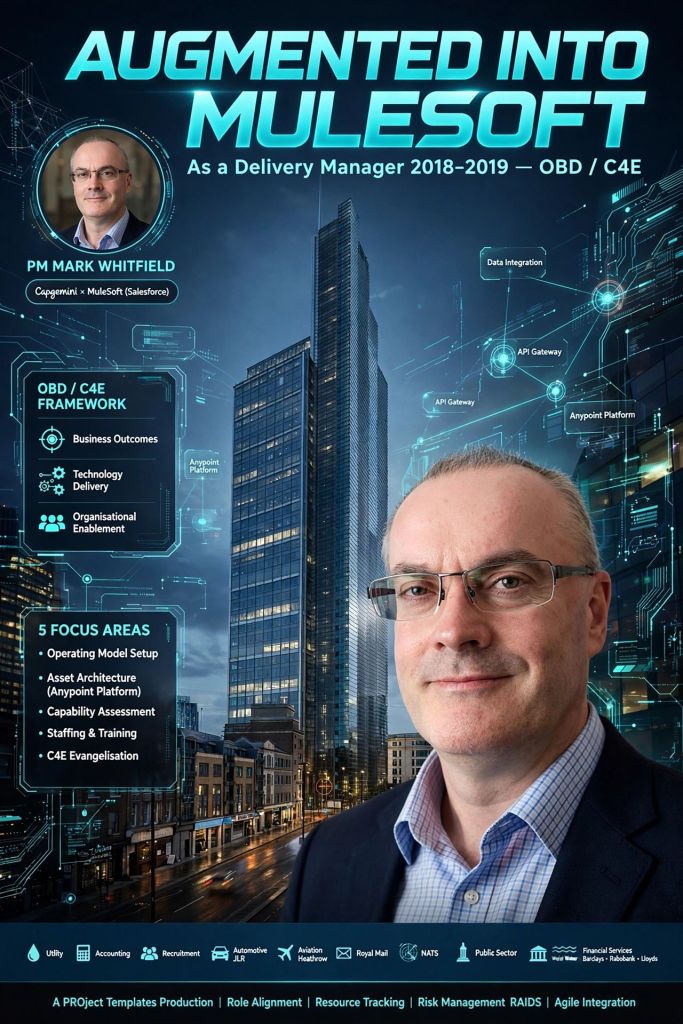
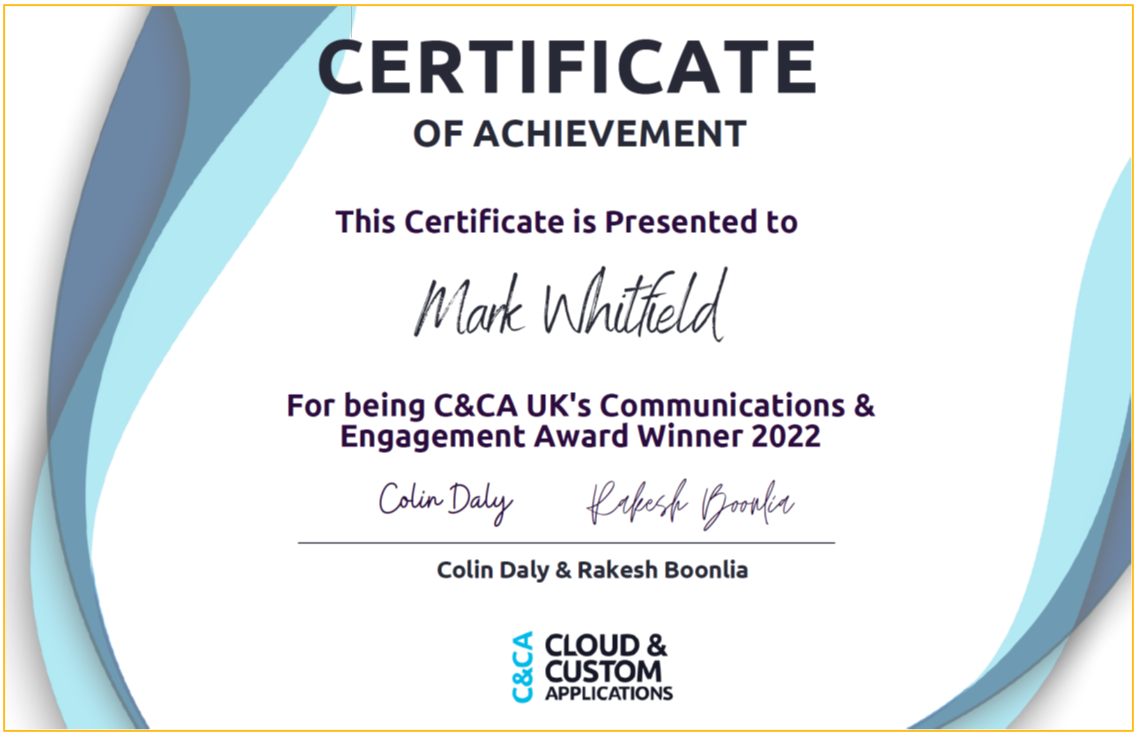
This resume summarizes the career of Mark Whitfield, a Senior IT Project Manager with over 30 years of experience specializing in digital and software development lifecycles, cloud migrations, and HP NonStop systems.
Core Focus: Senior Project Management for Digital/ Software Development Lifecycles (SDLC).
Expertise: Transitioning from a technical background in programming (pre-2000) to senior leadership in large-scale projects for global blue-chip companies.
Key Skills & Competencies
Methodologies: PRINCE2 Practitioner, Agile (Scrum/ Kanban), Waterfall, ITIL, ISO QA.
Project Controls: MS Project, Budget & Burn Tracking, GDPR compliance, Supplier & Stakeholder Management, Statement of Work (SoW).
Technical Proficiencies:
Platforms: HP NonStop (Tandem), Cloud Migration (Hybrid).
Languages (Historical): C/C++, Java, COBOL85, TAL, TACL, SCOBOL, SQL, MS SQL.
Utilities: PATHWAY, SCF, FUP, INSPECT, XPNET.
Professional Experience
Senior IT Project Manager (Various Projects):
Managed large-scale solutions for clients including Jaguar Land Rover (JLR), Heathrow, Royal Mail Group (RMG), NATS, and Euroclear.
Extensive work within the financial sector for Bank of England, Barclays, HSBC, Santander, Standard Chartered, Deutsche Bank, and Global Payments.
Government and public sector projects for Defra, UKEF, Welsh Water, and Scottish Water.
Early Career (Programmer / Technical Lead):
1990 – 1995: Programmer at The Software Partnership (later Deluxe Data) in Runcorn, specializing in electronic banking software (sp/ARCHITECT-BANK) on Tandem Mainframe Computers.
Education & Certifications
Degree: Higher National Diploma (HND) in Computing (Distinction, Graduated 1990).
BASIC (Beginner’s All-purpose Symbolic Instruction Code) was designed to make computing accessible to non-scientists, evolving from a simple teaching tool into the foundational language of the personal computer revolution.
The Academic Era (1964–1974)
1964: Invention at Dartmouth. John Kemeny and Thomas Kurtz created BASIC at Dartmouth College to allow students in non-technical fields to use computers.
1964: First Execution. The first BASIC program ran on 1 May 1964, on a GE-225 mainframe.
Philosophy of Simplicity. It featured an intuitive, English-like syntax and was originally a “compile-and-run” language rather than a slow interpreter.
Time-Sharing. BASIC was designed for the Dartmouth Time-Sharing System (DTSS), allowing multiple users to program simultaneously from different terminals.
The Home Computer Revolution (1975–1980s)
1975: Altair BASIC. Bill Gates and Paul Allen developed a BASIC interpreter for the MITS Altair 8800, which became Microsoft’s first product.
The “De Facto” Standard. By the late 1970s, BASIC was pre-installed in the ROM of almost every major home computer, including the Apple II, Commodore PET, and TRS-80.
Interpreted vs. Compiled. To save memory (often limited to 4KB), these versions were typically “interpreted,” meaning the computer translated code line-by-line during execution.
Hobbyist Culture. Magazines and books published “type-in” programs, allowing millions of users to learn coding by manually entering BASIC code.
The Professionalization & Decline (Mid-1980s–1990)
Structured Evolution. Microsoft released QuickBASIC (1985), which introduced structured syntax (removing the need for line numbers) and a compiler for faster performance.
Rise of C and Pascal. Professional developers began shifting toward more powerful languages like C and Pascal as hardware became capable of supporting them.
Shift to Applications. As pre-written commercial software became common, the average user stopped writing their own programs in BASIC.
The Visual & Enterprise Era (1991–Present)
1991: Visual Basic (VB). Microsoft combined BASIC with a graphical user interface (GUI) designer, allowing developers to “drag and drop” buttons and forms.
Dominance in Business. By 1998, an estimated two-thirds of Windows business applications were built using Visual Basic 6.0.
2002: Visual Basic .NET. Microsoft transitioned the language to the .NET framework, turning it into a fully object-oriented language.
Modern Status. While C# has surpassed it in popularity, VB.NET remains a stable, maintained language used heavily for maintaining legacy systems and Office automation.
BASIC programming language timeline history by year
The VAX (Virtual Address Extension) computer family, produced by Digital Equipment Corporation (DEC) from 1977 to 2000, is considered the quintessential 32-bit Complex Instruction Set Computing (CISC) architecture.
The Formative Years (1970s)
1976: Development begins on the VAX-11 architecture as a 32-bit successor to the successful 16-bit PDP-11 series.
1977: On 25 October, DEC announces the VAX-11/780 (code-named “Star”), the first system to implement the VAX architecture.
1978: The first VAX-11/780 systems ship with VMS 1.0 (Virtual Memory System).
Expansion and Innovation (1980–1984)
1980: Introduction of the VAX-11/750 (code-named “Comet”), the first LSI (Large Scale Integration) VAX.
1982: Launch of the VAX-11/730 (“Nebula”) and the dual-processor VAX-11/782 (“Atlas”).
1983: Introduction of VAXcluster technology, allowing multiple VAX systems to share storage and be managed as a single system.
1984: The VAX-11/785 and the high-end VAX 8600 (“Venus”) are introduced. This year also marks the debut of the MicroVAX I and VAXstation I, bringing VAX power to desktop workstations.
The Microprocessor Era (1985–1989)
1985: Launch of the MicroVAX II, featuring the first “VAX-on-a-chip”.
1986: Introduction of the VAX 8800 and 8200/8300 series. Local Area VAXcluster (LAVC) extends clustering to smaller workgroups.
1987: The VAXstation 2000 and MicroVAX 3500/3600 are released, the latter being the first to use the CVAX chip.
1988: Introduction of the VAX 6200 series and VMS 5.0.
1989: The VAX 9000 mainframe is announced, designed to compete directly with IBM’s most powerful systems. The MicroVAX 3100 and VAX 6000-400 are also launched.
The Transition to Alpha (1990–2000)
1990: Launch of the VAX 4000 series and the fault-tolerant VAXft 3000. DEC announces “OpenVMS”.
1991: The VAX 6000-600 is released, featuring the NVAX chip.
1992: Introduction of the VAX 7000 and 10000 series, the final high-end VAX systems. DEC begins transitioning to the 64-bit Alpha AXP architecture.
1999–2000: Sales of new VAX systems officially end, though support continues for decades.
The VAX (Virtual Address eXtension) computer family, produced by Digital Equipment Corporation (DEC), represents one of the most successful 32-bit architectures in computing history.
The Early Era: Origins and VAX-11 (1975–1984)
Designed to overcome the 16-bit memory limitations of the PDP-11, this era established VAX as the industry standard for superminicomputers.
1975: VAX 32-bit architecture first proposed.
1977: The VAX-11/780 (code-named “Star”) is introduced; it becomes the first commercially successful model and the baseline for “VAX MIPS” performance.
1980:VAX-11/750, the first 32-bit minicomputer using LSI technology.
1981:VAX-11/782, the first dual-processor VAX.
1982:VAX-11/730, the first to fit in a single cabinet.
1984:VAX-11/785 (most powerful VAX-11) and the high-end VAX 8600 are released.
The Expansion Era: MicroVAX and Workstations (1984–1989)
DEC miniaturized the architecture, bringing VAX power to desktops and departmental servers.
1984:MicroVAX I and VAXstation I introduced, bringing VAX to the workstation market.
1985:MicroVAX II (the “VAX-on-a-chip”) and VAXstation II extend performance to personal-sized systems.
1986:VAX 8200/8300 (mid-range) and VAX 8800 (high-end) introduce the VAXBI bus and dual-processor support.
1987:VAXstation 2000 and MicroVAX 3500/3600 launched.
1988:VAX 6200 series (first small systems to run Symmetric Multiprocessing) and the VAX 8840 (4-processor VAX) are released.
The Late Era: Mainframes and Transition (1989–2000)
DEC attempted to compete with mainframes while eventually transitioning to the 64-bit Alpha RISC architecture.
1989:VAX 9000 introduced as a mainframe-class machine, though its complexity led to commercial challenges.
1990:VAX 4000 series (replacing MicroVAX) and the fault-tolerant VAXft debuted.
1992:VAX 7000/10000 systems launched using the NVAX single-chip CPU; DEC introduces the 64-bit Alpha (RISC) as the successor to VAX.
1993–1996: Continued releases of VAX 4000 models (e.g., Model 705A) as legacy support.
2000: Compaq (which acquired DEC) officially announces the discontinuation of the remaining VAX models.
VAX Computer Family, Virtual Address Extension, Timeline History by year
Periphonics Corporation, founded in 1969, was a pioneer in the Interactive Voice Response (IVR) industry. The company evolved from a boutique voice response manufacturer into a key subsidiary of global telecommunications giant Nortel Networks by the late 1990s.
Founding & Early Era (1969 – 1979)
1969: Periphonics Corporation is co-founded in Bohemia, New York, by S. Thomas Emerson, who served as the original CTO.
Early 1970s: The company focused on manufacturing early computerized voice response systems.
1974: S. Thomas Emerson is named “Inventor of the Year” by the U.S. Patent Office for his work in computer technology.
Expansion & Market Leadership (1980 – 1998)
1983: Periphonics deployed the first-ever voice “call tree” (IVR system).
1980s: The company became a subsidiary of Exxon Corporation during a period of diversification by the oil giant into technology.
1991: Periphonics Limited (UK) is established to expand operations into the European market.
1992: Supplied and installed voice processing systems for the Emirates Telecommunications Corporation.
1998: Launched CallSponsor CT, a major computer telephony product that integrated IVR, skills-based routing, and call blending into a single suite.
The Nortel Era & Beyond (1999 – 2009)
1999: Nortel Networks acquires Periphonics Corp for approximately $435 million to bolster its e-commerce and internet-based service offerings.
2001: Nortel rebrands the core Periphonics technology as the Nortel Speech Server.
2005: Periphonics Limited (UK division) enters a declaration of solvency and begins liquidation as part of Nortel’s broader restructuring.
2009: Following Nortel’s bankruptcy, the assets and legacy Periphonics technologies were sold off to various telecommunications firms.
Key Products Through the Eras
Early Voice Response Units (VRUs): Proprietary hardware-based systems for high-energy physics data acquisition and early banking.
IVR “Call Trees” (1983): The foundational technology for modern automated phone menus.
CallSponsor CT (1998): A turnkey “computer telephony” suite designed to reduce installation and debugging times for call centres.
Nortel Speech Server (2000s): The evolved version of Periphonics technology integrated into Nortel’s digital network infrastructure.
Periphonics Corporation, founded in 1969, was a pioneer in the Interactive Voice Response (IVR) industry
The Sinclair ZX81 was a seminal moment in home computing, launched in March 1981 as the successor to the ZX80. It was designed by Sinclair Research to be a low-cost entry point into computing, famously costing less than £70 (or £50 as a self-assembly kit).
ZX81 Home Computer
Development & Launch (1980–1981)
Autumn 1980: Most of the ZX81’s software was completed, with the remainder of the year spent writing the manual and finalizing hardware.
5 March 1981: Official UK launch at an introductory price of £49.95 for the kit and £69.95 for the pre-assembled machine.
October 1981: Launched in the United States at $149.95 assembled and $99.95 in kit form.
November 1981: The ZX Printer was released for £49.95, expanding the system’s capabilities.
ZX81 Home Computer article
Market Success & Expansion (1982)
January 1982: Over 300,000 units had been sold via mail order. American sales reached 15,000 units per month.
February 1982: Production reached 40,000 units per month to keep up with massive global demand.
July 1982: Timex Sinclair 1000 launched in the US as a licensed version of the ZX81, featuring 2KB of RAM (double the original’s 1KB).
1982 Peripheral Boom: Numerous third-party upgrades were released, including the Memopak 64K RAM expansion and various replacement “real” keyboards to solve the frustration of the original membrane design.
The Shift to Spectrum & Decline (1982–1986)
23 April 1982: Sinclair launched the ZX Spectrum, the colour-capable successor that would eventually overshadow the ZX81.
1983: Total production of the ZX81 surpassed 1.5 million units worldwide.
1984: The ZX81 was officially discontinued as Sinclair focused on the Spectrum and the ill-fated Sinclair QL.
7 April 1986: Following financial difficulties, Sinclair Research’s computer assets were sold to Amstrad for £5 million.
The timeline of the BBC Micro and the Computer Project (CLP) represents a pivotal era in British computing, moving from early industrial machines to a generation-defining home computer.
Pre-Launch & The Need for Literacy (1974–1980)
1974:Ceefax launches as the world’s first teletext service, introducing interactive TV concepts.
1978:Acorn Computers is founded in Cambridge; the BBC initiates its Computer Project to address the UK’s lack of digital preparedness.
1979: A BBC report warns that the silicon chip will radically change the workplace, prompting the need for a national awareness campaign.
1980: After the “New Brain” computer project fails to meet requirements, the BBC searches for a British manufacturer to build a custom machine.
BBC Micro Home Computer
The Golden Era: The BBC Micro (1981–1985)
1981:Acorn wins the contract in March with its “Proton” prototype. The BBC Micro Model A (£299) and Model B (£399) are officially launched in December.
1982: The BBC Computer Literacy Project (CLP) formally launches with the TV series The Computer Programme. Over 500,000 machines are sold this year as the “Beeb” enters most UK schools.
1983: The Acorn Electron is launched in August as a budget-friendly home version of the BBC Micro. New series Making the Most of the Micro begins.
1984: High-speed expansion continues; 1,000 dealers operate in the US, and production reaches thousands of units per month in India and Mexico.
1985: The BBC Micro achieves its goal: at least one machine is present in every British school.
Expansion & The Move to 16-Bit (1986–1990s)
1986: Launch of the Domesday Project, a massive digital snapshot of Britain stored on Laservision discs and accessed via BBC Micros.
1987: The Acorn Archimedes is launched, introducing the revolutionary RISC architecture (the precursor to modern ARM chips).
1989: The official CLP project concludes after nearly a decade of programming and hardware releases. The domain bbc.co.uk is registered.
1997: The BBC website is established, transitioning the corporation’s digital focus from hardware to the internet.
The Modern Legacy (2016–Present)
2016: The BBC micro:bit is released—a pocket-sized, programmable computer distributed free to one million Year 7 students to continue the legacy of coding literacy.
2018: The BBC Computer Literacy Project Archive is made public, allowing users to watch old programmes and run original 8-bit software in modern browsers.
BBC Micro Home Computer and the Computer Project (CLP) timeline
The Structured Systems Analysis and Design Method (SSADM) is a highly structured, “waterfall” methodology developed in the 1980s for the UK government to standardise IT project management. Its timeline can be viewed through two lenses: its historical evolution as a standard and its internal execution phases.
Historical Evolution Timeline
SSADM evolved through several versions to become an “open” standard used widely in public and private sectors.
1980: The Central Computer and Telecommunications Agency (CCTA) evaluates various analysis and design methods.
1981: Consultants from Learmonth & Burchett Management Systems (LBMS) are selected to develop SSADM v1.
1983: SSADM is made mandatory for all new information system developments within the UK government.
1984–1986:Version 2 (1984) and Version 3 (1986) are released, with the latter being adopted by the National Computing Centre (NCC).
1990:Version 4 is launched, introducing more refined modules and stages.
1995:SSADM V4+ is announced, followed by the release of V4.2.
2000: The CCTA rebrands SSADM as “Business System Development,” repackaging it into 15 core modules with additional specialized modules.
Methodological Execution Timeline (Stages 0–6)
SSADM follows a strict linear sequence where each stage must be completed and “signed off” before the next begins.
Stage 0: Feasibility Study – Analyzes technical, financial, and organizational feasibility to determine if the project is cost-effective.
Stage 1: Investigation of Current Environment – Models the existing system using Data Flow Diagrams (DFDs) to understand current data and processes.
Stage 2: Business System Options – Presents up to six different ways to build the new system, allowing users to choose the best strategic direction.
Stage 3: Requirements Specification – A complex stage that builds a full logical specification of what the system must do, including Entity Life Histories (ELHs).
Stage 4: Technical System Options – Evaluates hardware and software architectures to determine the best technical implementation.
Stage 5: Logical Design – Defines user dialogues, update processes, and enquiry processes in an implementation-independent manner.
Stage 6: Physical Design – The final stage where logical specifications are converted into real hardware and software database structures and program specifications.
Jackson Structured Programming (JSP) was developed by British software consultant Michael A. Jackson to provide a rigorous, data-driven alternative to the intuitive “top-down” methods prevalent in the 1970s. Its evolution is characterized by a transition from micro-level program design to macro-level system architecture.
The Early 1970s: Foundation and Invention
1970: Michael Jackson founded his firm, Michael Jackson Systems Limited, to fully develop a new program design methodology.
1974: The name Jackson Structured Programming (JSP) was coined by the company’s Swedish licensee.
1975: Jackson published the seminal book Principles of Program Design, which formally documented the JSP method and is now considered a classic.
The Late 1970s: Standardisation and Expansion
1977: JSP reached global recognition, being taught in universities and used across Europe, the US, and Asia.
Government Adoption: The UK government adopted JSP as its standard program design method under the name SDM (System Development Methodology).
Industry Use: Large organisations like the World Health Organization (WHO) began using JSP as a standard for specifying programs.
The 1980s: Evolution into System Development (JSD)
1980: Jackson published JSP, A Practical Method of Program Design, further refining the technique for practical industry use.
1982–1983: Jackson, along with John Cameron, introduced Jackson System Development (JSD). While JSP focused on individual programs, JSD expanded these principles to entire systems.
Integration: JSD was widely incorporated into the UK’s SSADM (Structured Systems Analysis and Design Method), specifically for entity and event modelling.
The 1990s to Present: Legacy and Modern Relevance
1990s: Jackson introduced his third major method, Problem Analysis (or the Problem Frames Approach), focusing on requirements and software specifications.
Legacy: While JSP has faded from mainstream daily practice due to the rise of Object-Oriented Programming, its core concepts—like deriving program structure from data structures—influenced modern practices like Event Storming in Domain-Driven Design (DDD).
Jackson Structured Programming (JSP) Timeline by year
The history of cloud computing evolved from 1950s time-sharing concepts to today’s AI-integrated hyperscale ecosystems. While John McCarthy and J.C.R. Licklider envisioned computing as a global utility in the 1960s, the modern era truly began with the 1999 launch of Salesforce and the 2006 debut of Amazon Web Services (AWS).
Foundational Era (1950s – 1980s)
1955: John McCarthy introduces the theory of sharing computing time among a group of users.
1961: McCarthy proposes that computing will one day be sold as a public utility, similar to water or electricity.
1967: IBM develops the first operating system that allows multiple users to timeshare a single resource.
1969: ARPANET (Advanced Research Projects Agency Network) is launched, serving as the precursor to the modern internet.
1972: IBM releases the first version of its Virtual Machine (VM) operating system.
1977: The cloud symbol is first used in original ARPANET diagrams to represent networks of computing equipment.
The Rise of the Modern Cloud (1990s – 2009)
1996: The term “cloud computing” appears in an internal Compaq business plan.
1997: Professor Ramnath Chellappa defines cloud computing as a “computing paradigm where the boundaries of computing will be determined by economic rationale”.
1999: Salesforce.com launches, becoming the first company to offer business applications over the internet, pioneering SaaS.
2002: Amazon Web Services (AWS) launches as a suite of web-accessible tools for developers.
2006: AWS releases Elastic Compute Cloud (EC2) and Simple Storage Service (S3), marking the birth of modern IaaS.
2007: Netflix begins its transition to a video-streaming service using cloud infrastructure.
2008: Google releases Google App Engine, a platform for developing and hosting web applications in its data centres.
2009: Google Apps (now G Suite) launches, bringing browser-based enterprise applications to the mainstream.
Expansion & Specialisation (2010 – 2019)
2010: Microsoft officially releases Azure.
2010: NASA and Rackspace initiate OpenStack, an open-source project for cloud software.
2011: Apple launches iCloud, popularising consumer cloud storage.
The evolution of CI/CD (Continuous Integration and Continuous Delivery/Deployment) has transitioned from manual, high-risk “integration hell” to fully automated, cloud-native pipelines.
Foundational Era (Pre-2000s)
1989: Earliest known work on CI with the Infuse environment.
1991: Root practices of CI/CD began to emerge.
1994: Grady Booch used the term “continuous integration” in his book Object-Oriented Analysis and Design with Applications.
1997–1999: Kent Beck and Ron Jeffries formalise CI as a core practice of Extreme Programming (XP).
The Rise of Automation (2001–2010)
2001:CruiseControl is released as the first widely used open-source CI server.
2005:Hudson (the predecessor to Jenkins) is created by Kohsuke Kawaguchi at Sun Microsystems.
2006: JetBrains releases TeamCity.
2010: Jez Humble and David Farley publish the seminal book Continuous Delivery, formalising the “CD” part of the equation.
2010: IMVU engineers document the first practical CD system, initially met with skepticism but quickly adopted by lean software movements.
Modern CI/CD & Cloud Era (2011–2018)
2011:Jenkins is born after a legal dispute between Oracle and the Hudson community.
2011:Travis CI launches, popularising CI-as-a-Service for GitHub projects.
2013: Docker is released, revolutionising CI/CD through containerisation.
2014: GitLab CI is integrated directly into the GitLab platform.
2018:GitHub Actions is introduced, bringing native automation directly into the world’s largest code repository.
Cloud-Native & AI Era (2019–Present)
2019:Argo CD and Flux gain prominence as Kubernetes-native GitOps tools.
2020–2021: Massive growth phase for GitHub Actions, with over 12% of projects adopting or changing CI/CD technologies during this period.
2024–2026: Modern pipelines transition toward adaptive systems that use AI to optimize test suites and make contextual decisions rather than just running fixed sequences.
Evolution of CI/CD (Continuous Integration and Continuous Delivery/Deployment
The Third Normal Form (3NF) is a standard for database design that ensures data integrity by removing transitive dependencies. Its development was part of the foundational era of the relational model.
Comprehensive Timeline of 3NF and Normalization
1970 — The Birth of Relational Theory: Dr. E.F. Codd, a researcher at IBM, published his seminal paper, “A Relational Model of Data for Large Shared Data Banks.” This introduced the concepts of First Normal Form (1NF) and the initial framework for normalization.
1971 — Official Definition of 3NF: Codd formally defined Third Normal Form in his paper “Further Normalization of the Data Base Relational Model.” He also refined Second Normal Form (2NF) in this same period.
1971 (August) — Technical Specification: The specific requirements for 3NF were further detailed in the IBM Research Report RJ909, solidifying the mathematical rules for removing transitive functional dependencies.
1974 — Extension to Boyce-Codd Normal Form (BCNF): Together with Raymond F. Boyce, Codd introduced BCNF. Often considered a stronger version of 3NF, it addresses certain anomalies that 3NF might still permit.
1977–1979 — Higher Normal Forms: Ronald Fagin introduced Fourth Normal Form (4NF) in 1977 and Fifth Normal Form (5NF) in 1979 to address multi-valued and join dependencies, respectively.
2002 — 6NF Definition: C.J. Date, Hugh Darwen, and Nikos Lorentzos defined Sixth Normal Form (6NF) specifically for temporal databases.
3NF Requirement Summary
To reach 3NF, a table must follow a cumulative progression:
1NF: Each cell must contain atomic values, and there should be no repeating groups.
2NF: The table must be in 1NF, and every non-key attribute must depend on the entire primary key (no partial dependencies).
3NF: The table must be in 2NF, and every non-key attribute must depend only on the primary key (no transitive dependencies).
To reach Third Normal Form (3NF), a database table must first satisfy the requirements of 1NF and 2NF. The primary goal of 3NF is to ensure that all non-key columns depend only on the primary key, effectively eliminating “transitive dependencies”.
Step-by-Step Process
Verify Second Normal Form (2NF)
Ensure the table has a primary key.
Confirm all non-key attributes depend on the entire primary key (no partial dependencies).
Identify Transitive Dependencies
Look for “hidden” relationships where a non-prime attribute depends on another non-prime attribute.
Logic: If Attribute A (Primary Key) → Attribute B, and Attribute B → Attribute C, then Attribute C has a transitive dependency on the Primary Key through B.
Remove the Dependent Attributes
Select the attributes that do not directly depend on the primary key.
Move these attributes into a new, separate table.
Establish Relationships
In the original table, keep the attribute that served as the “determinant” (the non-key attribute that others depended on) to act as a foreign key.
In the new table, set that same attribute as the primary key.
Practical Example
Consider a Student table with: StudentID (PK), StudentName, ZipCode, and City.
Problem: City depends on ZipCode, and ZipCode depends on StudentID. This is a transitive dependency (StudentID → ZipCode → City).
By following these steps, you eliminate data redundancy and prevent update anomalies where changing a city name would otherwise require updating every student record in that zip code.
Third Normal Form 3NF Development Timeline and Example
The history of DevOps is a transition from siloed development and operations teams toward a unified culture of automation and collaboration.
Timeline History of DevOps
Pre-DevOps & Foundations (2001–2008)
2001: The Agile Manifesto is published, laying the groundwork for iterative software development and cross-functional teamwork.
2006: Amazon Web Services (AWS) launches, providing the cloud infrastructure necessary for rapid, automated deployments.
2007: Belgian consultant Patrick Debois begins investigating ways to bridge the gap between development and operations while working on a data centre migration project.
2008: At the Agile conference in Toronto, Andrew Shafer and Patrick Debois meet and discuss “Agile Infrastructure,” marking the conceptual start of the movement.
The Emergence of DevOps (2009–2014)
2009: John Allspaw and Paul Hammond give the legendary talk “10+ Deploys Per Day: Dev and Ops Cooperation at Flickr” at the Velocity Conference.
2009: Patrick Debois organises the first DevOpsDays in Ghent, Belgium, and coins the term “DevOps“.
2011: Analyst firm Gartner officially predicts DevOps will evolve from a niche concept to a mainstream strategy.
2013: The book The Phoenix Project is published, popularising DevOps principles through a fictional narrative of a company’s digital transformation.
2013: Docker is released, revolutionising the industry by making containerization accessible and consistent across environments.
2014: The first State of DevOps Report is published by Puppet, providing data-driven evidence of DevOps’ impact on performance.
Mainstream Adoption & Cloud-Native (2015–2019)
2015: Google releases Kubernetes as an open-source project, establishing the standard for container orchestration.
2015: Major cloud providers launch managed container services, such as Google Kubernetes Engine (GKE).
2017: Security begins “shifting left,” leading to the formalisation of DevSecOps within development pipelines.
2018: The book Accelerate is published, detailing the science behind high-performing DevOps organisations.
2019: DevOpsDays celebrates its 10th anniversary with events in over 20 countries, signalling global maturity.
The AI & Platform Era (2020–2026)
2020: The COVID-19 pandemic accelerates remote work and digital transformation, making DevOps practices essential for enterprise survival.
2023: Generative AI begins to be integrated into CI/CD pipelines for automated code generation, testing, and anomaly detection.
2024: The focus shifts to Platform Engineering, aiming to reduce developer cognitive load through Internal Developer Platforms (IDPs).
2025: AIOps (Artificial Intelligence for IT Operations) becomes standard for predictive analytics and self-healing infrastructure.
2026: DevOps continues to evolve with a focus on zero-CVE container images and high-demand roles for engineers who can manage AI-driven workflows.
Centiun is a British IT services consulting company and Microsoft Partner, helping enterprise public and private sector organisations achieve digital transformation excellence through the Microsoft cloud.
We specialise in Microsft Dynamics 365, Power Platform, and Micrisoft 365, delivering expert consultancy, solution architecture, implementation, and managed services that enable organisations to modernise operations, improve service delivery, and unlock greater value from their technology investment.
Centiun MS Business Applications and AI Specialists
From CRM transformation and business process automation to secure collaboration, data-driven decision making, and AI enabled innovation, Centiun supports customers to build smarter, faster and more resilient ways of working.
Our approach combines deep Microsoft expertise with a practical focus on outcomes – designing and delivering solutions that are scalable, compliant, and tailored to the needs of complex organisations.
Whether you’re starting your digital journey or optimising an existing platform, Centiun is your trusted Microsoft for long-term transformation and support.
Centiun MS Business Applications and AI Specialists
Centiun Limited is a UK-based technology consultancy that specialises in digital transformation and Microsoft Business Applications. Incorporated on 30 October 2025, the company operates as a Microsoft AI Cloud Partner, helping organisations modernise infrastructure and adopt AI-driven workflows.
Core Services
Centiun provides a range of strategic and technical services focused on the Microsoft ecosystem:
Business Applications: Implementing and automating processes using Microsoft Dynamics 365 and Power Platform.
Cloud Migration: Transitioning legacy systems to secure cloud environments to enhance scalability.
AI Readiness: Preparing businesses to integrate tools like Microsoft Copilot and agentic AI for sales and customer service.
Managed Services: Providing ongoing support, maintenance, and technical governance.
Target Industries
The firm tailors its solutions for several sectors, including:
Public Sector: Central government and non-departmental public bodies.
Healthcare: Public and private healthcare project delivery.
Nonprofit: Cost-effective digital solutions for charitable organisations.
Financial Services: Fintech, insurance, and banking services requiring high regulatory precision.
Key Company Facts
Location: Headquartered at Cheadle Royal Business Park, Cheshire, England.
Centiun is a specialized Microsoft AI Cloud Partner that focuses on modernizing business operations through the Microsoft Business Applications stack, primarily Microsoft Dynamics 365 and the Power Platform. Based in Cheshire, UK, they provide a range of services from AI readiness and digital transformation to managed support for small and medium-sized enterprises (SMEs).
……….
Centiun Microsoft Dynamics Overview
Centiun offers tailored implementation and support for the full suite of Microsoft Dynamics 365 applications, which unify CRM (Customer Relationship Management) and ERP (Enterprise Resource Planning) capabilities.
Core Applications Supported:
Sales & Marketing: Tools like Dynamics 365 Sales and Customer Insights to manage leads, automate marketing journeys, and provide a 360-degree view of customer data.
Service: Customer Service and Field Service modules to improve resolution efficiency and enhance overall customer experience.
ERP & Operations: Streamlining finance, supply chain, and HR processes using scalable cloud environments.
Key Service Pillars:
Digital Transformation: Modernising legacy systems and digitising paper forms into secure digital records.
AI Integration: Implementing Microsoft Copilot and predictive analytics to automate routine tasks and enhance decision-making.
Data Governance: Ensuring all customer interactions are GDPR compliant and stored in secure, audit-ready systems.
Managed Services: Providing SLA-compliant support and maintenance to ensure systems remain evergreen and secure.
Centiun Partner Timeline (2025–2026)
While Centiun’s experts have over 20 years of combined experience with Microsoft applications, the company itself reached several major official milestones recently:
2025
August: Published guidance on Digitising Paper Forms to help organisations move away from manual processes.
September: Centiun officially registered with the Information Commissioner’s Office (ICO) to ensure data protection compliance.
October: Achieved the nationally recognised Cyber Essentials Certification, demonstrating commitment to cybersecurity.
New… War Machine on Netflix… with Alan Ritchson of Reacher fame… a little like the first Predator movie (but with a giant transformer type robot) with a touch of Aliens in the last segment… not bad… hectic but ‘not bad’… conclusion… don’t make Predator sequels… re-imagine the original but differently… good fun at least… 😀
Microsoft Dynamics 365 as it exists today is the result of decades of acquisitions and rebranding, primarily involving four Enterprise Resource Planning (ERP) systems and one Customer Relationship Management (CRM) platform.
The Pre-Microsoft Era (1980s – 2001)
The foundations of Dynamics were built by independent companies before being acquired by Microsoft.
1980: Solomon Software is founded (later becomes Dynamics SL).
1983: Great Plains Software is founded by Doug Burgum (later becomes Dynamics GP).
1983: Damgaard Data is founded in Denmark (later becomes Dynamics AX).
1984: PC&C A/S is founded (later becomes Dynamics NAV).
1998: Damgaard and IBM release Axapta 1.0.
2000: Damgaard merges with Navision Software to form NavisionDamgaard.
2001: Microsoft acquires Great Plains Software (including Solomon) for $1.1 billion.
The Early Microsoft Dynamics Era (2002 – 2011)
During this period, Microsoft unified its business applications under the “Dynamics” brand.
2002: Microsoft acquires Navision A/S, gaining the Axapta and Navision products.
2003: Microsoft releases its first home-grown CRM, Microsoft CRM 1.0.
2005: The Microsoft Dynamics brand is officially launched to harmonize the ERP and CRM offerings.
2008: Dynamics CRM Online is launched, marking Microsoft’s first major step into cloud-based business apps.
2011: Dynamics CRM 2011 and Dynamics AX 2012 are released, introducing a more modern “Ribbon” interface.
The Transition to the Cloud (2012 – 2015)
Microsoft shifted toward a “cloud-first” strategy and rapid release cycles.
2013: Dynamics CRM 2013 debuts with a new UI that removes pop-up windows and introduces a flatter design.
2015: Dynamics NAV 2016 introduces native integration with Azure SQL and a dedicated phone client.
The Dynamics 365 Era (2016 – Present)
Microsoft unified CRM and ERP into a single cloud ecosystem.
2016: Microsoft Dynamics 365 is officially released on November 1, 2016.
Dynamics AX 7 is rebranded as Dynamics 365 for Operations.
CRM is split into specialized apps like Sales, Customer Service, and Field Service.
2018: Dynamics 365 Business Central is released as the cloud successor to Dynamics NAV.
2019: Power Platform (Power BI, Power Apps, Power Automate) becomes deeply integrated, allowing users to extend Dynamics 365 without code.
2020: Dynamics 365 for Operations is split into Dynamics 365 Finance and Dynamics 365 Supply Chain Management.
2023: Re-integration of Dynamics 365 Human Resources back into the Finance and Operations infrastructure.
2024–2025: The introduction of Microsoft Copilot across all Dynamics 365 apps, adding generative AI for summaries and automated tasks.