Agile Scrum Timeline and Overview

In Scrum, the “timeline” is typically structured as a repeatable, time-boxed cycle known as a Sprint, which usually lasts between one and four weeks. Each sprint follows a strict sequence of “ceremonies” designed to ensure constant delivery and feedback. 

The Standard Sprint Timeline (2-Week Example)

The following is a common chronological breakdown of a typical 10-day (two-week) sprint:

  1. Day 1: Sprint Planning
    • Goal: Define what will be delivered and how.
    • Activity: The Product Owner presents prioritized items from the Product Backlog. The team selects items to move into the Sprint Backlog.
  2. Days 2–9: Development & Daily Scrum
    • Development: The team works in parallel on design, coding, and testing.
    • Daily Scrum: A 15-minute “stand-up” held every morning. Team members sync on progress and identify blockers.
  3. Ongoing: Backlog Refinement
    • Goal: Prepare for future sprints.
    • Activity: The team reviews upcoming backlog items to ensure they are “ready” for the next planning session.
  4. Day 10: Sprint Review & Retrospective
    • Sprint Review: A demo for stakeholders to show the Product Increment (completed work) and gather feedback.
    • Sprint Retrospective: An internal meeting where the team reflects on their process to improve for the next cycle. 

Strategic Project Phases

While the sprint is the heart of execution, a broader Agile project often follows these foundational stages: 

  • Concept/Ideation: Defining project vision, high-level requirements, and initial scope.
  • Inception: Building the team, setting up architecture, and creating a mock-up.
  • Construction (Iterative Sprints): The primary execution phase consisting of multiple back-to-back sprints.
  • Release/Deployment: Final testing, security checks, and launching the product increment to production.
  • Maintenance & Operations: Ongoing support, bug fixes, and incorporating user feedback into new sprints. 

Time Allocation (The 15/10/5 Rule)

For a standard sprint, many teams use a percentage-based guide to manage ceremony time: 

  • 15% for Sprint Planning.
  • 10% for Sprint Review.
  • 5% for Sprint Retrospective. 

For more hands-on planning, tools like the Wrike Sprint Template or Jira Timelines can help visualize these cycles across a long-term roadmap.

Agile Scrum Timeline and Overview

PRINCE2 – PRojects IN Controlled Environments – Timeline

PRINCE2 (PRojects IN Controlled Environments) has evolved from a rigid, IT-specific framework into a globally recognised, flexible project management standard. 

Historical Evolution Timeline

  • 1975: PROMPT Origins – Simpact Systems Ltd developed PROMPT (Project Resource Organisation Management and Planning Techniques) to address IT project overruns.
  • 1989: The Birth of PRINCE – The UK’s Central Computer and Telecommunications Agency (CCTA) licensed PROMPT, renaming it PRINCE (originally “PROMPT II IN the CCTA Environment”).
  • 1996: PRINCE2 Launch – Developed with input from 150 European organisations, PRINCE2 was released as a generic, scalable framework suitable for any industry.
  • 2000–2013: Ownership Shifts – Ownership moved from the CCTA to the Office of Government Commerce (OGC) in 2000, then to AXELOS Ltd (a joint venture) in 2013.
  • 2009: Major “Refresh” – Introduced the seven core principles and made the method more customisable.
  • 2017: 6th Edition Update – Formerly known as the “2017 Update,” this version focused heavily on scalability and tailoring to specific project needs.
  • 2021–Present: PeopleCert Era – PeopleCert acquired AXELOS in 2021. In 2023, PRINCE2 7 was launched, introducing a greater emphasis on people management and sustainability. 

Comprehensive Project Timeline Breakdown

A standard PRINCE2 project follows a lifecycle defined by seven processes: 

  1. Pre-Project: Starting up a Project (SU)
    • Ensures the project is viable and worthwhile.
    • Key Output: Project Brief.
  2. Initiation: Initiating a Project (IP)
  3. High-Level Oversight: Directing a Project (DP)
    • An ongoing process where the Project Board provides guidance and makes key decisions without managing day-to-day tasks.
  4. Day-to-Day Management: Controlling a Stage (CS)
    • The Project Manager monitors work, manages risks, and reports progress for each individual stage.
  5. Technical Delivery: Managing Product Delivery (MP)
    • The Team Manager ensures products (deliverables) are created, tested, and handed over according to specifications.
  6. Transition: Managing a Stage Boundary (SB)
  7. Finalisation: Closing a Project (CP)
    • The formal decommissioning of the project, ensuring all products are accepted and lessons are documented. 

PRINCE2 – PRojects IN Controlled Environments

BASE24 and core Networking Component XPNET timeline

The technical timeline for BASE24 and its core networking component, XPNET, reflects the evolution of high-availability payment switching on HP NonStop (Tandem) systems.

Technical Evolution Timeline

  • 1980s: The Foundation
    • BASE24 Release: Originally developed by Applied Communications Inc. (now ACI Worldwide), BASE24 was built for the Tandem Guardian operating system.
    • XPNET Introduction: Developed as the Message-Oriented Middleware (MOM) to handle all transaction routing and communications. It introduced a multi-node architecture allowing different “satellite” processes (ATM, POS, Host) to communicate.
  • 1990s: Scale and Maturity
    • Classic Era: BASE24 “Classic” became the industry standard for ATM and POS switching.
    • XPNET 3.x: Enhanced to support larger networks and more complex auditing through NCPCOM.
    • Language & DB: The system relied on TAL (Tandem Application Language), COBOL, and the Enscribe database.
  • 2000s: The Shift to BASE24-eps
    • 2003–2005: ACI introduced BASE24-eps (Electronic Payment Systems). This was a re-architecture using C++ and Java to provide platform independence.
    • XPNET 4.1: Released to support the transition, adding features like Common Transport Subsystem (CTS) for better Pathway integration and support for external processes.
    • z/OS Support: By 2009, BASE24-eps was fully ported to IBM z/OS using CICS and VSAM.
  • 2010s – Present: Modernisation & Cloud
    • 2014–2017: Continued updates to BASE24 Classic R6.0, maintaining its relevance for legacy users.
    • Cloud Enablement: Recent versions of BASE24-eps focus on REST API integration via tools like LightWave, allowing legacy XPNET paths to be exposed as web services.
    • Active/Active Environments: Modern implementations focus on “continuous availability” using GoldenGate for data replication between sites. 

Key Technical Components

  • NMM (Network Management Module): The core process of XPNET that manages the configuration of lines, stations, and links.
  • LCONF: The Logical Network Configuration File used by XPNET to define how messages route between processes.
  • Auditing: XPNET provides the primary transaction auditing mechanism, which is still utilized by both Classic and eps versions.

BASE24 and core Networking Component XPNET

HPE NonStop Tandem ViewPoint EMS Event log viewer

The timeline of HPE NonStop ViewPoint (and its modern successor, Web ViewPoint) reflects the evolution of NonStop systems from Tandem’s fault-tolerant beginnings to Hewlett Packard Enterprise’s modern cloud-integrated management. 

Detailed History Timeline

  • Pre-2000: Legacy ViewPoint
    • Originally developed for the Tandem NonStop platform to provide a graphical operations interface for monitoring system status and events.
    • Featured early support for DSM/PM (Distributed Systems Management/Performance Monitor) and event management through primary and alternate event logs.
  • 2003–2005: Transition to Web ViewPoint
    • September 2003: Version 4 AAD released as an early iteration of the web-based management tool.
    • May–October 2004: Progressive upgrades (Versions 5.0 and 5 AAF) introduced refined management capabilities for S-Series servers.
    • March 2005: Version 5 AAG released, consolidating features for the S-Series.
    • November 2005: Web ViewPoint for Itanium (Version H01AAI) launched, marking the shift to the Intel Itanium-based Integrity NonStop architecture.
  • 2013–2015: The x86 Revolution & Virtualization
    • 2014: Support for Intel x86 architecture was officially announced, leading to the launch of NonStop X.
    • Evolution to Web ViewPoint Enterprise (WVP E): The platform evolved into an automated management product, eventually adding integration with cloud-based analytics like HPE Remote Analyst.
  • 2018–Present: Modern Hybrid Cloud Era
    • L-Series Support: Continued updates provided support for L-Series operating environments and enhanced security monitoring.
    • 2023–2024: Recent developments focus on Web ViewPoint Enterprise, featuring a global configuration platform and enhanced historical data capture through integrations like Sentinel for HPE NonStop. 

For more specific documentation, you can browse the HPE NonStop Manuals on the HPE Support Center. 

MultiBatch is a high-performance, mainframe-class workload automation and batch scheduling solution

MultiBatch is a high-performance, mainframe-class workload automation and batch scheduling solution specifically designed for the HPE NonStop parallel architecture (formerly Tandem). It is developed by ETI-NET (formerly by Insider Technologies) to manage complex batch schedules across both NonStop Guardian and OSS environments. 

Key Milestones and Timeline

  • 1976 – Tandem NonStop Origins: The foundation for these systems was established with the introduction of the first NonStop servers by Tandem Computers.
  • 2017 – MultiBatch Release: Insider Technologies announced an updated release of MultiBatch to enhance off-line processing flows for the HPE NonStop arena.
  • 2019 – GUI and Monitoring Enhancements: Real-time status monitoring through a GUI interface was highlighted as a major differentiator, allowing users to visually track complex batch schedules like RTGS and securities settlements.
  • 2020 – Business Benefits Proven: Case studies demonstrated that MultiBatch could reduce online-dealing batch times by up to 6 hours per day.
  • 2022 – MultiBatch 10 for TBC: MultiBatch 10 was presented at the NonStop Technical Boot Camp (TBC), positioning it as the only workload manager for NonStop built on continuous innovation principles.
  • 2024 – Modernization and Security: Recent updates focused on securing and modernizing the platform for high-performance multitasking. 

Core Functionality

  • Parallel Execution: Supports batch schedules that run concurrently across multiple nodes, leveraging the NonStop architecture for high availability.
  • Hybrid Support: Seamlessly integrates both Guardian and OSS jobs within a single schedule.
  • Batch Prediction: Uses historical metrics in a status database to predict schedule completion times based on average and maximum elapsed run times.
  • Simplified Migration: Unlike NetBatch, it allows for extracting and inserting schedules between environments (e.g., test to production) without TACL changes.

MultiBatch is a high-performance, mainframe-class workload automation and batch scheduling solution

Most Nominated Male Best Actors in Oscars History

Most Nominated Male Best Actors in Oscars History

Mark Whitfield IT Career Timeline, AI generated from Google

The technical timeline for 

Mark Whitfield, an SC cleared, Senior IT Project Manager and Engagement Manager, spans over 30 years and transitions from specialized banking software development to high-level project leadership and cloud migrations. 

Professional Career Timeline

  • 1990 – 1994: Programmer at The Software Partnership (later Deluxe Data). Developed electronic banking software (sp/ARCHITECT-BANK) on Tandem Computers (now HPE NonStop) for major banks like TSB and Bank of Scotland.
  • 1994 – 1995: Lead Analyst at Deluxe Data International, continuing support and development for banking customer systems.
  • 1995 – 2013: Project Manager of Strategic Technical Initiatives at Insider Technologies Limited. Oversaw projects involving Reflex 80:20, Sentra development, and corporate website authoring.
  • 2013 – 2014: Project Manager (Banking Division) at Wincor Nixdorf Limited, focusing on professional services for the banking sector.
  • 2014 – 2016: Senior Digital Project Manager at Betfred Limited, managing the Online and Mobile Division.
  • 2016 – Present:Engagement Manager / Senior PM at Capgemini UK.
    • 2016: Led a £4.3M data centre migration for Royal Mail (RMG) involving 1,100+ interfaces.
    • 2018 – 2019: Augmented into MuleSoft as a Delivery Manager for the Anypoint Platform.
    • 2020 – Present: Leading a £13.5M cloud migration program moving 130 UK government apps to Azure and AWS. 

Technical Training & Education

Whitfield maintains an active Professional Training timeline to adapt to changing technologies:

  • 1990: Graduated in Computing.
  • 1995: HP NonStop TAL Programming and Performance Tuning.
  • 1997: C/C++ Programming at Comtec.
  • 2006 – 2009: Deep dive into security and databases, including Cryptography, Thales e-Security, and Microsoft SQL 2000.
  • 2011: Java and Google Android programming using Eclipse IDE.
  • 2014 – 2024: Advanced Microsoft Excel and AI-focused refreshers. 

He is also a Certified Engagement Manager and a registered PRINCE2 Practitioner proficient in both Agile Scrum and Waterfall methodologies.

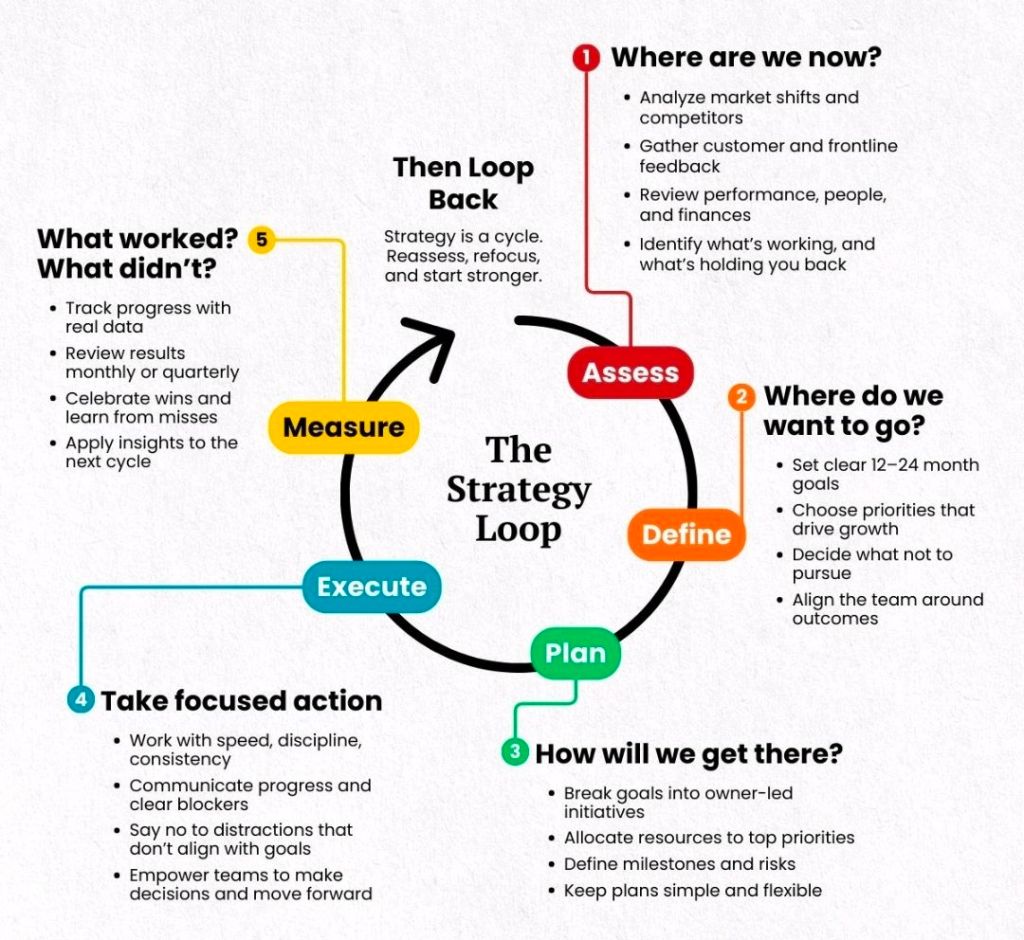
The Strategy Loop

The Strategy Loop