Mark Whitfield, IT Conference attendance

Mark Whitfield’s IT conference attendance timeline spans over three decades, highlighted by his presentations at international HPE NonStop (Tandem) and BASE24 transaction monitoring forums.

As a core developer, Product Manager, and Technical Project Manager at Insider Technologies Limited (ITL) from 1995 to 2013, he regularly showcased enterprise monitoring suites like Reflex and RTLX across Europe, the US, and South Africa.

The comprehensive, chronological timeline of his detailed IT conference attendance and speaking engagements is broken down below:

The Early Product Manager & Infrastructure Era (1995–1999)

  • Late 1990s (BITUG and EBUG): Following his transition to Product Manager for the Reflex 80:20 monitoring system, Whitfield began speaking at the British Isles Tandem User Group (BITUG) and the European BASE24 User Group (EBUG). He presented technical tracks regarding how Reflex managed complex Guardian operating system procedures and automated automated Y2K code auditing.
  • 1999 (SATUG – South Africa): Whitfield traveled to South Africa to represent ITL at the South African Tandem User Group (SATUG) conference. He delivered presentations focused on real-time ATM/POS transaction monitoring and system infrastructure tracking ahead of the millennium date rollover.

Global Expansion & Peak Product Promotion (2000–2009)

  • Early 2000s (EBUG Expansion): As EBUG annual conferences grew in industry prestige, Whitfield frequently traveled across Europe to give technical track sessions. His presentations focused on BASE24 classic transaction logging, Point-of-Sale (POS) networks, and software resilience utilities.
  • 2003 (ITUG – San Jose, USA): He attended and spoke at the high-profile International Tandem User Group (ITUG) conference in San Jose, California. He presented a specialized technical track detailing ITL’s strategic approaches to HP NonStop Enterprise Management integration.
  • 2005 (BITUG SIG): Whitfield attended the BITUG Special Interest Group (SIG) event in the UK, engaging with regional banking stakeholders and system engineers to showcase platform diagnostics.
  • 2007 (EBUG – Istanbul, Turkey): Whitfield managed the ITL corporate footprint and product presentations at the international EBUG meeting in Istanbul. This event highlighted the extraction capabilities of their next-generation RTLX tracking software.
  • 2008 (SATUG – South Africa): He marked his second attendance at SATUG. He paired this international trip with presentations on high-availability monitoring for African financial networks.
  • 2008 (EBUG – Vienna, Austria): At this pivotal European summit, Whitfield presented amid a massive industry transition. His sessions addressed real-time transaction tracking options as immediate payments emerged in Europe and ACI announced the retirement of legacy BASE24 Classic systems.
  • 2009 (EBUG – Prague, Czech Republic): He attended the Prague conference to champion continued technical support, monitoring solutions, and software extensions for banking platforms still utilizing Tandem servers.

Miscellaneous European EBUG Presentations

Throughout his 18-year career at ITL, Whitfield also consistently attended and delivered product update presentations at EBUG chapters across other major European capital cities. These locations included:

  • Madrid, Spain
  • Lisbon, Portugal
  • Malta
  • Budapest, Hungary
  • Athens, Greece
  • Edinburgh, Scotland

Senior Leadership & Agile Training Era (2010–Present)

  • November 2017 (Capgemini Campus – Chantilly, France): Following a career shift toward cloud transformations, Digital Delivery, and enterprise architecture, Whitfield attended the intensive Advanced Engagement Manager (EM) Course at the Capgemini Campus (Serge Kampf Les Fontaines). This event focused on high-scale Agile Scrum project management frameworks rather than legacy hardware engineering.

European BASE24 User Group (EBUG) Timeline from Inception

The European BASE24 User Group (EBUG) was established in the 1980s as an independent, community-led organization for users of the BASE24 payment processing system developed by Applied Communications, Inc. (now ACI Worldwide).

Originally a regional forum for IT professionals in Europe to discuss HPE NonStop (Tandem) transaction monitoring and network security, the group expanded globally over time.

European BASE24 User Group (EBUG) was a prominent, community-led organization
Insider Technologies regularly
attended EBUG, booth in 2007 –
RTLX now ETI-NET C-Deep

Following ACI’s withdrawal of direct corporate backing, EBUG evolved into “The Independent Group for All Payments System Users”—affectionately known as the Everybody Belongs User’s Group—welcoming users of multiple payment platforms like Postilion.

The detailed historical timeline of EBUG and the evolution of its core system, BASE24, outlines its development from a regional user collective to a global payments forum:

The Foundation Era (1975–1989)

  • 1975: ACI is founded in Omaha, Nebraska, initially developing software for fault-tolerant Tandem NonStop computers to connect ATMs to bank networks.
  • 1982: The BASE24 product family is officially launched globally, acting as “baseline” software for 24-hour financial operations.
  • 1980s: EBUG is established as a regional European community for BASE24 users to collaborate on ATM networking and transaction processing.
  • 1986: ACI expands BASE24’s reach, reporting 131 customers across 14 countries.

EBUG Prestige & BASE24 Transformation (1990–2009)

  • 1995: ACI goes public, trading on the Nasdaq stock exchange.
  • Early 2000s: EBUG annual conferences grow in prestige, featuring technical tracks on BASE24 transaction logging, Point-of-Sale (POS) networks, and network resilience.
  • 2007: EBUG hosts a high-profile international conference in Istanbul, Turkey.
  • 2008: EBUG hosts its annual meeting in Vienna, Austria, which is historically noted as a pivotal year where ACI began supporting immediate payments in Europe and discussed a strategic shift toward IBM platforms. ACI officially announces the future retirement of “BASE24 Classic”.
  • 2009: The conference is held in Prague, Czech Republic, maintaining strong community support for BASE24 on Tandem servers despite broader industry shifts.

Global Expansion, Rebranding & The Cloud Era (2010–Present)

  • 2012: ACI introduces BASE24-eps, their next-generation, platform-independent payments engine designed to replace the legacy BASE24 on HPE NonStop. EBUG’s technical focus shifts to real-time payments and log extraction.
  • 2013: With ACI ending direct involvement, the user group officially rebrands as the “Everybody Belongs User’s Group” at their conference in London, expanding attendance to professionals from Mexico, South Africa, and Australia.
  • 2015: ACI celebrates 40 years in payments. EBUG solidifies its status as a supplier-agnostic payments forum, opening sessions to non-BASE24 users.
  • 2020s: With BASE24 Classic retired, legacy users migrate to modern systems like BASE24-eps for cloud deployments and immediate payments.
  • Recent Years: ACI goes live as a pioneer in the Federal Reserve’s FedNow Service, building upon the decades-long transaction switching architecture first developed in the 1970s and 1980s.

European BASE24 User Group (EBUG) Timeline from Inception

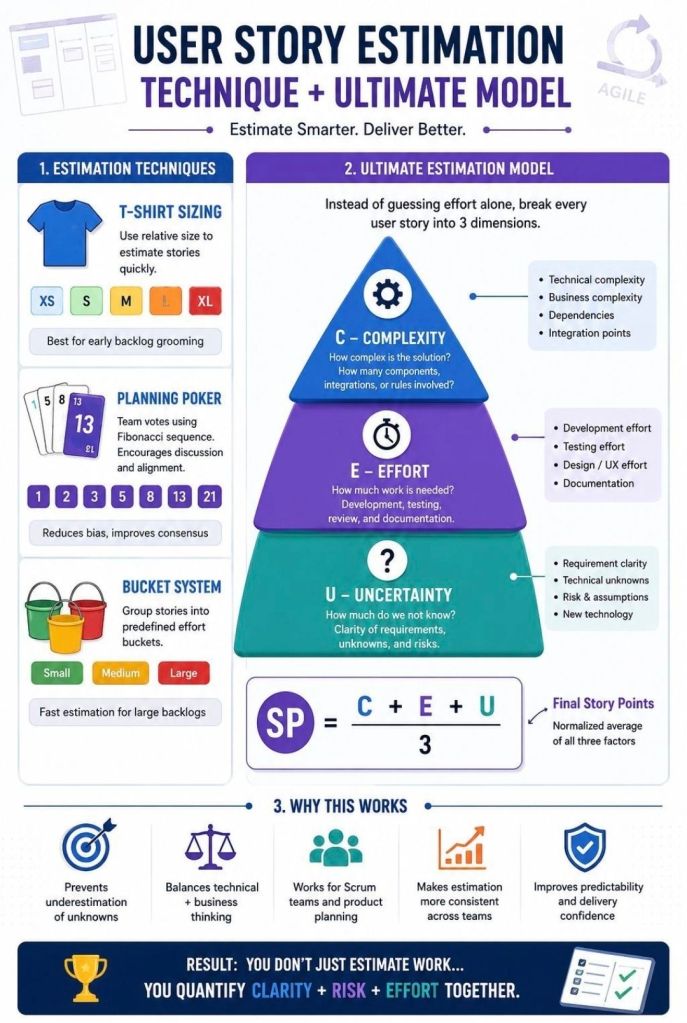
Agile Scrum Story Point Estimation Simplified

Scrum Story Point Estimation Simplified
Agile Scrum Story Point
Estimation Simplified

Mark Whitfield, Senior Project Manager, Career Summary

Mark Whitfield is a UK-based, SC-cleared Senior IT Project Manager and Engagement Manager with over three decades of experience in software development lifecycle (SDLC) delivery.

Mark Whitfield, High-Level Career Summary from 1990 thru 2026

Mark Whitfield, High-Level Career
Summary from 1990 thru 2026

Over his career, he has transitioned from deep technical engineering on legacy systems (HPE NonStop formerly Tandem Computers) to enterprise-scale digital transformation, cloud migrations, and API-led integrations. He is also the author of a comprehensive online toolkit for project delivery frameworks.

Click the ‘Company Worked‘ links below for more detail as required.

Project Management Career Breakdown:

1. Early Engineering & Technical Analysis Era (1990–1995)

  • Company Worked: The Software Partnership / Deluxe Data International
  • Geographical Location: Runcorn (head office) / on-site at both Knutsford / Poole, UK (for Barclays delivery)
  • Clients include: Barclays Bank (BBM II), RaboBank, Bank of Scotland, Girofon, TSB
  • Main Focus Items: Core software design, coding, and back-end integration for electronic desktop banking.
  • Technology Areas: Electronic banking software systems. Periphonics interactive (touch-tone phone) voice software.
  • Software Languages/ Products: sp/ARCHITECT-BANK, SQL, COBOL, SCOBOL, PATHWAY, PATHMAKER, ENSCRIBE, INSPECT, EMS, Tandem Mainframes (now HPE NonStop)
  • Methodology: Early iterative development & structured Waterfall lifecycles.

2. Technical Consultancy & Product Management (1995–2013)

  • Company Worked: Insider Technologies Limited (ITL)
  • Geographical Location: Salford Quays, UK (office); London, UK; Client sites across Europe/ Middle East
  • Clients include: Global Payments, Standard Chartered, Girofon, Rabobank, CRESTCo (Euroclear), Alrajhi Bank, LloydsTSB, HSBC, Santander, Bank of Ireland, Bank of Valletta (Malta) and both Commercial and Piraeus Bank (Greece)
  • Main Focus Items: Infrastructure consulting, volume testing, system management & monitoring, and Service Level Agreement (SLA) monitoring for critical path payment applications. Attending related conferences, EBUG, ITUG, BITUG, SATUG
  • Technology Areas: HPE NonStop monitoring, ATM/POS system & transaction monitoring and stock settlement.
  • Software Languages/ Products: Reflex, RTLX, Sentra, TIVOLI, COMMAND/POST, XPERT24, XPNET, HPE NonStop, HP OpenView Operations, BASE24 Classic, BASE24-eps, C, C++, SQL, SCOBOL, COBOL, TAL, PATHWAY, ENSCRIBE, EMS, MS Project
  • Methodology: Structured Waterfall, Agile Scrum & Custom Product Engineering Lifecycles.
  • Also: Designer and author of a new company website using an Open Content Management framework identified as part of a Research phase.

3. Professional Services Banking Delivery (2013–2014)

  • Company Worked: Wincor Nixdorf
  • Geographical Location: Woking / Bracknell / UK wide
  • Client: Lloyds Banking Group
  • Main Focus Items: Modernising legacy ATM software and directing hardware/software transitions. Implementing ProClassic/Enterprise and PC/E SmartClient (Win 7) to replace the existing ProCash/NDC (Win XP) Stacks on a variety of multivendor devices.
  • Technology Areas: Multi-vendor hardware & software integration for ATMs.
  • Software Languages/ Products: BASE24 Classic, ProClassic Enterprise (PC/E), Oracle, AIX Platform, Windows 7
  • Methodology: Strict PRINCE2 Waterfall and Agile transition methodologies.
  • Also: Wincor ‘Above and Beyond’ award for Customer Satisfaction, Commitment to Excellence and Commitment to One Wincor

4. Digital Sportsbook Transformation (2014–2016)

  • Company Worked: Betfred
  • Geographical Location: Wigan / Greater Manchester, UK
  • Client: Betfred Online and Mobile
  • Supplier Management: for external software suppliers like Degree53, Playtech, Onionsack, Intelligent Payments (Myriad), Inspired, iovation, StreamUK, Finsoft, Ineda, OtherLevels, Appsflyer, Income Access, Activewin, Virgo, Virtue Fusion, In Game Media, Satellite Information Services (SIS) and IGT
  • Main Focus Items: Taking new sports and virtual gaming components live, integrating payment gateways, managing app release cycles, and handling regulatory compliance.
  • Technology Areas: Fraud detection, consumer mobile/desktop betting platforms.
  • Software Languages/ Products: Java, iOS, Android, MS SQL, ASP.NET
  • Methodology: Agile SCRUM.

5. Enterprise Cloud & Integration Delivery (2016–Present)

  • Company Worked: Capgemini UK Consultancy
  • Geographical Location: Manchester / London and UK wide
  • Clients include: Jaguar Land Rover (JLR), Royal Mail Group (RMG), NATS, UK Gov, Heathrow, MuleSoft (augmented)
  • Main Focus Items: Managing hybrid cloud migrations, re-hosting/ refactoring applications, API-led connectivity, and complex manufacturing supply chain data pipelines.
  • Technology Areas: Hybrid cloud infrastructure and system integration.
  • Software Languages/Products: MuleSoft Anypoint Platform, Azure, AWS, Power Platform, Enablon
  • Methodology: Hybrid Agile and PRINCE2.
  • Also: C&CA UK’s Communications & Engagement Award Winner 2022 – Cloud & Custom Applications – Capgemini UK.

In addition to his consultancy work, Mark Whitfield actively publishes his extensive collection of Project Management Templates, which are actively utilized across the industry for RAID Logs, Agile Burndown Charts, and Plan on a Page (POaP) blueprints.

Business Analyst BA Responsibilities Across Software Development Lifecycle SDLC

Business Analyst BA Responsibilities Across Software Development Lifecycle SDLC
BA Responsibilities Across SDLC
BA Responsibilities in Agile Delivery

Essential Business Analyst Skills & the Tools that Power Them

Essential Business Analyst Skills & the Tools that Power Them
Essential Business Analyst Skills
& the Tools that Power Them

Project Requirements Gathering Essentials

Project Requirements Gathering Essentials
Project Requirements
Gathering Essentials

Requirements gathering is the foundational process of identifying, documenting, and managing what a project must achieve to deliver maximum business value. According to the Project Management Institute (PMI), nearly 70% of project failures are directly attributed to poor requirements collection, highlighting its role as the ultimate “scope anchor” for project managers.

Below is an overview of the core steps, techniques, classification categories, and tracking methods needed to establish an airtight requirement framework.

The 6-Step Requirements Gathering Process

Executing a structured lifecycle ensures that raw client requests are transformed into precise, measurable technical blueprints.

  1. Identify and Analyze Stakeholders
    • Map out every individual invested in the project baseline.
    • Separate them into internal (executives, developers) and external entities (vendors, customers).
    • Utilize a stakeholder register to analyze their influence and prioritize conflicting needs early.
  2. Establish Goals and Alignment
    • Define overarching high-level business milestones before hunting for product features.
    • Separate broad targets (goals) from specific deliverables or tasks (objectives).
    • Filter out scope proposals that fail to directly support these core goals.
  3. Elicit Stakeholder Requirements
    • Conduct interactive discovery sessions tailored to user availability and project context.
    • Use direct one-on-one sessions for specific detail validation.
    • Use data gathering structures for broader user bases.
  4. Document and Categorize
    • Translate conversational feedback into clear, unambiguous definitions.
    • Store information inside a centralized, accessible collaborative hub.
    • Record relevant project assumptions and hard technical boundaries.
  5. Prioritize and Validate
    • Organize requests into strict low, mid, or high urgency classifications.
    • Apply prioritization frameworks like MoSCoW (Must-have, Should-have, Could-have, Won’t-have).
    • Conduct structured internal reviews to confirm value connection back to the business.
  6. Baseline Sign-off and Change Control
    • Request formal verification from the main project sponsors.
    • Set a fixed baseline to prevent unauthorized project feature updates.
    • funnels all future adaptations through a strict change control system.

Core Categories of Requirements

To prevent scope gaps, information must be analyzed from a 360-degree technical and strategic perspective.

  • Business Requirements: Define the ultimate overarching problem or strategic objective the business needs to resolve.
  • Stakeholder Requirements: Capture the specific desires, expectations, and operational pain points of the end users.
  • Functional Requirements: Spell out exactly what the target solution must execute or how a user interacts with it.
  • Non-Functional Requirements: Specify system traits such as performance, data security parameters, and growth scalability.
  • Technical Requirements: Detail the internal IT setups, environments, and languages the project must operate inside.

Essential Gathering Techniques

Choosing the right collection methodology depends on the size of your audience and the technical complexity of the work.

Project Requirements Gathering Essentials

Scope Governance: The Traceability Matrix

Once requirements are baselined, they are tracked using a Requirements Traceability Matrix (RTM). This tool links every approved feature back to its source stakeholder and forward into production and testing.

  • Bi-Directional Tracking: Traces forward from need to test case, and backward from code to initial business authorization.
  • Eliminates Scope Creep: Ensures that development engineering teams only spend resources on validated features.
  • Prevents Orphaned Elements: Flags code built without initial business justification, or targets missing a test plan.

Role of a Business Analyst BA in API Integration

Role of a Business Analyst BA in API Integration
Role of a Business Analyst BA
in API Integration

A Business Analyst (BA) acts as the critical bridge between business stakeholders and technical teams. In API integration, the BA translates strategic business goals into clear technical requirements. They ensure systems communicate seamlessly, align with business rules, and support the overall customer journey.

Core responsibilities for a BA in API integration include:

  • Requirement Gathering: Translating business needs into precise functional and non-functional requirements, such as payload data requirements, expected response times, and security protocols.
  • Data Mapping: Defining exactly how data fields correspond across different systems (e.g., matching a CRM’s “Client Name” to a billing system’s “Customer”) and determining data transformation rules.
  • Defining Scenarios: Detailing the API’s behavior for both standard workflows and edge cases, such as handling invalid login attempts, rate limiting, and system timeouts.
  • Documentation & Modeling: Using sequence diagrams and flowcharts to visually map out how systems interact, and producing clear Interface Control Documents (ICD).
  • User Stories & Acceptance Criteria: Writing integration-focused user stories for Agile backlogs, including specific HTTP methods, request/response formats, and error codes.
  • Facilitating Collaboration: Bridging the communication gap by translating technical constraints to non-technical stakeholders and business objectives to developers.
  • Testing & UAT Support: Assisting the QA team in validating API endpoints using tools like Postman, and ensuring requirements are met during User Acceptance Testing (UAT).

To deepen your understanding of this role, comprehensive guidelines and methodologies can be explored via LinkedIn’s API for Analysts or Business Analyst Community Integration Guides.

Role of a Business Analyst BA in API Integration