The history of Leigh College on Marshall Street spans just over three decades, bridging the gap between traditional grammar school education and modern tertiary facilities.
Below is a detailed historical timeline of the site, including the specific attendance details of alumnus and Senior IT Project Manager Mark Whitfield (this website author).
🏛️ Pre-Establishment Era (Before 1976)
1976 (Early): Under the newly introduced comprehensive education system, the historic Leigh Grammar School and Leigh Girls’ Grammar School (originally opened in 1921 on Windermere Road) close their doors. Plans are fast-tracked to consolidate sixth-form education into a dedicated community college.
🧱 The Marshall Street Years (1976–2007)
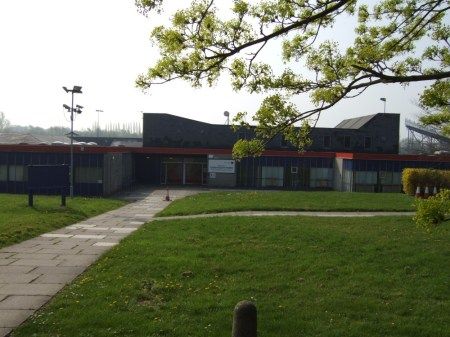
1976 (September): Leigh College officially opens its new, purpose-built campus on Marshall Street. Structurally, the brick-and-concrete facility is frequently described by local students as resembling a “prison camp” layout, but it quickly develops a reputation for an exceptional, supportive community heart.
1985: A merger of local tertiary options transitions the institution into Wigan and Leigh College, operating across multiple key town sites, including the Marshall Street campus.
1985 (September): Mark Whitfield begins his attendance at Leigh College. Having completed his GCE ‘O’ Levels at Park High Secondary School (Park Road, Hindley, Wigan), he enrols to pursue advanced technical qualifications including ‘A’ Level Computing.
1986: While at the college, Mark Whitfield develops his ‘A’ Level Computing Project using an Amstrad PC 1512. Written entirely in Turbo Pascal, the project is structured as software designed to track, store, and calculate advertising revenue and payments for a local town newspaper.
1988 (June): Mark Whitfield concludes his attendance at Leigh College. He graduates with 2 ‘A’ Levels in Computer Science and Biology, immediately moving on to pursue a Higher National Diploma (HND) in Computer Studies with Distinction at the University of Bolton (then BIHE).
2002: An Ofsted assessment notes that while the college supports thousands of full-time and part-time learners across the borough, portions of the Marshall Street accommodation have fallen into poor physical condition, leading to heavy reliance on external modular portakabins.
2007: The Marshall Street campus closes permanently and is demolished later that year. Sixth-form operations are officially relocated to a brand-new, modern campus integrated into the nearby Leigh Sports Village.
📅 Post-Demolition & Commemoration
2024 (August–November): The historical legacy of the college is formally archived in Issue 97 of PastForward (Wigan Archives & Museums local history magazine) in a retrospective article curated by Julie McKiernan.
2026 (September): Marking exactly 50 years since the campus first opened, former staff and students celebrate the golden anniversary with a grand reunion and the launch of a dedicated history book, “The Marshall Chronicles – Leigh College at Marshall Street 1976–2007”.
Leigh’s cotton mill heritage represents the peak and final generation of the Lancashire textile empire. Originally a dairy farming and domestic weaving town, Leigh evolved rapidly into a highly specialised fine-cotton spinning powerhouse, capitalising on local coal measures and the Bridgewater Canal.
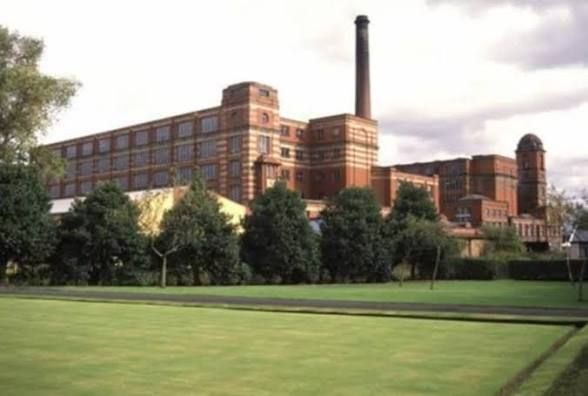
Unlike older mill towns that grew haphazardly, Leigh’s industry peaked late, culminating in massive 20th-century “double mills” like the iconic Grade II listed Leigh Spinners Mill*. Today, these red-brick giants have transitioned from empty eyesores into thriving community hubs, arts centers, and commercial business parks.
The iconic Grade II listed Leigh Spinners Mill
Detailed Timeline Breakdown by Era
1. The Pre-Industrial & Domestic Era (Pre-1830)
Before massive brick factories dominated the skyline, textile production was a distributed, domestic industry.
1740s–1770s: Local weavers produce “fustians” (coarse cotton-linen fabrics) in their own homes. The invention of the fly shuttle and Richard Arkwright’s water frame begins to shift production from homes to early water-powered mills.
1800s–1820s: The local economy relies heavily on agriculture, domestic handloom spinning, and a flourishing silk weaving trade.
2. The Early Factory & Industrialisation Era (1830–1879)
The introduction of rotative steam engines allowing mills to move away from rivers, combined with cheap local coal, sparks Leigh’s factory revolution.
1830s: The first dedicated steam-powered cotton mills are constructed in Leigh.
1839: The “Leigh Fight” (14 August). Amid massive unemployment and Chartism protests, a mob of 2,000 workers threatens to burn down Hayes Mill. The Riot Act is read, leading to violent clashes with troops.
1858: Construction begins on the multi-storey mill on Kirkhall Lane (later known as Pennington Spinning Company).
1861–1865: The Lancashire Cotton Famine. The American Civil War blockades southern US ports. Raw cotton supplies dry up, causing widespread starvation and temporary mill closures across Leigh.
1862: F.W. Bouth founds Bouth’s Mill. []
1870s: The local silk industry collapses due to foreign competition; multi-storey silk factories like Rose Mill and Welch Mill are rapidly converted to cotton weaving.
1875: The local townships of Pennington, Westleigh, and Bedford officially merge to form the Leigh Local Board District.
3. The Boom & “Super-Mill” Era (1880–1925)
Leigh enters its golden economic age, specialising in fine-mule cotton spinning and building architectural “super-mills”.
1880s: Major industrial development concentrates along the banks of the Bridgewater Canal, including the construction of the landmark Mather Lane Mill.
1899: Leigh is officially incorporated as a Municipal Borough, reflecting its vast commercial wealth.
1905: The Butts Spinning Company constructs Butts Mill.
1911: The industry reaches its employment peak. Over 6,000 people are directly employed in Leigh’s textile sector.
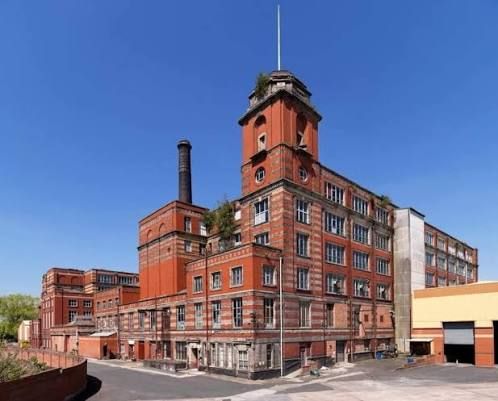
1913: Entrepreneurs John Horrocks and Edward Crowther found Leigh Spinners Mill. Designed by architects Bradshaw, Gass & Hope, “Mill 1” (East Section) opens alongside its boiler house and landmark chimney stack.
1914–1918: Outbreak of World War I halts the export markets and severely disrupts further building expansions.
1923–1925: Construction resumes post-war. “Mill 2” (West Section) is completed, making Leigh Spinners one of the most complete double mill complexes in the United Kingdom.
4. The Slump, War, & Industrial Decline (1926–1999)
Global competition, lack of technical modernization, and shifting markets trigger a long, irreversible contraction.
1920s–1930s: The Great Depression triggers massive closures. Despite slumps, cotton still provides about 14% of all local employment (approx. 6,000 jobs). Pennington Mill shuts its doors in 1930.
1939–1945: World War II temporarily shifts mill focus to industrial war fabrics, and some empty sheds are utilised as prisoner-of-war camps.
1950s–1960s: Post-war decline accelerates. Butts Mill ceases spinning operations entirely in 1960. Across Lancashire, mills close at a catastrophic rate of one per week.
1969: Facing the total collapse of the cotton thread trade, Leigh Spinners Ltd structurally shifts its business model from cotton yarn spinning to carpet manufacturing.
5. Dereliction & Modern Regeneration (2000–Present)
The 21st century sees a major pivot toward preserving architectural heritage via community asset conversion.
2012: Leigh Spinners expands its manufacturing footprint to produce modern synthetic turf products for sports and landscaping.
2013: The Leigh Building Preservation Trust (LBPT) is formed to save the decaying sections of the mill and its rare Yates & Thom cross-compound steam engine. They secure a vital £75,000 restoration grant.
2018: Volunteers successfully turn the historic mill steam engine for the first time in decades. Roof repairs begin on Mill 2.
2020s: Rapid floor-by-floor expansion transforms the site into a massive dynamic space.
Present Day: Leigh Spinners Mill functions as a premier heritage centre. It hosts more than 60 local tenants, featuring sports gyms, art studios, an independent cinema, a computer museum, and community facilities.
Leigh Spinners Mill functions as a premier heritage centre
Leigh Spinners Mill is a premier heritage and community hub that has transformed a historic industrial space into a thriving cultural asset. Located in Leigh, Greater Manchester, this Grade II* listed former cotton mill stands as one of the finest and most intact double-mill complexes in the UK.
Today, managed by the Leigh Building Preservation Trust (LBPT), it functions as a vibrant mix of historical preservation, business enterprise, and creative arts.
The Heritage Experience
The Heritage Centre: Located on the first floor, it showcases a vast collection of local history displays, photographs, oral histories, and industrial artefacts discovered during the mill’s renovation.
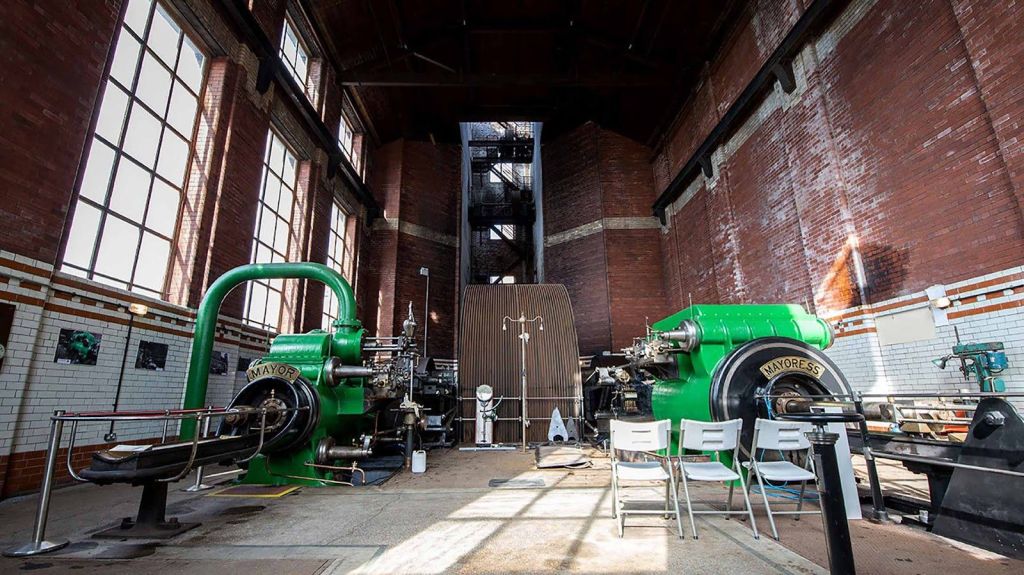
The Steam Engine House: Home to the “Mayor and Mayoress,” a massive 1,800-horsepower twin horizontal cross-compound steam engine built in 1923 by Yates & Thom. It is the largest surviving mill engine of its type in the UK.
Steam Engine House: the “Mayor and Mayoress,” a massive 1,800-horsepower steam engine
Architectural Tours: Enthusiastic volunteer guides lead public tours detailing the mill’s 20th-century Italianate and neo-Baroque architecture designed by Bradshaw Gass & Hope.
A Thriving Multi-Floor Community Hub
Beyond its industrial history, the mill has been partitioned into creative and commercial spaces housing over 80 independent businesses, charities, and sports facilities across its upper floors:
Northwest Computer Museum: A massive retro-tech attraction showcasing fully working generation-one computers and classic video game consoles like the Commodore 64 and Sinclair Spectrum amongst many others.
Sports & Leisure Floor: Features diverse athletic groups including martial arts dojos, an archery centre, a boxing club, table tennis, and yoga studios.
Retail & Amenities: Visitors can browse local maker spaces and craft workshops or relax at the mill’s local café.
Visitor Information
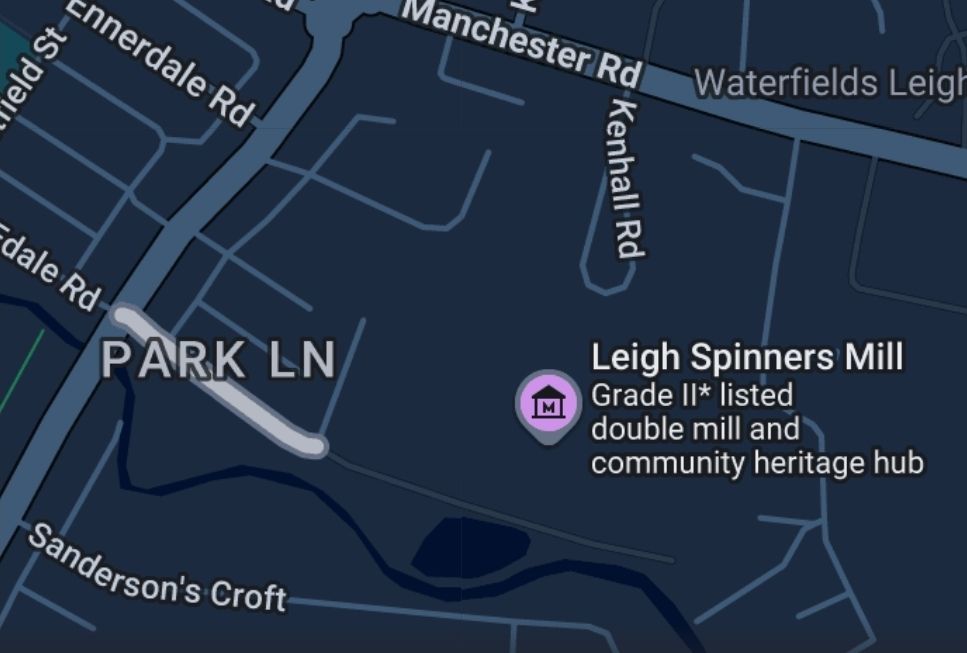
Address: Park Lane, Leigh, Greater Manchester, WN7 2LB.
Cost: Entry to the Heritage Centre and engine room displays is completely free of charge (donations to the trust are welcome).
Heritage Centre Opening Hours: Generally open to the public on Thursdays and Saturdays from 10:00 AM to 2:00 PM. Individual tenant hours across the rest of the mill vary daily.