Download Templates for Project Management | FREE Upgrades & Additions
Author: Mark Whitfield
Welcome to my site!
After graduating in Computing in 1990, I accepted a position as a programmer at a Runcorn based software house specialising in electronic banking software, namely sp/ARCHITECT-BANK on Tandem Computers (now HPE NonStop). This was before the internet became more prevalent and so the notion of enabling desktop access to company accounts for inter-account transfers and book keeping was still quite a cutting edge idea (and smartphones only ever hinted at in Space 1999). The company was called The Software Partnership (which was taken over by Deluxe Data in 1994).
I spent 5 years in Runcorn developing code for SP/ARCHITECT for various banks like TSB, Bank of Scotland, Rabobank and Girofon (Denmark) to name but a few. I then moved onto a software house in Salford Quays for further bank facing projects. After a further 23 years in the IT industry and now a Senior IT Project Manager (both Agile and Waterfall delivery), I thought I would echo out my Career Profile in this corner of the internet for quick and easy access.
Why an Organisation Needs a PMO, Project Management Office
An organisation needs a Project Management Office (PMO) to act as the strategic backbone that standardises processes, minimises operational risks, and directly aligns day-to-day project execution with long-term business goals.
Research by the Project Management Institute (PMI) highlights that 80% of high-performing organisations have established PMOs. Furthermore, companies utilizing a PMO deliver initiatives up to 2.5 times faster and waste 38% less budget compared to those operating without one.
1. Strategic Alignment & Portfolio Prioritisation
Goal connection: PMOs act as a filter, continuously checking that all active projects serve the corporate strategy.
Value redirection: The office can proactively recommend pausing or canceling redundant projects, redirecting resources to high-value initiatives.
Intake governance: They design a structured framework for project intake to stop random, impulsive investments.
2. Standardisation & Quality Assurance
Unified framework: PMOs replace chaotic “every-team-for-itself” habits with shared templates, common metrics, and standard delivery methodologies.
Repetitive economy: Creating consistent guidelines allows multi-project execution to become a predictable machine, reducing human error.
Performance baselines: Standardised metrics give leadership an objective rubric to compare project health across entirely different business units.
3. Resource Optimisation
Bottleneck reduction: Centralised control prevents staff from being unsustainably double-booked across competing silo projects.
Capacity visibility: Real-time capacity mapping lets the executive suite understand exactly who is available before approving future workloads.
Skills leverage: PMOs actively track internal talents, allowing organisations to pivot specialized professionals to high-priority issues quickly.
4. Data-Driven Governance & Risk Management
Executive transparency: PMOs deliver aggregated status dashboards (like “Stop Light” reporting) to keep stakeholders clearly informed without digging through minor details.
Early risk mitigation: Using institutional tools like RAID logs, they catch budget variances and deadline slips before they cascade out of control.
Compliance protection: They ensure strict adherence to industry regulations, corporate ethics, and legal benchmarks to safeguard the firm from penalties.
5. Knowledge Management & Continuity
Lessons learned: The PMO retains historical metrics, helping project teams build realistic, accurate cost and timeframe estimates on subsequent iterations.
Mentorship hubs: They provide ongoing skills coaching and workshops to organically raise the project management maturity level across the company.
Mark Whitfield spent 18 years (August 1995 – September 2013) at Insider Technologies Limited (ITL), a Manchester-based software house specialising in high-availability tracking, service management, and transaction monitoring. Entering as a Senior Programmer, he climbed through the ranks to become an Operations Products Manager and, ultimately, the Project Manager for Strategic Technical Initiatives.
His core technical contribution revolved around developing and managing platform-health diagnostic modules, automated event filtering, and multi-currency transaction log trackers.
He focused heavily on the HPE NonStop (Tandem) kernel, integrating these mainframes with Windows, Unix, and Linux open systems. His work protected critical banking infrastructure, such as transaction loops feeding into ACI BASE24 ATM/POS switches and major national payment clearings.
Detailed Timeline Breakdown
🔹 The Foundational Tandem Era (1995–1999)
This period focused on building out bespoke low-level mainframe diagnostic scripts, real-time logging, and bracing critical infrastructure for the millennium bug.
1995: Joined Insider Technologies Limited at Salford Quays after departing Deluxe Data. He began programming SCOBOL green screens and engineering PATHWAY servers to query raw Guardian operating system procedures.
1996: Core developer for the flagship Reflex monitoring suite (Reflex 80:20). He co-authored the Console module for HPE NonStop Event Management Service (EMS) viewing, alongside tracking blocks for system components like CPU, Disk, and Processes.
1997: Transitioned into an infrastructure consulting capacity, designing code routines to test physical hardware throughput.
1998: Formally appointed as the ITL Operations Products Manager. He orchestrated high-performance benchmarking tests on newly deployed Tandem S7000 processing hardware nodes for Euroclear (formerly CRESTCo), validating infrastructure that handled 88% of UK equities.
1999: Directed critical, deep-level automated Y2K code auditing. This guaranteed that real-time tracking loops and MultiBatch scheduling automation would accurately handle the date rollover for clearing partners like the Bank of England and Deutsche Bank.
🔸 The Operations & Middleware Integration Era (2000–2005)
This era bridged the gap between rigid standalone mainframes and modern open-system dashboards, creating cross-platform monitoring frameworks.
2000: Spearheaded deep-layer integration projects connecting legacy frameworks to distributed enterprise collectors like TIVOLI, COMMAND/POST, and third-party file monitors.
2001: Supervised 24×7 enterprise support teams handling cryptographic security frameworks for Thales e-SECURITY products, overseeing the SafeSign Authentication and Management Server lines on Windows/Unix.
2002: Led technical rollouts for ITL’s interactive Systems Training Platform, deploying patented system-cloning configurations to let institutional clients practice outage responses safely.
2003: Drove cross-platform middleware compatibility protocols, building hooks between the NonStop kernel and WebSphere MQ (MQSeries) message streams to trap transactional anomalies in real-time.
2004: Advanced to Project Manager – Strategic Technical Initiatives, implementing PRINCE2 governance for new product R&D pipelines.
2005: Began standardising the technical architecture of Reflex ONE24, transitioning the vintage monitoring code toward centralized electronic web consoles.
🔹 The Strategic Initiatives & Product Management Era (2006–2013)
Whitfield shifted into pure-play product management, expanding corporate web assets and publishing technical documentation before navigating the company through an MBO.
2006: Pioneered custom transaction parsing frameworks for payment switches, resulting in the foundational engine layout of Sentra and the Real-Time Log Extraction (RTLX) engine.
2007: Acted as the primary corporate website architect and author, modernising Insider’s public presence by building out and managing content deployments on DotNetNuke (DNN).
2008: Managed implementation pipelines for XPERT24, a highly specialized utility engineered specifically for performance tracking across complex BASE24 XPNET banking environments.
2010: Guided software engineers through logic modifications to intercept multi-currency retail POS and ATM interchange drops down to the millisecond.
2011: Coordinated agile deployment sprints for financial institutions to meet strict compliance laws surrounding automated data storage and long-term file retention.
2012: Provided the project governance behind the scenes during Insider Technologies’ internal structural transitions, supporting a £3m Management Buyout (MBO).
2013: Authored a major technical summary published globally in the recognized HP NonStop industry journal, The Connection, defining payment software lifecycles. Concluded his 18-year run at ITL in September to join Wincor Nixdorf.
(Note: The product lines Whitfield built and governed were later acquired by ETI-NET in 2015, where his original RTLX utility was rebranded as C-Deep for Transaction Monitoring.)
Joining in January 2016, he has orchestrated enterprise-scale cloud migrations, middleware application refactoring, and API-led integration architectures across public sector and tier-one corporate clients.
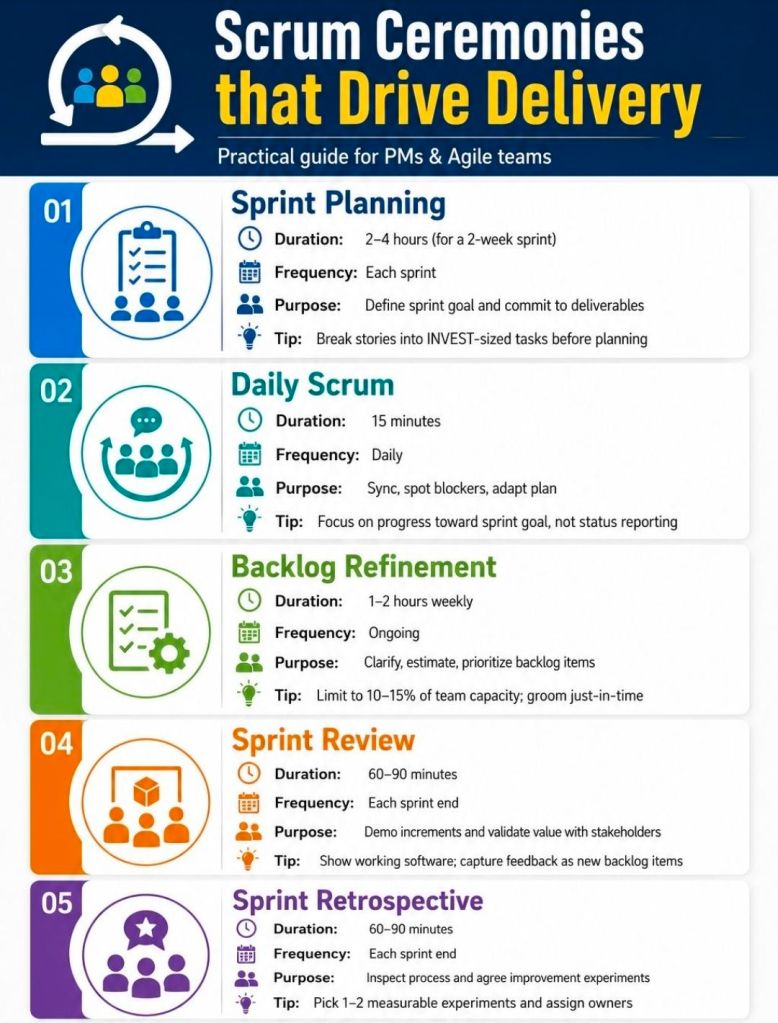
Methodologies: Agile Scrum ceremonies, Waterfall frameworks, and hybrid delivery patterns
Core Competencies: Hybrid cloud migrations, API lifecycle architectures, cross-data centre integration, multi-supplier governance, and financial forecasting
Key Clients Served: UK Government, MuleSoft / Salesforce, Jaguar Land Rover, Royal Mail Group, NATS, and Welsh Water
Detailed Capgemini Projects Timeline Breakdown by Year:
2016 – 2017: Aerospace & Defence Integration & Postal Infrastructure
Aerospace & Defence Mobile Apps: Managed an Agile Scrum delivery stream for a UK-wide Air Traffic organisation (NATS). He supervised the development of dual-layered Apple iOS applications rendering real-time airspace positioning data, separating sensitive internal military maps from public views.
Salesforce Portal Deployment: Led the enterprise integration and deployment of a Salesforce-driven Single Customer View (SCV) portal platform for defence stakeholders.
Postal Services Migration (May 2016 – Oct 2016): Appointed as PM for an award-winning £4.3 million Data Centre Migration project for a major postal client (Royal Mail Group). He directed 90 Capgemini engineers to shift 1,100+ critical interfaces—migrating file transmissions written in UNIX shell scripts and upgrading 150 interfaces processing through IBM ESB to safe software versions right before peak seasonal trading lockouts.
2017 – 2018: Automotive Supply Chain Middleware
Jaguar Land Rover iFAB Project: Directed the complex 12-month iFAB Middleware Project architecture development scheme. This cross-functional framework connected globally dispersed manufacturing supply components.
Supplier Governance: Coordinated on-site daily standups alongside integration engineering leads to accurately synchronize multiple software suppliers handling distinct tiers of middleware, messaging queues, and front-end architectures.
2018 – 2019: Enterprise API Platform Delivery (MuleSoft)
MuleSoft HQ Augmentation (October 2018 – June 2019): Embedded directly into MuleSoft’s London headquarters (Salesforce Tower) as a Senior Delivery Manager.
MuleSoft’s London office is located within the Salesforce Tower at 110 Bishopsgate.
Anypoint Platform Deployments: Guided multinational corporate clients through API-led connectivity lifecycles. This encompassed configuring Anypoint Code Builder structures, validating hyper-automation runtime layers, and ensuring architectural compliance against regulatory framework rules.
Anypoint Platform is the leading enterprise platform for building APIs, integrations & application networks
2019 – 2021: Large-Scale Public Sector Cloud Migration
UK Government Hybrid Cloud Transformation: Commanded a massive modernization program migrating a highly complex estate of legacy code.
130 Applications Transformed: Acted as the primary client escalation point to refactor, re-host, and re-platform 130 public-sector software applications into hybrid cloud environments. His responsibilities included aligning the massive multi-stack migration with strict GDPR protection directives and managing offshore project delivery targets.
2022: Utility Infrastructure & Cloud Upgrades
Water Utility EQS Cloud Shift: Dual-managed a £0.5 million technical contract moving an legacy document management environment (EQS) onto Microsoft Azure cloud structures via Enablon for Welsh Water and Scottish Water.
MS Dynamics 365 Evolution: Supervised a £0.4 million discovery and blueprint phase to move 12 legacy Microsoft Dynamics 2016 instances operating on outdated shared 8.2 infrastructure onto the unified Microsoft Dynamics 365 Online ecosystem. This involved authoring precise Statements of Work (SoW), custom exit strategies, and foundational Microsoft Project (MPP) tracking models.
Accolades: Won the prestigious Capgemini C&CA UK Communications & Engagement Award in December 2022 for outstanding delivery inside the Cloud & Custom Applications business unit.
C&CA UK’s Communications & Engagement Award Winner 2022 – Cloud & Custom Applications – Capgemini UK
C-Deep (formerly known as RTLX developed by Insider Technologies Limited) is an enterprise-grade, real-time transaction and payment monitoring software product. It is currently owned, maintained, and distributed globally by ETI-NET.
Product Overview & Key Features
The primary objective of C-Deep for HPE NonStop is to ensure fault tolerance, detect transactional vulnerabilities, and prevent outages within major financial ecosystems.
Target Environment: It is deployed alongside primary mission-critical payment engines, primarily operating as a high-performance add-on to ACI Worldwide’s BASE24™ solution or as a standalone tracker on HPE NonStop systems.
Architecture: The software utilizes lightweight extraction clients on the NonStop kernel to read Transaction Log Files (TLF) and POS Transaction Log Files (PTLF). It offloads data parsing to a C-Deep collector on Windows Server, keeping the primary switch’s CPU overhead at zero.
Data Retrieval: It stores and indexes historical transaction fields into annual databases for 10+ years, making it fully searchable to meet strict data regulatory compliance laws.
Granular Querying: Operators can isolate variables down to Bank Identification Numbers (BIN), detecting interchange timeouts, clearing delays, or switch drops down to the millisecond.
Detailed Timeline Breakdown by Era and Year
The technical evolution of this platform reflects the wider political and economic changes in global banking, transitioning from early bespoke mainframe logs to modern, automated cyber-resiliency environments.
🔹 The Foundational & Legacy Tandem Era (1989–2000)
This era centered around high-security, fault-tolerant mainframes built for NATO-aligned military communications and early banking networks following the end of the Cold War.
1989: Insider Technologies Limited is incorporated in the UK to manufacture specialized monitoring code for highly robust computer systems.
1990–1995: The vendor releases its foundational “Reflex” software suite for the Tandem Guardian operating system, offering real-time transaction diagnostics without interrupting physical processing operations.
1996–1999: The platform adds “MultiBatch” automation to orchestrate complex batch settlements. Engineering pivots toward critical Y2K code auditing to prove that automatic logging routines would survive the year 2000 date rollover.
🔸 The Multi-Platform & Financial Compliance Era (2000–2015)
This era mark’s the product’s rise to prominence as a core tool for transaction transparency across global clearings houses, reacting to rapid financial sector deregulation.
2001–2003: The architecture scales up from simple hardware tracking into dedicated operational security. The vendor expands the footprint into financial clearings, tracking transaction security for system-critical clearers like the Bank of England.
2004–2007: The developer releases RTLX (Real-Time Transaction Logging/Reactor), standardizing visibility from the point-of-sale terminal tap to the back-end ledger settlement. It adds cross-compatibility for Windows, Unix, and Linux systems alongside standard Tandem NSK systems.
2008–2012: Amid market volatility following the 2008 financial crash, transaction tracking rules tighten. RTLX adds specialized configuration engines to map high-volume dates (e.g., Black Friday) to proactively flag message queues and clear bottlenecks before causing outages.
🔹 The Acquisition & Integration Era (2015–Present)
This era sees consolidation in the HPE NonStop market, transforming the legacy product into a fully modern cyber-resilient and automated tracking ecosystem.
2015–2021: Real-time transaction frameworks become critical for compliance. To expand global distribution channels, ETI-NET formalizes an agreement to acquire and absorb Insider Technologies’ core system software catalog.
2022–2023: ETI-NET rebrands the classic software stack to streamline its message. The system monitoring side (Reflex) becomes Sentinel, while the specialized payment switch transaction monitor (RTLX) is official re-launched as C-Deep for Transaction Monitoring.
2024: ETI-NET pushes C-Deep through HPE Pointnext Services, making it directly purchasable within standard Hewlett Packard Enterprise customer channels. Integrations are updated to match the NIST 2.0 Cybersecurity Framework.
2025–2026: Modern upgrades focus heavily on end-to-end data auditing, automated email/SMS alerting systems, and specialized dashboard analytics tailored for complex, multi-currency transaction paths.
ETI-NET C-Deep real-time transaction and payment monitoring product timeline
Focus: Electronic banking programming and development on Tandem Mainframe Computers.
Projects: Wrote, developed, and maintained software like sp/ARCHITECT-BANK and associated billing software (in Poole, 1993). This involved building early electronic banking systems for desktops long before internet banking was prevalent.
Location: Insider Technologies, Salford Quays, Manchester, UK
Focus: NonStop product management, software design, and real-time event monitoring.
Projects: Product managed software lifecycles for four monitoring products (two NonStop based). This included creating health and diagnostic tools (RTLX, Reflex 80:20, Reflex ONE24,XPERT24) for mission-critical NonStop environments. He also deployed volume testing on early HP NonStop S7000 nodes for CRESTCo in London in 1997.
Insider Technologies, Salford Quays, Manchester, UK
Location: Wincor Nixdorf & ATM/POS Financial Services, UK
Focus: Modernization and migration of legacy systems.
Projects: Managed a £5M+ replacement of legacy HP NonStop software systems at a large UK retail bank, migrating functionalities to AIX-based J2EE and Oracle architectures.
Focus: Delivery of enterprise-scale middleware, digital transformation, and cloud.
Projects: Acts as an Engagement Manager and SC-Cleared Project Manager. Focus includes Agile software delivery for Air Traffic organisations (e.g., iOS applications for military and public-facing airspace tracking) and rolling out middleware solutions.
The 139th edition of the Wimbledon Championships takes place from Monday 29 June to Sunday 12 July 2026 at the All England Lawn Tennis and Croquet Club in London.
Wimbledon Championships 2026 29 June to 12 July 2026
The main draw begins tomorrow morning, bringing significant tournament structural overhauls, massive financial updates, and major player storylines.
📅 Full Tournament Schedule
Wimbledon continues its 14-day schedule without the traditional Middle Sunday rest period.
🏆 Key Player Storylines & Field Status
🧔 Men’s Draw
The Favorites: Defending champion Jannik Sinner enters as the top target, opening play on Centre Court on Day 1. He is heavily pressured by seven-time champion Novak Djokovic—still chasing an elusive 25th Major—and Roland Garros champion Alexander Zverev.
The Major Absence: Two-time champion Carlos Alcaraz withdrew from the tournament due to an ongoing wrist injury (tenosynovitis).
The Coaching Box: British legend Andy Murray returns to SW19, transitioning into a coaching role for British No. 1 Jack Draper.
👩 Women’s Draw
Serena’s Shock Comeback: At 44 years old, 23-time Grand Slam champion Serena Williams returns to singles action on a wildcard. She faces teenager Maya Joint in the first round and is also playing doubles with her sister, Venus Williams.
The Title Contenders: Defending champion Iga Świątek and World No. 1 Aryna Sabalenka headline the field alongside 2022 champion Elena Rybakina and rising French Open champion Mirra Andreeva.
💰 Record-Breaking Prize Money
Total prize money rises 20% to a record £64.2 million, making it the largest year-on-year financial bump in tournament history.
Singles Champions: £3,600,000
Singles Runners-Up: £1,800,000
First-Round Losers: £80,000
⚙️ Historical and On-Site Innovations
Electronic Video Review: For the first time in Wimbledon history, electronic video reviews are active for chair-umpire line calls (such as ‘not-up’ or ‘foul shot’) on Centre Court, No. 1 Court, and courts 2, 3, 12, and 18.
Scoreboard Transparency: Following spectator feedback, electronic court scoreboards will now explicitly flag “Out” and “Fault” calls visually.
Climate Accommodations: Following forecasts of record-breaking high temperatures, organizers expanded shade and shelter infrastructure around the Tea Lawn and The Hill.
📺 Broadcast Information
United Kingdom: Extended coverage is hosted on the BBC, which secured free-to-air rights through 2033.
United States: Live matches stream on ESPN and the Tennis Channel.
Wimbledon Championships, 139th edition from Monday 29 June to Sunday 12 July 2026