HPE NonStop Inspect debugger Overview and timeline by year

HPE NonStop Inspect is the primary symbolic, source-level debugger for applications running on the HPE NonStop (formerly Tandem) operating system. It allows developers to interactively control program execution, examine and change data variables, and debug complex multi-process applications in both the Guardian and Open System Services (OSS) environments. 

Program Summary

The Inspect debugger family facilitates high-availability software development through several specialized versions: 

  • Inspect (Legacy): A command-line tool for TNS, TNS/R, and TNS/E systems.
  • Native Inspect (eInspect/xInspect): Adapted from GDB for Itanium and x86 architectures; it provides a command-line interface with scripting capabilities.
  • Visual Inspect: A Windows-hosted GUI debugger that provides “point-and-click” efficiency for setting breakpoints and displaying variables.
  • NSDEE (Eclipse): Modern debugging integrated into the Eclipse-based development environment, supporting NonStop Application, Attach Process, and Snapshot debug configurations. 

Historic Timeline by Era

The evolution of the NonStop debugger mirrors the platform’s hardware transitions over five decades.

The Tandem Era (1974 – 1997) 

  • 1974: Tandem Computers is founded; the platform begins with T/16 (NonStop I).
  • 1980s: Inspect is introduced as the standard interactive debugger for the TNS (Tandem Network Strategy) CISC architecture.
  • Early 1990s: Migration to MIPS-based TNS/R systems; Inspect is updated to support RISC instruction sets and optimized compilers. 

The Compaq & Early HP Era (1997 – 2014)

  • 1997: Compaq acquires Tandem.
  • 2002: HP acquires Compaq; migration to TNS/E (Intel Itanium) architecture begins.
  • 2005 – 2010: Visual Inspect becomes a staple for developers seeking a GUI experience on Windows.
  • 2013: Release of the Inspect H01 Manual, documenting full support for TNS/R and TNS/E concurrent debugging. 

The Modern HPE Era (2014 – Present)

  • 2014: Introduction of NonStop X (x86-64 architecture). Native Inspect (xInspect) is launched, based on GDB, to support the move away from Itanium.
  • 2015: HPE is formed; focus shifts to the NonStop Development Environment for Eclipse (NSDEE).
  • 2020 – 2024: Enhancements in NSDEE include improved OSS process handling and support for large-scale application debugging.
  • 2025: HPE celebrates 50 years of NonStop; updates to the OS introduce greater development and debugging flexibility for named processes on NS5 X5 and NS9 X5 platforms

Future Outlook

HPE’s roadmap for NonStop focuses on modernisation through tradition, ensuring that legacy tools like Inspect remain compatible while transitioning to cloud-native and virtualized environments. 

  • Virtualized NonStop (vNS): Debugging tools are being adapted to work seamlessly within enterprise private clouds and HPE GreenLake consumption models.
  • AI Integration: Future enhancements likely include AI-driven diagnostics and automation within the debugger infrastructure to manage the complexity of modern REST/JSON API gateways and Kafka messaging buses.

HPE NonStop Inspect debugger Overview and timeline by year

Jackson Structured Programming JSP is a program design methodology, overview and timeline

Jackson Structured Programming (JSP) is a program design methodology developed by British software consultant Michael A. Jackson in the 1970s. It focuses on mapping the structure of a problem—specifically its data structures—directly onto the structure of the program used to solve it. 

Overview of Jackson Structured Programming

JSP is designed to create programs that are easy to maintain and modify because the program’s control structure naturally handles the input and output data structures. 

  • Core Principle: Requirement changes are typically minor tweaks to existing data structures. By aligning program structure with data structure, small changes to inputs or outputs translate into small, manageable changes in the code.
  • Methodology: The technique involves analyzing the structure of input files and output files, constructing diagrammatic representations of these, and then creating a program structure that handles both.
  • Key Constructs: JSP utilizes three basic structures for both data and programs, which can be visualized as a form of regular expression:
    • Sequence: A series of operations performed in order.
    • Iteration: The repetition of operations until a specific condition is met.
    • Selection: Choosing between different operations based on a condition.
  • Diagrams: JSP uses structure diagrams rather than flowcharts to represent the design, breaking down complex tasks into smaller, simpler parts. 
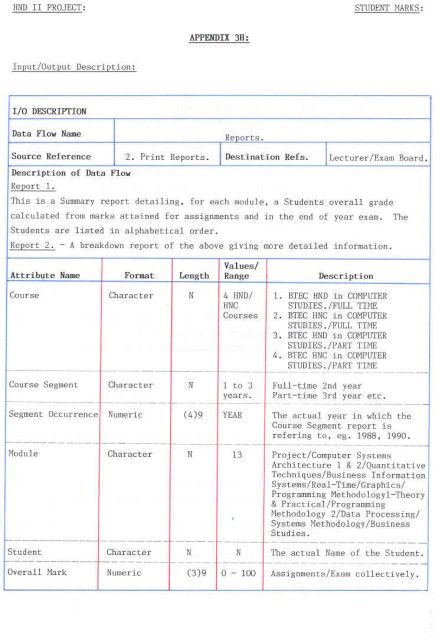
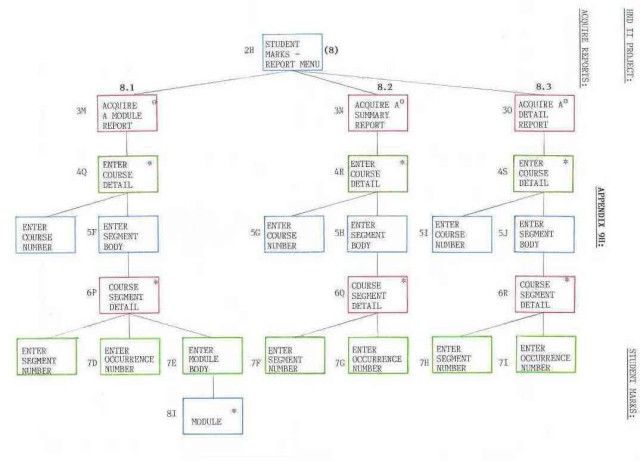
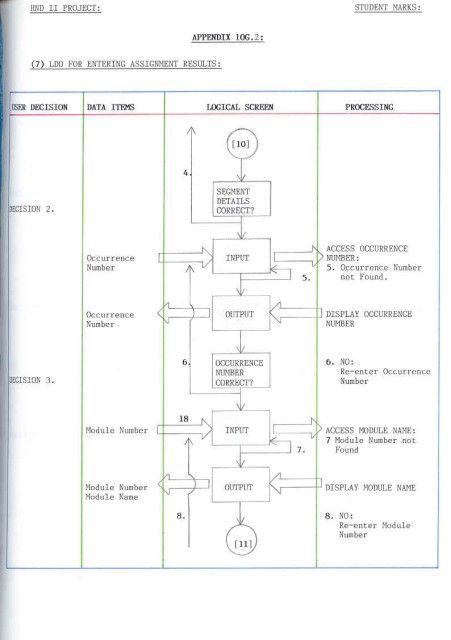
Excerpts from my HND project which made use of Jackson Structured Programming (JSP) as part of the program design phase

Detailed Historical Timeline

Early Years (1960s–1974): Conceptualization and Founding

  • 1960s: Michael A. Jackson works in data processing, encountering limitations in program reliability and seeking more systematic approaches to software design.
  • 1968: Jackson contributes to the early modular programming movement, collaborating with other pioneers.
  • 1970: Jackson leaves John Hoskyns & Company to found Michael Jackson Systems Limited, aimed at fully developing a new design methodology.
  • 1971: JSP becomes the core product of Michael Jackson Systems Limited, offering consultancy and training services.
  • 1974: The name “Jackson Structured Programming” is coined by a Swedish licensee of the company.

Established Method (1975–1979): Documentation and Adoption

  • 1975: Jackson publishes “Principles of Program Design,” the definitive text documenting JSP.
  • 1975: Michael Jackson Systems Ltd. begins offering software tools to support JSP design for COBOL programs.
  • 1977: JSP is widely recognized and adopted in Europe, the US, and Asia.
  • Late 1970s: The UK government adopts JSP (under the name “SDM” – System Development Methodology) as its standard program design method.
  • Late 1970s: The World Health Organization adopts JSP as a standard for program specification. 

Evolution into System Design (1980s): JSD

  • Early 1980s: Building on the principles of JSP, Jackson develops Jackson System Development (JSD) to address the design of entire information systems, not just individual programs.
  • 1983: Jackson publishes “System Development,” formally introducing JSD.
  • 1983-1989: JSD continues to evolve, with new features introduced in subsequent publications and manuals. 

Maturity and Retrospective (1990s–Present)

  • 1990s: Jackson develops the Problem Frames Approach, his third major methodology focusing on requirements analysis.
  • 1997: Jackson receives the Stevens Award for Software Development Methods.
  • 1998: Jackson receives the British Computer Society Lovelace Medal.
  • 2001: At a conference, Jackson provides a retrospective analysis of JSP’s driving forces and its relevance to modern software engineering.
  • Present: While overshadowed by object-oriented and agile methods, JSP principles remain useful for programming “in the small” and handling specific batch processing or embedded software tasks.

Jackson Structured Programming JSP is a program design methodology, overview and timeline

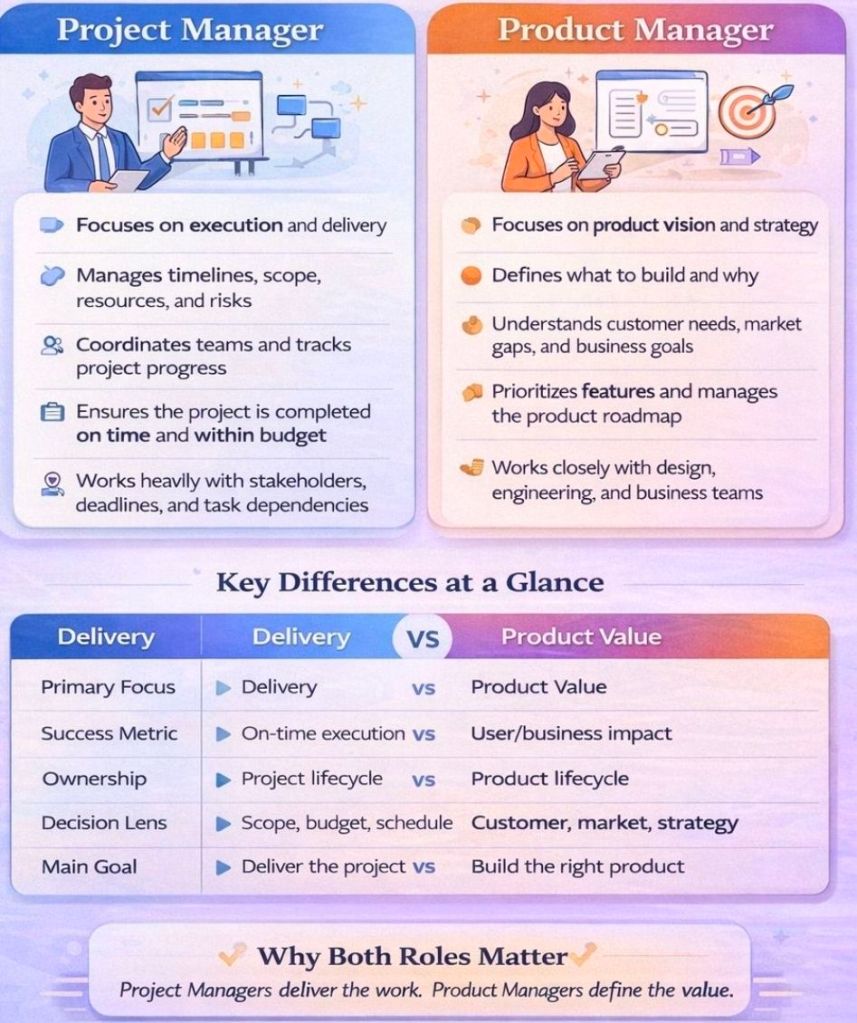
Project Manager vs Product Manager, key differences overview

Project Manager vs Product Manager, key differences overview

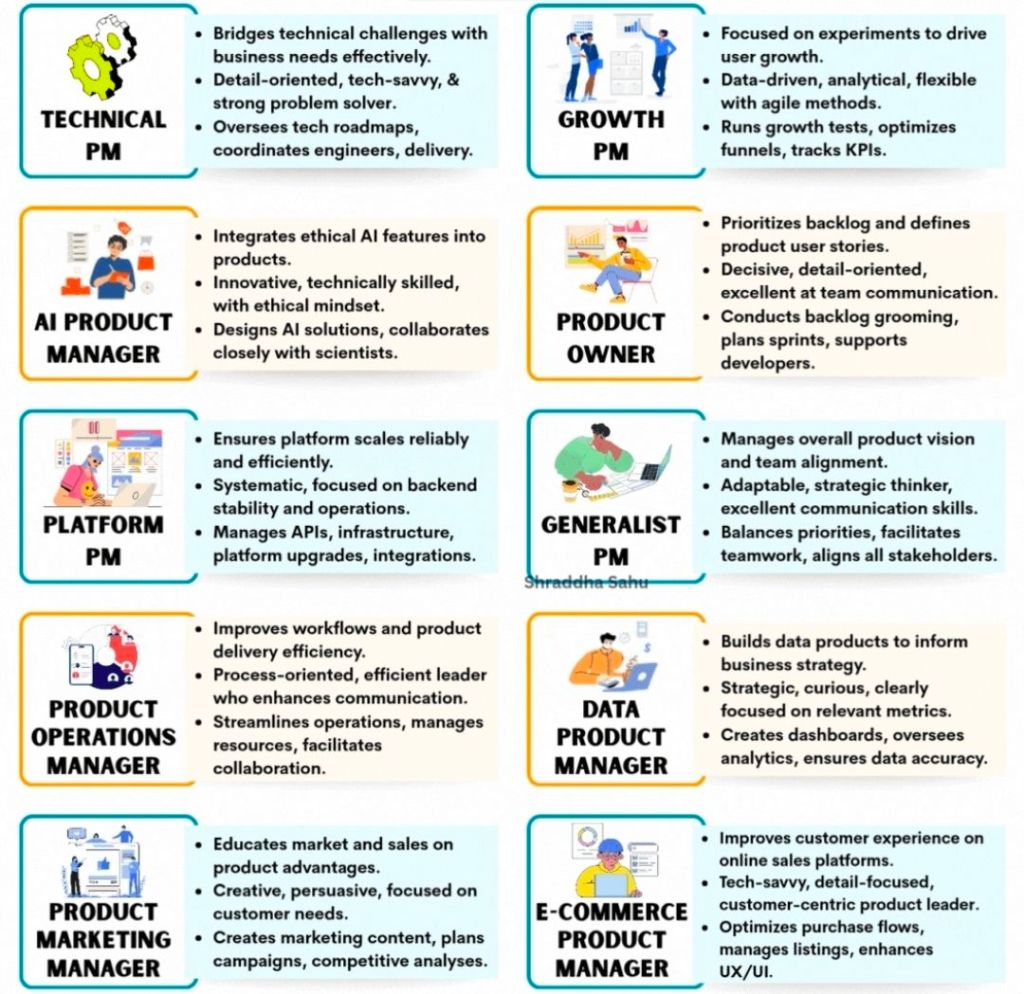
Types of Product Managers Overview

Types of Product Managers Overview

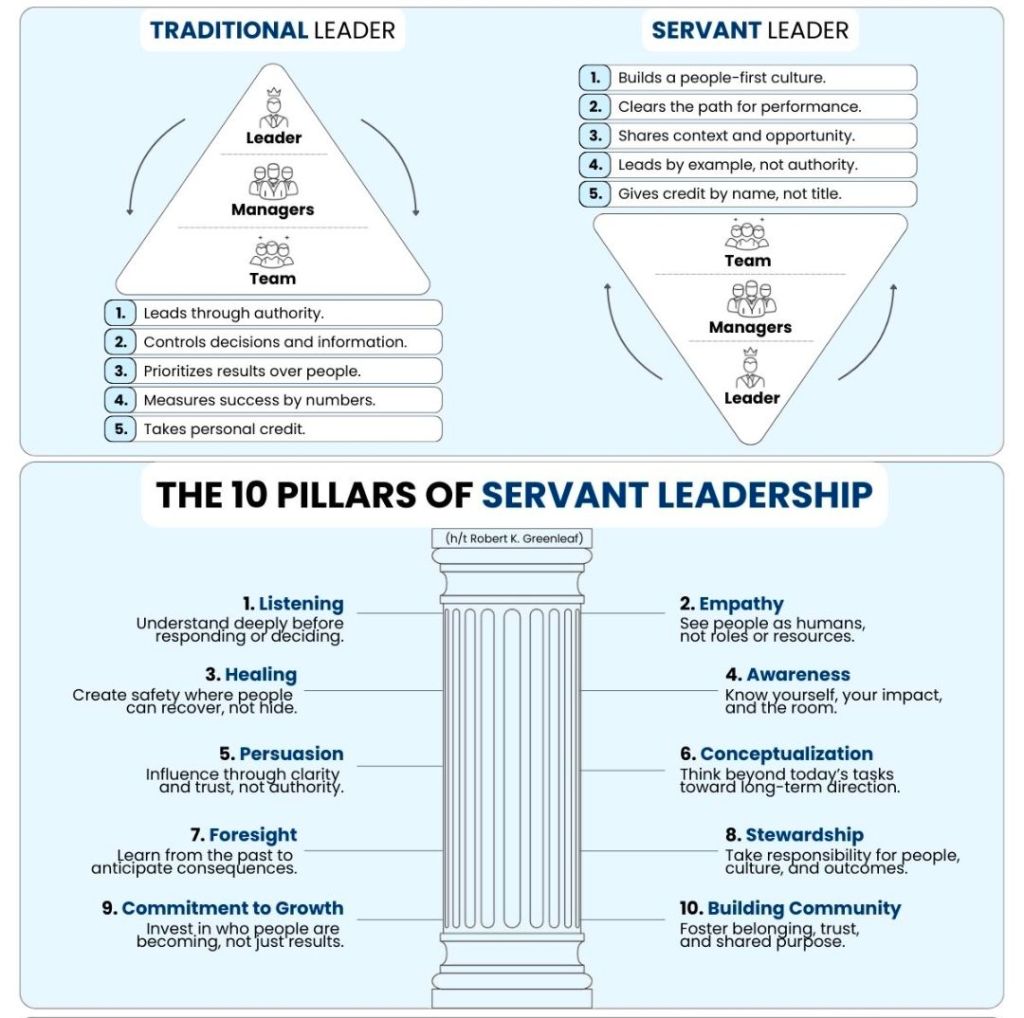
Servant Leadership on a page overview

Servant Leadership on a page overview

PRINCE2 (PRojects IN Controlled Environments) Overview and Timeline by Year

PRINCE2 (PRojects IN Controlled Environments) is a structured, process-based project management methodology focusing on organization, control, and business justification. Originating from UK government IT standards in the 1970s, it has evolved into a globally recognized, tailorable standard used in over 150 countries for projects across various industries. 

PRINCE2 Project Management Summary

  • Core Philosophy: Continued Business Justification (projects must make sense financially), Manage by Exception (delegating authority within limits), and Product-Based Planning.
  • Seven Principles: Projects must have continued business justification, learn from experience, define roles and responsibilities, manage by stages, manage by exception, focus on products, and tailor to suit the project.
  • Seven Processes: Starting a Project, Directing a Project, Initiating a Project, Controlling a Stage, Managing Product Delivery, Managing a Stage Boundary, and Closing a Project.
  • Key Themes: Business Case, Organization, Quality, Plans, Risk, Change, and Progress.
  • Main Benefits: Provides a common language, clear accountability, defined roles, and tailored, consistent documentation. 

Detailed Historical Timeline (1975–2023+)

Era 1: The PROMPT Origins (1975–1988) 

  • 1975: Simpact Systems Ltd develops PROMPT (Project Resource Organisation Management and Planning Techniques) in response to IT projects running over time and budget. PROMPT II introduces a phased approach (Initiation, Specification, Design, Development, Installation, Operation). 

Era 2: The PRINCE Birth (1989–1995)

  • April 1989: The UK Central Computer and Telecommunications Agency (CCTA) adopts PROMPT II as the standard for IT projects, renaming it PRINCE (initially “PROMPT II IN the CCTA Environment”).
  • 1990: PRINCE is released into the public domain and widely adopted by the private sector for non-IT projects, although it is perceived as too rigid for small projects. 

Era 3: The Birth of PRINCE2 (1996–2008) 

  • 1996: PRINCE2 is published by the CCTA. It is rewritten for broader use (not just IT), removing jargon to become a generic project management framework.
  • 1998: PRINCE2 begins undergoing revisions based on user feedback.
  • 2000: The Office of Government Commerce (OGC) becomes the owner of PRINCE2.
  • 2002: The international user community begins consultative updates to the method. 

Era 4: The Modern Revision Era (2009–2022) 

  • 2009: PRINCE2: 2009 Refresh is released by the OGC. This major revision simplifies the method, makes it more customizable, and introduces the seven core principles.
  • 2013: Ownership transfers from the UK Cabinet Office to AXELOS Ltd, a joint venture between the UK Government and Capita.
  • 2017: PRINCE2 2017 Update is published, focusing on increased flexibility, scalability, and better tailoring guidance.
  • 2018: PRINCE2 Agile is launched, bringing a governance layer to agile delivery methods like Scrum and Kanban.
  • 2020: PRINCE2 2017 is renamed “PRINCE2 6th Edition”.
  • 2021: PeopleCert becomes the sole owner of AXELOS and PRINCE2. 

Era 5: The Current Era (2023–Present) 

  • September 2023: PRINCE2 7th Edition is released. The update introduces a “People” element, focusing on change management and team leadership, along with new guidance on Sustainability, Commercial, and Digital & Data management. 
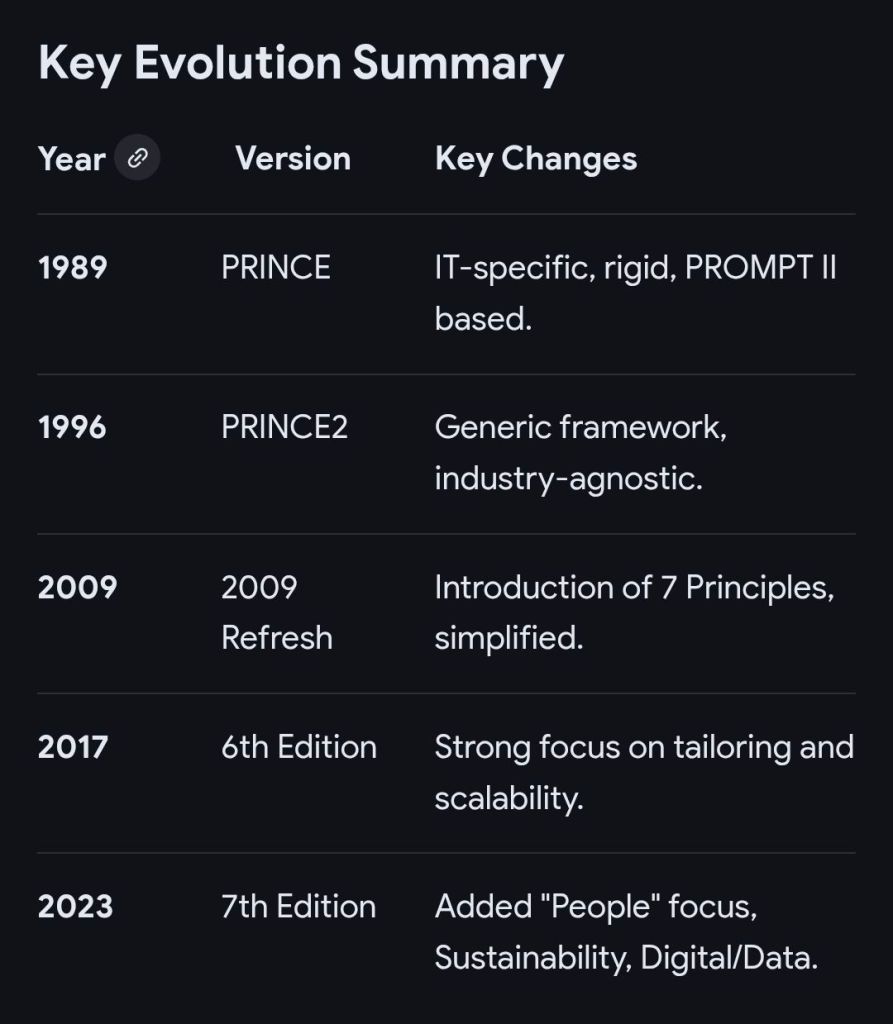
PRINCE2 Key Evolution Summary
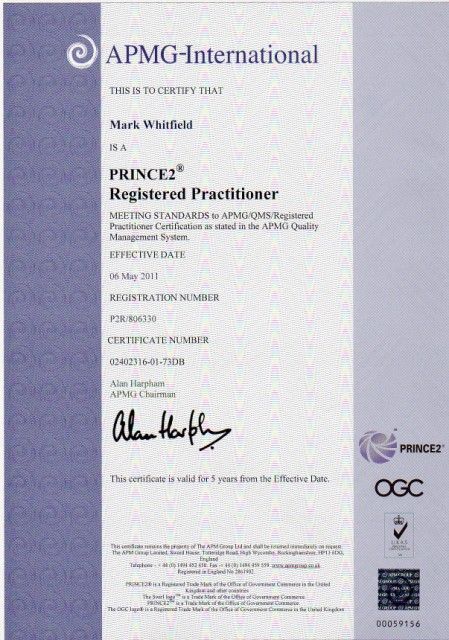
May 2011 – Registered PRINCE2 Practitioner with ILX, Mark Whitfield

PRINCE2 (PRojects IN Controlled Environments) Overview and Timeline by Year

PASCAL Programming Language Overview, Timeline and Technical Insight

Pascal is a historically significant imperative and procedural programming language designed by Niklaus Wirth between 1968 and 1969. It was created to encourage structured programming and efficient data structuring, serving as a clean, disciplined alternative to more complex languages of the time like ALGOL 60 and FORTRAN. 

Key Features and Overview

  • Strong Typing: Every variable must have a defined type (e.g., Integer, Real, Boolean, Char), and the compiler strictly enforces these to prevent errors during execution.
  • Rich Data Structures: Pascal introduced built-in support for complex types including records, sets, enumerations, subranges, and pointers.
  • Structured Control: It uses clear, English-like keywords such as beginendif-then-else, and while to organize program logic into manageable blocks.
  • Educational Focus: Originally intended as a teaching tool, it became the global standard for introductory computer science courses for nearly two decades. 

Historical Timeline of Pascal

The Foundation Era (1960s)

  • 1964–1966: Niklaus Wirth joins the IFIP Working Group to design a successor to ALGOL 60. His “pragmatic” proposal is rejected in favour of the more complex ALGOL 68.
  • 1966: Wirth implements his proposal at Stanford as ALGOL W, which introduces many concepts later found in Pascal.
  • 1968: Wirth begins designing a new language at ETH Zurich, naming it Pascal after the 17th-century mathematician Blaise Pascal. 

The Emergence Era (1970–1979)

  • 1970: The first Pascal compiler becomes operational on the CDC 6000 mainframe, and the official language definition is published.
  • 1971: Formal announcement of Pascal appears in Communications of the ACM.
  • 1972: The first successful port to another system (ICL 1900) is completed by Welsh and Quinn.
  • 1973: The Pascal-P kit (P-code) is released, providing a portable intermediate code that allows Pascal to be easily ported to different hardware.
  • 1975: The UCSD Pascal system is developed at the University of California, San Diego, eventually bringing the language to microcomputers like the Apple II.
  • 1979: Apple releases Apple Pascal, licensing the UCSD p-System for its platforms. 

The Dominance Era (1980–1989)

  • 1983ISO 7185:1983 is published, establishing the first international standard for Pascal.
  • 1983: Borland International releases Turbo Pascal 1.0. Priced at $49.95, its extreme speed and integrated environment revolutionize PC programming.
  • 1984: The Educational Testing Service (ETS) adopts Pascal as the official language for the AP Computer Science exam in the U.S..
  • 1985: Apple introduces Object Pascal on the Macintosh to support object-oriented programming.
  • 1989: Borland adds object-oriented features to Turbo Pascal 5.5, adopting the Apple Object Pascal extensions. 

The Transition and Legacy Era (1990–Present)

  • 1990: The Extended Pascal standard (ISO/IEC 10206) is released, adding modularity and separate compilation.
  • 1995: Borland releases Delphi, a Rapid Application Development (RAD) tool based on Object Pascal, designed for the Windows graphical interface.
  • 1997: The open-source Free Pascal compiler (originally FPK Pascal) emerges to provide a cross-platform alternative to commercial tools.
  • 1999: Pascal is replaced by C++ as the official language for the AP Computer Science exam, marking the end of its educational dominance.
  • Present: Pascal remains active through projects like Lazarus (an open-source IDE for Free Pascal) and continued updates to Embarcadero Delphi for Windows, macOS, Android, and iOS development. 

Pascal is a historically significant, high-level, and statically typed programming language designed in the late 1960s by Niklaus Wirth. Its primary technical goal was to encourage structured programming—a disciplined approach that uses clear, logical sequences and data structuring to make code more readable and reliable. 

Technical Insights

The technical architecture of Pascal is built on a few core pillars that distinguish it from its contemporaries like C or FORTRAN: 

  • Strong Typing: Unlike many early languages, Pascal is strongly typed, meaning data types cannot be mixed or converted without explicit instruction. This reduces runtime errors by catching type mismatches during compilation.
  • Block-Structured Design: Programs are organized into clear blocks (using BEGIN and END), including nested procedures and functions. This hierarchical structure allows for precise control over variable scope.
  • Unique Data Structures: Pascal introduced native support for sets (representing mathematical sets as bit vectors) and variant records, which allow different fields to overlap in memory to save space.
  • One-Pass Compilation: The strict ordering of declarations (constants, then types, then variables, then procedures) was originally designed to allow the compiler to process the entire program in a single pass. 

General Programming Approach

Pascal enforces a “think before you code” philosophy through its rigid syntax and organizational requirements: 

  1. Top-Down Design: The language encourages breaking complex problems into smaller, manageable sub-tasks (procedures and functions).
  2. Explicit Declarations: Every variable must be declared in a specific VAR section before the executable code begins. This prevents the “spaghetti code” common in earlier languages.
  3. Algorithmic Focus: Because the syntax is so close to pseudo-code, the approach focuses heavily on the logic of the algorithm rather than language-specific “tricks”.
  4. Parameter Passing Control: Developers have explicit control over how data moves; using the VAR keyword allows passing by reference (modifying the original variable), while omitting it passes by value (working on a copy). 

Modern Relevance

While its peak in education was the 1980s and 90s, Pascal evolved into Object Pascal, which powers modern tools: 

  • Delphi: A popular IDE by Embarcadero Technologies used for rapid application development (RAD) on Windows, macOS, and mobile.
  • Free Pascal (FPC) & Lazarus: Open-source alternatives that bring modern features like generics and anonymous methods to the language. 

COBOL Programming Overview & Detailed Timeline History by Era and Year

COBOL, (COmmon Business-Oriented Language) is a high-level, compiled programming language designed specifically for business, finance, and administrative systems. Developed as a portable “stopgap” for the US Department of Defense, it has endured for over 65 years and remains the backbone of global financial infrastructure. 

Programming Overview

  • Design Philosophy: It features a “prose” syntax designed to be self-documenting and readable by non-technical business professionals.
  • Structure: Programs are strictly divided into four Divisions:
    1. Identification: Defines the program name and metadata.
    2. Environment: Specifies the physical computer and files used.
    3. Data: Defines variables, structures, and record layouts.
    4. Procedure: Contains the logic and executable statements.
  • Core Paradigms: Originally strictly procedural and imperative, COBOL was updated in 2002 to include object-oriented features.
  • Key Characteristics: It is known for its verbosity (using over 300 reserved words), weak/static typing, and exceptional reliability in large-scale batch and transaction processing. 

Detailed Historical Timeline

Era 1: The Foundation (1950s)

This era focused on consolidating disparate manufacturer-specific languages into a single, hardware-independent standard for business. 

  • 1955: Grace Hopper develops FLOW-MATIC, which introduced English-like commands and influenced COBOL’s design.
  • 1958: IBM releases COMTRAN, another major precursor focused on commercial translation.
  • 1959 (April): Mary Hawes organizes a meeting at the University of Pennsylvania to propose a common business language.
  • 1959 (May): The Pentagon hosts a meeting creating CODASYL (Committee on Data Systems Languages) to oversee the project.
  • 1959 (December): The first specifications, “COBOL – Specifications for a COmmon Business Oriented Language,” are released. 

Era 2: Early Versions & Rapid Adoption (1960–1967)

The language quickly transitioned from a theoretical specification to a functioning industry standard. 

  • 1960COBOL-60 is officially published.
  • 1960 (August): The first COBOL program runs on an RCA 501.
  • 1961COBOL-61 is released, providing a major cleanup of original logical flaws.
  • 1962: IBM announces COBOL as its primary development language, ending work on COMTRAN.
  • 1963COBOL-61 Extended is released, introducing “Sort” and “Report Writer” facilities.
  • 1965COBOL Edition 1965 adds mass storage file handling and table processing.

Era 3: Standardization & Dominance (1968–1984)

COBOL became the most widely used language in the world as ANSI and ISO codified its rules. 

  • 1968COBOL-68 (ANSI X3.23-1968) is published as the first official US standard.
  • 1970: COBOL becomes the world’s most widely used programming language.
  • 1974COBOL-74 is standardized, introducing the DELETE statement and file organization improvements.
  • 1978: ISO formally adopts the COBOL-74 standard. 

Era 4: Structured Programming & Modernization (1985–2001) 

The language evolved to support better logic flow while managing the massive global codebase. 

  • 1985COBOL-85 introduces structured programming features like END-IFEVALUATE, and nested subprograms.
  • 1989: First amendment to COBOL-85 adds Intrinsic Function Modules.
  • 1997: Gartner Group estimates 200 billion lines of COBOL code are in existence.
  • 1999: Massive effort peaks to patch legacy COBOL code for the Y2K (Year 2000) problem

Era 5: The Object-Oriented & Modern Era (2002–Present)

Recent updates focus on interoperability with modern web and cloud environments. 

  • 2002COBOL-2002 introduces Object-Oriented Programming (OOP), Unicode support, and recursion.
  • 2014COBOL-2014 standardizes IEEE 754 data types and method overloading.
  • 2020: The COVID-19 pandemic highlights a critical shortage of COBOL programmers to maintain aging state unemployment systems.
  • 2023COBOL-2023 adds asynchronous messaging (SEND/RECEIVE) and transaction processing (COMMIT/ROLLBACK).
  • 2024: COBOL celebrates its 65th anniversary of active service.

COBOL Programming Overview & Detailed Timeline History by Era and Year