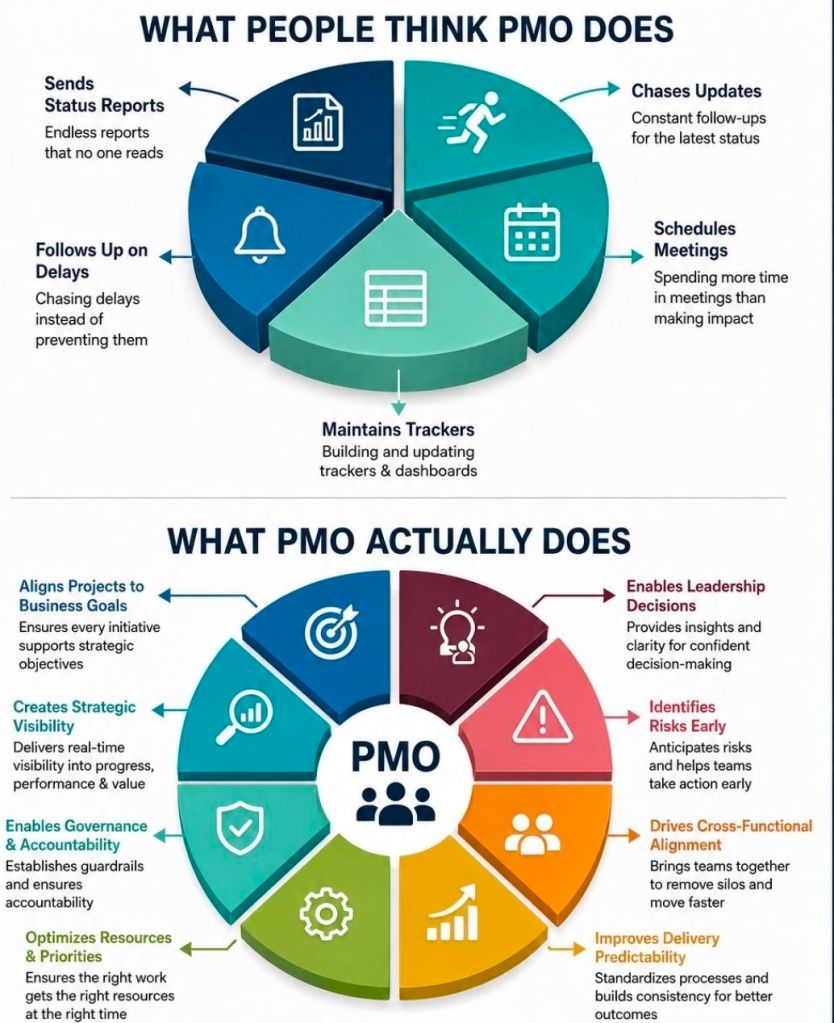
PMO Project Management Office Responsibility

PMO Project Management Office Responsibility

A Project Management Office (PMO) is a centralized department within an organization tasked with standardizing project management processes, enforcing governance, and aligning projects with strategic business goals. Its primary mission is to optimize resource utilization, mitigate risks across the portfolio, and improve the overall success rate of projects.

The core responsibilities of a PMO vary based on its organizational maturity and type (Supportive, Controlling, or Directive), but generally span five major domains:

1. Governance and Standardisation

  • Developing Methodologies: Establishing uniform frameworks, processes, and project management methodologies (such as Agile, Waterfall, or hybrid models) across all departments.
  • Creating Templates: Developing standard documentation, templates, and tools to ensure consistency in project initiation, tracking, and reporting.
  • Conducting Audits: Monitoring compliance with established standards through health checks and project reviews to identify and correct process deviations.

2. Strategic Portfolio Management

  • Strategic Alignment: Ensuring every project investment directly supports the organization’s high-level strategy and long-term business goals.
  • Project Prioritization: Evaluating incoming project proposals and business cases to prioritize high-value initiatives while deferring or canceling low-priority options.
  • Benefits Realization: Tracking and measuring project outcomes to ensure that completed deliverables provide the expected economic or structural value to the company.

3. Monitoring, Tracking, and Reporting

  • Performance Reporting: Collecting and analyzing performance metrics via dashboards to provide regular progress updates to senior executives and stakeholders.
  • Dependency Management: Tracking cross-project dependencies, scheduling overlaps, and potential bottlenecks to prevent organizational conflicts.
  • Risk Management: Identifying systemic risks and early-warning signs of failing projects to trigger timely interventions or escalation protocols.

4. Resource and Capacity Management

  • Resource Optimization: Coordinating the allocation and utilization of personnel, skill sets, and budgets across the entire project portfolio.
  • Capacity Planning: Assisting line managers with strategic capacity planning to identify talent gaps, prevent team burnout, and support hiring decisions.
  • Effort Estimation Support: Providing historical data and expert insights to help project teams produce accurate cost and time estimates.

5. Training and Knowledge Management

  • Mentorship and Coaching: Providing regular guidance, professional coaching, and continuous support to project managers and their delivery teams.
  • Skills Development: Organizing training sessions and educational paths on core project management practices, specialized software, and new industry standards.
  • Lessons Learned Repository: Maintaining a centralized repository of project documentation, historical metrics, and post-project reviews to drive continuous organizational learning.
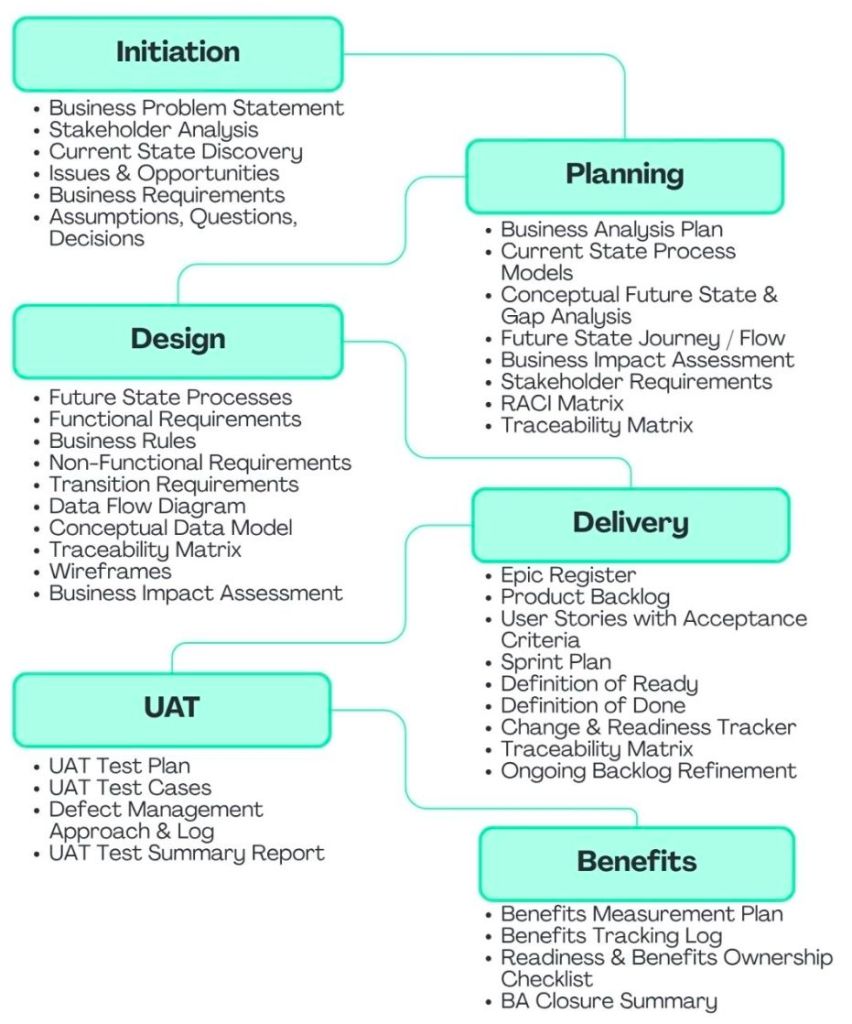
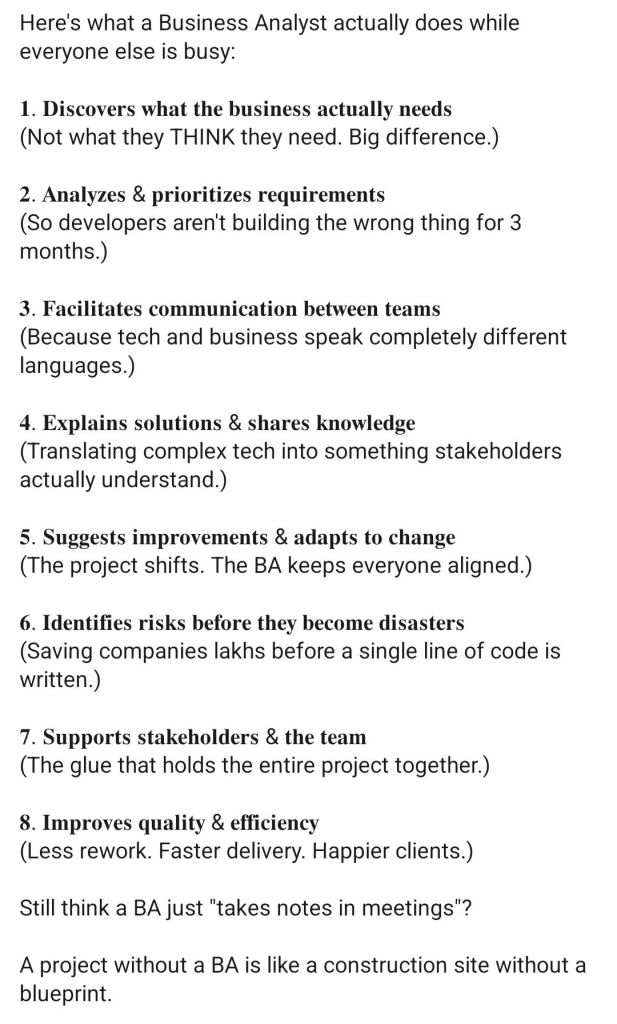
Business Analyst Project Deliverables

Business Analyst BA Project Deliverables
BA, Business Analyst Project Deliverables

Business analyst deliverables are essential documentation and artifacts produced throughout a project to define business needs, bridge gaps between stakeholders and technical teams, and ensure solutions deliver value. Key deliverables include the Business Case, Stakeholder List, Requirement Packages (BRD/User Stories), Process Models, and Transition Requirements.

Core Business Analyst Deliverables by Phase:

  • Initiation/Discovery:
    • Business Case: Outlines the justification for the project, including cost-benefit analysis and ROI.
    • Problem Statement/Project Scope: Defines the “why” and boundaries of the project.
    • Stakeholder Map/Matrix: Identifies key stakeholders and their influence.
  • Planning:
    • Business Analysis Plan: Outlines the approach, tasks, and techniques to be used.
    • Communication Plan: Defines how stakeholders will receive updates.
  • Elicitation & Analysis:
    • Current State Assessment (As-Is): Documents how processes work today.
    • Future State Modeling (To-Be): Visualizes the desired future processes.
    • Gap Analysis: Details what needs to change to get from current to future state.
    • Business Requirements Document (BRD): A formal document detailing what the business needs to achieve.
  • Solution Definition (Design & Implementation):
    • Functional/Non-Functional Requirements (SRS): Technical details on how the system should act.
    • Use Cases/User Stories: Detailed scenarios of user interactions with the system.
    • Prototypes/Wireframes: Visual representations of user interfaces.
    • Product Backlog (Agile): A prioritized list of user stories.
  • Evaluation & Closure:
    • Acceptance Criteria & Test Cases: Defines the criteria for a completed feature.
    • Solution Assessment/Validation Report: Evaluates if the delivered solution met the needs.
    • Lessons Learned/Closing Report: Documents successes and improvements for future projects.

Key Takeaways:

  • Formal vs. Informal: Plan-driven (Waterfall) projects use heavy formal documentation (BRD, SRS), while change-driven (Agile) projects focus on lighter tools like user stories, Jira tickets, and prototypes.
  • Value-Driven: Deliverables exist to facilitate communication, align stakeholders, and ensure project success.

Note: The specific deliverables required are usually determined in the initial project planning stage.

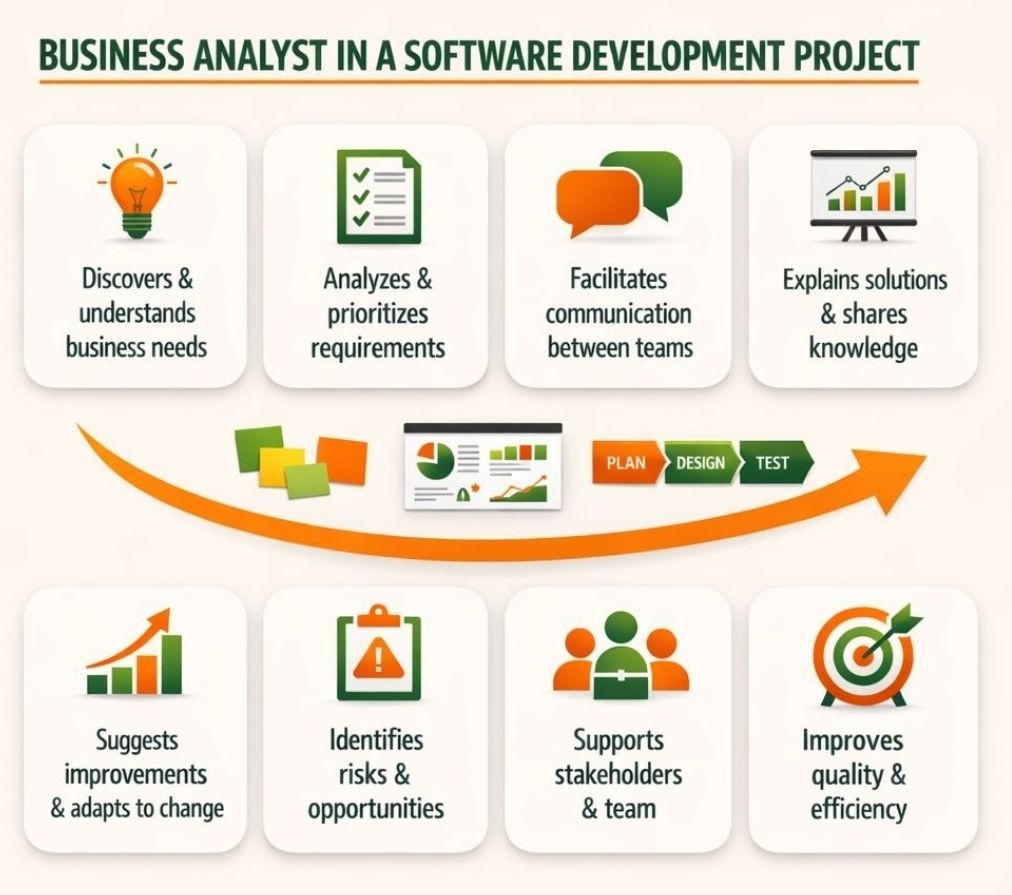
BA Business Analyst in a Software Development Project

Business Analyst BA in a Software Development Project
BA in a Software Development Project

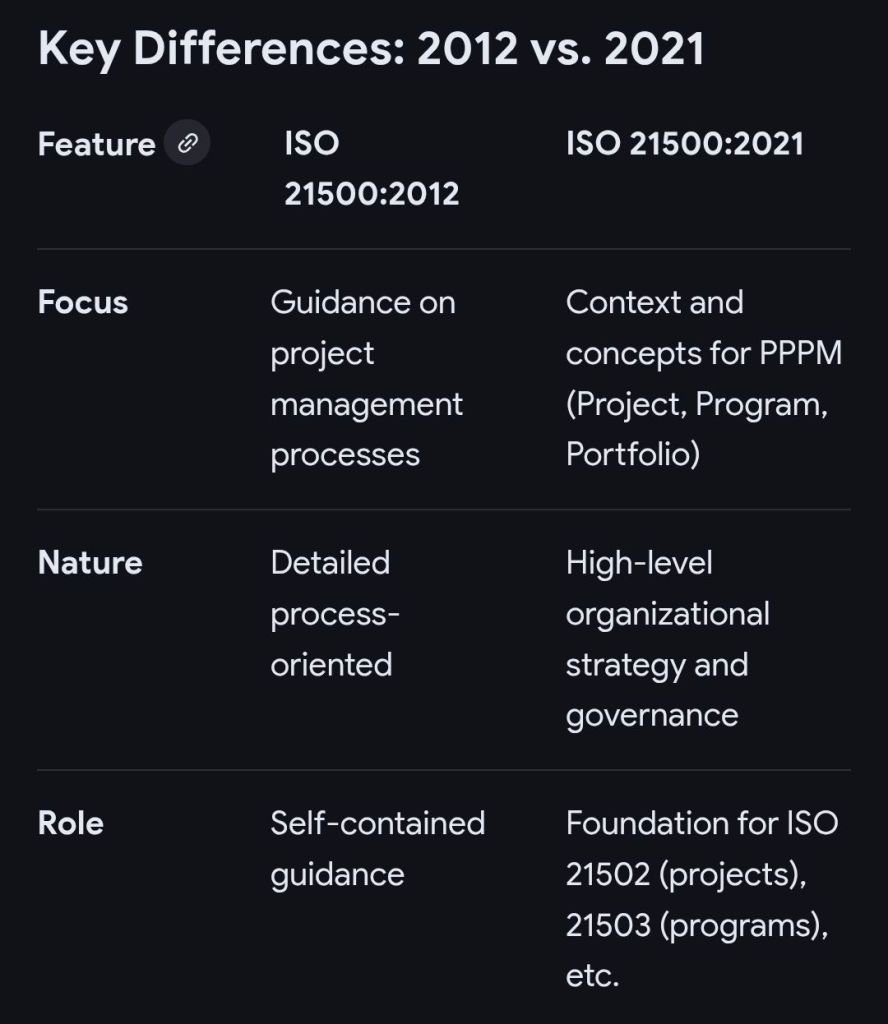
ISO 21500 high-level guidance on project, program, and portfolio management

ISO 21500 is a set of international standards providing high-level guidance on project, program, and portfolio management. Initially published in 2012 as a guidance document for project management, it was updated in 2021 to serve as the foundational, high-level “Context and Concepts” document for a broader suite of ISO project management standards (ISO 21500–21505). 

ISO 21500 Development Timeline

  • 2007: The ISO Technical Committee ISO/TC 258 (Project, programme and portfolio management) began working on a global project management standard.
  • September 2012: ISO 21500:2012 (Guidance on Project Management) was officially published, providing a generic framework for project management and a common language for professionals.
  • 2017: Work intensified on updating the standard to reflect new best practices and to transition into a family of standards (21500-21505).
  • 2020: ISO 21502:2020 was published, taking over the detailed guidance on project management formerly covered by ISO 21500:2012.
  • March 2021: ISO 21500:2021 (Project, programme and portfolio management – Context and concepts) was released, replacing the 2012 edition, with a focus on defining the overarching environment for project management rather than specific processes. 

Detailed Historical Timeline of Project Management

The following timeline details the evolution of project management leading up to the ISO standards. 

1. Ancient Era – Pre-1900: Foundation & Construction

  • Ancient Times: The pyramids of Giza, the Great Wall of China, and Roman infrastructure demonstrated early, sophisticated, large-scale project management.
  • 1896: Carol Adami developed the harmonogram, a precursor to visualization tools. 

2. Early Modern Era (1900–1950): Scheduling Techniques 

  • 1910-1915: Henry Gantt developed the Gantt Chart, revolutionizing scheduling by tracking project progress visually.
  • 1940s: Large-scale projects, such as the Manhattan Project, pioneered modern, integrated project teams. 

3. The Golden Age (1950–1980): Formalization

  • 1957: DuPont introduced the Critical Path Method (CPM) for chemical plant construction.
  • 1958: The U.S. Navy developed PERT (Program Evaluation and Review Technique) for the Polaris missile project.
  • 1962: U.S. Department of Defense mandated Work Breakdown Structures (WBS).
  • 1965: Founding of the International Project Management Association (IPMA).
  • 1969: Founding of the Project Management Institute (PMI). 

4. The Silver Age (1980–2000): Methodologies & Technology

  • 1984: Eliyahu Goldratt published “The Goal,” introducing the Theory of Constraints (TOC).
  • 1986: Takeuchi and Nonaka defined Scrum as a flexible, holistic product development strategy.
  • 1987: PMI published the first Project Management Body of Knowledge (PMBOK) guide.
  • 1989: The UK government developed PRINCE (Projects in Controlled Environments), later evolving into PRINCE2.
  • 1995: Scrum was formalized for software development by Jeff Sutherland and Ken Schwaber.
  • 1996: PMI published the first official edition of the PMBOK Guide. 

5. Modern Era (2000–Present): Agile & Global Standardization 

  • 2001: Publication of the Agile Manifesto, highlighting flexible and user-focused development.
  • 2007: ISO began developing international project management standards.
  • 2012: ISO 21500:2012 published, providing a global, standard-agnostic guide for project management.
  • 2017: The Association for Project Management (APM) received a Royal Charter.
  • 2020-2021: Shift towards Agile and hybrid methodologies; PMI released PMBOK 7th Edition, focusing on principles over processes.
  • 2021: ISO 21500:2021 (updated) and ISO 21502:2020 (detailed guidance) were established as the new global standard for project management.

ISO 21500 high-level guidance on project, program, and portfolio management

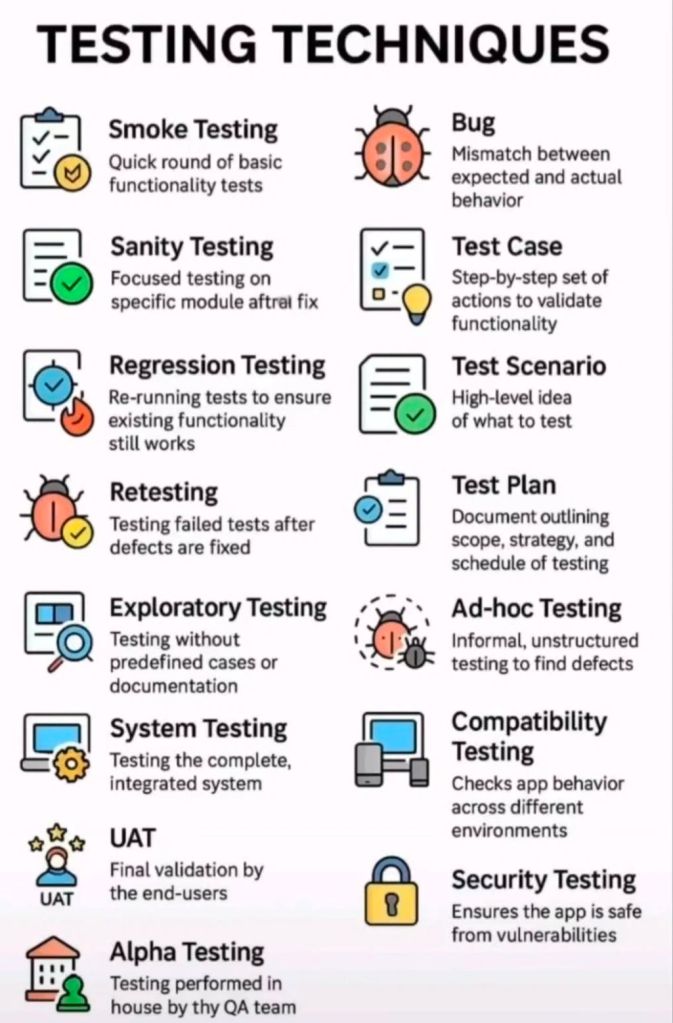
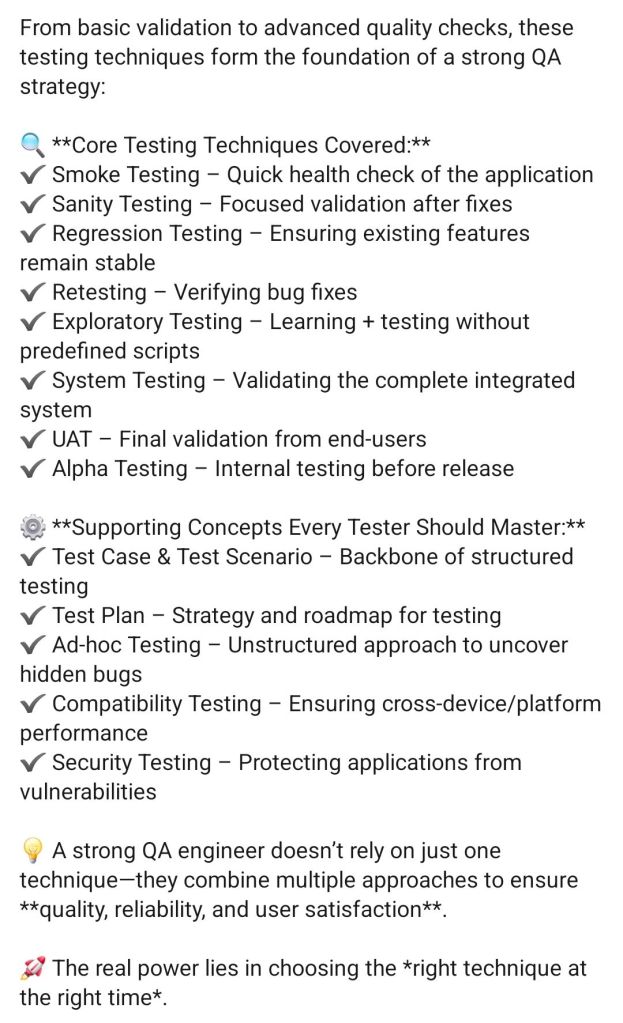
IT Project Testing Techniques

IT Project Testing Techniques

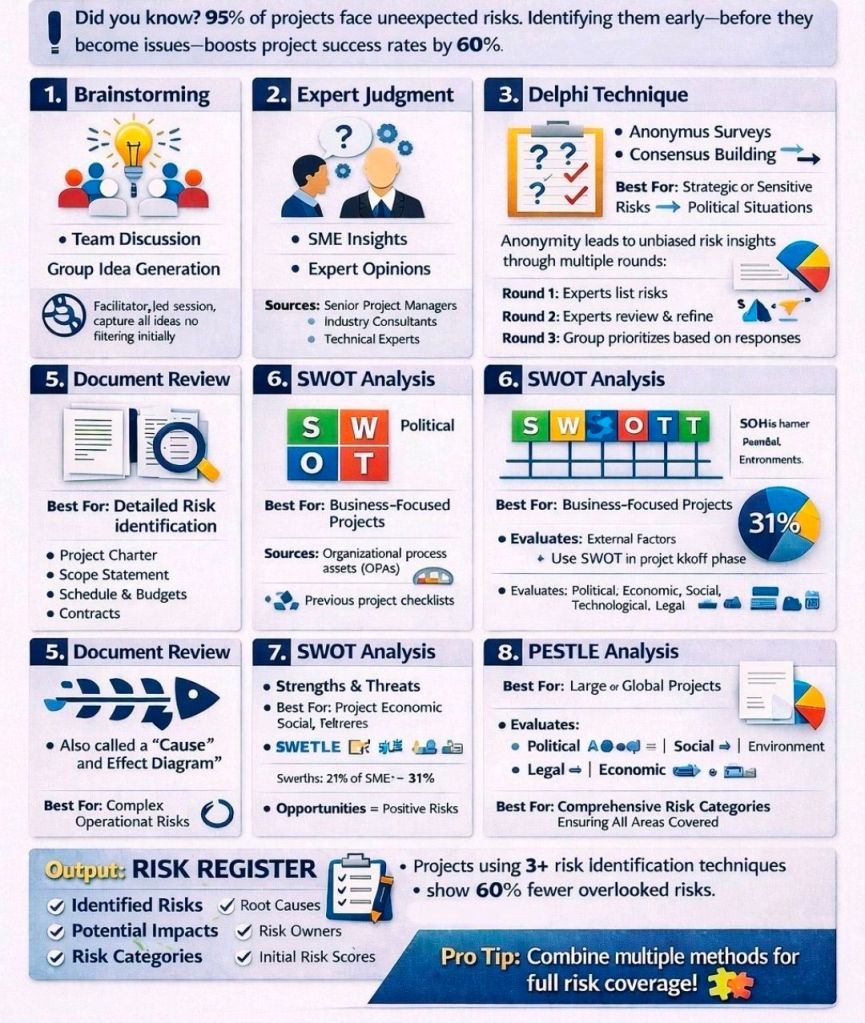
Project Risk Identification Techniques

Project Risk Identification Techniques

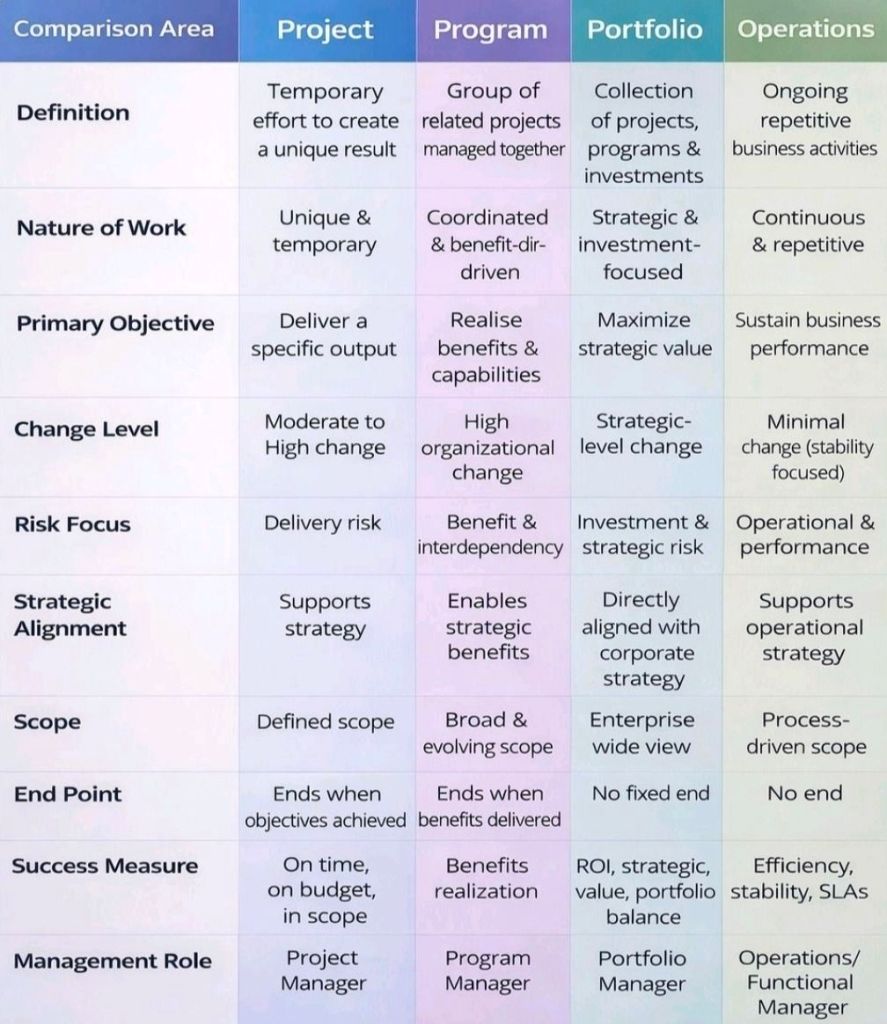
Area – Project vs Program vs Portfolio vs Operations

Area – Project vs Program vs Portfolio vs Operations

Buy Editable Project Program Management Template Examples, FREE upgrades and Additions

https://www.eloquens.com/channel/mark-whitfield

https://officedocdepot.com/channel/i_pro_pm_templates/

https://ebay.us/m/Japc7k

https://flevy.com/author/ipropmtemplates

https://www.depop.com/products/nonstopmark-free-upgrades-4-life-50/

Buy Editable Project Program Management Template Examples, FREE upgrades and Additions