Mark Whitfield’s Project Management templates are a comprehensive, editable suite of over 200 documents designed for Agile, Waterfall, and PRINCE2 methodologies, based on over 30 years of project delivery experience. Available through his website (click banner link above), Etsy, Flevy and Eloquens, these templates are designed to be used across the project lifecycle—from initiation to closure—and include lifetime free updates and additions.
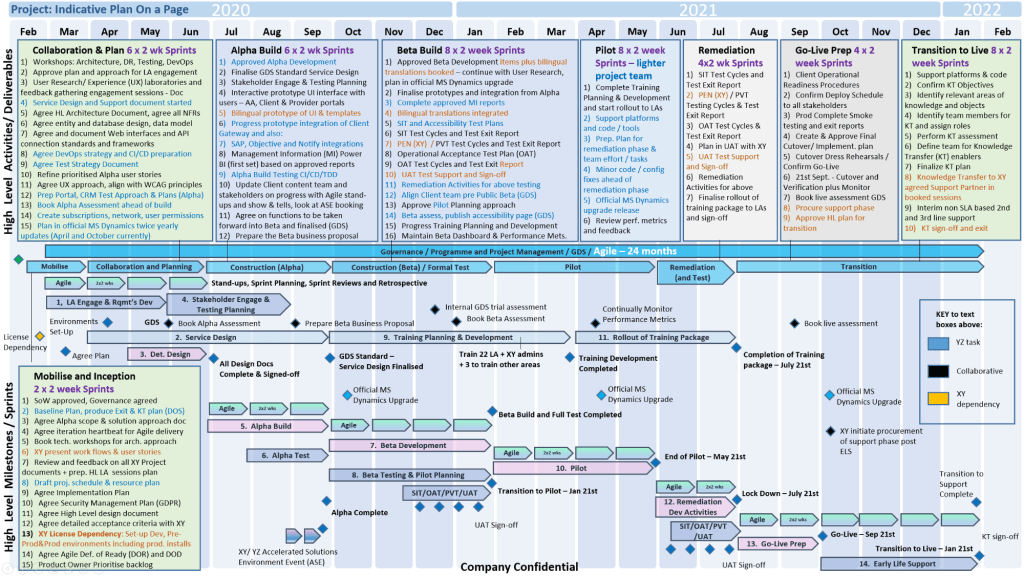
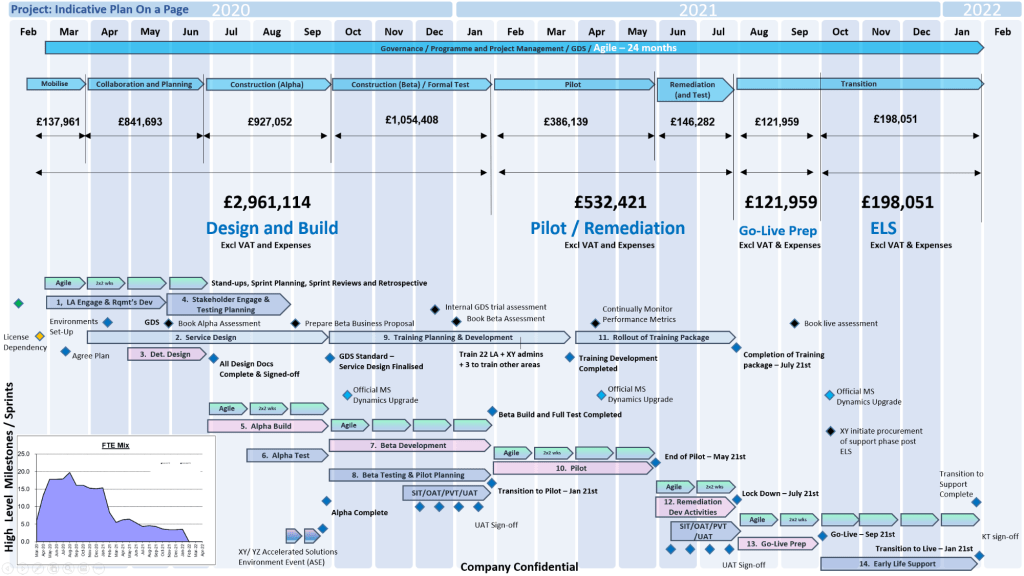
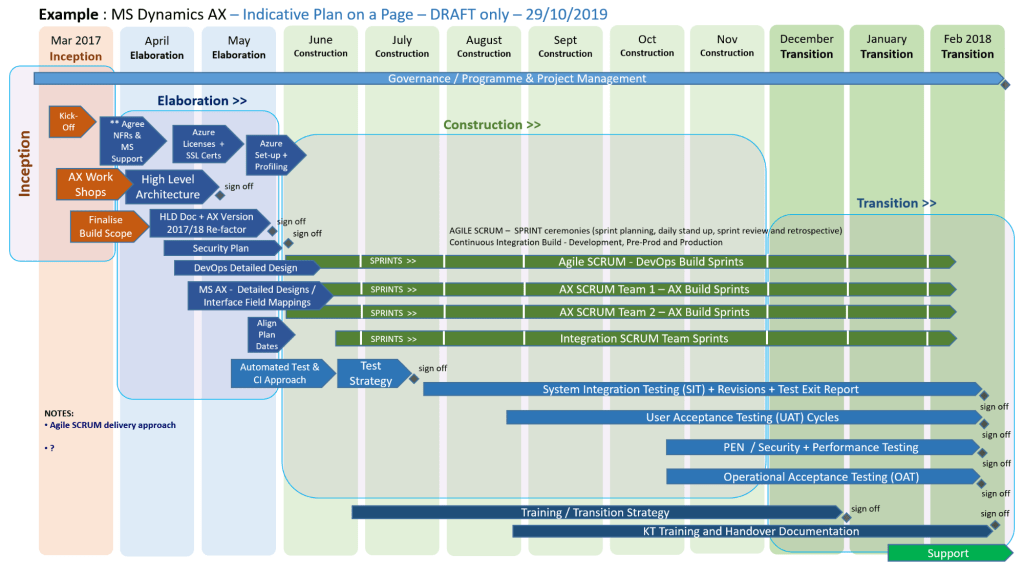
Many POaP Plan On a Page examples
Full Overview of Mark Whitfield Template Bundle
The bundle, priced at around £38.00 (as of April 2026), provides tools for MS Excel, Word, PowerPoint, and MS Project (.mpp).
1. Planning & Scheduling
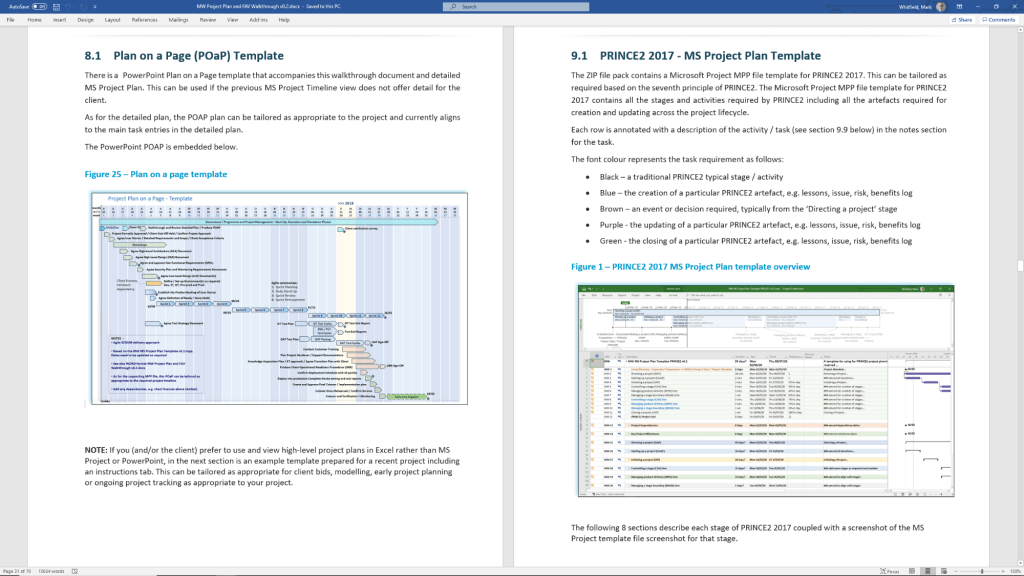
MS Project (MPP / MSP): Includes full PRINCE2 7th Edition, Agile Scrum, and SDLC (Software Development Life-cycle) plans.
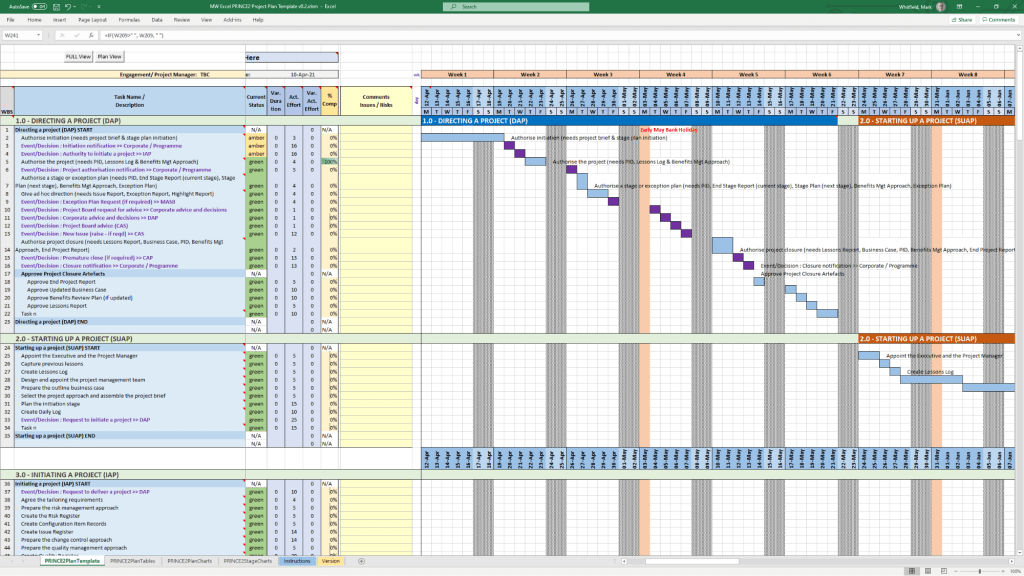
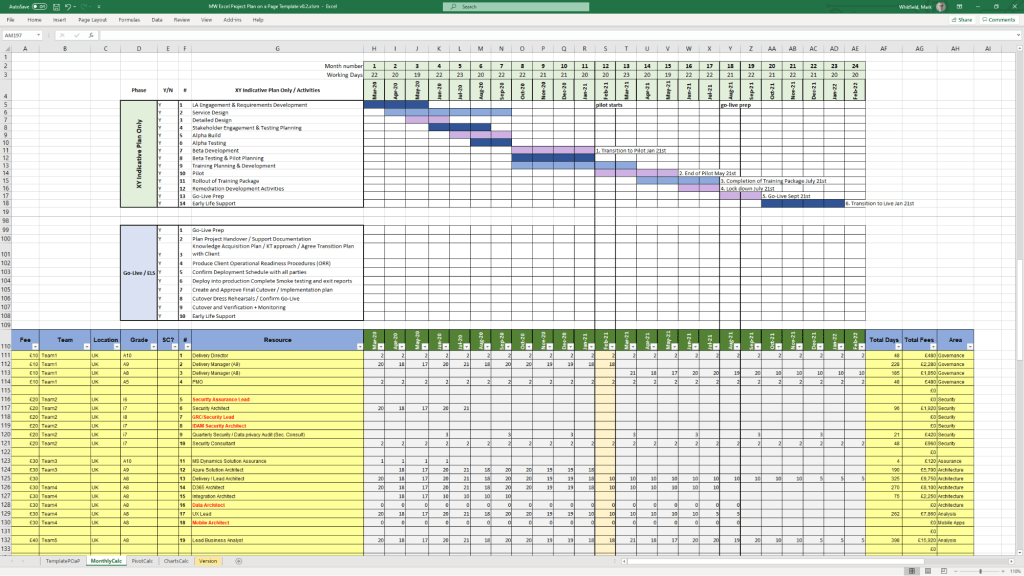
Excel Detailed Plans: Includes Gantt chart tracking for users without MS Project.
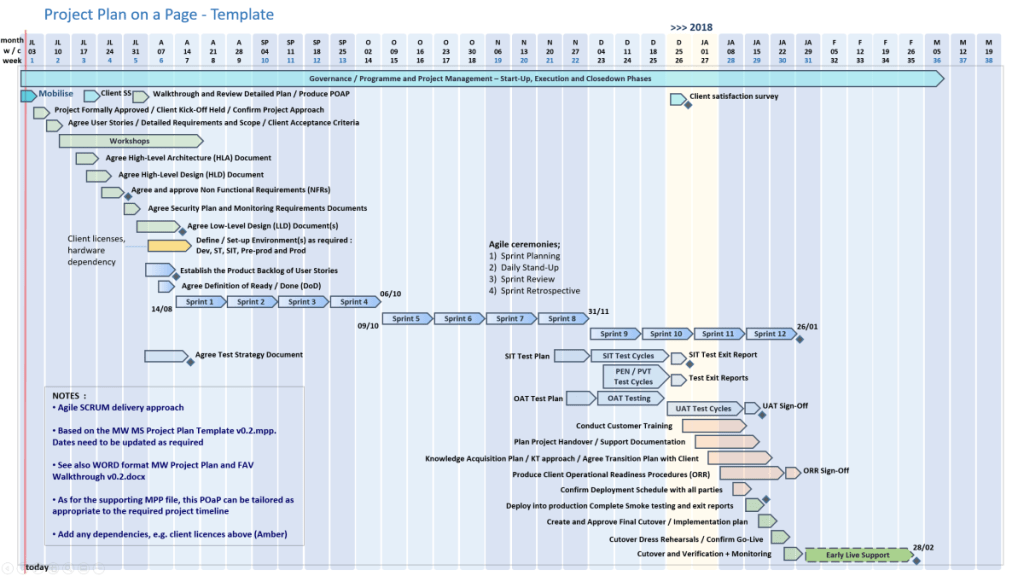
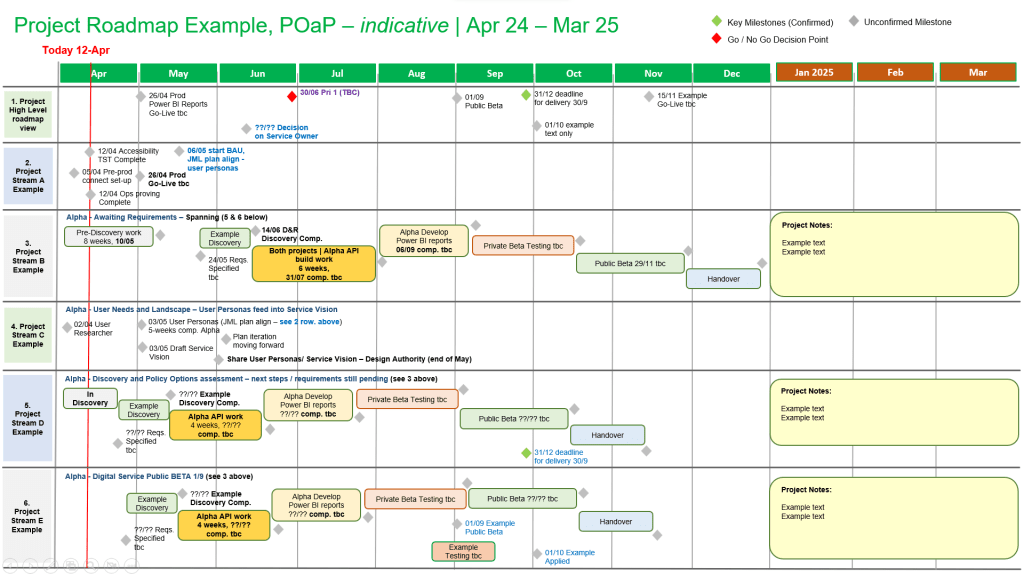
Plan on a Page (POaP): Over 30 PowerPoint examples for executive summaries.
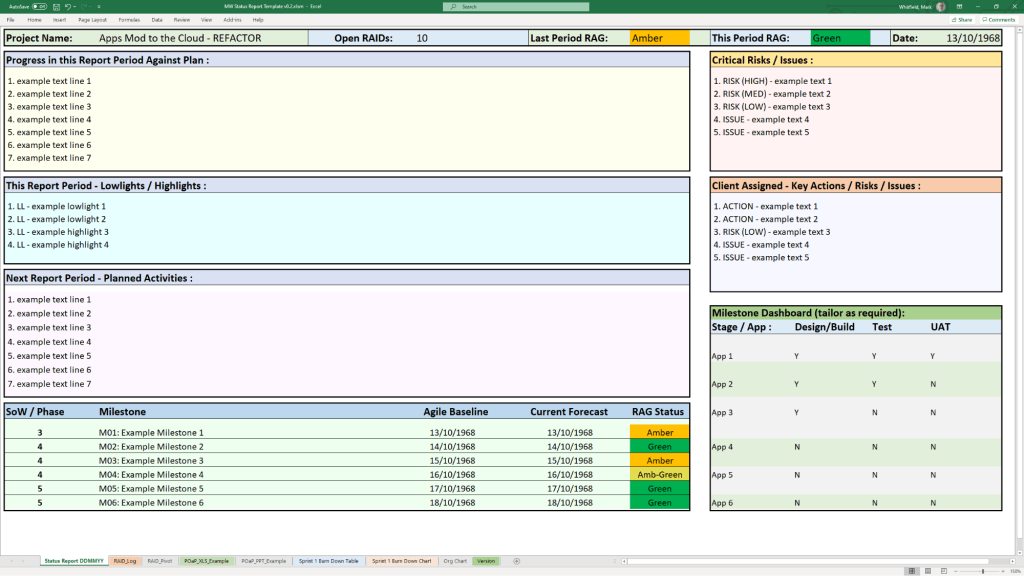
Example Plan On a Page POaP
2. PRINCE2 & Governance
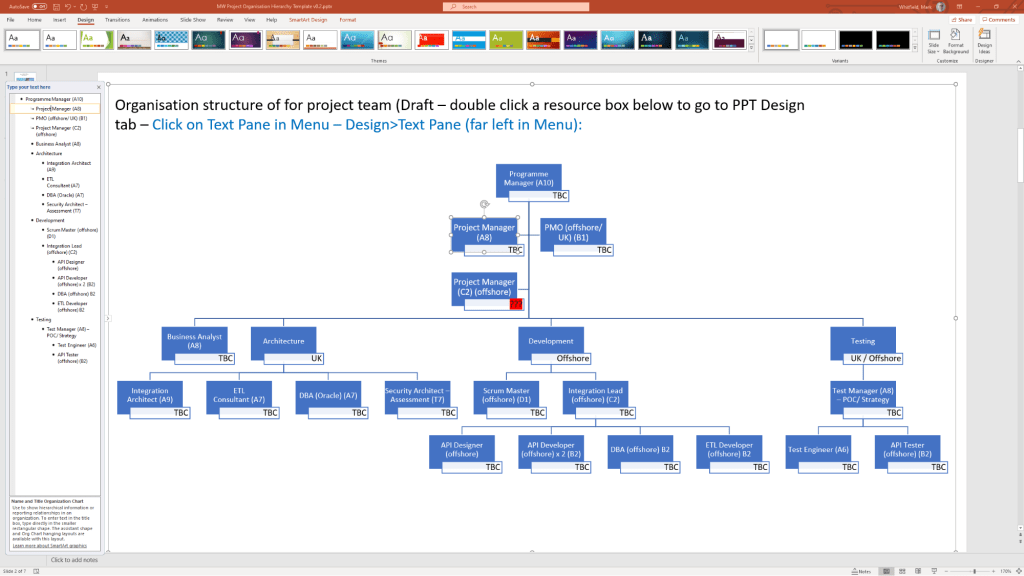
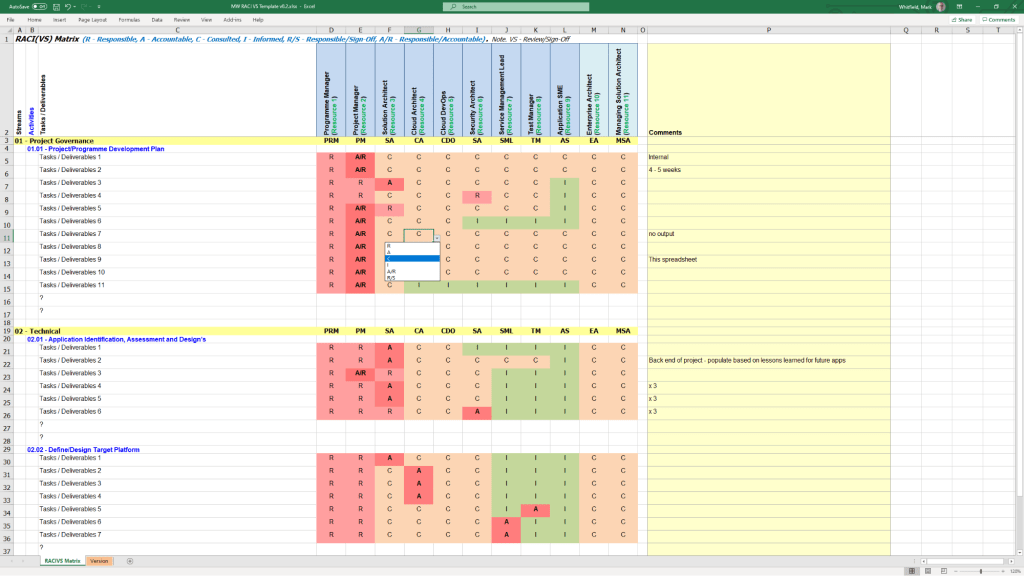
Full set of over 200 documents including Project Initiation Document (PID), Business Case, Work Packages, Risk Management Strategy, and Configuration Item Records.
Reporting: Highlight reports, exception reports, and end-stage reports.
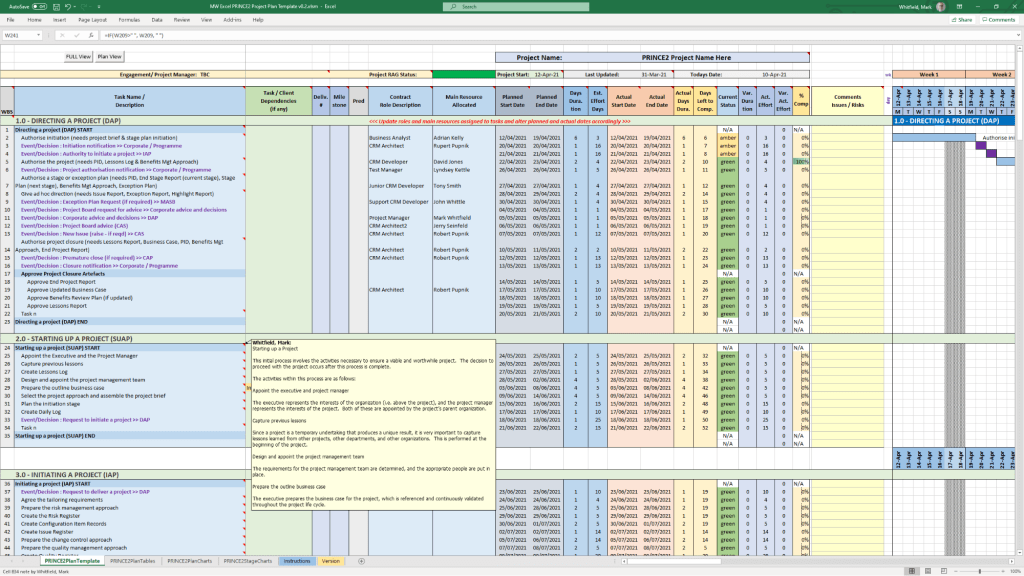
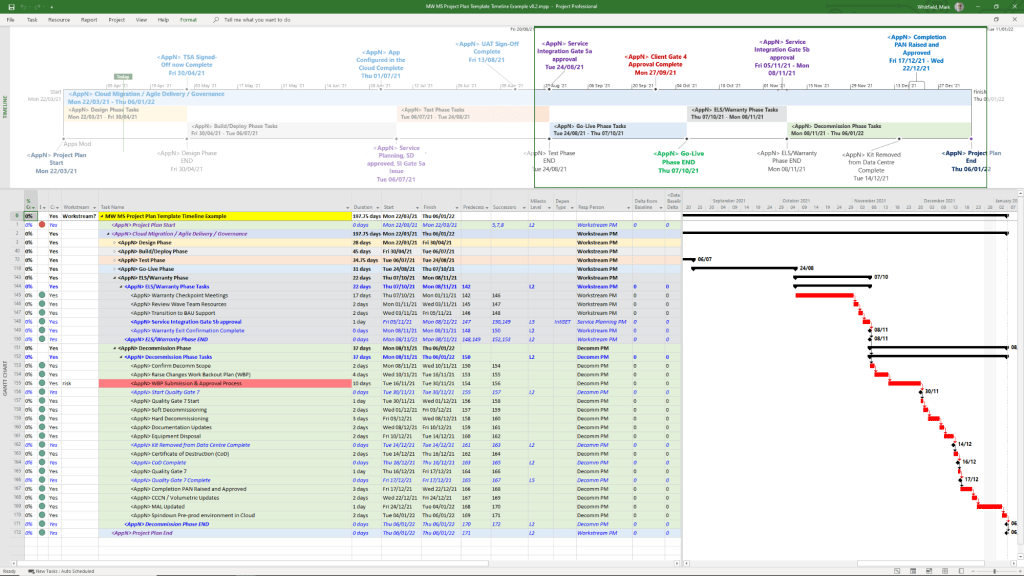
PRINCE2 Delivery Plan in MS Excel Example
3. Tracking & Risk Management
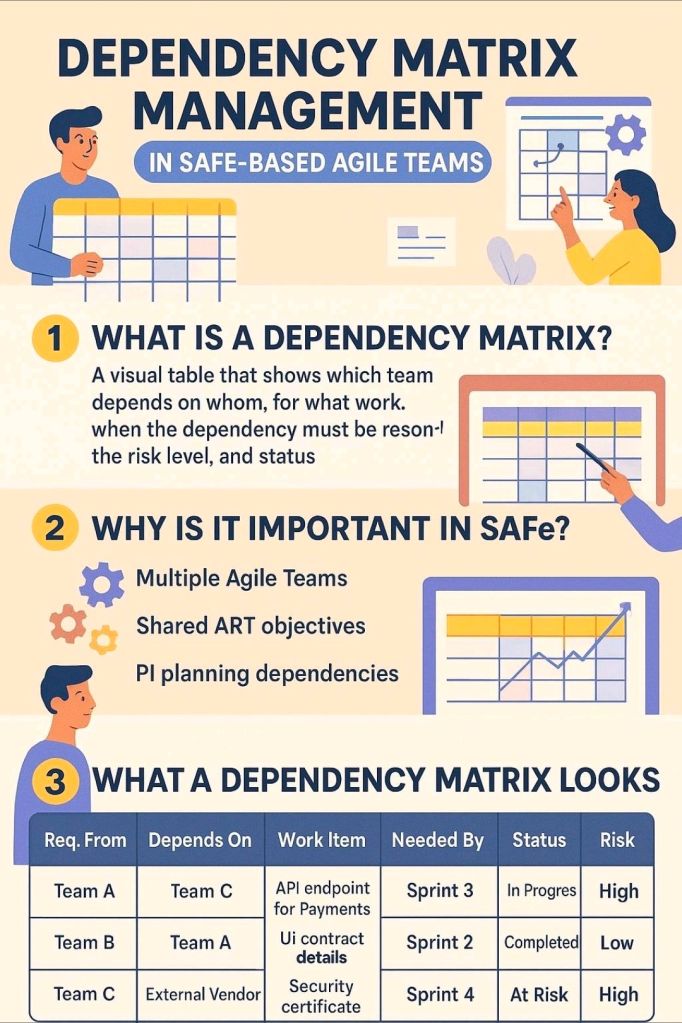
RAID Logs: Comprehensive trackers for Risks, Assumptions, Issues, and Dependencies (includes simple and detailed versions).
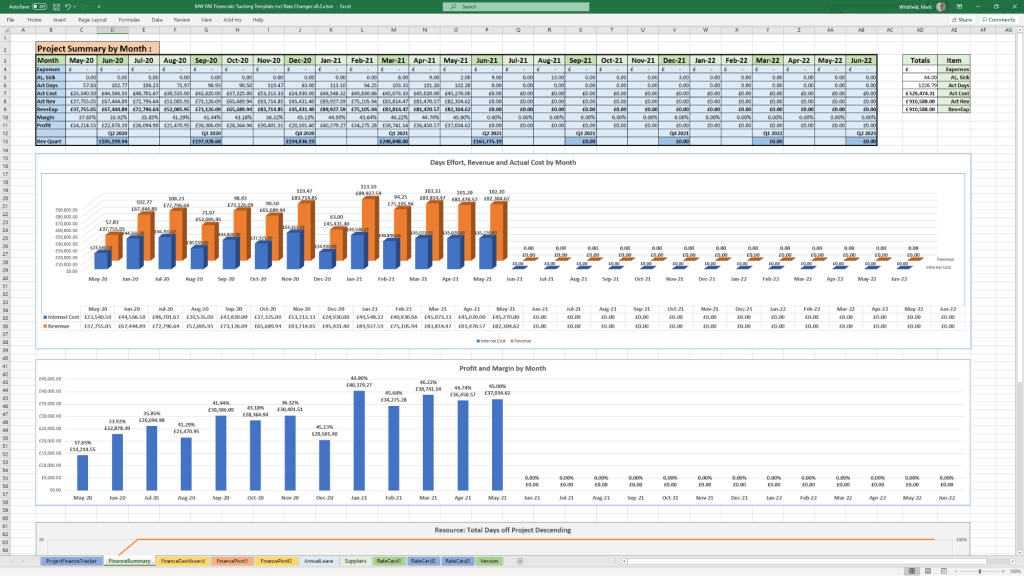
Finance Trackers: Simple and full project finance trackers (forecasting, actuals, variance, rate lookups).
SDLC: Detailed Software Development Life-cycle plans.
Deployment/Runbook: Execution and release planning documents.
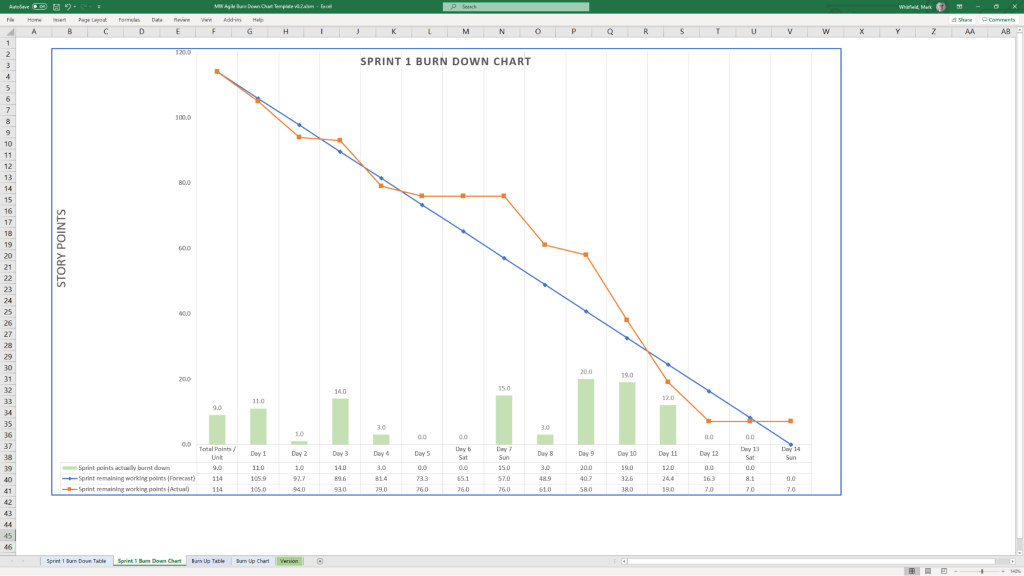
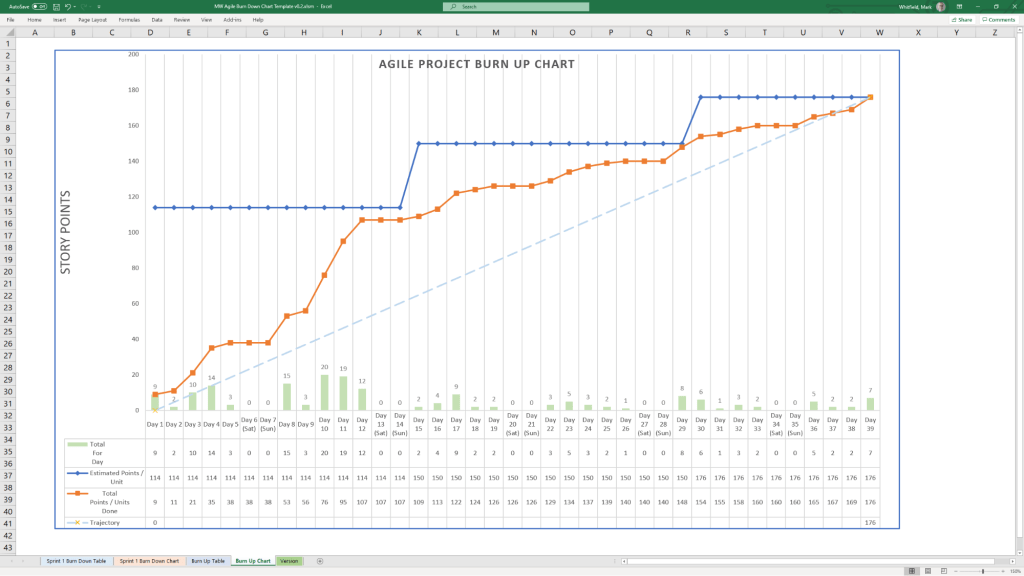
Agile: Burn down and burn up charts.
Example Agile Scrum Burn Down Chart
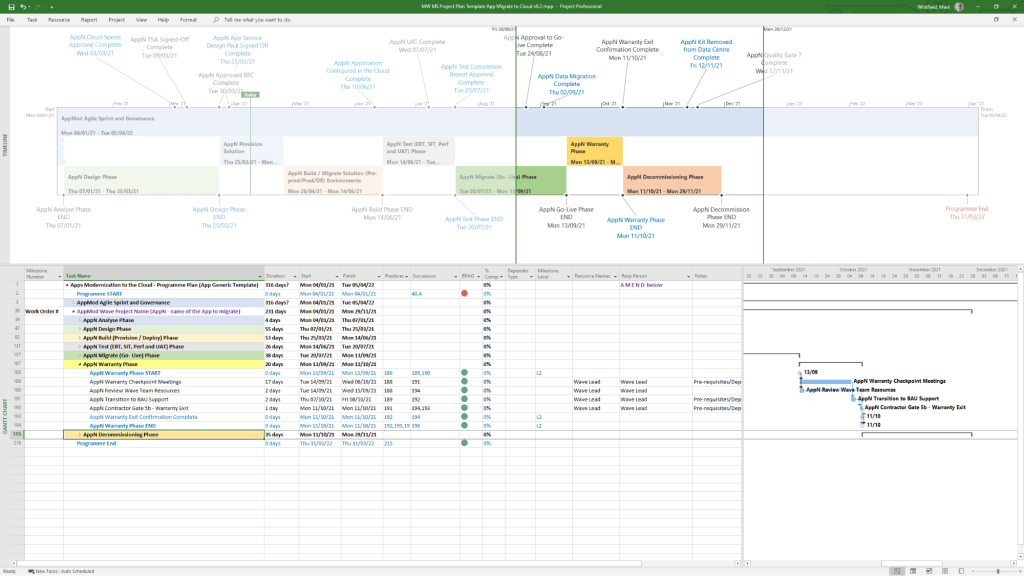
Detailed Timeline by Project Life Cycle
Templates provide detailed MS Project (.mpp) and Excel schedules that map out the standard project life cycle over time. The plans include notes and color-coded tasks (black: standard task, blue: artifact creation, brown: decision/event, purple: artifact update).
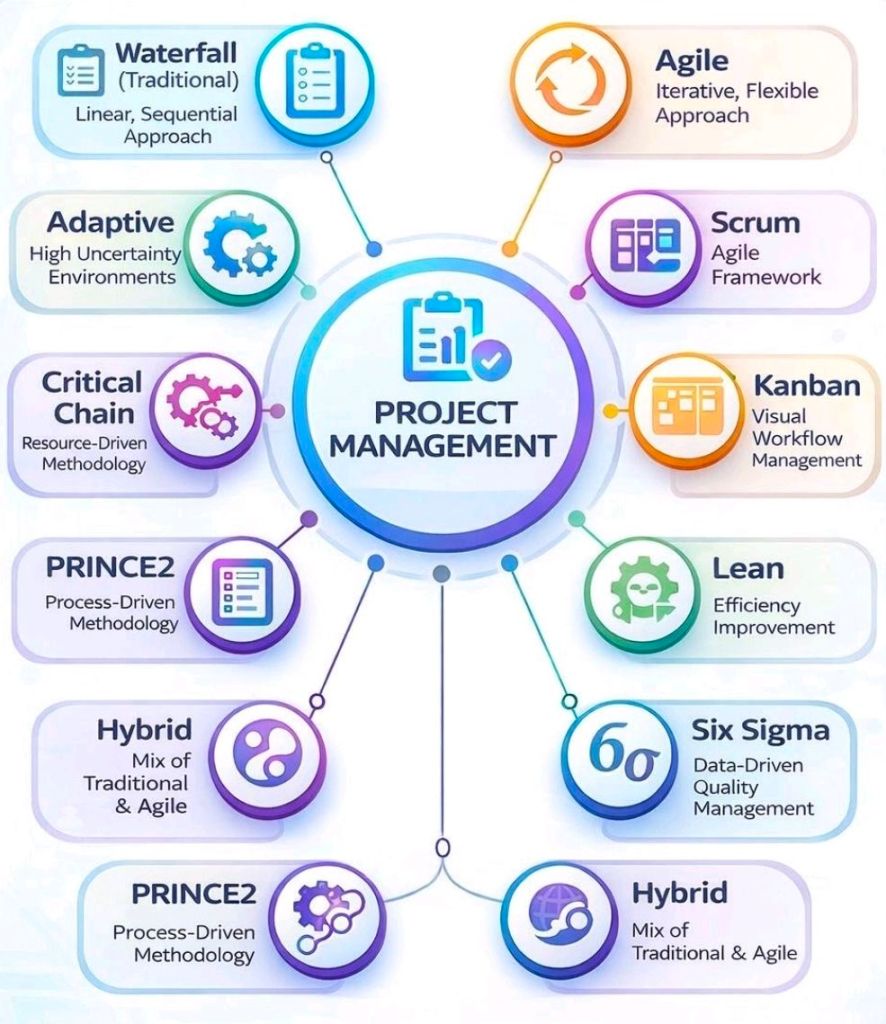
This is a detailed, comprehensive historical timeline of project management methodologies, tracing the evolution from ancient practices to modern adaptive frameworks.
I. Pre-Modern Era (Before 1900): Foundation of Task Coordination
2570 BC (Great Pyramid of Giza): Completion of the pyramids, demonstrating early project organization with managers for each of the four faces, planning, and logistics.
208 BC (Great Wall of China): Construction of the Great Wall, involving massive workforce organization divided into soldiers, citizens, and criminals.
1850s (Transcontinental Railroad): US railroad projects requiring large-scale resource and schedule management.
1896 (Harmonogram): Karol Adamiecki developed the harmonogram, a predecessor to the Gantt chart (published in 1931).
II. Early Modern Era (1910s–1950s): The Scientific Management Era
This era brought “scientific management” to project control, focusing on efficiency and visualization.
1910s (Gantt Chart): Henry Gantt developed the Gantt chart, a visual tool for scheduling tasks over time.
1911 (Scientific Management): Frederick Taylor published The Principles of Scientific Management, focusing on efficiency and time-saving.
1931–1936 (Hoover Dam): One of the first large-scale applications of Gantt charts for complex scheduling.
1942–1945 (Manhattan Project): Development of the atomic bomb, creating a need for rapid, complex planning and large-scale team coordination.
III. The “Golden Age” of Project Management (1950s–1960s): Formal Methodologies
This era introduced mathematical models for managing complex, interdependent tasks.
1956 (AACE Formed): The American Association of Cost Engineers (now AACE International) was formed, specializing in cost control and scheduling.
1957 (Critical Path Method – CPM): Developed by Dupont Corporation to manage chemical plant maintenance shutdowns.
1958 (Program Evaluation and Review Technique – PERT): Created by the US Navy Special Projects Office for the Polaris missile submarine project to manage task time and risk.
1962 (Work Breakdown Structure – WBS): The US Department of Defense mandated the use of WBS for large, complex projects.
1965 (IPMA Founded): The International Project Management Association (IPMA) was launched, the world’s first project management association.
1969 (PMI Founded): The Project Management Institute (PMI) was launched to promote the profession, later developing the PMP certification.
IV. The “Silver Age” (1970s–1980s): Systems and Controls
1970s (Waterfall Introduction): While used informally earlier, the Waterfall methodology was formalized for software development in the 1970s, emphasizing sequential phases.
1975 (PROMPTII): Simpact Systems Ltd created PROMPTII, a methodology to handle cost overruns in computer projects, which later formed the basis of PRINCE.
1975 (Mythical Man-Month): Fred Brooks published his seminal work on software engineering project management.
1978 (Toyota Production System): Lean production and Kanban techniques, used in manufacturing, began to influence project workflow.
1984 (Theory of Constraints – TOC): Dr. Eliyahu Goldratt published The Goal, introducing the Theory of Constraints for managing constraints (bottlenecks).
1986 (Scrum): Takeuchi and Nonaka defined Scrum as a project management style for fast-paced development.
1987 (PMBOK Guide): The Project Management Institute published the first Project Management Body of Knowledge (PMBOK) white paper.
1989 (PRINCE): The UK government launched PRojects IN Controlled Environments (PRINCE), the standard for information systems projects.
V. Rebirth and Modern Era (1990s–2000s): Agile and Adaptive Methods
1994 (CHAOS Report): The Standish Group published the first report documenting high IT project failure rates.
1995 (Scrum Formalization): Jeff Sutherland and Ken Schwaber formally defined the Scrum framework.
1996 (PRINCE2): PRINCE was updated to PRINCE2 to become a generic, more flexible methodology applicable to all project types.
1997 (Critical Chain Project Management – CCPM): Eliyahu Goldratt invented CCPM, based on the Theory of Constraints.
1998 (PMBOK Standard): The American National Standards Institute (ANSI) recognized PMBOK as a standard.
2001 (Agile Manifesto): 17 software developers met to publish the Manifesto for Agile Software Development, prioritizing collaboration and adaptability over rigid plans.
2007 (Kanban for Software): David Anderson adopted Kanban for software development, focusing on visualizing work and limiting work-in-progress.
VI. The Contemporary Era (2010s–Present): Hybrid, AI, and Speed
2012 (ISO 21500): The International Organization for Standardization published ISO 21500:2012, “Guidance on Project Management”.
2017 (PMBOK 6th Ed & PRINCE2 Update): PMI introduced Agile/adaptive practices into PMBOK, while AXELOS released a more flexible PRINCE2.
2018 (PRINCE2 Agile): PRINCE2 Agile was launched to combine the governance of PRINCE2 with the flexibility of Agile.
2021 (PMBOK 7th Ed): A major shift in PMI standards, moving from process-based to principle-based, focusing on project outcomes.
2020s–Present (AI/Hybrid): Rise of AI-driven project management, automated reporting, and hybrid methodologies combining Waterfall stability with Agile speed.
Project Management Methodologies, historical timeline by era and year
Scrumban is a hybrid Agile project management framework that blends the structured planning and roles of Scrum with the continuous flow and visualization of Kanban. Originally designed as a transition method for teams moving from Scrum to Kanban, it has evolved into a popular, distinct approach for teams needing to manage unpredictable work (e.g., support, maintenance) while maintaining prioritized planning. It focuses on pull-based workflows, limiting Work-in-Progress (WIP), and continuous improvement.
Scrumban Summary
Best Used For: Teams needing more flexibility than Scrum (no rigid sprints) but more structure than Kanban (needs planning cycles).
Key Features: Visual board (Kanban), Work-in-Progress (WIP) limits, on-demand or iterative planning, and a pull-based workflow.
Differences from Parent Frameworks:
vs. Scrum: No set sprint length or rigid roles; work is pulled continuously rather than planned in batches.
vs. Kanban: Uses planning meetings and team retrospectives, whereas classic Kanban is purely continuous.
Detailed Historical Timeline of Scrumban
1. The Pre-Scrumban Era (Pre-2008)
1950s (Kanban Origin): Toyota develops Kanban to optimize manufacturing production processes, focusing on Just-in-Time (JIT) production.
1986 (Scrum Concept): Takeuchi and Nonaka introduce the “rugby” approach to product development in the Harvard Business Review, fostering flexible, team-based development.
1995 (Scrum Introduced): Ken Schwaber and Jeff Sutherland formalize the Scrum framework for software development.
2001 (Agile Manifesto): Release of the Agile Manifesto, establishing core agile principles.
2004 (Kanban in Software): David J. Anderson suggests applying Kanban practices to software development to improve workflow.
2000-2007 (Evolution): Microsoft teams begin experimenting with “feature crews” that mix structured planning with continuous delivery, planting the seeds for hybrid approaches.
2. Conception and Definition (2008–2010)
2008:Corey Ladas coins the term “Scrumban” and introduces the concept in his work, proposing it as a mechanism for teams to transition from Scrum to Kanban, or as a sustainable hybrid for maintaining focus while reducing iteration overhead.
2008: Ajay Reddy discusses the “Scrumban (R)evolution,” emphasizing that Scrumban is a distinct, powerful approach, not merely a blend.
2009: Ladas publishes “Scrumban: Essays on Kanban Systems for Lean Software Development,” providing the definitive framework for the approach.
3. Formalization and Adoption (2011–2019)
Early 2010s: The methodology gains popularity in specialized software areas, such as maintenance and support teams, where unpredictable bugs demand faster flexibility than two-week sprints.
2016: Ajay Reddy releases “The Scrumban [R]Evolution: Getting the Most Out of Agile, Scrum, and Lean Kanban,” providing practical guidelines for applying the methodology.
2018-2019: Adoption expands beyond software development into agile marketing and HR, looking for reduced bureaucracy.
4. Mature Hybrid & Continued Growth (2020s–Present)
2020s: Scrumban is recognized as a standard agile framework within major project management tools (e.g., Jira, Miro, Monday).
2025-2026: Further refinement as teams integrate AI-driven task management with visual Kanban workflows to increase throughput and automate WIP tracking.
Core Principles of Modern Scrumban (2026 Perspective)
Pull System: Work is pulled by team members when capacity allows, rather than pushed into the team.
Visual Board: All tasks are visualized to show bottlenecks.
WIP Limits: Restricting the number of active tasks at any stage to improve efficiency.
No Required Roles: Teams can keep Scrum roles (Product Owner, Scrum Master) or remove them, depending on their needs.
Adaptive Planning: Planning occurs on-demand or at short intervals, not just in strict timeboxed sprints.
Scrumban project management summary and detailed historical timeline by era and year
The Critical Path Method (CPM) is a foundational project management technique developed in the late 1950s to identify the longest sequence of dependent tasks (the “critical path”) that determines the minimum time needed to complete a project. By focusing on these critical tasks, managers can identify which activities have flexibility (float) and which will delay the entire project if they slip.
Detailed Historical Timeline of CPM
Pre-Development Era (1940-1955): The Need for Speed
1940–1943: DuPont develops precursor techniques to manage scheduling challenges during the Manhattan Project.
Early 1950s: The U.S. Navy recognizes the need for better planning systems for complex, high-stakes defense projects.
Development Era (1956-1959): The Birth of CPM
1956: Morgan R. Walker (DuPont) and James E. Kelley Jr. (Remington Rand) begin collaborating to create a new method for managing industrial plant maintenance shutdowns.
1957: Walker and Kelley formalize the Critical Path Method (CPM). The technique is first applied to DuPont’s chemical plant projects, saving $1 million in its first year.
1958: Simultaneously, the U.S. Navy and Booz Allen Hamilton develop the Program Evaluation and Review Technique (PERT) for the Polaris missile program. The term “critical path” is coined by the PERT team.
1959: First paper on the critical path, “Critical-Path Planning and Scheduling,” is published by Kelley and Walker. First computer-based CPM is implemented on UNIVAC computers.
Expansion Era (1960-1979): Industrial Adoption
1961: Dr. John Fondahl develops the Precedence Diagramming Method (PDM), a manual “non-computer” alternative to early computer-heavy CPM.
1962: The U.S. Department of Defense (DoD) mandates the use of Work Breakdown Structures (WBS) along with network scheduling (PERT/CPM) for projects.
1966: CPM is used for the first time in the construction of the World Trade Center Twin Towers in New York City.
1970s: CPM moves from chemical and defense sectors to widespread use in construction, engineering, and infrastructure projects.
Computerization Era (1980-1999): The PC Revolution
1980s: Advent of personal computers (PCs) allows project management software (like Primavera) to make CPM accessible, removing the need for expensive mainframes.
1987: The Project Management Institute (PMI) publishes the first Project Management Body of Knowledge (PMBOK Guide), standardizing CPM as a best practice.
1997: Eliyahu M. Goldratt introduces Critical Chain Project Management (CCPM), a new method that builds on CPM by focusing on resource limitations rather than just activity sequence.
Digital/Agile Era (2000-Present): Modern Integration
2001: The Agile Manifesto is written, introducing iterative, non-critical-path methods for software development.
Today: CPM algorithms are embedded in modern scheduling software (Microsoft Project, Oracle Primavera, ClickUp), enabling real-time recalculation of the critical path.
Key Components of CPM
Network Diagram: A visual representation of activities (nodes) connected by dependencies.
Forward Pass: Calculates the earliest start (ES) and finish (EF) times for tasks.
Backward Pass: Calculates the latest start (LS) and finish (LF) times for tasks.
Float Calculation: Determines how long a task can be delayed without affecting the project completion date (Float = LS – ES).
Critical Path: The path with zero float; any delay in these tasks delays the project.
CPM Critical Path Method project management and detailed historical timeline by era and year