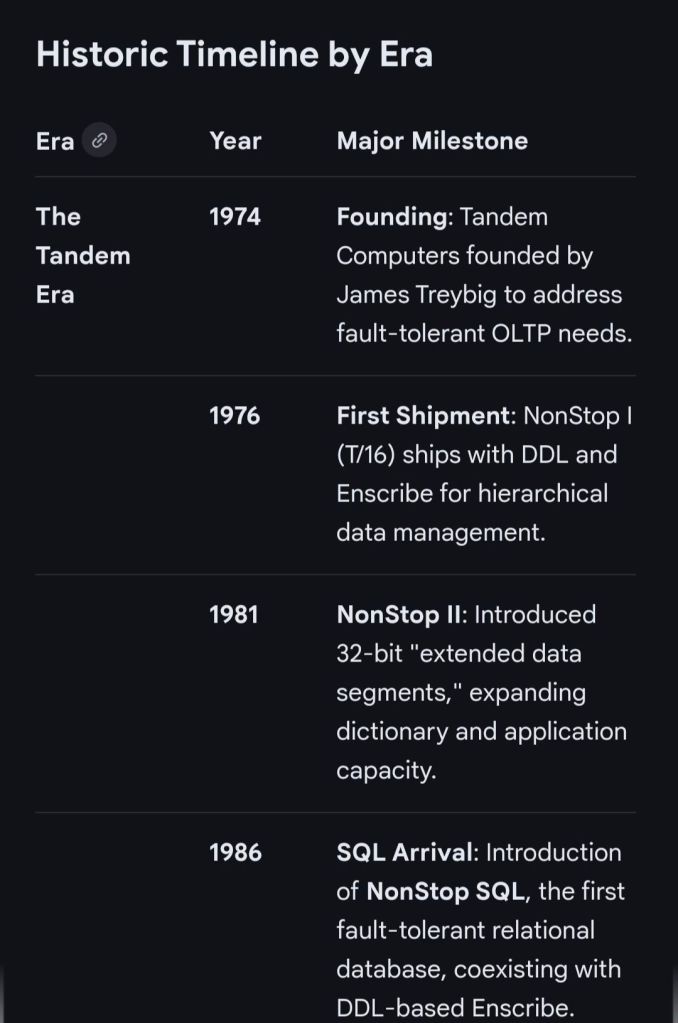
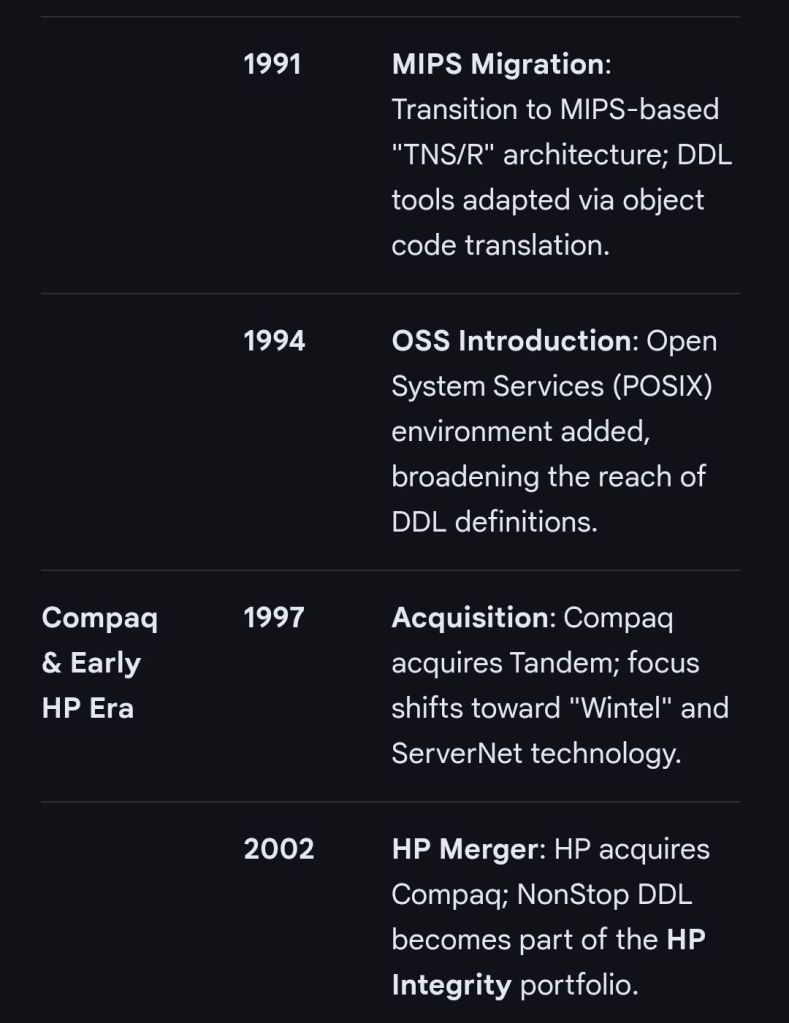
The HPE NonStop Data Definition Language (DDL) dictionary is a specialized subsystem used to define and manage data objects for Enscribe files and translate those definitions into source code for various programming languages. It serves as a central repository for metadata, ensuring consistent data structures across applications written in C, COBOL, TAL, or TACL.
Program Summary
The DDL dictionary program functions as a metadata management tool. Key capabilities include:
Centralised Definition: Defines records, fields, and file attributes in a hierarchical structure.
Code Generation: Translates DDL definitions into language-specific source code (e.g., COBOL copybooks or C headers).
Dictionary Maintenance: Allows users to create, examine, and update dictionaries to reflect changes in data structures.
Interoperability: Modern tools like Ddl2Bean convert dictionary files into Java Beans or XML, enabling cross-language and cross-platform use.
Future Outlook
The future of HPE NonStop DDL focuses on modernisation and integration rather than replacement.
Data Virtualization: Integration with AI factories and object storage platforms to expose legacy metadata in open-table formats like Apache Iceberg.
API Centricity: Enhancements to the NonStop API Gateway will likely use DDL metadata to automate REST/JSON service orchestration.
Real-time Analytics: Native streaming of NonStop data into platforms like Kafka, using DDL definitions to map real-time changes into analytics-ready formats.
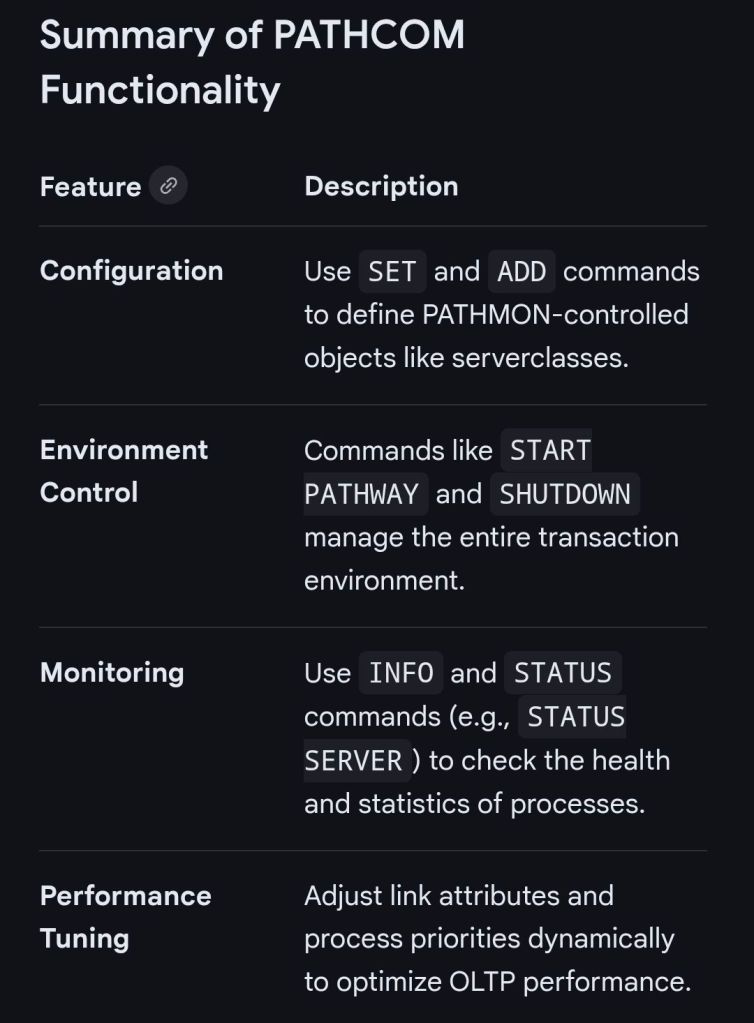
HPE NonStop PATHCOM is the interactive management interface for the Pathway transaction processing environment. It allows administrators to configure, monitor, and control PATHMON-governed objects such as serverclasses, TCPs (Terminal Control Processes), and links.
Historical Timeline: The Evolution of Pathway & PATHCOM
The history of PATHCOM is inseparable from the Tandem NonStop platform, which pioneered fault-tolerant Online Transaction Processing (OLTP).
The Tandem Era (1974 – 1997)
1974 – 1976: Tandem Computers is founded. The first NonStop I system ships in 1976.
1983: Tandem introduces Pathway software alongside the Transaction Monitoring Facility (TMF). This milestone removes the requirement for developers to manually code fault tolerance into applications, as the Pathway infrastructure (managed via PATHCOM) handles it automatically.
Early 1990s: The platform migrates from proprietary stack machines to MIPS RISC processors (TNS/R architecture). PATHCOM evolves to manage more complex distributed environments.
1994: Open System Services (OSS) is introduced, allowing NonStop to support a Unix-like POSIX environment.
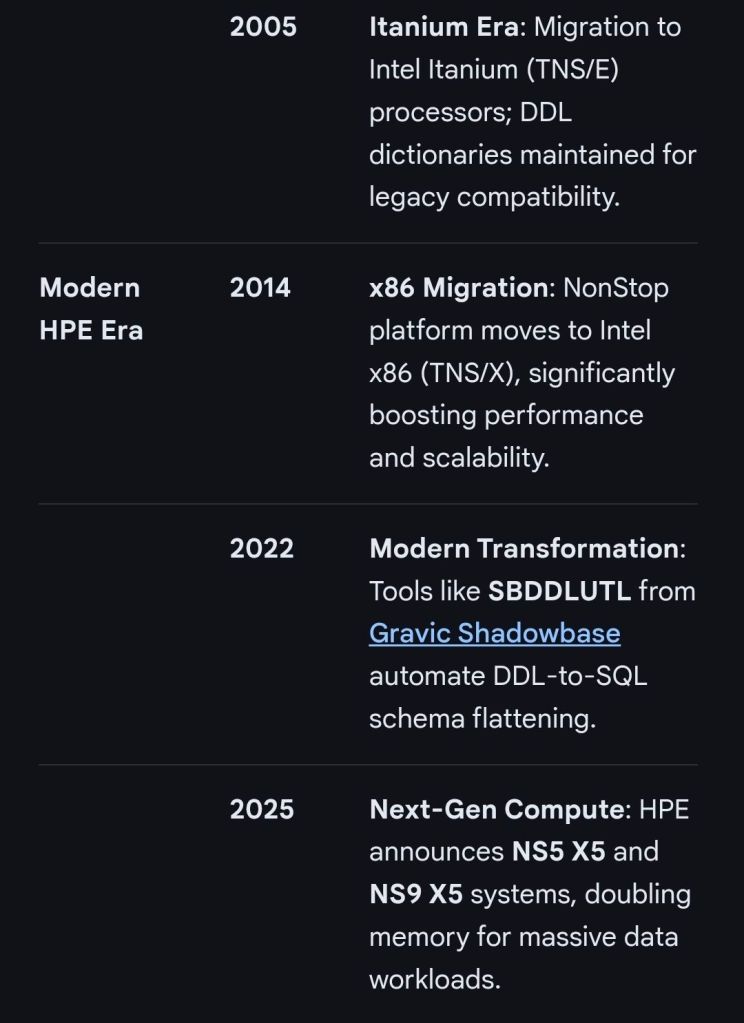
2005: Migration from MIPS to Intel Itanium (Integrity NonStop) begins.
2010s: Pathway evolves into HPE NonStop Pathway with TS/MP (Transaction Services/Massive Parallelism), enabling near-linear scalability for massive OLTP workloads.
The Modern HPE Era (2014 – Present)
2014: NonStop X is introduced, migrating the architecture to Intel x86-64 processors.
2015: Hewlett-Packard splits; the platform continues under Hewlett Packard Enterprise (HPE).
2020 – 2024: Focus shifts toward virtualisation and hybrid cloud. Modern Pathway/TS environments now support massive scaling up to 24,480 cores in a single system image.
Summary of PATHCOM Functionality
Future of NonStop Pathway
HPE’s roadmap for NonStop focuses on integrating mission-critical reliability with modern data centre technologies:
Modernisation: Support for Kubernetes Helm deployments and cloud-native frameworks.
Hardware Advancements: New NS9 X5 and NS5 X5 platforms offer double the memory capacity and 2x faster system interconnects.
Open Integration: Continued emphasis on open application development environments and open-source frameworks.
Hybrid Cloud: Positioning NonStop as a key component of HPE GreenLake for mission-critical workloads in the cloud.
The HPE NonStop Spoolcom (Spooler Command Language) program is the administrative interface for managing the Spooler subsystem on HPE NonStop systems. It allows operators to configure, monitor, and control print jobs, collectors, and print processes.
Program Summary
Purpose: Used to define and manage spooler objects such as collectors, devices, and jobs.
Key Functions: Starting/stopping the spooler, modifying device attributes, and controlling job states (e.g., hold, release, delete).
Architecture: Operates within the Guardian environment, communicating with the Spooler supervisor process to maintain 24/7 fault-tolerant printing operations.
Historical Timeline by Era
1. The Tandem Era (1974–1997)
1976: Introduction of the Tandem NonStop system; basic spooling capabilities were essential for early OLTP (Online Transaction Processing).
1980s: The Spooler evolved to handle complex routing and multiple collectors to support growing enterprise needs.
1997: Spooler D41 released, providing stable management for the MIPS-based architecture.
2. The Compaq & Early HP Era (1997–2014)
1999–2000: Release of Spooler D46, enhancing device ownership and virtual device support.
2001–2002: Spooler D48 released during the transition to the HP Integrity NonStop (Itanium) platform.
2012: Major updates to Spooler D48 to support H01 and H02 RVUs, improving scalability for high-end systems.
3. The Modern HPE Era (2014–Present)
2014: NonStop X (x86-64) introduced. Spoolcom adapted to support the new architecture and virtualised environments.
2018–2020: Focus shifted toward modernised interfaces. While Spoolcom remains the CLI standard, graphical alternatives like MultiBatch began gaining traction for batch management.
2023–2024: Continued integration with HPE GreenLake and hybrid cloud models, ensuring spooling services are available in private cloud deployments.
Futures and Roadmap
Modernisation: HPE is pushing toward “modernisation through tradition,” which includes better integration of legacy tools like Spoolcom with modern DevSecOps and cloud-native frameworks.
Kernel-Level Threading (KLT): Future updates aim to leverage KLT to improve the performance and scale-up capabilities of management processes.
Data-Centric Security: Integration with security platforms like TAMUNIO for field-level tokenization ensures that printed data remains compliant with PCI DSS 4.0 and GDPR.