Download Templates for PROject Management | FREE Upgrades & Additions
Author: Mark Whitfield
Welcome to my site!
After graduating in Computing in 1990, I accepted a position as a programmer at a Runcorn based software house specialising in electronic banking software, namely sp/ARCHITECT-BANK on Tandem Computers (now HPE NonStop). This was before the internet became more prevalent and so the notion of enabling desktop access to company accounts for inter-account transfers and book keeping was still quite a cutting edge idea (and smartphones only ever hinted at in Space 1999). The company was called The Software Partnership (which was taken over by Deluxe Data in 1994).
I spent 5 years in Runcorn developing code for SP/ARCHITECT for various banks like TSB, Bank of Scotland, Rabobank and Girofon (Denmark) to name but a few. I then moved onto a software house in Salford Quays for further bank facing projects. After a further 23 years in the IT industry and now a Senior IT Project Manager (both Agile and Waterfall delivery), I thought I would echo out my Career Profile in this corner of the internet for quick and easy access.
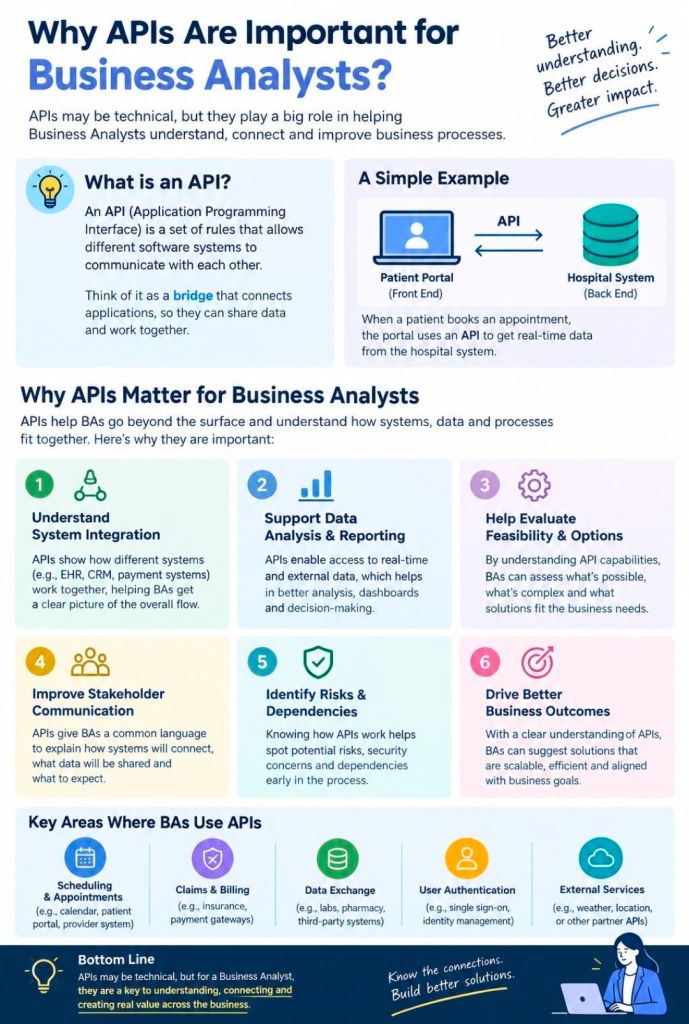
An Application Programming Interface (API) is a set of rules, definitions, and protocols that allows different software applications to communicate and exchange data with one another.
Essentially, an API acts as a software intermediary or “digital contract”: if one application submits a request in a specific format, the other system promises to return a predictable response or perform a specific action.
Instead of building every single feature from scratch, software engineers use APIs to seamlessly integrate tools, databases, and services built by other creators.
How an API Works (The Restaurant Analogy)
The easiest way to understand an API is to think of a restaurant:
The Client (You): You sit at the table looking at the menu, wanting to order food.
The Server (The Kitchen): The kitchen has the ingredients and the capability to cook your food, but you cannot talk directly to the chef.
The API (The Waiter): The waiter takes your specific order (the Request), delivers it to the kitchen, and returns to your table with your food (the Response).
Real-World Examples
Most modern digital experiences rely completely on APIs working behind the scenes:
Weather Apps: A phone app doesn’t track global weather itself. It sends an API request to an official organization like AWS Weather Systems or Weather.com, which safely delivers the live forecast data back to your screen.
Travel Booking: Websites like Expedia use APIs provided by individual airlines to instantly gather, compare, and display live flight prices and times in one place.
Ride-Hailing: Apps like Uber use the Google Maps API to handle location routing and mapping, rather than spending millions building their own global maps system.
Core Benefits
Efficiency: Developers save months of time by plugging into pre-built features instead of reinventing the wheel.
Security: APIs hide internal server details. They only share tiny packets of necessary data, keeping the main database protected from outside users.
Automation: They let data flow cleanly between applications without requiring manual file exports or human intervention.
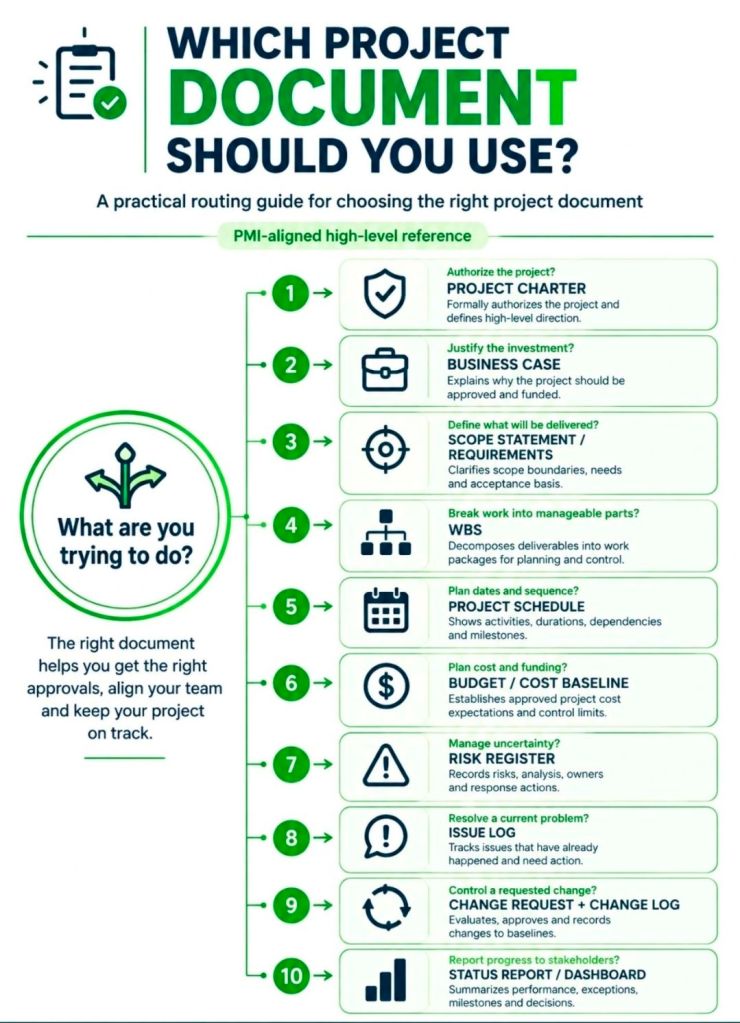
A project charter serves as the formal foundation of a project, acting as its official “green light”. Its primary purpose is to officially authorize the project’s existence and grant the project manager the formal authority to utilize organizational resources. By defining high-level goals, boundaries, and stakeholders, it ensures total alignment across the organization before detailed planning begins.
🎯 Core Purposes of a Project Charter
The overarching utility of a project charter can be broken down into three main functions according to platforms like Teamwork:
Formal Authorization: It acts as a legal or organizational decree. Signed by an external sponsor or upper management, it transitions an idea into a fully sanctioned corporate project.
Stakeholder Alignment: It establishes a shared understanding of what the project will—and will not—deliver. This alignment drastically minimizes scope creep and early misunderstandings.
Empowerment: It explicitly names the project manager and defines their spending and resource allocation boundaries, providing them a baseline “reference of authority”.
📋 Key Components Outlined in a Charter
While a charter is typically concise (often one to two pages), it must outline specific, high-level parameters to effectively serve its purpose.
The Business Case & Purpose: The underlying reason and justification for initiating the project.
Objectives & Success Criteria: Measurable, quantifiable goals (often using the SMART framework) that define what success looks like.
High-Level Scope: The boundaries of the project, clearly stating major deliverables and explicit exclusions.
Milestones & Timeline: A summary of critical target dates and overarching lifecycle phases.
Budget & Spending Limits: Pre-calculated baseline cost estimates and financial thresholds authorized by management.
Key Risks & Constraints: Known parameters, dependencies, or high-level dangers that could threaten execution.
Roles & Team Structure: Identification of the project sponsor, project manager, core team members, and crucial stakeholders.
Special Highlights: In addition to celebrating her career and meeting fans, she will participate in a special Just One of the Guyscast reunion alongside Joyce Hyser, Toni Hudson, Clayton Rohner, Leigh McCloskey, and director Lisa Gottlieb.
Tickets: Admission passes can be purchased directly through the official ticketing page on The Hollywood Show Website.
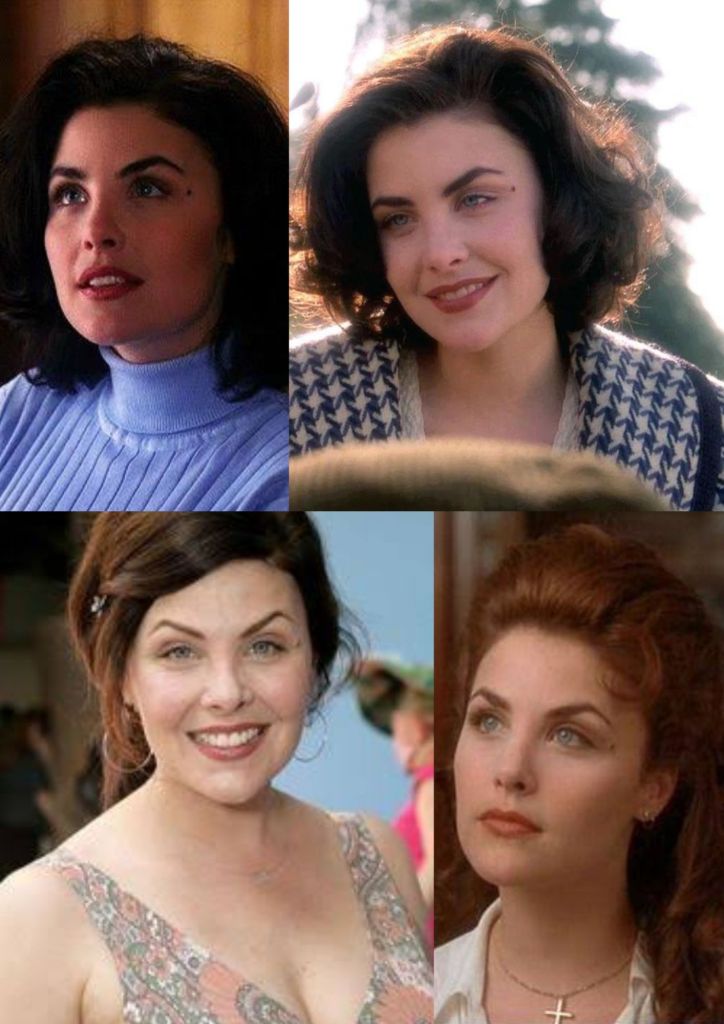
Best known for her unforgettable role as Audrey Horne in Twin Peaks, Sherilyn Fenn became one of the most recognizable faces of the series and earned both Emmy and Golden Globe nominations for her performance.
Her impressive film career includes Wild at Heart, Of Mice and Men, Boxing Helena, Three of Hearts and Ruby, along with television roles in Rude Awakening, Gilmore Girls, Shameless, Ray Donovan and the Twin Peaks revival.
Come meet Sherilyn Fenn and celebrate her incredible career on October 23rd & 24th, 2026 at the Los Angeles Marriott Burbank Airport Hotel and Convention Center!
Sherilyn Fenn is scheduled to appear at The Hollywood Show on October 23rd and 24th, 2026
Here is the detailed historical timeline for American actress Sherilyn Fenn, broken down by key life eras and years. Born Sheryl Ann Fenn into a prominent musical family in Detroit, her career spans from early 1980s B-movies to her definitive rise as a 1990s television icon and a prolific character actress.
🎬 Early Life & Hollywood Beginnings (1965–1989)
During this era, Fenn relocated to Los Angeles, enrolled at the Lee Strasberg Theatre Institute, and broke into the industry via teen comedies, science fiction, and erotic dramas.
1965: Born on February 1 in Detroit, Michigan to a musical family (niece of rock star Suzi Quatro).
1982: Relocated to Los Angeles at age 17 with her mother.
1984: Made her feature film debut in the youth comedy The Wild Life.
1985: Met and began dating Johnny Depp while filming the short student film Dummies; they subsequently became engaged. She also appeared in the cult teen comedy Just One of the Guys.
1986: Co-starred alongside Charlie Sheen in the sci-fi action film The Wraith and Josh Brolin in Thrashin’.
1987: Guest-starred alongside fiancé Johnny Depp in an episode of 21 Jump Street.
1988: Landed her first major leading role in Zalman King’s erotic drama Two Moon Junction.
🍒 The Breakthrough & Peak Stardom Era (1990–1997)
This defining period saw Fenn achieve global pop culture fame, earn prestigious award nominations, and headline major studio and independent film projects.
Named one of the “10 Most Beautiful Women in the World” by Us Magazine.
1990: Cast as the iconic Audrey Horne in David Lynch and Mark Frost’s cult series Twin Peaks. She also appeared in Lynch’s film Wild at Heart, posed for Playboy, and was named one of the “10 Most Beautiful Women in the World” by Us Magazine.
1991: Earned both Emmy and Golden Globe nominations for her performance in Twin Peaks.
1992: Starred as Curley’s Wife in the critically acclaimed big-screen adaptation of Of Mice and Men.
1993: Welcomed her first son, Myles, with musician Toulouse Holliday. She starred in the highly controversial film Boxing Helena and the comedy Three of Hearts.
1994: Married Toulouse Holliday (the marriage lasted until 1997).
1995: Portrayed Hollywood royalty in the high-profile NBC miniseries Liz: The Elizabeth Taylor Story.
📺 Television Prominence & Character Work (1998–2016)
As the industry shifted, Fenn successfully transitioned into a sought-after television actress, headlining her own sitcom and making memorable guest appearances.
1998: Began starring as recovering addict Billie Frank in the Showtime comedy series Rude Awakening, which ran until 2001.
2003: Appeared in the independent drama film The United States of Leland.
2003–2007: Cast in Gilmore Girls, first playing Sasha (season 3) and later returning as the recurring character Anna Nardini (seasons 6–7).
2007: Welcomed her second son, Christian, with boyfriend Dylan Stewart.
2014: Appeared in a recurring role as Loretta in the acclaimed Showtime drama series Ray Donovan.
2016: Guest-starred as Hermione Galindo in the hit comedy-drama series Shameless.
🌲 The Revival & Present Era (2017–Present)
This era is marked by her nostalgic return to her most famous role and steady work in modern television dramas and horror projects.
2017: Reprised her legendary role as Audrey Horne in Showtime’s highly anticipated limited event series, Twin Peaks: The Return. She also began a multi-year recurring arc as Karen Street on CBS’s S.W.A.T..
2020: Starred in the independent drama film Shooting Heroin.
2022: Joined the main cast of the horror-comedy series Shining Vale playing the character of Robyn Court.
2023: Co-starred in the independent drama films Upon Waking and Silent Life: The Story of the Lady in Black.