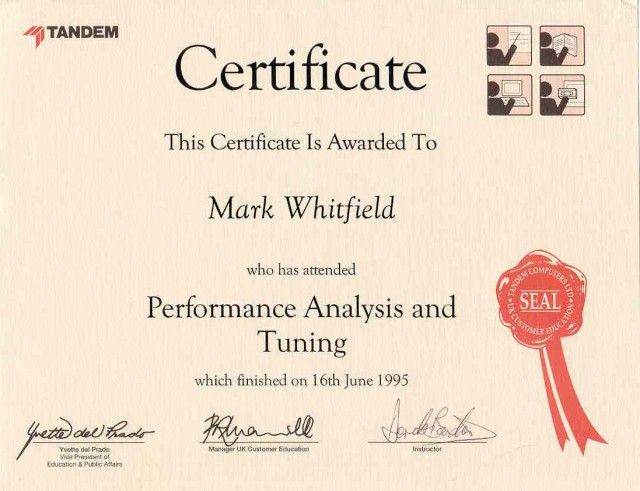
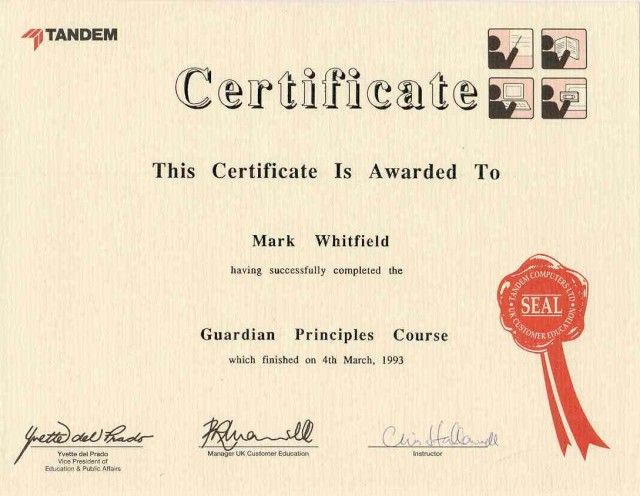
These terms map directly to the foundational 1990s technology stack behind Barclays Business Master II (BBM II), one of the UK’s earliest enterprise electronic desktop banking platforms.
Before the mainstream internet, this corporate banking infrastructure relied on specialized high-availability mainframe software to process secure corporate transactions.
🧱 Architectural Component Breakdown
Barclays Business Master (BBM / BBM II): A landmark corporate desktop electronic banking solution developed by Barclays Bank. It allowed businesses to dial directly into the bank to perform inter-account transfers, check balances, and automate book-keeping long before web browser banking became standard.
sp/ARCHITECT (or sp/ARCHITECT-BANK): The core electronic banking software package that powered BBM. It was originally engineered in the late 1980s and early 1990s by The Software Partnership (a UK-based fintech software house based in Runcorn that was later acquired by Deluxe Data). It eventually evolved into the widely known CONNEX advantage payment solution.
NonStop (Tandem Computers): The underlying hardware and operating system environment. Because banking infrastructure requires absolute uptime, sp/ARCHITECT was built to run on Tandem NonStop fault-tolerant computers (now HPE NonStop). These systems utilize a unique “shared-nothing” architecture to ensure zero transactional data loss.
💻 Legacy Technical Environment
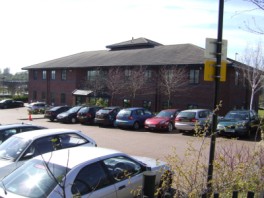
During the era when BBM was deployed across Barclays’ tech hubs (such as Knutsford), developers working on this specific stack utilized highly specialized mainframe tools:
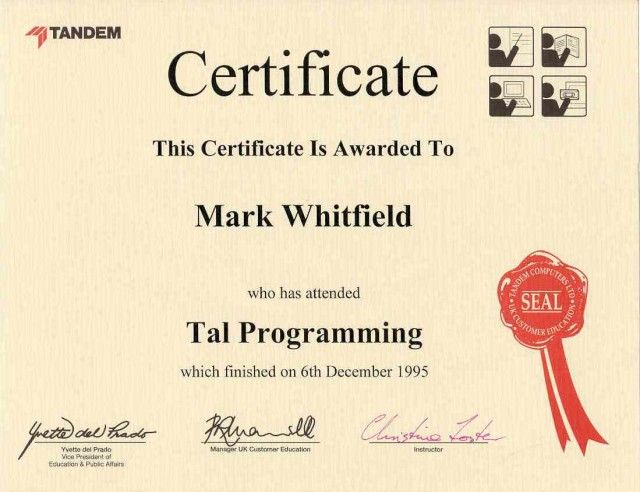
Languages: Code for sp/ARCHITECT was primarily written in TAL (Transaction Application Language) or COBOL85, which were native to the Tandem platform.
Interfaces: Early implementations integrated desktop client interactions with the Tandem host via middleware components like Tandem Pathway and Remote Server Call (RSC) facilities.
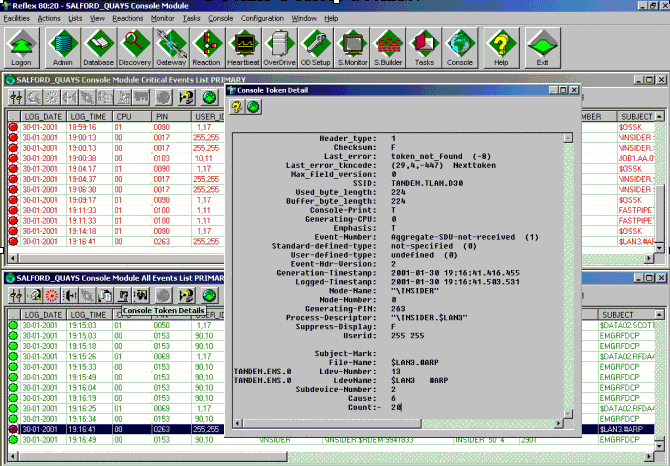
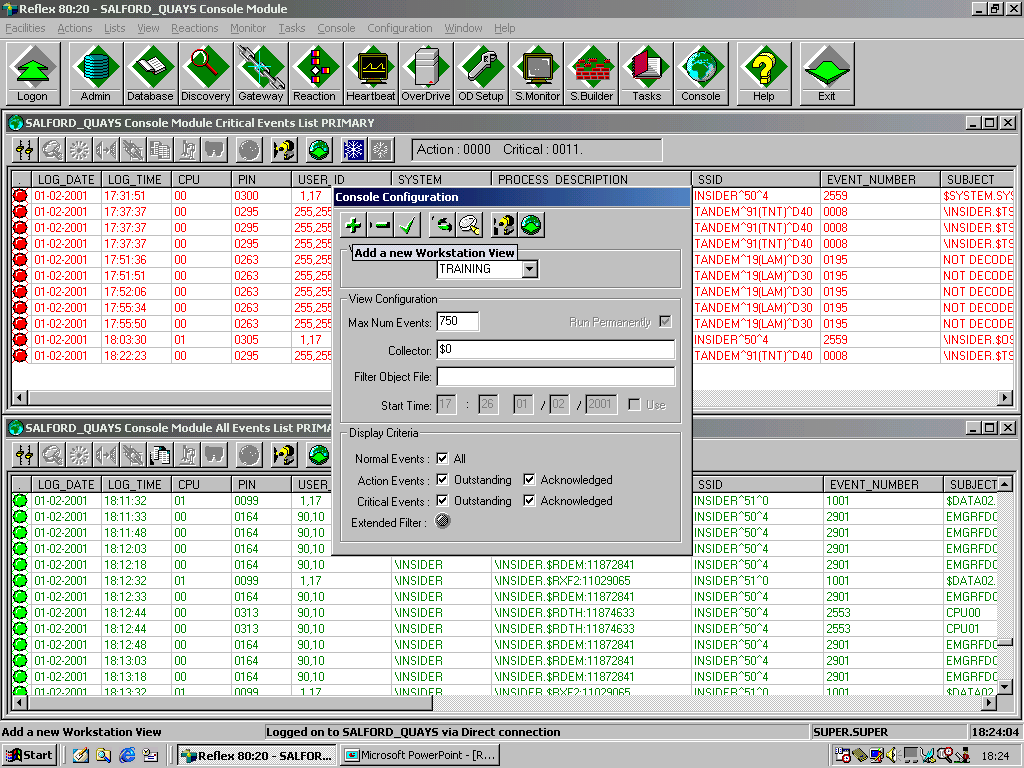
HPE NonStop Reflex (often referred to as Reflex 80:20) is a graphical, integrated IT management suite developed by Insider Technologies. It provides continuous health monitoring, automated workflow management, and diagnostic logging for mission-critical HPE NonStop environments, serving as a single, consolidated “pane of glass” for fault-tolerant network operations.
Detailed Timeline Breakdown by Era & Year
The history of the NonStop Reflex suite closely mirrors the architectural evolution of the underlying HPE NonStop (originally Tandem) fault-tolerant hardware platforms.
1. The Tandem / ITUG Era (1989 – 1996)
1989: Insider Technologies was founded in Salford Quays, Manchester, UK, establishing an early specialization in Tandem (NonStop) messaging software and message tracking utilities.
1990s: As massive online transaction processing (OLTP) workloads grew, native Tandem utilities proved increasingly cumbersome. This spurred the initial development of platform diagnostic and event-filtering tools that would soon become the Reflex suite.
1995: Insider Technologies actively codes and launches the initial iterations of Reflex 80:20, providing operators with an aggregated view of Tandem platform events.
2. The Compaq & Early HP Transition Era (1997 – 2014)
1997: Compaq acquires Tandem Computers. Reflex 80:20 begins updating its backend architecture to handle ServerNet clustering and the newly combined enterprise platforms.
2002: Hewlett-Packard (HP) acquires Compaq. HP begins the hardware migration from proprietary processors to Intel Itanium (HP Integrity NonStop).
2004: Insider Technologies formalizes its ongoing product development, heavily pushing both Reflex 80:20 and releasing new variants like Reflex ONE24 to support extended tracking for ATM and POS networks.
2007: Reflex and other Insider monitoring software platforms are highly integrated into FIS solutions, serving tier-one global banks and stock exchanges.
2013: Insider Technologies solidifies the Reflex 80:20 status as the ultimate consolidated replacement for legacy HP components, publishing technical insights in dedicated NonStop journals.
3. The Modern HPE & x86 Era (2014 – 2019)
2014: Hewlett Packard Enterprise (HPE) is formed and officially launches NonStop X, moving the architecture onto standard Intel x86-64 processors. Reflex 80:20 interfaces are updated to support InfiniBand fabrics and the newer Open System Services (OSS) environments.
2017 – 2019: HPE launches Virtualized NonStop (vNS), bringing continuous application fault tolerance directly to private and hybrid clouds. Reflex adapts its system management capabilities to securely monitor both physical x86 non-stop servers and virtual hypervisor instances.
4. The AI & Hybrid Cloud Era (2020 – 2026)
2020: HPE ends the sale of older Itanium-based platforms. Reflex fully commits its diagnostic support to modern HPE NonStop X and vNS environments.
2023 – 2024: The NonStop platform embraces AI integrations, expanded SQL/cloud workloads, and integrations with modern DevOps tools. Reflex tools receive updates to accommodate enhanced cyber resilience tracking and modern API-driven services.
2025: HPE celebrates 50 years of the fault-tolerant NonStop computing ecosystem. The Reflex suite provides compatibility for the upgraded, high-capacity hardware iterations running the L25 series OS.
2026: Reflex remains a staple ecosystem management suite for complex enterprise networks, processing and escalating exception conditions, EMS events, and subsystem alerts within the highly available HPE GreenLake consumption models.
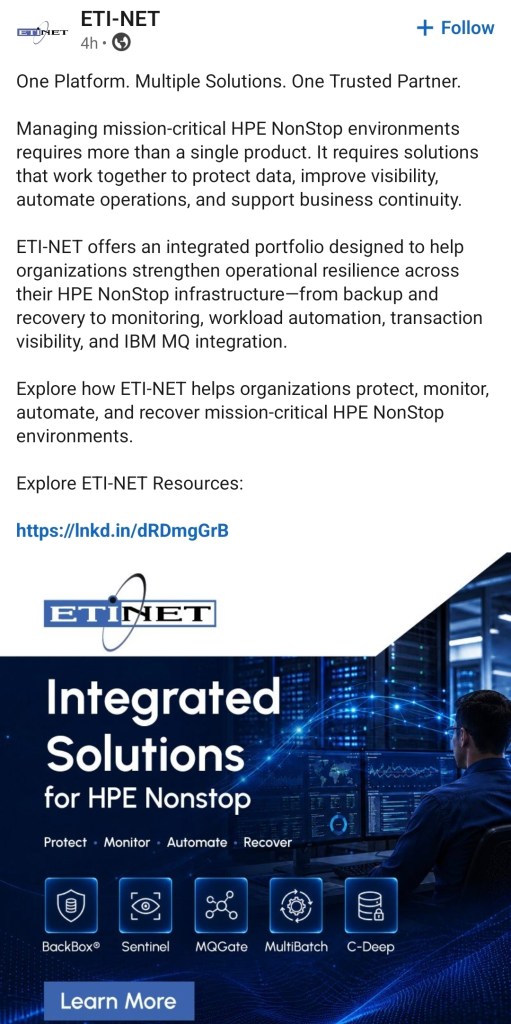
The Insider RTLX product at ETI-NET is now called C-Deep for Transaction Monitoring;
The official HPE Nonstop Technology Architecture is a specialized, 100% fault-tolerant infrastructure built with a tightly integrated hardware and software stack designed to eliminate any single point of failure. Formal instruction and architectural frameworks have been modernized under the newly relaunched HPE Nonstop Compute Training Portfolio curriculum.
Originally developed by Tandem Computers in 1976, the platform eventually became part of Hewlett Packard Enterprise (HPE). Unlike standard servers that can crash due to a single component failure, NonStop uses a tightly integrated, “shared-nothing” architecture to ensure that if a hardware or software component fails, another instantly takes over with zero downtime or data loss.
Core Architectural Features
To understand how HPE NonStop works, you need to understand its unique design principles:
Shared-Nothing Architecture: Every processor has its own dedicated memory, I/O channels, and copy of the operating system. No single component is shared, eliminating any single point of failure.
Process Pairs: Applications run using a primary process and a backup process on a different processor. The primary process constantly copies its state to the backup. If the primary fails, the backup immediately takes over.
Massive Scalability: Systems can scale up seamlessly from small distributed environments to massive clusters containing up to 24,000 processor cores without interrupting running operations.
Hardware Platform: The modern software environment runs on industry-standard x86 architectures, available as physical server racks (like the HPE NonStop NS9 X5) or as virtualized instances in hybrid cloud environments.
Dual Operating Environments
HPE NonStop runs a specialized operating system called NonStop OS. Inside this OS, developers and administrators interact with two distinct environments:
Guardian Environment: The native, proprietary environment optimized for high-volume Online Transaction Processing (OLTP). It handles tasks sequentially through process-oriented manually-started jobs rather than traditional automated queues.
Open System Services (OSS): A UNIX-like, POSIX-compliant environment built on top of the NonStop kernel. This allows organizations to run standard open-source applications, tools, and scripts natively alongside Guardian.
Ecosystem and Use Cases
HPE NonStop is rarely used for standard office automation or basic web hosting. Instead, it serves as the backbone for global industries where an hour of downtime could cost millions of dollars:
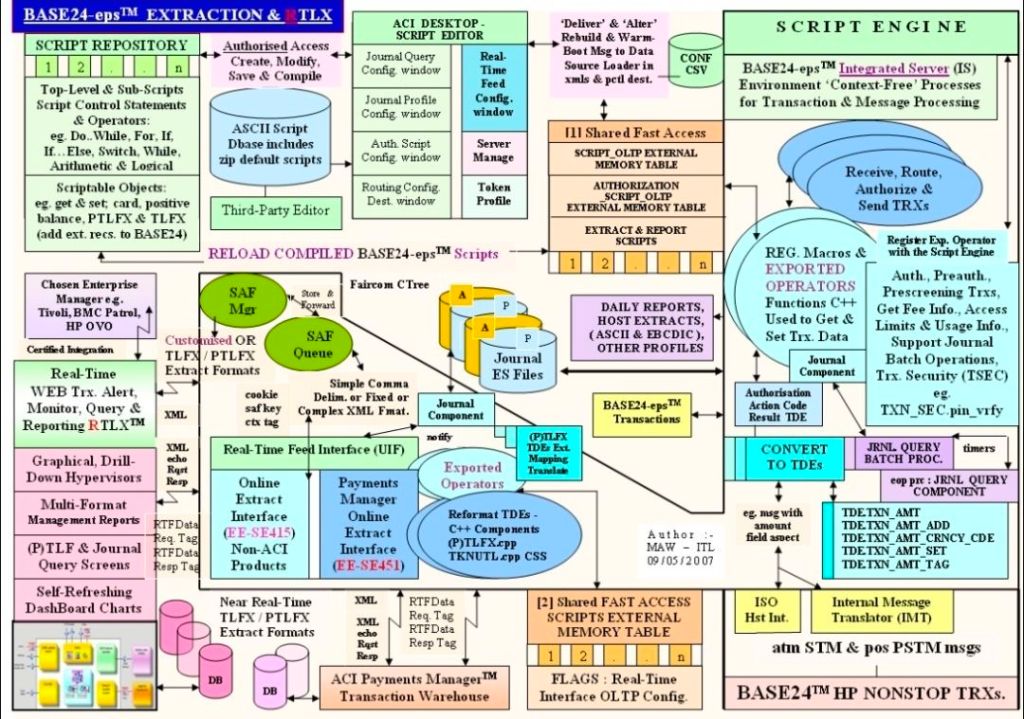
Financial Transactions: Powers global stock exchanges, automated teller machines (ATMs), and retail point-of-sale credit card processing, eg. BASE24.
Travel and Logistics: Runs critical airline reservation systems and real-time cargo routing infrastructure.
Database Management: Features its own highly secure, distributed database engine called NonStop SQL, which guarantees absolute data integrity across all transactions.
Modern Development: Supports traditional languages like COBOL85 and ANSI C, alongside modern DevOps integrations like Git, Ansible, and Eclipse-based IDE environments.
An architectural blueprint of an HPE NonStop environment typically separates the layout into three core interdependent layers:
Hardware & Fabric Layer: Consists of independent, loosely-coupled Processor Nodes (handling up to 24,000 cores globally) connected via an ultra-fast InfiniBand or ServerNet system fabric backbone.
I/O & Subsystem Layer: Utilizes Cluster I/O Protocols (CLIMs), splitting tasks between Storage CLIMs (SCLIMs) and Network CLIMs (NCLIMs) to isolate external communication from main processing.
Operating System & DB Layer: Runs the NonStop OS, which simultaneously manages the traditional Guardian environment, Open System Services (OSS) for UNIX/Linux paradigms, and the NonStop SQL distributed database engine.
Recommended Architecture Training Curriculum
HPE organizes its technical blueprints into structured educational paths for engineers.
1. Foundational Blueprint Concepts
Course Code: U4147S (HPE Nonstop Compute System Fundamentals).
Focus: Delivers a top-down view of system goals, transaction processing, and fundamental architecture.
Key Modules: Explores Guardian vs OSS, Pathway application management, and basic database interaction.
2. System Operations & Administration
Course Code: H1SC3S (HPE Nonstop Compute System Administration I).
Focus: Maps physical and virtual components to real-world deployment.
The HPE NonStop community, historically rooted in Tandem Computers’ culture of openness, has held an annual gathering since the early 1980s.
Originally known as the International Tandem Users Group (ITUG) summits, the main conference evolved into the NonStop Technical Boot Camp (TBC), now organized by Connect Worldwide and heavily supported by Hewlett Packard Enterprise.
The conference serves as the premier annual gathering for NonStop users, focusing on technical education, mission-critical applications, and networking.
Detailed Historical Timeline (1990–2026)
The “Tandem/ITUG” Era (1990–1996)
Focus: Transitioning from proprietary stack machines to MIPS RISC microprocessors, introducing Open System Services (OSS).
1990: Tandem reaches peak revenue; ITUG meetings focus on fault tolerance in ATM networks.
1993: Introduction of NonStop Himalaya K-series using MIPS R4400 processors.
1994: NonStop Kernel (NSK) extended with POSIX-compliant Unix.
1995: Introduction of ServerNet, foundational for future x86 architectures.
The Compaq & HP Transition Era (1997–2014)
Focus: Integration into larger portfolios, migration from MIPS to Intel Itanium (TNS/E).
1997: Compaq acquires Tandem. ITUG summits begin navigating the new corporate structure.
2003: HP acquires Compaq. NonStop conferences become key components of HP’s high-end mission-critical offerings.
2008: Connect Worldwide (independent user group) takes over, revitalizing the “Technical Boot Camp” name.
The HPE NonStop X & Virtualization Era (2015–2019)
Focus: Migration to x86-64 (NonStop X), Virtualization (vNonStop), and cloud integration.
2015: Formation of Hewlett Packard Enterprise (HPE). Focus shifts to modernized “NonStop X” systems.
2016: vNonStop demoed at TBC, allowing fault-tolerant systems in virtual machines.
2017: TBC highlights AI and cybersecurity, reflecting modern enterprise needs.
2019: Discussions around “NonStop-as-a-Service” (XaaS) and GreenLake integration.
The AI & 50th Anniversary Era (2020–2026)
Focus: Hybrid Cloud, Artificial Intelligence, 50th Anniversary of NonStop.
2020: TBC goes virtual, with high attendance from a global community.
2022: Continued focus on XaaS (everything as a service).
2023-2024: Emphasis on cyber resilience, SQL improvements, and integration with modern DevOps tools.
2025/2026:HPE NonStop 50th Anniversary. Conferences focus on AI-driven transformation, cybersecurity, and the new business track.
Conference Insights and Evolution
The “Beer Bust”: A tradition started in the early days of Tandem, now a staple social event at the TBC to foster community and open communication.
Format: The NonStop TBC typically features 4 days of technical sessions, user case studies, and partner exhibitions (e.g., XYPRO, NTI).
Regional Events: Alongside the main TBC, regional events (e.g., MexTUG) occur throughout the year.
Key Themes: Uninterrupted performance, database integrity, and migration to x86/cloud.
NonStop TBC 2026 is scheduled for Sept 14–18 in Orlando, FL.
The history of Tandem Computers (now HPE NonStop) conferences is a nearly 50-year chronicle of community-driven knowledge sharing, evolving from the Tandem User’s Group (TUG) in 1978 to the modern HPE NonStop Technology & Business Conference (TBC).
These events have served as the primary venue for sharing best practices on fault tolerance, high availability, and mission-critical application design, bridging the gap between Tandem’s founding in 1974 and HPE’s current virtualized NonStop systems.
1974: Jimmy Treybig founds Tandem Computers in Cupertino, CA, with a mission to create fault-tolerant systems for online transaction processing (OLTP).
1976: First Tandem/16 (T/16) system shipped to Citibank, initiating the NonStop era.
1978:Creation of the Tandem User’s Group (TUG) in San Jose, CA, as the foundational user community. Introduction of the Encompass database management system.
1980–1989: Growth and Expansion
1981: TUG is renamed the International Tandem User’s Group (ITUG), reflecting global growth. Introduction of NonStop II.
1983: Introduction of the Tandem NonStop Extended Processor (TXP) and Guardian B-Series OS.
1984: Formation of the British Isles Tandem User Group (BITUG).
1985–1986: Introduction of the entry-level NonStop EXT system.
1987-1988: Large-scale adoption of Tandem systems by international financial institutions and growing ITUG conference attendance, often characterized by strong community spirit.
1989: Release of NonStop Cyclone and relational database software, challenging IBM’s dominance in transaction processing.
1990–1999: The Move to Open Systems & Acquisition
1990: Announcement of the Integrity S2 line for Unix-based fault tolerance.
1991: Release of Cyclone/R (CLX/R) based on MIPS R3000, signaling a move away from custom proprietary CPUs.
1993: Launch of the Himalaya K-series, supporting the MIPS R4400 and native mode NSK.
1994-1995: Introduction of Open System Services (OSS), extending the NonStop Kernel to include a Unix-like POSIX environment.
1997:Compaq acquires Tandem for $3 billion. Tandem releases the NonStop Himalaya S-Series, introducing the ServerNet interconnect technology.
2000–2010: Compaq-HP Merger and Modernization
2001: Hewlett-Packard merges with Compaq, taking over the NonStop product line and initiating a migration to Intel Itanium processors (TNS/E).
2001: ITUG is renamed to “Compaq Users Group” before transitioning to the combined Connect community group.
2002: Formation of a Tandem Alumni Group, celebrating the unique culture.
Legacy + Future: Current TBC conferences balance supporting existing high-value transaction applications with modernization approaches like REST APIs, Java, and DevOps.
Virtualization & Cloud: A major focus is deploying NonStop as virtualized instances (vNS) and integrating with public/hybrid clouds.
Community Continuity: Despite multiple mergers (Tandem HPE), the user community has remained tight-knit, with organizations like Connect hosting the NonStop TBC.
Continuous Availability: The core focus remains 100% uptime, with sessions analyzing how to achieve it in modern containerized environments.
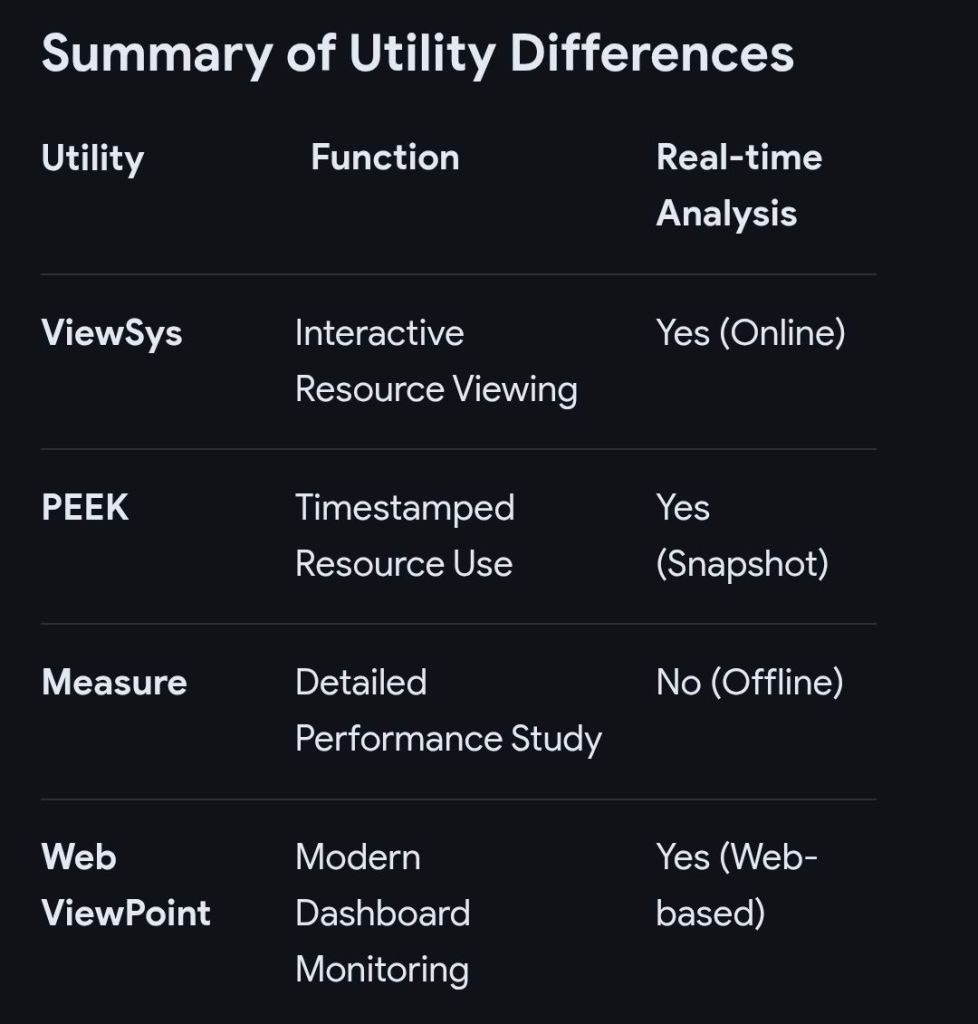
ViewSys is a legacy, interactive system monitoring utility for HPE NonStop servers that provides real-time visibility into system resource utilization. Similar to PEEK and Measure, it allows system operators to view resource consumption as it happens, allowing for immediate analysis of the impacts of process relocations or controller path changes.
HPE NonStop ViewSys Overview
Purpose: Monitors system resources, including processor utilization, I/O performance, and memory usage, on NonStop systems.
Key Features: Provides online viewing of system resources, allowing for quick recognition of performance bottlenecks, which helps in performance tuning.
Functionality: Unlike Measure, which is typically analyzed offline, ViewSys offers an interactive, live, and graphical view of system performance.
Operation Requirement: Runs from HPE block mode terminals or non-Stop terminal emulators, presenting average resource usage for each polling interval.
The history of ViewSys is deeply intertwined with the development of the HPE NonStop OS and its monitoring toolkit.
Era 1: Tandem Era (The Early Days)
1976: Initial Tandem NonStop System introduced; basic system monitoring is manual and console-based.
1980s (Mid-late): As Transaction Monitoring Facility (TMF) and Pathway are introduced, the need for interactive monitoring grows.
1990s:ViewSys becomes a key utility for operators managing massive OLTP (Online Transaction Processing) workloads.
Era 2: Compaq/Early HP Era (The Transition)
1997: Compaq Acquires Tandem.
2003: HP Acquires Compaq. The monitoring focus begins to merge with Integrity-based architecture.
2004: The ViewSys User’s Guide highlights ViewSys alongside PEEK and Measure, standardizing its use for interactive monitoring.
2005: Introduction of HP Integrity “NonStop i” (TNS/E) servers using Intel Itanium processors. ViewSys adapted to monitor Itanium systems.
Era 3: Modern HPE Era (The Modernization)
2014: First NonStop X (TNS/X) systems on x86-64 are introduced. ViewSys remains a available tool, but modernization efforts begin.
2015: Hewlett Packard Enterprise (HPE) is formed.
2016-2020: Shift towards Web ViewPoint Enterprise (by Idelji Corporation), which provides web-based dashboards for monitoring EMS events and system metrics.
2020: Sales of Itanium-based systems end. Modern monitoring focuses heavily on NonStop X systems and virtualized environments.
Present: While legacy ViewSys may exist in older environments, it is largely superseded by modern GUI-based, browser-independent monitoring solutions like Web ViewPoint and Remote Analyst.
HPE NonStop EMSDIST (Event Management Service Distributor) is a critical component within the HPE NonStop operating system responsible for distributing and managing event messages (logs) generated by the system, subsystems, or applications. It is part of the Event Management Service (EMS), which is essential for fault-tolerant monitoring.
EMS events (via EMSDIST) seen in the Reflex 80:20 application ( now Sentinel (Nonstop Monitoring) by ETI-NET)
EMSDist Overview
Purpose: EMSDIST reads events from an EMS collector process ($0, $ZLOG, etc.) or a collector logfile, filters them based on user criteria, and sends them to a user-specified destination (such as a terminal, printer, or another file).
Key Functionality: It enables both real-time monitoring and historical analysis of events.
Event Handling: It handles EMS messages, including those generated by the EMS subsystem itself (messages 513-999) and those from EMS distributors (messages > 1000).
Integration: Often used in conjunction with TACL (Tandem Advanced Command Language) for automated event management scripts.
Detailed Historic Timeline and Evolution
EMSDIST has evolved alongside Tandem / Compaq / HPE NonStop systems, transitioning from basic console management to complex distributed management systems.
1. The Tandem Guardian Era (Late 1970s – 1980s)
Context: The emergence of Tandem NonStop systems focused on continuous availability.
EMS Origins: Initial event handling was largely via console messages. As systems grew, the need to manage logs across multiple processors led to early Event Management Service components.
Role of EMSDist: Early distributors primarily moved messages from local collectors to a central console or tape log.
2. The D-Series & TMF Era (1990s)
Context: Introduction of sophisticated transaction monitoring and distributed databases.
1996: A significant EMS Reference Summary was released (PN 114754), formalizing the structure of EMS collectors and distributors.
Capabilities: EMSDIST became capable of filtering high-volume events, separating critical errors from warning messages (513-1019).
Evolution: Began integrating with the Distributed Systems Management (DSM) suite for better network-wide event visibility.
3. The Compaq & Integrity (J-Series/H-Series) Era (2000s – 2010s)
Context: Shift from MIPS-based processors to Intel Itanium (Integrity) servers.
2003-2005: Integration with Windows-based management systems (DSM/NOW) and improvements to the Multi Event Viewer (MEV).
2014: HP Integrity NonStop Operations Guides emphasized using EMSDIST alongside modern tools like OSM (Open System Management) Event Viewer, especially for H-Series and J-Series systems.
Key Capability: Improved handling of large logs, with better time-based querying (TIME and STOP options) for auditing and troubleshooting.
4. The HPE NonStop X & Modern Era (2015 – Present)
Context: Adoption of x86 architecture and cloud-ready systems (L-Series).
2015: HPE takes over the portfolio, accelerating integration with HPE InfoSight for AI-driven log analysis.
Modernization: While EMSDIST remains, modern environments heavily leverage NS Software Essentials and third-party tools for advanced analytics.
Continued Importance: EMSDIST remains essential for analyzing historical logs via the LOGFILE option, especially when dealing with cold-standby or restored logs from tape/disk.
Key Functional Milestones
Message Categorization: Formalization of messages 513-999 (collectors) and >1000 (distributors) for structured analysis.
Filtering Efficiency: Implementation of complex FILTER parameters allowed operators to filter events by process, user, or time.
Logfile Access: The ability for EMSDIST to process archived or older LOGFILE entries independently of the live $0 collector.
Template Support: Ability to use specific =_EMS_TEMPLATES for customizable output formatting.
HPE NonStop EMSDIST, Event Management Service Distributor Timeline by year
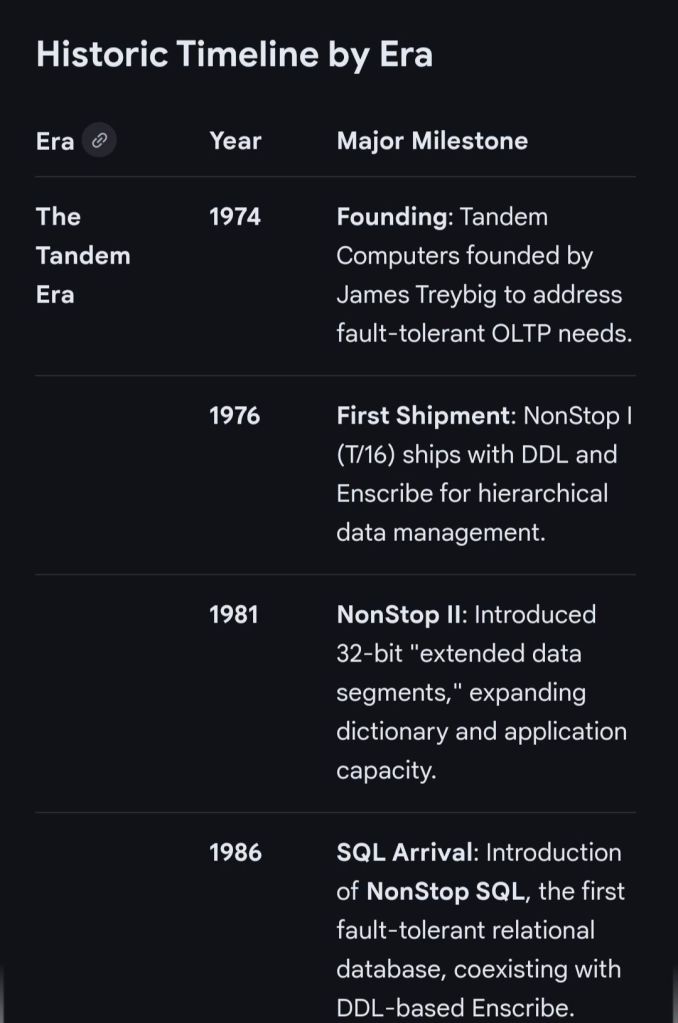
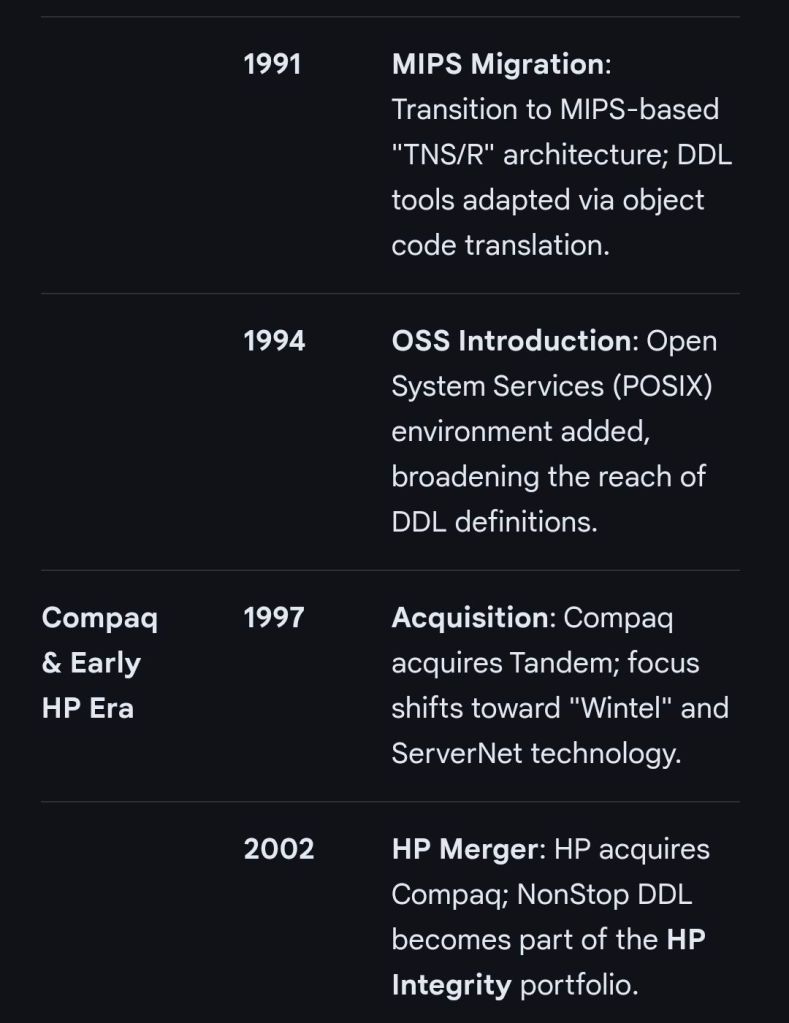
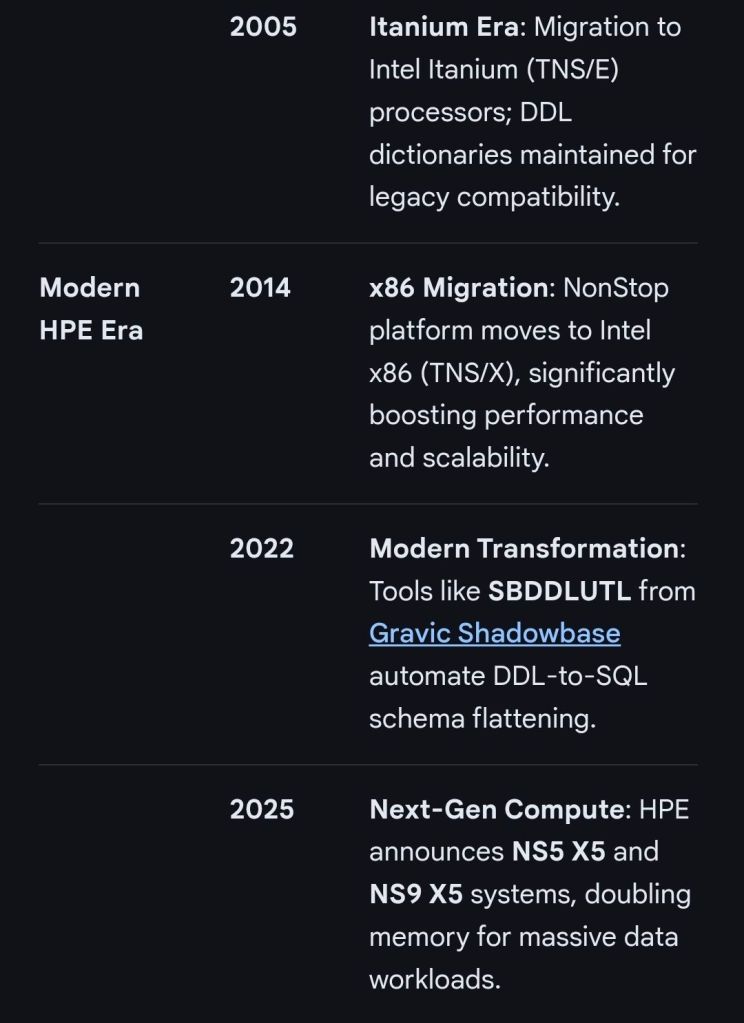
The HPE NonStop Data Definition Language (DDL) dictionary is a specialized subsystem used to define and manage data objects for Enscribe files and translate those definitions into source code for various programming languages. It serves as a central repository for metadata, ensuring consistent data structures across applications written in C, COBOL, TAL, or TACL.
Program Summary
The DDL dictionary program functions as a metadata management tool. Key capabilities include:
Centralised Definition: Defines records, fields, and file attributes in a hierarchical structure.
Code Generation: Translates DDL definitions into language-specific source code (e.g., COBOL copybooks or C headers).
Dictionary Maintenance: Allows users to create, examine, and update dictionaries to reflect changes in data structures.
Interoperability: Modern tools like Ddl2Bean convert dictionary files into Java Beans or XML, enabling cross-language and cross-platform use.
Future Outlook
The future of HPE NonStop DDL focuses on modernisation and integration rather than replacement.
Data Virtualization: Integration with AI factories and object storage platforms to expose legacy metadata in open-table formats like Apache Iceberg.
API Centricity: Enhancements to the NonStop API Gateway will likely use DDL metadata to automate REST/JSON service orchestration.
Real-time Analytics: Native streaming of NonStop data into platforms like Kafka, using DDL definitions to map real-time changes into analytics-ready formats.
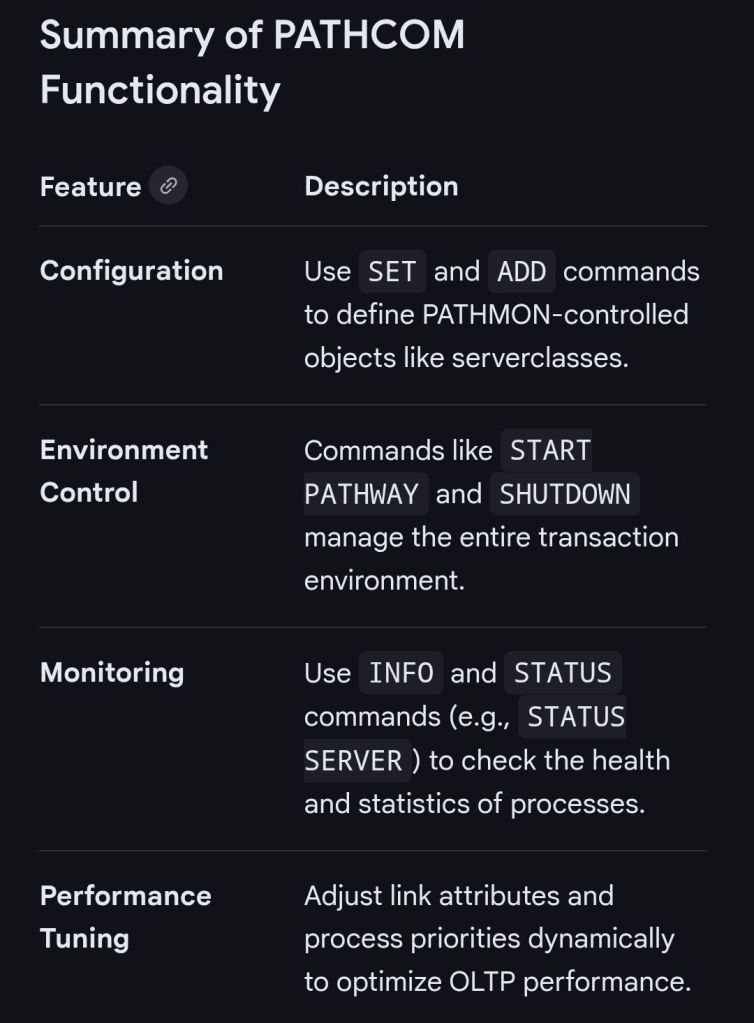
HPE NonStop PATHCOM is the interactive management interface for the Pathway transaction processing environment. It allows administrators to configure, monitor, and control PATHMON-governed objects such as serverclasses, TCPs (Terminal Control Processes), and links.
Historical Timeline: The Evolution of Pathway & PATHCOM
The history of PATHCOM is inseparable from the Tandem NonStop platform, which pioneered fault-tolerant Online Transaction Processing (OLTP).
The Tandem Era (1974 – 1997)
1974 – 1976: Tandem Computers is founded. The first NonStop I system ships in 1976.
1983: Tandem introduces Pathway software alongside the Transaction Monitoring Facility (TMF). This milestone removes the requirement for developers to manually code fault tolerance into applications, as the Pathway infrastructure (managed via PATHCOM) handles it automatically.
Early 1990s: The platform migrates from proprietary stack machines to MIPS RISC processors (TNS/R architecture). PATHCOM evolves to manage more complex distributed environments.
1994: Open System Services (OSS) is introduced, allowing NonStop to support a Unix-like POSIX environment.
2005: Migration from MIPS to Intel Itanium (Integrity NonStop) begins.
2010s: Pathway evolves into HPE NonStop Pathway with TS/MP (Transaction Services/Massive Parallelism), enabling near-linear scalability for massive OLTP workloads.
The Modern HPE Era (2014 – Present)
2014: NonStop X is introduced, migrating the architecture to Intel x86-64 processors.
2015: Hewlett-Packard splits; the platform continues under Hewlett Packard Enterprise (HPE).
2020 – 2024: Focus shifts toward virtualisation and hybrid cloud. Modern Pathway/TS environments now support massive scaling up to 24,480 cores in a single system image.
Summary of PATHCOM Functionality
Future of NonStop Pathway
HPE’s roadmap for NonStop focuses on integrating mission-critical reliability with modern data centre technologies:
Modernisation: Support for Kubernetes Helm deployments and cloud-native frameworks.
Hardware Advancements: New NS9 X5 and NS5 X5 platforms offer double the memory capacity and 2x faster system interconnects.
Open Integration: Continued emphasis on open application development environments and open-source frameworks.
Hybrid Cloud: Positioning NonStop as a key component of HPE GreenLake for mission-critical workloads in the cloud.