

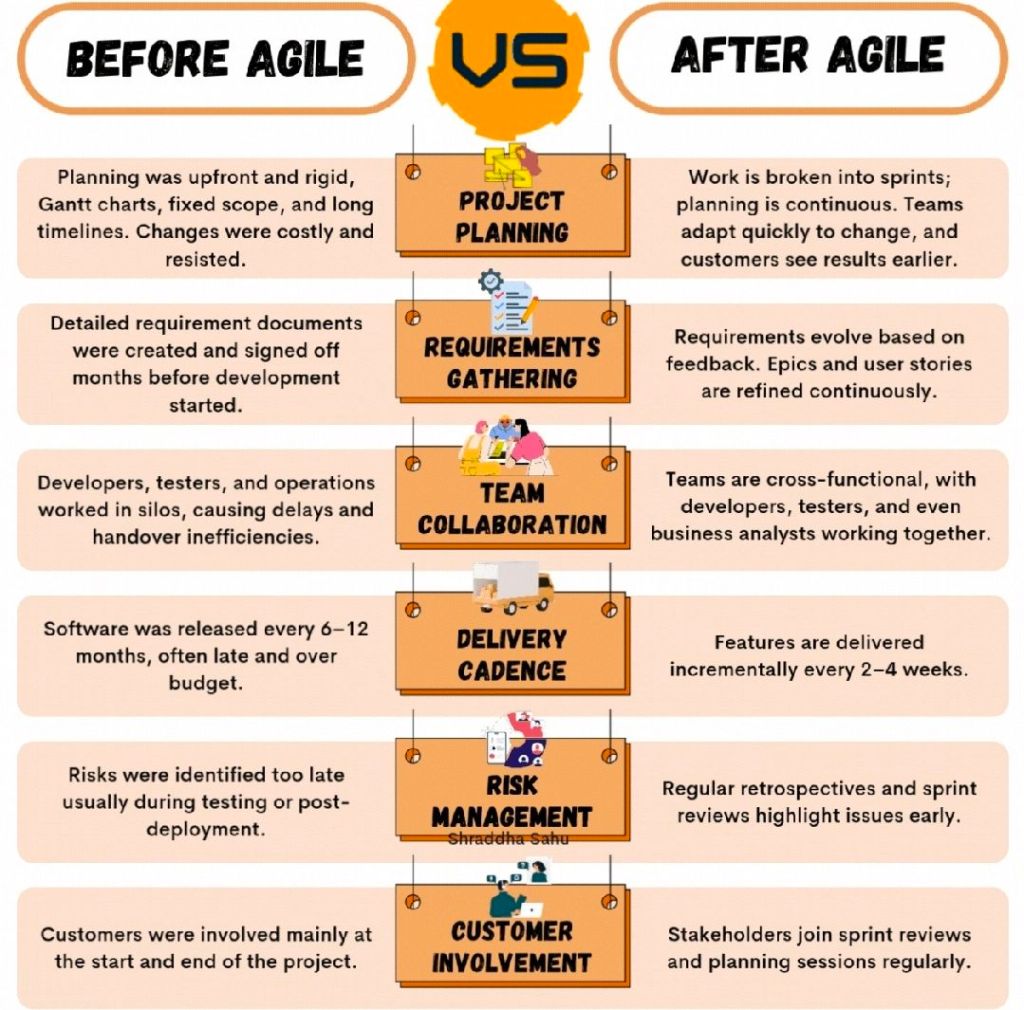
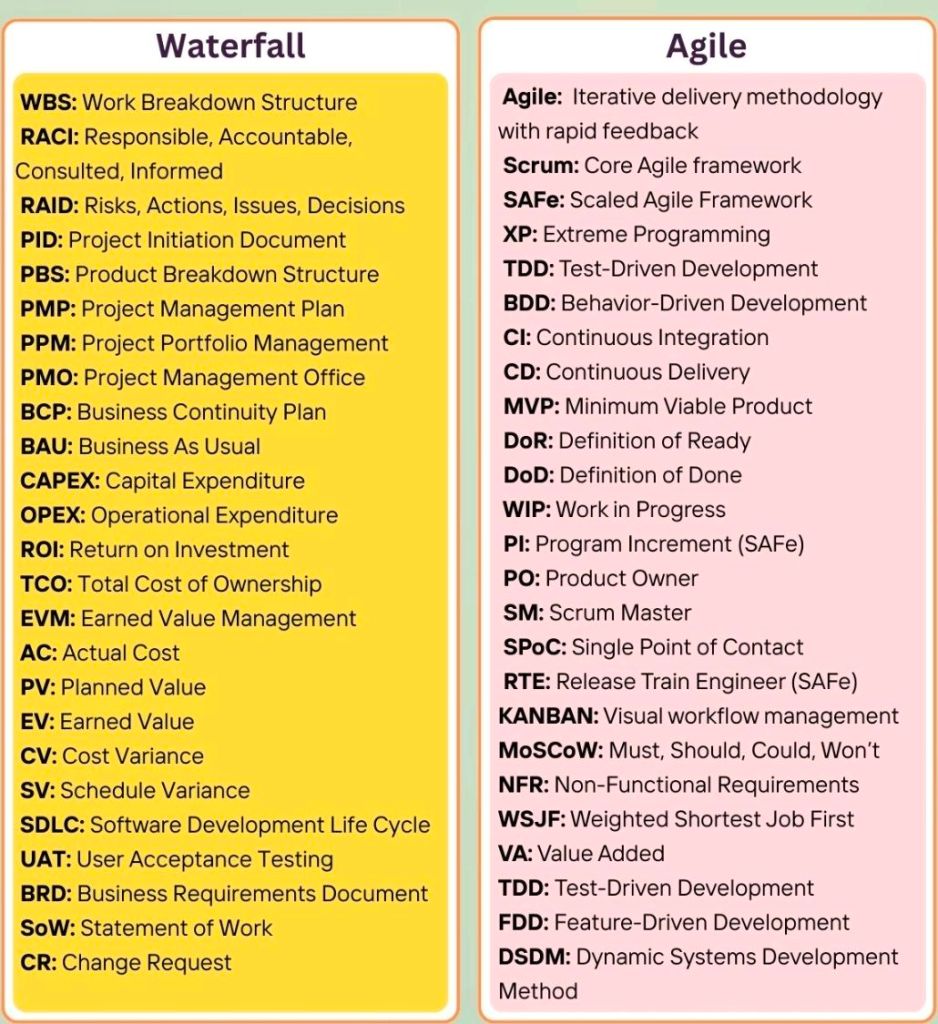
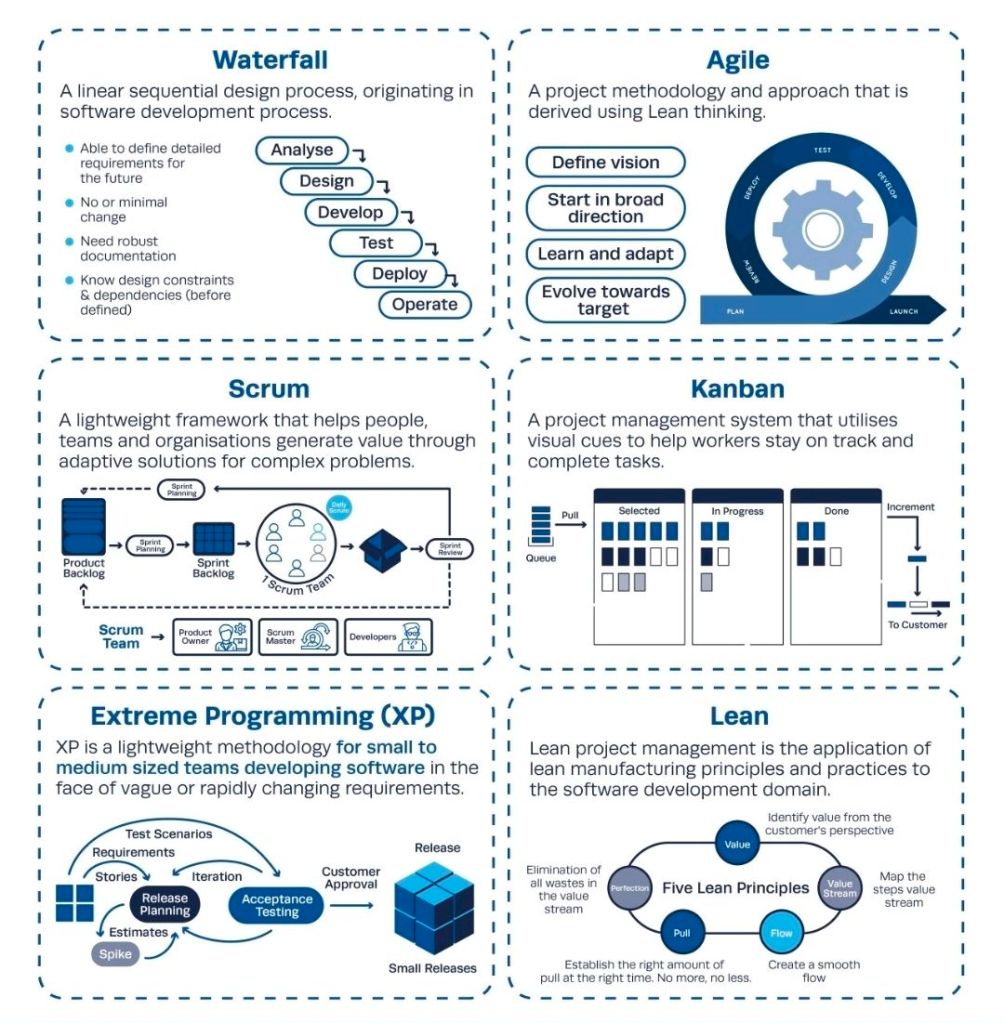
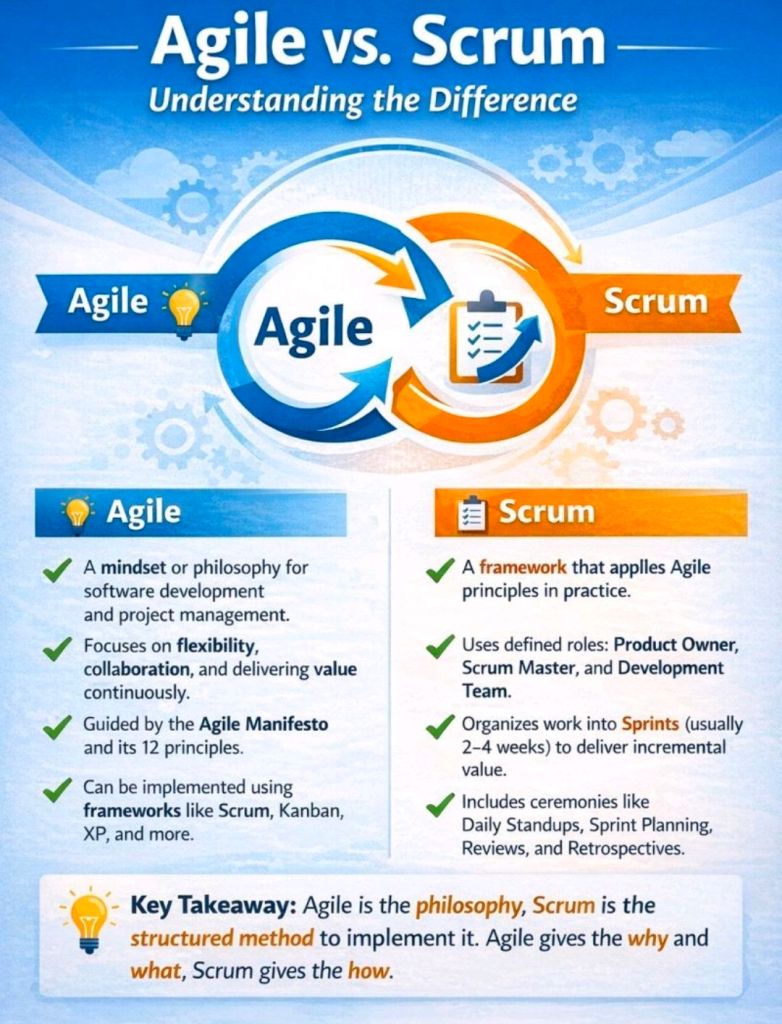
Agile project management is an iterative, incremental approach to project management that focuses on flexibility, continuous improvement, and rapid delivery of value. Unlike the linear “Waterfall” approach, Agile breaks projects into small, time-boxed cycles (sprints or iterations) to allow for frequent feedback and adaptation to changing requirements.
Summary of Agile Project Management
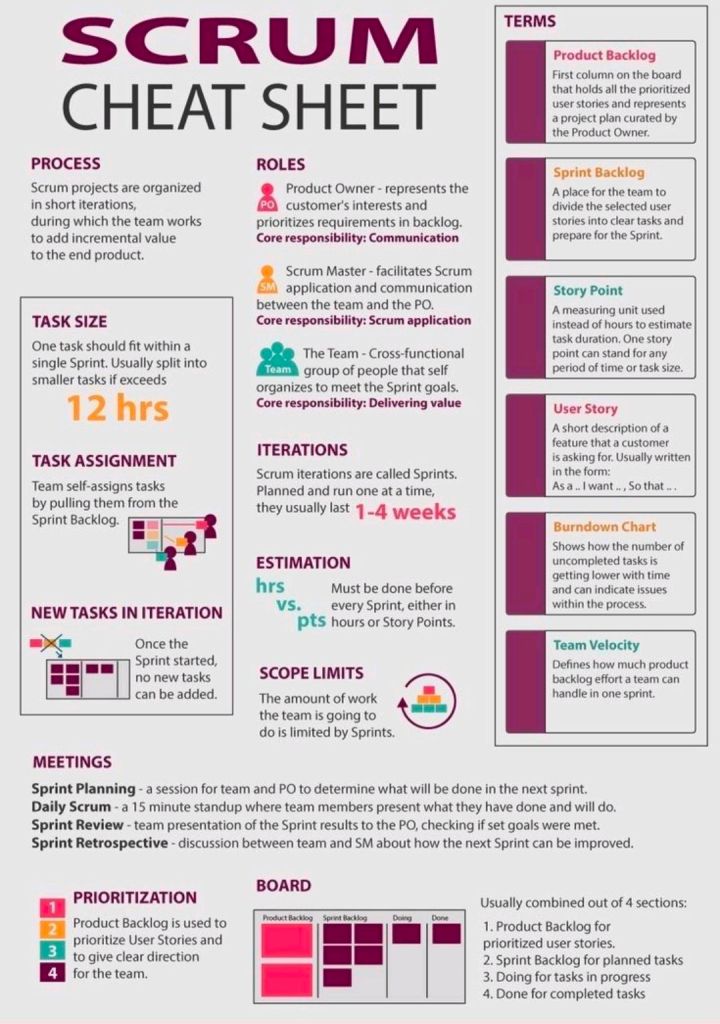
- Core Values: Individuals/interactions over tools, working software over documentation, customer collaboration over negotiation, and responding to change over following a plan.
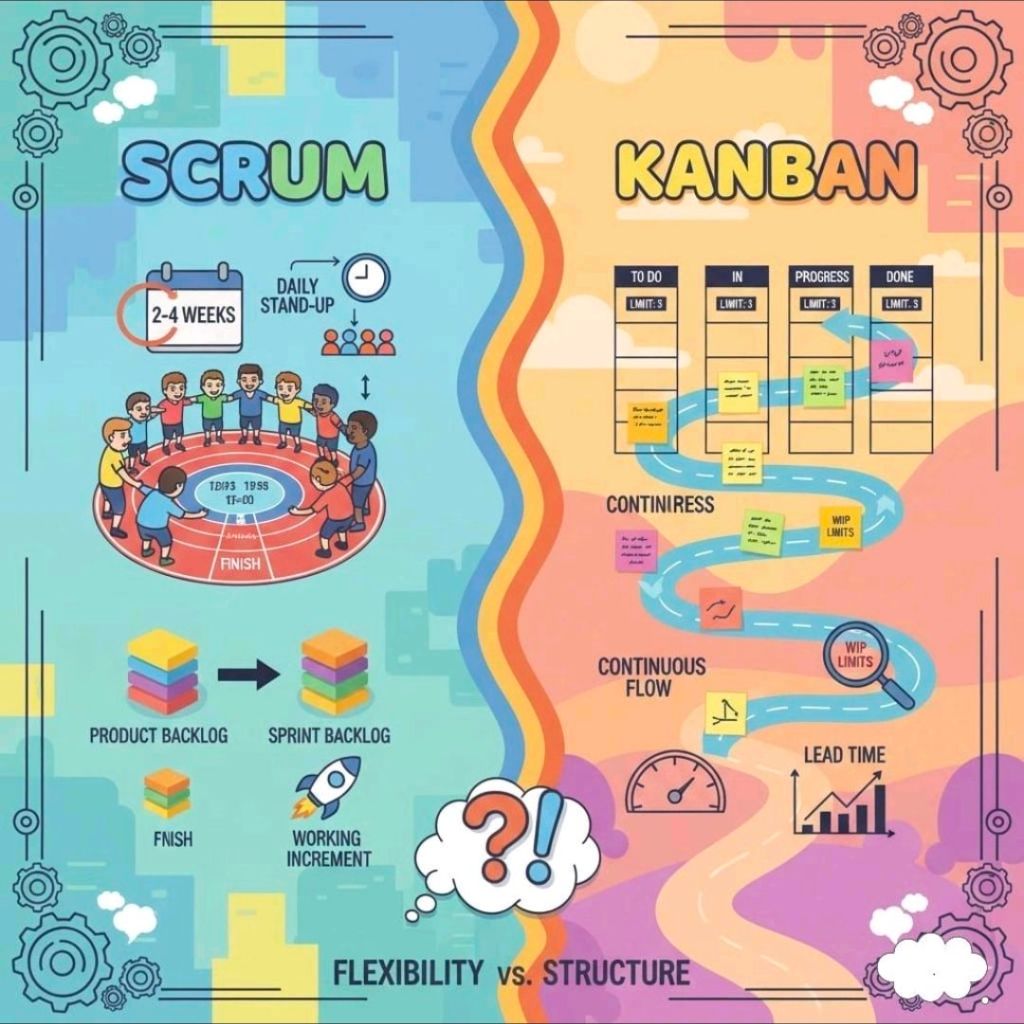
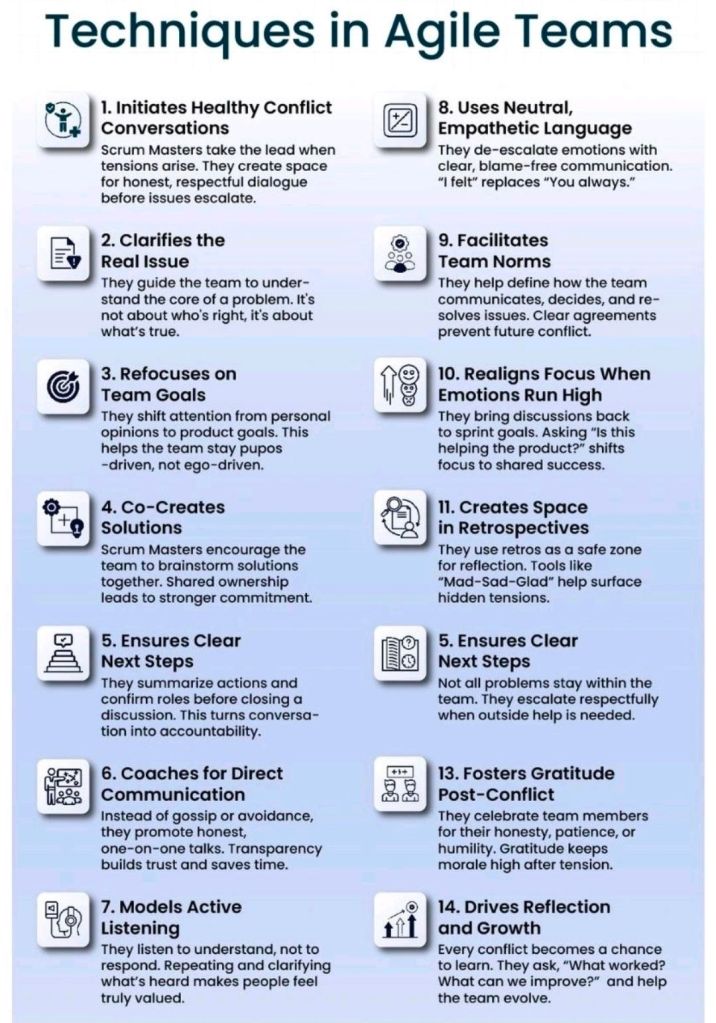
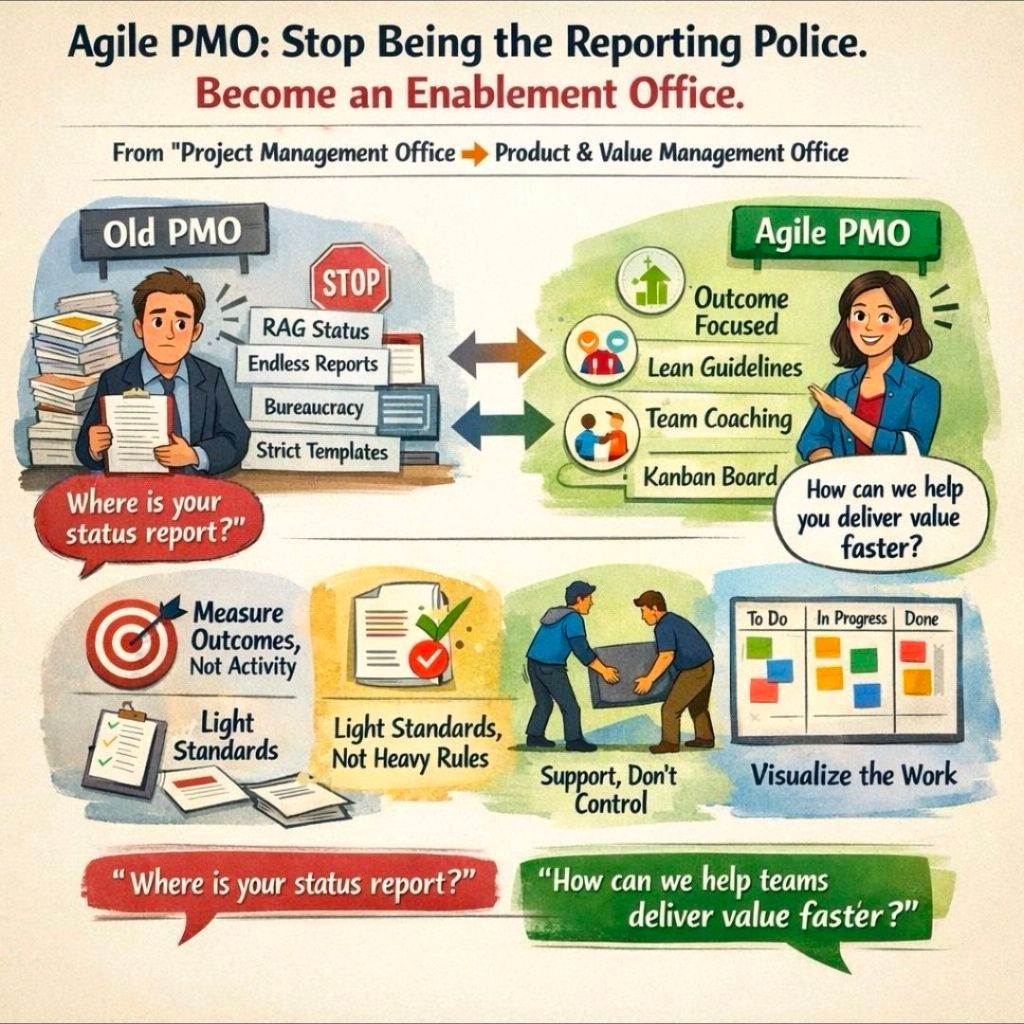
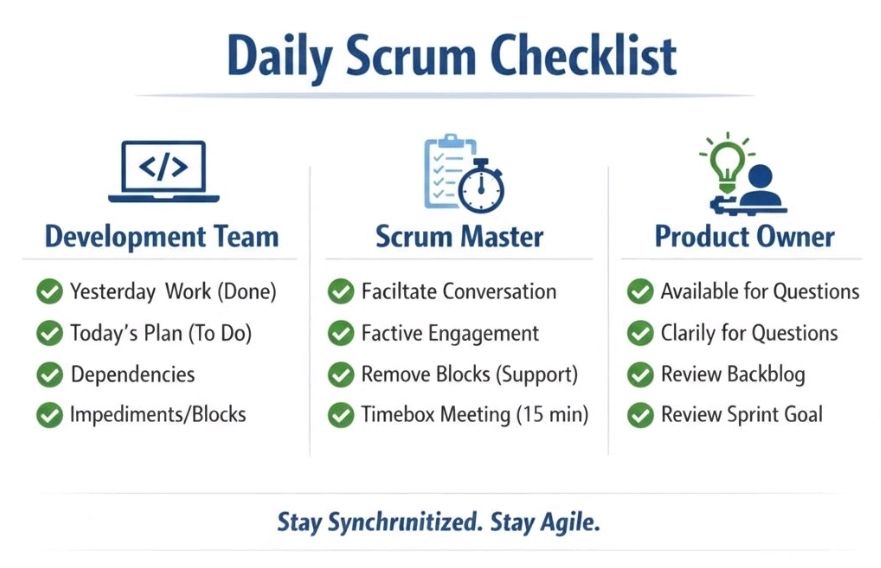
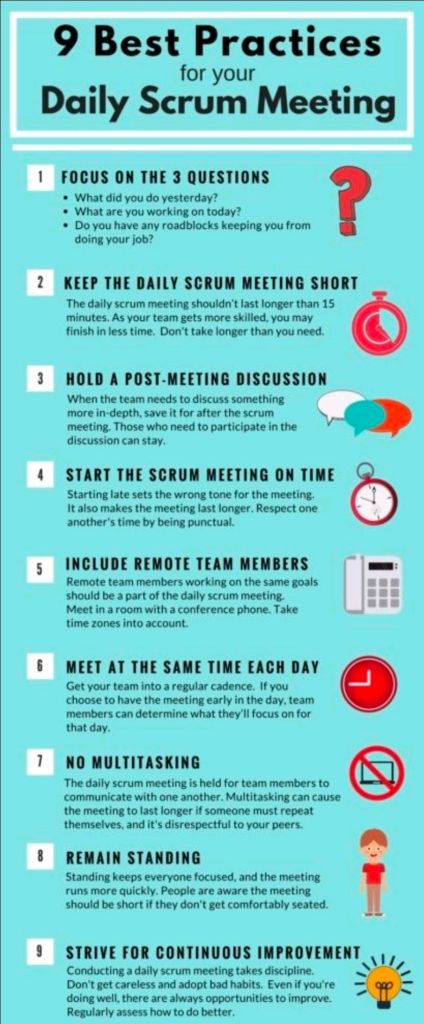
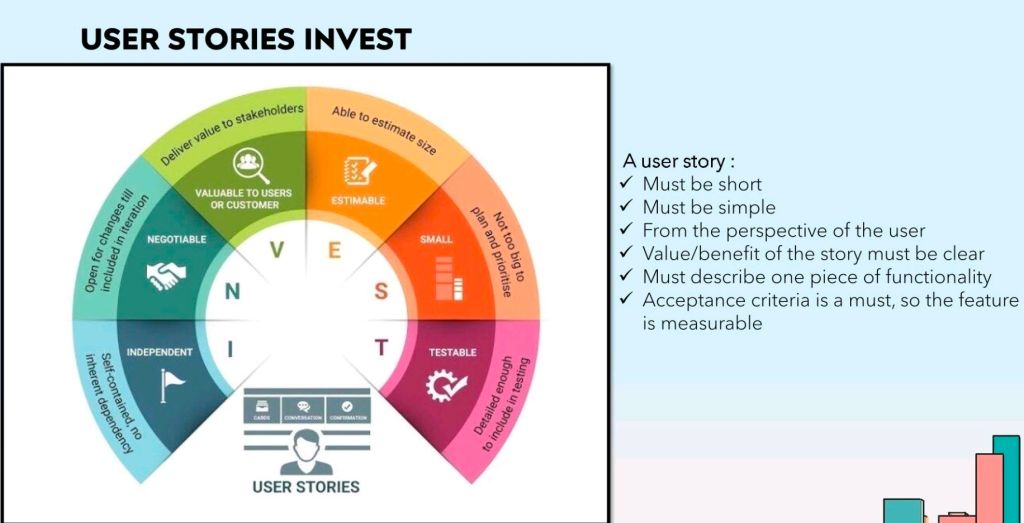
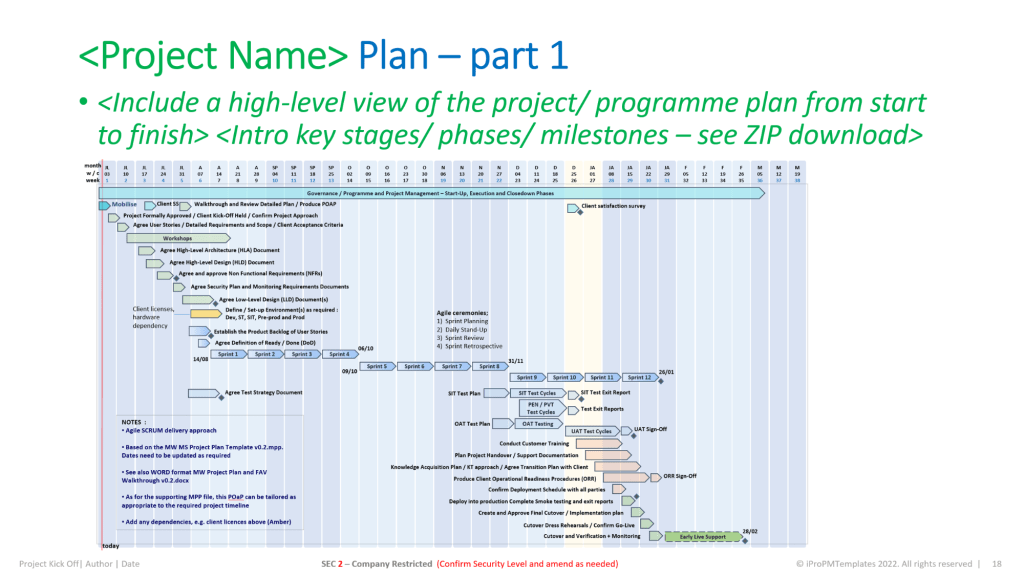
- Key Techniques: Sprints, daily stand-up meetings, visual control (Kanban boards), and user stories.
- Primary Benefits: Increased adaptability, higher quality through continuous testing, faster ROI, and better team collaboration.
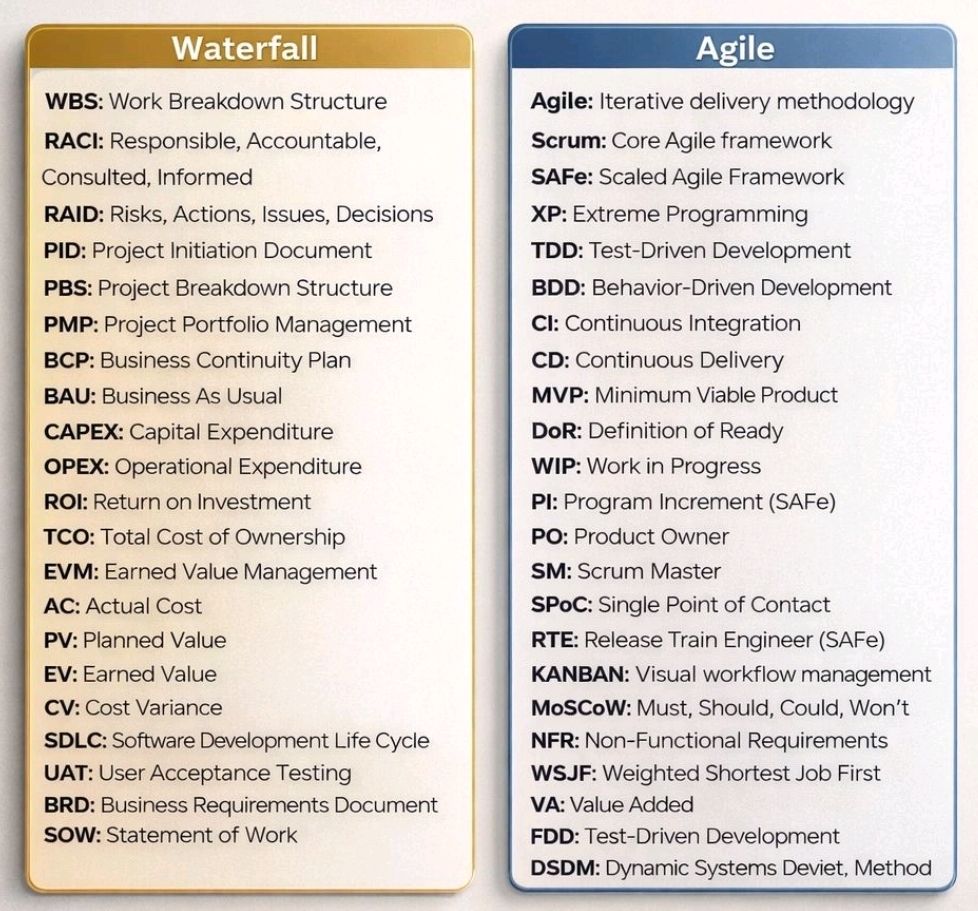
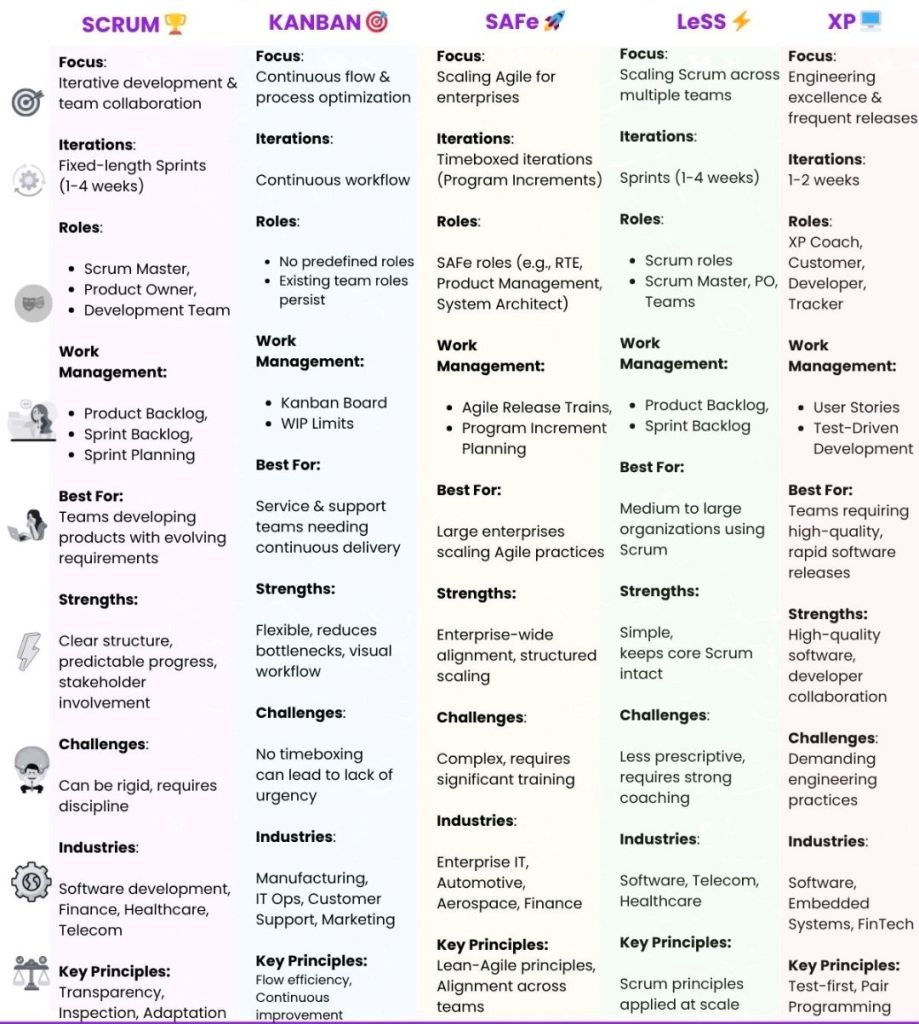
- Common Frameworks: Scrum, Kanban, Extreme Programming (XP), Crystal, and Dynamic Systems Development Method (DSDM).
Detailed Historical Timeline of Agile (1950s–Present)
1. The Pre-Agile Era: Iterative Roots (1950s–1980s)
Before “Agile” was a term, software pioneers experimented with iterative approaches to break away from linear, heavy-documentation processes.
- 1957: Gerald M. Weinberg begins experimenting with incremental development at IBM.
- 1968: “Conway’s Law” is coined, highlighting the impact of organizational communication on system design.
- 1970s: Barry Boehm proposes “Wideband Delphi,” a forerunner to modern estimation techniques like Planning Poker.
- 1985: Tom Gilb introduces the “Evolutionary Delivery Model” (Evo), focusing on small, incremental releases.
- 1986: Takeuchi and Nonaka publish “The New New Product Development Game” in Harvard Business Review, describing a rugby-like approach that inspires Scrum.
- 1988: Scott Schultz describes timeboxing in “Rapid Iterative Production Prototyping”.
2. The Birth of “Lightweight” Methods (1990s)
Practitioners, frustrated with the “Waterfall” approach, created new, faster methodologies, often called “lightweight” methods.
- 1991: James Martin releases Rapid Application Development (RAD), popularizing prototyping and iterative feedback.
- 1993: Jeff Sutherland, John Scumniotales, and Jeff McKenna develop the first Scrum framework at Easel Corporation.
- 1994: The Dynamic Systems Development Method (DSDM) is created to provide structure to RAD.
- 1995: Ken Schwaber and Jeff Sutherland co-present the Scrum methodology at the OOPSLA Conference.
- 1996: Kent Beck develops Extreme Programming (XP) at Chrysler; Jon Kern, Ivan Joseph, and Peter Coad create Feature-Driven Development (FDD).
- 1997: Ken Schwaber describes the “Daily Scrum”.
- 1998: The Chrysler Goes to Extremes case study popularizes XP practices like pair programming and three-week iterations.
3. The Agile Manifesto and Formalization (2000s)
- 2000: A group of 17 thought leaders meets in Oregon to discuss lightweight development, setting the stage for the Manifesto.
- 2001 (Feb): The 17 developers meet at Snowbird, Utah, to formulate the “Manifesto for Agile Software Development”.
- 2001 (Late): The Agile Alliance is formed to support the community.
- 2004: Ken Schwaber and Mike Beedle publish Agile Software Development with Scrum; Jim Highsmith publishes Agile Project Management.
- 2009: Kanban gains significant traction in the IT sector, focusing on continuous flow.
4. Mainstream Adoption and Scaling (2010s)
- 2010s: Real-life success metrics and case studies accompany Agile, driving adoption above 50%.
- 2011: The Agile Alliance holds “Agile2011” to reflect on ten years of the Manifesto.
- 2012-2015: Large-scale adoption accelerates, prompting the creation of frameworks like SAFe (Scaled Agile Framework) and LeSS (Large-Scale Scrum).
- 2017: AXELOS releases PRINCE2 Agile; Agile Testing gains a formal, collaborative definition.
5. Enterprise Agility and Beyond (2020s)
- 2020: COVID-19 pandemic drastically accelerates the adoption of remote/distributed Agile and digital tools like Jira.
- 2021+: Continued focus on “Business Agility,” moving Agile principles from IT departments into HR, marketing, and leadership teams.
Evolution of Core Methodologies
- Scrum: Emerged 1993/1995 (Sutherland/Schwaber).
- XP (Extreme Programming): Emerged 1996 (Beck).
- Crystal: Emerged 1991 (Cockburn).
- FDD (Feature Driven Development): Emerged 1997.
- Kanban: Adopted from manufacturing (Toyota 1940s) and applied to IT in late 2000s.
Agile project management summary and detailed historical timeline by era and year
 PROject Templates