Business Analysts and Artificial Intelligence AI, Future

Business Analysts and Artificial Intelligence AI Future
Business Analysts and Artificial Intelligence AI, future

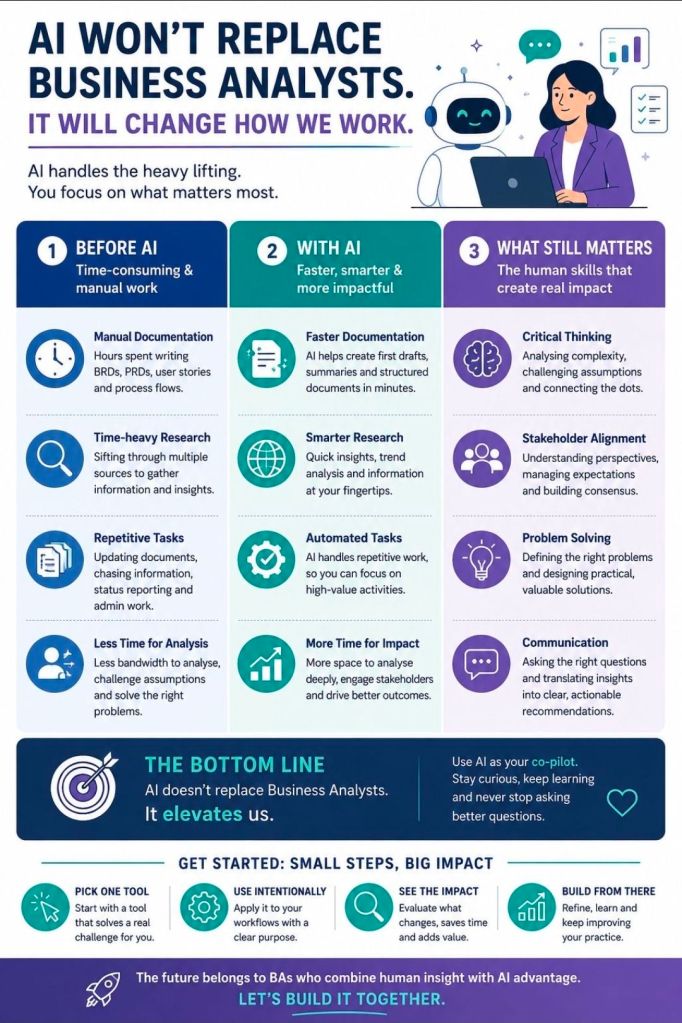
Artificial Intelligence (AI) is fundamentally shifting the role of the Business Analyst (BA) from a focus on routine data processing and documentation to more strategic, human-centric activities. While AI excels at identifying patterns and automating labor-intensive tasks, it currently lacks the contextual awareness and emotional intelligence required to manage complex stakeholder relationships.

Core AI Applications for Business Analysts

AI functions as a high-speed “copilot” that streamlines the traditional BA lifecycle.

  • Requirement Generation: AI can process meeting transcripts to draft an initial list of requirements, user stories, or a Business Requirements Document (BRD).
  • Data Analysis & Forecasting: Machine learning algorithms can identify subtle trends in large datasets and move analysis from descriptive (what happened) to predictive (what might happen).
  • Visual Modeling: Tools can now generate process flows, data models, and architecture diagrams from simple text descriptions, drastically reducing time spent on manual formatting.
  • Information Elicitation: Analysts can use AI to quickly extract key details from vast document repositories or prepare for stakeholder interviews by anticipating potential questions.

Skills That Remain Uniquely Human

As AI handles the “grunt work,” the most valuable BA skills are those that cannot be easily automated.

  • Strategic Thinking: Connecting big-picture organizational goals to specific technical solutions and defining the “why” behind an initiative.
  • Stakeholder Management: Navigating office politics, facilitating discussions to resolve disagreements, and building trust across teams.
  • Creative Problem Solving: Tackling ambiguous business challenges where there is no clear historical data for an AI to learn from.
  • Critical Evaluation: Fact-checking AI outputs to ensure they are accurate and free from “hallucinations” before they influence business decisions.

The Shift from “AI4BA” to “BA4AI”

A new perspective emerging in the field is that BAs shouldn’t just use AI, but should lead the organization’s AI adoption.

  • Guiding Implementation: BAs act as strategic enablers, ensuring that AI projects solve meaningful problems rather than just chasing technological trends.
  • Managing Risk: Analysts play a critical role in addressing ethical concerns, bias detection, and security risks associated with AI-driven systems.
  • Bridging the Gap: They serve as the essential link between technical AI teams and non-technical business leaders to ensure projects deliver tangible value.

Future Career Outlook

The consensus among industry experts is that AI will transform—rather than eliminate—the BA profession. The market for business analytics is projected to grow significantly through 2031. Analysts who successfully integrate AI into their workflow to enhance productivity are expected to replace those who do not.
IT Project Triangle, Scope, Timeline and Budget

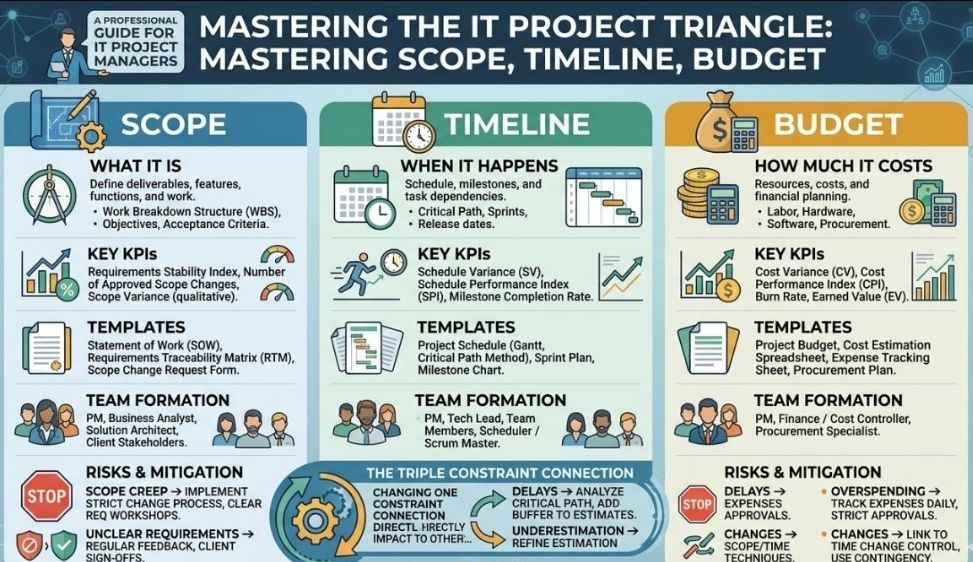
IT Project Triangle, Scope, Timeline and Budget

PRINCE2 Agile Outline

PRINCE2 Agile combines the structured governance of PRINCE2 with the flexibility of agile methods (like Scrum and Kanban) to manage projects effectively. It focuses on maintaining control, transparency, and high-quality delivery while empowering teams, making it ideal for fast-paced environments.

Key Aspects of PRINCE2 Agile:

  • Structure + Flexibility: It provides the framework to guide projects, while allowing the use of agile techniques to build the product.
  • Key Focus Areas:
    • The Agilometer: Assesses the level of risk and agility in a project.
    • Requirements: Prioritized to ensure the most valuable features are delivered first.
    • Rich Communication: Emphasizes face-to-face interaction and team rooms.
    • Frequent Releases: Ensures regular delivery and feedback loops.
  • Tailored Governance: Allows projects to remain aligned with organizational goals while keeping the flexibility needed for innovation.
  • Compatibility: Works well with various agile methods including Scrum, Kanban, and Lean Startup.

Main Benefits:

  • Increased Flexibility: Enables faster adaptation to changes and new information.
  • Improved Quality: Focuses on delivering high-quality products that meet client needs.
  • Enhanced Control: Provides necessary governance for project success.

When to Use:

  • Projects requiring both structure and high responsiveness.
  • Teams using Agile techniques who need to satisfy governing bodies.
  • Situations demanding regular, iterative delivery of results.

For more in-depth knowledge, consider exploring the PRINCE2 Agile Wiki and Good e-Learning articles.

PRINCE2 (PRojects IN Controlled Environments) Overview and Evolution Timeline

PRINCE2 (PRojects IN Controlled Environments) is a structured, process-driven project management method used internationally to deliver projects within time, cost, and quality constraints. Originally developed for IT projects, it has evolved into a generic, flexible, and scalable framework applicable to any type of project, now owned by PeopleCert.

Detailed Overview of PRINCE2 (2026 Framework)

As of 2026, the current framework is PRINCE2 7th Edition, launched in late 2023. It is characterized by its focus on people, digital tools, and sustainability, while retaining its core focus on governance.

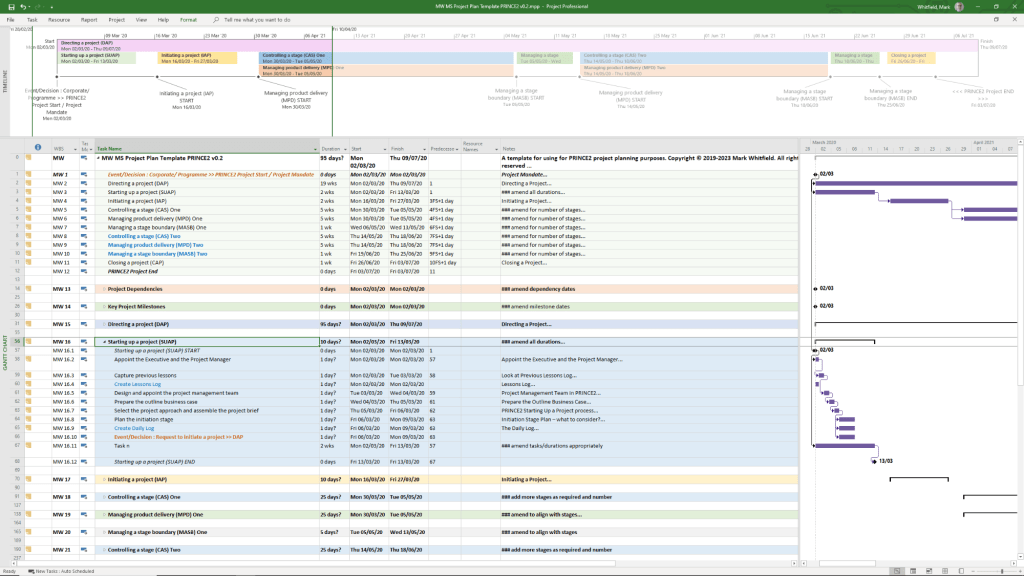
MS Project MPP template example

1. The Seven Principles (Why PRINCE2 is used)

  • Continued Business Justification: A project must have a valid business case.
  • Learn from Experience: Lessons are documented and used.
  • Defined Roles and Responsibilities: Clear organizational structure.
  • Manage by Stages: Projects are broken into manageable chunks.
  • Manage by Exception: Empowerment given to managers to act within tolerances.
  • Focus on Products: Focus on deliverables rather than activities.
  • Tailor to Suit the Project: Adapted to suit the project’s size, environment, and complexity.

2. The Seven Themes (What must be managed)

  • Business Case
  • Organization
  • Quality
  • Plans
  • Risk
  • Change
  • Progress

3. The Seven Processes (How to manage)

  • Starting up a Project
  • Directing a Project
  • Initiating a Project
  • Controlling a Stage
  • Managing Product Delivery
  • Managing a Stage Boundary
  • Closing a Project

4. Certification Levels

  • Foundation: Confirms basic knowledge of the methodology.
  • Practitioner: Tests the ability to apply and tailor the method to scenarios.

Detailed Timeline Evolution by Era and Year

PRINCE2 has evolved from a niche IT methodology to a global standard through three major revisions.

Era 1: The Foundations (1975–1989)

  • 1975: Simpact Systems Ltd. creates the PROMPT (Project, Resource, Organization, Management, and Planning Technique) methodology.
  • Early 1980s: UK Central Computer and Telecommunications Agency (CCTA) licenses PROMPT.
  • 1989: CCTA enhances PROMPT II, renaming it PRINCE (PROMPT in the CCTA Environment), mandated for UK IT projects.

Era 2: Launch and Public Adoption (1990–2005)

  • 1990: PRINCE is released into the public domain.
  • 1996: PRINCE2 is released by CCTA, designed for a broader range of projects (non-IT).
  • 2000: Ownership transfers to the UK Office of Government Commerce (OGC).
  • 2002/2005: Major revisions to the manual structure, strengthening the “product-based planning” approach.

Era 3: Modernization & Privatization (2009–2021)

  • 2009: Major “Refresh” released, introducing the seven principles, themes, and processes. Focuses on simplicity and customizability.
  • 2013: Ownership transfers to AXELOS Ltd, a joint venture between the UK Government and Capita.
  • 2017: PRINCE2 2017 Update (6th Edition) is released, focusing on enhanced flexibility and tailoring guidance.
  • 2018: Launch of PRINCE2 Agile.
  • 2021: PeopleCert acquires AXELOS, taking full ownership of the methodology.

Era 4: The 7th Edition (2023–Present/2026)

  • September 2023: Launch of PRINCE2 7th Edition.
  • 2024: PRINCE2 is branded as “PRINCE2 Project Management”.
  • 2026 (Current): Focus on hybrid delivery, digital transformation, and sustainability within the 7th edition framework.
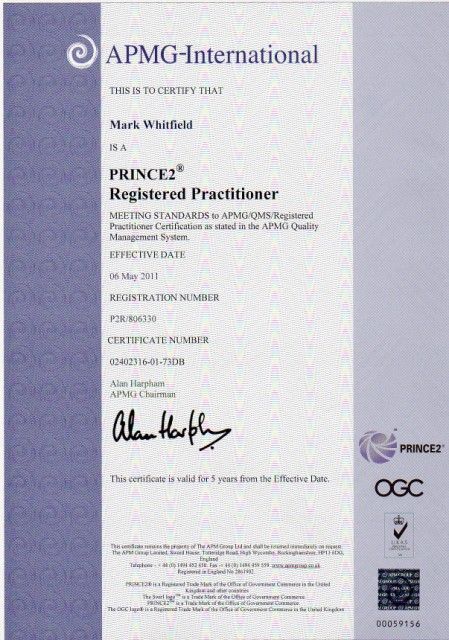
Mark Whitfield, May 2011 – Registered PRINCE2 Practitioner with ILX
May 2011 – Registered PRINCE2 Practitioner with ILX, Mark Whitfield
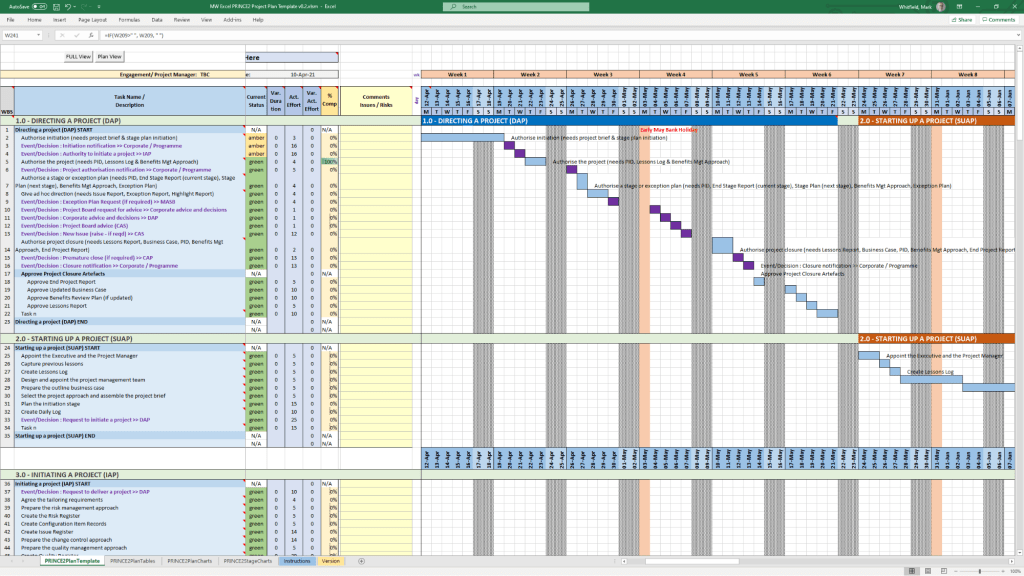
Prince2, Plan On a Page POaP, MS Excel Template

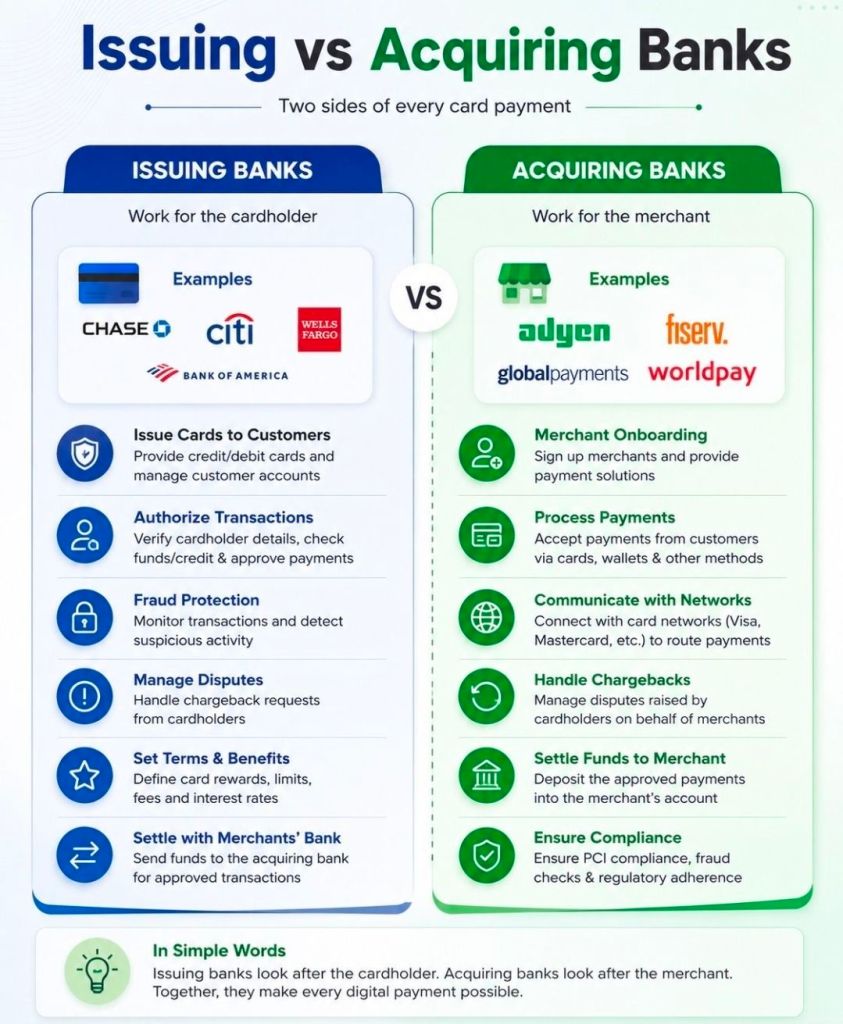
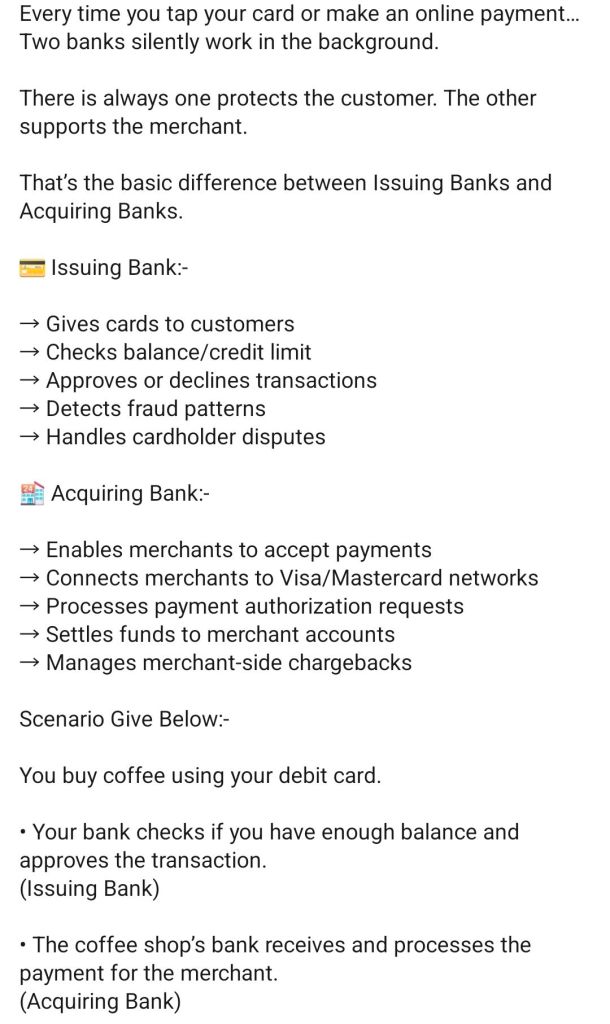
Issuing vs Acquiring Banks for Card Payments

Issuing vs Acquiring Banks for Card Payments

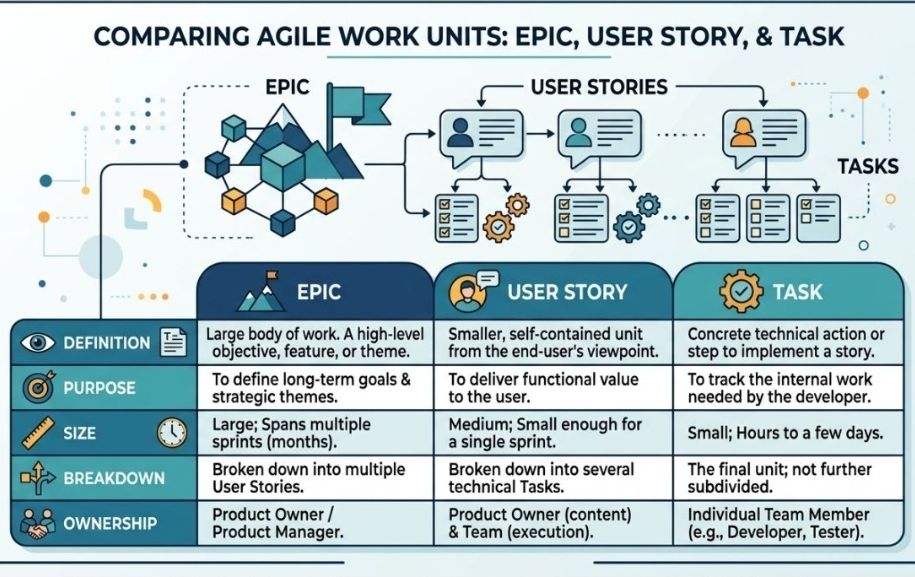
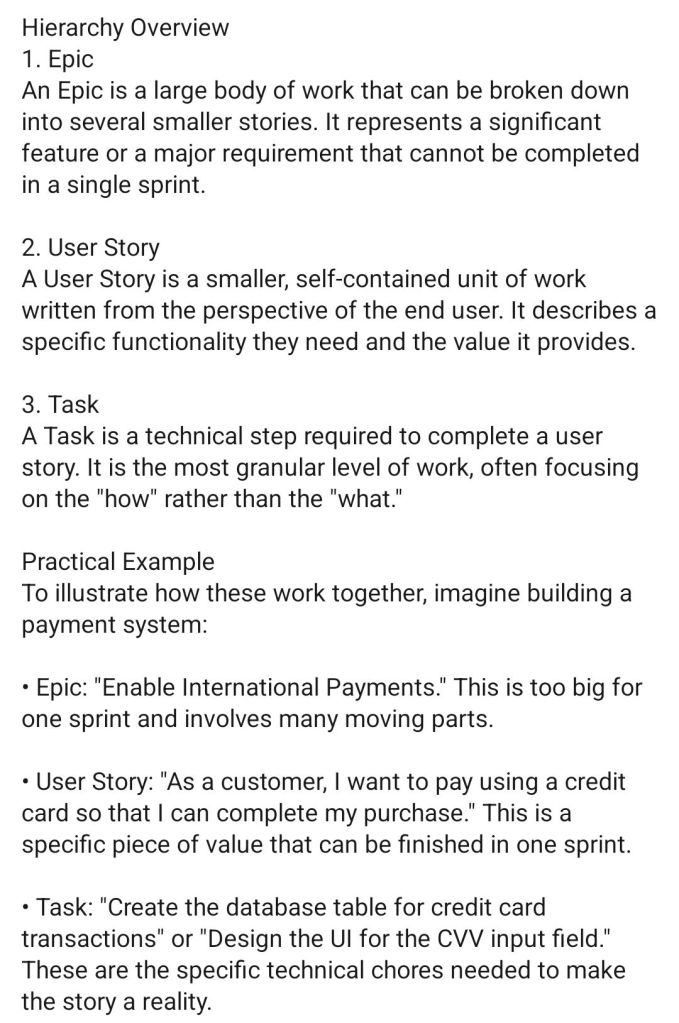
Comparing Agile Work Units; Epic, User Story & Task

Comparing Agile Work Units; Epic, User Story & Task

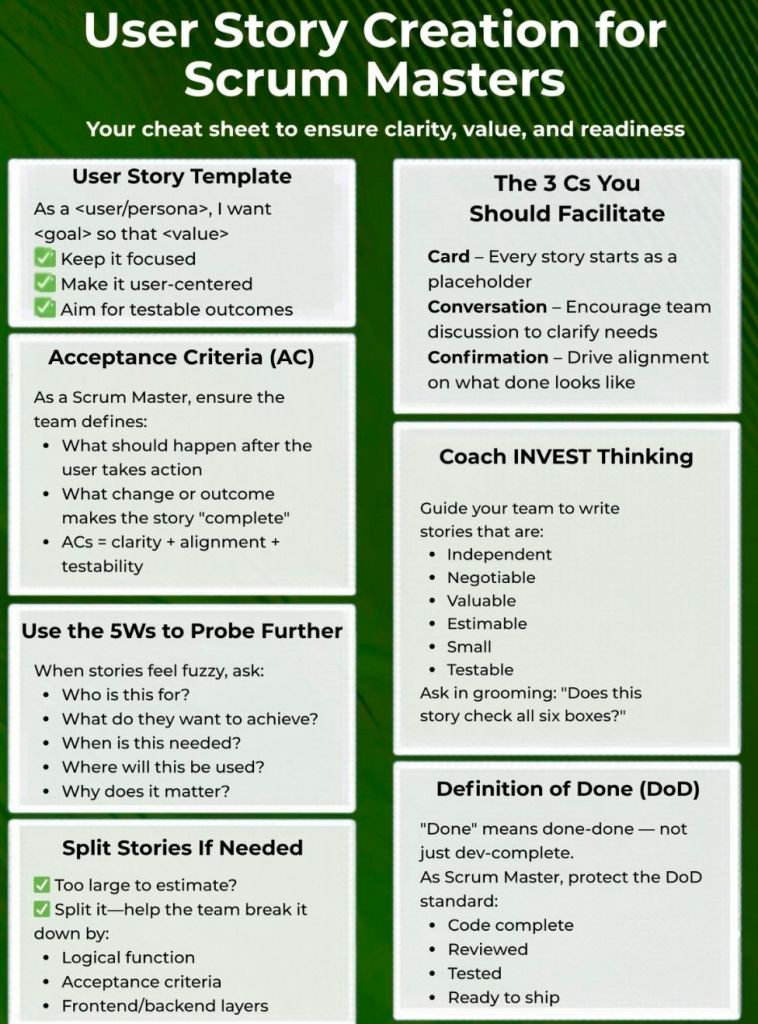
Agile User Story Creation for Scrum Masters; clarity, value and readiness

Agile User Story Creation for Scrum Masters; clarity, value and readiness

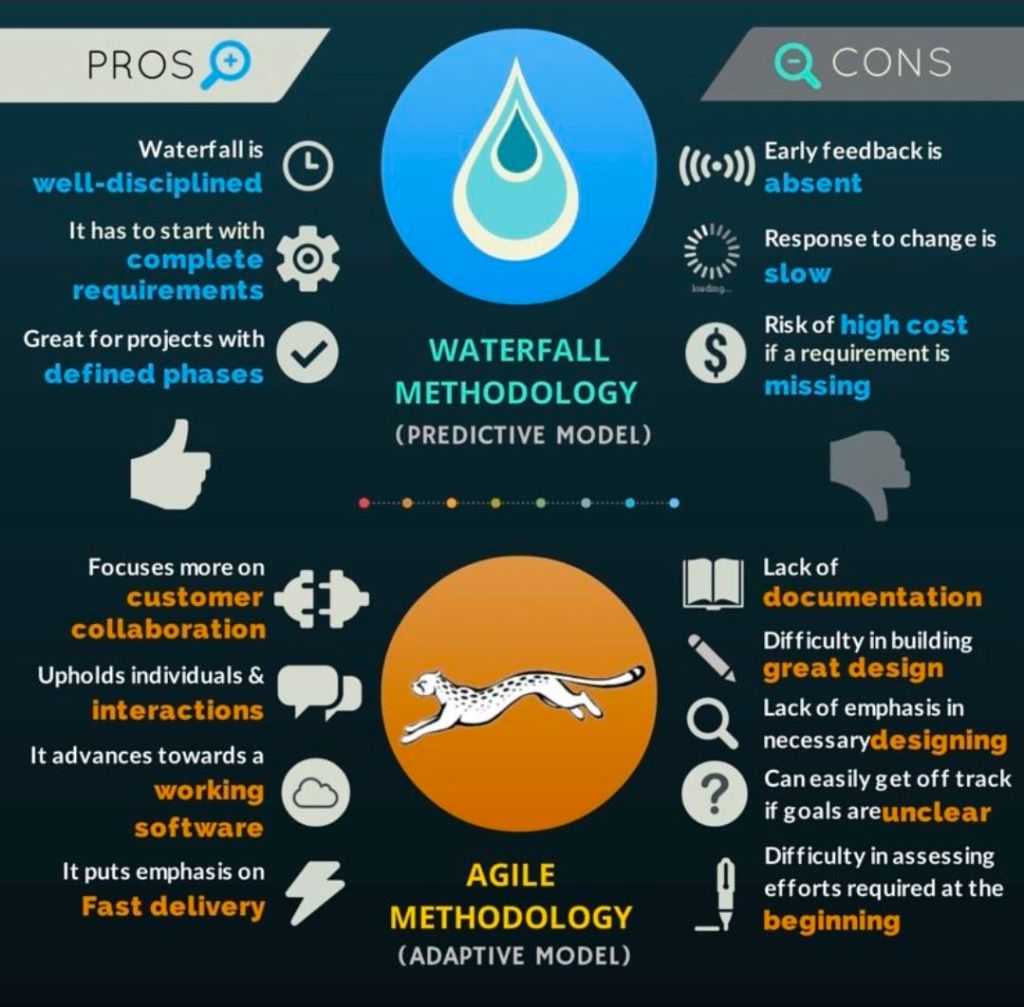
Waterfall vs Agile Methodology, Pros & Cons

Waterfall vs Agile Methodology, Pros & Cons
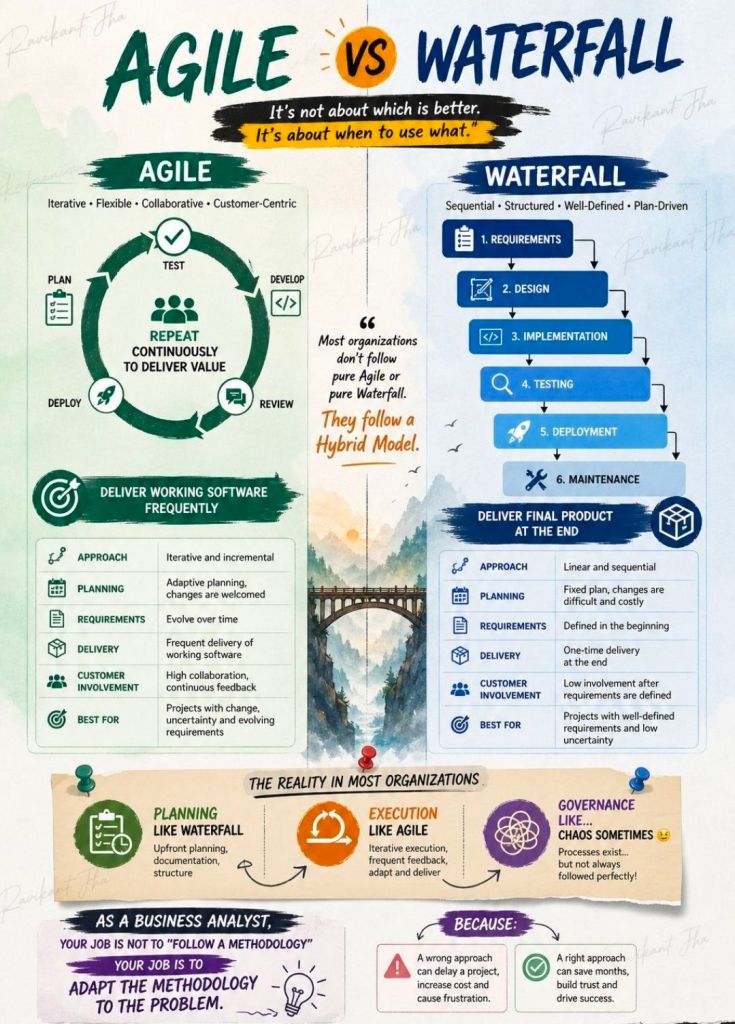
Agile vs Waterfall
Agile vs Waterfall