Project Management and Cost Control

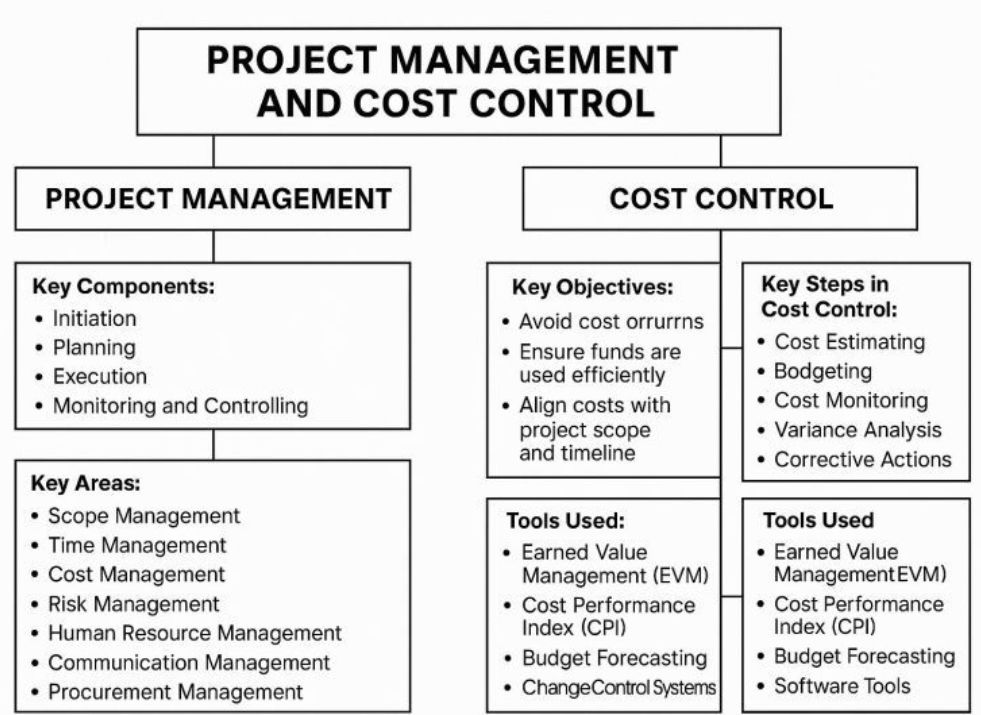
Project Management and Cost Control

Rational Unified Process RUP Overview and Timeline History

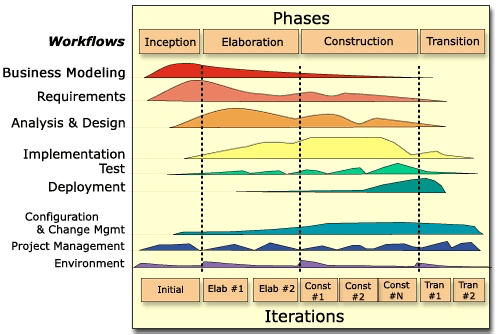
The Rational Unified Process (RUP) timeline is a two-dimensional framework where the horizontal axis represents time (divided into phases and iterations) and the vertical axis represents work/activities (divided into disciplines). 

Rational Unified Process, RUP

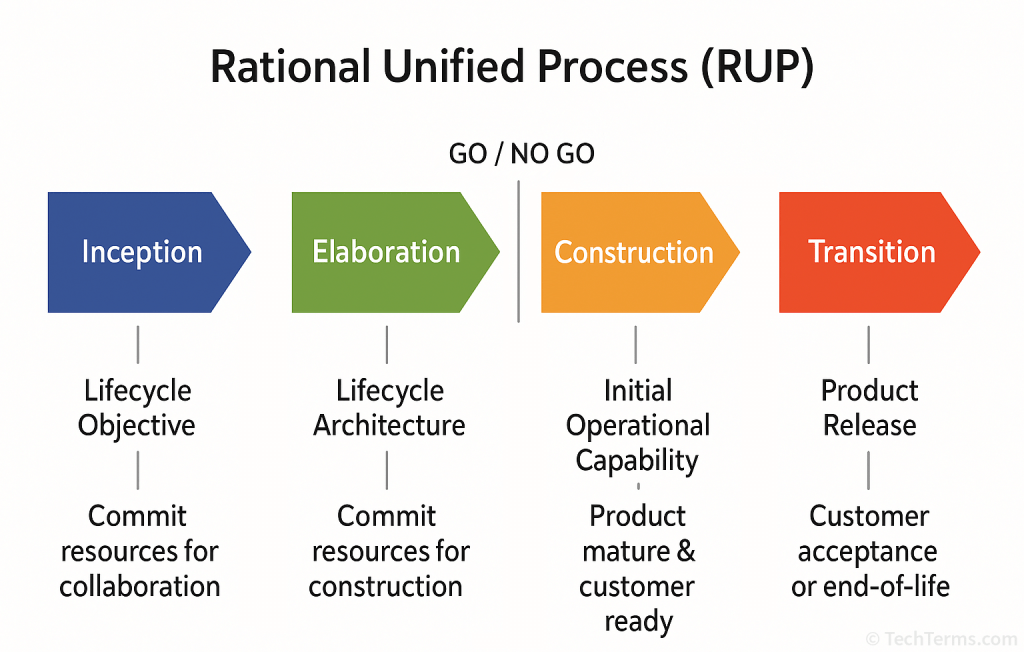
The process is structured into four sequential phases, each culminating in a major milestone where the project’s progress is assessed before moving forward. 

RUP Phases, Iterations and Workflows

RUP Project Phases and Milestones

Each phase of the RUP lifecycle has a specific objective and a corresponding milestone. 

  • Inception Phase
    • Goal: Define project scope, identify business risks, and establish the Business Case.
    • Milestone: Lifecycle Objective Milestone – Stakeholders agree on scope and cost/schedule estimates.
  • Elaboration Phase
    • Goal: Analyze requirements in detail and design a stable Software Architecture.
    • Milestone: Lifecycle Architecture Milestone – The architecture is validated and major risks are mitigated.
  • Construction Phase
    • Goal: Build the software system by developing and testing all components and features.
    • Milestone: Initial Operational Capability Milestone – A product is ready for beta testing by users.
  • Transition Phase
    • Goal: Deploy the software to the end users and perform final Beta Testing and training.
    • Milestone: Product Release Milestone – The development cycle is finished and the product is formally accepted. 

Detailed Iteration Timeline

Within each phase, work is performed in iterations (typically lasting 2 to 6 weeks). Each iteration is a mini-lifecycle that includes: 

  1. Requirements Analysis: Refining what needs to be built.
  2. Design: Modeling the system architecture and components.
  3. Implementation: Writing the code for specific features.
  4. Testing: Verifying the quality of the iteration’s output.
  5. Assessment: Evaluating the iteration against its planned goals. 

Historical Development Timeline

  • 1988: Objectory AB defines the core process.
  • 1995: Rational Software Corporation acquires Objectory.
  • 1998: RUP 5.0 is released, introducing UML integration.
  • 2003: IBM acquires Rational Software.
  • 2012: RUP is largely succeeded by Disciplined Agile Delivery (DAD) and SAFe.

Rational Unified Process RUP Overview and Timeline History

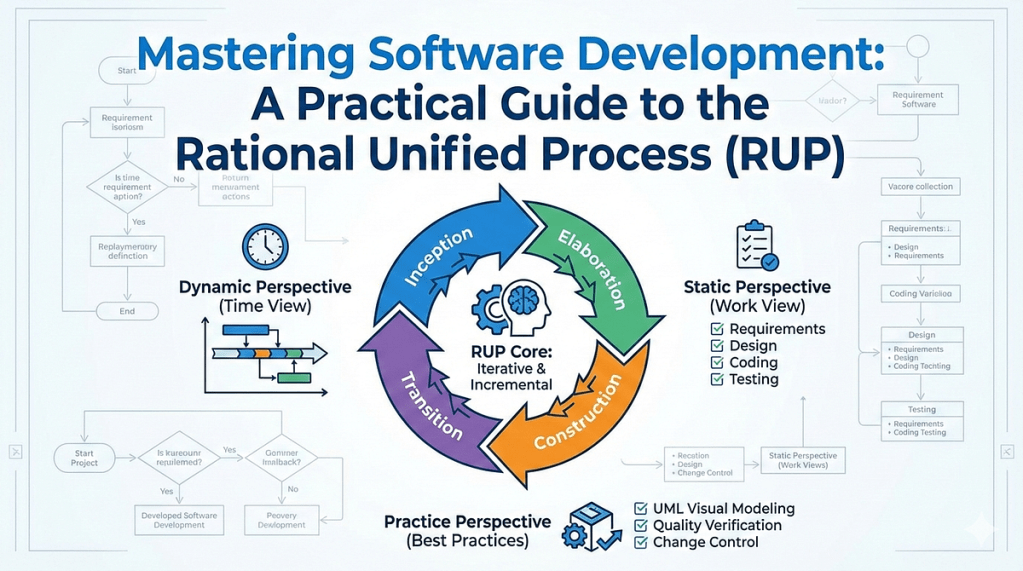
A Practical Guide to the Rational Unified Process RUP

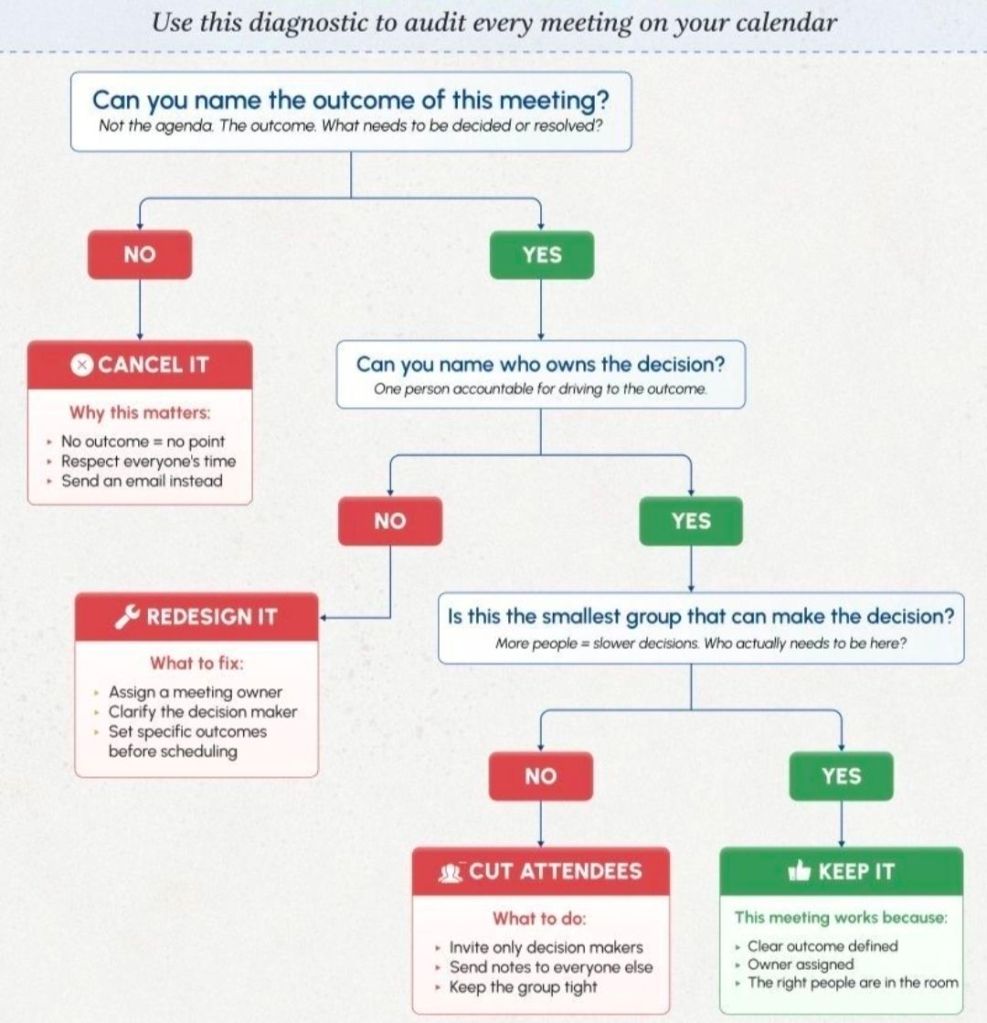
Setting up effective meetings

Setting up effective meetings

ISO 9001 Quality Assurance Detailed Timeline History by year

ISO 9001 is founded on seven core Quality Management Principles (QMPs) designed to guide organisations toward improved performance and consistent quality. Its history is a progression from rigid, procedure-heavy military-style standards to flexible, risk-based management systems. 

Core Principles of ISO 9001:2015

These seven principles form the foundation of the current standard: 

  • Customer Focus: Meeting and exceeding customer expectations is the primary focus to drive loyalty and revenue.
  • Leadership: Leaders at all levels establish unity of purpose and direction, creating an environment where people are engaged.
  • Engagement of People: Competent, empowered, and engaged people across all levels are essential to enhance the organisation’s value.
  • Process Approach: Understanding activities as interrelated processes that function as a coherent system leads to more predictable results.
  • Improvement: A permanent objective of every successful organisation is the continual improvement of its performance.
  • Evidence-based Decision Making: Decisions based on the analysis and evaluation of data are more likely to produce desired results.
  • Relationship Management: Managing relationships with interested parties, such as suppliers and partners, optimizes their impact on performance. 

Detailed Timeline History

The evolution of ISO 9001 can be categorised into four distinct eras: 

1. The Pre-ISO Foundations (1950s – 1986)

  • 1959: US and UK military departments establish MIL-SPECS for procurement.
  • 1969: NATO AQAP standards are introduced for defense industry mutual recognition.
  • 1971: The British Standards Institution (BSI) releases BS 9000 for the electronics industry.
  • 1979: BS 5750 is published in the UK, becoming the first general-purpose quality management standard for industry. 

2. The Procedural & Quality Assurance Era (1987 – 1999)

  • 1987 (ISO 9001:1987): First international publication. Focused on quality assurance through procedural controls and final product inspections. Three models existed: 9001 (Design/Production), 9002 (Production), and 9003 (Inspection).
  • 1994 (ISO 9001:1994): First revision. Shifted focus toward preventative actions rather than just checking finished products. However, it remained “document-heavy,” often leading to excessive bureaucracy. 

3. The Process Management Era (2000 – 2014)

  • 2000 (ISO 9001:2000): A major overhaul. Consolidated ISO 9001, 9002, and 9003 into a single standard. Introduced the Process Approach and the original eight Quality Management Principles.
  • 2008 (ISO 9001:2008): A minor update focusing on clarification and consistency with other standards like ISO 14001 (Environment). No new requirements were added. 

4. The Risk-Based & Strategy Era (2015 – Present)

  • 2015 (ISO 9001:2015): Introduced Risk-Based Thinking and the High-Level Structure (HLS) to ease integration with other management systems. It reduced prescriptive documentation requirements, focusing instead on organisational context and leadership accountability.
  • 2026 (Upcoming): The next major revision is currently under development (target: September 2026), expected to address digitalisation, sustainability (ESG), and climate change.

ISO 9001 Quality Assurance Detailed Timeline History by year

GDPR General Data Protection Regulation timeline history by year

The history of the General Data Protection Regulation (GDPR) spans several decades, evolving from early privacy concepts to a globally adopted gold standard for data protection. 

The Early Era: Foundations of Privacy (1890–1990) 

  • 1890: The “Right to Privacy” concept is first articulated in the USA by Warren and Brandeis.
  • 1950: The European Convention on Human Rights is established, protecting the right to respect for private and family life.
  • 1970: The German state of Hesse passes the world’s first data protection law.
  • 1973: Sweden enacts the first national Data Protection Act.
  • 1980: The OECD issues privacy principles to harmonise international data flows.
  • 1981: Convention 108 is signed, becoming the first legally binding international treaty for data protection. 

The Directive Era: Pre-Internet Regulation (1995–2011) 

  • 1995: The EU adopts the Data Protection Directive (95/46/EC), setting minimum standards for member states.
  • 1998: The UK implements the directive through the Data Protection Act 1998.
  • 2000: Safe Harbour Principles are developed to facilitate EU-US data transfers.
  • 2009: The European Commission launches a public consultation on data protection reform. 

The Development Era: Crafting the GDPR (2012–2015) 

  • 2012: The European Commission releases the first proposal for the GDPR.
  • 2014: The European Parliament votes overwhelmingly in favour of the draft regulation (621 to 10).
  • 2015: Formal “Trilogue” negotiations between the Parliament, Council, and Commission reach a final agreement.
  • 2015 (Oct): The European Court of Justice invalidates the Safe Harbour agreement in the Schrems I case. 

The Enforcement Era: Implementation and Fines (2016–2020)

  • 2016 (Apr): The GDPR is officially adopted by the European Parliament and Council.
  • 2016 (May): The regulation enters into force, beginning a two-year grace period for compliance.
  • 2018 (May 25): The GDPR becomes fully enforceable across the EU.
  • 2019: Regulators begin issuing major fines, including a €50 million penalty against Google by France’s CNIL.
  • 2020: The Schrems II ruling invalidates the EU-US Privacy Shield, causing uncertainty for international transfers. 

The Modern Era: Brexit and AI Evolution (2021–Present) 

  • 2021 (Jan): Post-Brexit, the UK GDPR and Data Protection Act 2018 take full effect as domestic law in the UK.
  • 2022: The EU Data Governance Act enters into force.
  • 2023: Italy’s regulator temporarily bans ChatGPT over GDPR concerns, highlighting the regulation’s role in governing AI.
  • 2024–2026: Expansion of GDPR-style laws globally and the introduction of the EU AI Act to complement data protection rules. 

GDPR General Data Protection Regulation timeline history by year

IT Career snapshot of Mark Whitfield, Senior IT Project Manager (SC cleared)

This resume summarizes the career of Mark Whitfield, a Senior IT Project Manager with over 30 years of experience specializing in digital and software development lifecycles, cloud migrations, and HP NonStop systems. 

Personal Details

  • Name: Mark A. Whitfield
  • Location: Manchester, UK
  • Nationality: British
  • Security Clearance: SC Cleared to 2031
  • Professional Profiles: Official Website | LinkedIn Profile 

Executive Summary

  • Experience: 30+ years in IT.
  • Core Focus: Senior Project Management for Digital/ Software Development Lifecycles (SDLC).
  • Expertise: Transitioning from a technical background in programming (pre-2000) to senior leadership in large-scale projects for global blue-chip companies. 

Key Skills & Competencies

  • Methodologies: PRINCE2 Practitioner, Agile (Scrum/ Kanban), Waterfall, ITIL, ISO QA.
  • Project Controls: MS Project, Budget & Burn Tracking, GDPR compliance, Supplier & Stakeholder Management, Statement of Work (SoW).
  • Technical Proficiencies:
    • Platforms: HP NonStop (Tandem), Cloud Migration (Hybrid).
    • Languages (Historical): C/C++, Java, COBOL85, TAL, TACL, SCOBOL, SQL, MS SQL.
    • Utilities: PATHWAY, SCF, FUP, INSPECT, XPNET. 

Professional Experience

  • Senior IT Project Manager (Various Projects):
    • Managed large-scale solutions for clients including Jaguar Land Rover (JLR), Heathrow, Royal Mail Group (RMG), NATS, and Euroclear.
    • Extensive work within the financial sector for Bank of England, Barclays, HSBC, Santander, Standard Chartered, Deutsche Bank, and Global Payments.
    • Government and public sector projects for Defra, UKEF, Welsh Water, and Scottish Water.
  • Early Career (Programmer / Technical Lead):
    • 1990 – 1995: Programmer at The Software Partnership (later Deluxe Data) in Runcorn, specializing in electronic banking software (sp/ARCHITECT-BANK) on Tandem Mainframe Computers. 

Education & Certifications

  • Degree: Higher National Diploma (HND) in Computing (Distinction, Graduated 1990).
  • Certifications:
    • Microsoft Azure Fundamentals (Certified).
    • PRINCE2 Practitioner.
    • Agile/ Radtac Course Completion. 

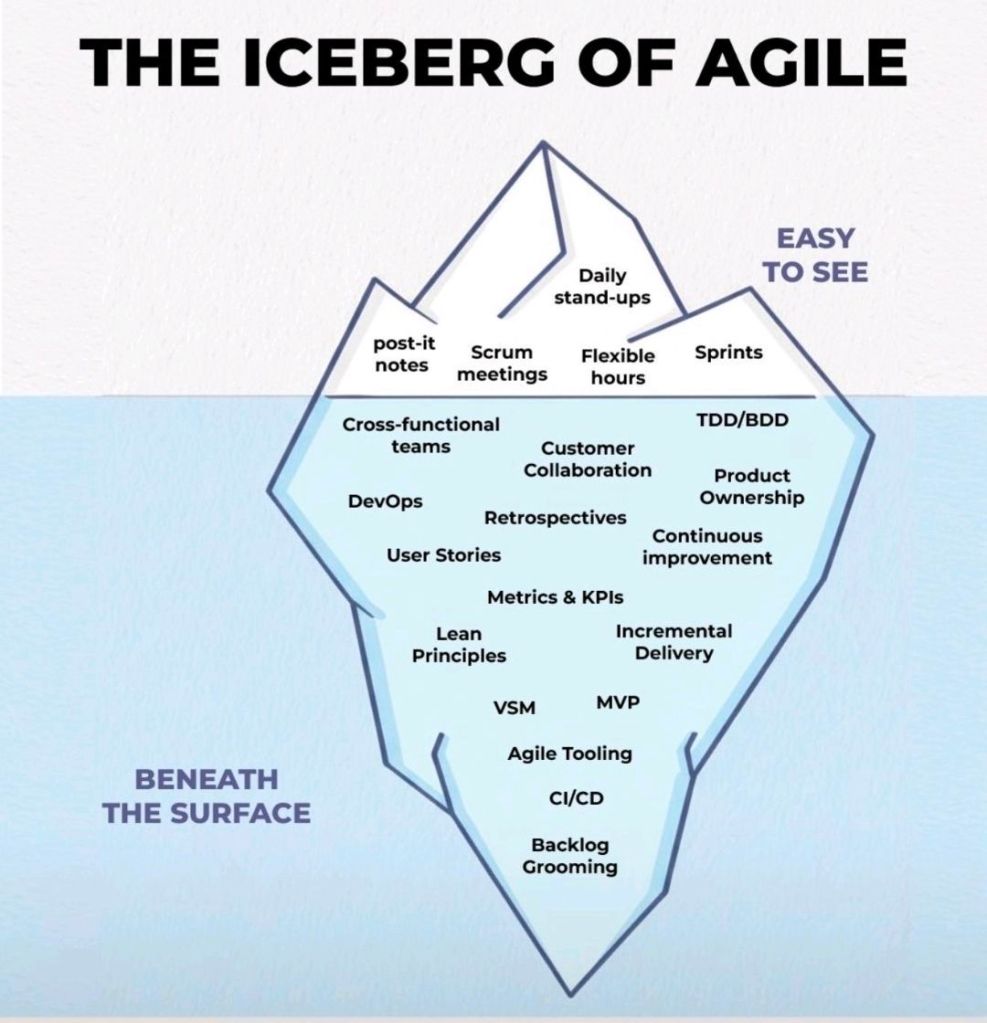
Agile Methodology Iceberg Overview

Agile Methodology Iceberg Overview

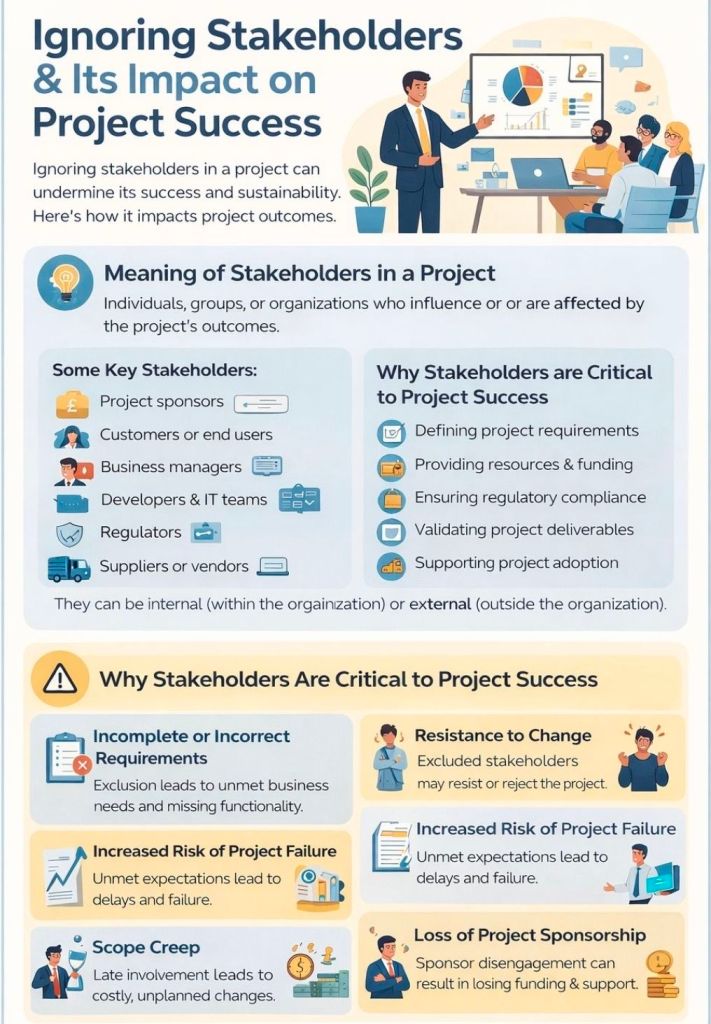
Stakeholders are key to Project Success

Stakeholders are key to Project Success