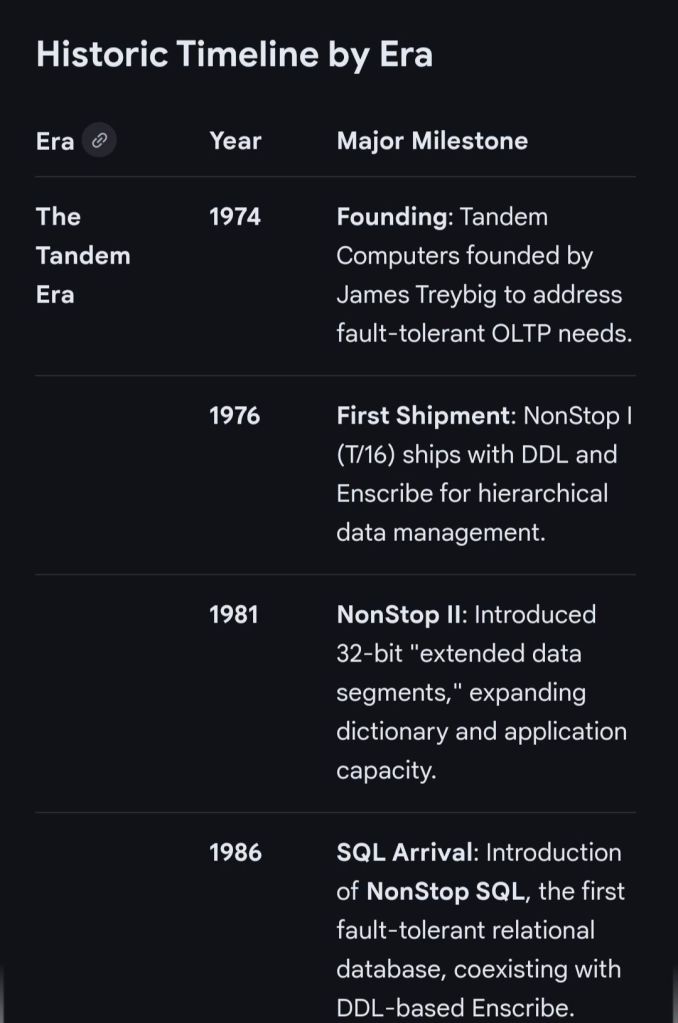
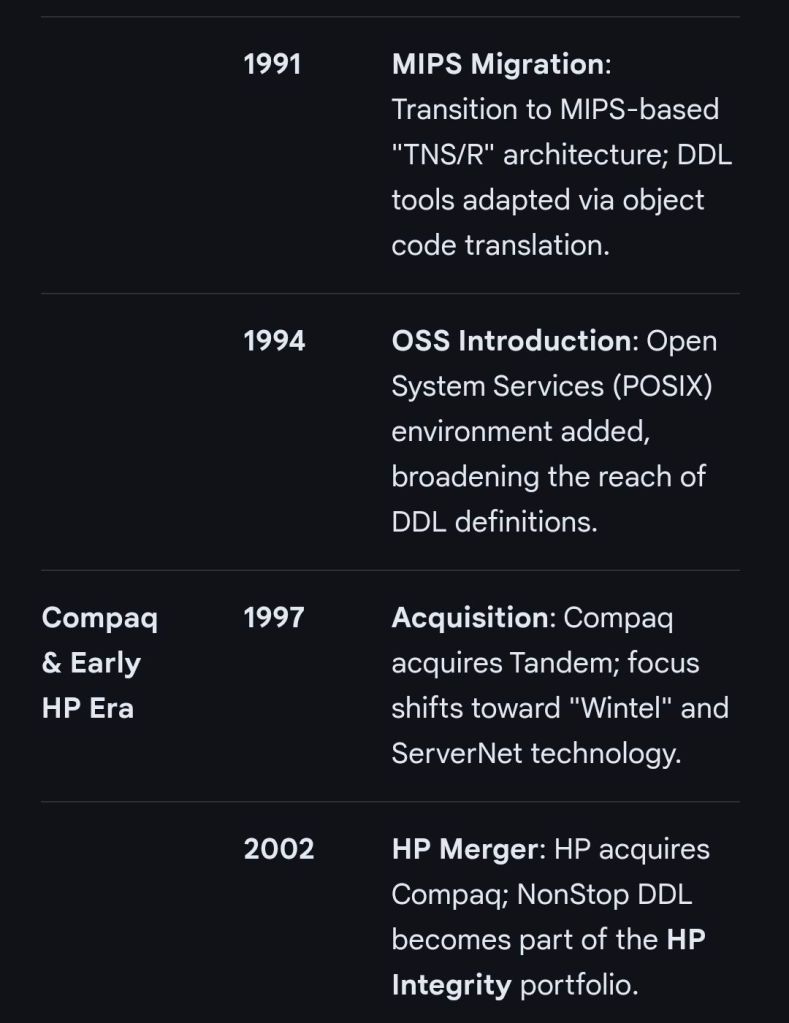
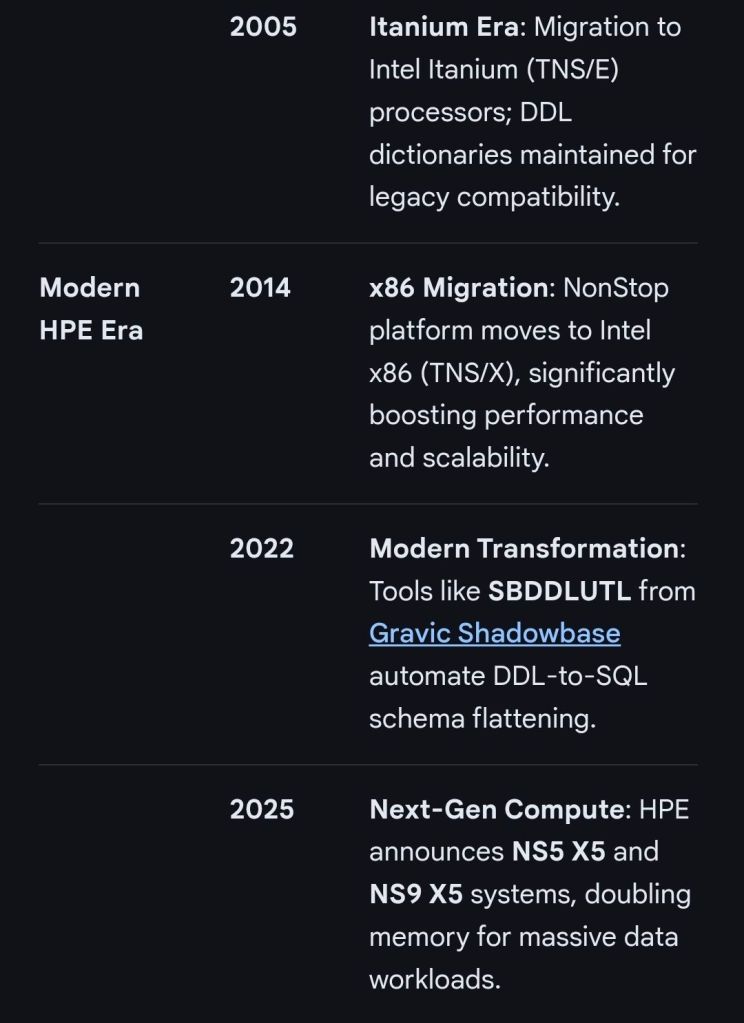
HPE NonStop Data Definition Language (DDL) dictionary overview and timeline

The HPE NonStop Data Definition Language (DDL) dictionary is a specialized subsystem used to define and manage data objects for Enscribe files and translate those definitions into source code for various programming languages. It serves as a central repository for metadata, ensuring consistent data structures across applications written in C, COBOL, TAL, or TACL. 

Program Summary

The DDL dictionary program functions as a metadata management tool. Key capabilities include: 

  • Centralised Definition: Defines records, fields, and file attributes in a hierarchical structure.
  • Code Generation: Translates DDL definitions into language-specific source code (e.g., COBOL copybooks or C headers).
  • Dictionary Maintenance: Allows users to create, examine, and update dictionaries to reflect changes in data structures.
  • Interoperability: Modern tools like Ddl2Bean convert dictionary files into Java Beans or XML, enabling cross-language and cross-platform use. 

Future Outlook

The future of HPE NonStop DDL focuses on modernisation and integration rather than replacement. 

  • Data Virtualization: Integration with AI factories and object storage platforms to expose legacy metadata in open-table formats like Apache Iceberg.
  • API Centricity: Enhancements to the NonStop API Gateway will likely use DDL metadata to automate REST/JSON service orchestration.
  • Real-time Analytics: Native streaming of NonStop data into platforms like Kafka, using DDL definitions to map real-time changes into analytics-ready formats. 

Internet Links & Manuals

HPE NonStop Data Definition Language (DDL) dictionary overview and timeline

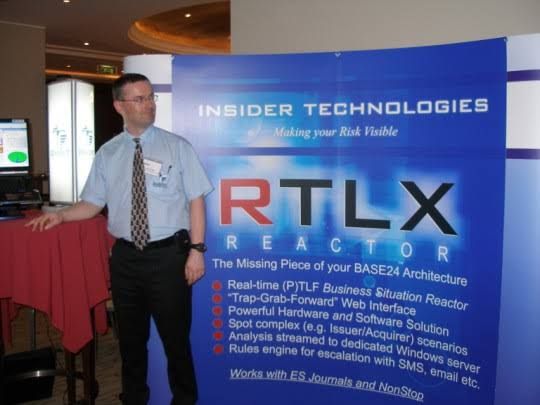
RTLX by Insider Technologies, Overview and Timeline by Year

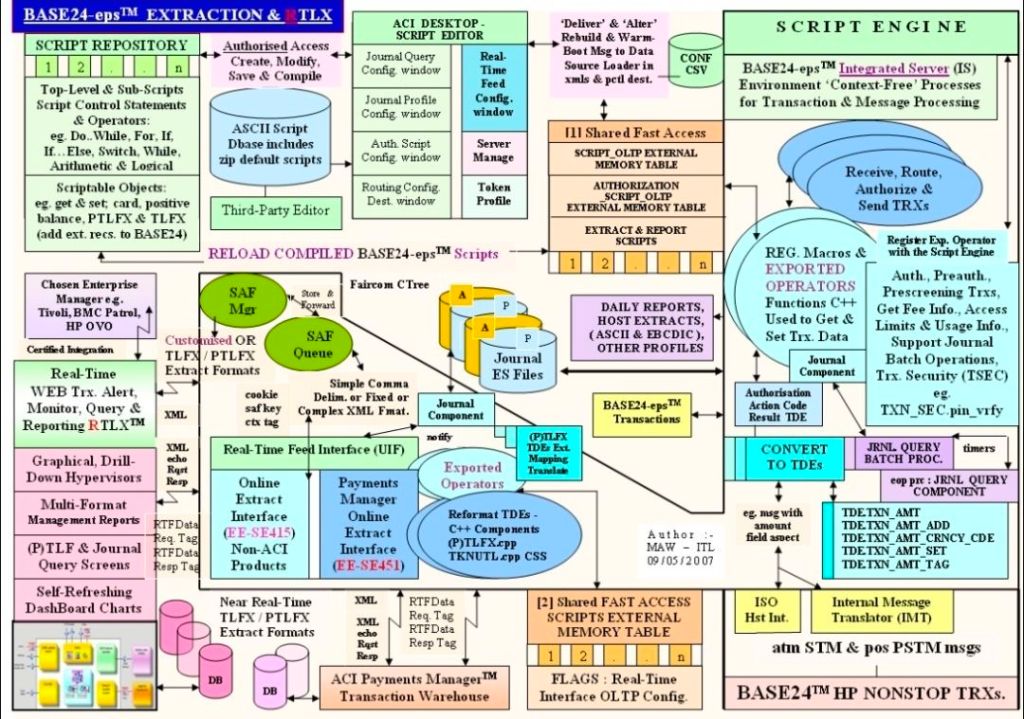
Insider Technologies RTLX (now C-Deep (Transaction Monitoring) https://etinet.com/products/c-deep-transaction-monitoring/ ) is a real-time monitoring and tracking solution designed to provide end-to-end visibility for high-volume electronic payments and transactional processes. It specifically ensures that every stage of a payment—from the initial card “tap” at a point-of-sale (POS) terminal to the final movement of funds from an account—is monitored to maintain operational continuity. 

RTLX Overview

  • Function: Real-time transaction and payment monitoring.
  • Platforms: Runs on HP NonStop, Windows, Linux, and Unix.
  • Core Value: Simplifies “Big Data” for IT operations by alerting teams to potential failures before they impact consumers (e.g., preventing ATM or online banking outages).
  • Key Use Case: Used by major financial institutions like the Bank of England and Royal Bank of Scotland for settlement and transaction security. 

RTLX Historical Timeline

The development of RTLX is closely tied to Insider Technologies’ growth as a specialist in mission-critical HP NonStop environments. 

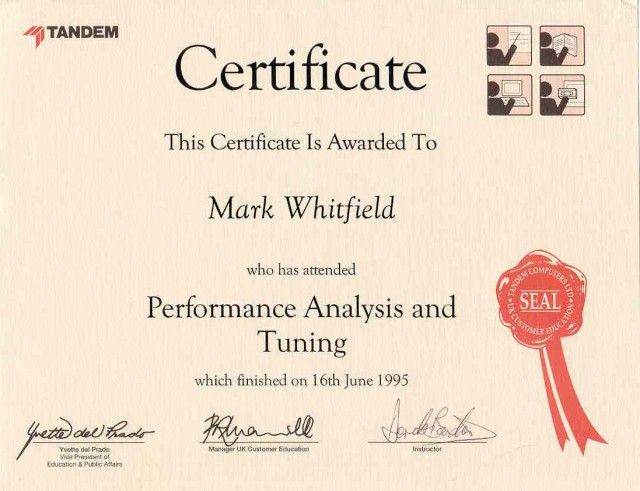
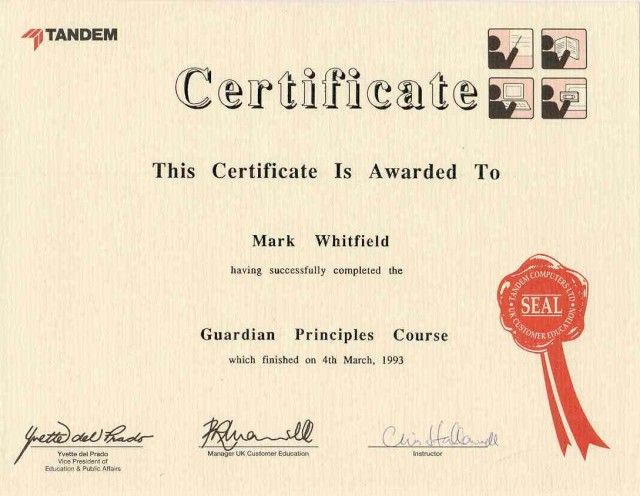
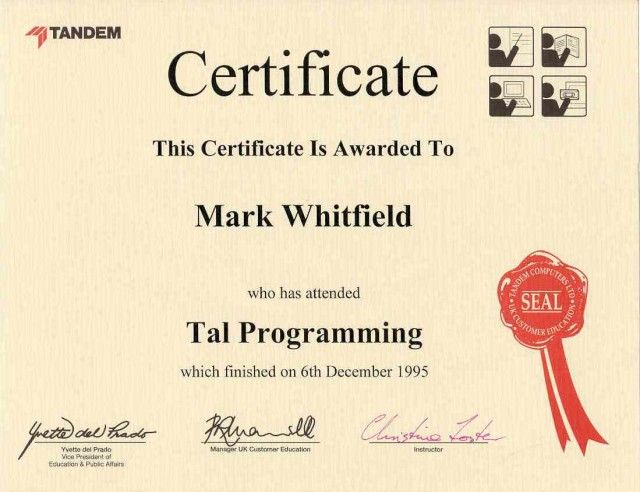
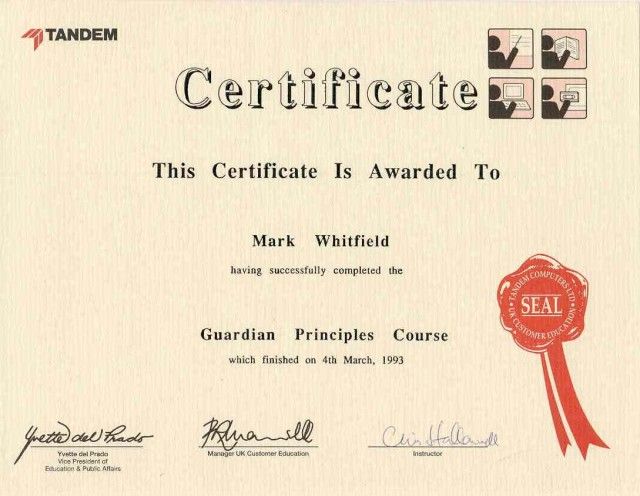
EBUG Conference, Mark Whitfield – Product Manager

The Foundational Era (1989–2000)

  • 1989Insider Technologies Limited is founded in Manchester, UK, by IT industry veterans.
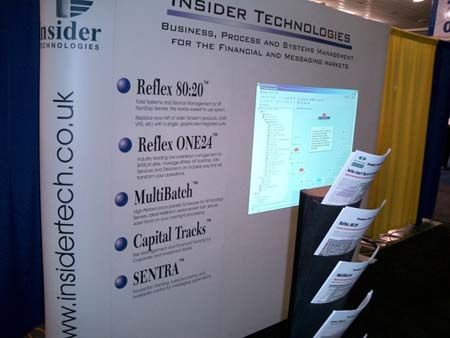
  • 1990s: The company establishes its “DNA” in the HP NonStop (Tandem) platform, developing core products like MultiBatch and Reflex.
  • 1995: Insider begins a period of rapid growth, providing technical support for critical UK financial infrastructure, including Euroclear (formerly CRESTCo), which settles 88% of UK equities. 

The Expansion Era (2001–2014)

  • 2002: Launch of the state-of-the-art Systems Training Platform, featuring 4x patented cloning technology for hyper-realistic simulations.
  • 2004–2013: Development of the Reflex suite (Reflex 80:20 and Reflex ONE24) and the introduction of Sentra and RTLX Reactor monitoring products.
  • 2014: Insider expands its product initiatives to include diagnostic and trending solutions for real-time electronic payments, solidifying the role of RTLX in global banking. 

The Acquisition & Integration Era (2015–Present)

  • 2015ETI-NET acquires Insider Technologies on 1 July, integrating its monitoring expertise with ETI-NET’s mainframe storage and backup solutions.
  • 2019: Insider celebrates its 30th year of operations, highlighting RTLX’s role in monitoring modern POS and “tap” payment systems.
  • 2023–Present: Insider becomes part of the PartnerOne group, a global family of mission-critical software companies, further scaling its threat detection and real-time monitoring capabilities. 

RTLX by Insider Technologies, Overview and Timeline by Year

HP NonStop Tandem Training provided by HPE Education Services

HP NonStop (originally Tandem) training focuses on the platform’s unique fault-tolerant architecture, designed to ensure 24×7 availability and data integrity for mission-critical industries like finance and telecommunications. Current training is provided by HPE Education Services, which offers expert-led courses ranging from basic concepts to advanced system management and database administration. 

Training Overview

HPE’s curriculum is structured to support IT teams at all levels—from beginners to experienced operators—and can be customised for specific business needs. Key training areas include: 

  • System Operations: Managing NonStop environments, including S-Series or newer x86-based systems.
  • Architecture & Concepts: Understanding fault tolerance, “fail fast” mechanisms, and message-based operating systems.
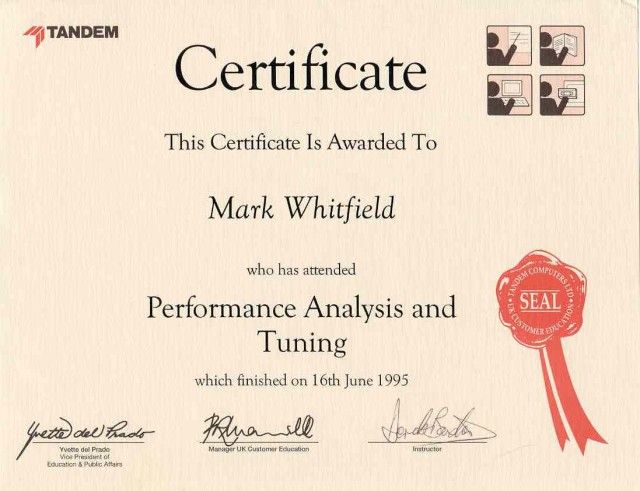
  • Database Management: Specialized courses for NonStop SQL/MXSQL/MP, and Enscribe.
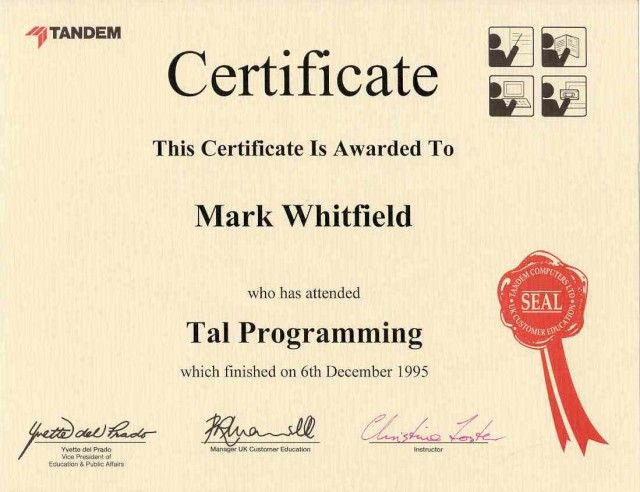
  • Application Development: Training in languages like C/C++COBOL, and TAL (Transaction Application Language).
  • Modern Environments: Transitioning to virtualised instances and hybrid cloud infrastructures. 

Detailed course information, including outlines and lab access, is available through the HPE NonStop Compute training portfolio


Detailed Textual Timeline: Era & Year

The NonStop platform has undergone three major architectural shifts since its founding.

1. The Tandem Era (1974–1997)

  • 1974: Tandem Computers Inc. is founded by James (Jimmy) Treybig.
  • 1975: Design of the Tandem/16 (later NonStop I) is completed.
  • 1976: The first system is shipped to Citibank, marking the birth of commercial fault-tolerant computing.
  • 1981: NonStop II is introduced, adding 32-bit addressing support.
  • 1983: NonStop TXP launches as the first new implementation of the instruction set, featuring cache memory.
  • 1983: Transaction Monitoring Facility (TMF) and Pathway are introduced, removing the need for applications to be manually coded for fault tolerance.
  • 1986: NonStop VLX is released with 32-bit datapaths and NonStop SQL, the first fault-tolerant SQL database.
  • 1987: NonStop CLX is introduced for the low-end/distributed market.
  • 1989: NonStop Cyclone debuts for high-end mainframe-level performance.
  • 1991: Migration to MIPS architecture begins with the Cyclone/R.
  • 1993: NonStop Himalaya K-series is released, using native MIPS R4400 processors.
  • 1994: Open System Services (OSS) adds a POSIX-compliant environment to the NonStop Kernel.
  • 1997: NonStop Himalaya S-Series introduces ServerNet, replacing older bus architectures. WikipediaWikipedia +7

2. The Compaq Era (1997–2002)

  • 1997: Compaq acquires Tandem Computers.
  • 1999: Zero Latency Enterprise (ZLE) solutions are introduced for real-time information access.
  • 2001: Compaq announces the migration of the entire NonStop line to Intel Itanium processors. 

3. The HP / HPE Era (2002–Present)

  • 2002: HP merges with Compaq, bringing the NonStop division under HP.
  • 2005: HP Integrity NonStop (“NonStop i” or TNS/E) is launched, completing the migration to Itanium.
  • 2014: NonStop X (TNS/X) is introduced, transitioning the platform to Intel x86-64 architecture.
  • 2015: Hewlett-Packard splits; NonStop becomes part of Hewlett Packard Enterprise (HPE).
  • 2020: Sales of Itanium-based systems officially end.
  • 2023–2024: NonStop evolves to support virtualised instances and deployment on hybrid infrastructures. 

HP NonStop Tandem Training provided by HPE Education Services

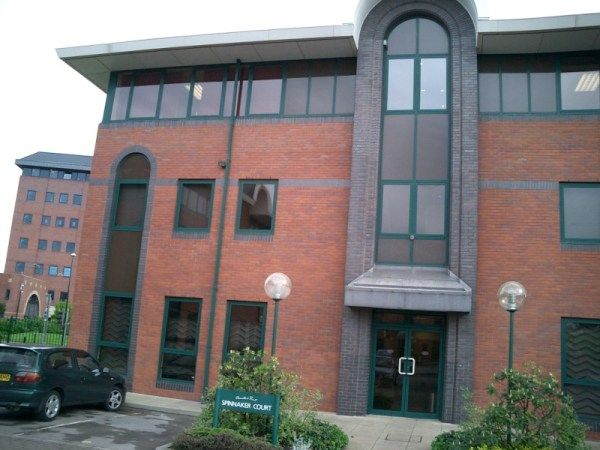
Barclays locations worked at for Tandem HP NonStop code development

Radbroke Hall is a 64-acre “Innovation Campus” in Cheshire that serves as the global technology and operations hub for Barclays. Originally built as a French chateau-style private residence in 1917, it transitioned through use by a nuclear research group before Barclays acquired it in 1972. Today, it employs approximately 4,000–6,500 staff and has been the development site for pioneering banking technology, including the first ATMs, debit cards, and mobile banking platforms. 

Radbroke Hall History Timeline

Era 1: Private Residence (1914–1956)

  • 1914: Construction begins on the Hall for Manchester textile manufacturer Claude Hardy and his wife Olga.
  • 1916: Claude Hardy dies; Olga oversees the completion of the Portland stone building alone.
  • 1917: The Hall is completed as a private residence.
  • 1920s–1930s: The Hall remains largely unoccupied during these decades. 

Era 2: Industrial & Nuclear Research (1956–1972)

  • 1956: The Hardy family sells the estate to The Nuclear Power Group.
  • 1956–1972: The site is used for nuclear energy research, with offices and a testing tower constructed on the grounds. 

Era 3: The Barclays Transformation (1972–1990s)

  • 1972: Barclays purchases the site from The Nuclear Power Group to reduce high rental costs in London.
  • 1972 (Relocation): Approximately 1,400 staff are relocated from London or hired locally; many find the move from London to the “rural North” a significant culture shock.
  • 1970s–1980s: The site begins its role as an IT hub, instrumental in developing the first cash machines (ATMs) and debit cards.
  • 1985: Barclays reorganises its UK and International banks into a single entity, further centralising tech and staff services at Radbroke. 

Era 4: Global Tech & Modernisation (2000s–Present)

  • Early 2000s: The campus leads the development of Barclays’ online and mobile banking applications.
  • 2012: Barclays celebrates the 40th anniversary of its presence at Radbroke Hall.
  • 2017: The original Hall building marks its 100th anniversary.
  • 2021: Barclays announces a major redevelopment plan to modernise the campus, including the demolition of older buildings (Kilburn, Lovelace, and Brooker Houses) to create a new central “town square” and “re-green” 80,000 sq. ft. of land.
  • 2024: Investment continues to transform Radbroke into a “world-class campus” focused on the future of work and advanced banking APIs.

Barclays House, located at 1 Wimborne Road, was a dominant fixture of the Poole skyline for 46 years. Originally built to decentralise Barclays Bank International operations from London, the nine-storey brutalist structure served as a major regional headquarters from 1976 until its closure in 2022. Following its vacancy, the building was earmarked for conversion into a residential complex featuring 362 apartments

Historical Overview

  • Purpose: The building was commissioned to move staff away from high London costs and boost local employment in Poole.
  • Architecture: Designed by Wilson, Mason and Partners, it features three interlinked octagonal/hexagonal towers in the brutalist style.
  • Landmark Features: A massive 14-foot aluminium eagle logo (the Barclays emblem) adorned the front of the building for decades. 

Detailed Timeline Breakdown

The Development Era (1960s – 1975) 

  • Late 1960s: Poole is selected as the primary location for Barclays Bank DCO (Dominion, Colonial and Overseas) decentralisation.
  • 1971 (August): Planning permission is granted for the project after a public inquiry, with an estimated cost of £5 million.
  • 1972 (September): Construction begins, led by the John Laing Group.
  • 1975 (June): Construction is officially completed. 

The Operational Era (1976 – 2021) 

  • 1976 (January): Barclays first occupies the building.
  • 1976 – 1980s: Workforce grows rapidly; in its first year, it employed 800 people, eventually peaking at roughly 2,500 employees.
  • 2007 (January): A planning bid to demolish the building for flats is refused due to its scale and lack of amenity space.
  • 2008: Barclays announces plans to build a new HQ in Poole, though these did not result in immediate relocation from the Wimborne Road site.
  • 2016: The building undergoes a major refurbishment to celebrate its 40th anniversary

The Closure & Transition Era (2022 – Present) 

  • 2022 (January 26): Barclays officially closes its doors at Wimborne Road after 46 years.
  • 2022 (October 27): The iconic Barclays eagle logo is removed from the building’s facade by cranes.
  • 2022 (December): Remaining staff (approximately 700) are relocated to new offices in Bournemouth.
  • 2023: VCRE Four Poole submits a planning bid to convert the structure into 362 homes.
  • 2024 (March 8): The separate Poole High Street branch also closes.
  • 2024 (June 10): Bournemouth, Christchurch and Poole (BCP) Council grants final approval for the conversion of Barclays House into residential apartments.

Barclays locations worked at for Tandem HP NonStop code development

HP NonStop Tandem Overview and Timeline History by year

HP NonStop is a series of fault-tolerant server computers designed for online transaction processing (OLTP) and mission-critical applications that require 100% uptime. Originally introduced by Tandem Computers Inc. in 1976, the platform uses a proprietary, integrated hardware and software stack known as NonStop OS (formerly Guardian) to eliminate single points of failure through massive redundancy and “fail-fast” logic

Historical Timeline by Era

1. The Tandem Founding Era (1974–1981) 

  • 1974: Tandem Computers Inc. is founded by James (Jimmy) Treybig and a team from Hewlett-Packard’s HP 3000 division.
  • 1976: The first system, the Tandem/16 (later NonStop I), is shipped to Citibank.
  • 1977: Tandem systems gain early traction as intelligent front-end processors for bank ATM networks. 

2. The Stack Machine Expansion (1981–1990) 

  • 1981: NonStop II is introduced, adding 32-bit addressing capabilities and replacing magnetic core memory with battery-backed DRAM.
  • 1983: NonStop TXP (Transaction Processing) launches as the first new implementation of the architecture, featuring cache memory and 2.0 MIPS performance.
  • 1986: Introduction of NonStop VLX (Very Large eXpansion) and NonStop SQL, the first fault-tolerant relational database designed for linear scalability.
  • 1987: NonStop CLX launches as a lower-cost, compact minicomputer for remote office environments.
  • 1989: NonStop Cyclone is released for high-end mainframe markets, featuring superscalar CPUs and fiber optic interconnects. 

3. The MIPS RISC Transition & Acquisitions (1991–2003)

  • 1991: Cyclone/R (or CLX/R) marks the move to MIPS R3000 RISC processors, using object code translation to maintain backward compatibility.
  • 1993: Himalaya K-series is released using MIPS R4400 processors.
  • 1995: Open System Services (OSS) is added to the NonStop Kernel to provide a POSIX/Unix-like environment.
  • 1997: Compaq acquires Tandem Computers. The Himalaya S-Series introduces ServerNet, which later becomes the InfiniBand industry standard.
  • 2002/2003: HP merges with Compaq, bringing the NonStop line under Hewlett-Packard. 

4. The HP Integrity & x86 Era (2005–Present)

  • 2005: HP Integrity NonStop (TNS/E) is introduced, migrating the platform to Intel Itanium microprocessors.
  • 2014: NonStop X (TNS/X) launches, shifting the architecture to Intel x86-64 processors for greater industry-standard alignment.
  • 2015: Following the HP corporate split, NonStop becomes part of Hewlett Packard Enterprise (HPE).
  • 2020: Sales of Itanium-based systems officially end in July 2020.
  • 2024–2025: HPE expands the platform with Virtualized NonStop Software for private clouds and consumption-based models via HPE GreenLake.

HP NonStop Tandem Overview and Timeline History by year

HPE NonStop (formerly Tandem and Compaq NonStop) is a family of fault-tolerant, integrated hardware and software systems designed for mission-critical enterprise workloads. Since its introduction in 1976, it has served as the backbone for high-volume transaction environments like banks, stock exchanges, and payment systems, offering 100% continuous uptime

Core Architecture and Features

The platform is defined by its “shared-nothing” architecture, where every component is redundant to eliminate single points of failure. 

  • Continuous Availability: If a hardware or software component fails, a backup takes over immediately without disrupting the application, a process often managed through process pairs (primary and hot backup processes).
  • Linear Scalability: You can add capacity (CPUs, memory) seamlessly without downtime. Systems can scale from a few processors to clusters of over 4,000 CPUs while maintaining a single-system image for management.
  • Integrated Stack: Unlike standard servers, NonStop includes a fully integrated stack of hardware, the NonStop OS (a proprietary kernel), a relational database (NonStop SQL), and middleware.
  • Fail-Fast Design: Modules are self-checking; they stop immediately upon detecting an error to prevent data corruption, allowing the redundant backup to resume processing from the last known good state. 

Current Hardware and Deployment

While historically based on proprietary or Itanium processors, modern NonStop systems (NonStop X) utilize industry-standard Intel Xeon processors and high-speed InfiniBand interconnects. 

  • High-End Systems: Models like the NS9 X5 are built for the most demanding high-volume transaction processing (OLTP).
  • Mid-Range/Entry Systems: Models like the NS5 X5 offer fault tolerance for smaller enterprises or development environments.
  • Virtualization & Cloud: HPE Virtualized NonStop Software allows the platform to run on standard private cloud infrastructure (e.g., VMware, OpenStack), and it is also available via HPE GreenLake as a consumption-based, pay-as-you-go service. 

Software and Security

  • Database: Supports NonStop SQL/MX and SQL/MP for multi-tenant, fault-tolerant data management.
  • Development: Supports modern languages like Java, C++, Python, COBOL, and the TACL scripting language. Developers can use the Eclipse-based IDE for building and debugging applications.
  • Security: Built with Zero Trust principles, including hardware-level vulnerability mitigations (e.g., against Spectre/Meltdown) and real-time threat detection. 

Detailed Architecture

HPE NonStop architecture is a fault-tolerant, shared-nothing, massively parallel computing platform designed for 100% operational continuity. Originally developed by Tandem Computers, it is engineered so that no single hardware or software failure can bring down the system. 

Core Architectural Pillars

  • Shared-Nothing Architecture: Each processor has its own dedicated memory, I/O bus, and copy of the HPE NonStop Operating System (NSK). This eliminates resource contention and single points of failure found in shared-memory systems.
  • Massive Scalability: Systems scale linearly by adding more processors. A single node can support up to 16 CPUs, and multiple nodes can be clustered to support over 4,000 CPUs.
  • Fault Tolerance (Process Pairs): Software availability is maintained through “process pairs”—a primary process and a passive backup process. If the primary fails, the backup immediately takes over without losing data or state.
  • Fail-Fast Design: Hardware and software modules are designed to stop immediately upon detecting an error (“fail-stop”) to prevent data corruption from propagating. 

Hardware Components

  • Compute Nodes: Modern HPE NonStop X systems use standard Intel Xeon x86-64 processors but implement fault tolerance through specialized system interconnects.
  • System Interconnect (Fabric):
    • InfiniBand: Used in NonStop X systems for high-speed, low-latency communication between CPUs and I/O devices (up to 56 Gbps).
    • ServerNet: The legacy high-speed, point-to-point switched fabric used in older S-series and Integrity i-series systems.
  • CLIMs (Cluster I/O Modules): Specialized offload engines for networking (IP CLIM), storage (Storage CLIM), and telco protocols. They handle I/O processing to free up the main host CPUs. 

Integrated Software Stack

The NonStop platform is a “tightly coupled” environment where hardware and software are integrated for availability. 

  • NonStop OS (NSK): A message-based operating system that manages the distributed resources as a single system image.
  • HPE NonStop SQL/MX: A distributed, fault-tolerant relational database that provides ANSI SQL compliance and automatic load balancing across the cluster.
  • HPE Pathway (TS/MP): An application server and middleware framework that manages workload distribution, load balancing, and automatic process restarts.
  • TMF (Transaction Monitoring Facility): Ensures database integrity by managing atomic transactions; if an update fails, TMF automatically rolls back the changes. 

Modern Deployment Options

  • HPE Virtualized NonStop (vNS): The complete software stack decoupled from proprietary hardware, allowing it to run as a set of virtual machines on industry-standard x86 servers within a private cloud (VMware).
  • HPE GreenLake: A consumption-based model providing NonStop capabilities as a cloud-like service. 

HPE NonStop Tandem Programming Languages, a development timeline

HPE NonStop (formerly Tandem) has evolved through distinct architectural eras, each introducing specific programming languages and environments to maintain its legendary fault tolerance. 

1. The Tandem Stack Machine Era (1974–1990)

This era focused on the proprietary 16-bit stack-based architecture (TNS), where software was designed to “fail-fast” and operate in process pairs. 

  • Nov 1974: Tandem Computers founded by Jimmy Treybig.
  • May 1976: TAL (Transaction Application Language) launched with the first Tandem/16 (NonStop I) system. It was the only language available at launch, derived from HP 3000’s SPL.
  • Late 1970s: COBOL74FORTRAN, and MUMPS were added to support business and scientific applications.
  • 1981: NonStop II introduced support for 32-bit addressing, enabling larger application memory.
  • 1983: SCOBOL (Screen COBOL) emerged alongside the Pathway transaction manager to handle terminal-based user interfaces and fault-tolerant logic.
  • 1986: NonStop SQL released as the first fault-tolerant relational database language.
  • 1987: C was introduced to the platform.
  • 1989: Integrity S2 line launched using MIPS processors, introducing a variant of Unix called NonStop UX

2. The MIPS RISC / Himalaya Era (1991–2004)

As Tandem migrated to MIPS processors (TNS/R), it introduced a Unix-like personality to attract modern developers while maintaining its legacy Guardian environment. 

  • 1991: Cyclone/R launched. Most software still ran in TNS stack mode using an “Accelerator” tool to translate code to MIPS instructions.
  • 1993: Himalaya K-Series released with native-mode compilers for C and COBOL to leverage MIPS performance.
  • 1994/1995: Open System Services (OSS) introduced a POSIX-compliant environment, enabling C++ and standard Unix utilities.
  • 1995: Java was first supported on the platform.
  • 1997: Compaq acquired Tandem; ServerNet became the standard interconnect.
  • Late 1990s: Support for scripting languages like PerlPython, and PHP began appearing in the OSS environment.

3. The HP Integrity Itanium Era (2005–2013)

Following the HP merger, the architecture moved to Intel Itanium (TNS/E), branded as HP Integrity NonStop

  • 2005: NonStop i introduced. Compilers for CC++, and Java were updated for the Itanium architecture.
  • 2000s: pTAL (Portable TAL) became the standard for system-level programming to bridge legacy TAL code to modern RISC/Itanium architectures.
  • 2011: Enhanced support for modern web languages and frameworks within the OSS environment. 

4. The Modern x86 / NonStop X Era (2014–Present)

HPE migrated the entire stack to standard Intel x86-64 processors (TNS/X) while retaining binary compatibility for legacy applications. 

  • 2014: NonStop X launched. All languages (COBOL, C, C++, Java) were migrated to target x86-64.
  • 2015: Transition to Hewlett Packard Enterprise (HPE) branding.
  • Recent Years: Integration of modern open-source dev-ops tools and languages, including JavaScript (Node.js)Python 3Go, and Samba via the HPE NonStop OSS environment. 

HPE NonStop (formerly Tandem) programming has evolved from proprietary languages designed for fault-tolerant, transaction-oriented processing (TAL, COBOL85) to supporting open-source languages (Java, C++, Python, PHP) on modern x86-64 hardware. The ecosystem spans from the initial Guardian OS to modern J-series and L-series OS, supporting TNS, TNS/R, TNS/E, and TNS/X architectures. 

Key Programming Languages & OS Timeline

  • 1970s–1980s (Tandem Guardian): Core development centered on TAL (Transaction Application Language) (system programming), COBOL85 (business logic), and TACL (Tandem Advanced Command Language) (command shell scripting).
  • 1990s (Guardian 90 / NonStop UX): Introduction of C and C++ for more flexible application development, alongside Pascal and FORTRAN.
  • 2000s (H-Series / J-Series – Itanium): Shift towards Java and enhanced support for C/C++ in the Pathway server environment.
  • 2010s–Present (J-Series / L-Series – x86-64): Modern NonStop systems, particularly on x86-64, expanded to include scripting languages like PerlPHP, and Python within the Open System Services (OSS) environment.
  • pTAL (Portable TAL): Introduced to bridge native TAL to newer, more portable processor architectures. 

Operating System & Architecture Evolution

  • Guardian (TNS): The foundational OS, relying on Tandem’s native stack, with TAL as the primary low-level language.
  • OSS (Open System Services): Introduced to bring POSIX-compliant, Unix-like functionality to NonStop, enabling easier porting of C/C++ and open-source applications.
  • Modern OS (J-series/L-series): Supports both Guardian (native) and OSS environments, allowing for a hybrid approach where traditional transaction processing (COBOL/TAL) mixes with modern web services (Java/Python).

Evolution of C++ on HPE NonStop Tandem systems

The evolution of C++ on HPE NonStop systems traces the platform’s transition from proprietary Tandem architectures to modern x86-64 standards.

HPE NonStop C++ Evolution Timeline

  • Early 1990s: Introduction of Native C/C++ (TNS/R)
    With the move to MIPS-based TNS/R architecture, Tandem introduced native C and C++ compilers. These supported the Guardian and the then-new Open System Services (OSS) personalities.
  • 2005: Itanium Transition (TNS/E)
    As the platform migrated to Intel Itanium processors (J-Series), the C++ compiler was updated to support the TNS/E (Tandem Native Stack / EPOC) architecture. This era introduced more robust Standard C++ Library support, though it required specific header management (e.g., CPATHEQ pragmas).
  • 2015: x86 Migration (TNS/X)
    The launch of NonStop X (L-Series) on Intel x86-64 marked a major shift. The compiler suite was re-engineered to leverage the x86-64 Instruction Set Architecture, providing significantly higher performance for C++ applications.
  • 2017: 64-Bit Addressing Support
    HPE introduced comprehensive 64-bit support for OSS processes (LP64 data model). This allowed C++ applications to access massive memory heaps beyond the previous 32-bit (ILP32) limits.
  • 2020–2022: Modern C++ Standards (C++11/14/17)
    HPE updated its toolchains to support modern language standards. The NonStop Development Environment for Eclipse (NSDEE) 13.x versions specifically introduced a dedicated UI for setting the C++17 Language Standard.
  • 2024: Kernel-Level Threading (KLT)
    The release of the L25.09 RVU brought Kernel-Level Threading to native C++ applications. This allowed C++ threads to execute concurrently across different IPUs, moving beyond the older POSIX User Threads (PUT) model.
  • 2025: Cloud-Native Development
    HPE now offers the HPE NonStop Development Environment (NSDevEnv) in the public cloud, allowing developers to build fault-tolerant C++ applications using a cross-compiler model without on-premise hardware. 

Evolution of C++ on HPE NonStop Tandem systems

TACL for HPE NonStop Tandem, Detailed Timeline

Tandem Advanced Command Language (TACL) is the interpreted, high-level command and programming language for HPE NonStop (formerly Tandem) systems. Its timeline follows the evolution of Tandem hardware and the Guardian operating system. 

Comprehensive TACL Timeline

  • 1974–1976: Foundation of Tandem
    • Tandem Computers Inc. was founded. The initial operating system, Guardian, was designed for fault-tolerant computing.
  • Late 1970s: Initial Release
    • TACL was introduced in the 1970s as the primary command interface, replacing or augmenting earlier, more primitive command interpreters. It was written in TAL (Tandem Application Language).
  • 1980s: Mature Programming Capabilities
    • TACL evolved from a simple shell into a powerful programming language. Key features like MacrosRoutines, and Variables (TEXT, ALIAS, STRUCT) were solidified during this era to automate complex system tasks.
  • 1994: D-Series (D30.00) Release
    • A significant update was documented in the TACL Programming Guide for D30.00, which detailed advanced features like Nowait I/OPathway Server integration, and SPI/EMS programmatic interfaces.
  • 1997–2000s: Corporate Transitions (Compaq & HP)
    • 1997: Compaq acquired Tandem.
    • 2002: HP merged with Compaq, and TACL development continued under the HP NonStop banner.
    • 2000: Updated reference manuals detailed TACL’s environment customization and the use of the _EXECUTE variable for program flow.
  • 2010s: H-Series and HPE Era
    • 2013: Comprehensive Reference Manuals were released, refining built-in functions for the H-Series architecture.
    • 2015: Hewlett Packard Enterprise (HPE) was formed. TACL is now maintained as part of the HPE NonStop software stack.
  • Current: Legacy & Automation
    • TACL remains the essential tool for administrative tasks and system-level automation on modern HPE NonStop X (x86) platforms.

TACL for HPE NonStop Tandem, Detailed Timeline