RTLX by Insider Technologies, Overview and Timeline by Year

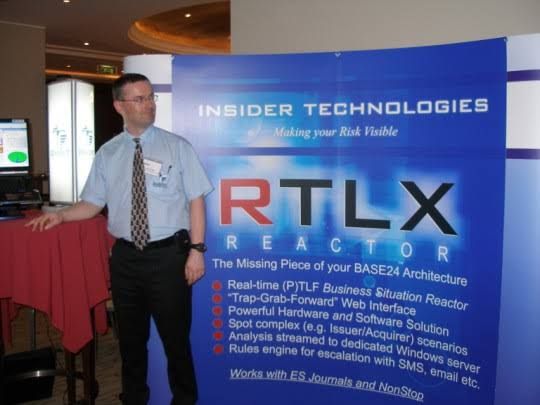
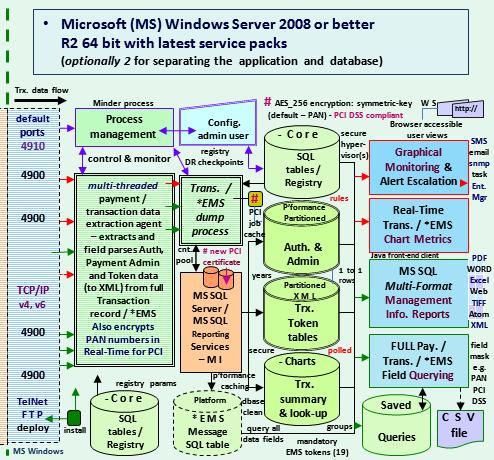
Insider Technologies RTLX (now C-Deep (Transaction Monitoring) https://etinet.com/products/c-deep-transaction-monitoring/ ) is a real-time monitoring and tracking solution designed to provide end-to-end visibility for high-volume electronic payments and transactional processes. It specifically ensures that every stage of a payment—from the initial card “tap” at a point-of-sale (POS) terminal to the final movement of funds from an account—is monitored to maintain operational continuity. 

RTLX Overview

  • Function: Real-time transaction and payment monitoring.
  • Platforms: Runs on HP NonStop, Windows, Linux, and Unix.
  • Core Value: Simplifies “Big Data” for IT operations by alerting teams to potential failures before they impact consumers (e.g., preventing ATM or online banking outages).
  • Key Use Case: Used by major financial institutions like the Bank of England and Royal Bank of Scotland for settlement and transaction security. 

RTLX Historical Timeline

The development of RTLX is closely tied to Insider Technologies’ growth as a specialist in mission-critical HP NonStop environments. 

EBUG Conference, Mark Whitfield – Product Manager

The Foundational Era (1989–2000)

  • 1989Insider Technologies Limited is founded in Manchester, UK, by IT industry veterans.
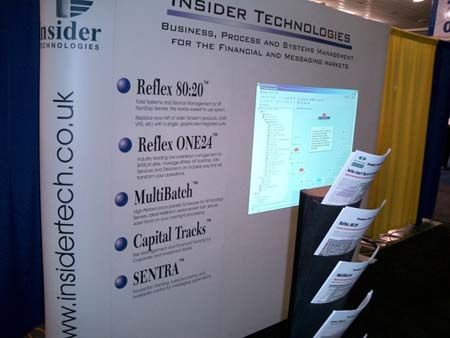
  • 1990s: The company establishes its “DNA” in the HP NonStop (Tandem) platform, developing core products like MultiBatch and Reflex.
  • 1995: Insider begins a period of rapid growth, providing technical support for critical UK financial infrastructure, including Euroclear (formerly CRESTCo), which settles 88% of UK equities. 

The Expansion Era (2001–2014)

  • 2002: Launch of the state-of-the-art Systems Training Platform, featuring 4x patented cloning technology for hyper-realistic simulations.
  • 2004–2013: Development of the Reflex suite (Reflex 80:20 and Reflex ONE24) and the introduction of Sentra and RTLX Reactor monitoring products.
  • 2014: Insider expands its product initiatives to include diagnostic and trending solutions for real-time electronic payments, solidifying the role of RTLX in global banking. 

The Acquisition & Integration Era (2015–Present)

  • 2015ETI-NET acquires Insider Technologies on 1 July, integrating its monitoring expertise with ETI-NET’s mainframe storage and backup solutions.
  • 2019: Insider celebrates its 30th year of operations, highlighting RTLX’s role in monitoring modern POS and “tap” payment systems.
  • 2023–Present: Insider becomes part of the PartnerOne group, a global family of mission-critical software companies, further scaling its threat detection and real-time monitoring capabilities. 

RTLX by Insider Technologies, Overview and Timeline by Year

HP NonStop MultiBatch Overview and Historical Timeline

HP NonStop MultiBatch is a “mainframe-class” workload automation and batch scheduling manager developed by Insider Technologies (distributed by ETI-NET). It is designed specifically for the HPE NonStop (formerly Tandem) platform to automate, manage, and secure complex batch processing across both Guardian and OSS environments. 

Product Overview

While the native NonStop scheduler is NetBatch, MultiBatch is positioned as a modern, high-performance alternative that provides deeper integration with the NonStop architecture. 

  • Workload Automation: Manages thousands of concurrent jobs with sophisticated calendaring and dependency tracking.
  • Architecture: Built to leverage NonStop’s fault tolerance and linear scalability, allowing batch schedules to execute across multiple networked nodes.
  • Interfaces: Modernized from command-line tools to a suite of role-based Graphical User Interfaces (GUIs) for operations and management.
  • Security: Includes a secure, audited environment with full support for NonStop-specific security attributes like High-PIN and CPU selection. 

Historical Timeline by Era

The evolution of MultiBatch is closely tied to the history of the Tandem/NonStop platform, which spans over 50 years of ownership changes and architectural shifts. 

1. The Tandem Era (1974 – 1997)

  • 1974: Tandem Computers founded by James Treybig to build the first fault-tolerant commercial systems.
  • Late 1980s – Early 1990sMultiBatch originated during this period (reportedly in the early 1990s) to address the needs of large financial institutions requiring complex batch schedules beyond the capabilities of the original NetBatch.
  • 1991: Release of the Cyclone/R and the start of the migration from proprietary stack machines to MIPS RISC processors. 

2. The Compaq & Early HP Era (1997 – 2014)

  • 1997: Compaq acquires Tandem.
  • 2002: Hewlett-Packard (HP) merges with Compaq. The NonStop platform begins its migration from MIPS to Intel Itanium (branded as Integrity NonStop).
  • Mid-2000s: MultiBatch matures as a mission-critical tool for global banks and stock exchanges. Development focuses on MultiBatch 7 and 8, enhancing GUI capabilities and adding support for Open System Services (OSS). 

3. The Modern HPE Era (2014 – Present)

  • 2014NonStop X is introduced, moving the architecture from Itanium to Intel x86-64.
  • 2015: Hewlett-Packard splits into HP Inc. and Hewlett Packard Enterprise (HPE).
  • 2018 – 2020MultiBatch 9.5 is released with an enhanced GUI. It increasingly becomes the primary alternative as HPE shifts focus away from active sales of the legacy NetBatch product.
  • 2023 – 2024: Release of MultiBatch 10, introducing “Define Classes,” support for up to 2,500 jobs, and improved OSS process handling. This era focuses on “modernisation through tradition,” aligning with HPE’s push for virtualized NonStop and hybrid cloud deployments. 

HP NonStop Tandem Training provided by HPE Education Services

HP NonStop (originally Tandem) training focuses on the platform’s unique fault-tolerant architecture, designed to ensure 24×7 availability and data integrity for mission-critical industries like finance and telecommunications. Current training is provided by HPE Education Services, which offers expert-led courses ranging from basic concepts to advanced system management and database administration. 

Training Overview

HPE’s curriculum is structured to support IT teams at all levels—from beginners to experienced operators—and can be customised for specific business needs. Key training areas include: 

  • System Operations: Managing NonStop environments, including S-Series or newer x86-based systems.
  • Architecture & Concepts: Understanding fault tolerance, “fail fast” mechanisms, and message-based operating systems.
  • Database Management: Specialized courses for NonStop SQL/MXSQL/MP, and Enscribe.
  • Application Development: Training in languages like C/C++COBOL, and TAL (Transaction Application Language).
  • Modern Environments: Transitioning to virtualised instances and hybrid cloud infrastructures. 

Detailed course information, including outlines and lab access, is available through the HPE NonStop Compute training portfolio


Detailed Textual Timeline: Era & Year

The NonStop platform has undergone three major architectural shifts since its founding.

1. The Tandem Era (1974–1997)

  • 1974: Tandem Computers Inc. is founded by James (Jimmy) Treybig.
  • 1975: Design of the Tandem/16 (later NonStop I) is completed.
  • 1976: The first system is shipped to Citibank, marking the birth of commercial fault-tolerant computing.
  • 1981: NonStop II is introduced, adding 32-bit addressing support.
  • 1983: NonStop TXP launches as the first new implementation of the instruction set, featuring cache memory.
  • 1983: Transaction Monitoring Facility (TMF) and Pathway are introduced, removing the need for applications to be manually coded for fault tolerance.
  • 1986: NonStop VLX is released with 32-bit datapaths and NonStop SQL, the first fault-tolerant SQL database.
  • 1987: NonStop CLX is introduced for the low-end/distributed market.
  • 1989: NonStop Cyclone debuts for high-end mainframe-level performance.
  • 1991: Migration to MIPS architecture begins with the Cyclone/R.
  • 1993: NonStop Himalaya K-series is released, using native MIPS R4400 processors.
  • 1994: Open System Services (OSS) adds a POSIX-compliant environment to the NonStop Kernel.
  • 1997: NonStop Himalaya S-Series introduces ServerNet, replacing older bus architectures. WikipediaWikipedia +7

2. The Compaq Era (1997–2002)

  • 1997: Compaq acquires Tandem Computers.
  • 1999: Zero Latency Enterprise (ZLE) solutions are introduced for real-time information access.
  • 2001: Compaq announces the migration of the entire NonStop line to Intel Itanium processors. 

3. The HP / HPE Era (2002–Present)

  • 2002: HP merges with Compaq, bringing the NonStop division under HP.
  • 2005: HP Integrity NonStop (“NonStop i” or TNS/E) is launched, completing the migration to Itanium.
  • 2014: NonStop X (TNS/X) is introduced, transitioning the platform to Intel x86-64 architecture.
  • 2015: Hewlett-Packard splits; NonStop becomes part of Hewlett Packard Enterprise (HPE).
  • 2020: Sales of Itanium-based systems officially end.
  • 2023–2024: NonStop evolves to support virtualised instances and deployment on hybrid infrastructures. 

HP NonStop Tandem Training provided by HPE Education Services

Barclays locations worked at for Tandem HP NonStop code development

Radbroke Hall is a 64-acre “Innovation Campus” in Cheshire that serves as the global technology and operations hub for Barclays. Originally built as a French chateau-style private residence in 1917, it transitioned through use by a nuclear research group before Barclays acquired it in 1972. Today, it employs approximately 4,000–6,500 staff and has been the development site for pioneering banking technology, including the first ATMs, debit cards, and mobile banking platforms. 

Radbroke Hall History Timeline

Era 1: Private Residence (1914–1956)

  • 1914: Construction begins on the Hall for Manchester textile manufacturer Claude Hardy and his wife Olga.
  • 1916: Claude Hardy dies; Olga oversees the completion of the Portland stone building alone.
  • 1917: The Hall is completed as a private residence.
  • 1920s–1930s: The Hall remains largely unoccupied during these decades. 

Era 2: Industrial & Nuclear Research (1956–1972)

  • 1956: The Hardy family sells the estate to The Nuclear Power Group.
  • 1956–1972: The site is used for nuclear energy research, with offices and a testing tower constructed on the grounds. 

Era 3: The Barclays Transformation (1972–1990s)

  • 1972: Barclays purchases the site from The Nuclear Power Group to reduce high rental costs in London.
  • 1972 (Relocation): Approximately 1,400 staff are relocated from London or hired locally; many find the move from London to the “rural North” a significant culture shock.
  • 1970s–1980s: The site begins its role as an IT hub, instrumental in developing the first cash machines (ATMs) and debit cards.
  • 1985: Barclays reorganises its UK and International banks into a single entity, further centralising tech and staff services at Radbroke. 

Era 4: Global Tech & Modernisation (2000s–Present)

  • Early 2000s: The campus leads the development of Barclays’ online and mobile banking applications.
  • 2012: Barclays celebrates the 40th anniversary of its presence at Radbroke Hall.
  • 2017: The original Hall building marks its 100th anniversary.
  • 2021: Barclays announces a major redevelopment plan to modernise the campus, including the demolition of older buildings (Kilburn, Lovelace, and Brooker Houses) to create a new central “town square” and “re-green” 80,000 sq. ft. of land.
  • 2024: Investment continues to transform Radbroke into a “world-class campus” focused on the future of work and advanced banking APIs.

Barclays House, located at 1 Wimborne Road, was a dominant fixture of the Poole skyline for 46 years. Originally built to decentralise Barclays Bank International operations from London, the nine-storey brutalist structure served as a major regional headquarters from 1976 until its closure in 2022. Following its vacancy, the building was earmarked for conversion into a residential complex featuring 362 apartments

Historical Overview

  • Purpose: The building was commissioned to move staff away from high London costs and boost local employment in Poole.
  • Architecture: Designed by Wilson, Mason and Partners, it features three interlinked octagonal/hexagonal towers in the brutalist style.
  • Landmark Features: A massive 14-foot aluminium eagle logo (the Barclays emblem) adorned the front of the building for decades. 

Detailed Timeline Breakdown

The Development Era (1960s – 1975) 

  • Late 1960s: Poole is selected as the primary location for Barclays Bank DCO (Dominion, Colonial and Overseas) decentralisation.
  • 1971 (August): Planning permission is granted for the project after a public inquiry, with an estimated cost of £5 million.
  • 1972 (September): Construction begins, led by the John Laing Group.
  • 1975 (June): Construction is officially completed. 

The Operational Era (1976 – 2021) 

  • 1976 (January): Barclays first occupies the building.
  • 1976 – 1980s: Workforce grows rapidly; in its first year, it employed 800 people, eventually peaking at roughly 2,500 employees.
  • 2007 (January): A planning bid to demolish the building for flats is refused due to its scale and lack of amenity space.
  • 2008: Barclays announces plans to build a new HQ in Poole, though these did not result in immediate relocation from the Wimborne Road site.
  • 2016: The building undergoes a major refurbishment to celebrate its 40th anniversary

The Closure & Transition Era (2022 – Present) 

  • 2022 (January 26): Barclays officially closes its doors at Wimborne Road after 46 years.
  • 2022 (October 27): The iconic Barclays eagle logo is removed from the building’s facade by cranes.
  • 2022 (December): Remaining staff (approximately 700) are relocated to new offices in Bournemouth.
  • 2023: VCRE Four Poole submits a planning bid to convert the structure into 362 homes.
  • 2024 (March 8): The separate Poole High Street branch also closes.
  • 2024 (June 10): Bournemouth, Christchurch and Poole (BCP) Council grants final approval for the conversion of Barclays House into residential apartments.

Barclays locations worked at for Tandem HP NonStop code development

HP NonStop Tandem Overview and Timeline History by year

HP NonStop is a series of fault-tolerant server computers designed for online transaction processing (OLTP) and mission-critical applications that require 100% uptime. Originally introduced by Tandem Computers Inc. in 1976, the platform uses a proprietary, integrated hardware and software stack known as NonStop OS (formerly Guardian) to eliminate single points of failure through massive redundancy and “fail-fast” logic

Historical Timeline by Era

1. The Tandem Founding Era (1974–1981) 

  • 1974: Tandem Computers Inc. is founded by James (Jimmy) Treybig and a team from Hewlett-Packard’s HP 3000 division.
  • 1976: The first system, the Tandem/16 (later NonStop I), is shipped to Citibank.
  • 1977: Tandem systems gain early traction as intelligent front-end processors for bank ATM networks. 

2. The Stack Machine Expansion (1981–1990) 

  • 1981: NonStop II is introduced, adding 32-bit addressing capabilities and replacing magnetic core memory with battery-backed DRAM.
  • 1983: NonStop TXP (Transaction Processing) launches as the first new implementation of the architecture, featuring cache memory and 2.0 MIPS performance.
  • 1986: Introduction of NonStop VLX (Very Large eXpansion) and NonStop SQL, the first fault-tolerant relational database designed for linear scalability.
  • 1987: NonStop CLX launches as a lower-cost, compact minicomputer for remote office environments.
  • 1989: NonStop Cyclone is released for high-end mainframe markets, featuring superscalar CPUs and fiber optic interconnects. 

3. The MIPS RISC Transition & Acquisitions (1991–2003)

  • 1991: Cyclone/R (or CLX/R) marks the move to MIPS R3000 RISC processors, using object code translation to maintain backward compatibility.
  • 1993: Himalaya K-series is released using MIPS R4400 processors.
  • 1995: Open System Services (OSS) is added to the NonStop Kernel to provide a POSIX/Unix-like environment.
  • 1997: Compaq acquires Tandem Computers. The Himalaya S-Series introduces ServerNet, which later becomes the InfiniBand industry standard.
  • 2002/2003: HP merges with Compaq, bringing the NonStop line under Hewlett-Packard. 

4. The HP Integrity & x86 Era (2005–Present)

  • 2005: HP Integrity NonStop (TNS/E) is introduced, migrating the platform to Intel Itanium microprocessors.
  • 2014: NonStop X (TNS/X) launches, shifting the architecture to Intel x86-64 processors for greater industry-standard alignment.
  • 2015: Following the HP corporate split, NonStop becomes part of Hewlett Packard Enterprise (HPE).
  • 2020: Sales of Itanium-based systems officially end in July 2020.
  • 2024–2025: HPE expands the platform with Virtualized NonStop Software for private clouds and consumption-based models via HPE GreenLake.

HP NonStop Tandem Overview and Timeline History by year

HPE NonStop (formerly Tandem and Compaq NonStop) is a family of fault-tolerant, integrated hardware and software systems designed for mission-critical enterprise workloads. Since its introduction in 1976, it has served as the backbone for high-volume transaction environments like banks, stock exchanges, and payment systems, offering 100% continuous uptime

Core Architecture and Features

The platform is defined by its “shared-nothing” architecture, where every component is redundant to eliminate single points of failure. 

  • Continuous Availability: If a hardware or software component fails, a backup takes over immediately without disrupting the application, a process often managed through process pairs (primary and hot backup processes).
  • Linear Scalability: You can add capacity (CPUs, memory) seamlessly without downtime. Systems can scale from a few processors to clusters of over 4,000 CPUs while maintaining a single-system image for management.
  • Integrated Stack: Unlike standard servers, NonStop includes a fully integrated stack of hardware, the NonStop OS (a proprietary kernel), a relational database (NonStop SQL), and middleware.
  • Fail-Fast Design: Modules are self-checking; they stop immediately upon detecting an error to prevent data corruption, allowing the redundant backup to resume processing from the last known good state. 

Current Hardware and Deployment

While historically based on proprietary or Itanium processors, modern NonStop systems (NonStop X) utilize industry-standard Intel Xeon processors and high-speed InfiniBand interconnects. 

  • High-End Systems: Models like the NS9 X5 are built for the most demanding high-volume transaction processing (OLTP).
  • Mid-Range/Entry Systems: Models like the NS5 X5 offer fault tolerance for smaller enterprises or development environments.
  • Virtualization & Cloud: HPE Virtualized NonStop Software allows the platform to run on standard private cloud infrastructure (e.g., VMware, OpenStack), and it is also available via HPE GreenLake as a consumption-based, pay-as-you-go service. 

Software and Security

  • Database: Supports NonStop SQL/MX and SQL/MP for multi-tenant, fault-tolerant data management.
  • Development: Supports modern languages like Java, C++, Python, COBOL, and the TACL scripting language. Developers can use the Eclipse-based IDE for building and debugging applications.
  • Security: Built with Zero Trust principles, including hardware-level vulnerability mitigations (e.g., against Spectre/Meltdown) and real-time threat detection. 

Detailed Architecture

HPE NonStop architecture is a fault-tolerant, shared-nothing, massively parallel computing platform designed for 100% operational continuity. Originally developed by Tandem Computers, it is engineered so that no single hardware or software failure can bring down the system. 

Core Architectural Pillars

  • Shared-Nothing Architecture: Each processor has its own dedicated memory, I/O bus, and copy of the HPE NonStop Operating System (NSK). This eliminates resource contention and single points of failure found in shared-memory systems.
  • Massive Scalability: Systems scale linearly by adding more processors. A single node can support up to 16 CPUs, and multiple nodes can be clustered to support over 4,000 CPUs.
  • Fault Tolerance (Process Pairs): Software availability is maintained through “process pairs”—a primary process and a passive backup process. If the primary fails, the backup immediately takes over without losing data or state.
  • Fail-Fast Design: Hardware and software modules are designed to stop immediately upon detecting an error (“fail-stop”) to prevent data corruption from propagating. 

Hardware Components

  • Compute Nodes: Modern HPE NonStop X systems use standard Intel Xeon x86-64 processors but implement fault tolerance through specialized system interconnects.
  • System Interconnect (Fabric):
    • InfiniBand: Used in NonStop X systems for high-speed, low-latency communication between CPUs and I/O devices (up to 56 Gbps).
    • ServerNet: The legacy high-speed, point-to-point switched fabric used in older S-series and Integrity i-series systems.
  • CLIMs (Cluster I/O Modules): Specialized offload engines for networking (IP CLIM), storage (Storage CLIM), and telco protocols. They handle I/O processing to free up the main host CPUs. 

Integrated Software Stack

The NonStop platform is a “tightly coupled” environment where hardware and software are integrated for availability. 

  • NonStop OS (NSK): A message-based operating system that manages the distributed resources as a single system image.
  • HPE NonStop SQL/MX: A distributed, fault-tolerant relational database that provides ANSI SQL compliance and automatic load balancing across the cluster.
  • HPE Pathway (TS/MP): An application server and middleware framework that manages workload distribution, load balancing, and automatic process restarts.
  • TMF (Transaction Monitoring Facility): Ensures database integrity by managing atomic transactions; if an update fails, TMF automatically rolls back the changes. 

Modern Deployment Options

  • HPE Virtualized NonStop (vNS): The complete software stack decoupled from proprietary hardware, allowing it to run as a set of virtual machines on industry-standard x86 servers within a private cloud (VMware).
  • HPE GreenLake: A consumption-based model providing NonStop capabilities as a cloud-like service. 

Mark Whitfield HP NonStop Tandem experience & Project Management Templates

Mark Whitfield is an experienced IT Project Manager and software developer who has spent over 22 years specialising in HP NonStop (formerly Tandem) systems. He is currently an Engagement Project Manager at Capgemini

Career & Expertise

Whitfield’s career in HP NonStop began in 1990 and includes significant technical and leadership roles across the financial and technology sectors: 

  • Software Development: Early in his career, he worked as a programmer for The Software Partnership (later Deluxe Data/FIS), focusing on electronic banking software like sp/ARCHITECT on Tandem mainframes.
  • Insider Technologies (1995–2013): He spent 18 years at Insider Technologies as a Senior Development Engineer and Project Manager. His work involved:
    • Developing monitoring and diagnostic software such as Reflex 80:20Reflex ONE24, and RTLX (Real-Time Log Extraction) for payment systems.
    • Managing the first HP OpenView Operations Smart Plug-In certification for the NonStop platform.
    • Designing XPERT24, a performance tracking product for ACI’s XPNET layer.
  • Capgemini (2016–Present): As an Engagement Project Manager, he has led digital projects for major clients in the automotive, government, and aerospace sectors, including a cloud migration for UK Government applications. 

Technical Contributions

  • Publications: He has authored articles for globally published journals like The Connection (2013), discussing topics such as querying terabytes of legacy transaction log data from NonStop mainframes.
  • Project History: He has managed high-value projects, including a £5 million initiative to migrate legacy HP NonStop software to AIX-based technologies for a large UK retail bank.
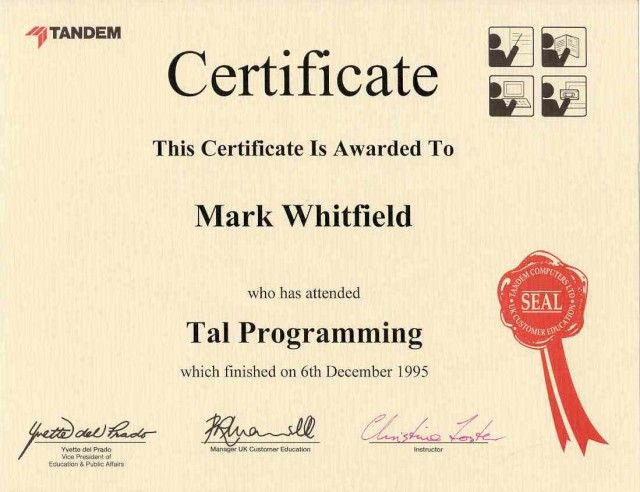
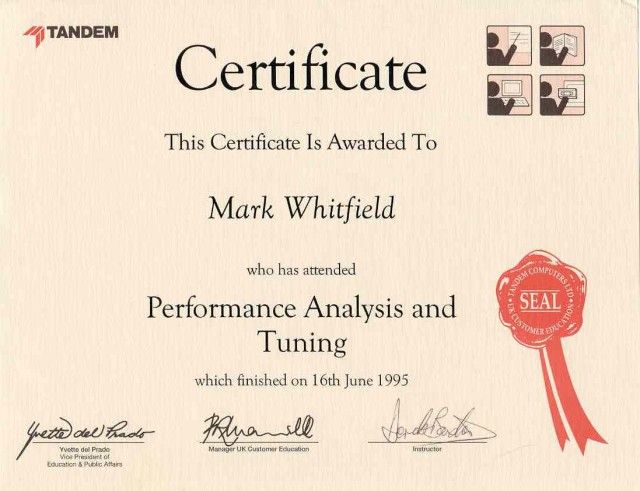
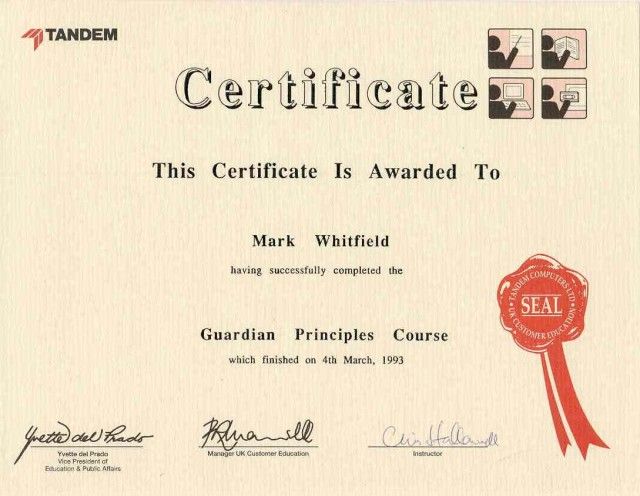
  • Training: He is trained in various NonStop-specific technologies, including TAL (Transaction Application Language), COBOL85PATHWAY, and NonStop SQL

Whitfield also maintains a professional website, mark-whitfield.com, where he provides project management templates and resources related to HP NonStop and Tandem systems. 

Mark Whitfield provides a comprehensive bundle of over 200 editable project management templates designed for Agile, Waterfall, and PRINCE2 methodologies. These templates are based on over 30 years of project delivery experience and are available for purchase via his official website or Etsy shop. 

Key Template Categories

The bundle includes a wide variety of tools across different formats (Excel, PowerPoint, Word, and MS Project): 

  • Planning & Scheduling:
    • Plan on a Page (POaP): Over 30 PowerPoint slide examples for executive-level summaries.
    • Detailed Project Plans: MS Project (MPP) and Excel templates for SDLC, PRINCE2 7th Edition, and Agile Scrum projects.
    • Gantt Charts: Built-in tracking views for both MS Project and Excel.
  • Tracking & Control:
    • RAID Logs: Comprehensive logs for tracking Risks, Actions, Issues, and Dependencies, plus additional tabs for Change Requests and Lessons Learned.
    • RACI Matrix: Templates to define project roles and responsibilities (Responsible, Accountable, Consulted, Informed).
    • Finance Trackers: Tools for internal and external forecast vs. actual costs, including margin and variance tracking.
  • Agile Specific Tools:
    • Burn Down & Burn Up Charts: Excel-based alternatives when tools like Jira are unavailable.
    • Agile Story Dependency Tracking: Specifically for managing dependencies between agile stories and external suppliers.
  • Reporting & Governance:
    • Status Reports: Weekly and monthly templates in Word and PowerPoint formats.
    • Stakeholder Analysis: Power/interest mapping and engagement plan templates.
    • Benefits Realisation: Plans to track project outcomes against initial business goals. 

Purchase Benefits

  • Lifetime Upgrades: Once purchased, all future additions and updates to the template package are provided for free.
  • Compatibility: Templates are designed for Microsoft Office 365 but also include Excel versions compatible with earlier software.
  • Support: The package typically includes walkthrough Word documents to guide users on how to use each major template.

Mark Whitfield HP NonStop Tandem experience & Project Management Templates

HP NonStop (HPE) fault tolerant servers originally developed by Tandem Computers – Summary

My IT career between the years 1990 and 2014, involved significant programming and large projects for Tandem HP NonStop servers.

HP NonStop Tandem Computers

HP NonStop refers to the line of fault-tolerant servers and software originally developed by Tandem Computers and now owned by Hewlett Packard Enterprise (HPE). These systems are designed for continuous operation and uninterrupted transaction processing by using redundant hardware components and independent processors to automatically failover in the event of a failure, ensuring high availability for critical applications in banking, telecommunications, and healthcare. 

Origins and Evolution

  • Tandem Computers: Founded in 1974, Tandem introduced the NonStop system, a pioneering fault-tolerant computer with no single point of failure, revolutionizing continuous availability for online transaction processing. 
  • Acquisitions: Tandem Computers was acquired by Compaq in 1997, and Compaq was later acquired by Hewlett-Packard (HP) in 2001. 
  • Current Ownership: After the split of HP into Hewlett Packard Enterprise (HPE) and HP Inc. in 2015, the NonStop product line became part of HPE. 

Key Features and Uses

  • Fault Tolerance: The systems are built with redundant components, including identical processors and storage devices, allowing them to automatically detect and recover from hardware or software failures without interruption. 
  • High Availability: This fault-tolerant architecture is ideal for mission-critical applications that require constant uptime, such as financial transactions, emergency services, and large-scale banking systems. 
  • Scalability: NonStop systems are designed for scalability, able to handle large commercial workloads by adding independent processors. 
  • Dedicated Operating System: Historically, NonStop systems ran on proprietary software like the Guardian operating system and used the TAL programming language
  • Specialized Database: The line includes NonStop SQL (currently SQL/MX), a relational database designed for the high availability and scalability needs of these systems.