Mark Whitfield – projects timeline history from 1990

Mark Whitfield is an SC-cleared Senior IT Project Manager with over 30 years of experience delivering high-availability financial, cloud, and digital transformation projects. Over his career, he has transitioned from deep technical engineering on HPE NonStop (Tandem) mainframe systems to leading major corporate and public sector Agile and Waterfall software rollouts.

A comprehensive, year-by-year timeline breakdown of his project history and clients since 1990 is outlined below.

💻 The Technical Era (1990–1995)

During this period, Whitfield worked as a Programmer and Lead Analyst for The Software Partnership (acquired by Deluxe Data in 1994). He focused on electronic banking software (sp/ARCHITECT-BANK) on Tandem Mainframe Computers.

  • 1990–1992: Barclays Bank – Placed on-site at Knutsford, Cheshire to design and code software for the high-profile Barclays Business Master II (BBM II) electronic desktop banking project.
  • 1992–1993: Girofon (Denmark) – Developed a touch-tone phone banking suite. This allowed clients to use automated voice/menu-driven systems via a Periphonics VRAM device to fetch live balances from back-end mainframes.
  • 1993–1994: TSB & Bank of Scotland – Conducted early-era digital investigations, logic design, and mainframe coding for inter-account desktop money transfers.
  • 1994–1995: Rabobank – Headed software optimization, custom electronic coding patches, and on-site deployment validation for international operations.

🛡️ Monitoring & Infrastructure Era (1995–2013)

Whitfield joined Insider Technologies Limited (ITL) in Salford Quays, specializing in platform diagnostics, transaction monitoring, and financial logging systems for mission-critical infrastructure.

  • 1995–1996: Internal ITL Product R&D – Core developer on the Reflex monitoring suite (Reflex 80:20), creating platform health and diagnostic plug-in modules.
  • 1997–1998: CRESTCo (now Euroclear) – Brought in as a technical infrastructure consultant to run benchmark tests on newly released Tandem S7000 processing hardware nodes.
  • 1999–2001: Bank of England / Deutsche Bank – Deployed real-time tracking protocols utilizing ITL’s MultiBatch scheduling architectures and file monitors.
  • 2002–2003: Hewlett-Packard (HP) – Successfully managed the rigorous certification process for the first HP OpenView Operations (OVO) Smart Plug-In built for the NonStop mainframe environment.
  • 2004–2007: Alliance & Leicester (now Santander) / HSBC – Implemented transaction log extraction protocols (RTLX and Sentra) to audit automated teller machine (ATM) logs.
  • 2008–2010: Saudi Arabian Retail Bank – Acted as Project Manager overseeing the cross-border rollout of a high-volume ATM and Point-of-Sale (POS) monitoring system.
  • 2011–2013: Global Payments / Standard Chartered – Integrated transaction monitoring capabilities with external corporate frameworks such as TIVOLI and XPERT24 using ACI’s XPNET architecture.

🏦 Senior Project Management & Retail Banking (2013–2016)

This timeframe marked a total transition into senior contract project management, dealing directly with multi-million-pound programs.

  • 2013–2014: Lloyds Banking Group (LBG) – Augmented into Wincor Nixdorf as the IT Project Manager leading a £5+ million workstream. This was part of LBG’s comprehensive Self-Service Software Replacement (SSSR) initiative to modernise legacy ATM software.
  • 2014–2016: Betfred – Senior IT Project Manager inside an Agile Scrum structure. Directed cross-functional software vendors to deliver updates for mobile apps (iOS/Android), fraud detection systems, and payment gateways for their digital sportsbook platforms.

🌐 Enterprise Consulting & Cloud Transformations (2016–Present)

In January 2016, Whitfield joined global consultancy firm Capgemini as a Senior client-facing Engagement/Delivery Manager.

  • 2016–2017: Aerospace & Defence Client – Managed an enterprise-level integration project to deploy a Salesforce-driven Single Customer View (SCV) portal platform.
  • 2017–2018: Jaguar Land Rover (JLR) – Served as Project Manager for the iFAB Middleware Project, a complex 12-month architecture development program linking global manufacturing supply components.
  • 2018–2019: MuleSoft (A Salesforce Company) – Augmented directly into MuleSoft’s London headquarters as a Delivery Manager, spearheading API-led connectivity deployments via the Anypoint Platform.
  • 2019–2021: UK Government Agency (UK Gov) – Commanded a major Hybrid Cloud Migration initiative to refactor, re-host, and re-platform 130 legacy agency software applications directly to cloud servers.
  • 2022: UK Utility Sector (Welsh Water / Scottish Water) – Dual-management lead executing a £0.5 million contract to migrate an aging, on-premise document management program (EQS) onto the Microsoft Azure cloud via Enablon.
  • 2023–2026: Public Sector & Core Tooling (Current) – Managing high-value middleware and API integrations for entities like the Royal Mail Group (RMG), NATS, and regional government bodies. Concurrently authors a widely used portfolio of commercial project management templates (RAID logs, RACI matrixes, and MS Project MPP layouts) published via PROject Templates.

Capgemini Engagement Manager is a senior-level, client-facing role

A Capgemini Engagement Manager is a senior-level, client-facing role responsible for end-to-end delivery of complex business and technology transformation programs. They bridge strategy and execution, acting as a trusted advisor to clients while maintaining operational and financial control over projects.

Mark Whitfield PM, Capgemini Engagement Manager from 2016
Engagement Manager, from 2016

Key Responsibilities

  • End-to-End Delivery: Overseeing projects from start to finish, ensuring milestones, SLAs, and contractual obligations are met on time and within budget.
  • Financial Accountability: Managing project budgets, revenue tracking, forecasting, invoicing, and contract compliance.
  • Stakeholder Management: Acting as the primary client point of contact while aligning cross-functional and globally distributed delivery teams.
  • Risk & Governance: Identifying potential roadblocks, proactively managing risks, and ensuring strict adherence to project governance standards.
  • Business Growth: Spotting opportunities for additional business and supporting bid activities for account expansion.
Mark Whitfield, Engagement Management EM Level 2 Exam Passed 2017

Ideal Candidate Profile

  • Experience: Typically requires a degree in Business, Engineering, or IT, combined with at least 5+ years of experience in project management or service delivery within a B2B environment.
  • Skills: Strong commercial acumen, proficiency in formal methodologies (e.g., Agile, ITIL), and the ability to lead diverse, multinational teams.
C&CA UK's Communications & Engagement Award Winner 2022, Cloud & Custom Applications, Mark Whitfield
C&CA UK’s Communications & Engagement Award Winner 2022, Cloud & Custom Applications, Mark Whitfield

Explore current vacancies and learn more about the EM community through the Capgemini Careers Portal or their specific Engagement Management Careers overview.

Capgemini Engagement Manager, from 2016.

Capgemini Campus – Serge Kampf Les Fontaines, Chantilly, France – Advanced Engagement Management Course – November 2017 Class – 2nd from left, Mark Whitfield
Capgemini Campus – Serge Kampf Les Fontaines, Chantilly, France – Advanced Engagement Management Course – November 2017 Class – 2nd from left

Mark Whitfield – Senior Project Manager – training received

Mark Whitfield, an SC cleared Senior Project Manager based in the Manchester area, has over 30 years of experience transitioning from a software engineer to an IT program leader.

His extensive technical and project management training spans methodologies, cloud infrastructure, and software applications.

A detailed breakdown of his training, certifications, and academic background includes:

Project Management Methodologies

  • PRINCE2 Practitioner: Certified via the ILX Group.
  • Agile SCRUM: Trained in-house with RADTAC.
  • Advanced Engagement Management: Level 2 certification completed via Capgemini.
  • Project Fundamentals: Completed “Fundamentals of Successful Project Management” and “Managing Multiple Projects” via Skillpath.
  • Microsoft Project: Microsoft Project ’98 certified.

Technical & Cloud Training

  • Microsoft Azure: AZ-900 Microsoft Certified Azure Fundamentals.
  • MuleSoft: Completed outcome-based delivery training and is a specialized Delivery Manager.
  • Technical Programming: Includes foundational database and software language training, such as C++ and MS SQL 2000 query training, as well as VPS and Tandem (HPE NonStop) technical/development courses.
  • Productivity: Completed Microsoft Excel Refresher and Expert skills training (Udemy and Microsoft).

Formal Education

  • Higher National Diploma (HND): Graduated with a Distinction (top) in Computing (1990).

You can review his detailed credential breakdown on the PROject Templates Professional Training Page.

Types of Project Management for Successful Project Delivery

Types of Project Management for Successful Project Delivery

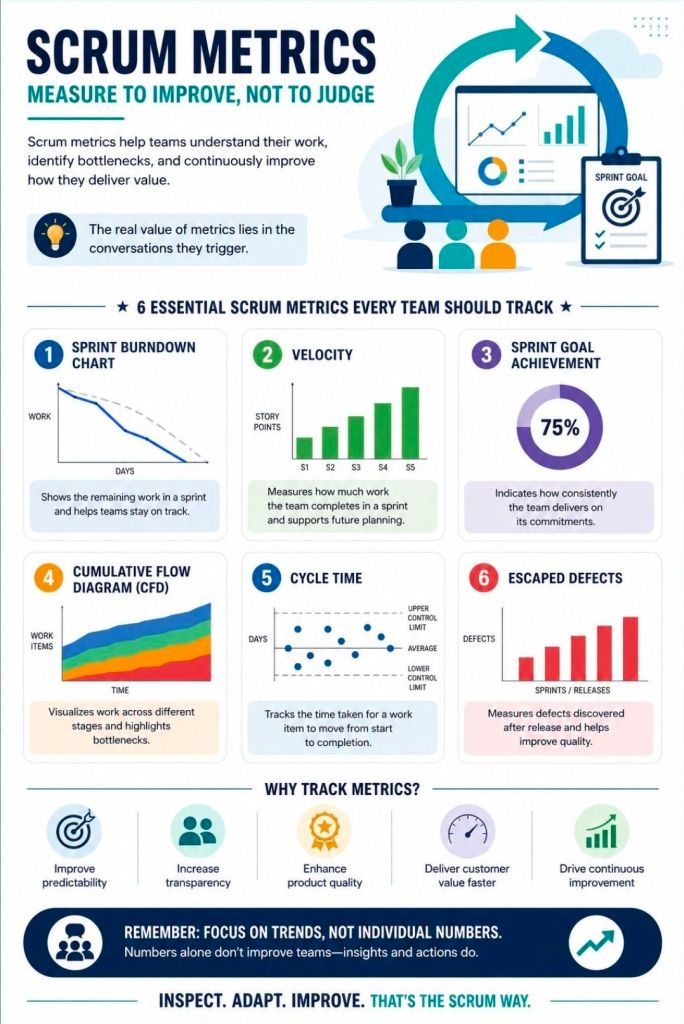
Why Agile Scrum Teams Use Fibonacci Story Points

Why Agile Scrum Teams Use Fibonacci Story Points

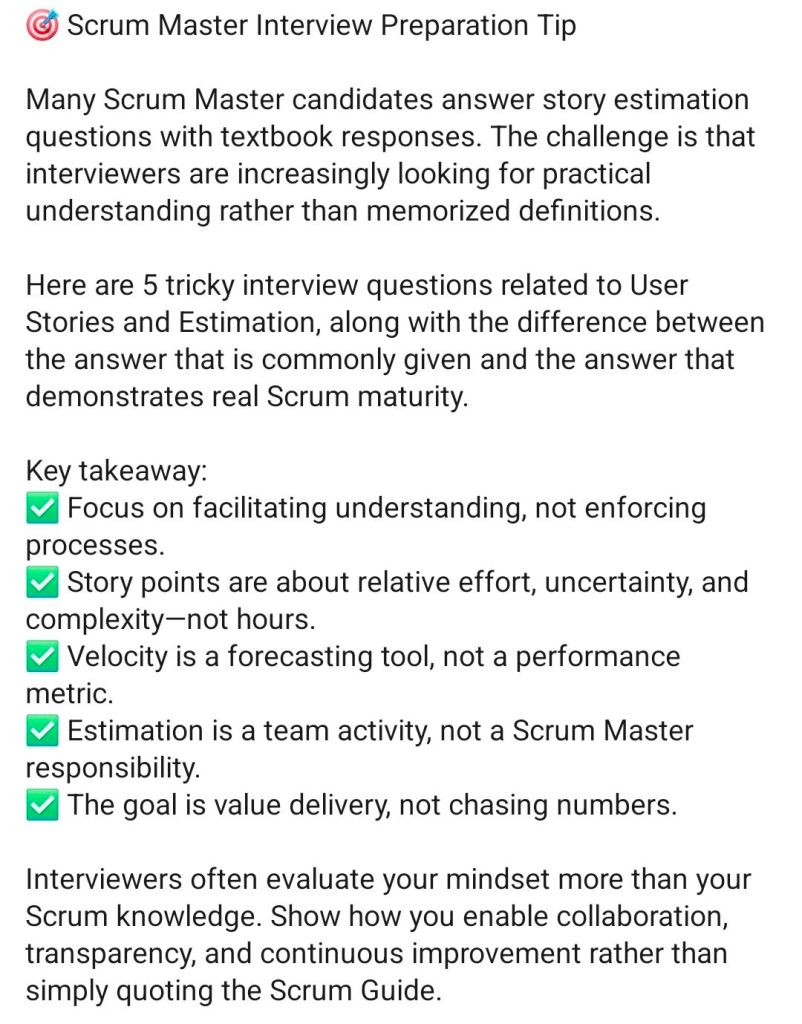
Agile Scrum teams use Fibonacci story points to account for exponential uncertainty, eliminate low-value debates over absolute hours, and establish relative sizing based on complexity.

Instead of using a standard linear scale (\(1, 2, 3, 4, 5…\)), Agile frameworks adopt the Fibonacci sequence (\(1, 2, 3, 5, 8, 13…\)) or a modified version (\(1, 2, 3, 5, 8, 13, 20, 40…\)) to fundamentally change how teams measure and discuss work.

🧠 The Psychology and Science of Sizing

  • Weber’s Law: Human brains struggle to detect minor differences in large magnitudes. While you can easily spot the difference between a 1kg and 2kg weight, you cannot easily tell the difference between 20kg and 21kg. The Fibonacci sequence mimics this by expanding the numbers proportionally (roughly a 60% jump each time), aligning with how humans naturally perceive effort.
  • Increasing Uncertainty: The larger a software development task is, the more unknowns it contains. The widening gaps between Fibonacci numbers (e.g., the jump from 8 to 13) visually represent this growing exponential risk and ambiguity.
  • Prevents False Precision: Estimating a complex feature at “39 hours” gives a false sense of security. Forcing the team to bucket a highly complex task as an 8 or 13 keeps the focus on high-level estimation rather than pixel-perfect precision.

🚀 Operational Benefits for Scrum Teams

  • Faster Planning Poker Sessions: Linear scales cause teams to waste valuable time arguing whether a task is a 5 or a 6. Because the Fibonacci sequence jumps straight from 5 to 8, it eliminates minor nitpicking and drives significantly quicker team alignment.
  • Shifts Focus to “CUE”: Story points measure Complexity, Uncertainty, and Effort altogether. Moving away from traditional hours breaks the mental link to individual time constraints, allowing a senior and a junior developer to agree on a task’s relative size even if they would complete it at different speeds.
  • Natural “Epic” Indicators: High Fibonacci scores serve as an immediate operational trigger. Most Scrum teams establish a rule that any user story rated an 8 or 13 is too large for a single sprint and must be broken down into smaller, bite-sized tasks.

Why Agile Scrum Teams Use Fibonacci Story Points

Agile Product Backlog Refinement

Agile Product Backlog Refinement

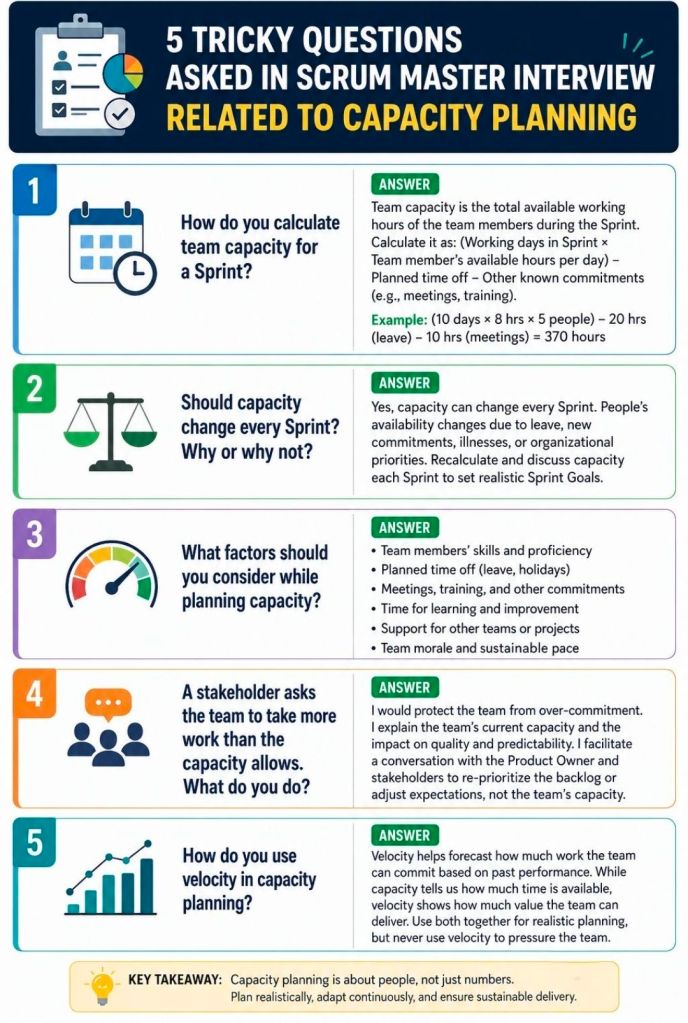
Agile – Scrum vs Kanban

Agile - Scrum vs Kanban
Agile – Scrum vs Kanban

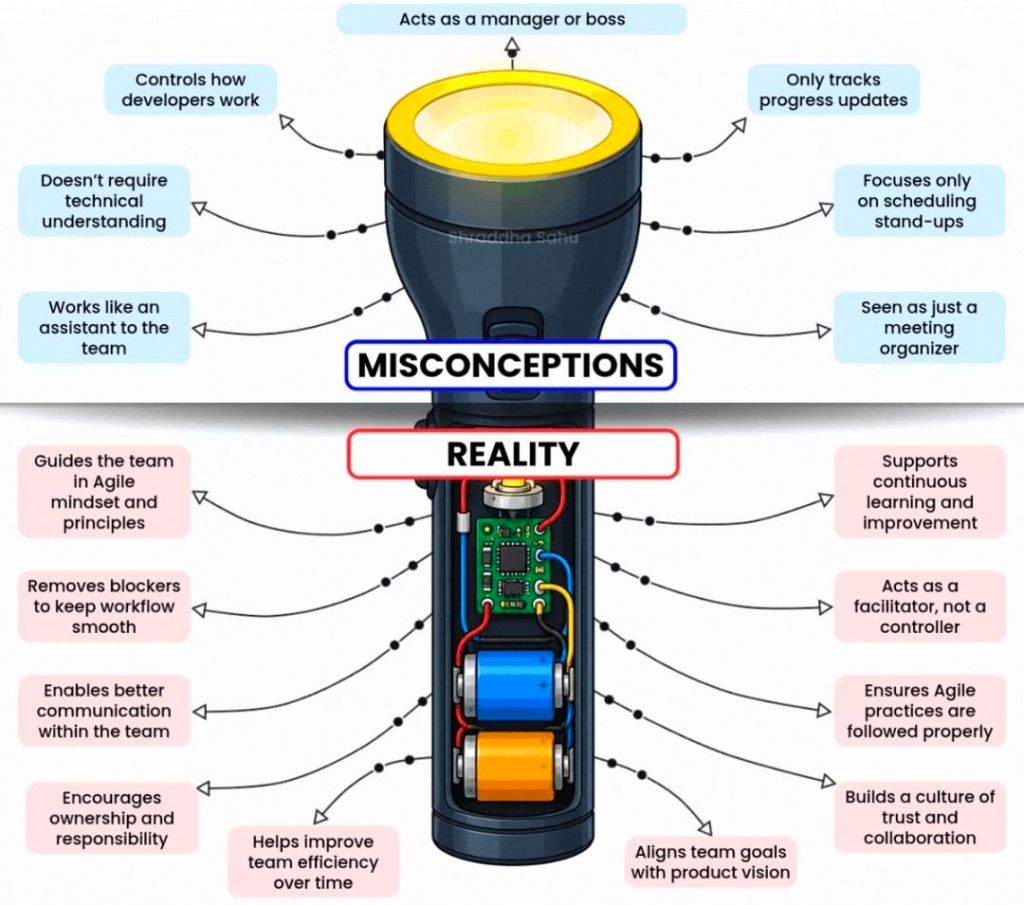
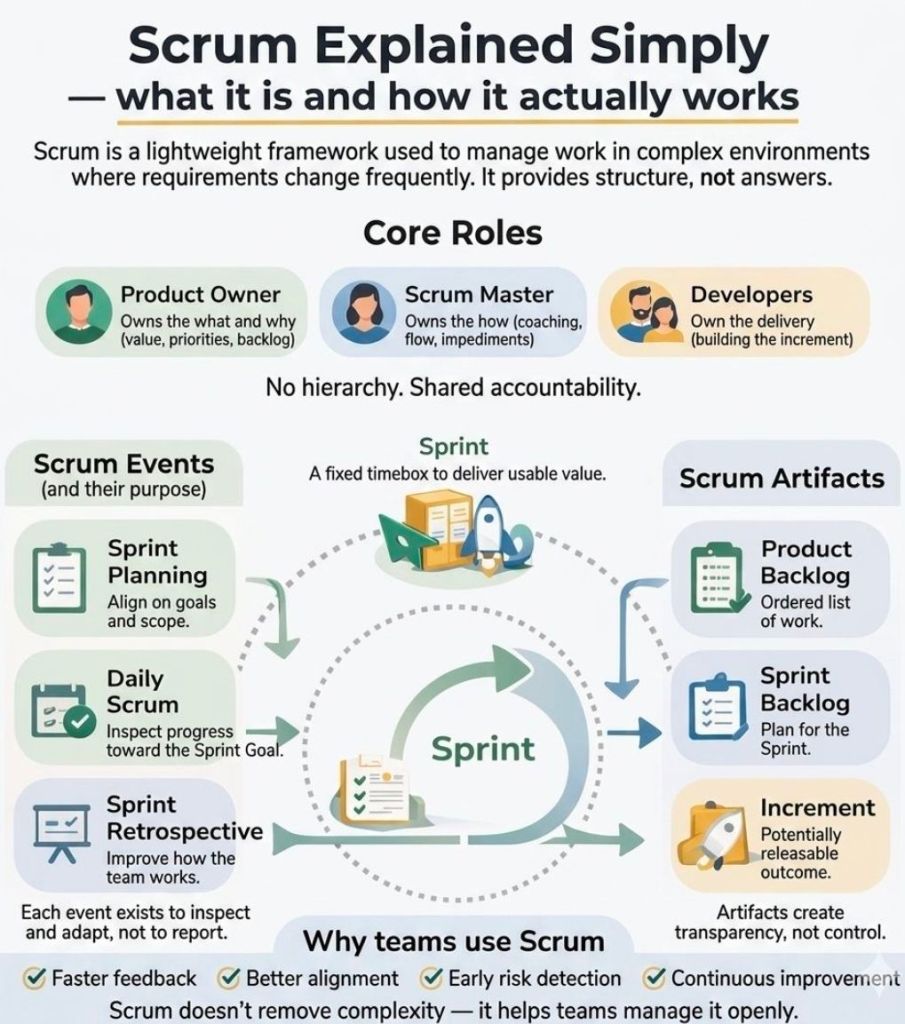
Scrum and Kanban are both popular Agile project management frameworks, but Scrum relies on rigid, time-boxed cycles with explicit roles, while Kanban focuses on continuous workflow and limiting work-in-progress to resolve bottlenecks.

Core Mechanics of Scrum

  • Time-Boxed Sprints: Work is divided into locked iterations where the team commits to a specific batch of deliverables.
  • Strict Ceremonies: Requires mandatory structural events including Sprint Planning, Daily Scrums, Sprint Reviews, and Retrospectives.
  • Clear Accountabilities: Relies on a Product Owner to dictate priorities, and a Scrum Master to eliminate work blockers.

Core Mechanics of Kanban

  • WIP Limits: Explicitly caps the maximum number of active items allowed in any single workflow column to prevent overloading.
  • Continuous Delivery: Tasks flow from the backlog to “Done” independently as resources allow, rather than in batched releases.
  • Evolutionary Change: Fits seamlessly over existing operational hierarchies without requiring an organizational overhaul.

How to Choose the Right Framework

Choose Scrum if:

  • You are building a complex product requiring highly disciplined planning cycles.
  • The project requires substantial stakeholder engagement and frequent product reviews.
  • Your team prefers structured routine, cross-functional collaboration, and highly concrete targets.

Choose Kanban if:

  • Your workflow is dictated by inbound, unpredictable operational tasks (like IT support or bug tracking).
  • Priorities change rapidly, demanding immediate pivot capabilities mid-week.
  • You want a visual aid to reveal pipeline bottlenecks without altering current team roles.

Note: Many organizations merge these models into a hybrid approach known as Scrumban, leveraging Scrum’s regular event cadences alongside Kanban’s visual WIP flexibility.

Mark Whitfield’s Project Management Templates offer a comprehensive, fully editable toolkit of over 200 documents

Mark Whitfield’s Project Management Templates offer a comprehensive, fully editable toolkit of over 200 documents spanning the entire project lifecycle. Designed for PRINCE2, Agile Scrum, and Waterfall methodologies, the suite helps project managers streamline planning and tracking. The toolkit is available on platforms like Mark Whitfield’s Project Templates and Etsy – ProjectTemplatesSoft.

Here is a detailed breakdown of the templates by type:

1. Planning & Scheduling Templates

These templates help structure timelines, resource allocation, and task dependencies.

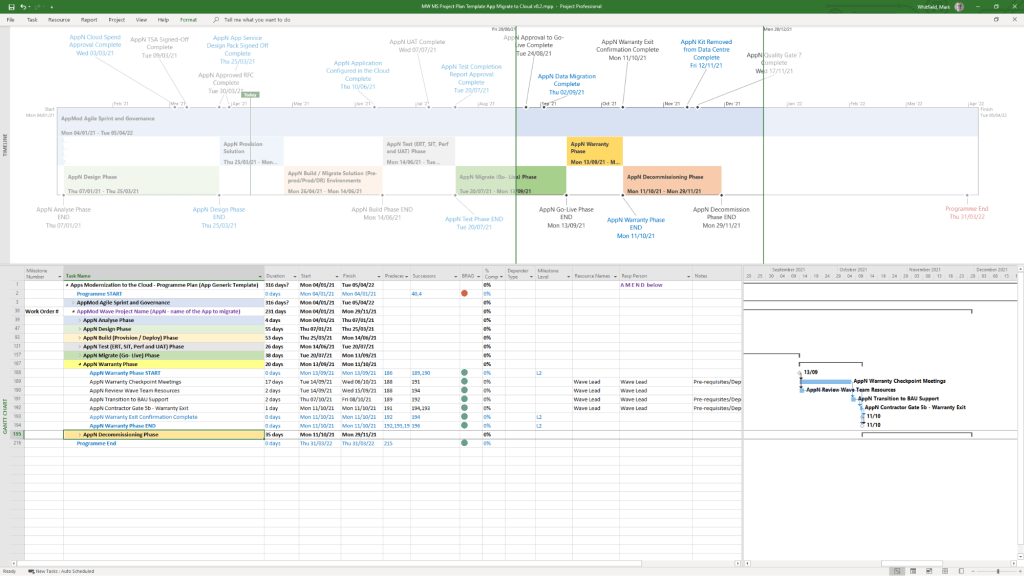
  • MS Project Plans (.mpp): Detailed, annotated files spanning full Software Development Life-Cycles (SDLC) and PRINCE2 7th Edition. Includes sprint overviews for Agile teams.
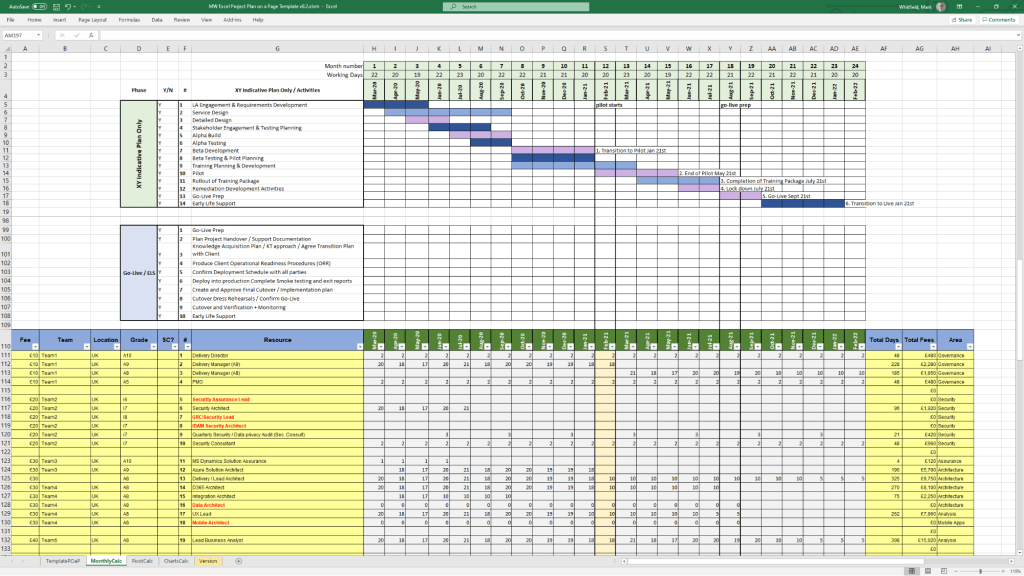
  • Excel Detailed Plans: Full Gantt chart and task tracking for users who do not have MS Project. Includes self-populating columns for baseline variance, actual effort, and RAG (Red/Amber/Green) status.
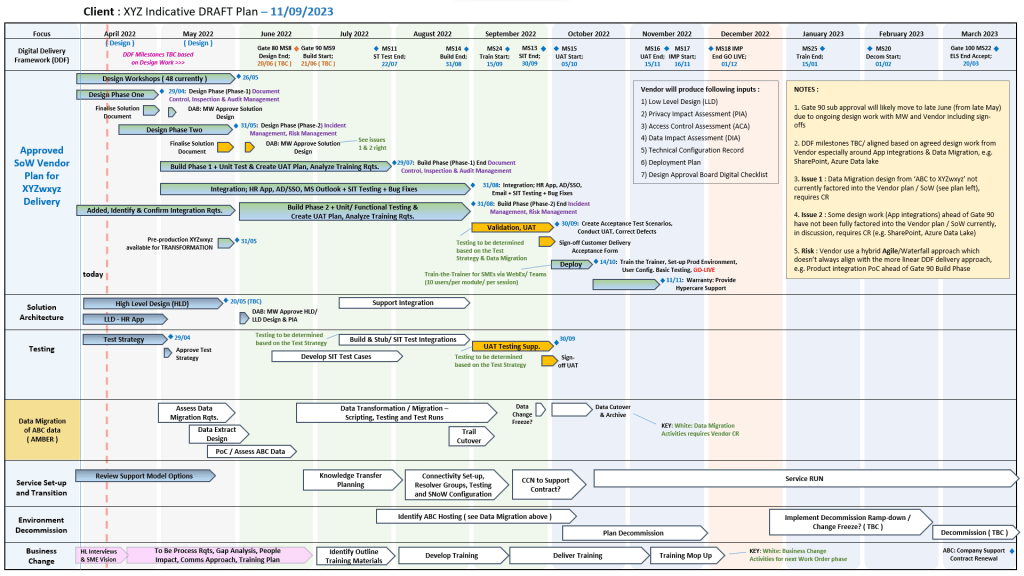
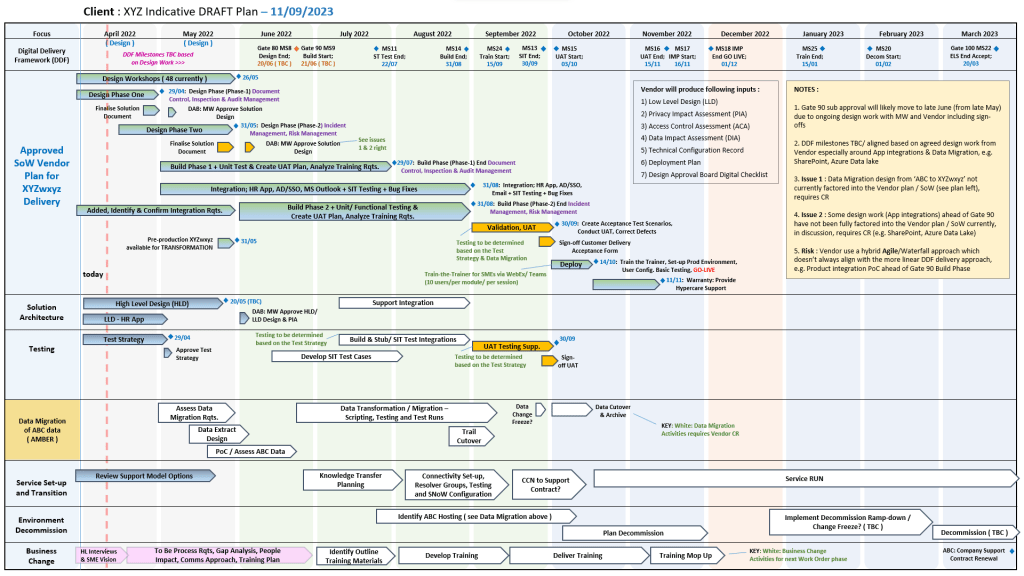
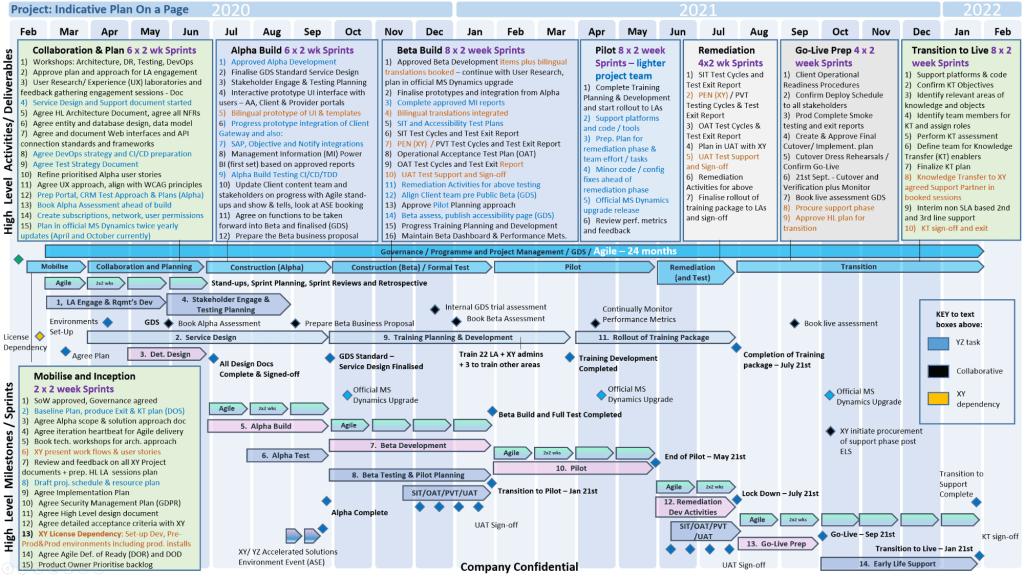
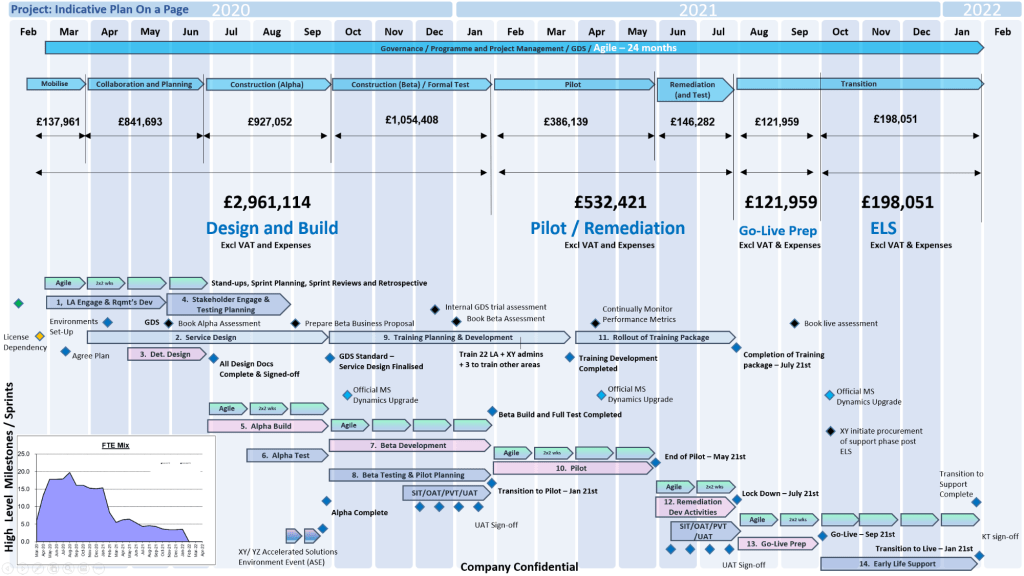
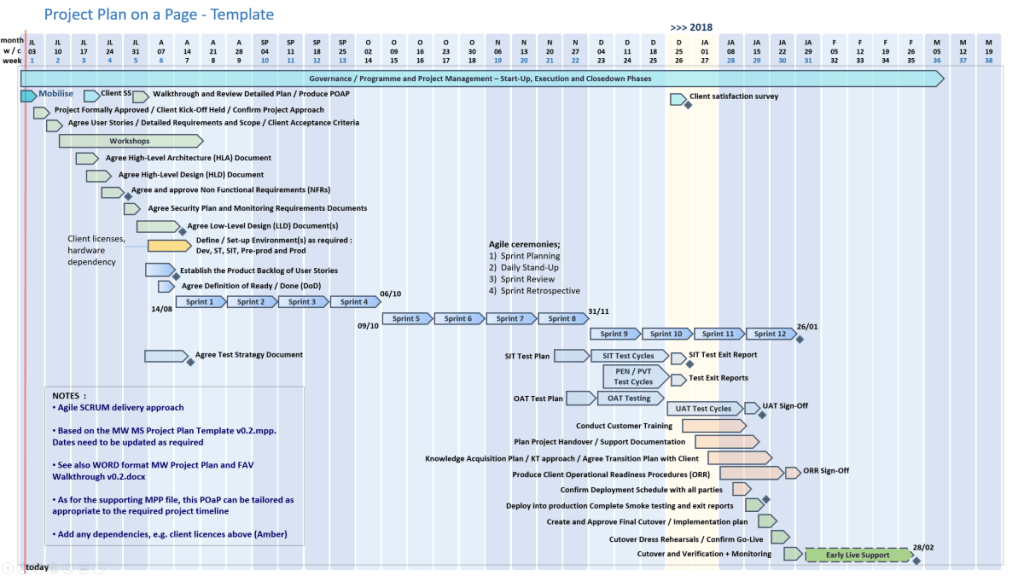
  • Plan on a Page (POaP): Over 30 PowerPoint slide designs that simplify complex project timelines, allowing you to present the overarching plan to clients and executives without overwhelming them with micro-details.
Mark Whitfield’s Project Management Templates offer a comprehensive, fully editable toolkit of over 200 documents

2. RAIDs Log Templates

These core tracking documents help manage the unknowns and variables of your project.

  • Basic RAIDs Log: Simple trackers for Risks, Assumptions, Issues, and Dependencies.
  • Comprehensive RAIDs Log: Highly detailed sheets with separate tabs to track supplier details, individual deliverables, Change Requests (CR), and out-of-scope (OOS) tasks.

3. Financial Management Templates

Designed to maintain tight control of your budget and forecast.

  • Monthly Finance Tracker: Simple sheets to monitor monthly forecasts, actuals, annual leave, and monthly variances.
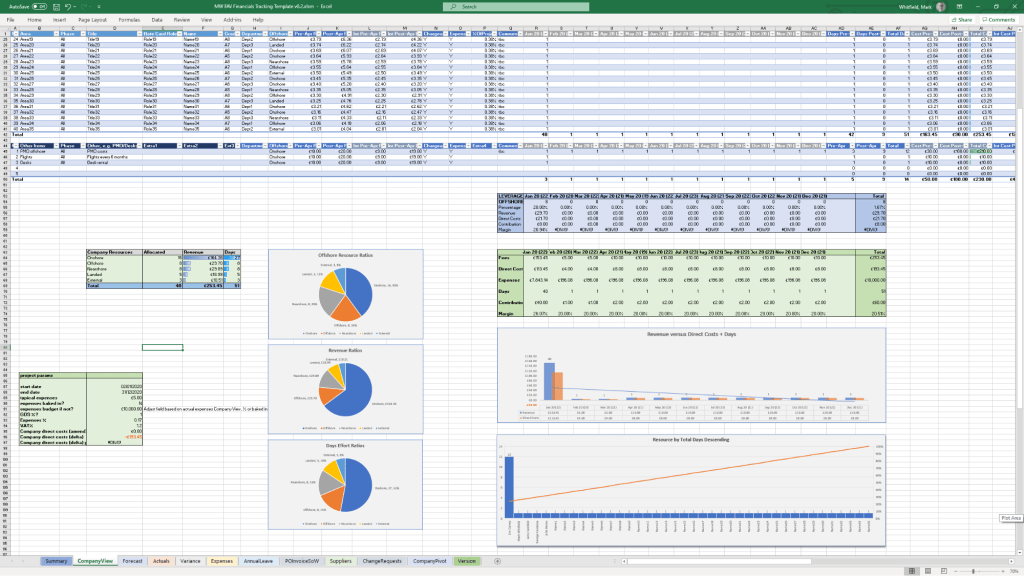
  • Project Cost Tracker: Full-featured financial spreadsheets providing rate lookups, margin calculations, expense logs, and built-in charts for financial reporting.

4. Governance & Project Controls

These templates form the administrative and structural backbone, primarily based on the PRINCE2 methodology.

  • Project Initiation Documentation (PID): Includes templates for the Business Case, project approach, roles & responsibilities, and team structure.
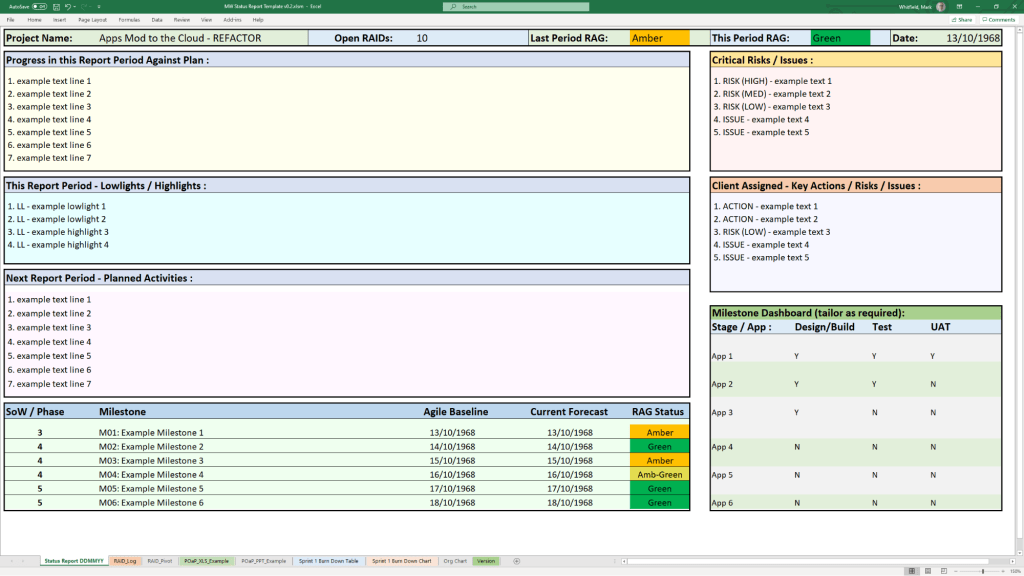
  • Reports: Standardized documents for Checkpoint Reports, Highlight Reports, End-Stage Reports, and Exception Reports.
  • Logs & Registers: Tailored templates for Lessons Learned, Quality Management, and Configuration Item Records.

5. Stakeholder & Team Management Templates

Focused on communication and team alignment.

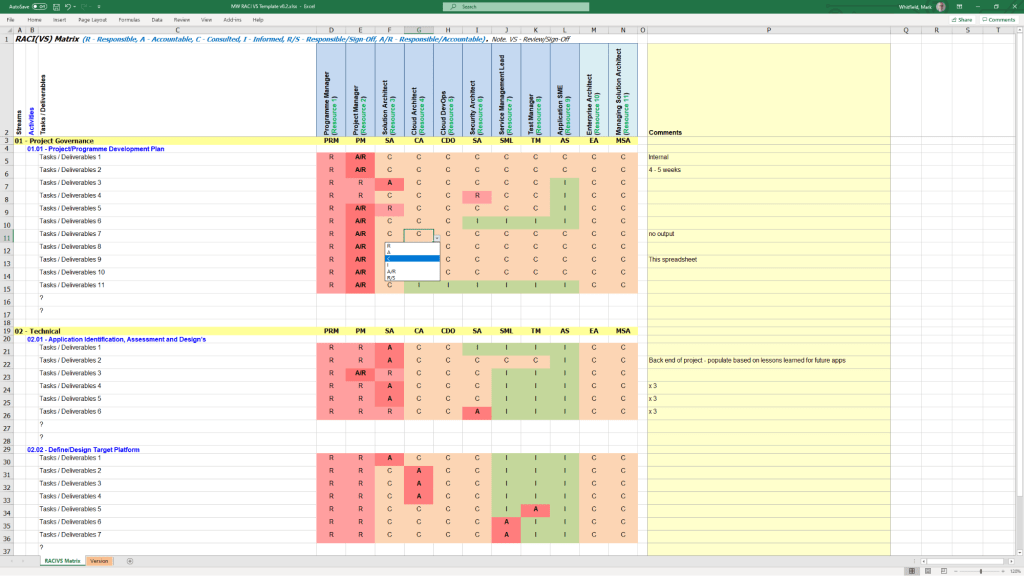
  • RACI Matrix: A tracker to define exactly who is Responsible, Accountable, Consulted, and Informed for each project task.
  • Stakeholder Analysis: Charts and planning tables designed to measure stakeholder “influence vs. impact” so you know exactly how to manage expectations.
  • Mobilisation Kit: Onboarding documents and team kickoff presentations to get new resources up to speed quickly.

6. Agile & Specialized Execution Templates

  • Agile Dependency Tracking: Tools designed specifically to monitor user stories that have hard dependencies on external suppliers or stakeholders.
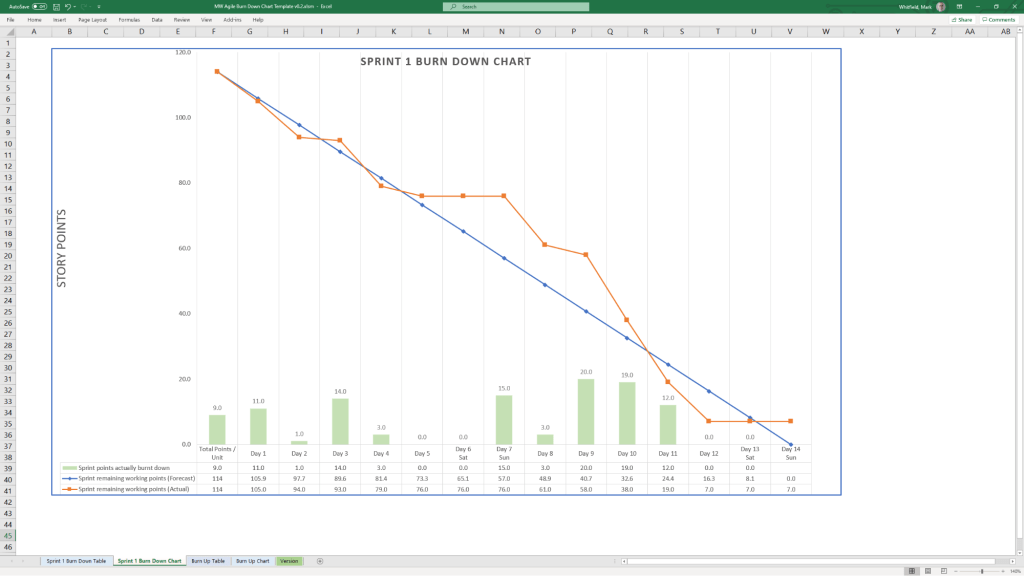
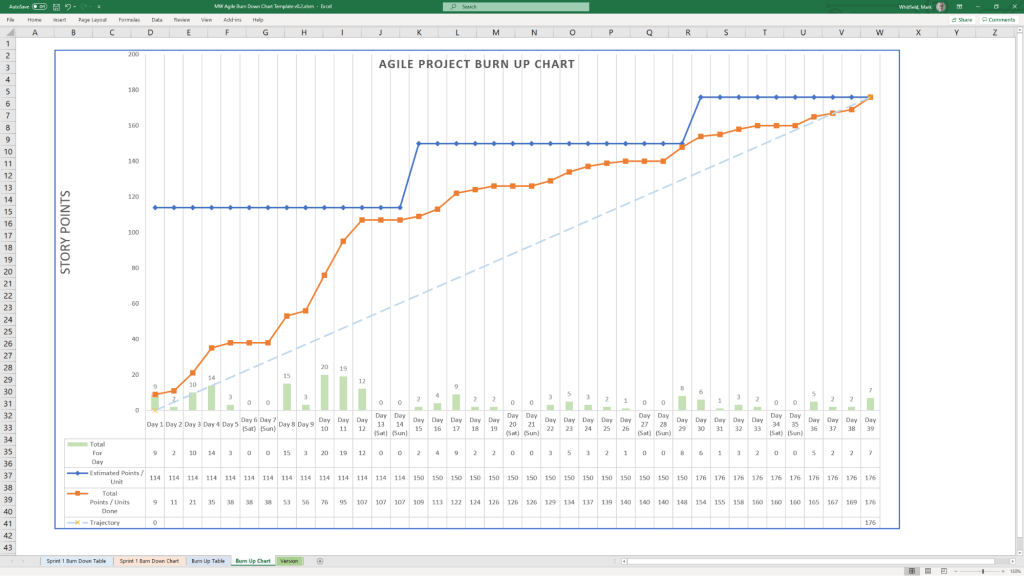
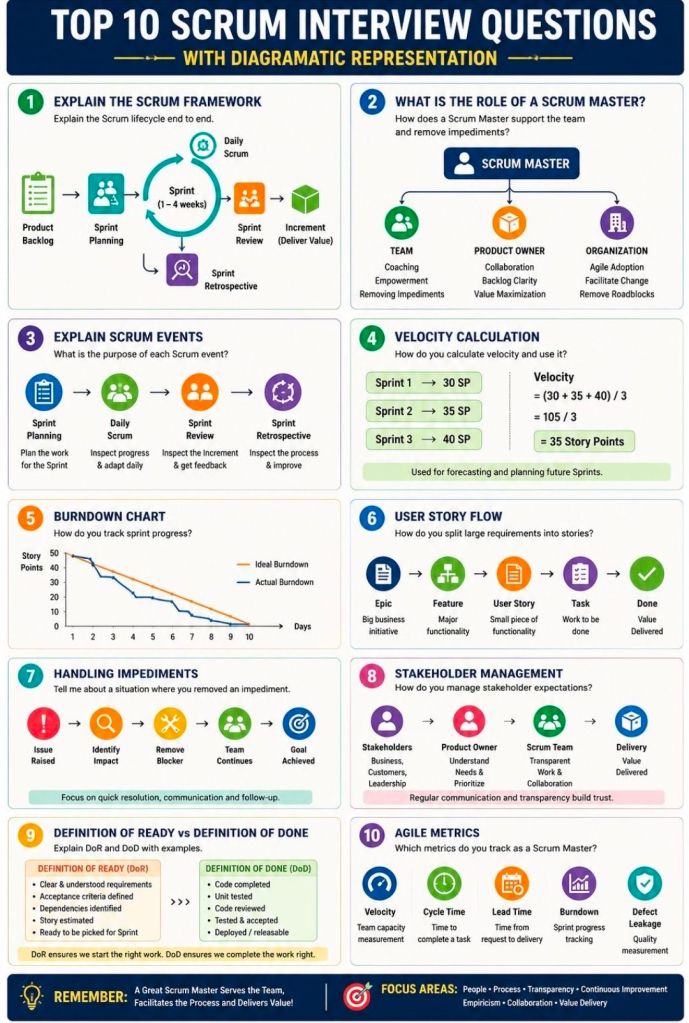
  • Burn Down / Burn Up Charts: Visual aids in Excel to track sprint velocity and project progression against deliverables.
  • Benefits Realization Plan: A spreadsheet that evaluates the project’s completed deliverables against the organization’s original business goals and financial targets.

All templates are designed for use across desktop, tablet, and cloud platforms. Purchases on his site come with lifetime free upgrades for any additions he makes to the package.