Download Templates for PROject Management | FREE Upgrades & Additions
Author: Mark Whitfield
Welcome to my site!
After graduating in Computing in 1990, I accepted a position as a programmer at a Runcorn based software house specialising in electronic banking software, namely sp/ARCHITECT-BANK on Tandem Computers (now HPE NonStop). This was before the internet became more prevalent and so the notion of enabling desktop access to company accounts for inter-account transfers and book keeping was still quite a cutting edge idea (and smartphones only ever hinted at in Space 1999). The company was called The Software Partnership (which was taken over by Deluxe Data in 1994).
I spent 5 years in Runcorn developing code for SP/ARCHITECT for various banks like TSB, Bank of Scotland, Rabobank and Girofon (Denmark) to name but a few. I then moved onto a software house in Salford Quays for further bank facing projects. After a further 23 years in the IT industry and now a Senior IT Project Manager (both Agile and Waterfall delivery), I thought I would echo out my Career Profile in this corner of the internet for quick and easy access.
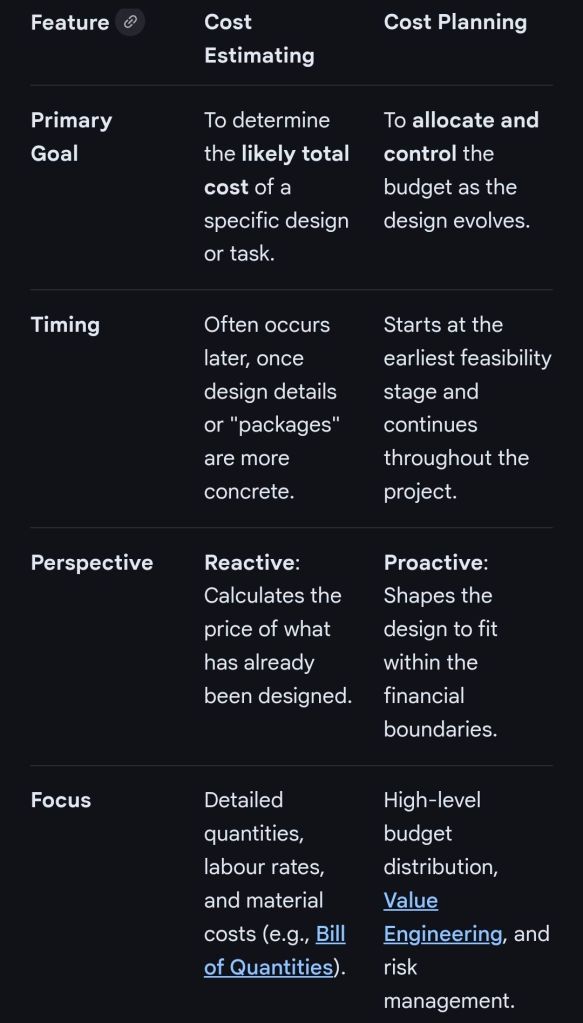
In professional project management and construction, cost estimating and cost planning are complementary processes that occur at different stages to ensure a project remains financially viable.
1. Cost Estimating: “What will it cost?”
Cost estimating is a technical assessment used to predict the expenditures for a project.
Early Stages: Estimates might be “rough orders of magnitude” based on square footage or historical data (e.g., cost per hotel room).
Later Stages: Estimates become precise “tender figures” used by contractors to bid on work, factoring in current market rates for labour and materials.
Function: It answers the question: “Is this specific plan affordable?”.
2. Cost Planning: “How do we stay on budget?”
Cost planning is a strategic framework that manages a project’s financial health from start to finish.
Iterative Process: It is a “living document” that is updated as the project moves from concept to detailed design.
Allocation: It breaks down the total budget into “elemental” targets (e.g., spending £X on the foundation and £Y on finishes).
Control: If an estimate for one part of the project exceeds its target, the cost plan guides the team to adjust the design or find savings elsewhere to keep the overall project on track.
Standard Professional Guidance
The Royal Institution of Chartered Surveyors (RICS) provides the New Rules of Measurement (NRM 1), which standardises how these processes work together:
Order of Cost Estimate: Establishing the initial viability of a project.
Elemental Cost Plan: Breaking the estimate down into functional parts.
Cost Checking: Continually comparing design changes against the cost plan to prevent overspending.
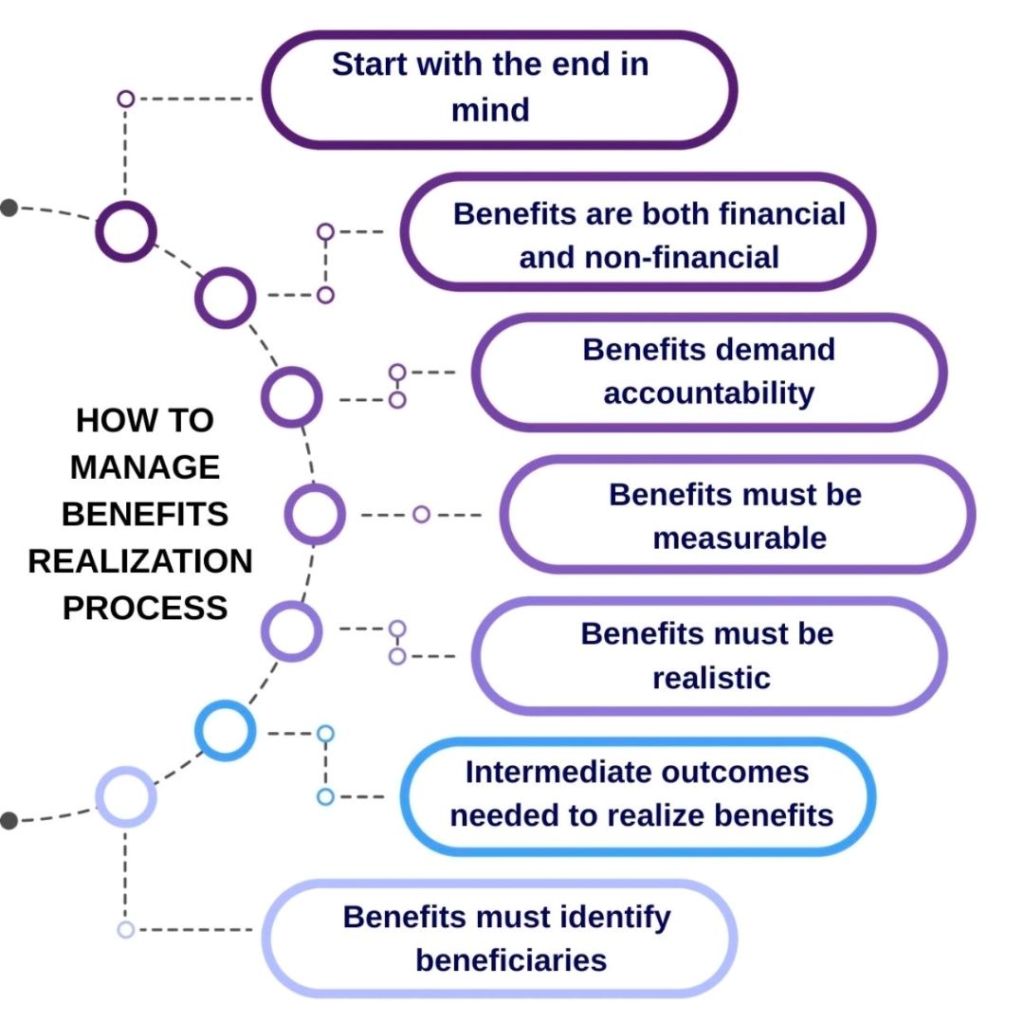
The benefits realization process is a structured framework used to ensure that projects and programmes deliver the tangible value and strategic outcomes intended by an organisation. Unlike traditional project management, which focuses on outputs (deliverables like a new software), benefits realization focuses on outcomes (the actual value derived, such as a 10% increase in efficiency).
Core Stages of the Process
While various frameworks exist, most follow three or four primary stages:
1. Identification: Defining the expected benefits at the start of a project. This involves aligning benefits with the organisation’s strategic goals and identifying “benefit owners” who will be accountable for their delivery.
2. Planning: Developing a Benefits Realization Plan that establishes metrics, Key Performance Indicators (KPIs), and timelines for when benefits will be achieved.
3. Execution & Delivery: Monitoring and managing the project to ensure it stays on track to deliver the planned benefits. This includes managing risks that could negatively impact benefit delivery.
4. Sustainment & Review: Occurring post-project completion, this stage focuses on ensuring benefits are fully realized and sustained over the long term. A final review is conducted to compare actual results against the original business case.
Key Components and Tools
Benefits Register: A central document used to track and manage all identified benefits, their owners, and their current status.
Benefit Profiles: Detailed records for individual benefits, describing what they are, how they will be measured, and who is responsible for them.
Benefit Dependency Map (BDM): A visual tool showing the links between project outputs, organizational changes, and final strategic objectives.
Benefit Owners: Individuals (usually from the business side) who are accountable for ensuring a specific benefit is achieved and sustained after the project team disbands.
Why It Matters
Organizations that mature in benefits realization management are significantly more likely to meet their original goals and business intent. It bridges the gap between high-level strategy and tactical project execution, ensuring that investments translate into actual business value.
Benefits Realization Process is a structured framework
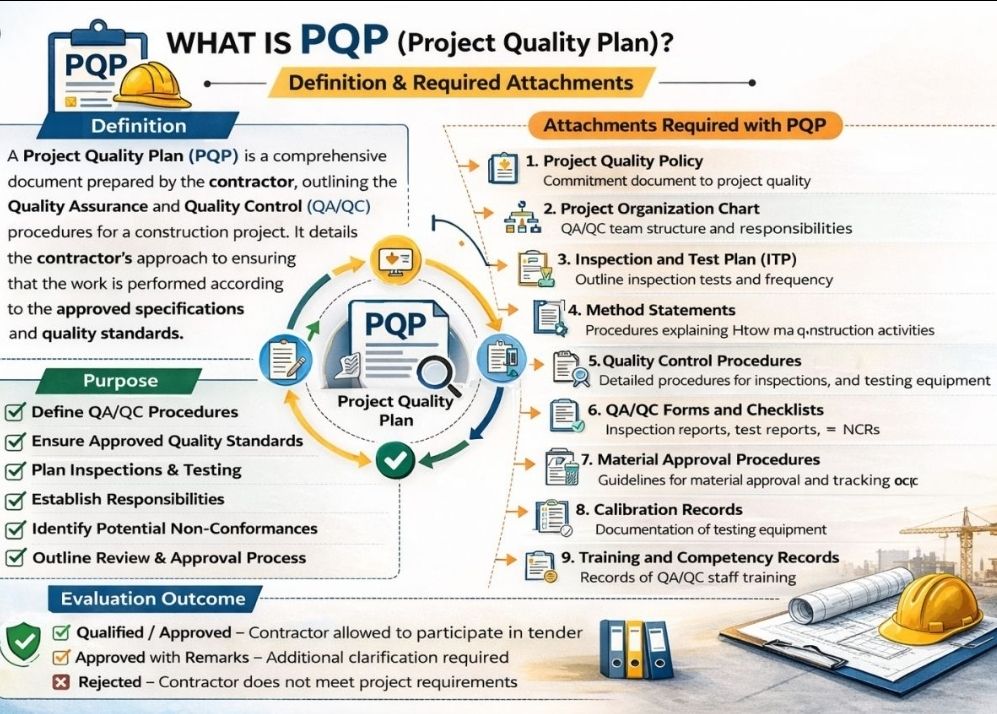
The primary purpose of a Project Quality Plan (PQP) is to define the standards, tools, and processes required to ensure a project’s deliverables are “fit for purpose” and meet all stakeholder expectations. It serves as a strategic roadmap for the project team to maintain consistent quality throughout the project lifecycle rather than treating it as an afterthought.
Core Objectives
A PQP is designed to achieve several critical goals:
Define “Quality”: Translates vague stakeholder needs into measurable criteria and specific benchmarks.
Prevent Defects: Establishes Quality Assurance (QA) processes to proactively “build in” quality from the start, reducing the risk of errors.
Detect and Correct Issues: Outlines Quality Control (QC) activities, such as testing and inspections, to identify and fix defects before they reach the customer.
Clarify Accountability: Assigns specific roles and responsibilities so every team member knows who is responsible for performing, checking, and approving work.
Ensure Compliance: Guarantees the project adheres to relevant internal policies, legal regulations, and industry standards like ISO 9001.
Strategic Benefits
Implementing a structured quality plan provides tangible advantages for project management:
Reduced Costs and Rework: By catching errors early, the team avoids expensive last-minute fixes and wasted resources.
Improved Efficiency: Standardised workflows and clear metrics allow the team to focus on production rather than constant troubleshooting.
Increased Stakeholder Trust: Providing objective evidence through audits and reports gives sponsors and clients confidence in the final outcome.
Continuous Improvement: The plan often includes feedback loops and lessons-learned processes to refine and enhance quality for future project phases.
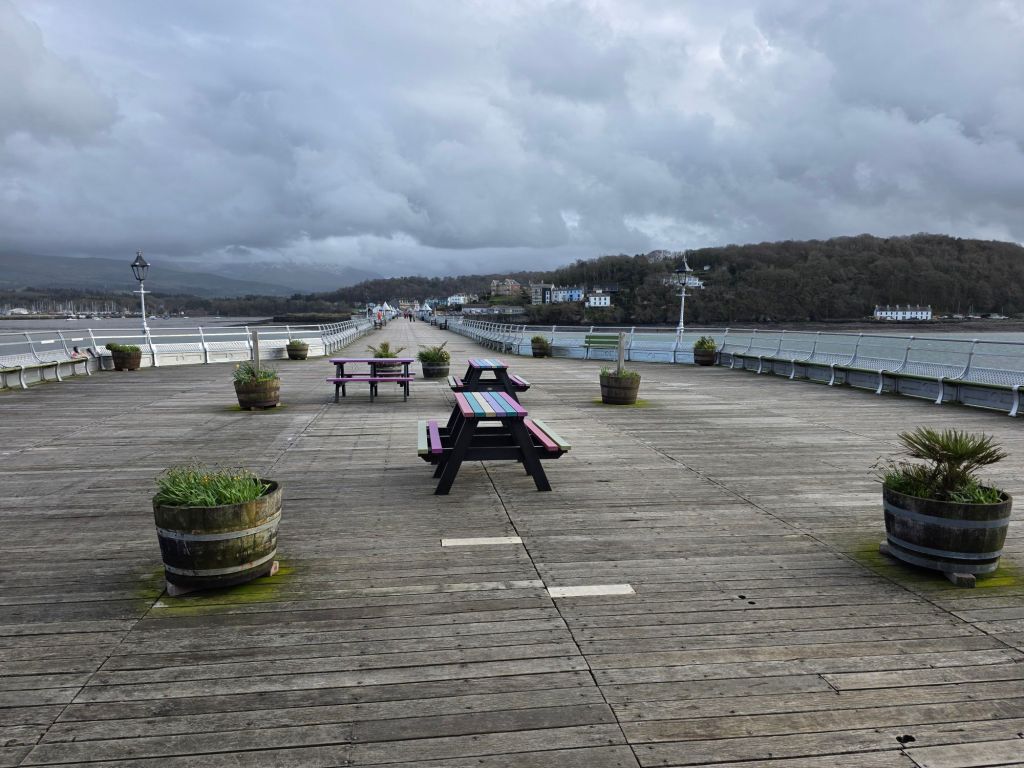
Bangor Garth Pier is a Grade II* listed Victorian landmark in North Wales, recognized as the second-longest pier in Wales and the ninth-longest in the British Isles. Stretching 1,500 feet (460m) into the Menai Strait, it is celebrated for its well-preserved architectural elegance and panoramic views of the Eryri (Snowdonia) mountains and Anglesey.
Bangor Pier taken 15th March, 2026
Key Highlights
Award-Winning Heritage: It was named Pier of the Year 2022 by the National Piers Society for its successful community-led restoration and original Victorian charm.
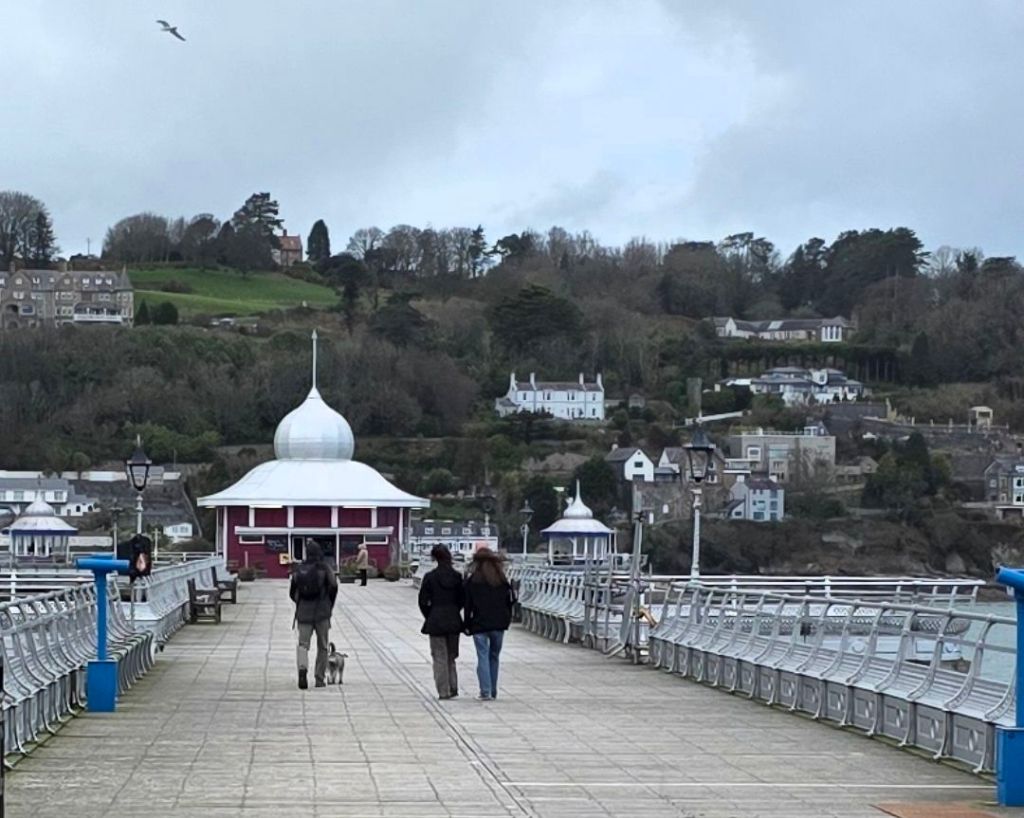
Victorian Kiosks: The deck features a series of distinctive octagonal, onion-domed kiosks that house local independent businesses, including sweet shops, artisan crafts, and a gallery.
The Pavilion: At the pier-head stands a large domed pavilion housing a family-friendly café famous for its tea, coffee, and homemade scones.
Leisure & Wildlife: The pier is a popular spot for crabbing and fishing. Visitors can also spot local wildlife, including a colony of black guillemots often referred to as “Bangor Penguins”.
Bangor’s Garth Pier is a Grade II* listed structure stretching 1,500 feet (460m) into the Menai Strait toward Anglesey. It is the second-longest pier in Wales and is renowned for its well-preserved Victorian architecture, featuring original kiosks and ornamental ironwork. Unlike many other piers, it was never heavily modified with large theatres, retaining its elegant, traditional character.
Bangor Pier, March 2026
Comprehensive Historical Timeline
The Early Origins (Pre-1896)
1292: Records mention the Porthesgob ferry operated by the Bishop of Bangor, establishing the area as a key crossing point to Anglesey.
1826: The principal crossing shifted to the new Menai Bridge, though the local Garth ferry continued operating for many years.
1893: A Parliamentary Bill was passed to authorize the construction of a permanent pier.
The Victorian Boom (1896–1914)
1896 (May 14): Lord Penrhyn officially opened the pier. It was designed by JJ Webster and cost approximately £17,000.
1896–1914: The pier thrived as a landing stage for pleasure steamers from Liverpool, Blackpool, and the Isle of Man. A 3-foot gauge tramway ran its length to transport passenger luggage.
1914: The cargo ship SS Christiana broke free and crashed into the pier, severing a section of the structure. The baggage railway was subsequently removed.
Transition & Decline (1915–1971)
1921: Permanent repairs for the 1914 ship damage finally resumed following the conclusion of World War I.
1927: Professor Phillip White established a small marine laboratory in one of the pier kiosks, eventually leading to Bangor University’s renowned marine science department.
1939–1945: The pier remained a local landmark through WWII; historical photos show servicemen and locals using the structure.
1960s: Lack of investment led to severe structural deterioration.
1971: The pier was officially closed to the public on safety grounds.
Threat of Demolition & Rescue (1974–1988)
1974: Ownership passed to Arfon Borough Council, which proposed demolishing the structure.
1975–1978: Following public outcry, Bangor City Council purchased the pier for a symbolic fee of 1p.
1982: A major six-year restoration project began, funded by the National Heritage Memorial Fund and the Manpower Services Commission.
1983: The ongoing project won the Prince of Wales Award.
1988 (May 7): The Marquess of Anglesey officially reopened the pier after a £3 million restoration.
The Modern Era (2011–Present)
2011: Surveys revealed new structural issues, specifically with the sub-structure.
2017: A new £1 million restoration programme commenced to strengthen the structure and replace handrails.
2021: The pier celebrated its 125th anniversary, and the Friends of Bangor Garth Pier volunteer group took over a kiosk to support further fundraising.
Scrum is a lightweight framework within the broader Agile methodology used to manage complex work through iterative, incremental delivery. It organizes work into fixed-length cycles called sprints, typically lasting two to four weeks, to deliver a usable “increment” of value at the end of each cycle.
Core Components (The 3-5-3 Structure)
The framework is built around three accountabilities, five events, and three artifacts.
1. Three Accountabilities (Roles)
Product Owner: Represents the customer and stakeholders. They manage the Product Backlog and prioritize work to maximize the value delivered by the team.
Scrum Master: A servant leader who coaches the team on Scrum theory and removes impediments that block progress.
Developers: A cross-functional, self-managing team that does the actual work to create the product increment.
2. Five Events (Ceremonies)
The Sprint: The container for all other events; a time-boxed period where work is performed.
Sprint Planning: The team defines what will be delivered in the sprint and how the work will be achieved.
Daily Scrum: A 15-minute daily check-in for developers to synchronize progress and plan the next 24 hours.
Sprint Review: Held at the end of the sprint to inspect the outcome with stakeholders and adapt the Product Backlog.
Sprint Retrospective: An internal team meeting to reflect on the process and identify improvements for the next sprint.
3. Three Artifacts
Product Backlog: An ordered, evolving list of everything needed for the product.
Sprint Backlog: The subset of product backlog items selected for the current sprint, plus a plan for delivering them.
Increment: The concrete sum of all completed backlog items that meet the Definition of Done.
The Three Pillars of Empiricism
Scrum is founded on empirical process control, which relies on:
Transparency: The process and work must be visible to everyone involved.
Inspection: Frequent checks of artifacts and progress to detect variances.
Adaptation: Adjusting the process or product if an inspection reveals unacceptable deviations.
Key Values
Success with Scrum depends on the team’s commitment to five core values: Commitment, Courage, Focus, Openness, and Respect.