During his tenure as a client-facing Engagement Manager for Capgemini UK, Senior IT Project Manager Mark Whitfield was augmented directly into MuleSoft (a Salesforce company) as a Delivery Manager from October 2018 to June 2019.
Operating out of MuleSoft’s London headquarters in the Salesforce Tower, his role mirrored that of a Programme Manager. He aligned client project plans with MuleSoft’s structured delivery frameworks to establish self-sufficient integration capabilities.
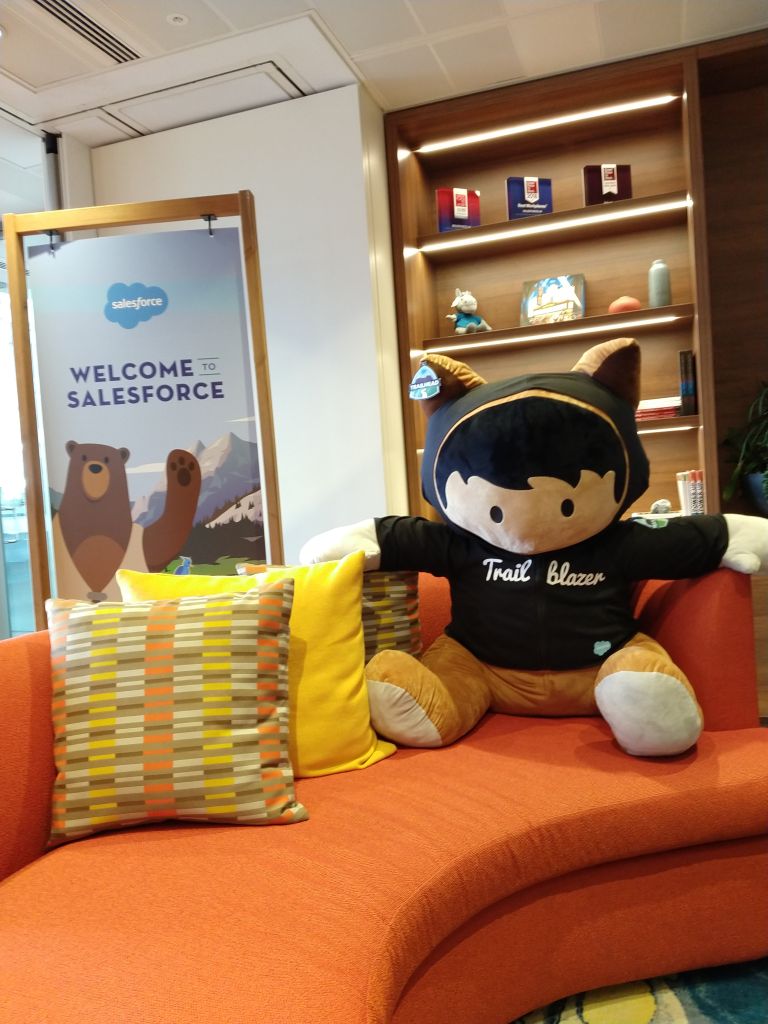
MuleSoft’s London office is located within the Salesforce Tower at 110 Bishopsgate
The focus areas of his augmentation, the Outcome Based Delivery (OBD) / Centre for Enablement (C4E) framework, and the enterprise clients he managed are detailed below.
📋 Overview of MuleSoft Delivery Manager Augmentation
Role Alignment: Linked directly with client-side Project/Programme Managers to align execution timelines with MuleSoft’s implementation standards.
Resource Tracking: Monitored MuleSoft partner and consultant efforts, project costs, and timelines against statements of work (SOW).
Risk Management: Owned and tracked client-side OBD risks, assumptions, issues, and dependencies via specialized OBD RAIDs logs.
Agile Integration: Facilitated the prioritization and assignment of integration tasks into Agile Sprints or structured Waterfall milestones.
🏛️ C4E & OBD Focus Areas
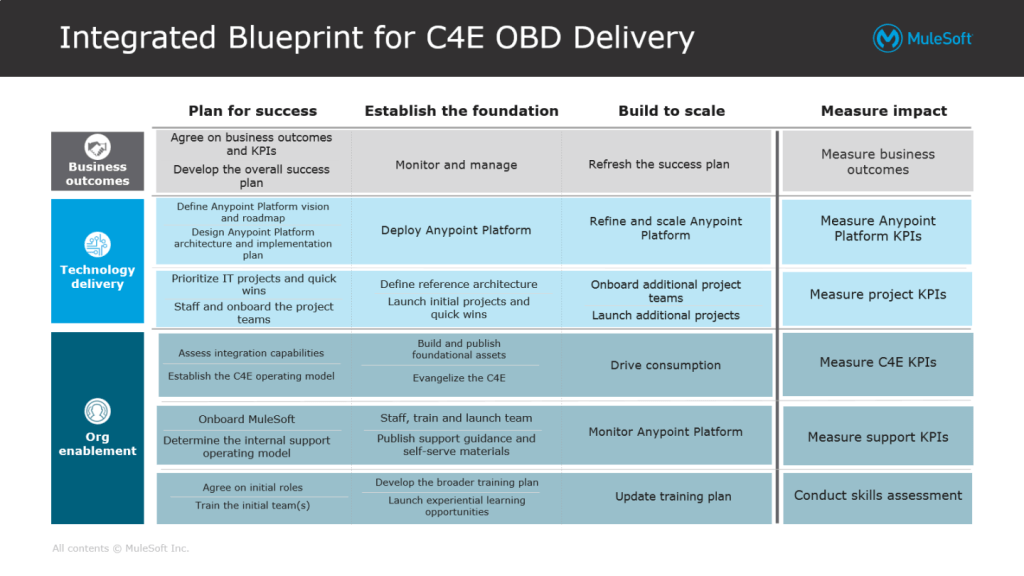
MuleSoft’s Outcome Based Delivery (OBD) framework is built across three primary streams—Business Outcomes, Technology Delivery, and Organisational Enablement—specifically engineered to build a functional client-side Centre for Enablement (C4E).
Whitfield’s delivery focus focused heavily on Organisational Enablement:
Operating Model Setup: Establishing the foundational C4E operating model and internal technical support structures.
Asset Architecture: Guiding teams to build, govern, and publish reusable foundational assets and APIs on the Anypoint Platform.
Capability Assessment: Assessing the client’s existing software integration maturities to benchmark project targets.
Staffing & Training: Creating comprehensive training, onboarding, and experiential learning pathways to upskill client IT and business personnel.
C4E Evangelisation: Promoting self-serve materials and governance guidance across the broader enterprise to eliminate reliance on external MuleSoft SMEs.
🏢 MuleSoft Ecosystem & Enterprise Clients Managed
As part of his broader Capgemini UK Consultancy footprint and his direct MuleSoft delivery assignment, Whitfield spearheaded cross-functional integration deployments for multiple blue-chip, public sector, and utility accounts across the UK:
MuleSoft Accounts: Managed complex software delivery accounts spanning the UK Utility, Accounting, and Recruitment industries during his direct augmentation.
Automotive Integration: Directed the Jaguar Land Rover (JLR) iFAB Middleware Project, coordinating multi-vendor supply chain data pipelines.
Aviation & Logistics: Managed enterprise architecture environments for major infrastructure clients including Heathrow Airport, Royal Mail Group (RMG), and NATS (National Air Traffic Services).
Public Sector & Utilities: Guided digital transformation frameworks for UK Government Agencies, UK Export Finance (UKEF), and water utilities like Welsh Water.
Financial Services: Handled integration and core enterprise ecosystems for banking giants such as Barclays, Rabobank, and Lloyds Banking Group (LBG).
Salesforce MuleSoft is an industry-leading Integration Platform as a Service (iPaaS) and automation solution that enables organizations to securely connect data, applications, and devices across hybrid cloud and on-premises environments. Instead of relying on rigid, custom-coded point-to-point connections, MuleSoft uses an API-led connectivity approach. This methodology treats every system connection as a modular, reusable building block (System, Process, and Experience APIs).
October 2018 – June 2019, was assigned as a Delivery Manager at MuleSoft
Core Capabilities
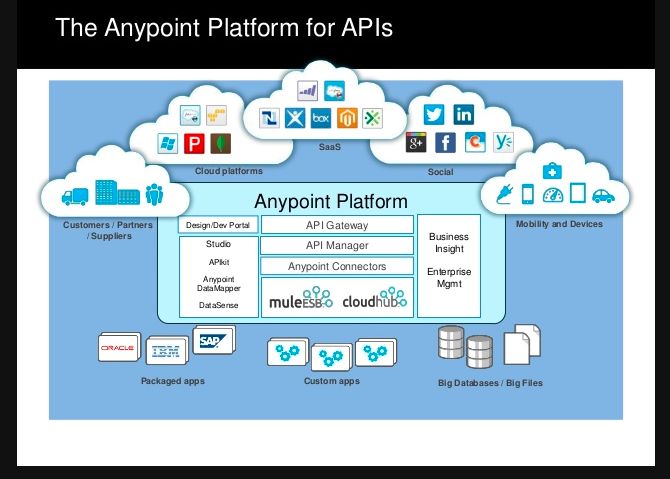
Anypoint Platform: The flagship product covering the entire lifecycle of API design, testing, deployment, governance, and monitoring.
MuleSoft Automation: A suite combining Composer (no-code integration for business teams) and Robotic Process Automation (RPA) to automate workflows across legacy and modern platforms.
Salesforce Ecosystem Synergy: Acts as the data integration engine for Salesforce Customer 360, bringing siloed third-party systems together to establish a single customer view.
Outcome Based Delivery (OBD) Model, C4E, Center for Excellence
Detailed Timeline Breakdown
The evolution of MuleSoft spans four distinct eras, progressing from a niche open-source project to an enterprise integration powerhouse, culminating in its massive acquisition and expansion under Salesforce.
Era 1: The Open-Source Roots (2003 – 2008)
This era focused on addressing the tedious “donkey work” of custom data integration through open-source software.
2003: Developer Ross Mason creates the Mule open-source project. He writes an architecture framework to move away from rigid, proprietary integration infrastructure. The project name stems from the literal “mule work” or drudgery of writing point-to-point connections.
2006: Ross Mason and Dave Rosenberg co-found MuleSource in San Francisco. The company is built to commercialize the open-source Mule Enterprise Service Bus (ESB) project.
2007: Lightspeed Venture Partners leads a Series A funding round to back the growing open-source platform.
2008: The company expands its product landscape by focusing on developer adoption and expanding core enterprise middleware features.
Era 2: Cloud Transition and iPaaS Transformation (2009 – 2016)
During this era, the company pivoted to a subscription-based software-as-a-service model, targeting cloud applications and APIs.
2009: The company officially changes its name from MuleSource to MuleSoft. Greg Schott is hired as CEO to restructure the business, transitioning from a pure open-source model to a hybrid commercial enterprise subscription model.
2010: The development of dedicated cloud tools kicks off, responding to a massive industry shift from on-premises systems toward software-as-a-service (SaaS) applications.
2012: MuleSoft launches CloudHub, the industry’s first true multi-tenant Integration Platform as a Service (iPaaS).
2013: MuleSoft acquires ProgrammableWeb, the leading repository for web application programming interfaces (APIs), positioning itself as the voice of the emerging API economy.
2014: The company officially rolls out the Anypoint Platform, a unified product suite designed to dismantle the barriers between data applications, SaaS platforms, and APIs.
2015: MuleSoft secures a $128 million funding round led by New Enterprise Associates, with Salesforce Ventures participating as a strategic investor. Revenue breaks past the $100 million mark.
2016: The enterprise focus shifts entirely toward championing API-led connectivity over standard enterprise service bus middleware architectures.
Era 3: IPO and the Salesforce Acquisition (2017 – 2018)
The era defined by rapid financial maturation and a landmark enterprise SaaS consolidation.
2017: MuleSoft launches its Initial Public Offering (IPO) on the New York Stock Exchange under the ticker symbol MULE, valuing the business at over $1.5 billion on its first day of trading.
2018 (March): Salesforce announces a definitive agreement to acquire MuleSoft for an enterprise value of approximately $6.5 billion, making it Salesforce’s largest acquisition up to that point.
2018 (May): Salesforce completes the acquisition. MuleSoft is positioned to power the new Salesforce Integration Cloud to unlock legacy and external database silos for CRM clients.
Era 4: Modern Era—Automation and Unified Customer 360 (2019 – Present)
This era represents the deep technological coupling of MuleSoft with cloud architecture, AI, and low-code applications.
2019: Salesforce shifts strategy, abandoning the “Integration Cloud” branding to lean heavily on the trusted MuleSoft brand. The technology is deeply embedded directly into core platforms like Sales and Service Clouds.
2020: MuleSoft updates its core data engine engine with Mule 4, optimizing performance, reducing custom script overhead, and easing API lifecycle management workflows.
2021: The brand releases MuleSoft Composer, a click-based, no-code application integrated directly inside the Salesforce user interface, enabling business users to connect systems without relying on IT engineers.
2022: Salesforce expands MuleSoft’s reach beyond APIs by acquiring Servicetrace and launching MuleSoft RPA, building a comprehensive hyper-automation ecosystem alongside Composer.
2023–2024: MuleSoft adapts to the AI revolution by releasing Anypoint Code Builder and embedding Einstein AI into the workflow. Developers use natural language prompts to automatically generate integration flows and API designs.
2025–2026: MuleSoft is fully integrated as a core architectural foundation for Salesforce Data Cloud and Agentforce. It serves as the primary system of connectivity to securely feed legacy, real-time enterprise data into autonomous AI agents.
Salesforce MuleSoft Overview & Development Timeline
1. Welcome Salesforce, London Office2. Welcome Salesforce, London Office (external)