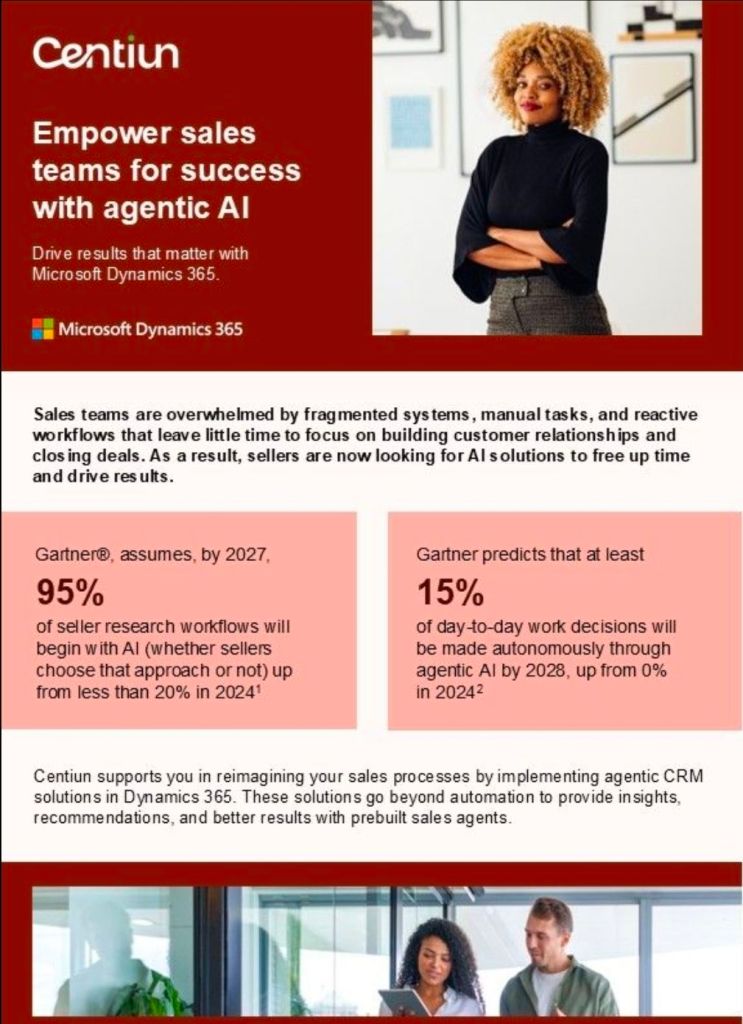
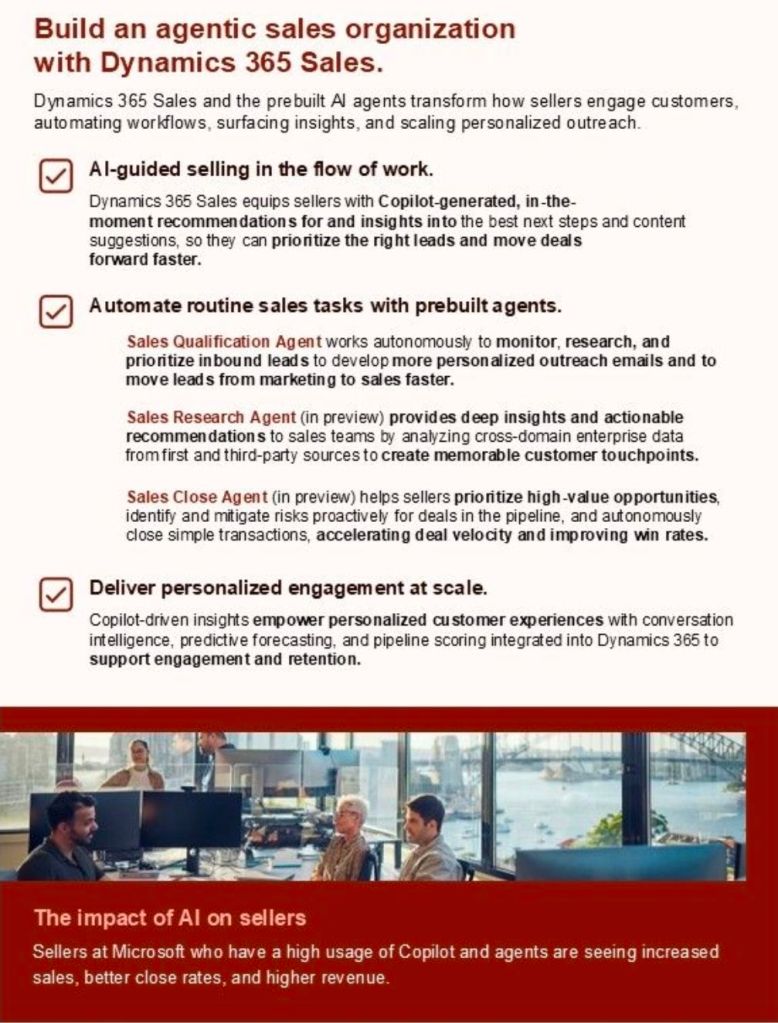
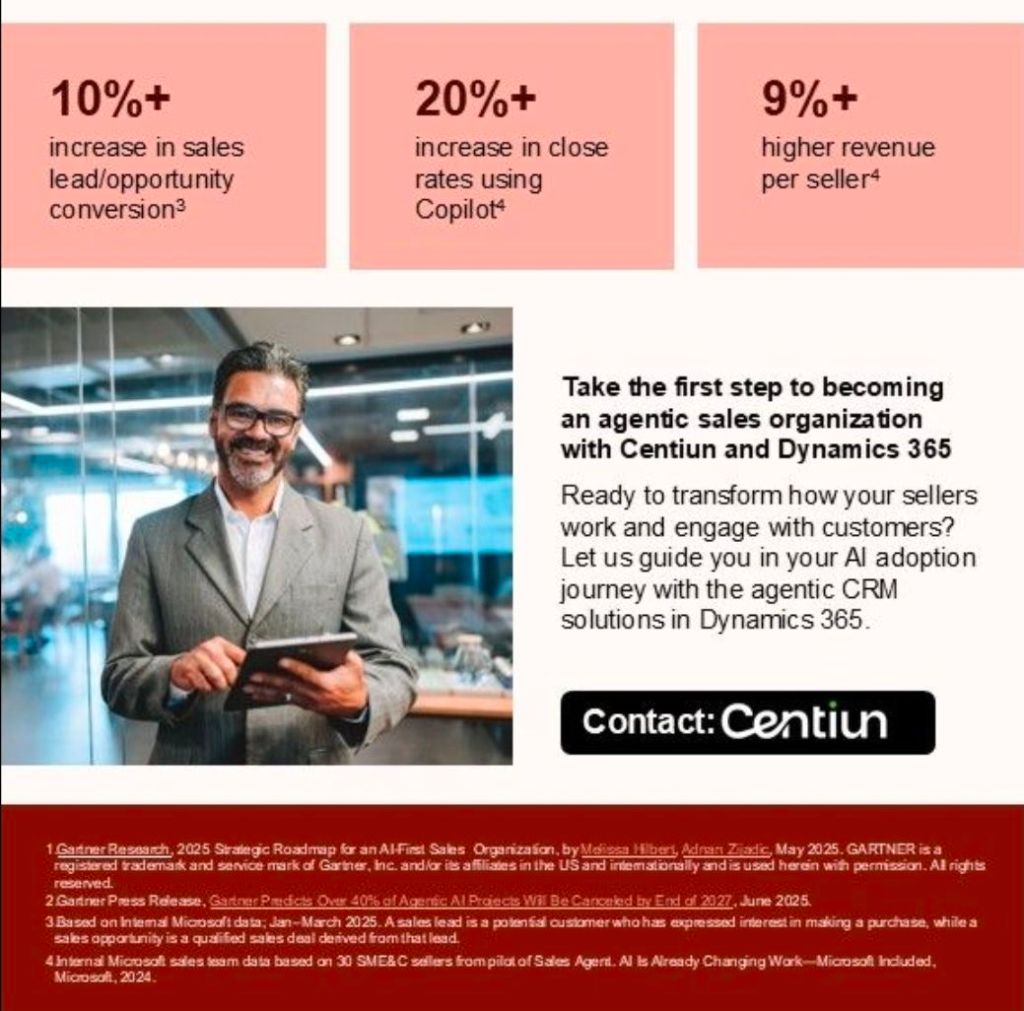
Centiun MS Business Applications and AI Specialists

Centiun Company Overview

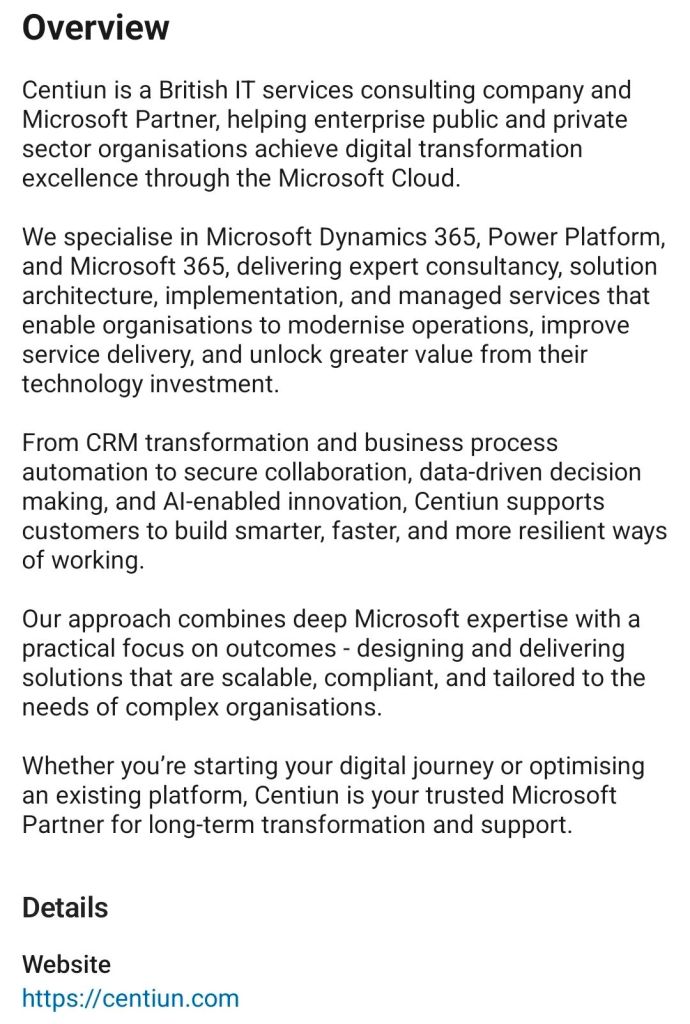
Centiun is a British IT services consulting company and Microsoft Partner, helping enterprise public and private sector organisations achieve digital transformation excellence through the Microsoft cloud.

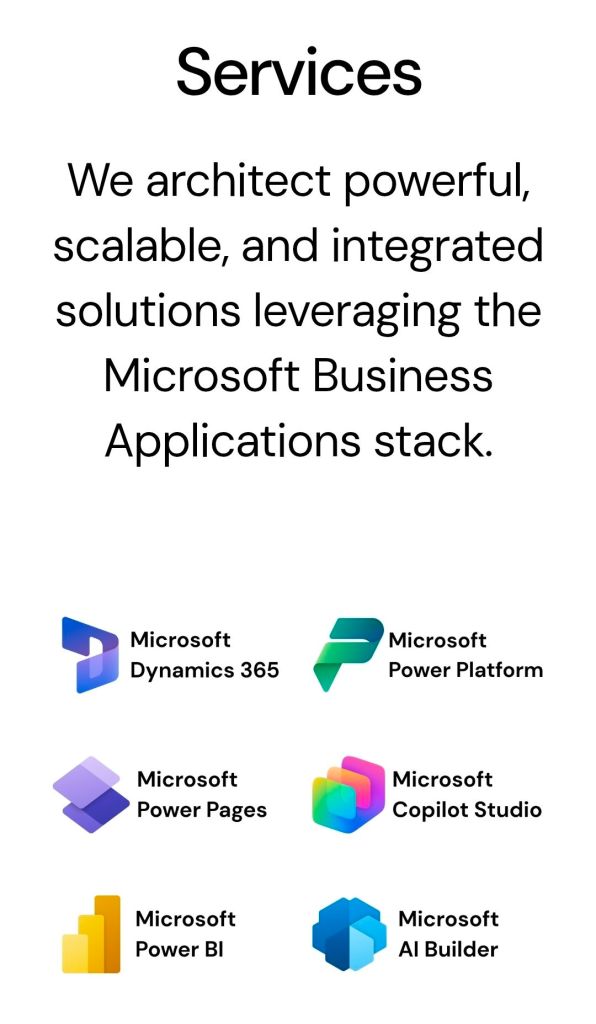
We specialise in Microsft Dynamics 365, Power Platform, and Micrisoft 365, delivering expert consultancy, solution architecture, implementation, and managed services that enable organisations to modernise operations, improve service delivery, and unlock greater value from their technology investment.

Centiun MS Business Applications and AI Specialists

From CRM transformation and business process automation to secure collaboration, data-driven decision making, and AI enabled innovation, Centiun supports customers to build smarter, faster and more resilient ways of working.

Our approach combines deep Microsoft expertise with a practical focus on outcomes – designing and delivering solutions that are scalable, compliant, and tailored to the needs of complex organisations.

Whether you’re starting your digital journey or optimising an existing platform, Centiun is your trusted Microsoft for long-term transformation and support.

Websitehttps://centiun.com

On LinkedInhttps://www.linkedin.com/company/centiun/

Email: info@centiun.com

Centiun MS Business Applications and AI Specialists

Centiun Limited is a UK-based technology consultancy that specialises in digital transformation and Microsoft Business Applications. Incorporated on 30 October 2025, the company operates as a Microsoft AI Cloud Partner, helping organisations modernise infrastructure and adopt AI-driven workflows. 

Core Services

Centiun provides a range of strategic and technical services focused on the Microsoft ecosystem: 

  • Business Applications: Implementing and automating processes using Microsoft Dynamics 365 and Power Platform.
  • Cloud Migration: Transitioning legacy systems to secure cloud environments to enhance scalability.
  • AI Readiness: Preparing businesses to integrate tools like Microsoft Copilot and agentic AI for sales and customer service.
  • Managed Services: Providing ongoing support, maintenance, and technical governance. 

Target Industries

The firm tailors its solutions for several sectors, including:

  • Public Sector: Central government and non-departmental public bodies.
  • Healthcare: Public and private healthcare project delivery.
  • Nonprofit: Cost-effective digital solutions for charitable organisations.
  • Financial Services: Fintech, insurance, and banking services requiring high regulatory precision. 

Key Company Facts

  • Location: Headquartered at Cheadle Royal Business Park, Cheshire, England.
  • Leadership: Directed by Kieran Gerard Holmes.
  • Compliance: Registered with the Information Commissioner’s Office (ICO) for data protection and holds Cyber Essentials certification.

Centiun is a specialized Microsoft AI Cloud Partner that focuses on modernizing business operations through the Microsoft Business Applications stack, primarily Microsoft Dynamics 365 and the Power Platform. Based in Cheshire, UK, they provide a range of services from AI readiness and digital transformation to managed support for small and medium-sized enterprises (SMEs). 

……….

Centiun Microsoft Dynamics Overview

Centiun offers tailored implementation and support for the full suite of Microsoft Dynamics 365 applications, which unify CRM (Customer Relationship Management) and ERP (Enterprise Resource Planning) capabilities. 

  • Core Applications Supported:
    • Sales & Marketing: Tools like Dynamics 365 Sales and Customer Insights to manage leads, automate marketing journeys, and provide a 360-degree view of customer data.
    • ServiceCustomer Service and Field Service modules to improve resolution efficiency and enhance overall customer experience.
    • ERP & Operations: Streamlining finance, supply chain, and HR processes using scalable cloud environments.
  • Key Service Pillars:
    • Digital Transformation: Modernising legacy systems and digitising paper forms into secure digital records.
    • AI Integration: Implementing Microsoft Copilot and predictive analytics to automate routine tasks and enhance decision-making.
    • Data Governance: Ensuring all customer interactions are GDPR compliant and stored in secure, audit-ready systems.
    • Managed Services: Providing SLA-compliant support and maintenance to ensure systems remain evergreen and secure. 

Centiun Partner Timeline (2025–2026) 

While Centiun’s experts have over 20 years of combined experience with Microsoft applications, the company itself reached several major official milestones recently: 

  • 2025
    • August: Published guidance on Digitising Paper Forms to help organisations move away from manual processes.
    • September: Centiun officially registered with the Information Commissioner’s Office (ICO) to ensure data protection compliance.
    • October: Achieved the nationally recognised Cyber Essentials Certification, demonstrating commitment to cybersecurity.
    • October: Centiun Limited was officially incorporated as a private limited company.
    • November: Appointed as an official Crown Commercial Service Supplier, allowing them to provide services to the UK public sector.
    • December: Announced a strategic partnership with Pax8 to further enhance their cloud-based solution delivery.
  • 2026
    • January: Launched specialized App Modernisation services to help businesses revitalize legacy infrastructure.
    • February: Reaffirmed their mission as a digital partner for sustainability and efficiency for SMEs. 

Microsoft Dynamics 365 Timeline History by Year

Microsoft Dynamics 365 as it exists today is the result of decades of acquisitions and rebranding, primarily involving four Enterprise Resource Planning (ERP) systems and one Customer Relationship Management (CRM) platform. 

The Pre-Microsoft Era (1980s – 2001)

The foundations of Dynamics were built by independent companies before being acquired by Microsoft. 

  • 1980: Solomon Software is founded (later becomes Dynamics SL).
  • 1983: Great Plains Software is founded by Doug Burgum (later becomes Dynamics GP).
  • 1983: Damgaard Data is founded in Denmark (later becomes Dynamics AX).
  • 1984: PC&C A/S is founded (later becomes Dynamics NAV).
  • 1998: Damgaard and IBM release Axapta 1.0.
  • 2000: Damgaard merges with Navision Software to form NavisionDamgaard.
  • 2001: Microsoft acquires Great Plains Software (including Solomon) for $1.1 billion. 

The Early Microsoft Dynamics Era (2002 – 2011)

During this period, Microsoft unified its business applications under the “Dynamics” brand. 

  • 2002: Microsoft acquires Navision A/S, gaining the Axapta and Navision products.
  • 2003: Microsoft releases its first home-grown CRM, Microsoft CRM 1.0.
  • 2005: The Microsoft Dynamics brand is officially launched to harmonize the ERP and CRM offerings.
  • 2008Dynamics CRM Online is launched, marking Microsoft’s first major step into cloud-based business apps.
  • 2011Dynamics CRM 2011 and Dynamics AX 2012 are released, introducing a more modern “Ribbon” interface. 

The Transition to the Cloud (2012 – 2015)

Microsoft shifted toward a “cloud-first” strategy and rapid release cycles. 

  • 2013Dynamics CRM 2013 debuts with a new UI that removes pop-up windows and introduces a flatter design.
  • 2015Dynamics NAV 2016 introduces native integration with Azure SQL and a dedicated phone client. 

The Dynamics 365 Era (2016 – Present)

Microsoft unified CRM and ERP into a single cloud ecosystem. 

  • 2016Microsoft Dynamics 365 is officially released on November 1, 2016.
    • Dynamics AX 7 is rebranded as Dynamics 365 for Operations.
    • CRM is split into specialized apps like SalesCustomer Service, and Field Service.
  • 2018Dynamics 365 Business Central is released as the cloud successor to Dynamics NAV.
  • 2019: Power Platform (Power BI, Power Apps, Power Automate) becomes deeply integrated, allowing users to extend Dynamics 365 without code.
  • 2020: Dynamics 365 for Operations is split into Dynamics 365 Finance and Dynamics 365 Supply Chain Management.
  • 2023: Re-integration of Dynamics 365 Human Resources back into the Finance and Operations infrastructure.
  • 2024–2025: The introduction of Microsoft Copilot across all Dynamics 365 apps, adding generative AI for summaries and automated tasks.

Microsoft Dynamics 365 Timeline History by Year

Microsoft Power Platform Development Timeline Overview

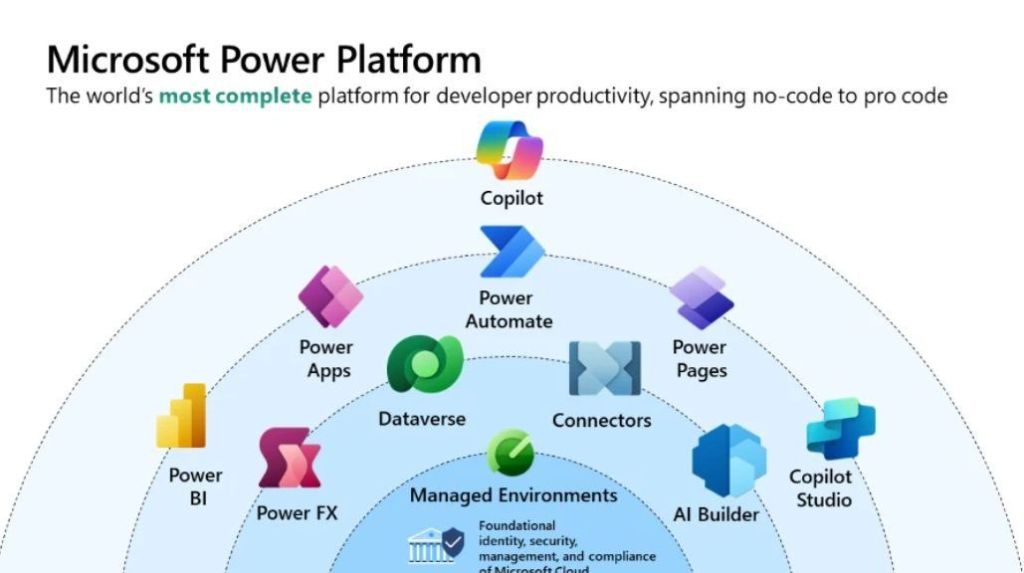
Microsoft Power Platform is a suite of low-code tools designed to help organizations analyze data, build custom solutions, automate processes, and create AI-powered agents. It enables both professional developers and “citizen developers” (business users) to rapidly build end-to-end business applications that integrate with the broader Microsoft Cloud ecosystem

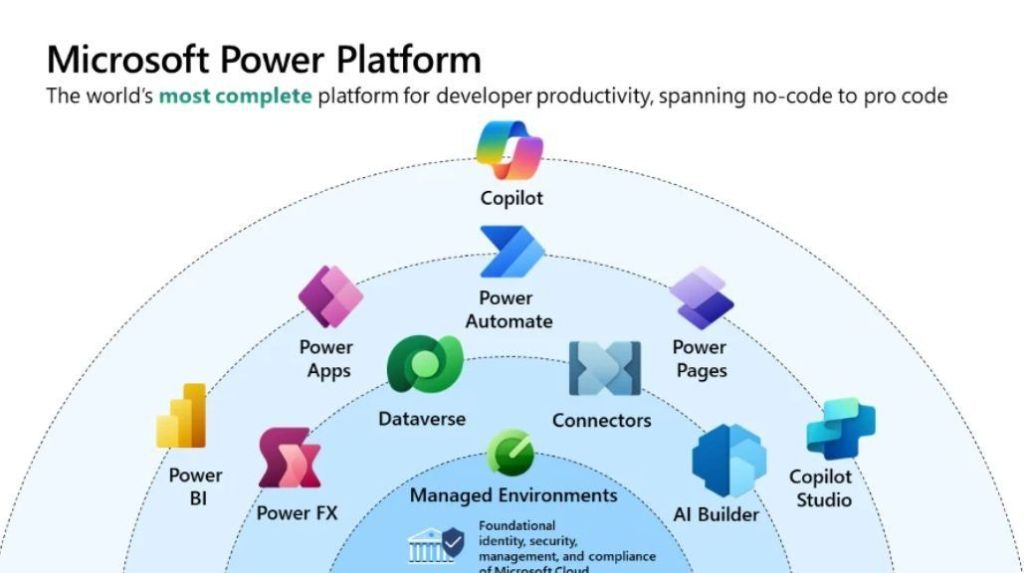
Microsoft Power Platform

Core Product Areas

The platform consists of five primary applications: 

  • Power BI: A business analytics tool for data visualization and interactive reporting.
  • Power Apps: A low-code development environment for building custom web and mobile business applications.
  • Power Automate: A service for workflow automation and robotic process automation (RPA).
  • Power Pages: A platform for creating and hosting secure, external-facing business websites.
  • Copilot Studio: A graphical tool for building and customizing AI-powered agents and chatbots. 

Underlying Capabilities

The platform’s strength lies in its shared infrastructure: 

  • Microsoft Dataverse: A secure, cloud-scale data store that provides a common data model for all Power Platform apps.
  • Connectors: Over 1,000 prebuilt integrations that allow apps to communicate with external data sources like SAP, Salesforce, and Google Analytics.
  • AI Builder: A capability that allows users to add AI models (e.g., sentiment analysis or object detection) to their apps and flows without writing code.
  • Power Fx: A low-code, strongly-typed programming language used for expressing logic across the platform.

The Microsoft Power Platform has evolved from individual components like Power BI and Power Apps into a unified suite, now heavily integrated with Copilot and AI

Origins & Early Growth (2013–2018)

  • 2013Power BI is first released as an Excel add-in before becoming a standalone service in 2015.
  • 2015Power Apps enters public preview as a low-code tool for building business applications.
  • 2016Microsoft Flow (now Power Automate) is launched to provide workflow automation across apps and services.
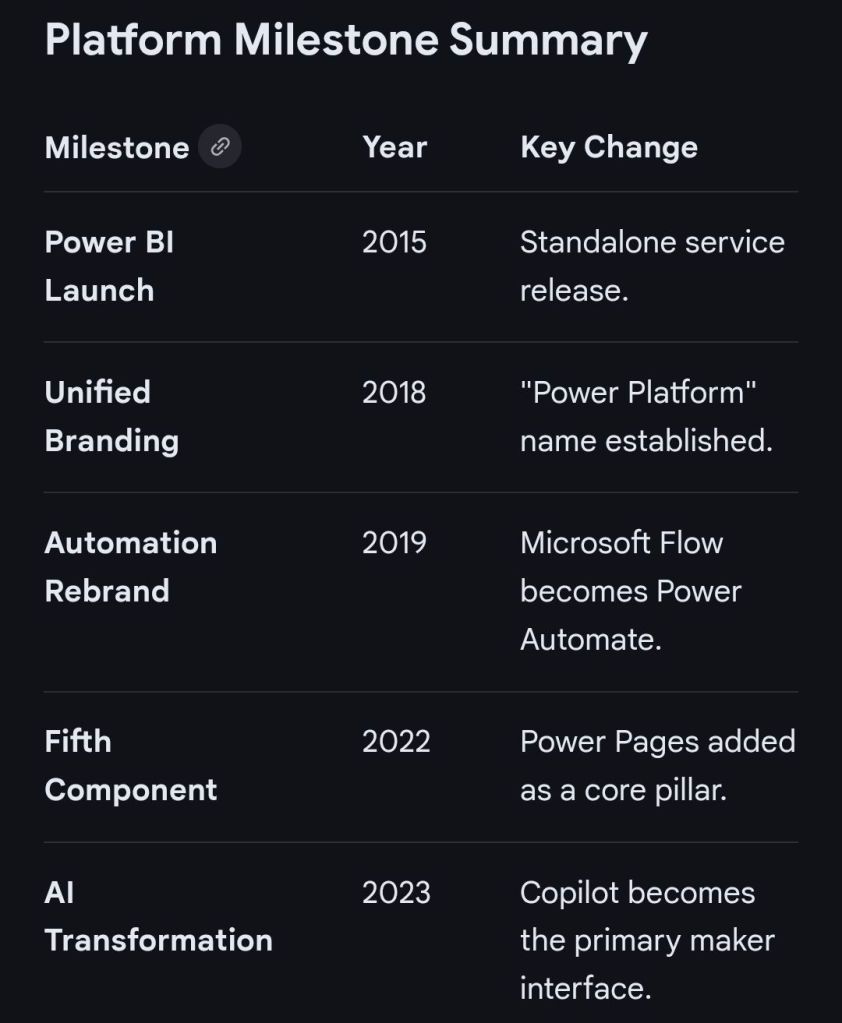
  • 2018: The term “Microsoft Power Platform” is officially introduced to unify Power BI, Power Apps, and Flow. 

Expansion & Rebranding (2019–2022)

  • 2019Power Virtual Agents is added to the suite for creating no-code chatbots. Microsoft Flow is rebranded as Power Automate.
  • 2020: Launch of Power BI Premium per user and the Dataverse (formerly Common Data Service) rebranding.
  • 2021Power Fx, an open-source formula language based on Excel, is introduced as the standard language across the platform.
  • 2022Power Pages is launched as the fifth standalone product for building secure, low-code business websites. 

The AI & Copilot Era (2023–Present)

  • 2023: Integration of Copilot across all Power Platform products, allowing users to build apps, flows, and reports using natural language.
  • 2024: Introduction of Timeline Highlights in Power Apps to provide AI-generated summaries of record activities.
  • 2025: Microsoft announces the retirement of the Power Apps per app plan (January) and ends support for contact tracking in the Dynamics 365 App for Outlook (October).
  • 2026: The 2026 Release Wave 1 begins (April–September), focusing on deeper Role-based Copilot offerings and enhanced security agents.
Microsoft Power Platform Milestone Summary

The Microsoft Power Platform originated from Microsoft’s effort to democratise data and app development by evolving its existing business tools into a unified low-code ecosystem

Origins and Evolution (2003–2015)

The platform’s roots trace back to early business solutions that were eventually merged into the modern suite: 

  • Dynamics CRM 1.0 (2003): The foundation for what became the Microsoft Dataverse (formerly Common Data Service), providing a secure relational database.
  • Project Siena (2013): A “garage project” at Microsoft aimed at building web apps without professional coding tools. This project eventually became Power Apps.
  • Power BI Launch (2015): Originally “Project Crescent” for SQL Server, Power BI was the first of the modern “Power” services to be delivered, entering preview in January 2015. 

Expansion and Formalisation (2016–2019) 

Microsoft transitioned from individual tools to an integrated platform: 

  • Power Apps and Flow (2016): Power Apps and Microsoft Flow (later renamed Power Automate) became generally available in November 2016.
  • Common Data Service (2016): Introduced to provide a shared data platform across Dynamics 365 and the new “Power” tools.
  • Official Branding (2018–2019): The term “Microsoft Power Platform” was officially established as an umbrella brand for the suite of tools. In 2019, Microsoft Flow was rebranded to Power Automate to align with the platform’s naming convention. 

Modern Era and AI Integration (2020–Present) 

The platform has shifted toward “AI-first” development and expanded its core pillars: 

  • New Components: Power Virtual Agents (now Copilot Studio) and Power Pages (for external websites) were added to the core lineup.
  • Acquisitions: Microsoft acquired Softomotive (2020) and Minit (2022) to bolster Power Automate with Robotic Process Automation (RPA) and process mining capabilities.
  • Generative AI: Recent updates have focused on integrating Copilots across all products, allowing users to build apps and automations using natural language. 

Microsoft Power Platform Development Timeline Overview

Microsoft Dynamics 365 Timeline

Top Open Content Management CMS OCM Solutions in 2026

In 2026, the landscape for open content management solutions is defined by a shift toward headless architecturesAI-native workflows, and high-security frameworks for regulated sectors. While established players remain dominant, newer platforms are gaining ground by treating content as structured data for omnichannel delivery. 

Top Open-Source CMS Solutions

These platforms are the most prominent open-source options available in 2026, often used as the foundation for both simple sites and complex enterprise architectures. 

  • WordPress: Remains the global leader, powering over 42.8% of all websites. The 2026 updates have modernised the platform with real-time collaboration features similar to Google Docs and significant performance gains in its core editor. This particular website is built using WordPress, https://mark-whitfield.com
  • Strapi: A leading headless CMS preferred by developers for its API-first design. Strapi 5 features a complete TypeScript migration and a new “Document Service API” that simplifies frontend integration.
  • Drupal: The primary choice for high-security environments like government, healthcare, and higher education. Drupal 11 (released in late 2024) and upcoming updates in 2026 focus on modernising its technical stack with newer Symfony components.
  • Joomla: Serves as a “middle-ground” option, offering more native structural control than WordPress without the extreme complexity of Drupal. It features native support for 70+ languages without needing additional plugins.
  • Ghost: A specialized Node.js platform for modern publishing and newsletters. Ghost 6.0 introduced native analytics and networked publishing, achieving extremely fast load times of under 0.7 seconds.
  • TYPO3: Highly favoured by European enterprises for multi-site management. Its “Site Sets” functionality allows reusable configurations across thousands of sub-sites from a single installation. 

Key 2026 Evaluation Criteria

When choosing a solution in 2026, organizations are prioritizing the following:

Feature Trend for 2026

AI Integration, Shift from simple text generation to Agentic AI that can automate workflows, update metadata, and audit content autonomously.

Architecture Hybrid Headless is the “sweet spot” for mid-market companies, combining API-driven delivery with visual editing for marketers.

Security, Adherence to modern standards like NIST SP 800-53 and OWASP Top 10:2025 is critical, especially regarding supply chain security in plugin ecosystems.

Performance, Core Web Vitals targets have tightened, with top platforms aiming for a Largest Contentful Paint (LCP) under 2.5 seconds.

Specialized Alternatives

  • For E-commerceShopify remains the dominant SaaS choice, while WooCommerce (open-source) is the top pick for those wanting full ownership.
  • For Design-Centric TeamsWebflow and Wix Studio are leading the “visual-first” CMS market, though they are proprietary SaaS models rather than open-source.
  • For Advanced Content OpsSanity is increasingly viewed as a “Content Operating System” rather than a traditional CMS, focusing on content as programmable data for AI applications. 

Open content management (OCM) refers to platforms that allow for flexible, open-source, or highly integrated digital content and change management. Below is a timeline of the top open solutions based on their market entry and evolution into 2026

Open Content Management (OCM) Evolution Timeline

  • 1998: TYPO3 Release
    • One of the earliest enterprise-class open-source CMS platforms, known for its scalability and multilingual support.
  • 2001: Drupal Launch
    • Established as a highly flexible, community-driven framework.
    • By 2026, it remains a top choice for complex, large-scale enterprise websites due to its modular design.
  • 2003: WordPress and Textpattern
    • WordPress: Initially a blogging tool, it evolved into the world’s most popular CMS, powering over 43% of websites including this site, https://mark-whitfield.com
    • Textpattern: Launched as a simple, elegant open-source alternative for content creators.
  • 2005: Joomla! and Alfresco
    • Joomla!: Released as a user-friendly but powerful open-source CMS, balancing flexibility with ease of use.
    • Alfresco: Introduced as an open-source Enterprise Content Management (ECM) system, focusing on document management and information governance.
  • 2008: Magento (Adobe Commerce)
    • Launched as a specialized open-source platform for e-commerce content management.
  • 2009: Nuxeo and dotCMS
    • Nuxeo: Entered the market as a cloud-native, open-source ECM platform designed for complex content lifecycles.
    • dotCMS: Released as a Java-based hybrid CMS that bridges traditional and headless content delivery.
  • 2013–2015: Rise of Headless & Modern OCM
    • Ghost (2013): A modern, open-source “headless” CMS specifically for professional publishing and newsletters.
    • Backdrop CMS (2015): A Drupal fork aimed at providing a more accessible path for small-to-medium organizations.
  • 2020–2026: Integrated & AI-Driven OCM
    • OCM Solution (OCMS Portal): Emerged as a leading modern platform for Organizational Change Management (OCM), providing open templates and digital tools for tracking business transformation.
    • Strapi & TinaCMS: Gained popularity as developer-first, open-source headless solutions for modern web applications.
    • Drupal CMS (2026): A new, simplified version of Drupal designed to be more accessible for non-developers while maintaining its “open” core. 

Top Open Content Management OCM CMS Solutions in 2026

Centiun Microsoft Business Applications and AI Specialists

Websitehttps://centiun.com

Centiun Microsoft Business Applications and AI Specialists

Centiun Overview

Centiun is a British IT services consulting company and Microsoft Partner, helping enterprise public and private sector organisations achieve digital transformation excellence through the Microsoft cloud.

We specialise in Microsft Dynamics 365, Power Platform, and Micrisoft 365, delivering expert consultancy, solution architecture, implementation, and managed services that enable organisations to modernise operations, improve service delivery, and unlock greater value from their technology investment.

From CRM transformation and business process automation to secure collaboration, data-driven decision making, and AI enabled innovation, Centiun supports customers to build smarter, faster and more resilient ways of working.

Our approach combines deep Microsoft expertise with a practical focus on outcomes – designing and delivering solutions that are scalable, compliant, and tailored to the needs of complex organisations.

Whether you’re starting your digital journey or optimising an existing platform, Centiun is your trusted Microsoft for long-term transformation and support.

Website: https://centiun.com

On LinkedIn: https://www.linkedin.com/company/centiun/

Email: info@centiun.com

Centiun services
Centiun Microsoft Business Applications and AI Specialists

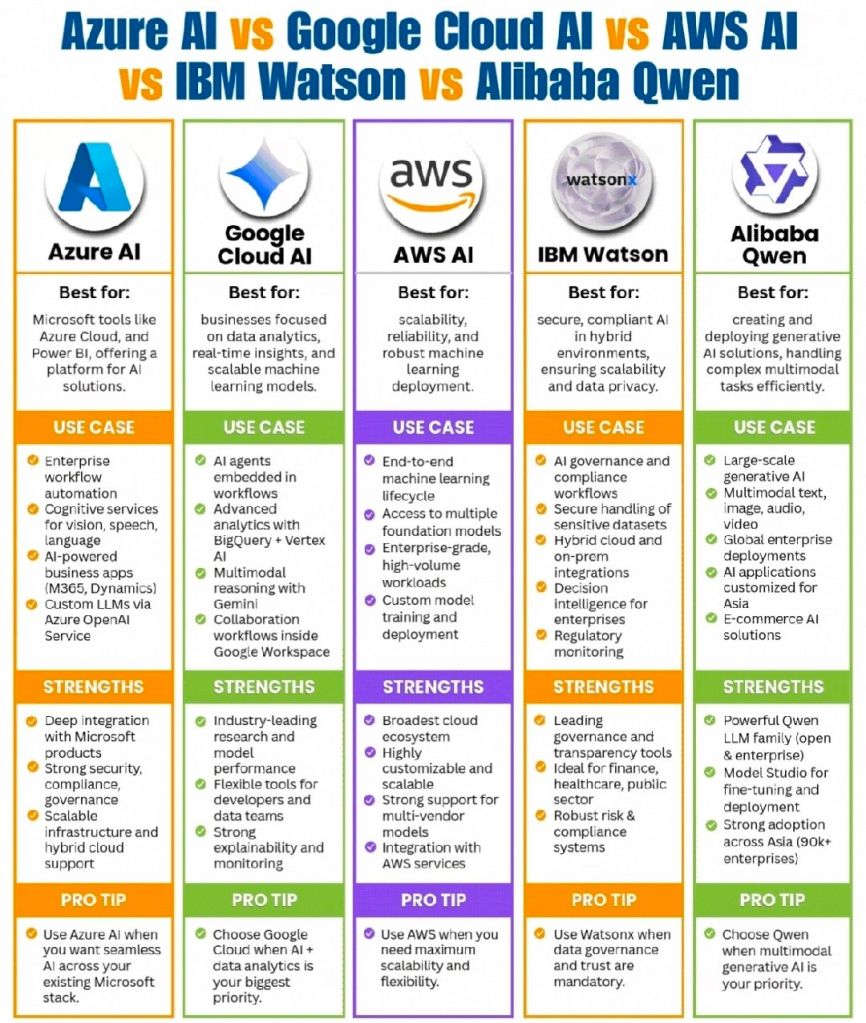
Azure AI vs Google Cloud AI vs AWS AI vs IBM Watson vs Alibaba Qwen

Azure AI vs Google Cloud AI vs AWS AI vs IBM Watson vs Alibaba Qwen

Microsoft Word Development Timeline History

Microsoft Word has evolved from a niche tool for Xerox programmers into the world’s most dominant word processor. Below is the comprehensive history of its development and key milestones

Templates available for download at website banner

The Early Years (1980s)

  • 1981: Microsoft hires Charles Simonyi and Richard Brodie, former Xerox PARC developers, to create a word processor.
  • 1983 (October): The first version, Multi-Tool Word, is released for Xenix and MS-DOS.
  • 1985: Word for Macintosh is released, introducing the GUI (Graphical User Interface) that would define its future.
  • 1989: The first version of Word for Windows debuts, setting the stage for its commercial dominance. 

The Rise to Dominance (1990s)

Templates available for download at website banner
  • 1990: With the release of Windows 3.0, Word becomes a massive commercial success.
  • 1993: Word 6.0 is released, skipping versions 3, 4, and 5 to synchronise version numbers across platforms.
  • 1995: Word 95 launches as part of the first Microsoft Office suite, moving to a year-based naming convention.
  • 1997: Word 97 introduces the infamous “Clippy” assistant and the standard .doc format that would last for a decade. 

Modernisation & The Ribbon (2000s) 

  • 2003: Word 2003 introduces XML-based formats and better collaboration tools.
  • 2007: A massive overhaul introduces the Fluent User Interface (the Ribbon) and the new .docx (Office Open XML) file format.
  • 2010: Word 2010 adds more customisation to the Ribbon and introduces the Backstage view for file management. 

Cloud & AI Era (2011–Present)

  • 2011: Office 365 is launched, shifting Word toward a subscription-based, cloud-first model.
  • 2013: Introduces better PDF editing and Read Mode.
  • 2014-2016: Real-time collaboration and Smart Lookup are added, allowing users to research directly within the document.
  • 2021: AI-powered writing suggestions and better dark mode are introduced.
  • 2024: Integration with Microsoft Copilot allows for AI-generated drafts, summaries, and advanced editing.

Microsoft Word Development Timeline History

Capgemini C&CA UKs Communications and Engagement Award Winner – Cloud and Custom Applications

Capgemini C&CA UKs Communications and Engagement Award Winner – Cloud and Custom Applications