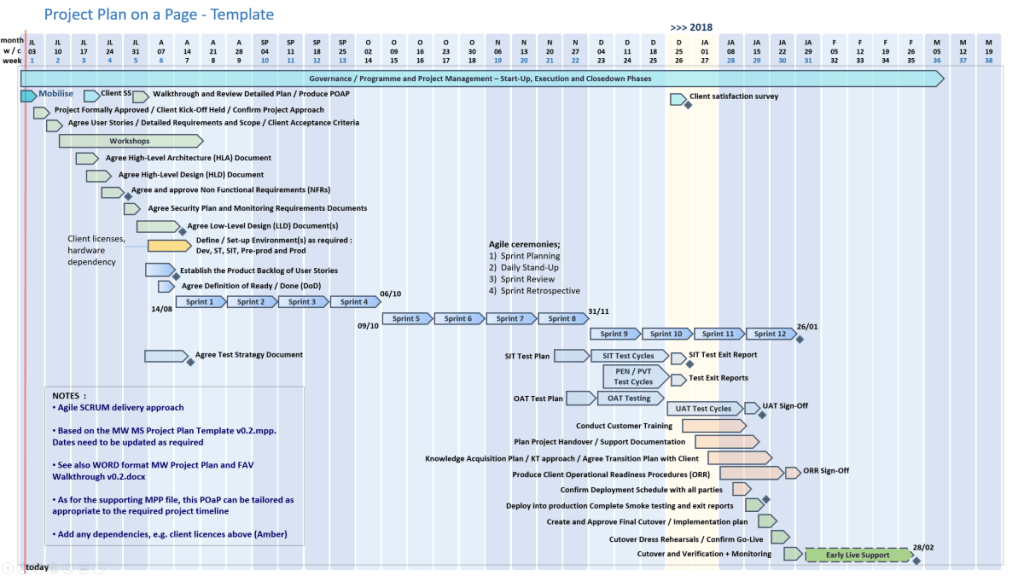
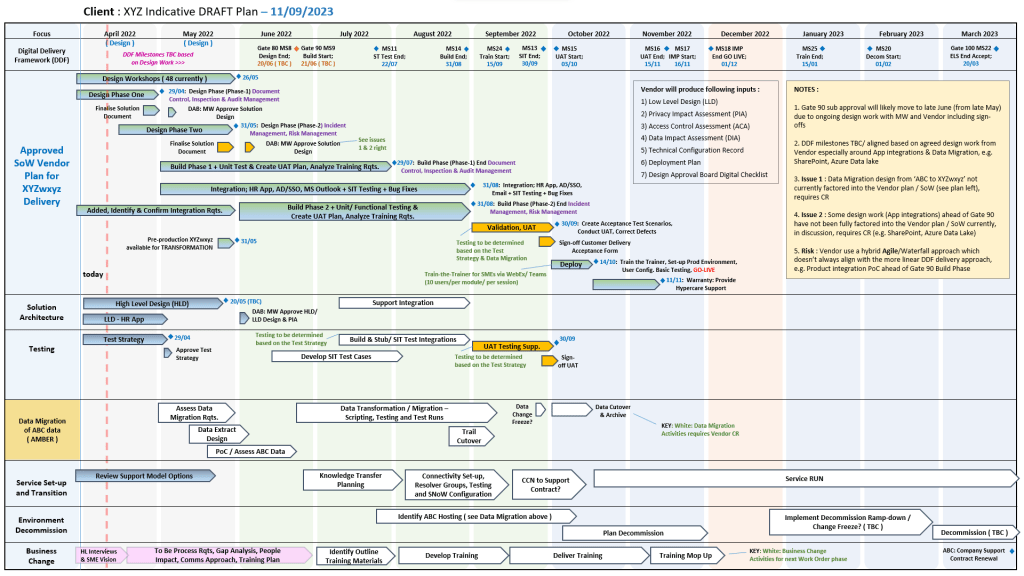
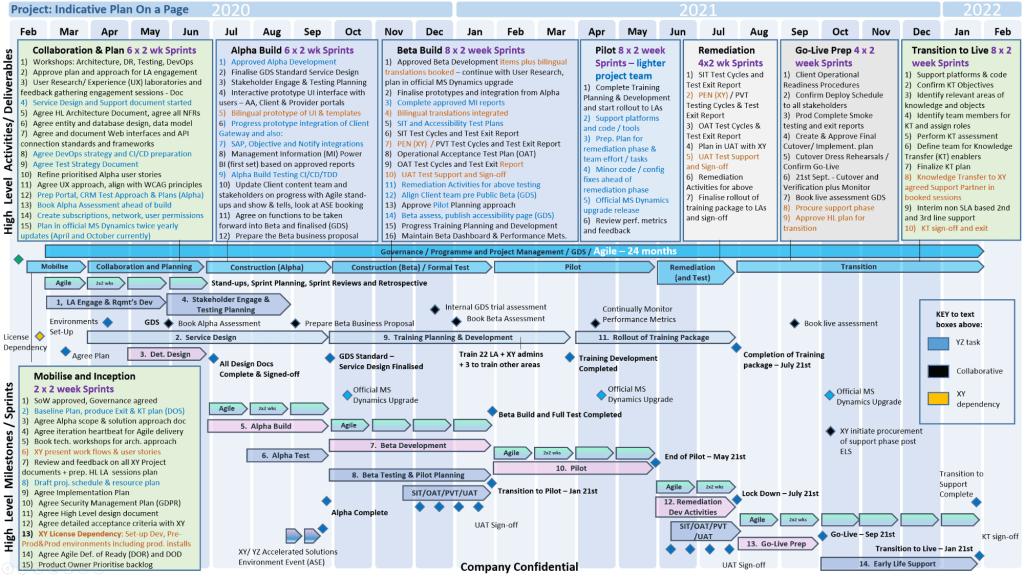
A Plan on a Page (POAP) is a concise, visual summary of a project’s core elements. It distills complex, granular project details into a highly accessible, single-page format.
It acts as an executive summary rather than a replacement for comprehensive, detailed project plans. Example, tailorable Agile and Waterfall MS PowerPoint POaP project templates can be purchased at this link.
🎯 Primary Purpose
- Executive Communication: Provides busy stakeholders and C-level management with rapid visibility into a project’s status without overwhelming them with data.
- Alignment: Ensures teams, sponsors, and stakeholders share a unified understanding of project goals and direction.
- Focus & Risk Management: Keeps the strategic vision front-and-center, prevents teams from getting “lost in the weeds,” and allows leaders to spot high-level risks early.
- Decision Support: Serves as a quick reference guide during steering committee and status meetings.
📝 Content Summary
To fit on a single page, a POAP strips away tactical daily tasks and focuses only on the most critical strategic and timeline components:
- Project Vision & Scope: A concise statement of what the project aims to deliver.
- Objectives & KPIs: Specific, measurable targets and Key Performance Indicators to measure success.
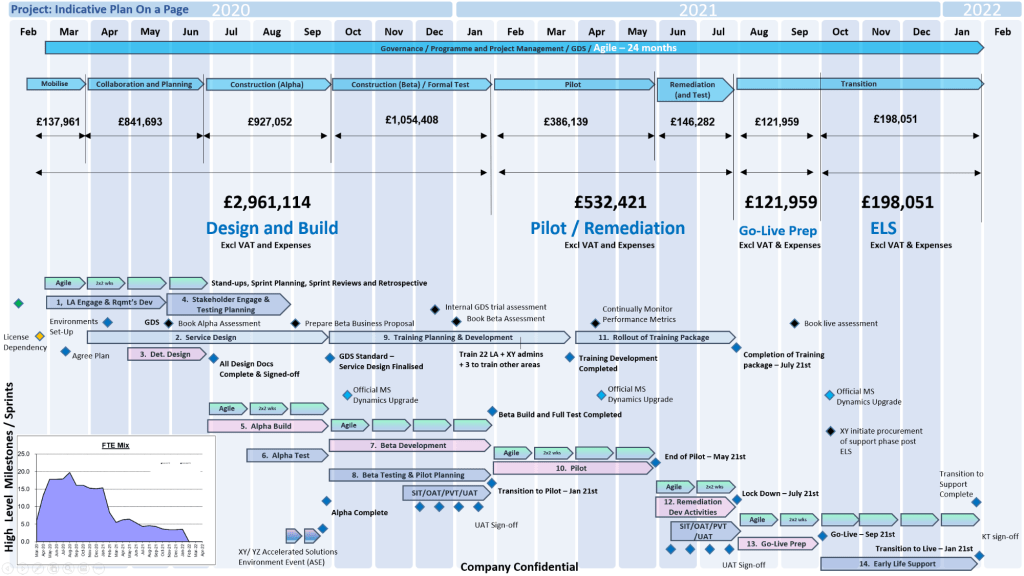
- Visual Timeline: A high-level roadmap, Gantt chart, or phase-based breakdown (e.g., Discovery, Execution, Launch) displaying major milestones.
- Project Health/Status: Current RAG (Red/Amber/Green) status or progress tracking.
- Resource & Budget Allocation: High-level overview of assigned budget and key personnel.
- Risk & Dependencies: Notable blockers, constraints, or critical assumptions.
- Governance & Contacts: The project sponsors, managers, and the best way to get support.