The Critical Path Method (CPM) is a foundational project management technique developed in the late 1950s to identify the longest sequence of dependent tasks (the “critical path”) that determines the minimum time needed to complete a project. By focusing on these critical tasks, managers can identify which activities have flexibility (float) and which will delay the entire project if they slip.
Detailed Historical Timeline of CPM
Pre-Development Era (1940-1955): The Need for Speed
- 1940–1943: DuPont develops precursor techniques to manage scheduling challenges during the Manhattan Project.
- Early 1950s: The U.S. Navy recognizes the need for better planning systems for complex, high-stakes defense projects.
Development Era (1956-1959): The Birth of CPM
- 1956: Morgan R. Walker (DuPont) and James E. Kelley Jr. (Remington Rand) begin collaborating to create a new method for managing industrial plant maintenance shutdowns.
- 1957: Walker and Kelley formalize the Critical Path Method (CPM). The technique is first applied to DuPont’s chemical plant projects, saving $1 million in its first year.
- 1958: Simultaneously, the U.S. Navy and Booz Allen Hamilton develop the Program Evaluation and Review Technique (PERT) for the Polaris missile program. The term “critical path” is coined by the PERT team.
- 1959: First paper on the critical path, “Critical-Path Planning and Scheduling,” is published by Kelley and Walker. First computer-based CPM is implemented on UNIVAC computers.
Expansion Era (1960-1979): Industrial Adoption
- 1961: Dr. John Fondahl develops the Precedence Diagramming Method (PDM), a manual “non-computer” alternative to early computer-heavy CPM.
- 1962: The U.S. Department of Defense (DoD) mandates the use of Work Breakdown Structures (WBS) along with network scheduling (PERT/CPM) for projects.
- 1966: CPM is used for the first time in the construction of the World Trade Center Twin Towers in New York City.
- 1970s: CPM moves from chemical and defense sectors to widespread use in construction, engineering, and infrastructure projects.
Computerization Era (1980-1999): The PC Revolution
- 1980s: Advent of personal computers (PCs) allows project management software (like Primavera) to make CPM accessible, removing the need for expensive mainframes.
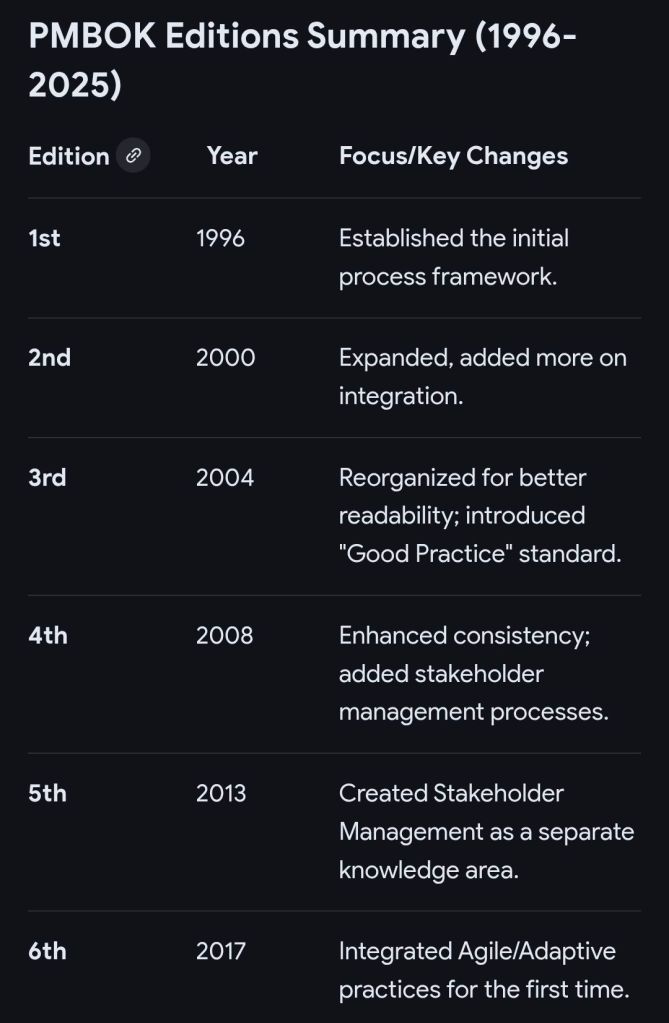
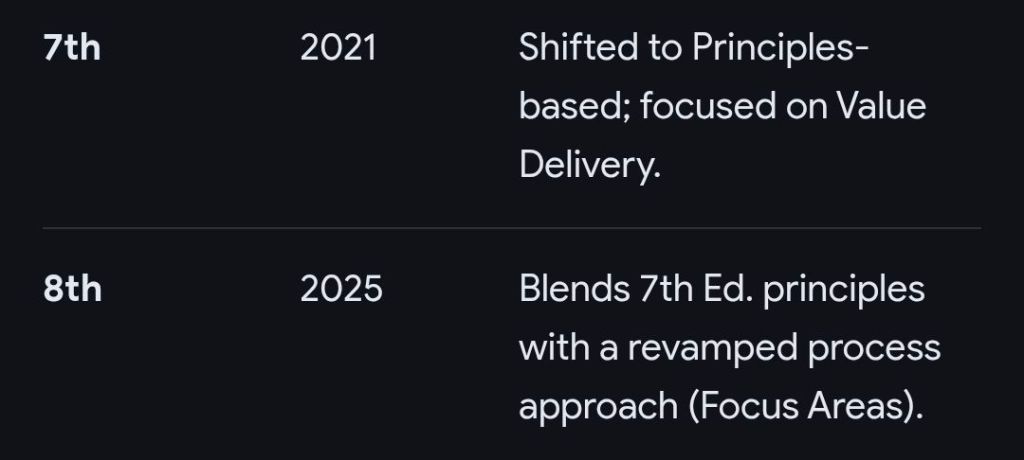
- 1987: The Project Management Institute (PMI) publishes the first Project Management Body of Knowledge (PMBOK Guide), standardizing CPM as a best practice.
- 1997: Eliyahu M. Goldratt introduces Critical Chain Project Management (CCPM), a new method that builds on CPM by focusing on resource limitations rather than just activity sequence.
Digital/Agile Era (2000-Present): Modern Integration
- 2001: The Agile Manifesto is written, introducing iterative, non-critical-path methods for software development.
- 2010s: Hybrid project management becomes popular, combining CPM (for predictable, sequential work) with Agile methods (for unpredictable work).
- Today: CPM algorithms are embedded in modern scheduling software (Microsoft Project, Oracle Primavera, ClickUp), enabling real-time recalculation of the critical path.
Key Components of CPM
- Network Diagram: A visual representation of activities (nodes) connected by dependencies.
- Forward Pass: Calculates the earliest start (ES) and finish (EF) times for tasks.
- Backward Pass: Calculates the latest start (LS) and finish (LF) times for tasks.
- Float Calculation: Determines how long a task can be delayed without affecting the project completion date (Float = LS – ES).
- Critical Path: The path with zero float; any delay in these tasks delays the project.
CPM Critical Path Method project management and detailed historical timeline by era and year