

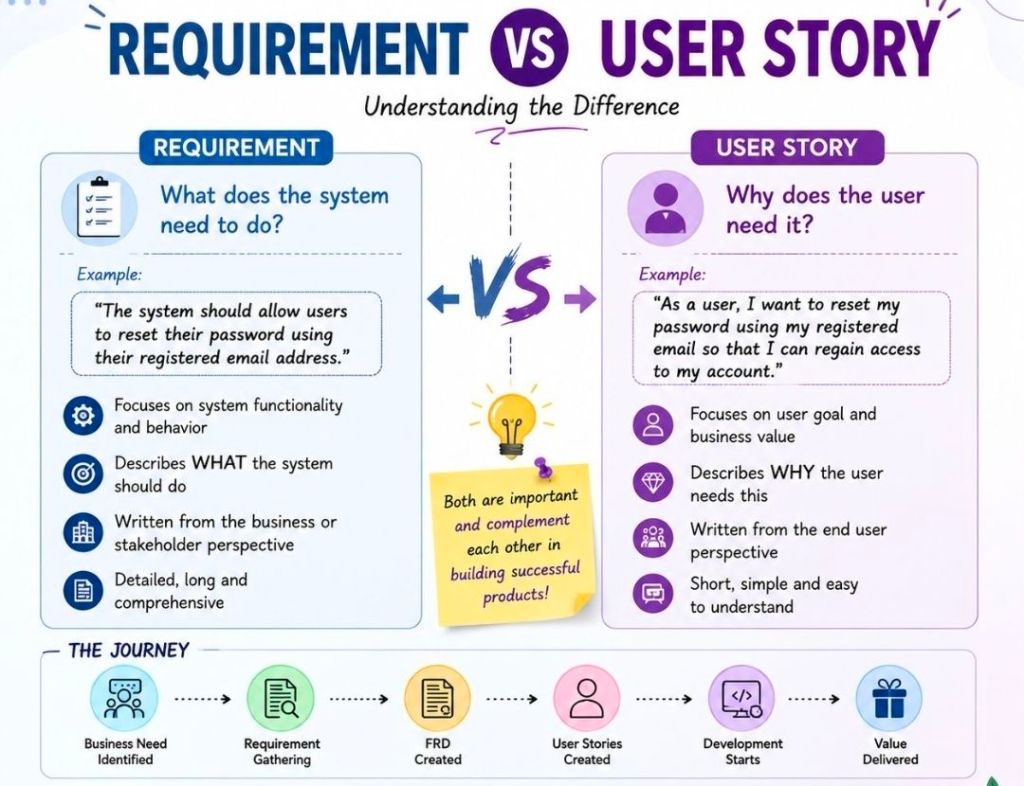
Project requirements are comprehensive, formal specifications describing what a system must do, usually written from the system’s perspective. User stories are short, lightweight descriptions of functionality written from the end-user’s perspective to drive team collaboration and conversation.
The distinction between these two approaches shapes how modern development teams capture scope and value.
Understanding Project Requirements
- Focus: System functionality, technical constraints, and business rules.
- Perspective: Written from the viewpoint of the system or product (e.g., “The system shall generate daily PDF reports.”).
- Format: Heavy documentation, PRDs (Product Requirements Documents), spreadsheets, or flowcharts.
- Methodology: Traditionally used in waterfall methodologies to define the scope comprehensively before any design or development begins.
Understanding User Stories
- Focus: The user’s goal, business value, and the “why” behind a feature.
- Perspective: Written from the viewpoint of the persona using the system (e.g., “As a Sales Manager, I want to review daily signups so that I can prioritize my sales calls.”).
- Format: Short, often using the template: As a [User], I want to [Action], so that [Benefit]. Accompanied by Acceptance Criteria.
- Methodology: An Agile-first tool. They are designed to act as an “invitation to a conversation” rather than a finalized contract.
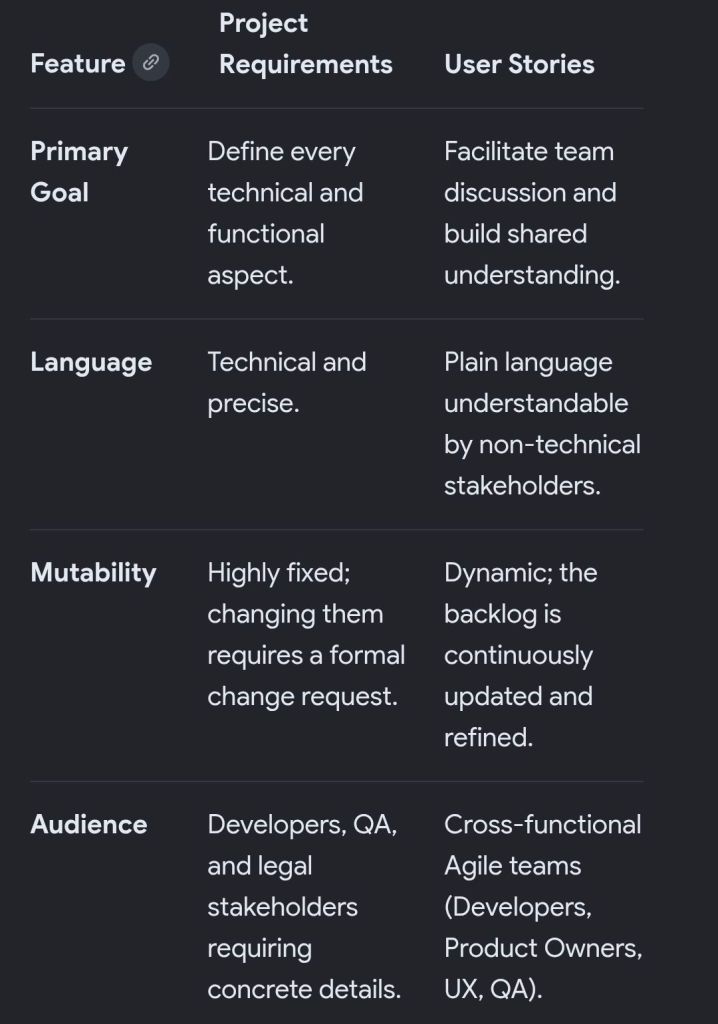
Key Differences at a Glance
How They Work Together (The Hybrid Approach)
Most modern software development teams don’t abandon requirements entirely, but they shift the format. They use lightweight User Stories to represent the core value, and then pair them with technical Acceptance Criteria or supplementary design specifications to clarify the exact requirements the system must satisfy.
Requirement versus User Story


