

HP NonStop (originally Tandem) training focuses on the platform’s unique fault-tolerant architecture, designed to ensure 24×7 availability and data integrity for mission-critical industries like finance and telecommunications. Current training is provided by HPE Education Services, which offers expert-led courses ranging from basic concepts to advanced system management and database administration.
Training Overview
HPE’s curriculum is structured to support IT teams at all levels—from beginners to experienced operators—and can be customised for specific business needs. Key training areas include:
- System Operations: Managing NonStop environments, including S-Series or newer x86-based systems.
- Architecture & Concepts: Understanding fault tolerance, “fail fast” mechanisms, and message-based operating systems.
- Database Management: Specialized courses for NonStop SQL/MX, SQL/MP, and Enscribe.
- Application Development: Training in languages like C/C++, COBOL, and TAL (Transaction Application Language).
- Modern Environments: Transitioning to virtualised instances and hybrid cloud infrastructures.
Detailed course information, including outlines and lab access, is available through the HPE NonStop Compute training portfolio.
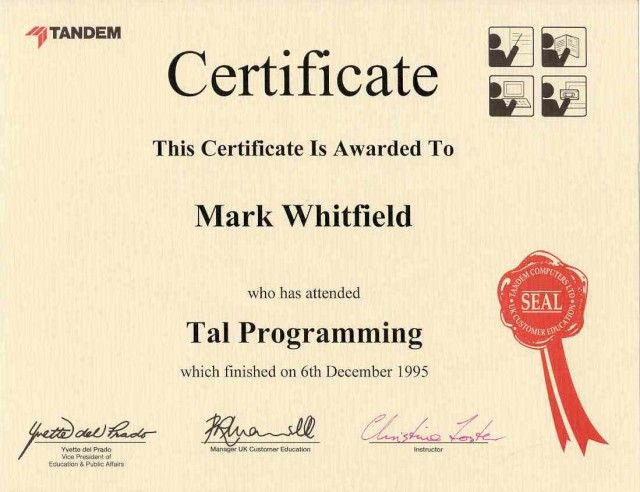
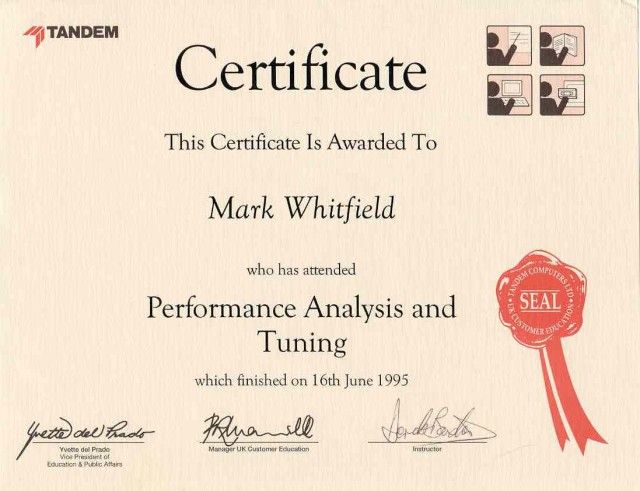
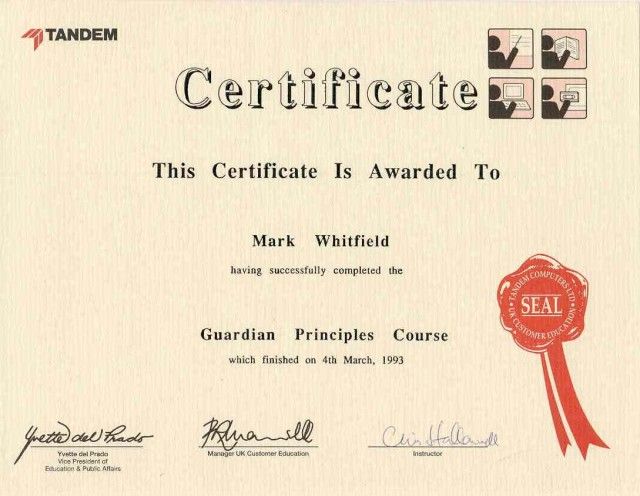
Detailed Textual Timeline: Era & Year
The NonStop platform has undergone three major architectural shifts since its founding.
1. The Tandem Era (1974–1997)
- 1974: Tandem Computers Inc. is founded by James (Jimmy) Treybig.
- 1975: Design of the Tandem/16 (later NonStop I) is completed.
- 1976: The first system is shipped to Citibank, marking the birth of commercial fault-tolerant computing.
- 1981: NonStop II is introduced, adding 32-bit addressing support.
- 1983: NonStop TXP launches as the first new implementation of the instruction set, featuring cache memory.
- 1983: Transaction Monitoring Facility (TMF) and Pathway are introduced, removing the need for applications to be manually coded for fault tolerance.
- 1986: NonStop VLX is released with 32-bit datapaths and NonStop SQL, the first fault-tolerant SQL database.
- 1987: NonStop CLX is introduced for the low-end/distributed market.
- 1989: NonStop Cyclone debuts for high-end mainframe-level performance.
- 1991: Migration to MIPS architecture begins with the Cyclone/R.
- 1993: NonStop Himalaya K-series is released, using native MIPS R4400 processors.
- 1994: Open System Services (OSS) adds a POSIX-compliant environment to the NonStop Kernel.
- 1997: NonStop Himalaya S-Series introduces ServerNet, replacing older bus architectures.
Wikipedia +7
2. The Compaq Era (1997–2002)
- 1997: Compaq acquires Tandem Computers.
- 1999: Zero Latency Enterprise (ZLE) solutions are introduced for real-time information access.
- 2001: Compaq announces the migration of the entire NonStop line to Intel Itanium processors.
3. The HP / HPE Era (2002–Present)
- 2002: HP merges with Compaq, bringing the NonStop division under HP.
- 2005: HP Integrity NonStop (“NonStop i” or TNS/E) is launched, completing the migration to Itanium.
- 2014: NonStop X (TNS/X) is introduced, transitioning the platform to Intel x86-64 architecture.
- 2015: Hewlett-Packard splits; NonStop becomes part of Hewlett Packard Enterprise (HPE).
- 2020: Sales of Itanium-based systems officially end.
- 2023–2024: NonStop evolves to support virtualised instances and deployment on hybrid infrastructures.
HP NonStop Tandem Training provided by HPE Education Services
 PROject Templates