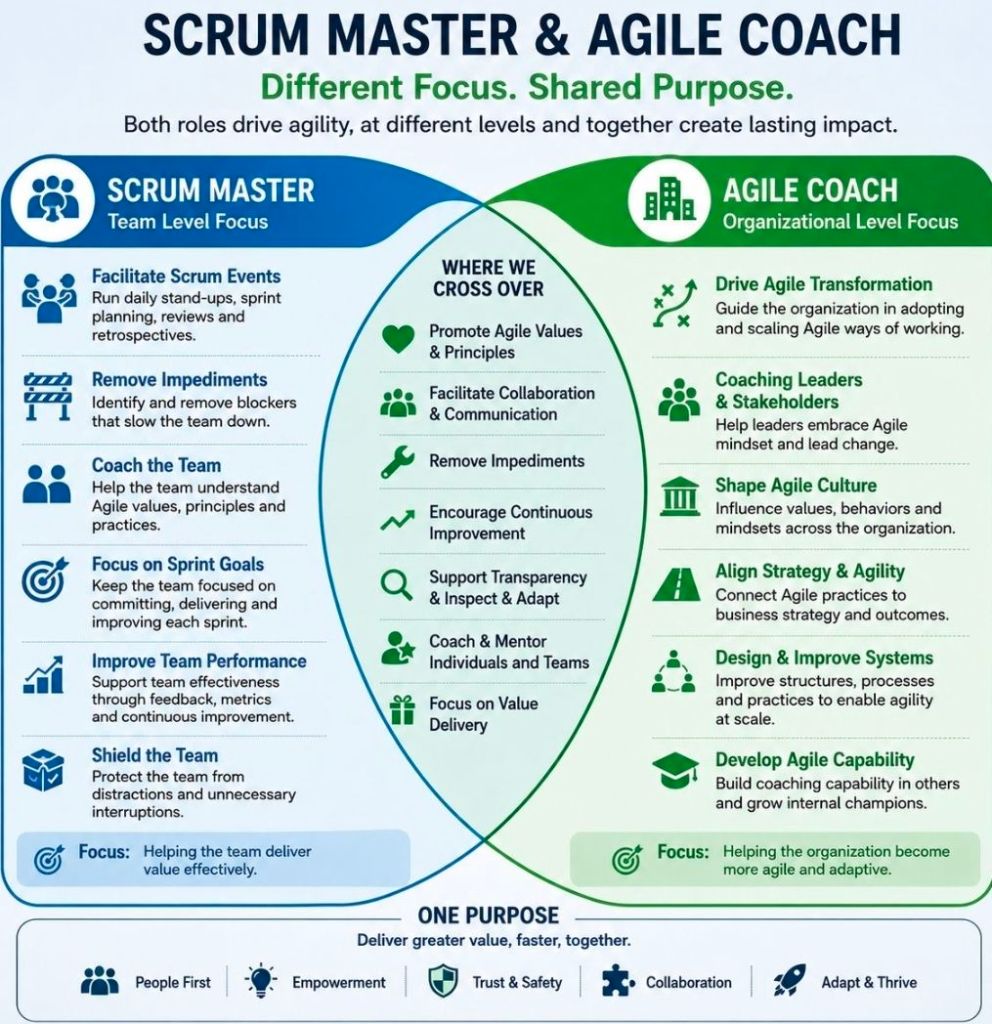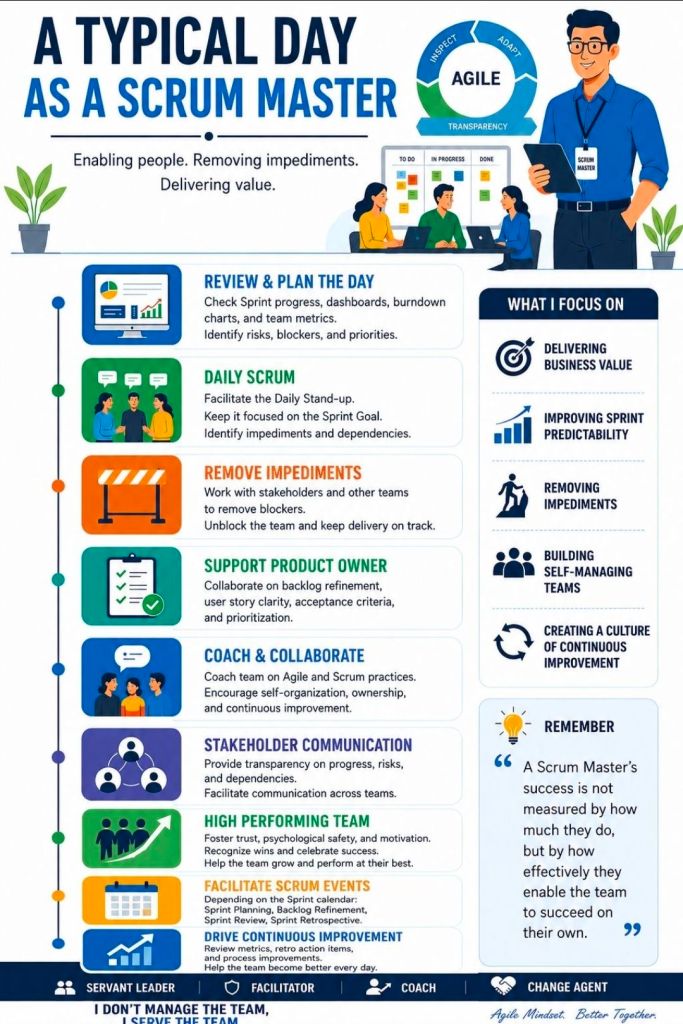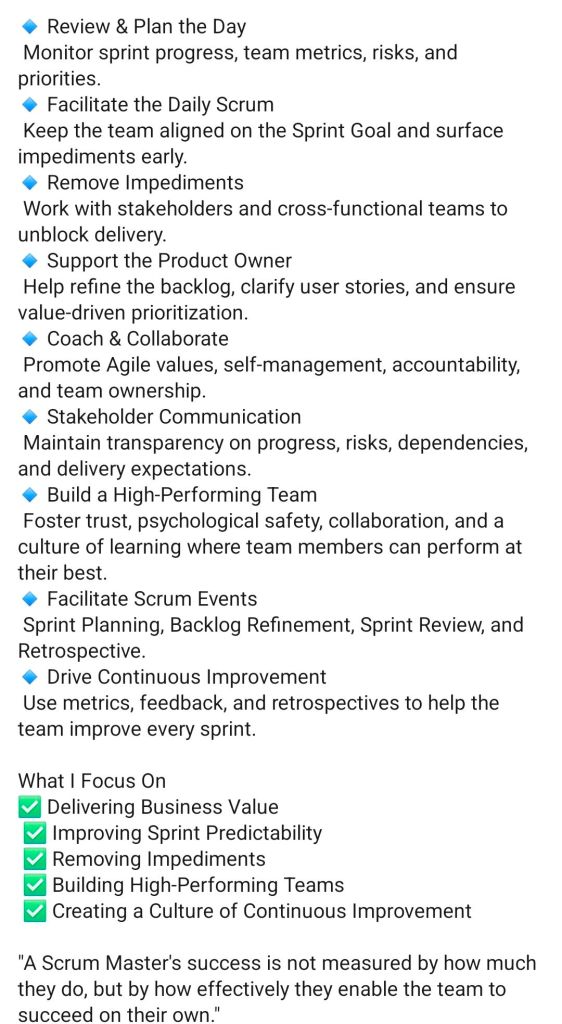
Agile Scrum Master, a Typical Day

Agile Scrum Master, a Typical Day
Agile Scrum Master, Typical Day

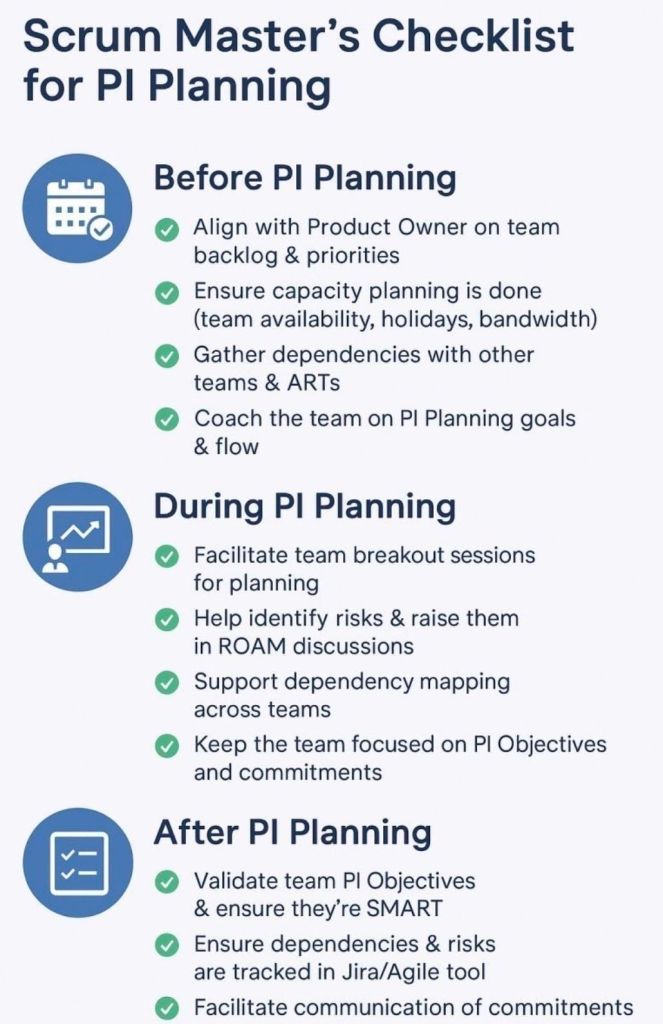
Agile Scrum Master’s Checklist for Program Increment PI

Agile Scrum Master's Checklist for Program Increment
Agile Scrum Master’s Checklist for Program Increment

An Agile Scrum Master’s checklist for a Program Increment (PI)ensures your team is aligned, dependencies are resolved, and a realistic delivery plan is established for the upcoming 8–12 weeks of work. As a facilitator and coach, you support the team across three core phases: Pre-PI Planning, During PI Planning Events, and Post-PI Execution.

Here is a comprehensive checklist structured across the lifecycle of a Program Increment.

📅 Phase 1: Pre-PI Planning Readiness

  • Establish Sprint Cadence: Define exact start/end dates for every sprint within the upcoming PI.
  • Calculate Team Capacity: Factor in vacations, public holidays, corporate events, and historic team velocity.
  • Refine the Backlog: Collaborate with the Product Owner to ensure top features meet the Definition of Ready (DoR).
  • Encourage Feature Decomposition: Guide developers to begin breaking down high-priority features into draft user stories.
  • Prepare Digital Tooling: Set up virtual whiteboards like Miro or MURAL, and structure project boards in systems like Jira.
  • Align Engineering Standards: Review architectural patterns with system architects to prevent technical blockers.

🛠️ Phase 2: During the PI Planning Event

  • Day 1 Breakout Management: Facilitate your team’s breakdown of features into actionable, estimated sprint user stories.
  • Map Dependencies: Identify files, data, or logic needed from external teams and link them on the program board.
  • Draft PI Objectives: Help the team write clear, outcome-oriented, and SMART goals based on their planned work.
  • Surface Program Risks: Collaboratively categorize all technical or resource hurdles using the ROAM framework (Resolved, Owned, Accepted, Mitigated).
  • Day 2 Plan Finalization: Ensure uncommitted objectives are preserved for high-risk items requiring external prerequisites.
  • Conduct Confidence Votes: Run an anonymous digital vote to gauge psychological safety and realistic alignment before final team commitment.

🚀 Phase 3: Post-PI & Execution Tracking

  • Sync the Agile Tooling: Move sticky notes and analog mappings directly into active Jira epics or tracking backlogs.
  • Establish Sprint Tracking: Distribute automated calendar sequences for recurring Daily Scrums, Sprint Plannings, and Sprint Reviews.
  • Monitor Cross-Team Risks: Attend standard Scrum of Scrums (SoS) meetings to report on blockers and coordinate incoming dependency tracks.
  • Protect the WIP Limits: Enforce explicitly defined work-in-progress (WIP) boundaries to prevent team burnout over mid-increment changes.
  • Inspect and Adapt (I&A): Facilitate the final evaluation comparing actual value delivered against initial PI targets to feed process enhancements back into the train.

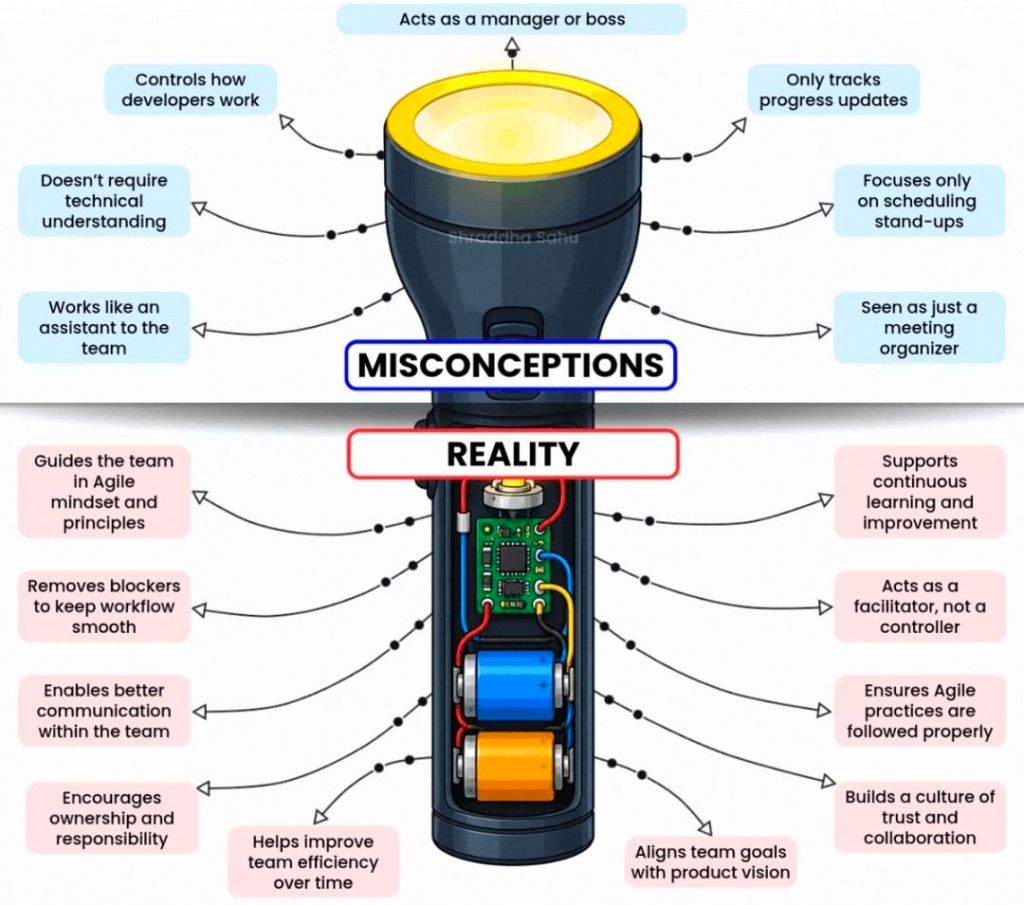
Agile Scrum Master Misconceptions versus Reality

Agile Scrum Master Misconceptions versus Reality

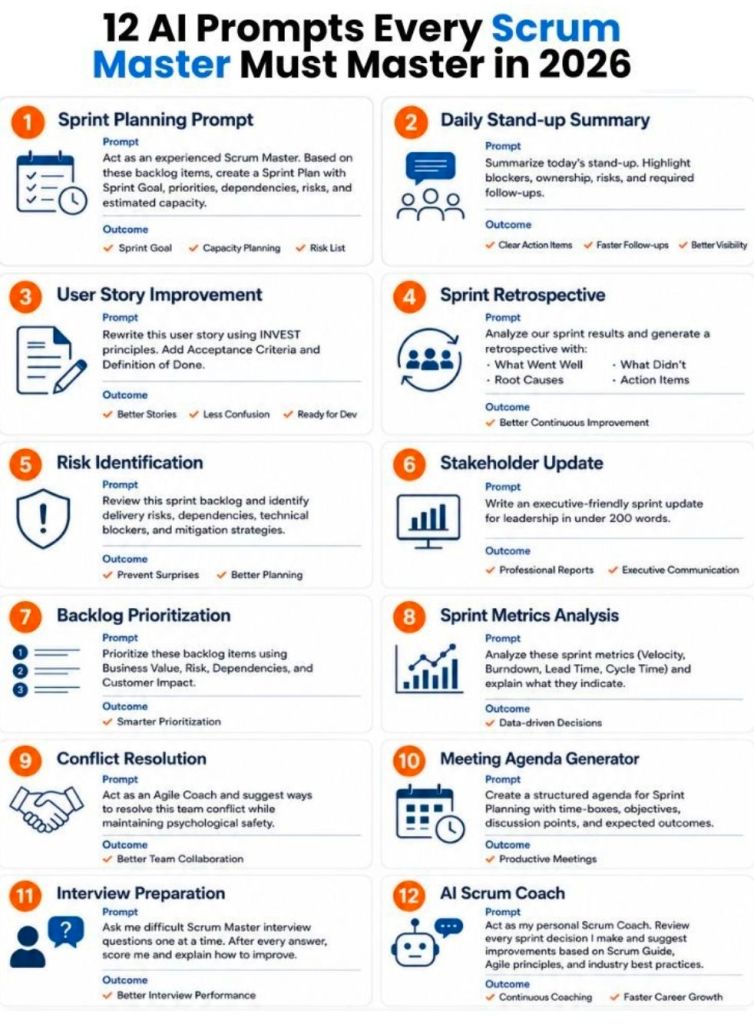
Agile Scrum Master Interview Questions & Preparation Advice

Agile Scrum Master Interview Questions
Agile Scrum Master Interview Preparation Advice

Typical Agile Scrum Master interview questions evaluate your understanding of the Scrum Framework (the 3-5-3 structure), your ability to facilitate continuous improvement, and your soft skills in conflict resolution and servant leadership.

The questions generally fall into four core categories:

1. Scrum Fundamentals & Frameworks

These questions test your technical knowledge of Scrum and how it compares to other frameworks.

  • Explain Scrum vs. Agile: Agile is the overarching mindset and set of principles; Scrum is a specific, lightweight framework for implementing Agile.
  • The 3-5-3 structure: What are the three roles (Product Owner, Scrum Master, Developers), five events (Sprint, Sprint Planning, Daily Scrum, Sprint Review, Sprint Retrospective), and three artifacts (Product Backlog, Sprint Backlog, Increment)?
  • Scaling Agile: What experience do you have scaling Agile (e.g., SAFe, Scrum of Scrums, Nexus) if the organization is large?

2. Facilitation & Coaching

Interviewers want to see how you run events, coach Product Owners, and improve team delivery.

  • Daily Scrum: What is your approach to running the Daily Scrum, and how do you prevent it from becoming just a status update?
  • Retrospectives: What specific techniques or games do you use to keep retrospectives fresh and actionable?
  • Definition of Done (DoD): How do you help a team create and adhere to a clear Definition of Done?
  • Metrics: How do you track a team’s effectiveness (e.g., velocity, sprint goal success, cycle time, burndown charts)?

3. Behavioral & Situational Scenarios

These “tell me about a time when…” questions assess your real-world experience.

  • Team Conflict: Can you describe a time when you had to resolve a conflict between team members or between a developer and the Product Owner?
  • Resistant Teams: What would you do if a team member or stakeholder doesn’t see the value in Scrum ceremonies and refuses to participate?
  • Management Intervention: How do you handle managers or executives who try to bypass the Scrum process or assign work directly to the developers?
  • Scope Creep: How do you handle sudden mid-sprint requirement changes or scope creep?

4. Self-Awareness & Servant Leadership

Hiring managers ask these to test your humility and growth mindset.

  • Your Greatest Failure: Can you share a time you failed as a Scrum Master, and what you learned from the experience?
  • Protecting the Team: How do you say “no” to leadership or protect the team from external noise while still serving the broader organization?

__________

More Agile Scrum Questions with Example Answers:

Mastering a Scrum Master interview involves demonstrating a deep understanding of servant leadership, the Agile mindset, and hands-on experience navigating team dynamics. Below are the most common interview questions, summarized with strategic, industry-recommended answers to help you stand out.

Core Scrum Framework & Mechanics

Question 1: Explain the 3-5-3 structure of Scrum.

  • What they’re looking for: A solid foundation in Scrum basics.
  • Recommended Answer: “Scrum is governed by a ‘3-5-3’ rule: 3 roles (Product Owner, Scrum Master, Developers), 5 events (Sprint, Sprint Planning, Daily Scrum, Sprint Review, Sprint Retrospective), and 3 artifacts (Product Backlog, Sprint Backlog, Increment).”

Question 2: What is the difference between a Product Backlog and a Sprint Backlog?

  • What they’re looking for: Understanding of backlog management and scope.
  • Recommended Answer: “The Product Backlog is a continuously evolving, prioritized list of everything needed for the product, owned by the Product Owner. The Sprint Backlog is a subset of the Product Backlog—it’s the specific forecast of items the team commits to delivering during the current sprint.”

Behavioral & Situational Questions

Question 3: How do you handle conflict within the Scrum team?

  • What they’re looking for: Your facilitation and conflict-resolution skills, avoiding direct intervention where the team can self-manage.
  • Recommended Answer: “I avoid playing the role of a micromanager. Instead, I facilitate open dialogue and encourage the team to address the conflict directly using the Scrum values of openness and respect. My goal is to guide them to find a mutually agreeable solution while fostering an environment of psychological safety.”

Question 4: What do you do if a team member refuses to adopt Scrum practices?

  • What they’re looking for: Change management skills and patience.
  • Recommended Answer: “I first try to understand the root cause of their resistance, as it usually stems from a lack of understanding or fear of change. I would have a private one-on-one conversation to address their concerns. I might pair them with an experienced Agile advocate or use team-building exercises to demonstrate the value of Scrum in a low-pressure way.”

Leadership & Stakeholder Management

Question 5: Tell me about a time you had to challenge leadership or management.

  • What they’re looking for: The courage to protect the team’s focus and uphold Scrum principles.
  • Recommended Answer: “I once had a stakeholder attempt to bypass the Product Owner and directly assign high-priority tasks to Developers mid-sprint. I respectfully but firmly challenged this by explaining how breaking the Sprint Goal jeopardizes the team’s focus and the project’s overall velocity. I then helped the stakeholder work with the Product Owner to place the new task in the Product Backlog for the next sprint planning.”

Question 6: How do you measure if your team is truly Agile?

  • What they’re looking for: Focus on delivering value over measuring arbitrary metrics like velocity.
  • Recommended Answer: “Velocity is for planning, not for measuring success. I look at outcome-based metrics, such as Sprint Goal success rates, customer satisfaction scores, time-to-market, and the quality of increments. The ultimate measure is whether we are continuously delivering iterative business value to our end users.”
Agile Scrum, Capacity Planning

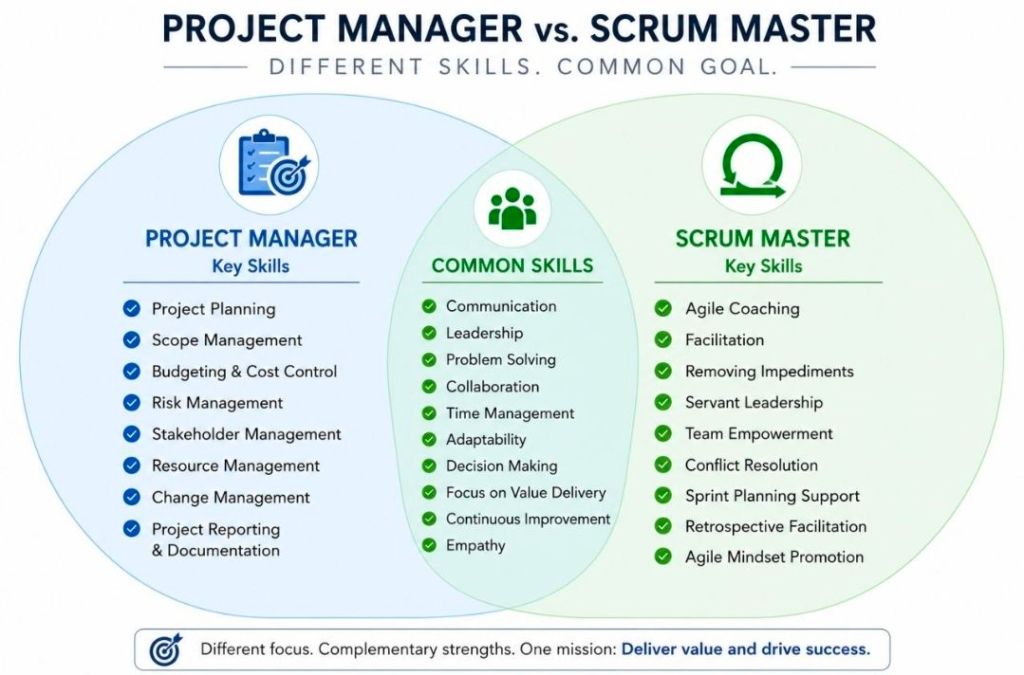
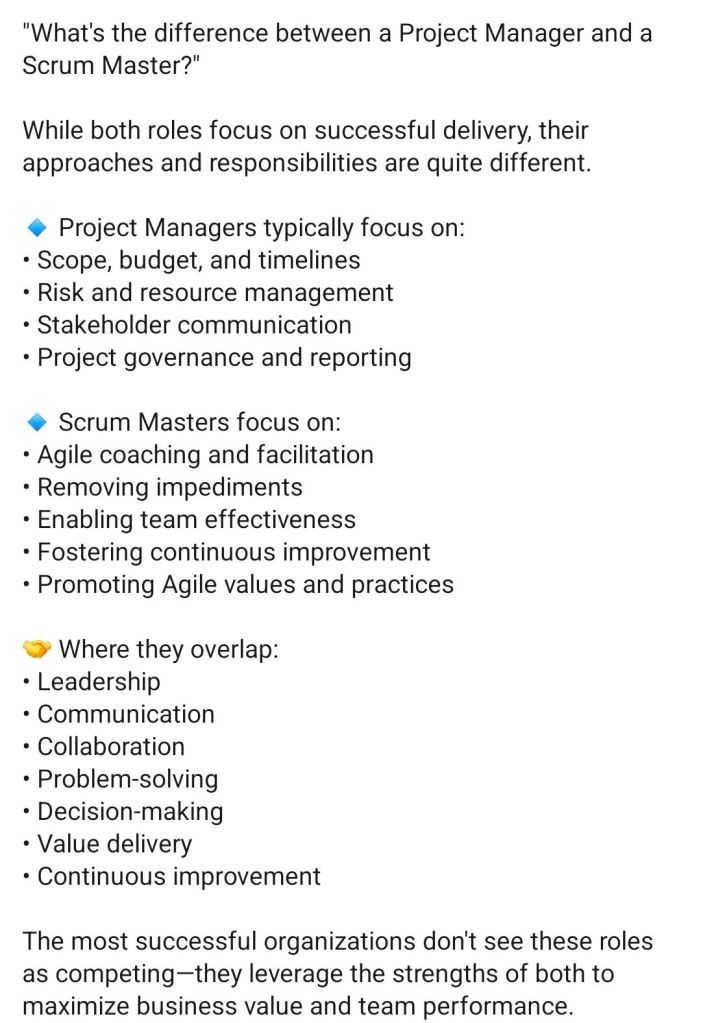
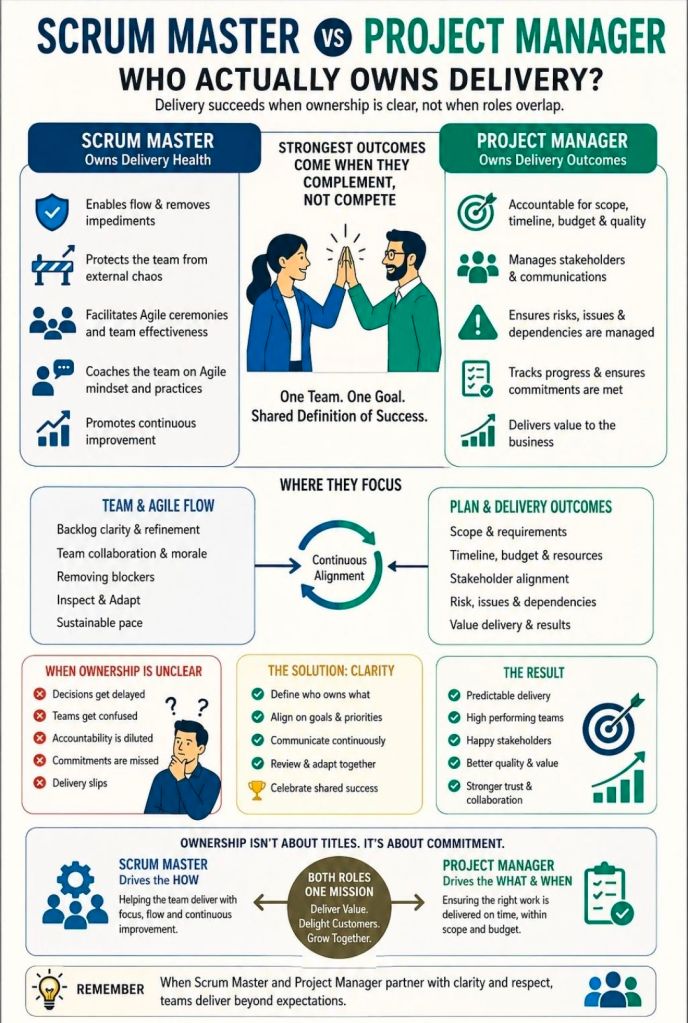
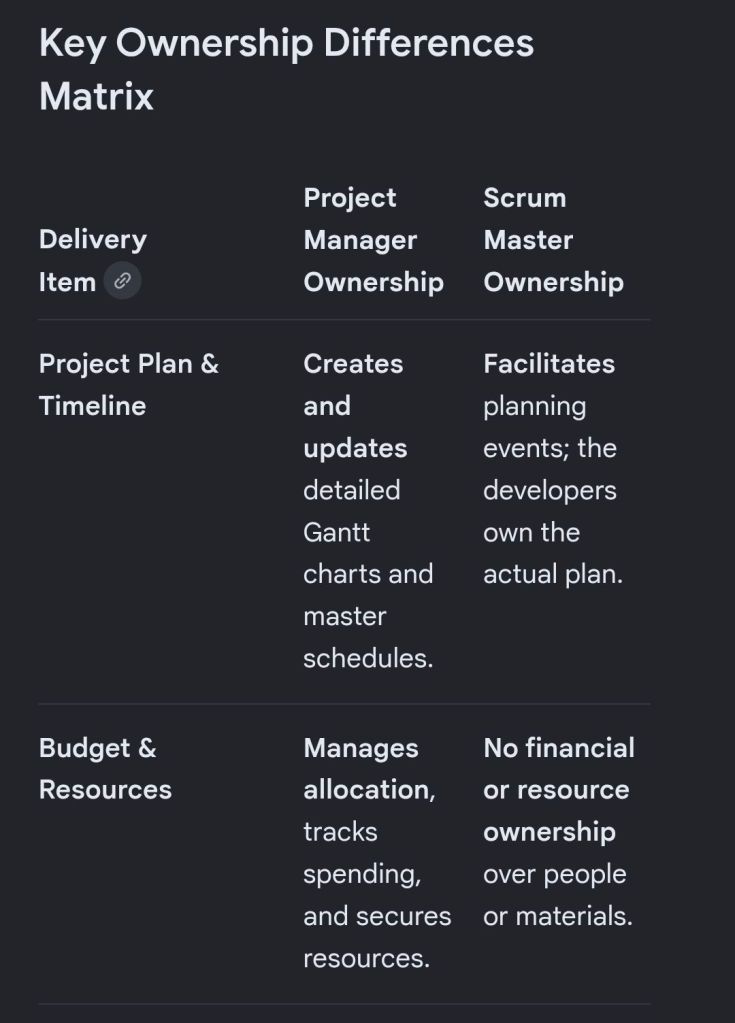
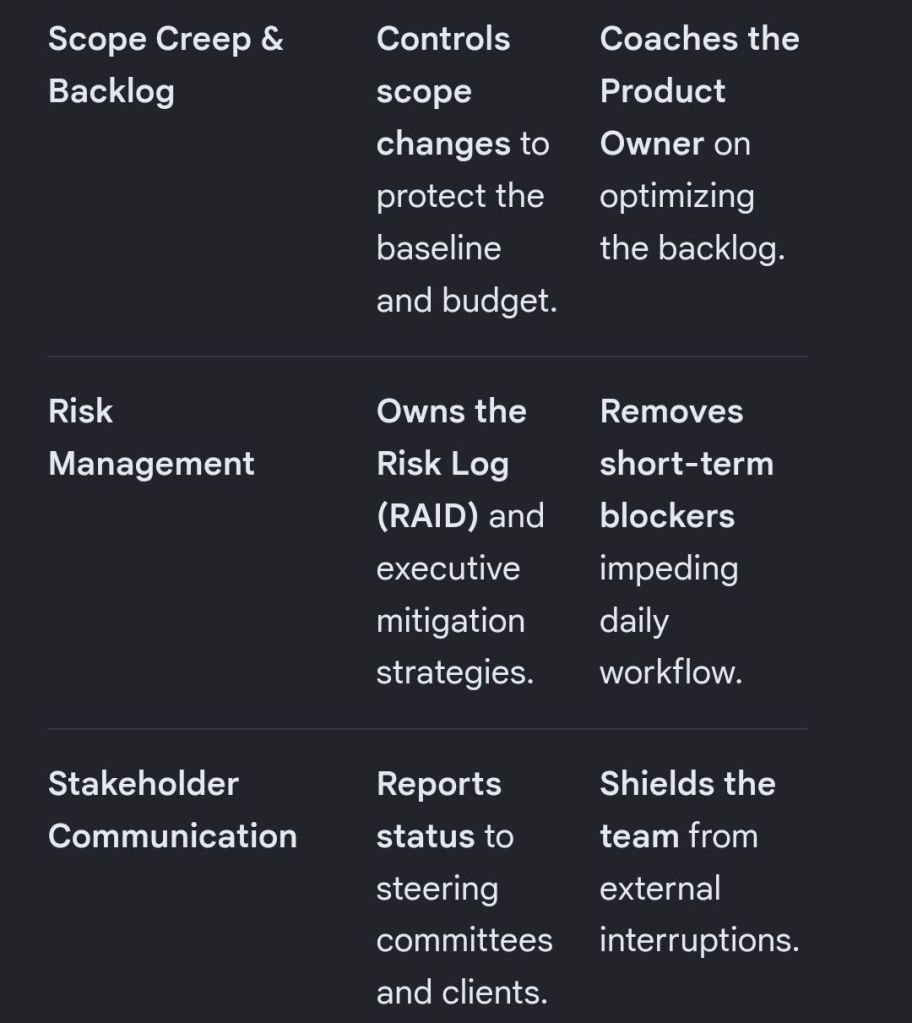
Difference between Scrum Master and Project Manager

Difference between Scrum Master and Project Manager

Project Phases, Scrum Master & Project Manager Checklist

Project Phases, Scrum Master & Project Manager Checklist

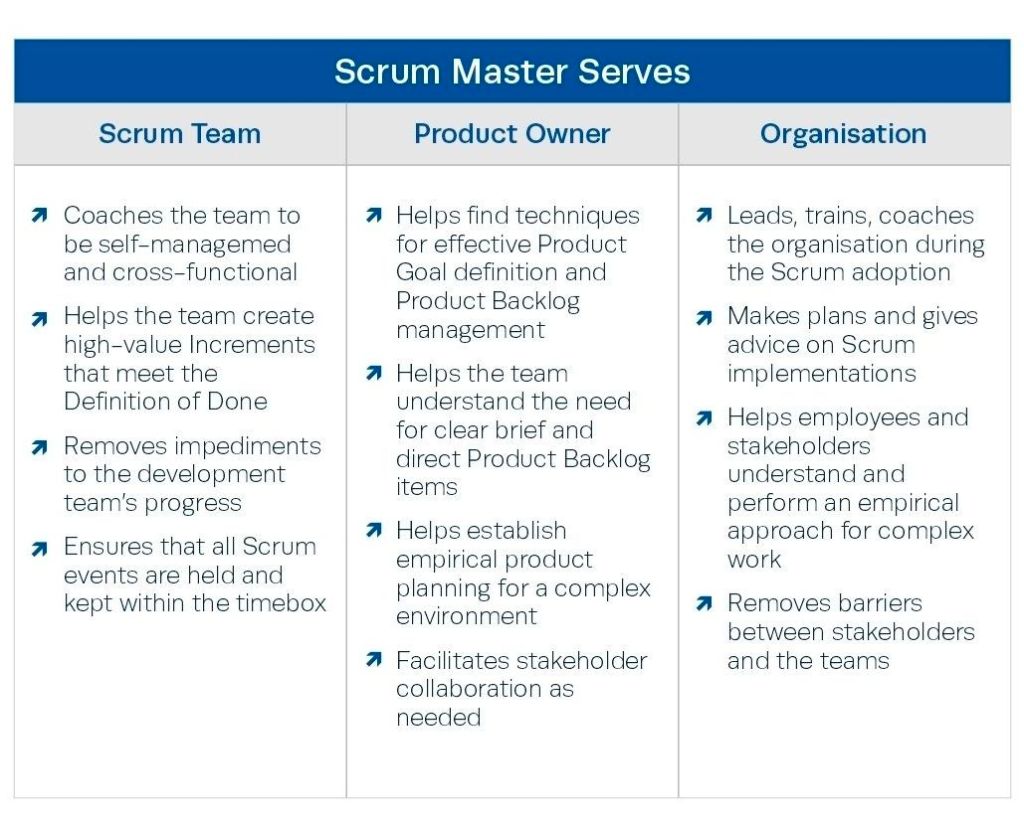
Agile Scrum Master Skills for Success

Agile Scrum Master Skills for Success

RACI Matrix for a Scrum Master

RACI Matrix for a Scrum Master