Artificial intelligence (AI) is transforming project management through two distinct but related paths: the use of AI-powered tools to manage general projects and the specialized methodologies required to manage AI development itself.
1. Methodologies for Managing AI Projects
Traditional software development methods (like Waterfall) often fail for AI because these projects are experimental and non-linear. Specialized frameworks have emerged to handle the “data-first” nature of AI:
CPMAI (Cognitive Project Management for AI): A leading methodology that combines Agile principles with data-centric phases: Business Understanding, Data Understanding, Data Preparation, Model Development, Model Evaluation, and Model Operationalization.
Agile-AI Hybrid: Adapts standard Agile by using “short-boxed” iterations for model training and allowing for a “flexible scope” because model performance is unpredictable until tested.
Data Driven Scrum: A variation of Scrum that prioritizes work based on data availability and experimental results rather than just feature backlogs.
MLOps (Machine Learning Operations): An operational framework focused on the continuous integration, deployment, and monitoring of models to prevent “model drift” after a project officially “ends”.
2. AI-Augmented Project Management (The “AI Copilot”)
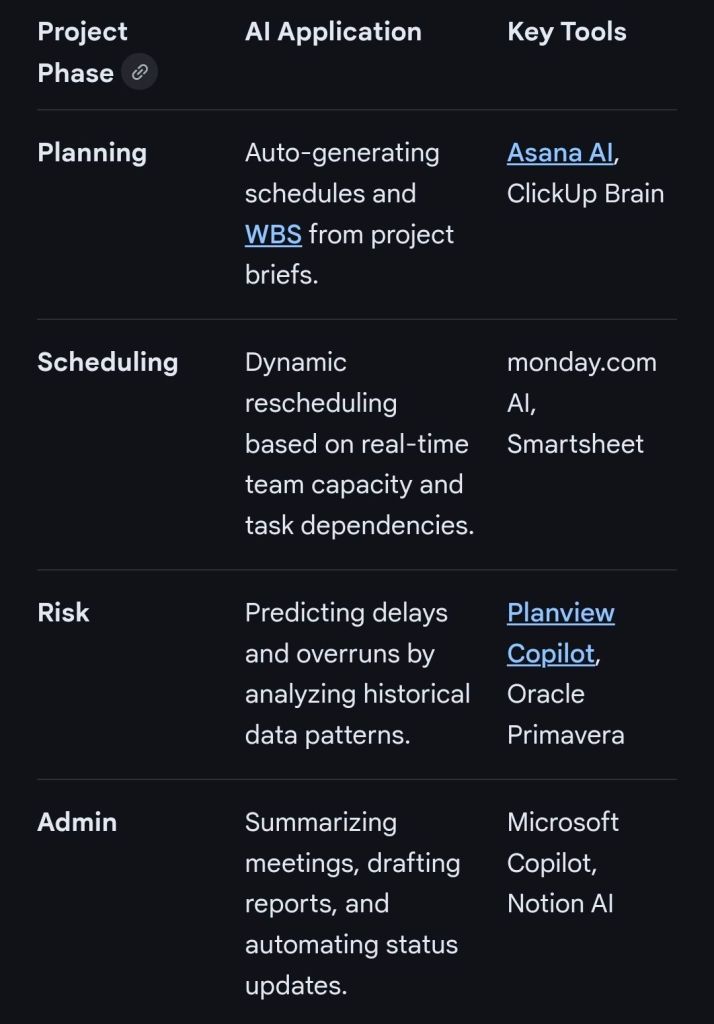
For non-AI projects, AI acts as an intelligent assistant to automate administrative tasks and provide predictive insights.
3. Implementation Strategy
Experts recommend a phased approach to integrating AI into management workflows:
Assess Inefficiencies: Identify repetitive tasks (e.g., status reporting) that can be automated first.
Data Governance: Ensure project data is clean and centralized; AI is only as good as the data it consumes (“Garbage In, Garbage Out”).
Human-in-the-Loop: Use AI for data-heavy lifting, but retain human judgment for high-stakes leadership, ethics, and stakeholder empathy.
AI Projects and Methodologies for Managing AI Projects
The history of artificial intelligence is defined by cycles of extreme optimism followed by “winters” of reduced funding and interest. It has evolved from a theoretical branch of mathematics into a pervasive modern technology.
The Foundations (Pre-1950)
Before AI was a formal field, it existed in science fiction and early mechanical concepts.
1921: The term “robot” is coined by Karel Čapek in the play Rossum’s Universal Robots.
1943: Warren McCulloch and Walter Pitts publish the first mathematical model of a neural network.
1949: Edmund Berkeley’s book Giant Brains proposes that machines can think.
The Birth of AI (1950–1956)
This era shifted AI from mythology to a serious academic discipline.
1950: Alan Turing publishes “Computing Machinery and Intelligence,” introducing the Turing Test to measure machine intelligence.
1952: Arthur Samuel creates the first self-learning checkers program.
1955-1956: John McCarthy coins the term “Artificial Intelligence” during the proposal for the Dartmouth Workshop, which officially launched the field.
The Golden Years & First AI Winter (1957–1979)
Initial successes led to over-promising and a subsequent crash.
1958: Frank Rosenblatt develops the Perceptron, the foundation for modern neural networks.
1973-1974: The Lighthill Report in the UK and subsequent funding cuts by DARPA lead to the First AI Winter due to limited computing power and unmet expectations.
The Expert Systems Boom & Second Winter (1980–1993)
AI found commercial success through specialized knowledge bases before another decline.
1980: XCON (expert configurer) becomes the first commercially successful expert system, saving Digital Equipment Corporation millions.
1981: Japan launches the Fifth Generation Computer project with $850 million to create human-level reasoning.
1987-1993: The Second AI Winter occurs as specialized AI hardware (Lisp machines) becomes obsolete compared to cheaper personal computers from Apple and IBM.
The Age of Agents & Narrow AI (1993–2011)
AI began achieving superhuman performance in specific, “narrow” tasks.
1997: IBM’s Deep Blue defeats world chess champion Garry Kasparov.
2002: iRobot releases the Roomba, bringing autonomous AI into the home.
2011: IBM’s Watson wins Jeopardy! against human champions, and Apple releases Siri.
The Deep Learning Revolution (2012–2021)
A massive surge in data and GPU power transformed the field.
2012: AlexNet wins the ImageNet competition, proving the power of deep convolutional neural networks.
2016: Google DeepMind’s AlphaGo defeats world Go champion Lee Sedol.
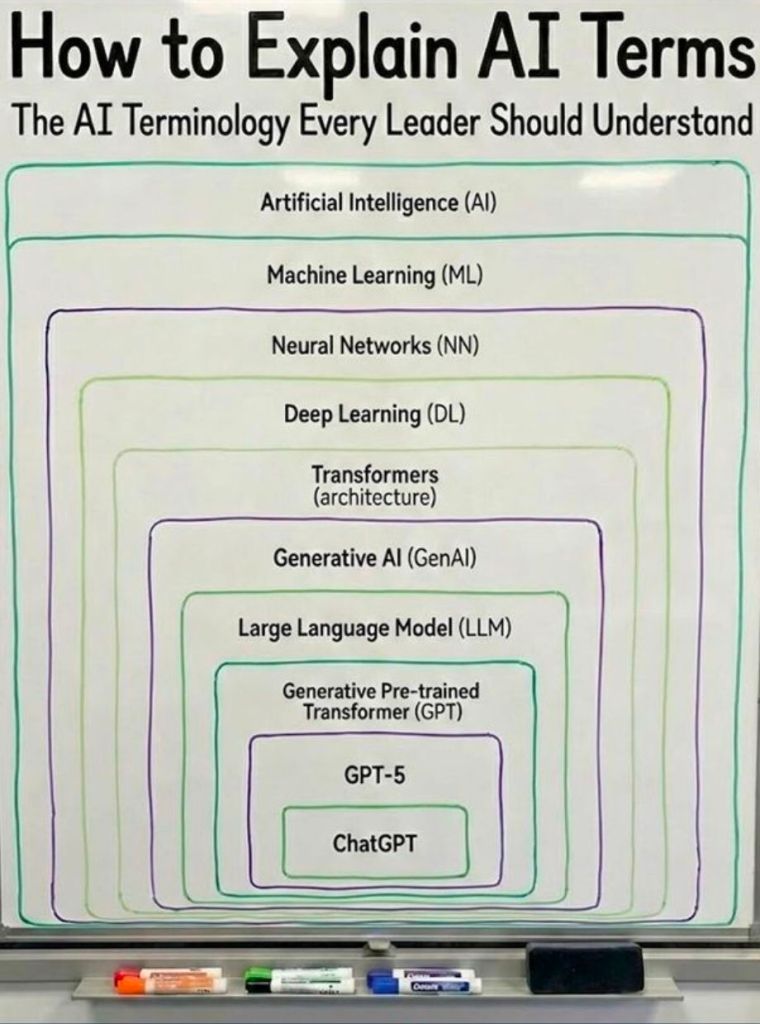
2017: Researchers at Google propose the Transformer architecture, which becomes the backbone of modern large language models.
The Generative AI Boom (2022–Present)
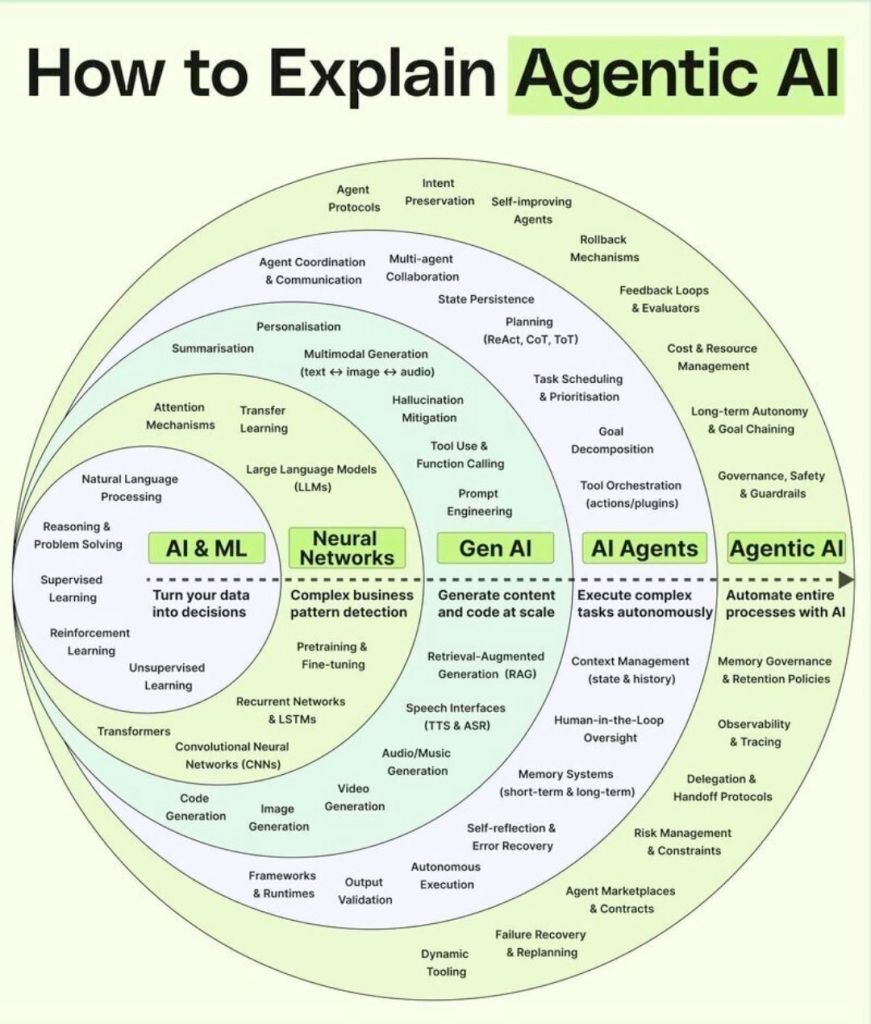
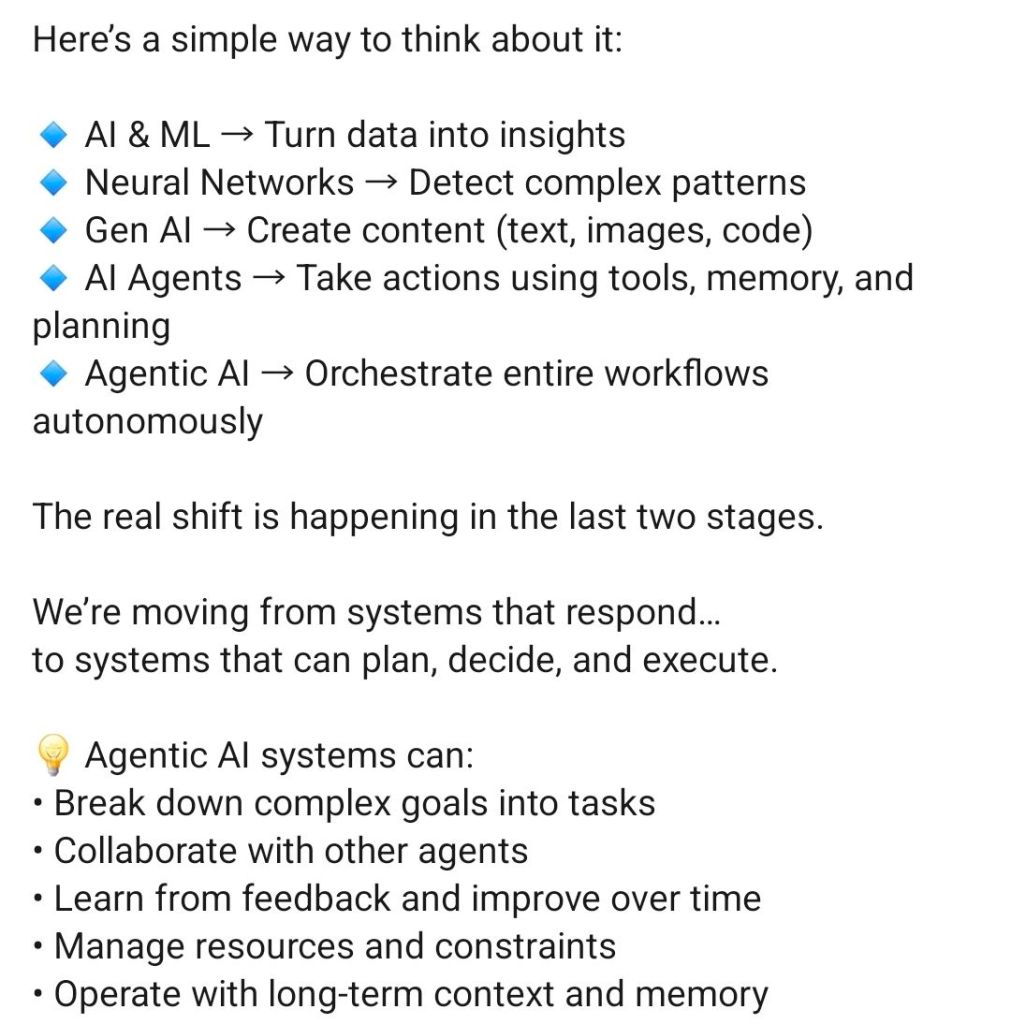
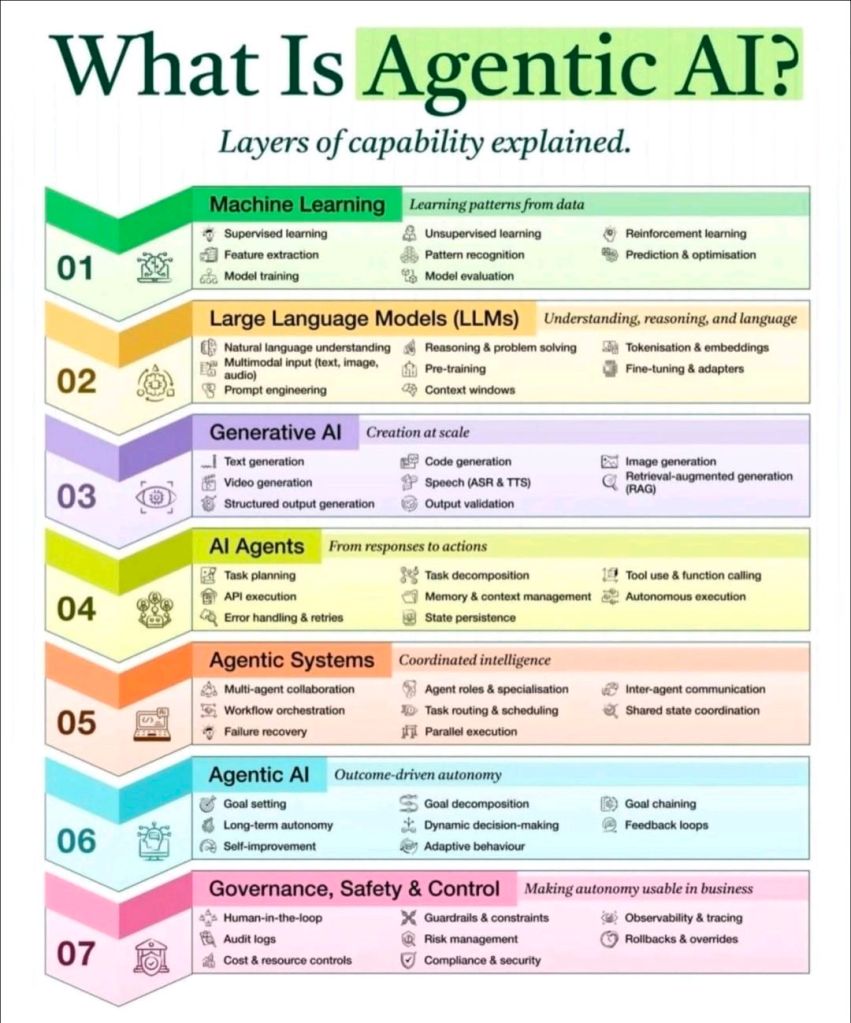
AI has entered the mainstream, moving toward Agentic AI that can plan and act autonomously.
2022: OpenAI releases ChatGPT, sparking global interest in generative AI.
2023-2024: Focus shifts toward Multimodal AI (images, video, and text) and Agentic AI capable of completing complex workflows across multiple tools.
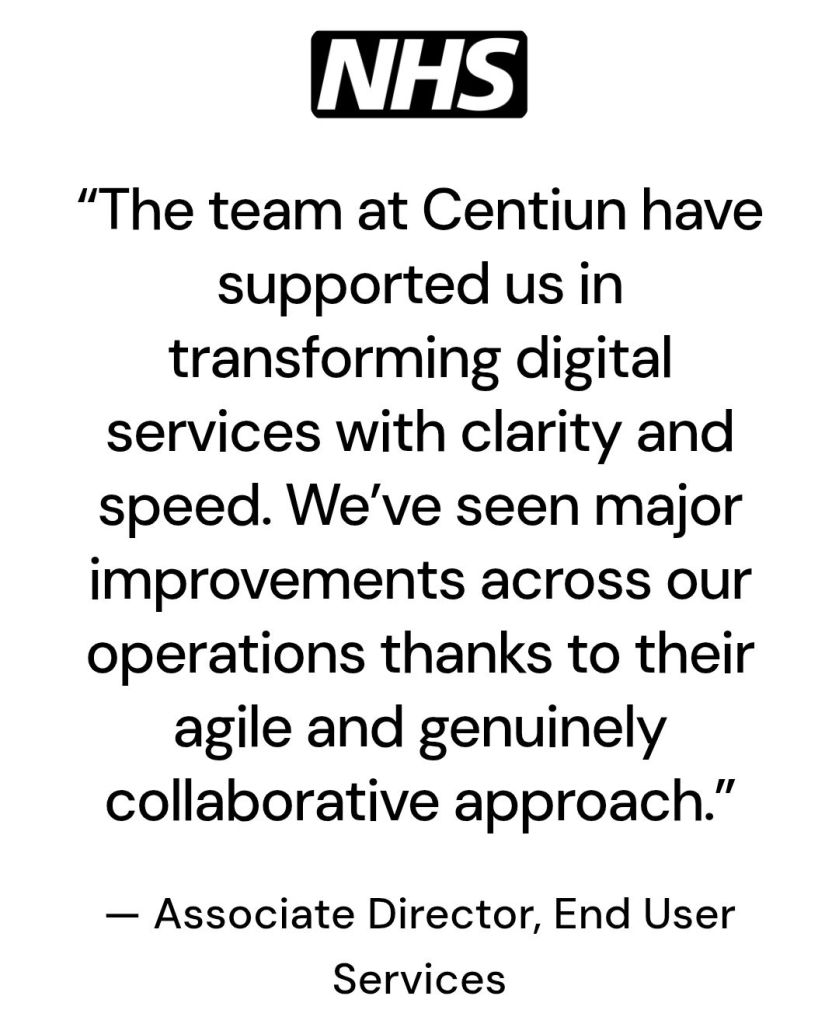
Centiun is a British IT services consulting company and Microsoft Partner, helping enterprise public and private sector organisations achieve digital transformation excellence through the Microsoft cloud.
We specialise in Microsft Dynamics 365, Power Platform, and Micrisoft 365, delivering expert consultancy, solution architecture, implementation, and managed services that enable organisations to modernise operations, improve service delivery, and unlock greater value from their technology investment.
Centiun MS Business Applications and AI Specialists
From CRM transformation and business process automation to secure collaboration, data-driven decision making, and AI enabled innovation, Centiun supports customers to build smarter, faster and more resilient ways of working.
Our approach combines deep Microsoft expertise with a practical focus on outcomes – designing and delivering solutions that are scalable, compliant, and tailored to the needs of complex organisations.
Whether you’re starting your digital journey or optimising an existing platform, Centiun is your trusted Microsoft for long-term transformation and support.
Centiun MS Business Applications and AI Specialists
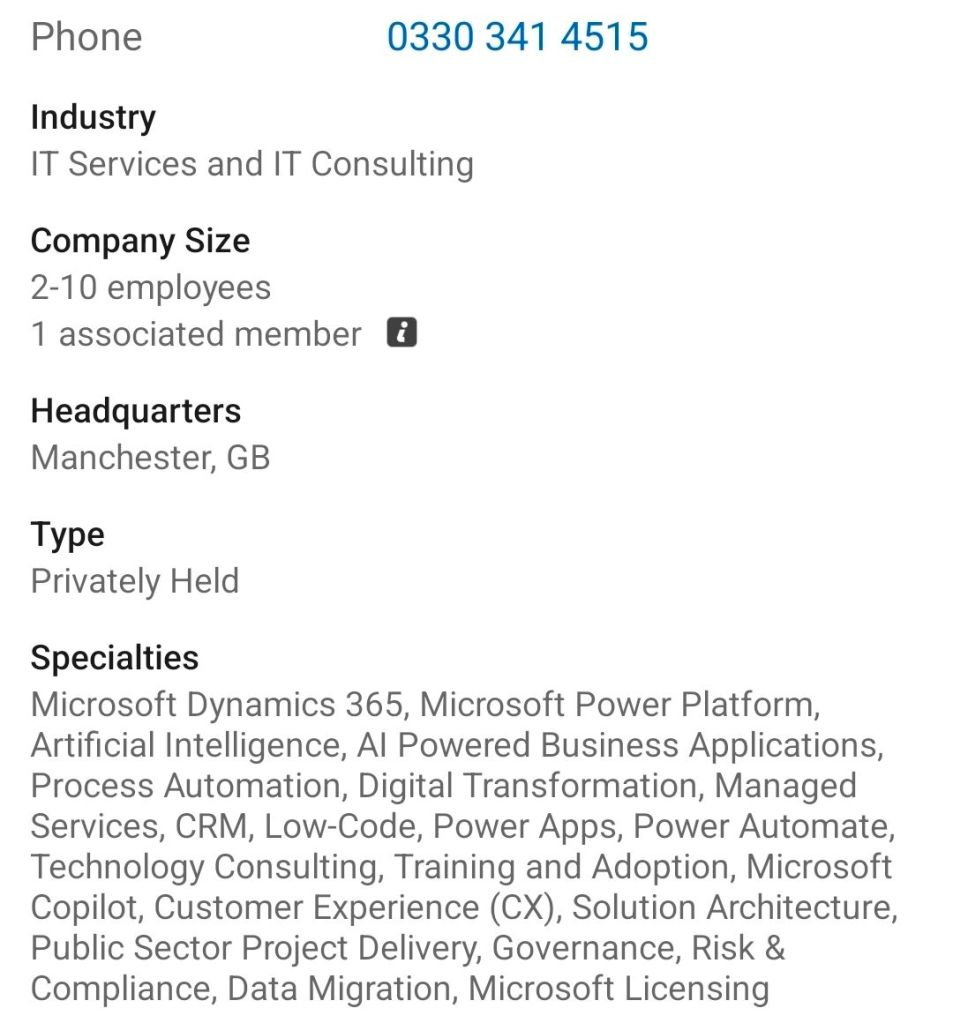
Centiun Limited is a UK-based technology consultancy that specialises in digital transformation and Microsoft Business Applications. Incorporated on 30 October 2025, the company operates as a Microsoft AI Cloud Partner, helping organisations modernise infrastructure and adopt AI-driven workflows.
Core Services
Centiun provides a range of strategic and technical services focused on the Microsoft ecosystem:
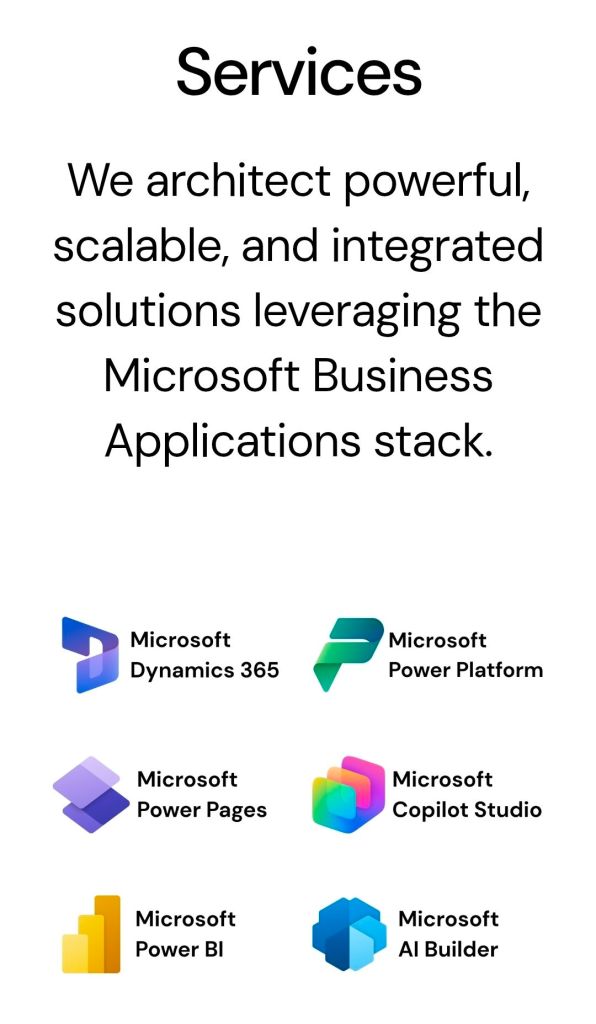
Business Applications: Implementing and automating processes using Microsoft Dynamics 365 and Power Platform.
Cloud Migration: Transitioning legacy systems to secure cloud environments to enhance scalability.
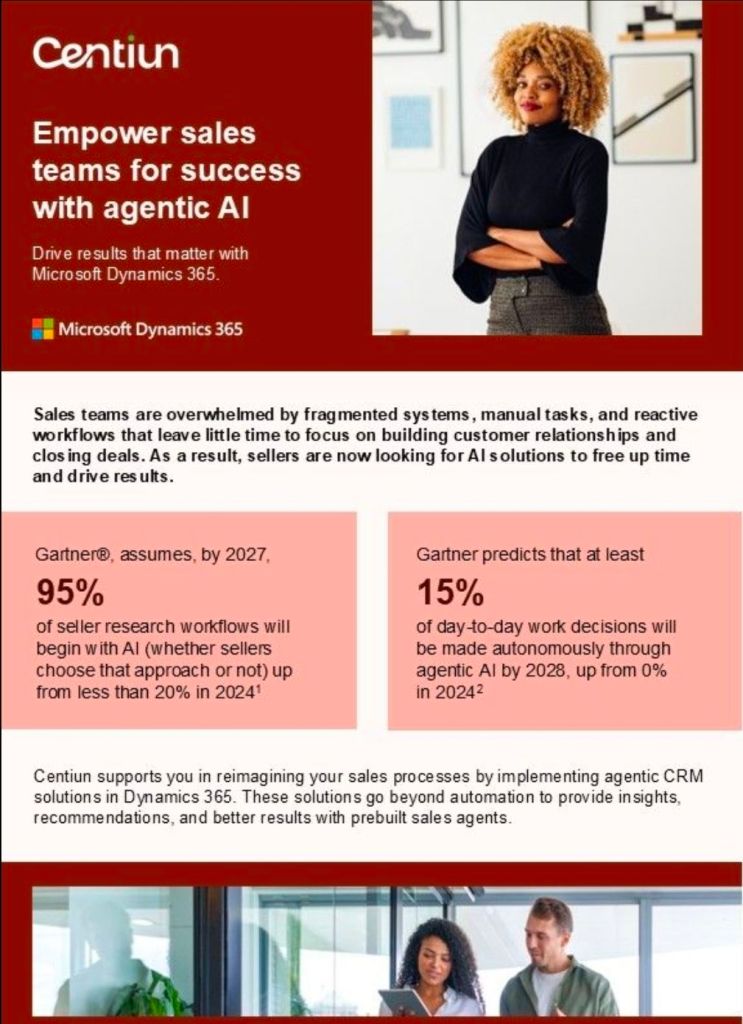
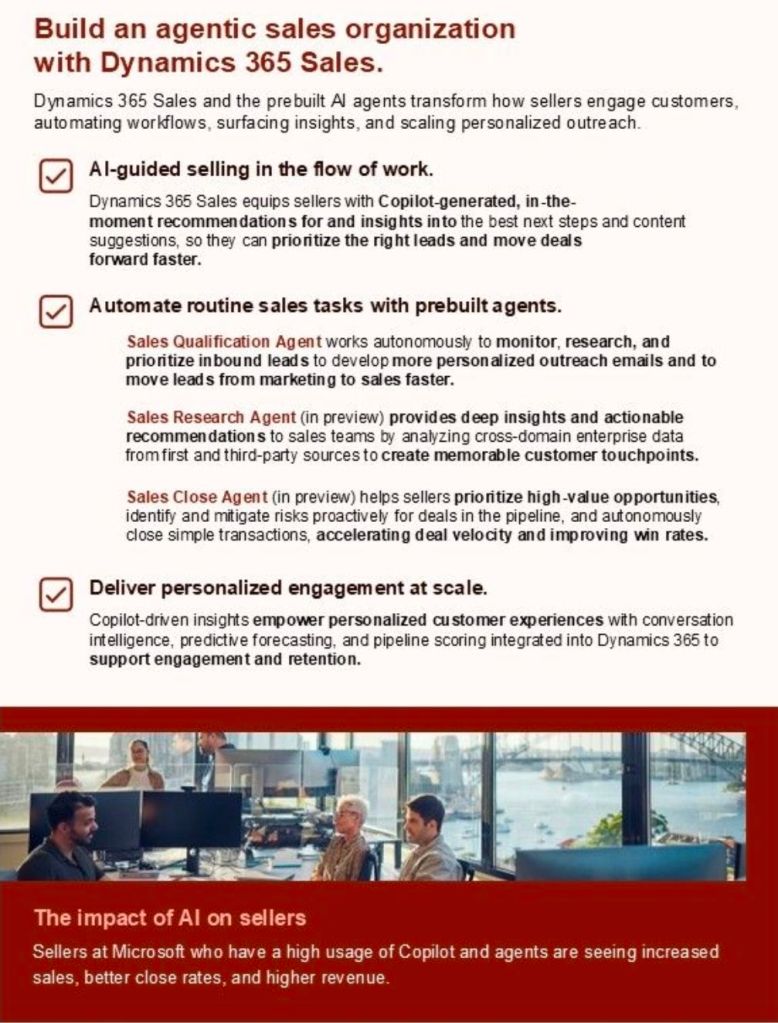
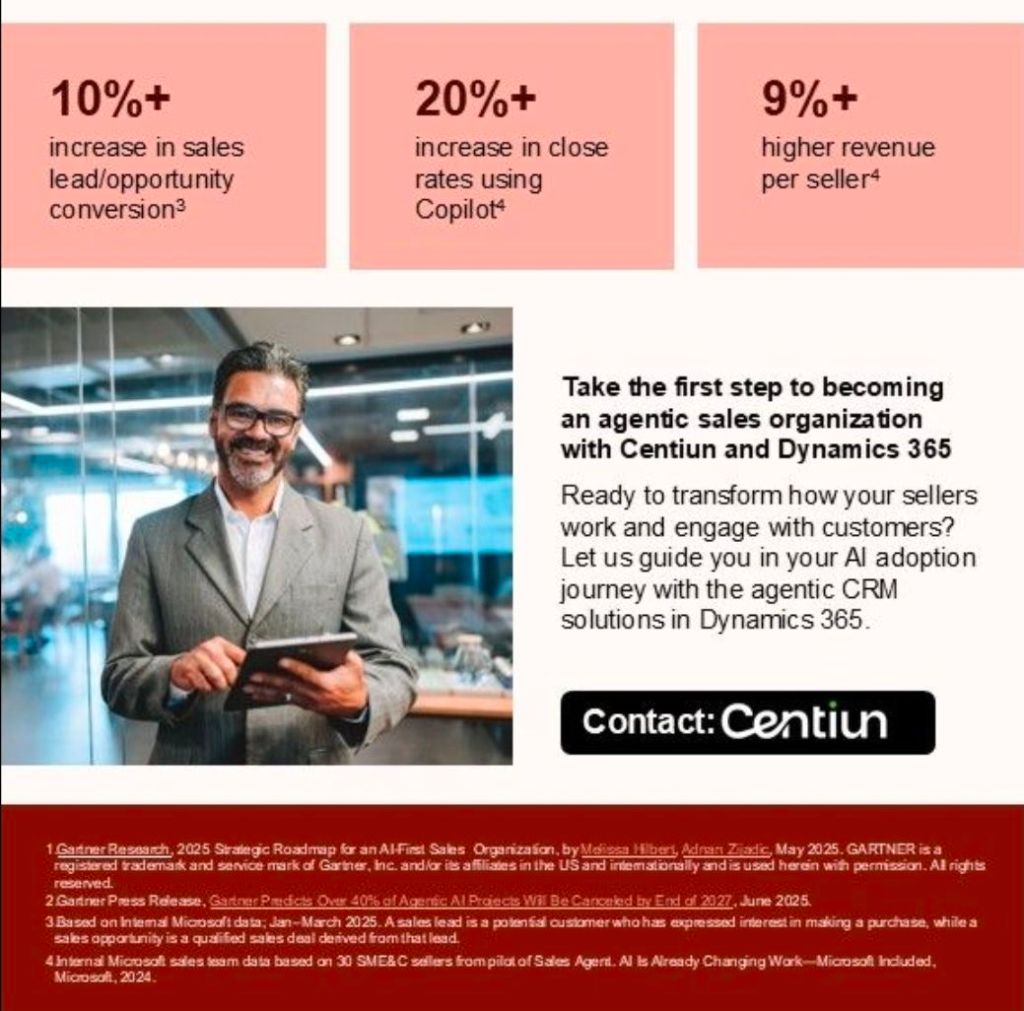
AI Readiness: Preparing businesses to integrate tools like Microsoft Copilot and agentic AI for sales and customer service.
Managed Services: Providing ongoing support, maintenance, and technical governance.
Target Industries
The firm tailors its solutions for several sectors, including:
Public Sector: Central government and non-departmental public bodies.
Healthcare: Public and private healthcare project delivery.
Nonprofit: Cost-effective digital solutions for charitable organisations.
Financial Services: Fintech, insurance, and banking services requiring high regulatory precision.
Key Company Facts
Location: Headquartered at Cheadle Royal Business Park, Cheshire, England.
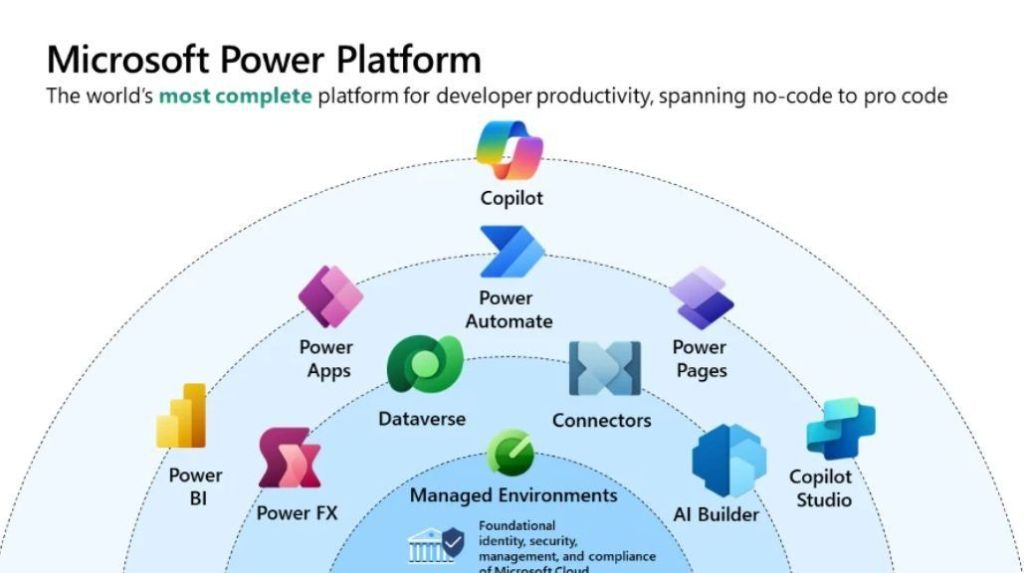
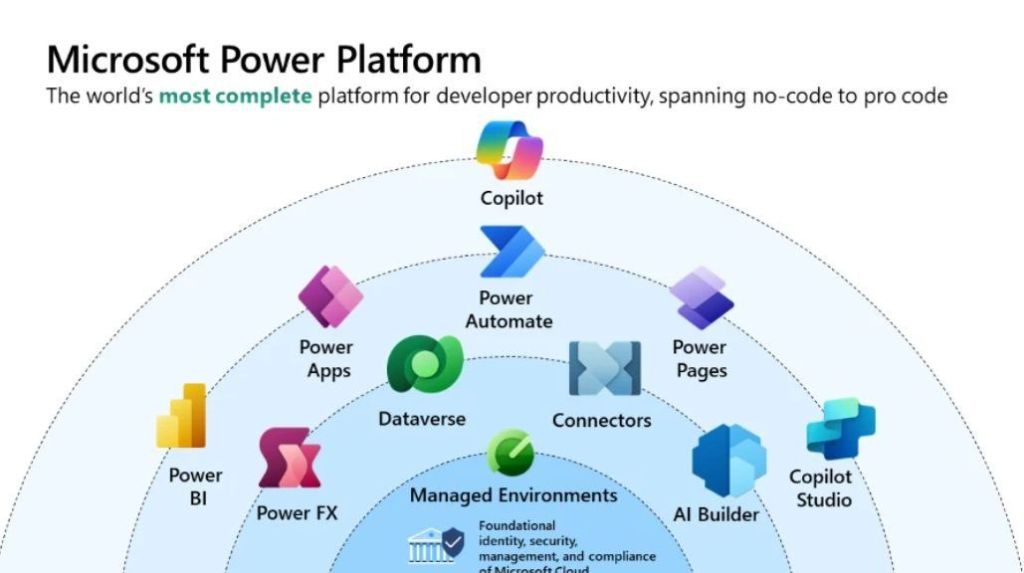
Microsoft Power Platform is a suite of low-code tools designed to help organizations analyze data, build custom solutions, automate processes, and create AI-powered agents. It enables both professional developers and “citizen developers” (business users) to rapidly build end-to-end business applications that integrate with the broader Microsoft Cloud ecosystem.
Microsoft Power Platform
Core Product Areas
The platform consists of five primary applications:
Power Apps: A low-code development environment for building custom web and mobile business applications.
Power Automate: A service for workflow automation and robotic process automation (RPA).
Power Pages: A platform for creating and hosting secure, external-facing business websites.
Copilot Studio: A graphical tool for building and customizing AI-powered agents and chatbots.
Underlying Capabilities
The platform’s strength lies in its shared infrastructure:
Microsoft Dataverse: A secure, cloud-scale data store that provides a common data model for all Power Platform apps.
Connectors: Over 1,000 prebuilt integrations that allow apps to communicate with external data sources like SAP, Salesforce, and Google Analytics.
AI Builder: A capability that allows users to add AI models (e.g., sentiment analysis or object detection) to their apps and flows without writing code.
Power Fx: A low-code, strongly-typed programming language used for expressing logic across the platform.
The Microsoft Power Platform has evolved from individual components like Power BI and Power Apps into a unified suite, now heavily integrated with Copilot and AI.
Origins & Early Growth (2013–2018)
2013: Power BI is first released as an Excel add-in before becoming a standalone service in 2015.
2015: Power Apps enters public preview as a low-code tool for building business applications.
2016: Microsoft Flow (now Power Automate) is launched to provide workflow automation across apps and services.
2018: The term “Microsoft Power Platform” is officially introduced to unify Power BI, Power Apps, and Flow.
Expansion & Rebranding (2019–2022)
2019: Power Virtual Agents is added to the suite for creating no-code chatbots. Microsoft Flow is rebranded as Power Automate.
2020: Launch of Power BI Premium per user and the Dataverse (formerly Common Data Service) rebranding.
2021: Power Fx, an open-source formula language based on Excel, is introduced as the standard language across the platform.
2022: Power Pages is launched as the fifth standalone product for building secure, low-code business websites.
The AI & Copilot Era (2023–Present)
2023: Integration of Copilot across all Power Platform products, allowing users to build apps, flows, and reports using natural language.
2024: Introduction of Timeline Highlights in Power Apps to provide AI-generated summaries of record activities.
2025: Microsoft announces the retirement of the Power Apps per app plan (January) and ends support for contact tracking in the Dynamics 365 App for Outlook (October).
2026: The 2026 Release Wave 1 begins (April–September), focusing on deeper Role-based Copilot offerings and enhanced security agents.
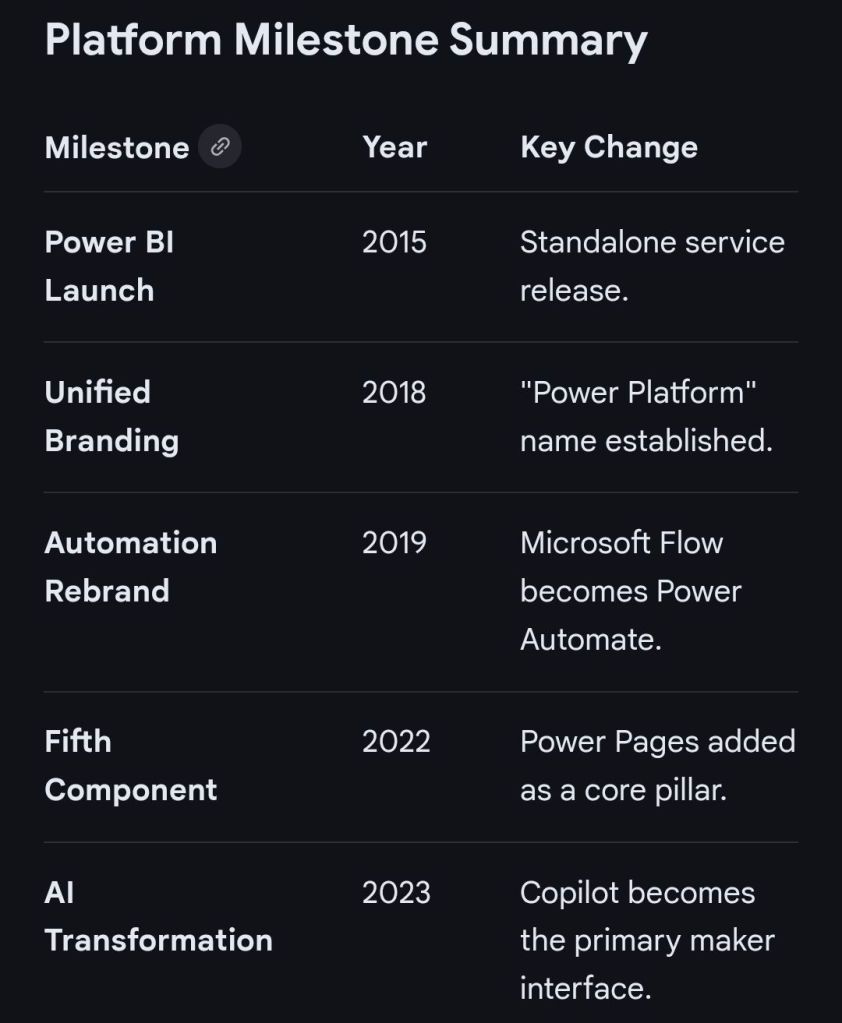
Microsoft Power Platform Milestone Summary
The Microsoft Power Platform originated from Microsoft’s effort to democratise data and app development by evolving its existing business tools into a unified low-code ecosystem.
Origins and Evolution (2003–2015)
The platform’s roots trace back to early business solutions that were eventually merged into the modern suite:
Dynamics CRM 1.0 (2003): The foundation for what became the Microsoft Dataverse (formerly Common Data Service), providing a secure relational database.
Project Siena (2013): A “garage project” at Microsoft aimed at building web apps without professional coding tools. This project eventually became Power Apps.
Power BI Launch (2015): Originally “Project Crescent” for SQL Server, Power BI was the first of the modern “Power” services to be delivered, entering preview in January 2015.
Expansion and Formalisation (2016–2019)
Microsoft transitioned from individual tools to an integrated platform:
Power Apps and Flow (2016):Power Apps and Microsoft Flow (later renamed Power Automate) became generally available in November 2016.
Common Data Service (2016): Introduced to provide a shared data platform across Dynamics 365 and the new “Power” tools.
Official Branding (2018–2019): The term “Microsoft Power Platform” was officially established as an umbrella brand for the suite of tools. In 2019, Microsoft Flow was rebranded to Power Automate to align with the platform’s naming convention.
Modern Era and AI Integration (2020–Present)
The platform has shifted toward “AI-first” development and expanded its core pillars:
New Components:Power Virtual Agents (now Copilot Studio) and Power Pages (for external websites) were added to the core lineup.
Acquisitions: Microsoft acquired Softomotive (2020) and Minit (2022) to bolster Power Automate with Robotic Process Automation (RPA) and process mining capabilities.
Generative AI: Recent updates have focused on integrating Copilots across all products, allowing users to build apps and automations using natural language.
Microsoft Power Platform Development Timeline Overview
Centiun Microsoft Business Applications and AI Specialists
CentiunOverview
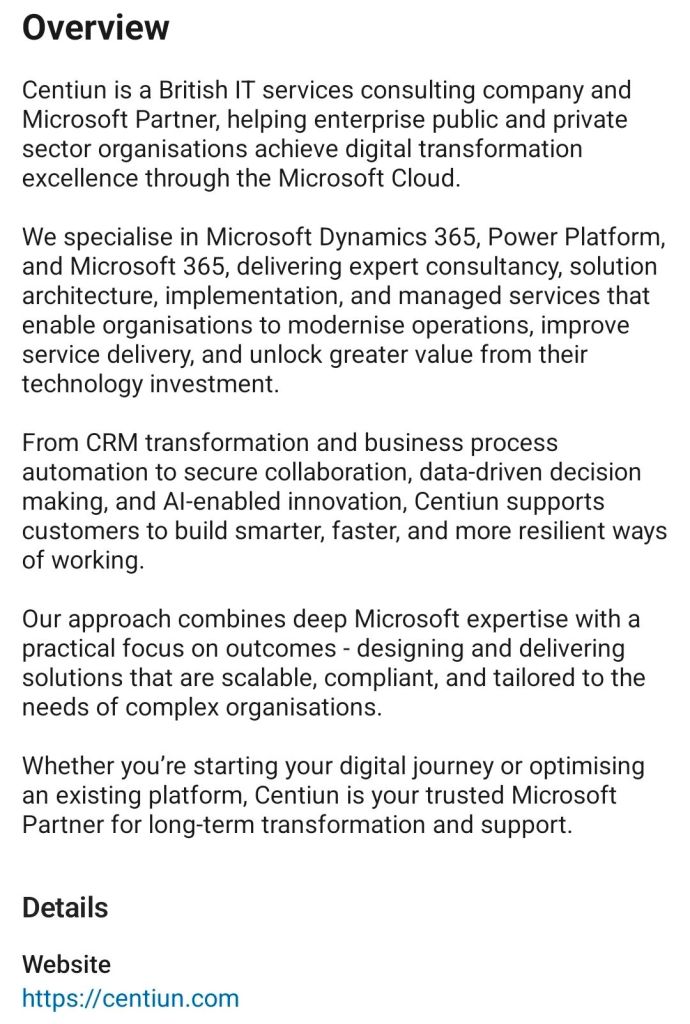
Centiun is a British IT services consulting company and Microsoft Partner, helping enterprise public and private sector organisations achieve digital transformation excellence through the Microsoft cloud.
We specialise in Microsft Dynamics 365, Power Platform, and Micrisoft 365, delivering expert consultancy, solution architecture, implementation, and managed services that enable organisations to modernise operations, improve service delivery, and unlock greater value from their technology investment.
From CRM transformation and business process automation to secure collaboration, data-driven decision making, and AI enabled innovation, Centiun supports customers to build smarter, faster and more resilient ways of working.
Our approach combines deep Microsoft expertise with a practical focus on outcomes – designing and delivering solutions that are scalable, compliant, and tailored to the needs of complex organisations.
Whether you’re starting your digital journey or optimising an existing platform, Centiun is your trusted Microsoft for long-term transformation and support.




 PROject Templates