

Salford Quays is a major waterfront destination in Greater Manchester, originally the site of the Manchester Docks. After the docks closed in 1982, the area underwent one of the UK’s most ambitious urban regeneration projects, transforming from a derelict industrial zone into a vibrant cultural, commercial, and residential hub. It is now home to landmarks such as The Lowry, Imperial War Museum North, and the MediaCityUK media cluster.
Comprehensive Historical Timeline
The history of Salford Quays is defined by three distinct eras: the rise of the Manchester Docks, a period of industrial decline, and its modern rebirth through regeneration.
I. The Industrial Era (1887–1960s)
This era saw the construction and peak of the Manchester Docks, which turned Manchester into an inland port despite being 40 miles from the sea.
- 1887: Construction of the Manchester Ship Canal begins to bypass high charges from Liverpool’s docks.
- 1893: The canal is flooded in November, preparing for its opening.
- 1894: Queen Victoria officially opens the Manchester Ship Canal and Salford Docks on 21 May.
- 1905: King Edward VII opens No. 9 Dock, the largest in Salford, on the former site of the Manchester racecourse.
- 1920: Employment peaks with approximately 16,000 labourers working at the docks.
- 1927: Official Dock offices open on Trafford Road.
- 1950s: The docks reach their peak traffic, annually seeing over 16 million tons of cargo and 5,000 ships.
II. The Era of Decline (1960s–1982)
Technological shifts in shipping and industrial unrest led to the eventual closure of the port.
- 1966: A 47-day strike by the National Union of Seamen leads to a significant loss of customer confidence.
- 1969: The vessel Manchester Courage hits the Irlam lock gates, trapping ships in the docks for five weeks.
- 1970s: The rise of containerisation makes the Ship Canal too narrow for modern, larger ships, causing a rapid decline in trade.
- 1982: The docks officially close, resulting in the loss of 3,000 jobs and leaving the area derelict and polluted.
III. The Regeneration Era (1983–Present)
Salford City Council and private partners began transforming the abandoned docks into a modern “urban living” quarter.
- 1983: Salford City Council acquires the derelict docks from the Manchester Ship Canal Company.
- 1984: The area is officially rebranded as Salford Quays.
- 1985: The Salford Quays Development Plan is published, outlining a mix of housing, offices, and leisure.
- 1986: Regeneration work officially begins; the MGM Canon Cinema (the first new building) opens in December.
- 1987: The Copthorne Hotel opens. A compressed air mixing system is introduced to oxygenate the water, allowing 12,000 fish to be introduced.
- 1989: Mariner’s Canal is opened by the Duke of York.
- 1991: The Anchorage office complex is completed, becoming a major commercial landmark.
- 1994: The Centenary Walkway is opened by Princess Anne to commemorate the canal’s 100th anniversary.
- 1999: The Metrolink tram extension to the Quays opens.
- 2000: The Lowry arts centre is officially opened by Queen Elizabeth II on 28 April.
- 2001: The Lowry Outlet Mall (now Quayside) and the Salford Watersports Centre open.
- 2002: Imperial War Museum North, designed by Daniel Libeskind, opens its doors.
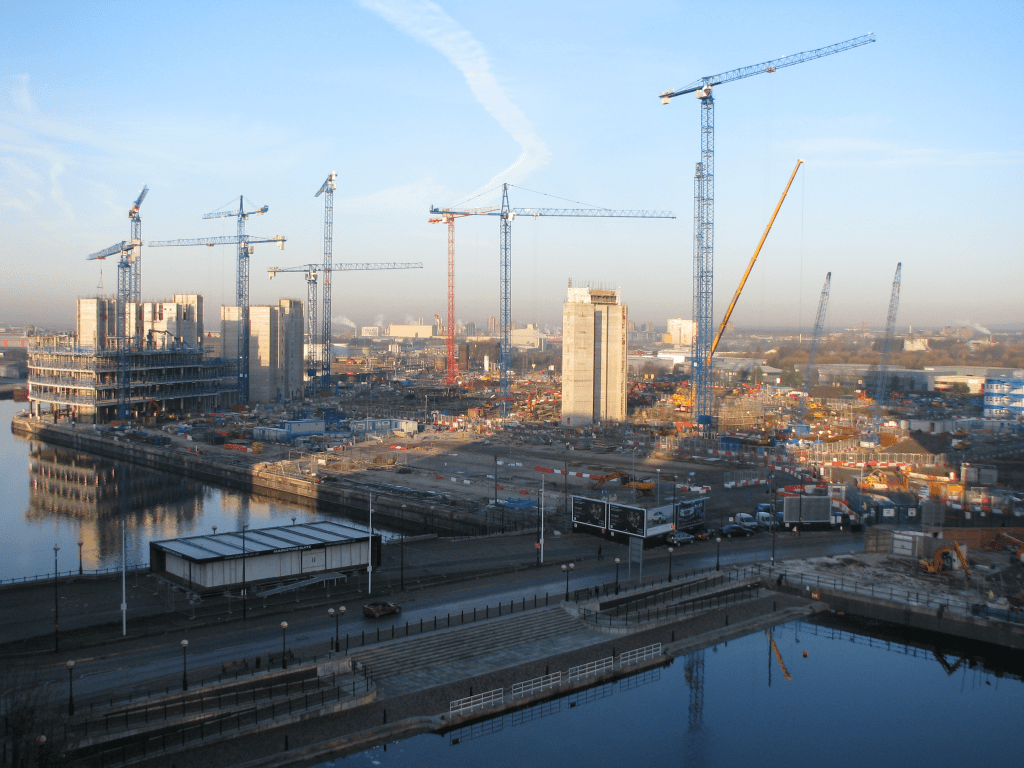
- 2007: Construction begins on MediaCityUK after the BBC proposes moving several departments from London.
- 2011: The BBC completes its move to MediaCityUK; the University of Salford opens its satellite campus there.
- 2013: Coronation Street moves its production and iconic cobbles to a new site at MediaCity.
- 2021: MediaCityUK buildings become the first in the UK to achieve net zero carbon status.
- 2023: High-rise developments continue with the completion of the 29-storey Eda (Erie Dock Apartments).
Salford Quays Overview and Comprehensive Timeline by Era
 PROject Templates