

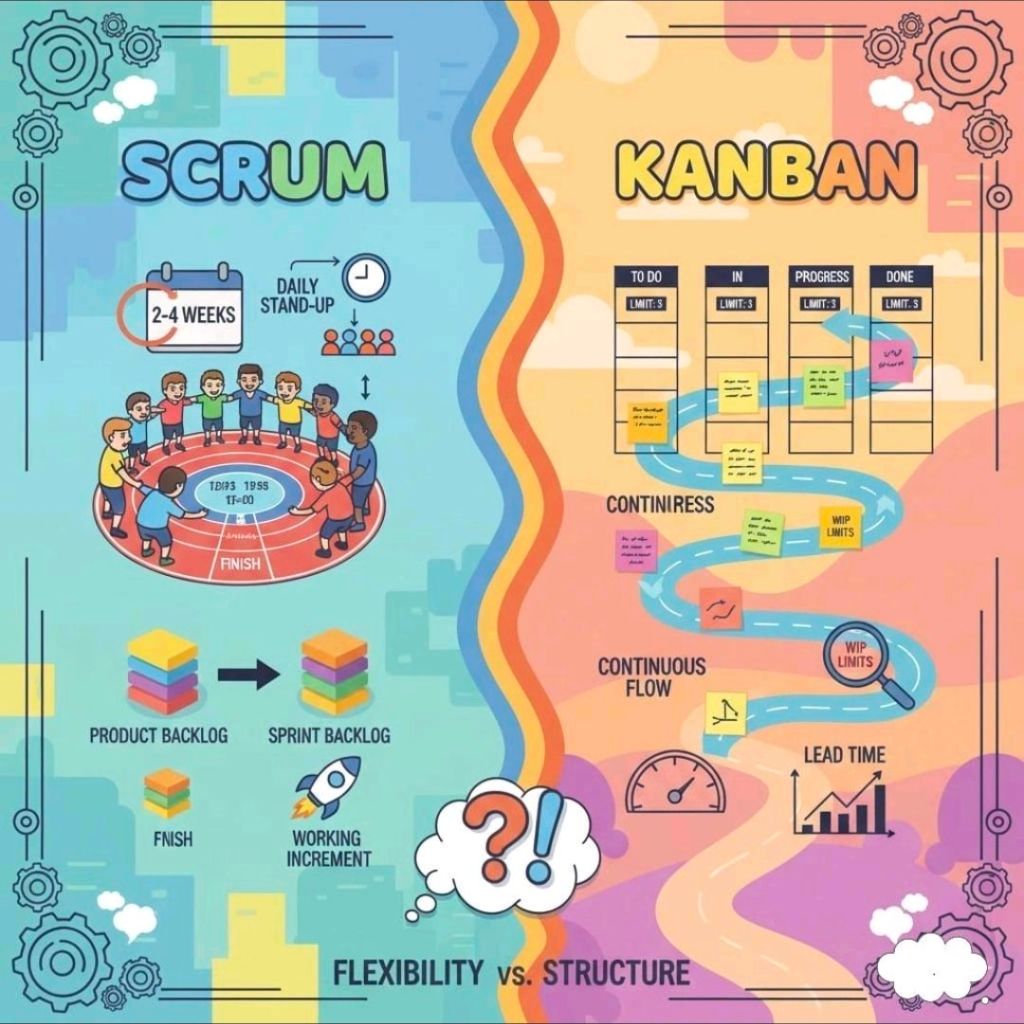
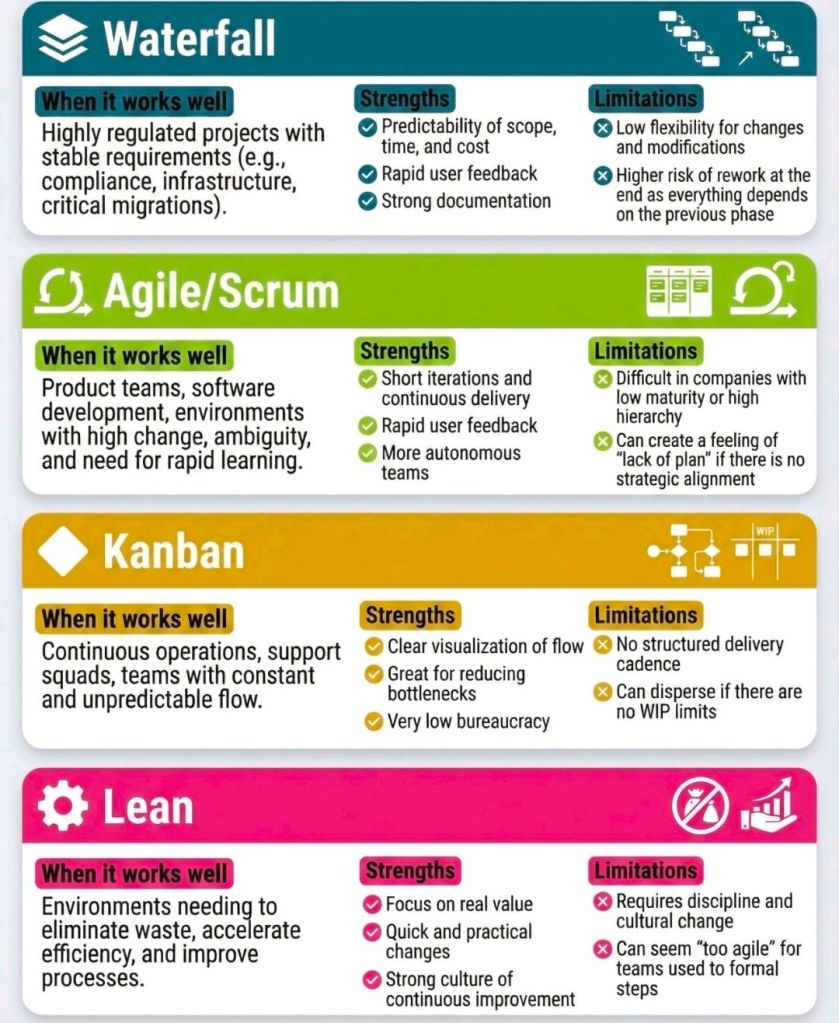
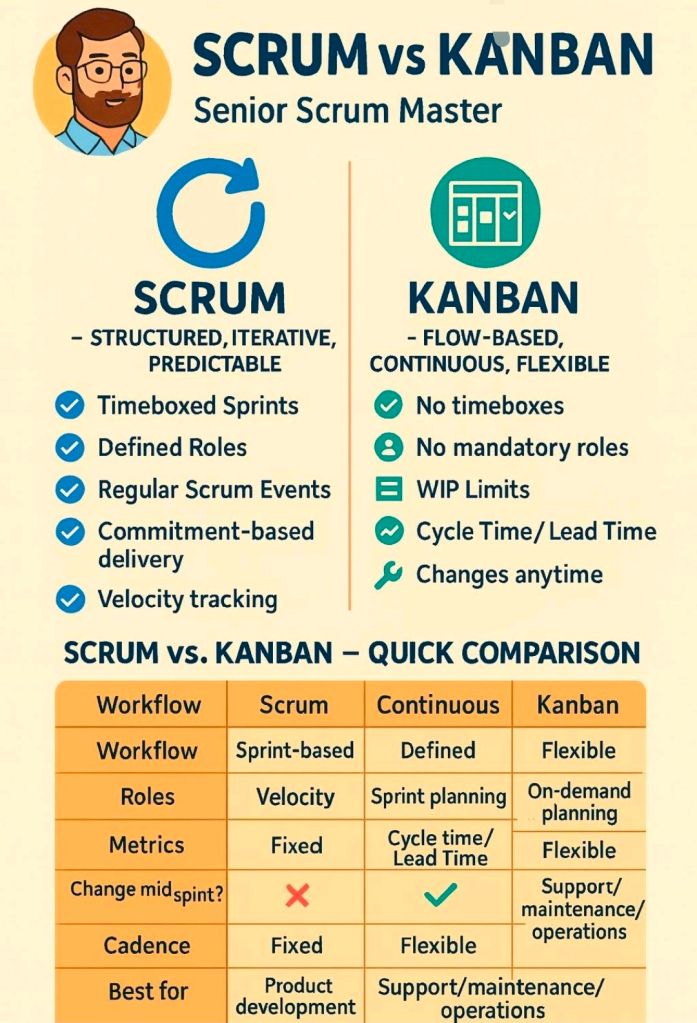
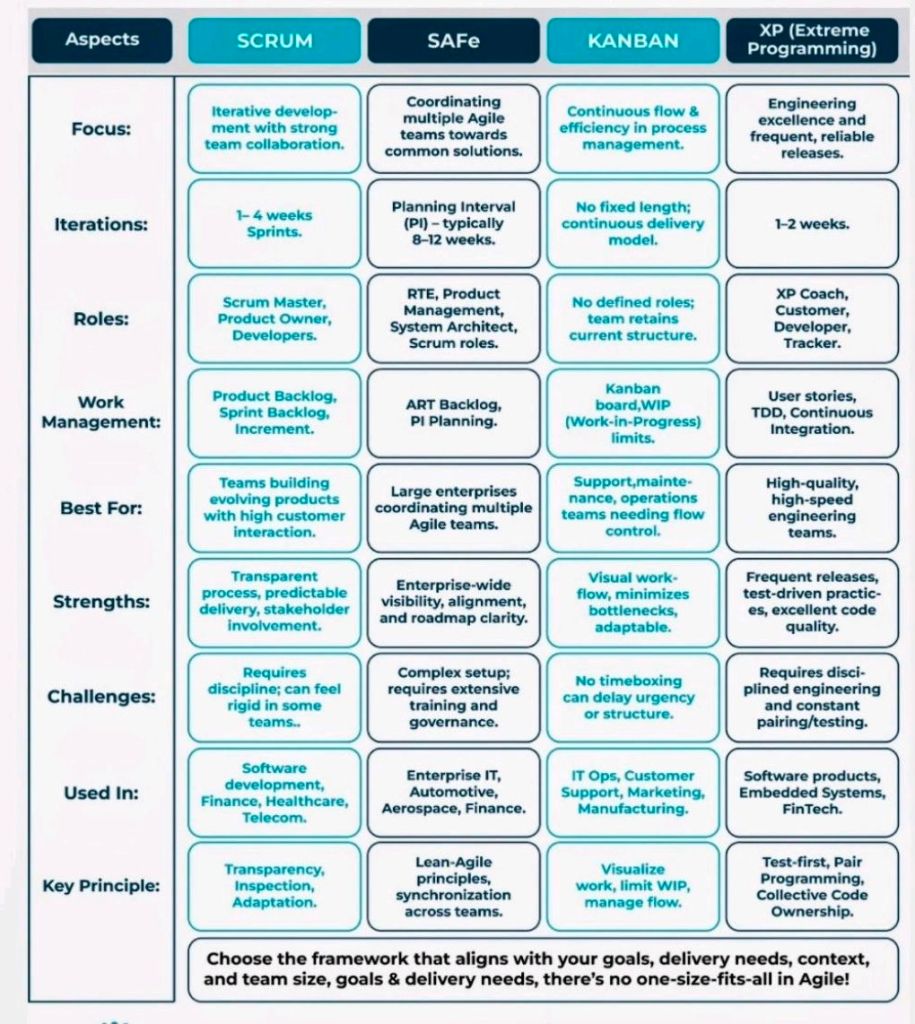
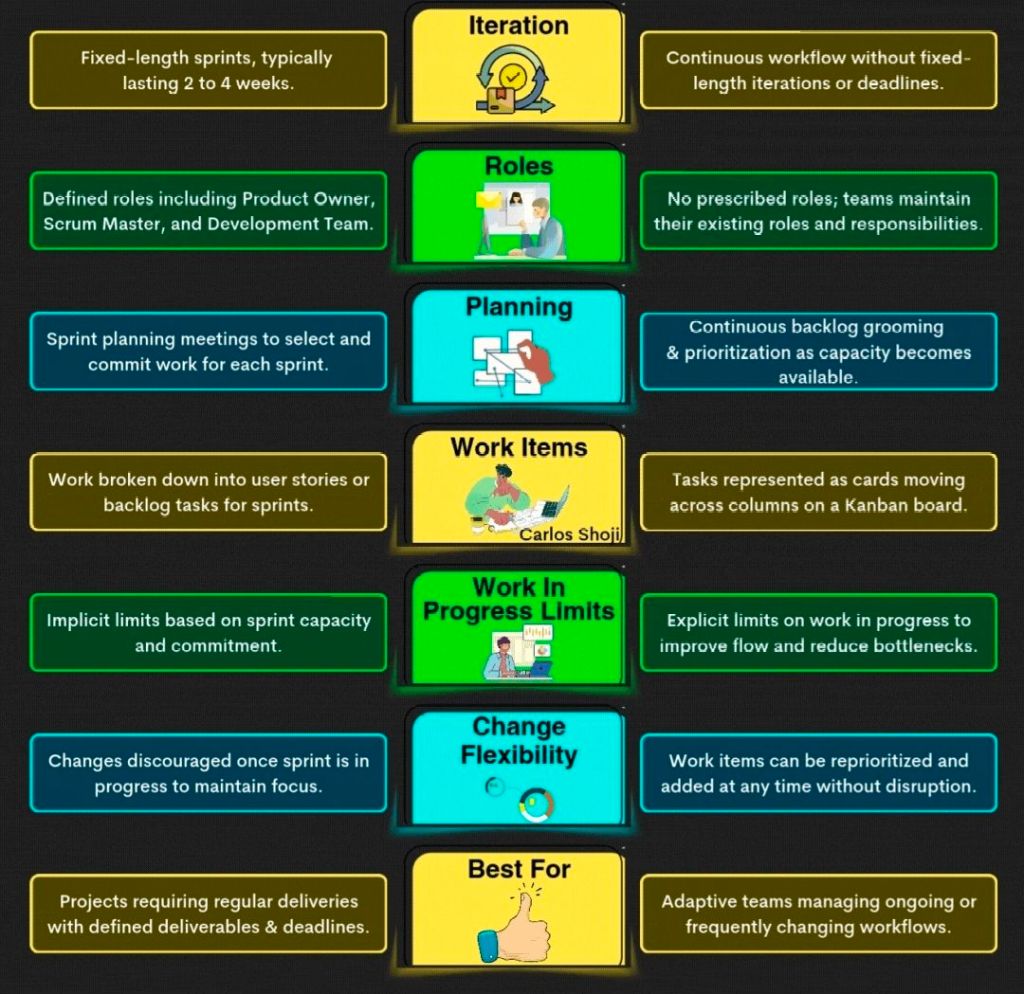
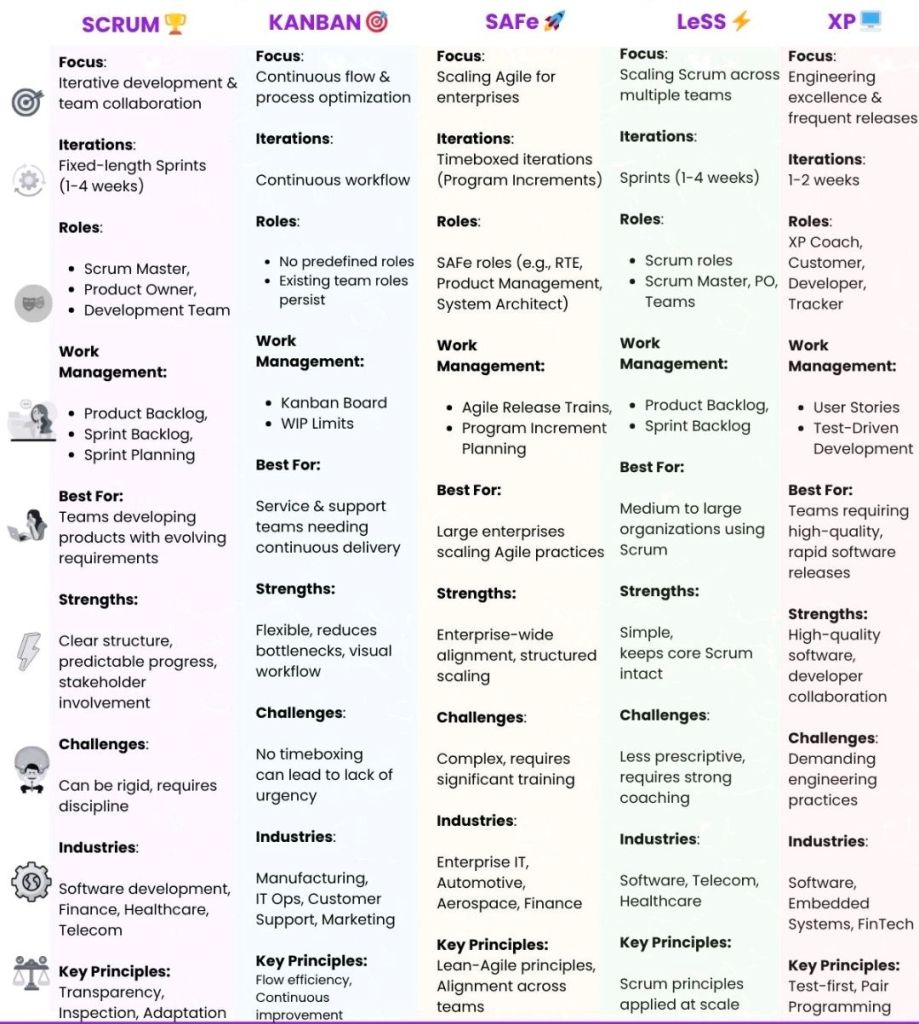
Kanban is a visual project management framework used to implement lean and agile methodologies, focusing on reducing waste, managing work-in-progress (WIP), and ensuring continuous, high-quality flow. Originating from Japanese manufacturing in the 1940s, it has evolved into a dominant, flexible system for knowledge work, software development, and everyday task management, characterized by “pulling” work only when capacity allows.
Summary of Kanban Project Management
- Definition: “Kanban” is Japanese for “signboard” or “visual card”. It is a system for managing work as it moves through a process.
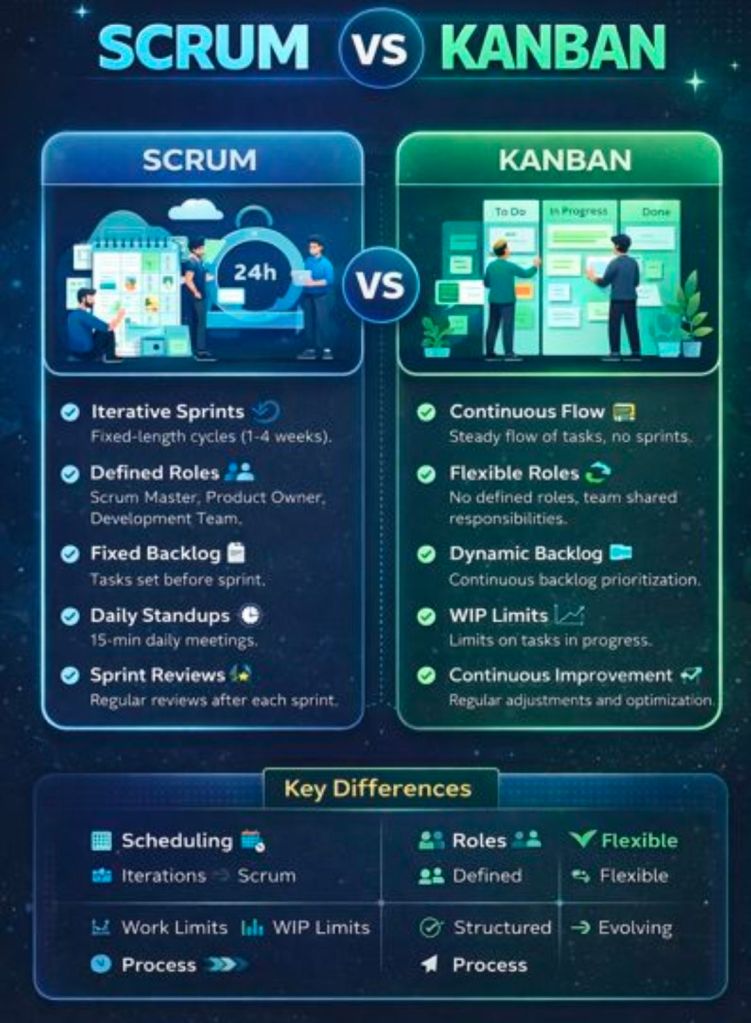
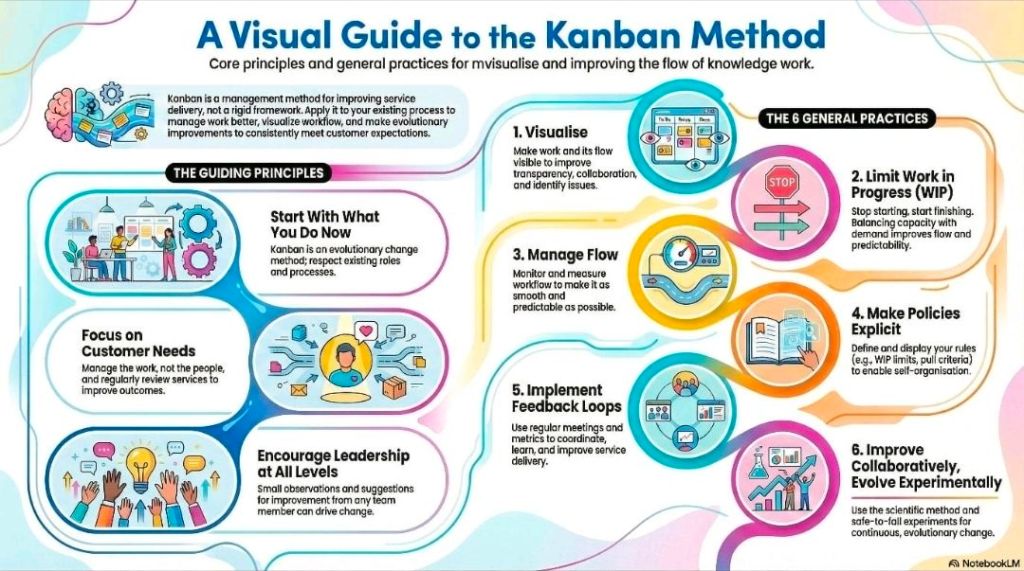
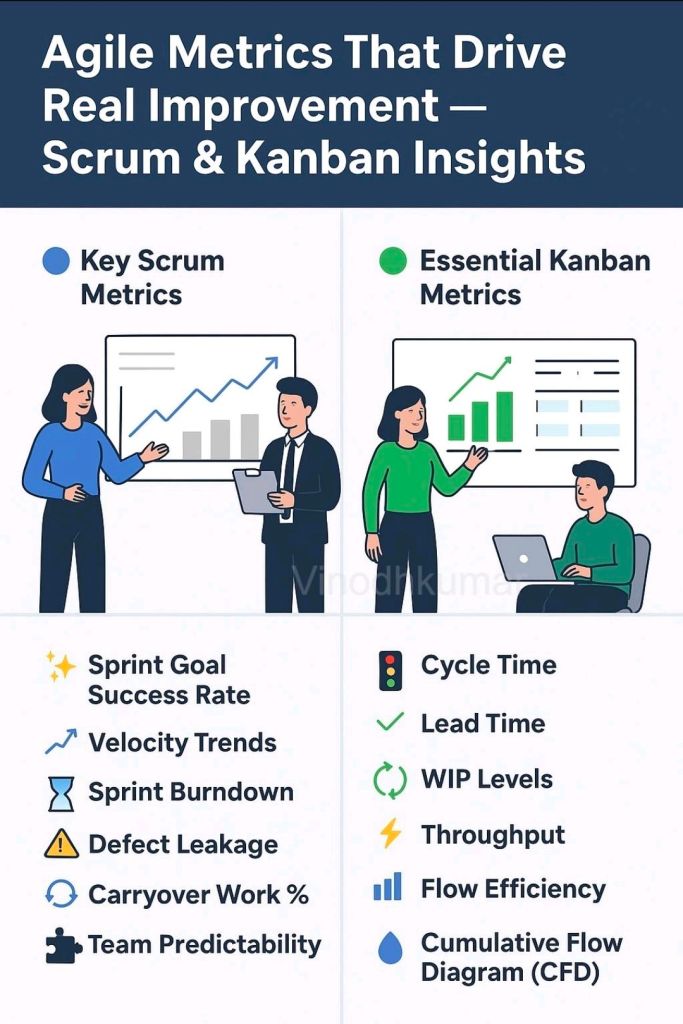
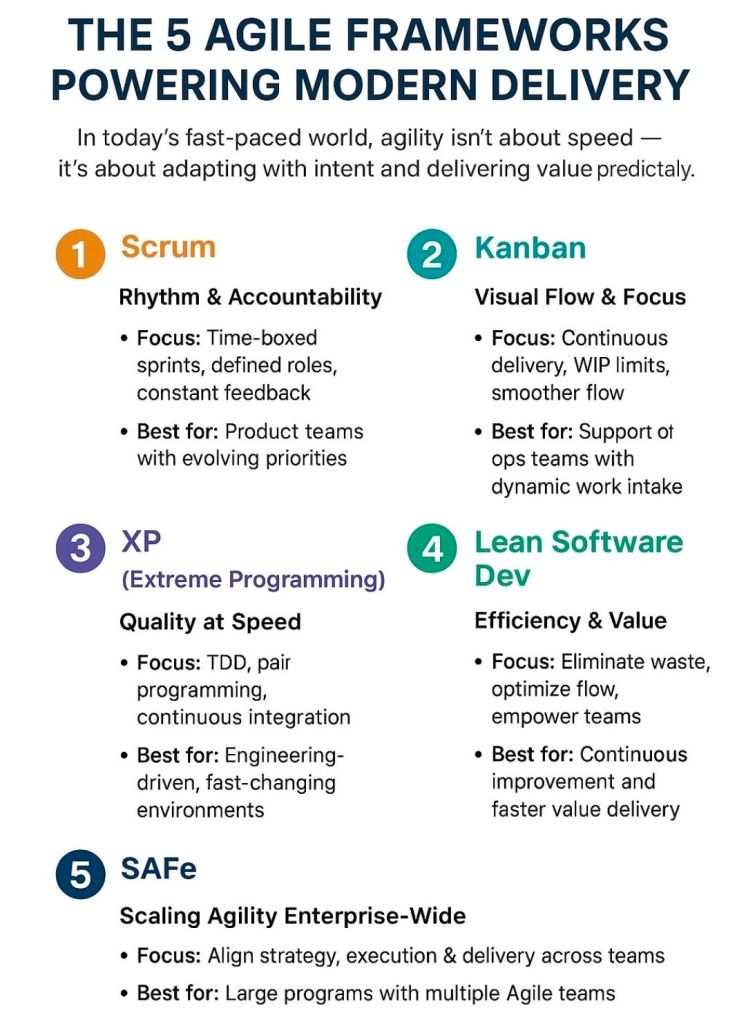
- Core Principles: Visualize workflow, limit work-in-progress (WIP), manage flow, make process policies explicit, and improve collaboratively.
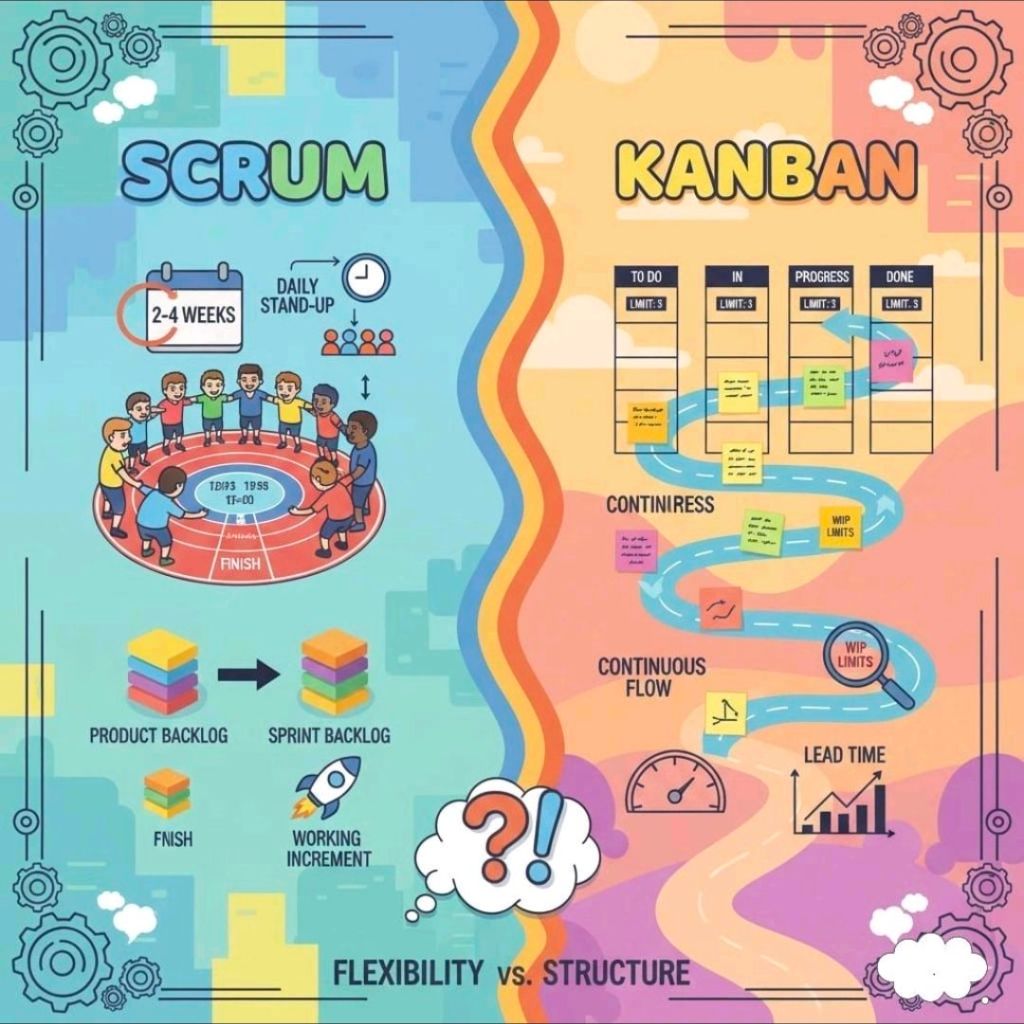
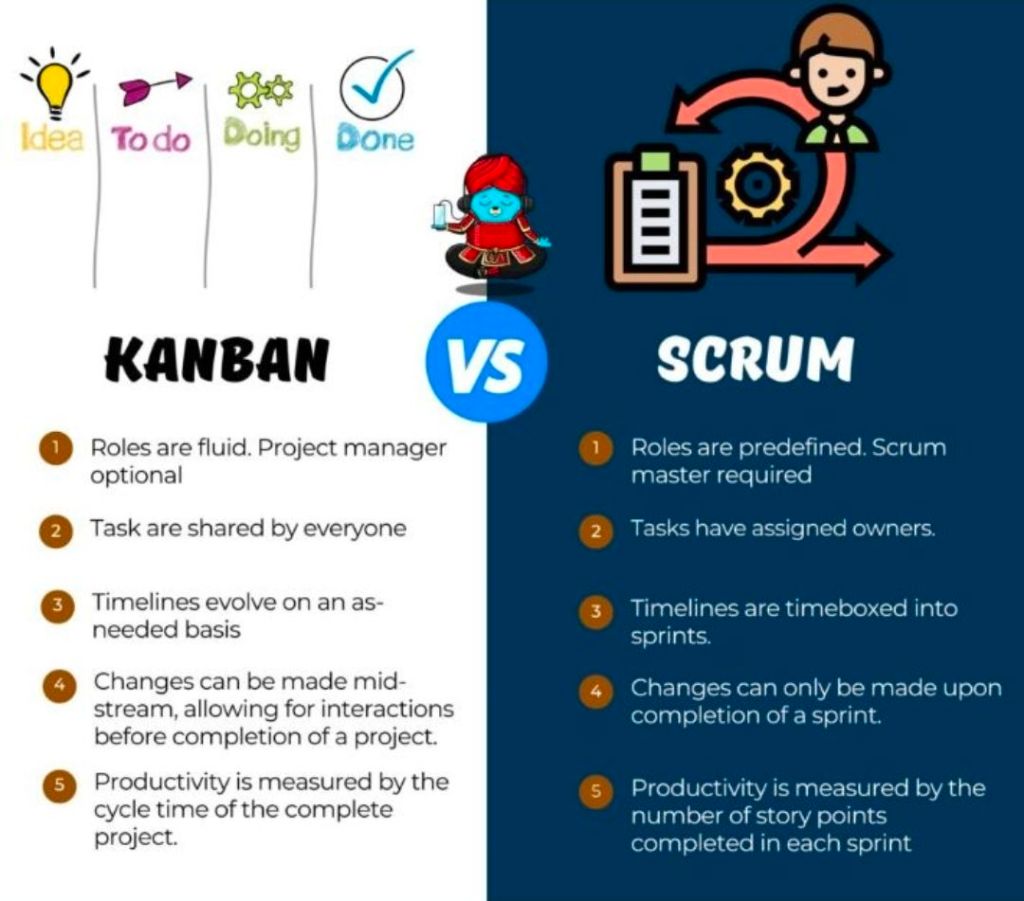
- Key Components: Kanban Board (visual representation), Kanban Cards (work items), and Columns (workflow stages like To Do, Doing, Done).
- Key Benefits: Increased visibility of bottlenecks, improved team focus, flexibility in priorities, and reduced waste (overproduction/excess inventory).
- “Pull” System: Work is only started when a downstream team member “pulls” a new card, preventing overburdening.
Detailed Historical Timeline
Era 1: Roots & Conceptualization (1600s – 1930s)
- 1600s (Edo Period): The term “Kanban” originates, referring to signboards used by Japanese shops to attract customers and distinguish their services, representing the need to communicate content clearly.
- 1920s: Sakichi Toyoda, founder of Toyoda Automatic Loom Works, invents automatic looms that stop if a thread breaks, establishing the “jidoka” (automation with a human touch) principle.
- 1930s: Toyota releases its first automobiles, with manufacturing heavily influenced by American assembly line methods.
Era 2: Toyota Production System (1940s – 1990s)
- Late 1940s: Taiichi Ohno, an industrial engineer at Toyota, develops the “Just-in-Time” (JIT) production system to minimize waste and inventory costs while increasing manufacturing efficiency.
- 1953: Toyota applies supermarket-style “pull” logic to its main plant machine shop, using cards to signal demand and replenish materials.
- 1956: Ohno visits American supermarkets and studies how shelf-stocking relies on customer demand to trigger replenishment.
- 1963: The Kanban system is officially implemented and adopted across all Toyota factories.
- 1973–1978: Ohno publishes the principles of the Toyota Production System, popularizing Lean Manufacturing.
Era 3: Transition to Knowledge Work (2000s)
- 2001: The Agile Manifesto is published, highlighting the need for faster software development, which Kanban later helps achieve.
- 2003: Mary and Tom Poppendieck publish “Lean Software Development: An Agile Toolkit,” mapping manufacturing principles to IT.
- 2004: David J. Anderson applies “pull system” principles to Microsoft’s XIT Sustaining Engineering group, creating the “Kanban Method”.
- 2005: David Anderson implements the first Kanban system for change request management at Corbis.
- 2007: Anderson introduces Kanban to the Agile community at the Agile 2007 conference. Karl Scotland introduces Kanban to Yahoo!.
- 2008: The “kanbandev” Yahoo! group is formed, fostering community development of virtual kanban systems.
Era 4: Modernization and Global Adoption (2009 – Present)
- 2009: Corey Ladas publishes “Scrumban,” exploring the mix of Scrum and Kanban. The first Lean Kanban conference is held in Miami.
- 2009 (Summer): Jim Benson begins developing Personal Kanban, applying the methodology to personal organization.
- 2010: Anderson publishes “Kanban: Successful Evolutionary Change for Your Technology Business”, cementing the framework in tech management.
- 2011: Jim Benson and Tonianne DeMaria Barry publish “Personal Kanban”.
- 2016: “Essential Kanban Condensed” is published by David Anderson and Andy Carmichael, distilling the method into five core practices.
- 2020s: Digital Kanban tools become industry standard for remote work, and adoption spreads to non-tech industries like marketing, human resources, and law.
Kanban project management summary and detailed historical timeline by era and year


 PROject Templates