

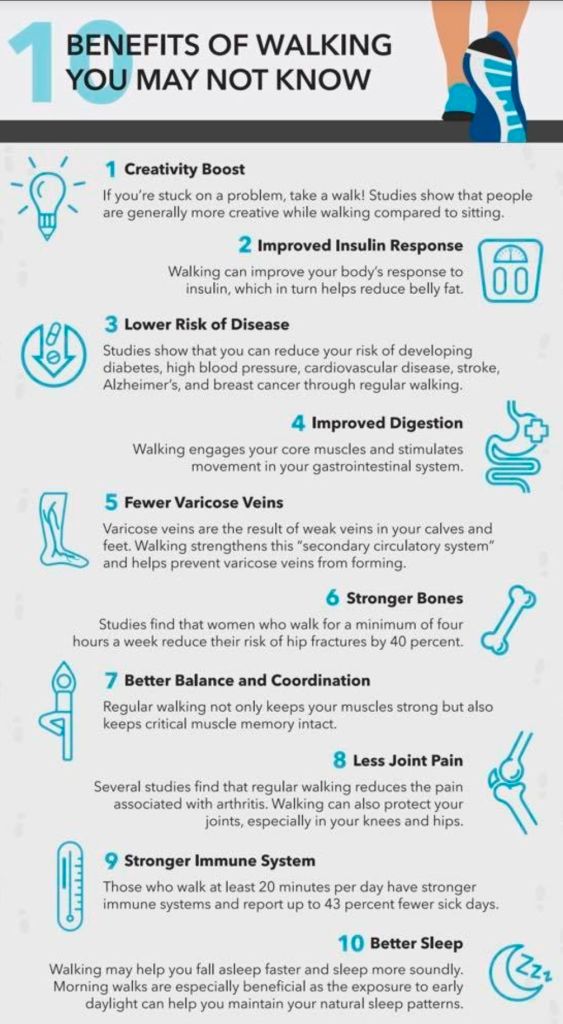
Walking is a highly accessible form of exercise that offers a range of physical, mental, and lifestyle advantages. Just 30 minutes a day can significantly improve overall health, though even a brisk 10-minute walk provides measurable benefits.
Physical Health Benefits
- Heart Health: Regular walking strengthens the heart, lowers blood pressure, and reduces the risk of stroke and coronary heart disease.
- Disease Prevention: It helps manage or prevent type 2 diabetes by improving insulin sensitivity and controlling blood sugar levels. It is also linked to a lower risk of certain cancers, including breast and colon cancer.
- Weight Management: Walking burns calories and boosts metabolism, which aids in losing body fat and maintaining a healthy weight.
- Muscles & Bones: As a weight-bearing exercise, it increases bone density (reducing osteoporosis risk) and strengthens leg and core muscles, which improves balance and coordination.
- Joint Support: Walking helps lubricate joints and strengthen the muscles that support them, which can alleviate arthritis pain.
- Immune System: Daily walks can bolster the immune system, leading to fewer sick days and milder symptoms when you do fall ill.
Mental & Cognitive Benefits
- Mood Elevation: Physical activity triggers the release of endorphins, serotonin, and dopamine, which naturally reduce stress, anxiety, and symptoms of depression.
- Brain Function: Walking is linked to improved memory, focus, and creative thinking. It may also help prevent the early onset of dementia and Alzheimer’s by protecting brain volume.
- Sleep Quality: Regular morning walks in natural light help regulate your circadian rhythm, making it easier to fall asleep and improving the quality of your rest.
Practical & Social Benefits
- Accessibility: It is completely free, requires no special equipment (other than supportive shoes), and can be done almost anywhere.
- Social Connection: Walking with friends, family, or in community groups helps combat feelings of isolation and improves social well-being.
- Energy Levels: A brisk walk increases blood flow and oxygen delivery throughout the body, providing a natural energy boost that is more effective than caffeine for long-term fatigue.
Summary of “Rules” & Methods
Various structured methods can help you get the most out of walking:
- 10-Minute Brisk Walk: The NHS recommends this as a baseline for significant health gains.
- Japanese Walking Method (3-3-3): Alternating three minutes of fast walking with three minutes of slow walking for 30 minutes to improve cardiovascular fitness.
- 6-6-6 Rule: A 6-minute warm-up, a 60-minute brisk walk, and a 6-minute cool-down, often performed six days a week for weight loss.


