COBOL85 programming language on HPE NonStop systems (formerly Tandem NonStop)

“COBOL85 nonstop” refers to the use of the COBOL85 programming language on HPE NonStop systems (formerly Tandem NonStop). The HPE NonStop platform is known for its fault-tolerant, continuous availability architecture, often used for critical, large-scale transaction processing. 

Key aspects of COBOL85 on NonStop include:

  • Platform-Specific Implementation: HPE provided a specific implementation of the 1985 COBOL standard tailored to its unique Guardian operating system and hardware architecture.
  • Mission-Critical Applications: COBOL programs on NonStop are commonly used in industries such as finance, retail, and government for applications requiring high reliability and constant uptime (the “nonstop” nature of the system).
  • Fault Tolerance: NonStop systems achieve fault tolerance through mechanisms like process pairs, and the COBOL runtime library can interact with these features. For example, a PARAM NONSTOP OFF setting in a PATHMON configuration can prevent a COBOL85 server from running as a process pair if that behavior is not desired.
  • System Integration: Programmers can call Guardian procedures and use embedded SQL/MP statements within their COBOL85 programs to interact with the system’s robust file system and database.
  • Development and Maintenance: The combination of COBOL85 and HPE NonStop utilities is a specific skill set for developers maintaining these critical legacy systems.
  • Tools and Manuals: Documentation and tools, such as the INSPECT symbolic debugger and the FUP (File Utility Program), are specific to the NonStop environment and assist with development and maintenance. 

For detailed information, users can consult the official documentation, such as the HP COBOL Manual for TNS and TNS/R Programs or other manuals available on the NonStopTools website and HPE Support portals. 

My NonStop COBOL85 programming experience.

Transaction Application Language – TAL on HP HPE Nonstop mainframes (previously Tandem)

Transaction Application Language

Programming language

Tandem TAL - Visual Studio Marketplace
TAL User Defined Language for Notepad++ | sybond/project
Transaction Application Language – TAL on HP HPE Nonstop mainframes (previously Tandem)

Transaction Application Language or TAL is a block-structured, procedural language optimized for use on Tandem hardware. TAL resembles a cross between C and Pascal. It was the original system programming language for the Tandem Computers CISC machines, which had no assembler.

Source: Wikipedia

Transaction Application Language or TAL (originally “Tandem Application Language”) is a block-structured,[1] procedural language optimized for use on Tandem (and later HP NonStop) hardware. TAL resembles a cross between C and Pascal. It was the original system programming language for the Tandem Computers CISC machines, which had no assembler.[2]

Transaction Programming Language (TAL)
ParadigmBlock-structured procedural language
DeveloperHewlett-Packard Enterprise (originally Tandem Computers)
First appearedmid 1970s
PlatformMIPS, Itanium, x86-64
OSNonStop OS
LicenseProprietary commercial software
File formatsunstructured, Enscribe, NonStop SQL/MP, NonStop SQL/MX
Dialects
TAL, pTAL, epTAL
Influenced by
ALGOL, Pascal, C

The design concept of TAL, an evolution of Hewlett-Packard‘s SPL, was intimately associated and optimized with a microprogrammed CISC instruction set. Each TAL statement could easily compile into a sequence of instructions that manipulated data on a transient floating register stack. The register stack itself floated at the crest of the program’s memory allocation and call stack.

The language itself has the appearance of ALGOL or Pascal, with BEGIN and END statements. However, its semantics are far more like C. It does not permit indefinite levels of procedure nesting, it does not pass complex structured arguments by value, and it does not strictly type most variable references. Programming techniques are much like C using pointers to structures, occasional overlays, deliberate string handling and casts when appropriate.

Available datatypes include 8-bit, 16-bit, 32-bit and (introduced later) 64-bit integers.[3] Microcode level support was available for null terminated character strings. However, this is not commonly used.

Originally the Tandem NonStop operating system was written in TAL. Much of it has since been rewritten in C and TAL has been deprecated for new development.

In the migration from CISC to RISC, TAL was updated/replaced with pTAL – compilers allowed TAL to be re-compiled into Native RISC Applications. Later, the epTAL compiler was introduced for Itanium processors.

sp/ARCHITECT-BANK – developed by a Runcorn-based software house called The Software Partnership (later acquired by Deluxe Data in 1994)

“sp/architect nonstop tandem” refers to SP/ARCHITECT-BANK, an electronic banking software that ran on the highly available, fault-tolerant Tandem NonStop servers (now part of the Hewlett Packard Enterprise, or HPE, NonStop product line). 

SP/ARCHITECT-BANK Software

  • Function: Developed as an electronic banking software package, it enabled functions like desktop access to company accounts, inter-account transfers, and bookkeeping, which was considered cutting-edge in the early 1990s.
  • Developer: The software was developed by a Runcorn-based software house called The Software Partnership (later acquired by Deluxe Data in 1994).
  • Users: Various banks, including TSB, Bank of Scotland, Rabobank, and Girofon (Denmark), used the software. 

Tandem NonStop Servers

The NonStop servers, originally from Tandem Computers Inc., are known for their extreme reliability and scalability, making them suitable for mission-critical applications in finance, telecommunications, and retail. 

Key architectural features include:

  • Fault Tolerance: The systems use redundant components (processors, storage, controllers, power supplies) with a “shared-nothing” architecture to ensure continuous operation even if a component fails.
  • Operating System: They use a proprietary, message-based operating system, the NonStop Kernel (NSK, originally Guardian), which manages fault detection and failover automatically, without human intervention.
  • Current Status: Tandem was acquired by Compaq in 1997, and Compaq was subsequently acquired by HP in 2002. The NonStop product line is now offered by Hewlett Packard Enterprise (HPE). More information is available on the HPE website

The Software Partnership (later acquired by Deluxe Data in 1994)

In 2013, delivered a large transaction tracking project at a retail bank in Riyadh

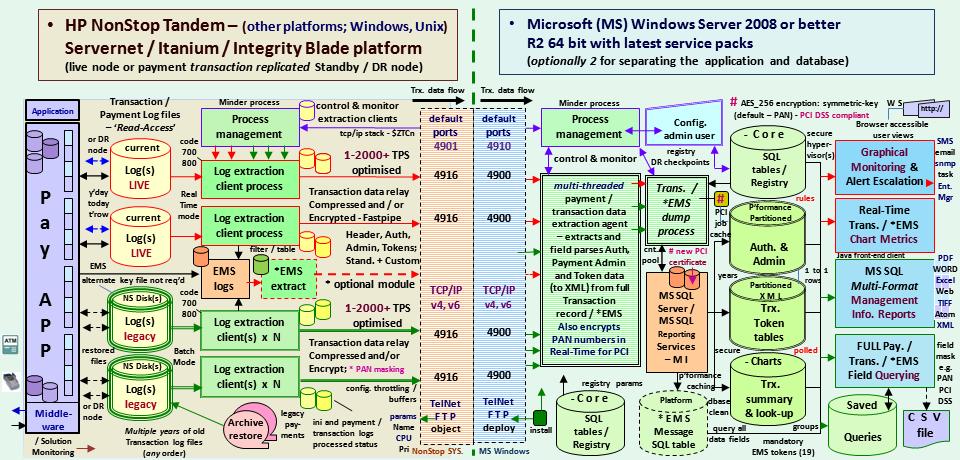
Retail Banking (off-shore) – in 2013, delivered a large transaction tracking project at a retail bank in Riyadh (Saudi Arabia). This involved the BASE24 Classic payment solution and the relay and optimised parsing of multiple Terabytes of tape archived POS & ATM transaction logs to a new monitoring and reporting system. Project managed the work and delivery both in Salford Quays, Manchester and locally at the bank in Riyadh.

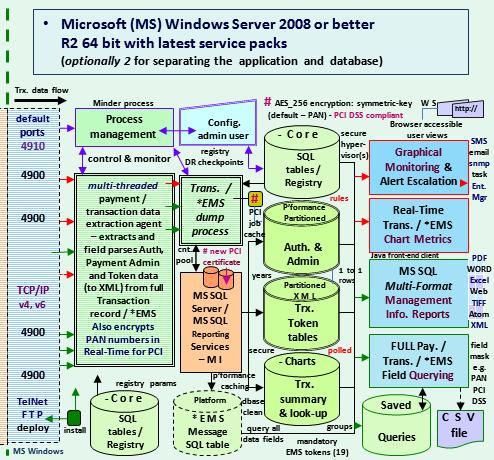
mark whitfield wordpress_connection_HP_NonStop_to_Windows_Combined

( now C-Deep [Transaction Monitoring] https://etinet.com/products/c-deep-transaction-monitoring/ )

HP NonStop (HPE) fault tolerant servers originally developed by Tandem Computers – Summary

My IT career between the years 1990 and 2014, involved significant programming and large projects for Tandem HP NonStop servers.

HP NonStop Tandem Computers

HP NonStop refers to the line of fault-tolerant servers and software originally developed by Tandem Computers and now owned by Hewlett Packard Enterprise (HPE). These systems are designed for continuous operation and uninterrupted transaction processing by using redundant hardware components and independent processors to automatically failover in the event of a failure, ensuring high availability for critical applications in banking, telecommunications, and healthcare. 

Origins and Evolution

  • Tandem Computers: Founded in 1974, Tandem introduced the NonStop system, a pioneering fault-tolerant computer with no single point of failure, revolutionizing continuous availability for online transaction processing. 
  • Acquisitions: Tandem Computers was acquired by Compaq in 1997, and Compaq was later acquired by Hewlett-Packard (HP) in 2001. 
  • Current Ownership: After the split of HP into Hewlett Packard Enterprise (HPE) and HP Inc. in 2015, the NonStop product line became part of HPE. 

Key Features and Uses

  • Fault Tolerance: The systems are built with redundant components, including identical processors and storage devices, allowing them to automatically detect and recover from hardware or software failures without interruption. 
  • High Availability: This fault-tolerant architecture is ideal for mission-critical applications that require constant uptime, such as financial transactions, emergency services, and large-scale banking systems. 
  • Scalability: NonStop systems are designed for scalability, able to handle large commercial workloads by adding independent processors. 
  • Dedicated Operating System: Historically, NonStop systems ran on proprietary software like the Guardian operating system and used the TAL programming language
  • Specialized Database: The line includes NonStop SQL (currently SQL/MX), a relational database designed for the high availability and scalability needs of these systems. 

Tandem Computers, NonStop Kernel (NSK), a Timeline of HP NonStop

Tandem Computers, NonStop Kernel (NSK), a timeline of the history and evolution of HP NonStop.

Note: some texts below AI generated for completeness.

Tandem’s NonStop computers, founded by Jimmy Treybig in 1974, were a revolutionary fault-tolerant system that sold its first server in 1976 to Citibank, achieving rapid growth through the 1980s before later becoming part of Compaq (1997), Hewlett-Packard (2003), and finally Hewlett Packard Enterprise (HPE). Key milestones include the 1983 introduction of the Transaction Monitoring Facility (TMF), which simplified development by handling fault tolerance at the system level, the introduction of the first NonStop X x86-based systems in 2014, and the phasing out of Itanium-based models by 2020. 

1970s

  • 1974: Tandem Computers Inc. is founded by Jimmy Treybig, with the goal of creating “NonStop” computers that don’t fail. 
  • 1975: The design of the first NonStop hardware, the Tandem/16, is completed. 
  • 1976: The first NonStop server ships to Citibank. The company experiences exponential growth. 

1980s

  • 1981: The NonStop II server is introduced, and Tandem joins the Fortune 500. 
  • 1983: The requirement for developers to code specifically for fault tolerance is removed with the introduction of the Transaction Monitoring Facility (TMF) and NonStop Tuxedo software. 
  • 1985: The first online-serviceable disk storage facilities, the V8 and XL8, are introduced. 
  • 1986: NonStop technology is used by the world’s 30 largest telecommunication companies and many top banks. 
  • 1988: Tandem acquires Ungermann-Bass, Inc. to enhance its networking capabilities. 
  • Late 1980s: A new line of NonStop systems, including the CLXCYCLONE, and Cyclone-R, is introduced, representing a significant redesign while maintaining fault-tolerant principles. 

1990s

  • 1990: Tandem reaches its peak revenue but begins a slow decline as the market shifts to faster, cheaper systems. 
  • 1991: Tandem announces the Tandem Image Processing System for digitized document management. 
  • 1997: Tandem is acquired by Compaq, becoming a server division within the company. 

2000s 

  • 2003: Hewlett-Packard (HP) acquires Compaq, and the NonStop line becomes part of HP.
  • 2005: The HP Integrity NonStop i (TNS/E) servers, based on Intel Itanium microprocessors, are introduced.

2010s

  • 2014: The first NonStop X (TNS/X) systems, built on Intel x86-64 processors, are launched. 
  • 2015: Following the split of Hewlett-Packard, the NonStop division becomes part of Hewlett Packard Enterprise (HPE). 

2020s 

  • 2020: Sales of Itanium-based NonStop systems end, marking a major shift to x86 architecture for the product line.

The Tandem NonStop history began in 1976 with Tandem Computers’ introduction of its fault-tolerant systems for critical transaction processing. After Tandem was acquired by Compaq in 1997, the NonStop line continued under Compaq, then Hewlett-Packard (HP) in 2003, and is now part of Hewlett Packard Enterprise (HPE) following the company’s 2015 split. Key developments include the 1983 introduction of the Transaction Monitoring Facility (TMF) and NonStop Tuxedo, the 2005 arrival of NonStop i servers based on Intel Itanium processors, and the 2014 launch of the NonStop X systems using Intel x86-64 processors. 

Also;

1970s

  • 1974: Tandem Computers is founded in Cupertino, California, by Jim Treybig. 
  • 1976: Tandem introduces its first NonStop fault-tolerant system. 
  • 1970s: Tandem’s architecture is designed for continuous availability and zero data loss, becoming the dominant manufacturer of fault-tolerant computer systems for ATM networks, banks, and stock exchanges. 

1980s

  • 1983: Tandem introduces the Transaction Monitoring Facility (TMF) and the Pathway transaction management software, removing the need for applications to be specifically coded for fault tolerance. 
  • 1986: Tandem launches NonStop SQL, the first fault-tolerant SQL database, which offers unique features for data integrity across nodes and can scale performance with additional nodes. 
  • 1989: A new version of NonStop SQL adds transactions that can be spread across multiple nodes, a groundbreaking feature for the time. 

1990s 

  • 1997: Compaq acquires Tandem Computers, with NonStop becoming a server division within Compaq.

2000s 

  • 2003: Hewlett-Packard (HP) acquires Compaq, integrating the NonStop line into its operations.
  • 2005: HP introduces the HP Integrity NonStop i servers (also known as TNS/E), which are based on Intel Itanium microprocessors.

2010s

  • 2014: HP launches the first NonStop X systems (TNS/X), which are built on Intel x86-64 processors. 
  • 2015: Following the split of Hewlett-Packard, the NonStop division becomes part of Hewlett Packard Enterprise (HPE). 

2020s

  • 2020: Sales of the Itanium-based NonStop systems end. 
  • 2025 (Present): HPE continues to operate the NonStop platform, a technology that still serves critical infrastructure requiring high availability and continuous operation. 

See also : https://www.company-histories.com/TANDEM-COMPUTERS-INC-Company-History.html